I’m delighted to share our study, “Contamination Detection Using a Deep Convolutional Neural Network with Safe Machine Environment Interaction,” has been accepted for publication in MDPI Electronics Journal. This journey has been an effort of dedication, and I can’t wait to share our groundbreaking findings with you.
Understanding the Problem Contamination detection is an important issue in many industries, including food processing, healthcare, and others. A primary focus is ensuring product quality and safety, and this is where our research comes in. Manual examination gets laborious and may result in contamination occurring along the production line. To solve this issue, a contamination detection system based on an enhanced deep convolutional neural network (CNN) in a human-robot collaboration framework is proposed.
Deep Learning: The Key to Precision In our research, we enhanced Deep Convolutional Neural Networks (CNNs) to detect contaminants in food packages. CNNs are well-known for their ability to extract intricate patterns from complex data, making them perfect for tasks like object detection and analysis.
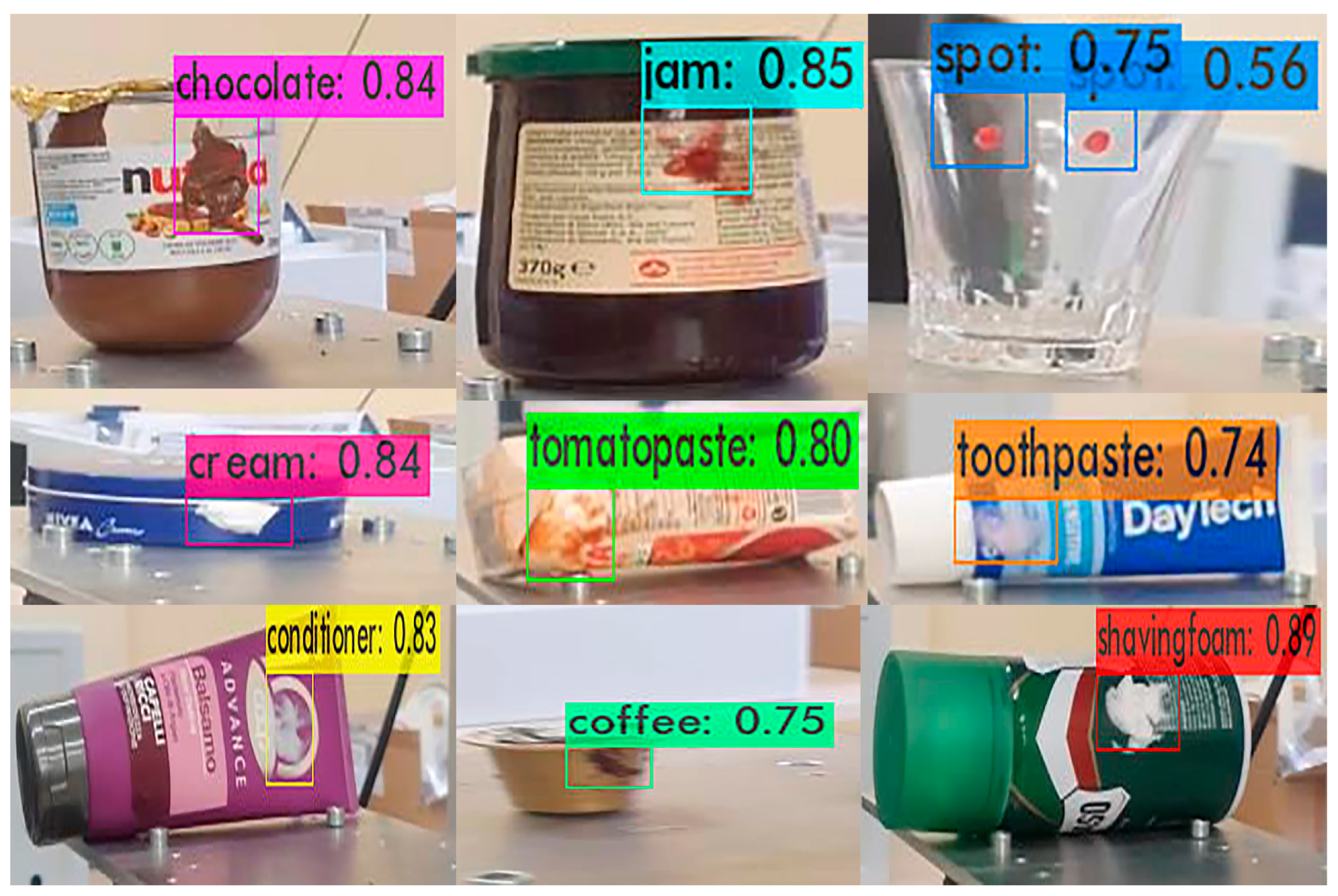
Safe Machine Environment Interaction To improve our system’s performance, we coded the proximity sensor for “Safe Machine Environment Interaction.” A mechatronic platform with a camera for contamination detection and a time-of-flight sensor for safe machine-environment interaction was used for the experiment. The experiment findings show that the reported system can identify contamination with 99.74% mean average precision (mAP). Figure 1 depicts the experimental results, and the publication can be found here [1].
Figure 1. Experimental trials of real-time detection using the reported CNN [1].Future Directions Future work may concentrate on adding more contamination classes in order to create a more thorough and improved contamination detection system. The algorithm might also be applied in a real robot with a conveyor belt to create an industrial quality inspection setup. However, the journey does not finish here. We’re devoted to improving our methodology and investigating new applications. We’re thrilled to be at the forefront of the deep learning revolution.
Acknowledgments I want to express my heartfelt gratitude to my Supervisor, colleagues, and the entire research team who played a pivotal role in this project. Their expertise, dedication, and collaboration made this achievement possible.
Paper Reference
[1] Hassan, Syed Ali, Muhammad Adnan Khalil, Fabrizia Auletta, Mariangela Filosa, Domenico Camboni, Arianna Menciassi, and Calogero Maria Oddo. “Contamination Detection Using a Deep Convolutional Neural Network with Safe Machine—Environment Interaction.” Electronics 12, no. 20 (2023): 4260.
The representation of our society in cultural forms has fascinated me for a long time. Theatre, opera, dance, film, photography all have shaped my upbringing. It was during years of studying digital and creative media that I learnt more about the versatility of media and its representation of life and society at large—from a practical as well as theoretical lens.
First signs of art go back to the Stone ages. As put by Prof. Xiang Xiong Lin in this article in the Humanities, Arts and Society magazine, “Artistic cells are born within human blood. […] Art is the carrier of human culture, and culture is the platform of human civilization.“ Art holds a mirror to the time when it was created. As highlighted by the MET, “art from the past holds clues to life in the past. By looking at a work of art’s symbolism, colors, and materials, we can learn about the culture that produced it.” Equally, art from this century truly tells a lot about the times we live in today. How does technology change the perception about our identity? How does data drive objectivity and erase individuality? How do robots interact with humans?
I want to highlight here a few contemporary artworks that fascinated me in the past and may tell us, step by step, a little bit more about the era we call ourselves a part of or, at least, provide some thought provoking perspectives—on human civilisation in the digital era:
Exploratory Selfie or Selfiecity.Net, 2014, L.MANOVICH
The presentation of the self. A topic that probably never experienced such a dramatic change like right now and within the digital age. Our self-representation is even so important since Instagram, and selfie-camera that Manovich decided to do an artwork on the topic “selfie”. The project is an interactive web app of 3200 Instagram selfies from different countries in the world (Bangkok, Berlin, Moscow, New York, and Sao Paulo). A software creates a certain visualisation of the photos. Via a computer that shows the web app the visitor can explore the dataset of selfies that is then projected onto the wall infront of the visitor. With other artists and specialists, Manovich wants to discuss the construction of self-representation in the digital age. He started analyzing the selfies with a special software, and visualizes the received data. The portraiture of a single person changes through history – from the art of painting, to the photography, to the selfie. The way the self is portrait changes with its society. The project of Manovich even argues if the selfie can be seen as a new sub-genre of photography.
“Selfie is not only a photographic image that we recognize as a self-portrait and which bears a formal resemblance to numerous canonical photographic self-portraits from the nineteenth and twentieth centuries. Instead, selfie is a product of a networked camera. […] While focusing on Instagram, one of several available platforms of online image-sharing, Selfiecity comments on the social media in general. The project views social media as a vehicle of voluntary interpersonal communication, and discusses the visual component of such communication.” (Tifentale and Manovich, 2015)
Face Cages is an artwork that is critizising the biometric industry. Its measuring in an objective way is creating a cage. There is either 1 or 0. If you are too extraordinary for the system what are you then? Do you have to worry if your smile is not detected as a smile – by a software? The face cages are inflexible metal constructions for the face that look like a biometrical measurement of the facial factors. These biometric systems are a generalization of the human individuum that create stereotypes. The result is either discrimination, racism, sexism, transphobia or even homophobia. The discomfort the cages entail, dramatizes the discrepancy of the interaction of biometric norms and the individual person.
“Blas fabricated face masks that resemble iron muzzles based on the shape of biometric diagrams, evoking resonances with prison bars, the Scold’s Bridle, and torture devices used during slavery in the U.S. and in the Medieval period in Europe.”; “The different machinations of faciality […]—as a singular, unique, personal and identifiable security-check, as the imposition of a political norm, as collective empowerment, as a plural, multi-form, malleable and amendable canvas, as a means to play with identity, similarity and difference, and as a source of data extraction—indicate that supra-individual cultural narratives and concerns about policing and governance are braided around the algorithmic capture of the face.” (de Vries, 2020)
After Tresset lost his passion for his hand drawn paintings he started building robots and he named them Paul. Paul is a robotic arm mounted on a table. Paul uses computer vision to recognize faces he then starts drawing on a paper in about 30 minutes. Through Paul, a robot becomes human. Art used to be made by human kind – what changes now, that even robots know how to draw a portrait? The boarders merge. But what stays is the fascination of only one human-like robotic arm that has the ability to identify a human face and to draw it.
“Paul is a naive drawer: it does not have highlevel knowledge of the structures constitutive of the human face (such as the mouth, nose, eyes) nor the capability of learning expertise based on experience as a human would. However, Paul is able to draw using the equivalent of an artist’s stylistic signature based on a number of processes mimicking drawing skills and technique, which together form a drawing cycle. […] Although the individual algorithms driving Paul are relatively simple and not particularly novel, the way in which they are combined is of interest as the drawings Paul produces are considered by professionals as being of artistic value, which is unusual for computer-generated figurative portraits” (Tresset and Leymarie, 2013)
Vorn creates a huge impressive installation with up to eleven dysfunctional machines hanging from the ceiling of the room. Each machine has eight arms made of aluminium reaching out from a spherical body. The machine works like a nervous system made of motor-, sensing-, and a controlling-system. This allows the machine to detect the visitors and react to them. The Hysterical Machines serve to exemplify the paradoxal nature of artificial intelligence. They provoke the visitor’s empathy as they are reacting to their appearance.
“In addition to physically interacting with the audience, Hysterical Machines also initiate or establish an emotional relationship with the audience. Their hybrid status, combining the properties of living organisms (their behavior) and technical machinery (their appearance) causes viewers to re-act with a similarly structured ambiguity and ambivalence, in which affective emotions combine with cognitive interest and empathy mixes with primal anxiety and technophobia.” (Kluszczyński 2018)
What artworks do you find most remarkable for our digital lives?
To me, art still represents much about us, our past, our present, and makes us think about our future. To close, I choose the words of a popart legend:
“You need to let the little things that would ordinarily bore you suddenly thrill you.” – Andy Warhol
During my academic journey as a PhD student, I’ve come to recognise the crucial role of platforms that facilitate interaction between academia and industry. For students like me, these spaces are not just areas of collaboration—they are realms of revelation. They have been pivotal in shaping my research, thinking, and understanding of how innovation and digital transformation play out in the real world.
Real-World Context to Theoretical Studies
Source: own photo.
The world of academia often revolves around theories, models, and conceptual discussions. While this is essential for foundational knowledge, there’s a palpable gap when it comes to understanding how these theories apply to real-world scenarios. This is where industry-academia collaboration platforms come in. They provide PhD students like me with the real-world context, helping us align our research with genuine industrial needs and challenges.
For instance, at the recent EINST4INE summer school at the Institute for Manufacturing (IfM) I had the incredible opportunity to engage with leading professionals from various sectors. These interactions brought home the stark realities and specific challenges they face; insights that can’t be gleaned from a textbook or a lecture.
Enabling Impactful Research
One of the essential goals of any research, especially at the PhD level, is to have a genuine impact. The industry offers a testing ground for our theoretical frameworks and models. By understanding the problems industry actors face, we can tailor our research to propose effective solutions.
During my interactions at the summer school, discussions on innovation ecosystems and roadmaps as technology strategy tools were incredibly enlightening. This exchange allowed me to consider the application of theoretical constructs in diverse industrial settings, pushing me to think of research areas that truly matter.
At the recent EINST4INE summer school, I also had the opportunity to discuss some of my research findings with industry experts and gather feedback on managerial tools that translate my research into practical applications. This opportunity is invaluable for PhD students who often lack the ability to directly engage with industry leaders.
Preparing for a Seamless Transition
Beyond research, these collaborative spaces prepare us for the eventual transition to the industry (if we choose that path). By understanding industry dynamics first-hand, we are better positioned to add value from day one. For someone like me, keen on ensuring that my research contributes to real-world impact, these platforms have been instrumental in aligning my studies with industry requirements.
In Conclusion
In the evolving landscape of innovation and digital transformation, the need for collaboration between academia and industry has never been more critical. Platforms and spaces that foster such collaboration are the bridges that connect theoretical knowledge with practical applications. As a PhD student, I can attest to the immense value they bring—not just in enriching our research but in moulding us to be better contributors to the world of industry and innovation.
In the world of academic research, it’s common to embark on a journey with a specific destination in mind (at least that was my path). Guided by established theories and prior studies, we often believe we know where our research will take us. My recent experience with a case study on innovation ecosystems, particularly focusing on environmental sustainability, was a humbling reminder of the unpredictable nature of inquiry.
As is the beauty—and sometimes, the frustration—of qualitative research (though it’s worth noting that surprises aren’t exclusive to this methodology), I was in for some revelations, when taking a closer look at how companies carry out projects…
… As I was delving into the practices of companies engaged in green transition projects, I encountered a case that exemplifies this perfectly: the renowned CopenHill facility in Copenhagen.
CopenHill is an example of a new breed of sustainability projects that are simultaneously functional and hedonistic. With its waste-to-energy plant, ski slope, and restaurant, CopenHill epitomizes the concept of “hedonistic sustainability”, a term brought to life by Bjarke Ingels, the architect behind the facility (Estika et al., 2020). Aimed at merging environmental responsibility with pleasure and aesthetic appeal, many of these new facilities stand as a testament to the interconnectedness of green projects with the social, cultural, and environmental fabric of their communities. They are “history-dependent and organizationally-embedded units of analysis” (Engwall, 2003), each following a unique trajectory influenced by a variety of factors.
Thus, the creation of such multifaceted projects involves a collaborative effort extending beyond the realms of engineering or business. To assess their success or failure, there is an increasing need to adopt inter- or multi-disciplinary approaches, as their implementation and development cannot be fully understood or effectively managed through a single field of knowledge. Instead, it requires the collaboration and integration of diverse disciplines, as I have come to realize. For this reason, the current findings of my case study research are steering me in a more sociological direction, to better understand the complexities of the green transition. In pursuit of this, I have enrolled in an immersive three-day course at Aarhus University, where I’ll delve into various sociological theories, including Actor-Network Theory and Transition Theory, to name a few. My aim is to enrich my comprehension of the historical and environmental contexts that surround my case study.
Of course, I’m eager to share my discoveries along the way, so stay tuned for more updates and revelations!
References:
Engwall, M. (2003). No project is an island: Linking projects to history and context. Research Policy, 32(5), 789–808. https://doi.org/10.1016/S0048-7333(02)00088-4
Estika, N. D., Kusuma, Y., Prameswari, D. R., & Sudradjat, I. (2020). The hedonistic sustainability concept in the works of Bjarke Ingels. ARTEKS : Jurnal Teknik Arsitektur, 5(3), 339–346. https://doi.org/10.30822/arteks.v5i3.487
As a fan of Christopher Nolan and a researcher in the innovation management field, I couldn’t help but be excited by the release of “Oppenheimer”. As you may know, the movie describes the life of the American theoretical physicist J. Robert Oppenheimer, focusing on his time as a student, his leadership role in the Manhattan Project to develop the atomic bomb, and his downfall after World War II.
Atomic Bomb vs AI: similarities and differences
The movie has sparked many conversations in the public opinion about how the development of the atomic bomb resembles the dangers of an uncontrolled Artificial Intelligence (AI) use (Scientific American; Guardian; Wired). While these two innovations have some similarities, it is important to recognize their differences, too.
First, as also Nolan noted: “It’s reassuringly difficult to make nuclear weapons and so it’s relatively easy to spot when a country is doing that. I don’t believe any of that applies to AI.” Second, while AI is a broad term that covers a wide range of tools, nuclear fission is a specific chemical reaction with clear and known applications. Third, in this regard, if the atomic bomb detonation is the expected result of a process controlled by humans, most generative AI models are currently neither explainable nor predictable black boxes (repeating the same prompt may produce different results for which the machine was not even trained).
Thus, what can we learn from this movie that could still be relevant today and for future (revolutionary) innovations?
I believe that the most important takeaway is that the role of academia should not only be limited to develop innovations; rather, academics should also be actively involved in setting the rules and sensitize for a responsible use of the technology they contributed to being invented.
I will tell you more about it in the next paragraphs.
Academic activism
Nuclear activism
“This isn’t a new weapon, it’s a New World.”
After the two atomic bombs were dropped on Hiroshima and Nagasaki, Bohr’s prediction came true. The world changed forever. This is when Oppenheimer joined the already heated debate on using the bomb and began opposing the development of the H-Bomb. On this matter, he says in the movie that:
“Having played an active part in promoting a revolution in warfare, I needed to be as responsible as I could with regard to what came of this revolution.“
However, this position turned to be more problematic than expected. Several scientists that played a key role during the war were increasingly excluded from influential positions when it came to the future of atomic energy, due to their criticism (Bulletin of the Atomic Scientists). For Oppenheimer, this period reached its peak with the loss of his security clearance (Avalon Project). Nonetheless, academia managed to play a vital role in regulating atomic energy.
Particularly, Linus Pauling, an American chemist that received the Nobel Prize in Chemistry in 1954, had a huge influence on the U.S. public opinion in the disarming process and ban of nuclear weapons tests. In 1958, together with his spouse, he submitted a formal petition to the United Nations, urging the cessation of nuclear weapons testing. This document was signed by 11.021 scientists representing fifty countries. Moreover, Pauling also supported the research known as the “Baby Tooth Survey”, which provided legitimacy and a crucial boost to public opinion demands (Wikipedia).
Public pressure and the results of this research contributed to the signature of the moratorium on above-ground nuclear weapons testing, followed by the Partial Test Ban Treaty in 1963, between John F. Kennedy and Nikita Khrushchev. For his activism, Pauling received in that year the Nobel Peace Prize, which made Pauling the only person to have been awarded two unshared Nobel Prizes.
Pauling and Teller TV debate Source: Oregon State University
Other examples
Nevertheless, this is not an isolated case. The scientific community has played a pivotal role in regulating scientific innovations in other instances, too. The regulation of genetic engineering is another example (Krimsky, 2005).
The first publications describing the successful production and intracellular replication of recombinant DNA appeared in 1972 and 1973. Recognizing both the benefits and risks of this innovation, a group of experts (mainly biologists, but also including lawyers and physicians) met at Asilomar in 1975. During this conference, the experts discussed these concerns and a voluntary moratorium on recombinant DNA research was introduced for experiments that were considered particularly risky. These guidelines eventually informed the regulation set by the National Institutes of Health (USA) in the following years, which formally limited rDNA applications (Wikipedia).
Conclusion
The development of new technologies is leading us into an era of rapid transformation across various aspects of our lives. From Large Language Models to Blockchain, the pace of change is accelerating, while regulations often struggle to keep up (GZero).
In light of this, it is evident that academia’s role extends beyond just fostering the development and commercialization of new technologies. It also involves championing a responsible approach to innovation.
Engaged scholarship is a great starting point to increase the likelihood of advancing knowledge for science and practice (Van de Ven, 2007). However, as we have seen, sometimes the role of experts and citizens blur (Hoffman, 2016), making it necessary to reach another level of engagement: an engagement that leads to moving beyond the ivory tower of academia.
References
Hoffman, A. J. (2016). Reflections: academia’s emerging crisis of relevance and the consequent role of the engaged scholar. Journal of Change Management, 16(2), 77-96.
Krimsky, S. (2005). From Asilomar to industrial biotechnology: risks, reductionism and regulation. Science as Culture, 14 (4), 309-323.
Van de Ven, A. H. (2007). Engaged scholarship: A guide for organizational and social research. Oxford University Press, USA.
If you think life as a PhD student is just about boring books and endless research, think again! My last few weeks have been a whirlwind of cool events, amazing people, and lots of learning. Let me take you on a quick tour.
A Dive into Enabling Technologies at Stuttgart
In the heart of October, I found myself amidst the historic beauty of Stuttgart, ready to attend a workshop hosted by the University of Stuttgart. The central theme of the event revolved around enabling technologies and their pivotal role in the digital transformation.
The workshop spread over three days, promised – and delivered – a potpourri of informative sessions, panel discussions with industry stalwarts, and glimpses into the future of digital advancements. From discussing AI and data’s role in research to exploring the dynamics of enabling technologies for ecosystems was genuinely enriching.
A personal highlight for me was the chance to present my ongoing research project on the implementation of collaborative robots (or cobots) in SMEs. It’s a subject I’m deeply passionate about, as emphasized in my paper titled “Cobots in SMEs: Processes, Challenges, and Success Factors”. The feedback and interactions that followed the presentation were invaluable, offering diverse perspectives and new angles to consider in my research.
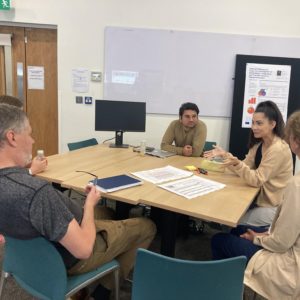
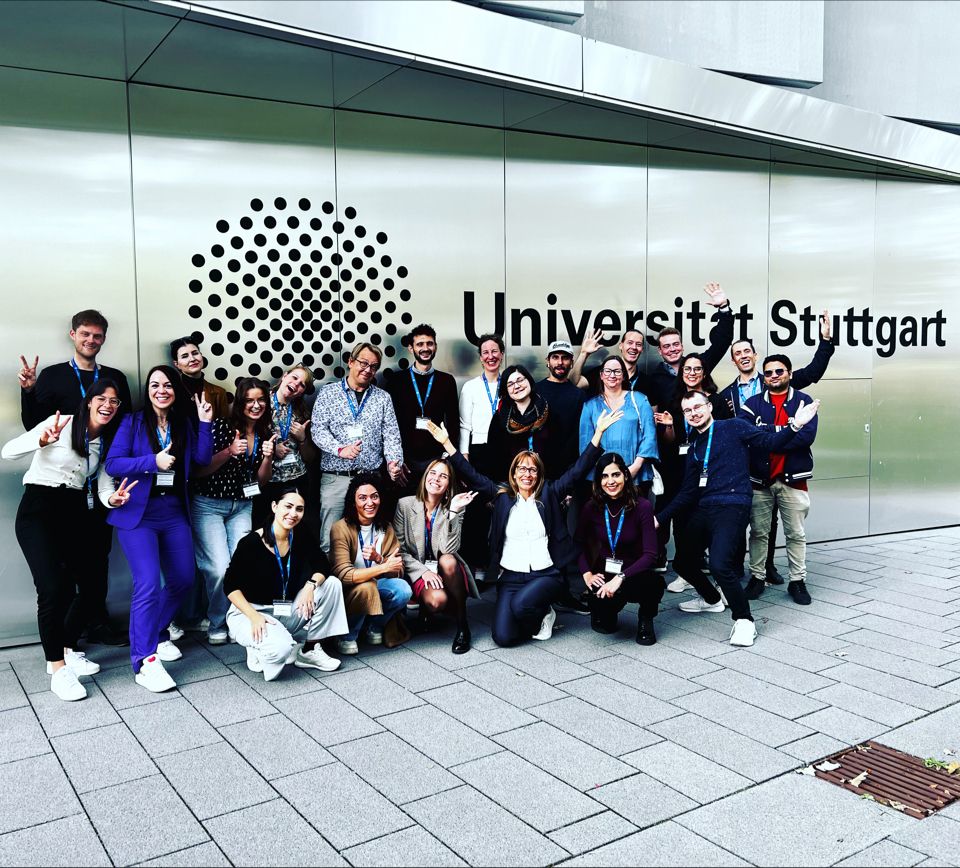
Participants at the EINST4INE Workshop in Stuttgart (Source: photo taken by Christina Theodoraki)
A Taste of Local Culture
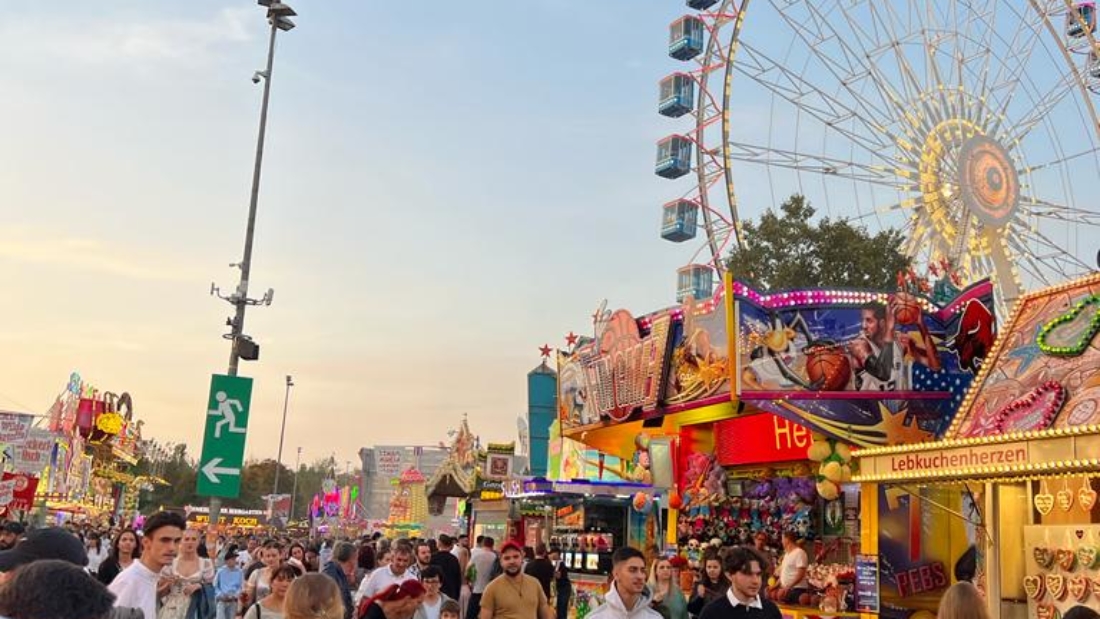
Before the intellectual marathon began, a few colleagues and I took a cultural detour to the vibrant Wasen event in Stuttgart. It was a delightful amalgamation of tradition, laughter, and shared memories – a perfect start to an intense week.
Reaching Out to the World
Another proud moment was presenting my conference paper remotely at the IEEE TEMs conference in Lithuania. The virtual platform extended the reach of my work to a global audience. Engaging with professionals and academicians from different corners of the world brought forth a myriad of viewpoints, making the experience thoroughly enlightening.
Looking Ahead
The journey, as they say, is never-ending. As I pen down these words, I’m in the midst of preparing a poster presentation for the upcoming World Open Innovation Conference in Bilbao, Spain, this November. I’m eagerly looking forward to further collaborations, feedback, and the joy of sharing my work with a broader audience.
In the world of academia, every day brings new challenges and revelations. These events and interactions have been instrumental in shaping my thought processes and providing direction to my research. I’m grateful for these opportunities and excited for the road ahead.
Until my next update, stay curious and keep exploring!
The EINST4INE network recently all met in Germany for our ‘Enabling Technologies Workshop’ hosted by the ENI team at the University of Stuttgart. As I reach the end of my second year of doctoral studies, I find myself mulling over career options post-PhD. The final session of this workshop gave us the opportunity to hear from highly successful academics (thank you to our energetic and passionate guest Christina Theodoraki for candidly sharing her career journey) and a safe space to ask many pending academic career questions to our experienced seniors. Here are some of my key takeaways and reflections:
A career in academia can be scary…
Firstly, I often already get asked “what do you actually do?” or “when you are getting a real job? Are you going to be a student forever?” to which I often laugh and even agree. If I can’t even explain what I do, how do I expect anyone to understand it? Perhaps I am on a path of being an eternal student, so what ‘value’ does that bring to the ‘real world’? This is difficult to justify. For some entertaining consolement on this issue, you can read De Vaujany’s (2016) expression of trying to answer what a management researcher does at a dinner party.
Secondly, even if you have figured out how to articulate what you do, you also have to believe it yourself. Many people in general suffer from imposter syndrome, but especially so in academia where we are trying to push the boundaries of knowledge, experiencing feelings of self-doubt regarding our intellect and abilities which is very challenging to overcome. Bothello and Roulet (2019) wrote a provoking essay in Journal of Management Studies, which outlines imposter syndrome in academic life, particularly for PhD students considering a career in management academia, that I recommend anyone in this position to read.
Thirdly, I am sure anyone reading this is familiar with the “publish or perish” culture. Particularly as a PhD student, even more so if publishing is a requirement of your PhD, this culture can feel overwhelming. Not only are we expected to publish, but to publish in highly ranked journals that can take years to develop, in order to advance one’s career. Even once you manage it, you’re then expected to do it more. Working in academia, you can easily fall victim to defining your worth through your h-index or publication output which seldom has positive outcomes, particularly for your mental health.
But it can also be exciting…
Firstly, as scientists, it is our job and our privilege to understand how the world works. Prompted by some wisdom from Calogero Oddo, us junior researchers realised that instead of talking about what we have done, we should perhaps focus on the how and the why. For a number of reasons, we tend to make a habit of reporting the quantitative metrics and measures e.g., I published in X journal, I attended Y conferences, as opposed to reporting on the science we are creating – those valuable insights that will help to push our field(s). I feel like sometimes I forget that I am working in such an exciting domain, and while I am not inventing any breakthrough concept, I am contributing knowledge and understanding to our collective discoveries.
Secondly, while I often get frustrated with the focus on pushing out publications rather than a focus on slow exploration and deep learning, reflecting with peers in industry and often those that completed a PhD themselves, it seems I can still be grateful that in academia we are spending time on questioning the why rather than pushing on with how and doing (sometimes before thinking). Both are vital, but it seems for those with curious minds then academia allows you to play and explore and question which is a wonderful thing.
Thirdly, since this line of work often includes international collaboration with a broad range of people (other scholars, organisations, institutions) we have so many exciting opportunities to explore the world to help understand it and ourselves. It might not be for everyone, and I am also acutely aware of the privileges in the ability to travel and attend conferences both personally and institutionally, but typically a career in academia opens you up to many experiences abroad whether it be through travel or through your colleagues and their diverse backgrounds.
Becoming a researcher or a scholar
A reflective moment I had as a result of some conversations during this workshop was that the terms “researcher” and “scholar” are often used interchangeably, but they can have slightly different connotations. A researcher is primarily focused on the systematic investigation of questions, problems, or phenomena to generate new knowledge, while a scholar is someone deeply engaged in the broader intellectual life of a field, which may include research, teaching, writing, and contributing to the academic community. While you can be both a researcher and a scholar, it is perhaps not often that you have the opportunity to be “scholarly” when you are working outside of academia.
Bottom line – you can make it your own and there are always choices.
There are many different pathways in an academic career, which even differentiates further depending on the country and institution you are based at. In light of this, in the final years of my PhD I will try to focus on:
Engaging with different types of scholars and researchers to uncover the more ‘unknown’ or less obvious pathways,
Understand what is meaningful to me without all the external pressures, topic hype, and noise,
Determine what is realistic for me and which sacrifices I am willing to take or not take (which may look very different to others),
Reflect on what my definition of success is,
And consider what kind of impact I would like to make (on myself, colleagues, project partners, and even society more generally).
References:
Bothello, J., & Roulet, T. J. (2019). The imposter syndrome, or the mis-representation of self in academic life. Journal of Management Studies, 56(4), 854-861.
de Vaujany, F.-X. (2016). ‘The dinner: How can we explain management research just before dessert?’. Management, 19, 330–334.
In-between Places: How to work and travel during your PhD
“Why do you go away? So that you can come back. So that you can see the place you came from with new eyes and extra colors. And the people there see you differently, too. Coming back to where you started is not the same as never leaving.” – Terry Pratchett
Originally, I was convinced that doing a PhD means to sit in a dusty, dark office corner at the end of a long echoing corridor of a university. And that may still hold true for some PhD candidates, frankly, I don’t know. Studying one topic in-depth for 3 to possibly many more years, turning that one coin over and over again, that does not exactly sound like a roller-coaster ride. It sounds like a long sweaty marathon when the skies are grey, everyone else is running in front of you, and the cheerleaders have gone home. But that is not it.
Embarking on a PhD journey may seem like a black box at first. Luckily, in my case, this does not describe my office situation. The black box is rather the many things that you figure out along the journey and that uncover over time and that includes the research output as well as the steps to get there. Against assumptions, two years into the journey, the ride continues to be exciting and somewhat mysterious. The times I spent sitting at a desk are finely interwoven with another trip to book, another chance to mingle and learn, another part of the chain to get to the next step.
The requirement of the EINST4INE program to move into another country was what drew me to it. I moved from Berlin to Barcelona in less than 2 months (the time frame is not my personal recommendation, but it worked out in the end!). Ever since, I get to enjoy an environment that was new to me, I am learning a new language and a new way of living—la vida loca. Aside from finding a new place to call home, the consortium also gets together on a regular basis, be it in Denmark, Italy, recently the United Kingdom – or soon in Stuttgart in southwestern Germany. And, of course, conferences, workshops and similar events are vital for joining the academic community, finding like-minded peers, and exchanging on the most recent findings.
While last year I was able to spend 4 months on an industry secondment in southern Norway, I kicked off this year with a joyful 3-months stay in Melbourne at RMIT. And here are some things that I learnt during my trips away thus far:
Leaving your comfort zone is never easy, but can be very rewarding when you keep an open mind to experiencing something new everyday
Planning early on and ahead of time can help to get adjusted more easily and prepare for the new setting (and safe money of your budget for another trip instead)
Networking and getting to know new people are often the highlights of spending time abroad, especially if you can find people to discuss your topic with and get new ideas for your work, you may even make new friends for life
Balancing to try new things and maintain regular habits (e.g., workout, sleep schedule, etc.) can be helpful to challenge yourself and expand your horizon while also keeping connected with your “home base self” for when your trip ends
Exploring a new city and what it has to offer such as restaurants, museums, sights, and nature will provide many opportunities for experience and insight that can sometimes provide new angles on existing thoughts (especially for your research)—go explore and sleep when you are back home 😉
Looking back on every conference, every seminar, every dinner networking I thus far attended, each event provides such a unique value, adding to the pages of the PhD diary. Finally, my favorite saying goes like this: Don’t wait to be sure—move, move, move!
My quest to better understand the scaling challenge in digital transformation led to focus my research on the challenge of transitioning – the very needed – digital innovations (DIs), including processes, products, services and models, to operationalisation or commercialisation at scale in incumbent firms.
According to recent industry estimates, around 75% of DIs still stall before reaching the desired scale (Martin 2018). This is a big issue; if companies continue to struggle to reap the benefits of their investment, we will have an endless cycle of search and failure.
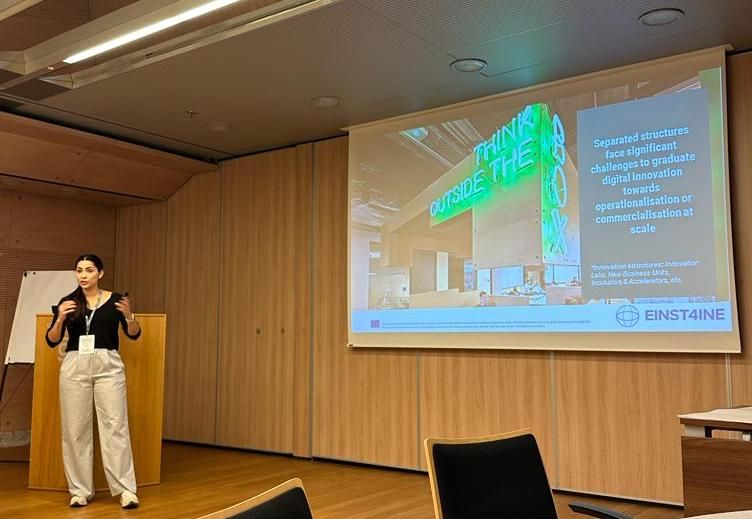
One of my areas of interest is the role of innovation managers in the transition to scale of digital innovations, especially when these innovations are developed in separated in dedicated structures (e.g., Digital Innovation Units, Innovation Labs, New Venture Units).
Recently, I had the change to attend ISPIM – International Society for Professional Innovation Management conference 2023, held in beautiful Ljubljana, and present some of my research. I was very happy to learn that my paper “Digital Innovation: Exploring Integration and Transition Modes in Scaling Success” was one of the three nominees for the Alex Goffman Award for the best student paper.
Source: own photo.Conference paper presented at XXIV ISPIM Innovation Conference and published in conference proceedings.
The Role of Innovation Managers in the Transition to Scale of Digital Innovations: Key Takeaways
The rise of digital technology is reshaping the landscape of businesses globally. In a comprehensive study, we delved into the critical role innovation managers play within large incumbent firms during their digital transformation journeys. Here’s what we found:
The Orchestrating Role of Innovation Managers: Innovation managers are not just pioneers of innovative ideas. They are the very bridges that connect novel digital solutions to traditional business operations. They facilitate communication, handle resources, and manage complex interdependencies to ensure that innovations don’t just remain ideas but become scalable solutions. In this, innovation managers are the key enablers of the transition to scale of digital innovations by orchestrating the integration of new digital solutions and offerings with core business, ensuring these find a suitable home in the core of the organisation and managing the process through which these digital innovations migrate to the core structures of the organisation.
The Standard Transition Model: Innovation managers have in mind a standard transition model for digital innovations. It’s thought that innovations will smoothly integrate with core business, become self-sufficient in the core of the organisation, and then scale. However, the reality of such transitions can be vastly different.
Challenges in Digital Innovation: The process of transitioning digital innovations is riddled with challenges. From resource allocation hurdles to cumbersome task allocation in core businesses, innovation managers frequently face obstacles in turning a digital idea into a successful operation.
Adapting to Challenges: One size does not fit all. Depending on the challenges faced, innovation managers might deviate from the standard transition model. These deviations are essential to ensure that digital innovations can continue to progress towards becoming scaled solutions, but they also come with important trade-offs.
In conclusion, as the digital landscape rapidly evolves, the role of innovation managers becomes ever more pivotal. They stand at the crossroads of traditional business operations and groundbreaking digital solutions, ensuring not just the birth of innovative ideas but their successful journey to large-scale operations.
Despite their crucial role, research has only recently started to investigate the actions of innovation managers beyond overseeing the innovation process. We need more research that brings insights into the role of innovation managers in the implementation of digital innovations, so that we can better understand how transition to scale challenges emerge, what strategies, actions or mechanics are used to cope with these challenges and how, in turn, these affect scaling.
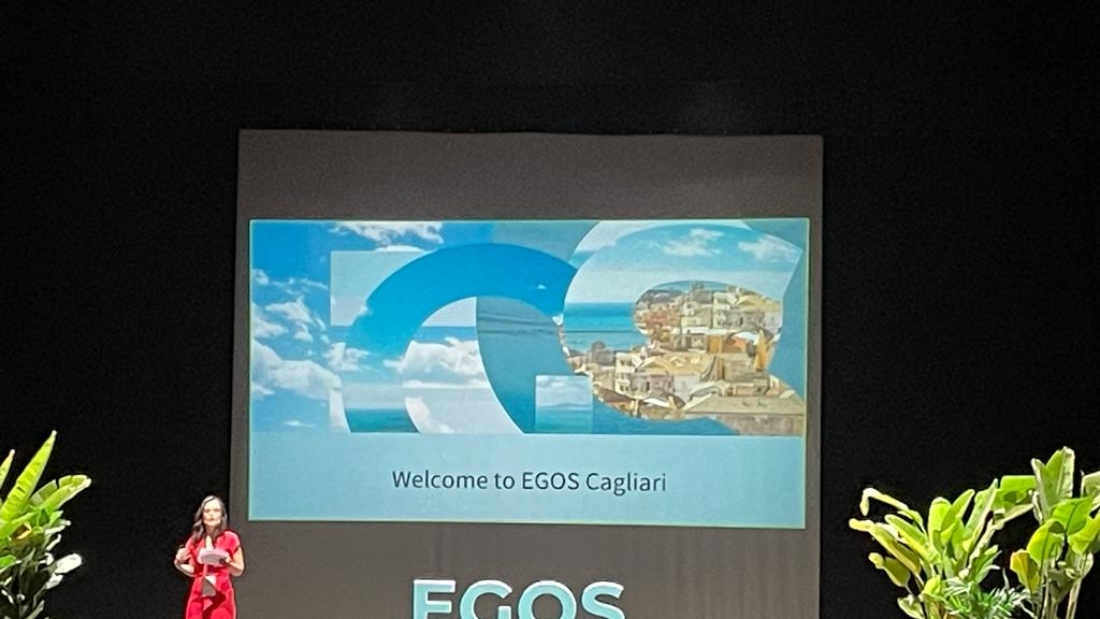
As a researcher, often summertime is conference time – this was true for me this year as well. Like some other ESRs’, I attended and presented at R&D Management Conference 2023 in Seville in June. In July I travelled again, this time to Cagliari, Italy to attend and present at the EGOS Colloquium 2023. In addition, I got a spot at the EGOS PhD Colloquium, which is a one-day event before the conference itself. In the following blog post, I will share some insights from my time there – EGOS is indeed a really good conference and the research there is so amazing and high quality, I can totally recommend going!
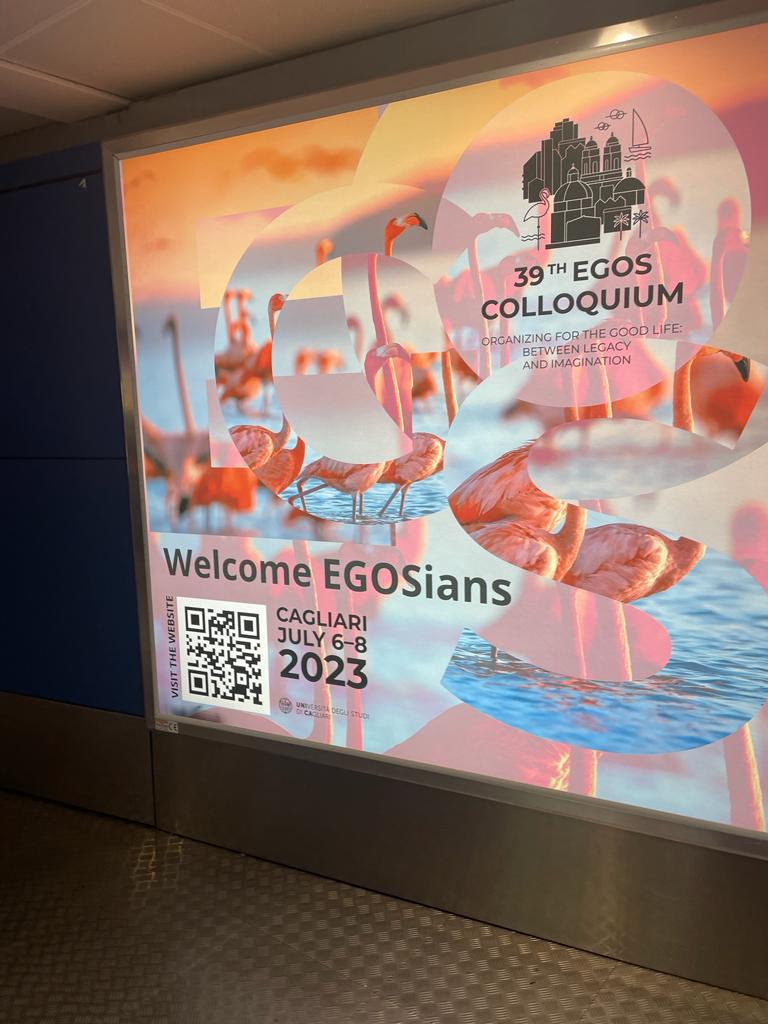
Poster at Cagliari airport welcoming all EGOSians (picture taken by C. Leeb).
The EGOS PhD Colloquium
PhD Colloquia are an excellent opportunity for any PhD student and I highly recommend attending one or several! This year I attended the one from R&D Management and the one from EGOS. Jess already wrote an insightful summary of the PhD Colloquium with R&D, and I thought it could be useful to share how the EGOS one looks like.
It was a one-day event before the main conference and we heard some talks by senior scholars about writing theory papers, the art of reviewing, and insights on how to publish in Organization Studies. In addition, the EGOS PhD Colloquium consists of small table rounds of a few students and one senior researcher. Each student submits a thesis proposal which is then being discussed in these smaller groups. This way you get to meet fellow PhD students from around the world, as well as brilliant researchers from various fields within organisational studies.
Even though it can be daunting to share your thoughts, especially as everybody is doing such great work, it is a great opportunity! This part was extremely productive and useful for me – I learned so much and got very valuable tips from the other PhDs and my facilitator. In addition, you already get to meet other people you will see again at the main conference!
In general, I would recommend doing PhD Colloquia as early as possible in your PhD – it sometimes is a bit hard to be ready for these in your first year. At the EGOS colloquium, I felt like most people were in their 3rdyear of PhD (also depending on the PhD system of their home country), so it is for more “advanced” PhDs.
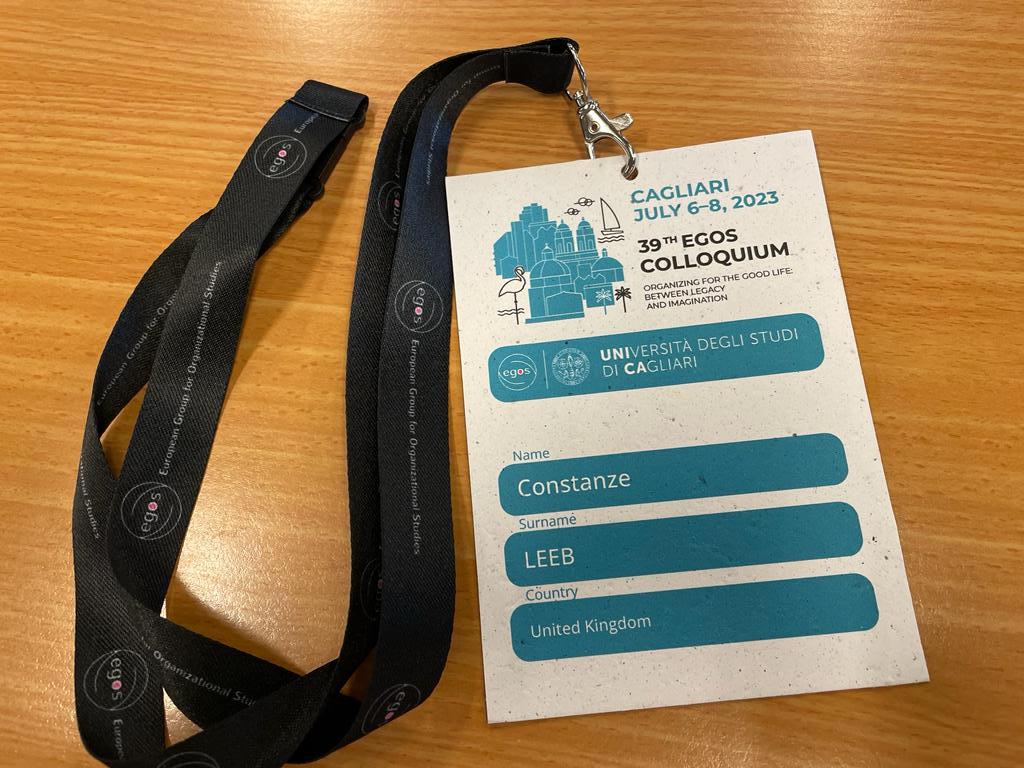
Sustainable conference badge, which can be planted! (picture taken by C.Leeb).
The main EGOS colloquium
Don’t get confused – the main EGOS colloquium is the name of the conference, and it is really a big conference! We were spread out in 3 different locations across the city, and I heard from others that it really was a conference with thousands of people.
Something really great about EGOS is that they are trying to be as sustainable as possible. One example is their conference badges (see picture)!
What is specific for EGOS is that they have a track-based system. That means that you submit your work to one specific track and if you get selected to present, you are asked to attend all sessions in this track throughout the conference. This way, they are trying to build a community around a topic – which is really nice! I presented in the track “Professions in an Age of Intelligent Technologies”.
It was such an amazing experience for me to join this as such a junior researcher. In my track, there were so many excellent researchers, whose papers I had read in top journals – just incredible! The feedback I got was so useful and of excellent quality. Many of the attendees had read my paper and were really trying to give useful feedback to help me progress further. In addition, every single presentation in my track was interesting to listen to and the topic was relevant to my research – incredible!
Of course, this can also be intimidating, and it is normal to start questioning what you do, etc. – but courage, it is part of the PhD journey (what I have been told from senior researchers) and it’s just an amazing opportunity to connect with great scholars from your field!
At EGOS I did not know many people. Alejandra was there as well, which was really nice for some social events, and also another friend that I met at my placement at RMIT Australia was there. However, as noted above, the conference is really big, which meant that I did not meet them during coffee breaks and was alone – something daunting as well! As in most conferences, people travel with colleagues or have their community already, so it can feel a bit lonely and overwhelming. But, don’t be afraid – you will meet people that you can have a chat with or you can just approach new people to make some small talk. Or, what happened to me, is you meet somebody who is really well connected and who introduces you (in person or via e-mail) to other scholars. And don’t forget: it’s also totally ok to take breaks from socialising now and then, conferences are exhausting!
Even though it was harder to meet people at EGOS than it was at R&D (where I already knew many people through EINST4INE, especially more senior scholars), I still met a few new people who do similar things to me, some of whom I will also try to visit when I pass by their university.
As a summary: EGOS is an amazing and excellent conference. It was daunting, exciting and brought me invaluable and extremely helpful insights into my research – I can only recommend everybody to attend EGOS if you get a chance to!
Here, I refer to AI as any ‘intelligent’ system, mainly embodied but also virtual, that allows the automation of tasks with minimum or no human intervention in uncontrolled social environments. The type of AI that is or might be clearly displacing humans in some tasks at work. While some suggest that AI could stimulate economic development and create new jobs, others fear that it may devastate the economy [1]. Work is a very important part of our life, mainly because we spent most of our lifetime working but also because it is one of the main sources of meaning in life [2] and is considered a fundamental human need [3]. Through our day-to-day work, we can achieve things that will make us feel fulfilled and complete.
Then, what if AI takes that opportunity away from us?
For example, healthcare is a very vulnerable setting where AI can step in. Handing over activities that healthcare workers find meaningful to embodied AI technologies such as robots can lead to a loss of meaningfulness in their lives [2]. A nurse could find herself or himself asking “How to connect with patients if there is an intelligent robot taking care of them instead of me?” or “How am I going to be able to contribute to the patient’s well-being if this robot is doing what I used to do before?”. AI may represent a threat to meaningful work because tasks that were meaningful for them are not part of their routine anymore, however, there is another possibility: intelligent robots being an opportunity for meaningful work [4]. In that case, the nurse could be thinking “These robots are helping me with some tasks that I actually liked, but, in the end, it benefits the patients and that makes me feel good. Also, I have more time to focus on other meaningful activities”. As Sven Nyholm and Markus Rüther [2] put it, if AI systems take over activities that we find meaningful, then we have to find other meaningful activities or, otherwise, we will have a meaningfulness gap. According to the authors, the other option is that AI displaces humans only on mundane tasks. For this, it is necessary that AI technologies can take over these less meaningful activities without interfering with the activities that we consider meaningful [2].
Co-designing interactions for meaningful work with AI.
As we can see, there are many possible scenarios and “what if’s” for the many ways in which humans may feel about the automation of work. However, I believe that a design approach can help to give more certainty and direction to promote meaningful work. Design can be seen and defined from different perspectives; here, I talk about design as a process arrangement or rearrangement of elements in the best possible way to solve a problem. Thus, when I propose co-designing interactions, I refer to a collaborative organization and reorganization of the elements that form human-robot interactions. What are these elements? the features of the AI systems, the humans involved, the bystanders, the physical space, the role of the interactants, and the allocated tasks [5]. This list is not exhaustive, but it is a good start.
I think that interdisciplinarity may be key in navigating the ‘meaningful work with AI’ challenge. AI systems’ design, development, roles, and task allocation could be done by a group that involves or at least represents all stakeholders. Having a discussion on what tasks are meaningful, what tasks to automate, and how to balance the trade-offs can allow AI designers and developers to test their assumptions on what they thought could work in real life [1], and thus automate work in a dynamic and democratic way. The dynamism is based on the fact that many iterations and sessions with dialogue and negotiations have to be constant as part of a holistic process [6]. Meaningful work is a complex concept that most people may find difficult to define or understand if and how their own work is meaningful. Thinking about meaningful work invites self-reflection, so I think designing AI systems with meaningful work in mind is not an easy task, but it is relevant if we want a sustainable use of AI at work.
Is co-designing robotized interactions an ethical or an organizational endeavor?
We need mindful task allocation that considers the meaningfulness of work. But, who decides what tasks should be assigned to AI systems? Is it an ethical or an organizational discussion? I think it is both. Ethics can provide a list of the general criteria we should base our decisions on how to design human-robot interactions. For example, general criteria for good care involve a relevant amount of human contact [7]. Therefore, when assigning tasks between robots and healthcare workers we need to make sure that the workers have enough human contact, and for that, we need to consult them and not just assume that people from management know the answer.
Ethical discussions will allow us to design a more human work. We don’t need AI technologies to be the ones designing our work for us with systems that can predict and manage workflows for the sake of efficiency. As Kate Crawford [8] puts it, “Rather than representing a radical shift from established forms of work, the encroachment of AI into the workplace should properly be understood as a return to older practices of industrial labor exploitation established in the 1890s and early 20th century”. Indeed, research has shown that when work is designed only to improve efficiency, there is a decrease in satisfaction, but when both efficiency and satisfaction are considered, the tradeoffs are avoided [9]. This is why we need humans behind the redesign of work. Humans need to be engaged in the co-creation of meaning to feel that our lives are valuable [3].
References
[1] A. Rojas and A. Tuomi, “Reimagining the sustainable social development of AI for the service sector: the role of startups,” JEET, vol. 2, no. 1, pp. 39–54, Nov. 2022, doi: 10.1108/JEET-03-2022-0005.
[2] S. Nyholm and M. Rüther, “Meaning in Life in AI Ethics—Some Trends and Perspectives,” Philos. Technol., vol. 36, no. 2, p. 20, Jun. 2023, doi: 10.1007/s13347-023-00620-z.
[3] R. Yeoman, “Conceptualising Meaningful Work as a Fundamental Human Need,” J Bus Ethics, vol. 125, no. 2, pp. 235–251, Dec. 2014, doi: 10.1007/s10551-013-1894-9.
[4] J. Smids, S. Nyholm, and H. Berkers, “Robots in the Workplace: a Threat to—or Opportunity for—Meaningful Work?,” Philos. Technol., vol. 33, no. 3, pp. 503–522, Sep. 2020, doi: 10.1007/s13347-019-00377-4.
[5] K. Fischer et al., “Integrative Social Robotics Hands-on,” IS, vol. 21, no. 1, pp. 145–185, Jan. 2020, doi: 10.1075/is.18058.fis.
[6] R. V. Zicari et al., “Co-Design of a Trustworthy AI System in Healthcare: Deep Learning Based Skin Lesion Classifier,” Front. Hum. Dyn., vol. 3, p. 688152, Jul. 2021, doi: 10.3389/fhumd.2021.688152.
[7] M. Coeckelbergh, Robot ethics. Cambridge, Massachettes: The MIT Press, 2022.
[8] K. Crawford, Atlas of AI: power, politics, and the planetary costs of artificial intelligence. New Haven: Yale University Press, 2021.
[9] F. P. Morgeson and M. A. Campion, “Minimizing Tradeoffs When Redesigning Work: Evidence from a Longitudinal Quasi-Experiment,” Personnel Psychology, vol. 55, no. 3, pp. 589–612, Sep. 2002, doi: 10.1111/j.1744-6570.2002.tb00122.x.
Originally published at: https://www.alejandrarojasblog.com/codesigning-interactions-for-meaningful-work
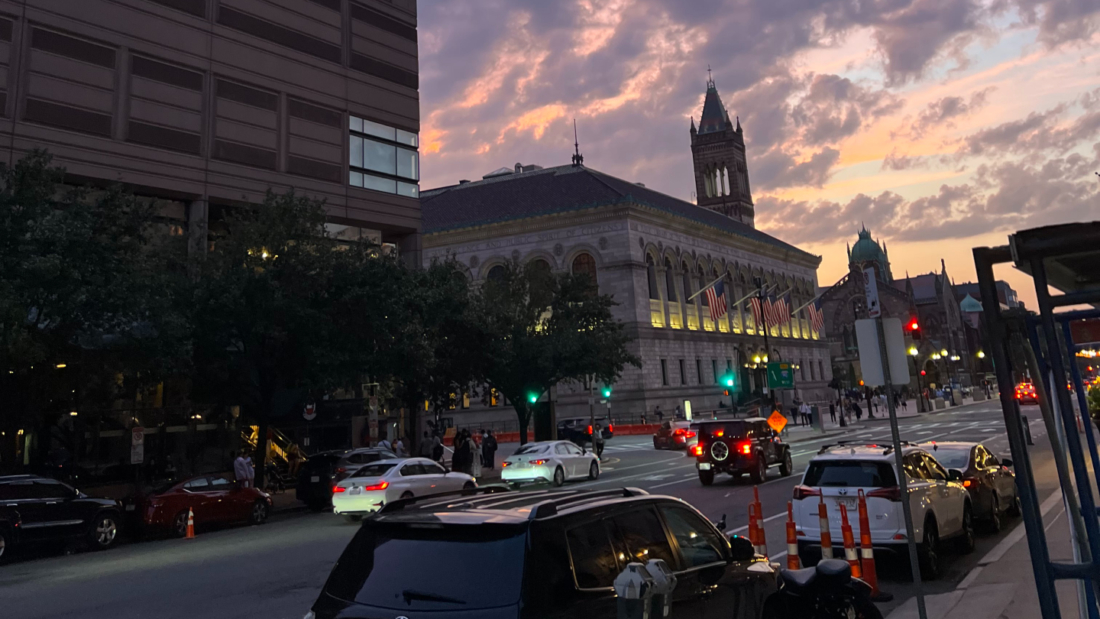
The faint hum of discussion, the air imbued with intellectual verve, and Boston’s ever-endearing charm as the backdrop: this year’s Annual Meeting of the Academy of Management (AoM) was nothing short of enlightening.
A Beacon of Knowledge in Boston
With the banner “Putting the Worker Front and Center,” the 83rd Annual Meeting brought the academic world alive in the heart of Boston, a city recognized globally for its synergy of historic charm and intellectual prowess. The AoM’s return to Boston was a significant affair, given its reputation as the most highly attended location in previous years. Over 10,000 attendees from diverse corners of the globe congregated, epitomizing Boston’s allure as an international hotspot for research and learning.
This year’s conference was a veritable smorgasbord of academic feasting. From over 1,500 in-person sessions to the inaugural Annual Meeting Opening Reception, where attendees could engage with AoM’s past and present leaders. Notably, a cutting-edge online platform facilitated interactions, allowing participants to review the program, coordinate schedules, and immerse in spirited discussions.
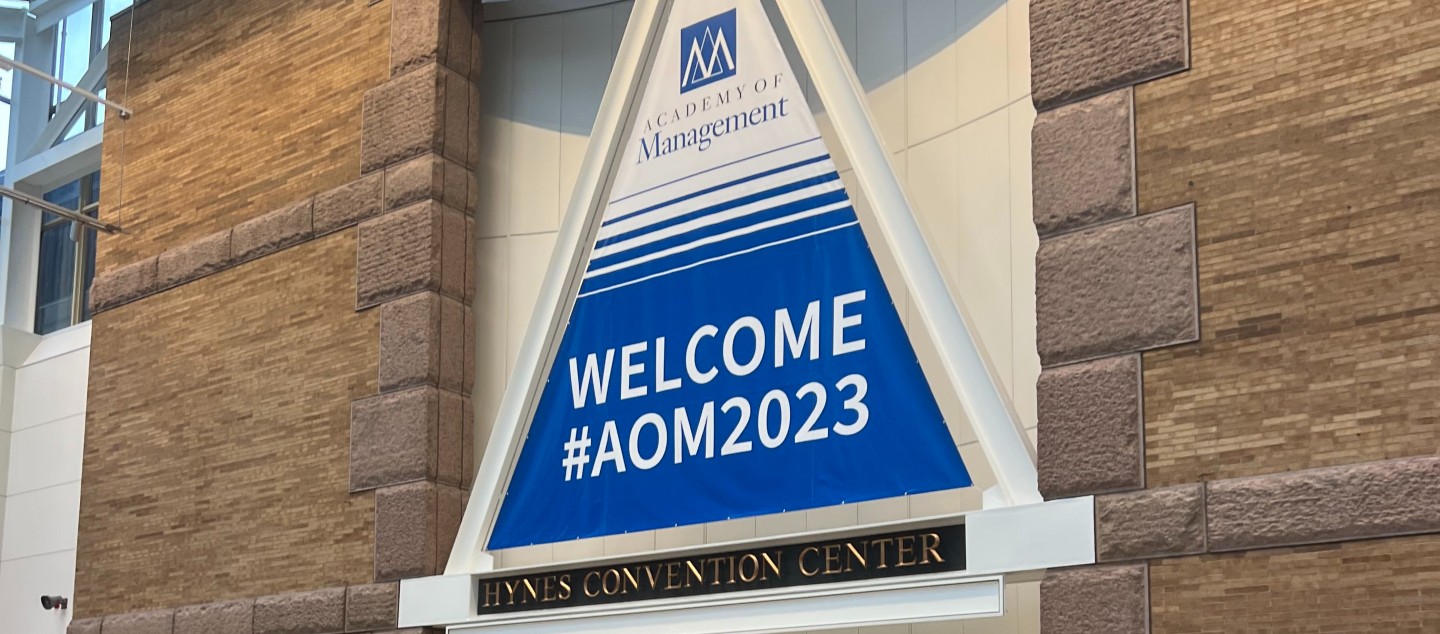
AoM23 Welcome Sign. Source: own photo.
A Day at the Doctoral Consortium
Among the variety of events, one that significantly resonated with my academic pursuits was the Doctoral Consortium at the Boston Hynes Convention Center. This event holds a unique significance, bridging doctoral students from across the world, facilitating discussions on a myriad of topics and workshops tailored to mold the academic leaders of tomorrow.
The day began with the scent of freshly brewed coffee and a light breakfast, providing an informal ambience for attendees to mingle. As the hours unfolded, the consortium delved into a range of sessions: from crafting job talks to understanding the emotional and mental nuances of transitioning to faculty roles. One particularly poignant segment was the Keynote Speech by Rajshree Agarwal on “Fostering your own enterprise.” Her insights, combined with the wisdom imparted by various faculty panels, made the consortium an enriching experience.
The lunchtime roundtable on research pitches was particularly close to my heart. It was here I had the opportunity to present my project, focused on understanding the interaction models of collaborative robots in organizations. The feedback from peers and mentors was invaluable, aligning with my objectives, such as exploring technology acceptance and its overarching impact on organizational performance. This consortium, coupled with the insights and critiques I received, has been instrumental in steering my research of collaborative human-robot interaction towards a clearer goal.
As dusk approached, the consortium attendees gathered for an off-site dinner at the Back Bay Social. While enjoying Boston’s tasty food and nice atmosphere, our day’s talks easily turned into friendly chats, helping us build work friendships.
Reflecting on the Odyssey
Attending the 83rd Annual Meeting of the AoM has been more than just an academic excursion; it was a journey of personal and professional growth. The myriad discussions, panels, and networking opportunities bolstered my understanding, expanded my horizons, and solidified my passion for exploring the realms of collaborative robots in organizations.
In essence, this Boston odyssey has not just been about gaining knowledge but about making connections – with academia, peers, and the deeper nuances of my own research. As I left the city, I carried with me not just memories but a renewed zeal, ready to tackle the challenges of the 21st century related to management and organizations.
Shopping Basket
This website collects cookies to enable the proper functioning and security of the website, and help us offer you a better browsing experience. By using our website you agree we can place functional and analytical cookies on your device. Find out more about cookies and how to manage them by visiting the RMIT Privacy Statement link in the website footer. If you're happy to continue, please press accept. You can opt-out if you wish but this may affect how the website functions. Cookie settingsACCEPT
Privacy and Cookies Policy
Privacy Overview
This website uses cookies to improve your experience while you navigate through the website. Out of these cookies, the cookies that are categorized as necessary are stored on your browser as they are essential for the working of basic functionalities of the website. We also use third-party cookies that help us analyze and understand how you use this website. These cookies will be stored in your browser only with your consent. You also have the option to opt-out of these cookies. But opting out of some of these cookies may have an effect on your browsing experience.
Necessary cookies are absolutely essential for the website to function properly. This category only includes cookies that ensures basic functionalities and security features of the website. These cookies do not store any personal information.
Any cookies that may not be particularly necessary for the website to function and is used specifically to collect user personal data via analytics, ads, other embedded contents are termed as non-necessary cookies. It is mandatory to procure user consent prior to running these cookies on your website.