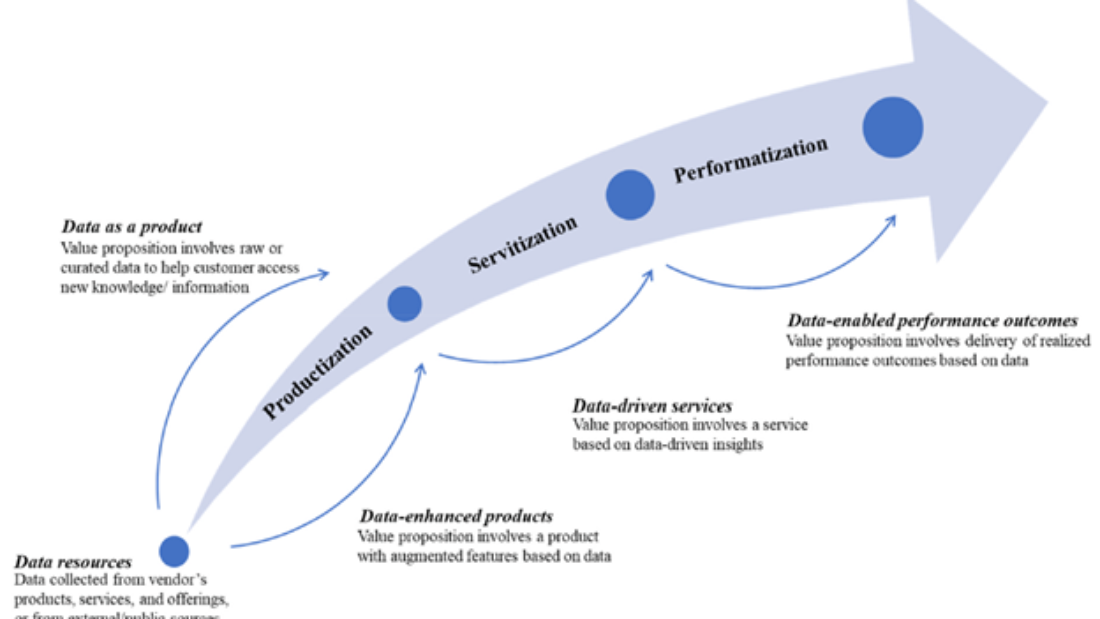
Data-driven value proposition continuum (Source: Ritala et al., 2023)

Selling and monetizing data in B2B markets

This blog post is based on the findings of our research article, openly accessible and freely available here: https://doi.org/10.1016/j.technovation.2023.102935

What is data monetization?

Data monetization refers to the process of capturing monetary value from data by generating revenue through selling data, data-based products, and data-based services. It involves converting the intangible value of data into tangible financial returns.
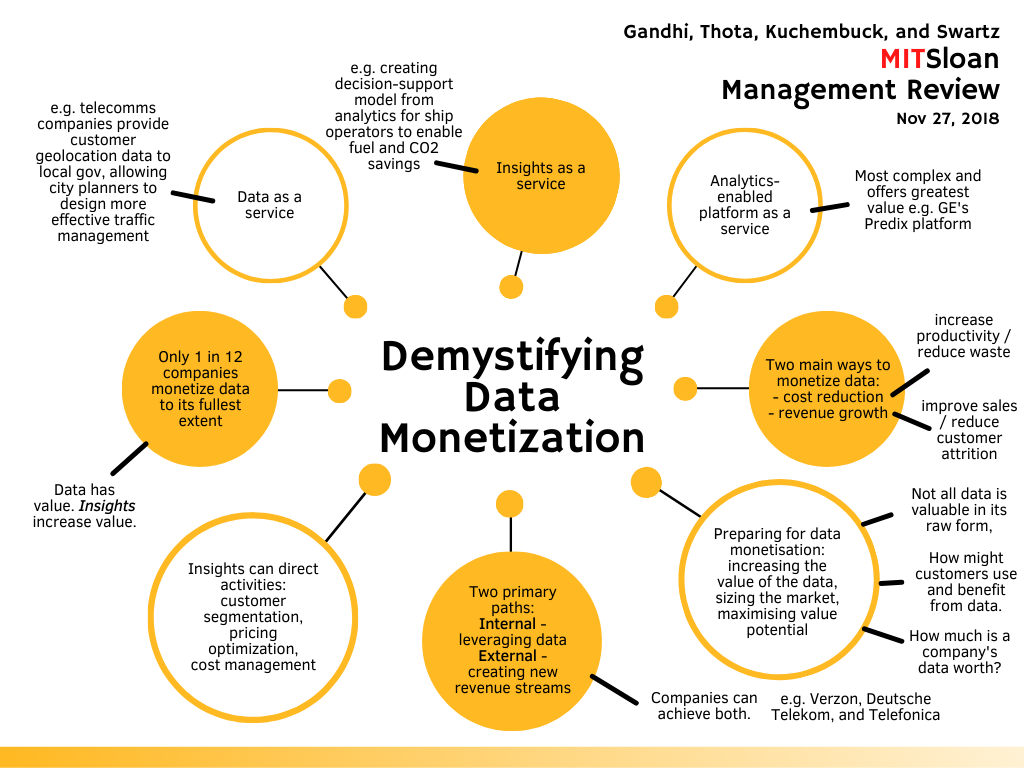
Summary of ‘Demystifying Data Monetization’ (Gandhi et al., 2018). Created by author.

I was actually very new to this topic when I started this project, so as a fun way to get into the literature I generated a few visuals to help concretize the key learnings and takeaway. I share them here (above and below) to help give a snapshot of some of the foundational reading. At this time, I was lucky enough to gain the experienced wisdom from my co-authors, who publish works in this area such as ‘Three Ways to Sell Value in B2B Markets‘ (Keränen et al., 2021) and ‘Growth Reinvented: Turn your data and artificial intelligence into money‘ (Ruokonen, 2020).
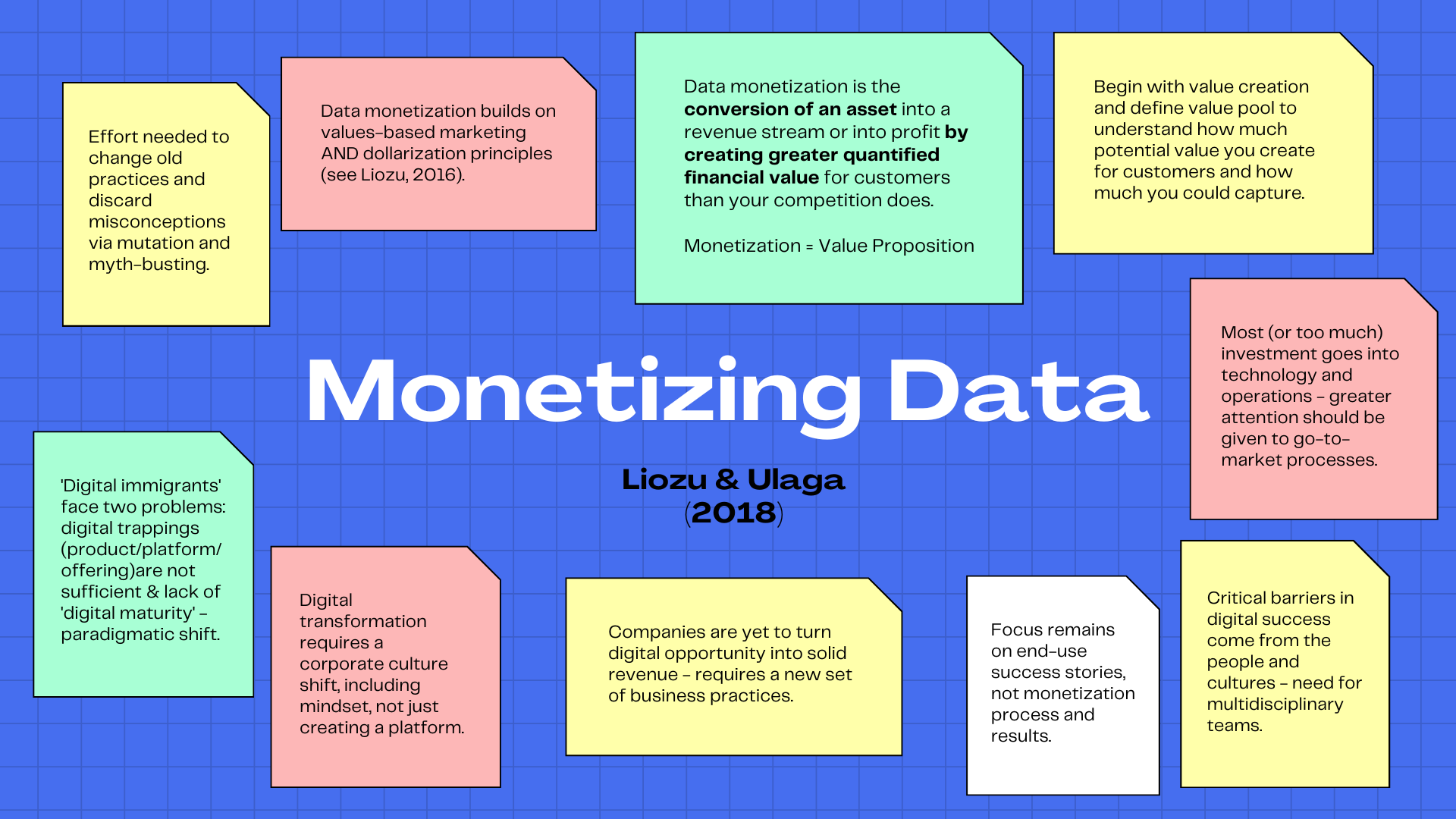
Summary of ‘Monetizing Data’ (Liozu & Ulaga, 2018). Created by author.

Data monetization is crucial for organizations as it presents opportunities to create new revenue streams, drive innovation, enhance competitiveness, and unlock the full potential of data assets which can also contribute to environmental and social benefits. Despite the increasing trend towards data-driven offerings, many B2B firms face difficulties in effectively selling and monetizing their data.

How can data be monetized – what did we find?

We studied data-driven value propositions by 14 B2B companies, including ABB Group, Hilti Group, Kemira, Eagle Alpha, Kyndryl, Metso Outotec, Jakamo, and many others. Accumulating evidence from some of the authors’ previous work, the literature, and predominantly the interviews we conducted with key informants from our case companies, we were able to identify four different data-driven value propositions that B2B firms can use to sell and monetize data-driven offerings. These are:

  1. Data as a product – where raw or processed data is sold or shared with customers as a stand-alone offering. In this model, vendors typically sell their own data or data collected from public domains or other companies.
  2. Data-enhanced products – where existing product offerings are enhanced with data-driven features and functionalities. In this model, vendors embed for instance smart sensors, software, and IoT applications into physical products to collect, analyze, and monitor data on how customers use their products.
  3. Data-driven services – where vendors use accumulated data to analyze, predict, and optimize customers’ processes. In this model, vendors sell intangible insights and know-how through consulting services.
  4. Data-enabled performance outcomes where vendors combine data-enhanced products and data-driven services to deliver complete smart solutions that guarantee specific performance outcomes. In this model, vendors take responsibility for specific processes on behalf of their customers and sell measurable and guaranteed performance, capacity, or availability outcomes.

Each of these value propositions has its unique characteristics, capabilities, and challenges, and the study provides insights into how firms can transition between them and develop their data-driven offerings (see Table 2 in the paper).

These four propositions are not a step-by-step progression, as a firm can choose to develop one or more of these propositions and expand in either direction that suits the firm’s capabilities, resources, and goals at any given time. Although, it can be said there is a higher investment of resources and increasing complexity and challenges as you progress from 1 to 4 of the labelled propositions above.

We developed a continuum to visualize how firms often navigate between these different value propositions.
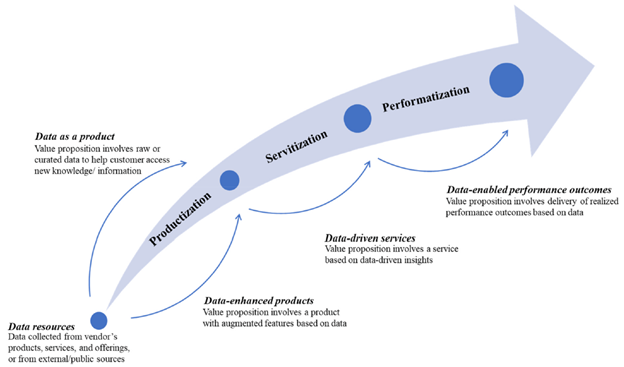
Data-driven value proposition continuum (Source: Ritala et al., 2023)

For example, Telia told us about their data-driven services such as Crowd Insights, where for instance they work with cities to support decision-making and planning for a more efficient and optimized city. Using aggregated mobile data (meaning it is anonymized and cannot be traced to the individual) the city can understand the movements of people to better organise road traffic and general services such as events. This innovation allows Telia to make use of their otherwise untapped data and open additional revenue streams, while creating both social and environmental benefits with better traffic flow and less crowding.

As another example, at Johnson & Johnson MedTech they design healthcare solutions that are smarter, less invasive, and more personalized. They told us about how they monetize data via their smart product  and technologies (data-enabled products). Ultimately, the goal is to make surgery safer and to reduce complications. Additionally, with data-enabled performance outcomes such as their Surgical Process Manager, they are able to standardize processes better which reduces errors and thus reduces complications in surgery.

Key implications for managers

We suggest that firms need to carefully develop and pilot new data-driven value propositions with their customers.

  • During this process, they should engage in organizational up-skilling, especially in terms of acquiring and developing new capabilities related to data collection and analysis, tech architecture, commercialization, sales, and marketing.
  • While the softer sales and marketing capabilities needed to understand and communicate the value of data-driven value propositions are often possible to learn and (re)train in-house, the more complex technical capabilities related to data collection, analysis, and interpretation usually need to be acquired externally through hiring or partnering with other firms.
  • It’s also important for firms to consider strategically how and to what extent they can monetize the data they can access and to address challenges with customer or industry maturity in terms of accepting and using novel data-driven solutions, which often require extra effort from suppliers to educate and shape those markets.

Our research article is openly accessible and freely available here: https://doi.org/10.1016/j.technovation.2023.102935

References:

Gandhi, S., Thota, B., Kuchembuck, R., Swartz, J., 2018. Demystifying Data Monetization. https://sloanreview.mit.edu/article/demystifying-data-monetization/

Keränen, J., Terho, H. and Saurama, A., 2021. Three ways to sell value in B2B markets. MIT Sloan Management Review, 63(1).

Liozu, S., Ulaga, W., 2018. Monetizing Data: A Practical Roadmap for Framing, Pricing & Selling Your B2B Digital Offers. Value Innoruption Advisors Publishing.

Ritala, P., Keränen, J., Fishburn, J. and Ruokonen, M., 2024. Selling and monetizing data in B2B markets: Four data-driven value propositions. Technovation, 130, p.102935.

Ruokonen, M. 2020. Growth Reinvetned: How to turn your data and artificial intelligence into money. Independently published.
Enabling Technologies Workshop

Demystifying the academic career

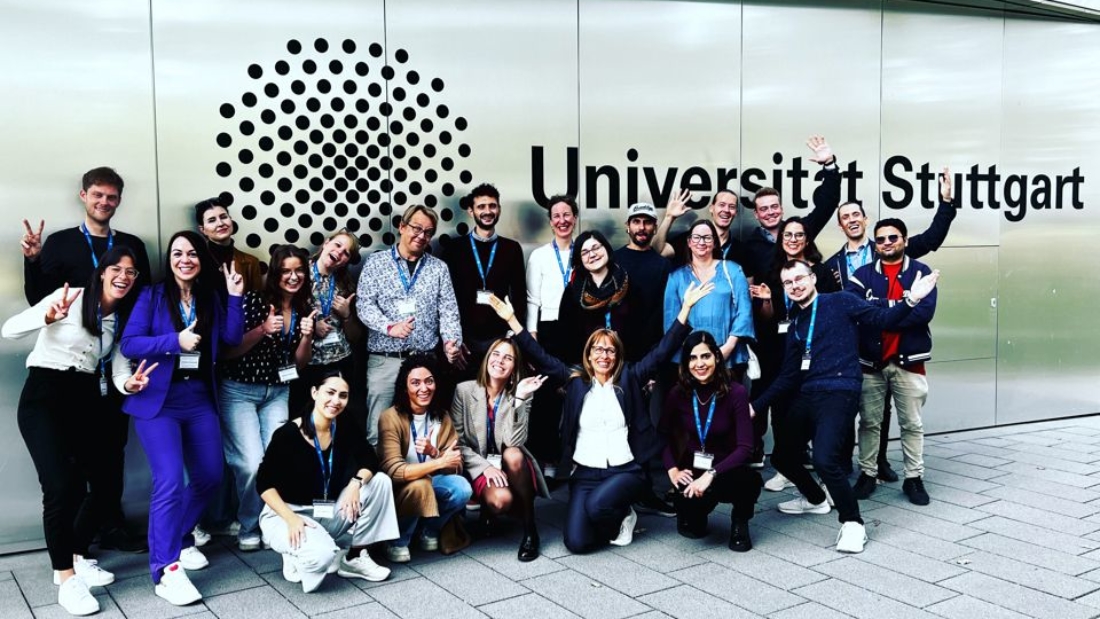
The EINST4INE network recently all met in Germany for our ‘Enabling Technologies Workshop’ hosted by the ENI team at the University of Stuttgart. As I reach the end of my second year of doctoral studies, I find myself mulling over career options post-PhD. The final session of this workshop gave us the opportunity to hear from highly successful academics (thank you to our energetic and passionate guest Christina Theodoraki for candidly sharing her career journey) and a safe space to ask many pending academic career questions to our experienced seniors. Here are some of my key takeaways and reflections:

A career in academia can be scary…

Firstly, I often already get asked “what do you actually do?” or “when you are getting a real job? Are you going to be a student forever?” to which I often laugh and even agree. If I can’t even explain what I do, how do I expect anyone to understand it? Perhaps I am on a path of being an eternal student, so what ‘value’ does that bring to the ‘real world’? This is difficult to justify. For some entertaining consolement on this issue, you can read De Vaujany’s (2016) expression of trying to answer what a management researcher does at a dinner party.

Secondly, even if you have figured out how to articulate what you do, you also have to believe it yourself. Many people in general suffer from imposter syndrome, but especially so in academia where we are trying to push the boundaries of knowledge, experiencing feelings of self-doubt regarding our intellect and abilities which is very challenging to overcome. Bothello and Roulet (2019) wrote a provoking essay in Journal of Management Studies, which outlines imposter syndrome in academic life, particularly for PhD students considering a career in management academia, that I recommend anyone in this position to read.

Thirdly, I am sure anyone reading this is familiar with the “publish or perish” culture. Particularly as a PhD student, even more so if publishing is a requirement of your PhD, this culture can feel overwhelming. Not only are we expected to publish, but to publish in highly ranked journals that can take years to develop, in order to advance one’s career. Even once you manage it, you’re then expected to do it more. Working in academia, you can easily fall victim to defining your worth through your h-index or publication output which seldom has positive outcomes, particularly for your mental health.

But it can also be exciting…

Firstly, as scientists, it is our job and our privilege to understand how the world works. Prompted by some wisdom from Calogero Oddo, us junior researchers realised that instead of talking about what we have done, we should perhaps focus on the how and the why. For a number of reasons, we tend to make a habit of reporting the quantitative metrics and measures e.g., I published in X journal, I attended Y conferences, as opposed to reporting on the science we are creating – those valuable insights that will help to push our field(s). I feel like sometimes I forget that I am working in such an exciting domain, and while I am not inventing any breakthrough concept, I am contributing knowledge and understanding to our collective discoveries.

Secondly, while I often get frustrated with the focus on pushing out publications rather than a focus on slow exploration and deep learning, reflecting with peers in industry and often those that completed a PhD themselves, it seems I can still be grateful that in academia we are spending time on questioning the why rather than pushing on with how and doing (sometimes before thinking). Both are vital, but it seems for those with curious minds then academia allows you to play and explore and question which is a wonderful thing.

Thirdly, since this line of work often includes international collaboration with a broad range of people (other scholars, organisations, institutions) we have so many exciting opportunities to explore the world to help understand it and ourselves. It might not be for everyone, and I am also acutely aware of the privileges in the ability to travel and attend conferences both personally and institutionally, but typically a career in academia opens you up to many experiences abroad whether it be through travel or through your colleagues and their diverse backgrounds.

Becoming a researcher or a scholar

A reflective moment I had as a result of some conversations during this workshop was that the terms “researcher” and “scholar” are often used interchangeably, but they can have slightly different connotations. A researcher is primarily focused on the systematic investigation of questions, problems, or phenomena to generate new knowledge, while a scholar is someone deeply engaged in the broader intellectual life of a field, which may include research, teaching, writing, and contributing to the academic community. While you can be both a researcher and a scholar, it is perhaps not often that you have the opportunity to be “scholarly” when you are working outside of academia.

Bottom line – you can make it your own and there are always choices.

There are many different pathways in an academic career, which even differentiates further depending on the country and institution you are based at. In light of this, in the final years of my PhD I will try to focus on:

  • Engaging with different types of scholars and researchers to uncover the more ‘unknown’ or less obvious pathways,
  • Understand what is meaningful to me without all the external pressures, topic hype, and noise,
  • Determine what is realistic for me and which sacrifices I am willing to take or not take (which may look very different to others),
  • Reflect on what my definition of success is,
  • And consider what kind of impact I would like to make (on myself, colleagues, project partners, and even society more generally).

References:

Bothello, J., & Roulet, T. J. (2019). The imposter syndrome, or the mis-representation of self in academic life. Journal of Management Studies, 56(4), 854-861.

de Vaujany, F.-X. (2016). ‘The dinner: How can we explain management research just before dessert?’. Management, 19, 330–334.

Source: Own image.

R&D Management Conference Doctoral Colloquium: here’s what to expect

Attending a Doctoral Colloquium can be an exciting and valuable experience for doctoral students at all stages in their journey. I was lucky enough to be accepted to this year’s R&D Management conference and Doctoral Colloquium, held in the beautiful (and very hot) Sevilla. This was my first time attending a colloquium so I thought I would share my experiences to help other first-time goers or those that are simply interested to learn more about the experience.

The colloquium typically provides a platform for doctoral candidates to present themselves and their ongoing research work, receive feedback, and interact with experienced researchers and scholars in our field. Here are my key takeaways:

Research is MEsearch:

Alberto Di Minin (Co-Editor in Chief of R&D Management Journal) energetically opened the colloquium with a ‘Start with Why’ exercise (if you are familiar with Simon Sinek’s work). As an icebreaker and to introduce ourselves, we all shared the ‘why’ of our research, before explaining the ‘what’ and the ‘how’. This was a meaningful reminder of how research is really MEsearch which we don’t often acknowledge – you are the one invested in your topic, you are carrying out the research, you are producing the results. It is important we remind ourselves why we are doing this and continue to engage with that in order to power on and in creating connections with others.


Presentation of Research:

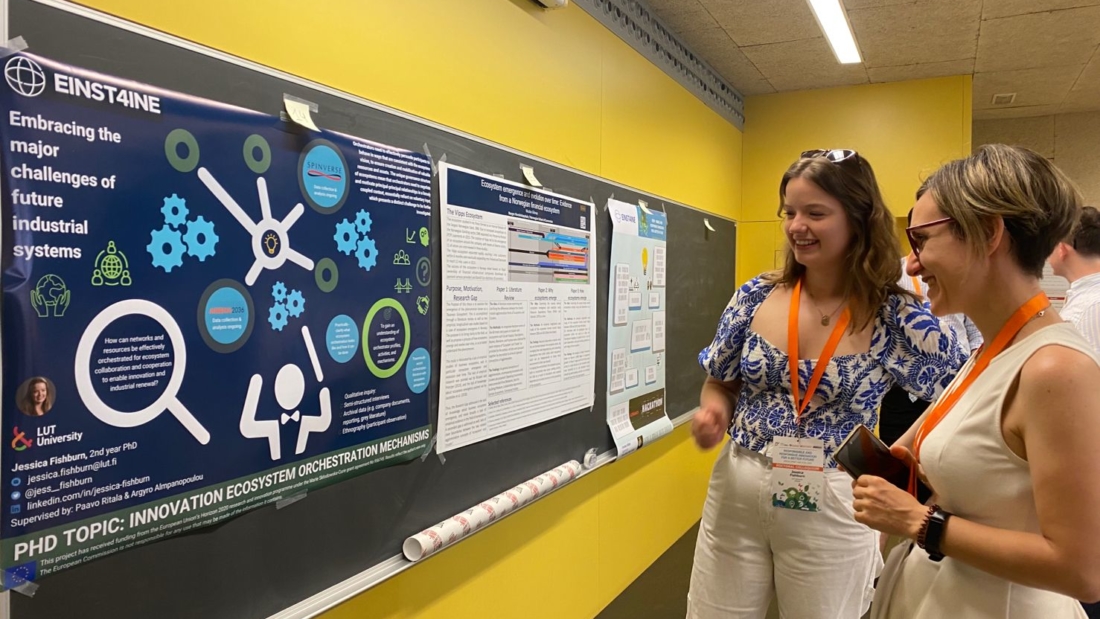
As a participant, we had the opportunity to present our doctoral research projects in the form of a poster presentation. It was interesting to see the range of posters presented, from the traditional academic poster format to more visual and creative ones. Honestly, I felt a little self-conscious displaying my work on a giant A0 sheet for everyone to poke at, but this became a very fruitful exercise both for myself and I hope for those interested in my work. In the preparations I stressed over what and how I should present, but in the end I learnt it is most important to understand what YOU would like to get from the interaction and let your poster follow that principle, no matter how others have approached the task.


Networking Opportunities:

The colloquium allows you to connect with other doctoral students and researchers who share similar interests in R&D management and wider management topics. Networking is an essential aspect of academic conferences, as it opens doors for potential collaborations and research partnerships in the future. However, what is perhaps some unspoken law about conferences that is maybe unknown to new PhD students (at least it was to me) is how social these events are. The majority of networking, and deeper connections, happen outside of the conference centre and instead in the bars, tours, dinners, etc. Having these bonding moments and community building activities are essential, so while these are very long and tiring days, I would urge all students to make the most of these additional activities where possible and be open to getting involved.


Mentorship and Guidance:

Expect to receive insights, suggestions, and critiques from both fellow doctoral students and established researchers. This feedback can be invaluable in refining your research approach and identifying potential areas for improvement, particularly gaining insights from outside of your usual mentorship. We were honoured to benefit from the expertise and wisdom of Petra C. de Weerd-Nederhof, Lucia Naldi, Wim Vanhaverbeke, Anne Ter-Wal, Bart Van Looy, Shanthi Gopalakrishnan, Andrea Piccaluga, Leticia Pérez-Calero, and Jeremy Klein.


Exposure to Current Trends:

We can often get stuck in our narrow little holes as PhD students focussing hard on our topics. While sometimes I find it overwhelming to become distracted by so many new ideas and inputs, you never know when a piece of advice, literature suggestion, new connection, etc. may become fundamental to your work. Since R&D Management conference attracts the leading experts and top students in the field, the colloquium can expose you to the latest trends and emerging areas of interest in R&D management.


Practice in Academic Communication:

Presenting at the colloquium allows you to refine your academic communication skills, including attempting to deliver clear research ideas, responding to questions, and engaging with an audience. When working with experts who have 10s of years experience in these fields, I often still feel that I know nothing about my topic. Having to communicate my research, respond to questions, and share the observations I am making surprisingly gave me some ‘uh-huh’ moments where I realised, perhaps sometimes I do know what I am talking about. Similarly, being asked questions opened up new avenues even in my own mind about what should be clarified and what is most interesting to answer – which is key to making impact with your work!

Community Building:

As mentioned above regarding networking, one of the biggest takeaways was the social aspect that I did not expect. Being able to connect with other doctoral students in your field and share some of the trials and tribulations of this journey with them is a very cathartic and underrated activity. Particularly since this is a small and select group (approx. 40 students accepted) means that you do have the opportunity to get to know most of the students over the 2 days and, even better, you then have some familiar faces to say hello to during the conference. Of course, I hope that all doctoral students also have a great community at their home institution, but having this community extended across borders is all the more valuable. For future collaboration, or future complaining, as you wish!


Overall, remember to come prepared with energy and intention and don’t be shy to receiving constructive criticism. This is an excellent chance to gain valuable insights into your work and build connections within the academic community, so don’t forget to follow-up afterwards too. Enjoy the experience and make the most out of this unique opportunity!

Credit: Ulia Koltyrina / Adobe Stock

Is it useful to distinguish between theory and theorize?

During my recent secondment in Germany with University of Stuttgart and ARENA2036, I had the honour to participate in a 3-day seminar ‘On Theorizing’ by Professor José López from University of Ottawa. This provided me the opportunity to reflect on a fundamental element of science – theory building. As researchers we are consistently asked to consider our theoretical contribution, to justify what theories we are using, to understand complex theories, and how we are building upon this. It dawned on me as an early-stage researcher, we are never really explicitly told how to do all of these things. We are aware this is crucial, but the ways in which we can do this are not clear.


What exactly is ‘theory’? And how do you ‘theorize’?


Distinguishing between theory and theorizing was a key takeaway for me. Perhaps this comes from imposter syndrome to an extent, but I always considered that creating ‘theory’ was for the grand theorists and thought leaders of our generation and those before us. Therefore, the rest of us simply chip away at the edges of this, either confirming or disproving these grand theories. I needed to be reminded this is only one way to think about theory and, in fact, there is always big T Theory and little t theory – both of which are as important as each other.


Theory remains abstract and ambiguous; this is largely due to the contestations on the nature of truth. Theory can be defined as a formal statement of ideas that are suggested to explain a fact, or event, or how something works. Essentially, we are trying to explain truths. When different people have different ideas on what the truth is, this gets complicated. Thus, attempting to build theory becomes even more complex.


Putting a different perspective on this, we can think about theorizing instead. The forming of a theory seems somewhat more achievable than facing the Theory beast head on and ill-equipped. Abend (2008) suggests 8 ways in which theories can be developed from causal explanations to social interpretation. While this isn’t an exhaustive list, it is rather inclusive of various epistemological standpoints and opened my mind to more ways that theorizing can be done.


How useful is this really?


Personally, I find it useful to distinguish between theory and theorizing because the language itself infers whether it is passive (theory) or active (theorize). In addition, I feel more comfortable with the idea of theorizing as opposed to making or creating theory. While these are both simply cognitive influences, this is nonetheless important and useful if it enables researchers to engage with theory more proactively. You might disagree if you feel that it complicates the process of theory building, in which case, find whatever suits you.


Regardless, I hope it was useful to reflect on this with me. I have recommended a few readings if you would like to further your thoughts on theory and how to make your own contributions! Feel free to comment additional resources you have found useful too 😊


Recommended readings:

Abend, G. 2008. The Meaning of ‘Theory.’ Sociological Theory, 26(2), pp. 173–199. https://doi.org/10.1111/j.1467-9558.2008.00324.x

Corley, K.G. and Gioia, D.A., 2011. Building theory about theory building: what constitutes a theoretical contribution? Academy of management review, 36(1), pp.12-32. https://doi.org/10.5465/amr.2009.0486

Makadok, R., Burton, R. and Barney, J., 2018. A practical guide for making theory contributions in strategic management. Strategic Management Journal, 39(6), pp.1530-1545. https://doi.org/10.1002/smj.2789

Sutton, R. I., & Staw, B. M. 1995. What theory is not. Administrative science quarterly, 40(3), pp. 371-384. https://doi.org/10.2307/2393788

Photo by Ramon Salinero. Source: Unsplash

What is ecosystem orchestration?

Don’t ecosystems belong in nature? Isn’t orchestration to do with music? Yes and yes, but also, no 😊 as you will (hopefully) find out, these metaphors effectively provide meaning to practical and theoretical management concepts.

You might realize that academics like to use big words because of the need to convey complicated things in simple ways. Likewise, businesses like to use buzzwords to stay up-to-date with the latest talk and trends. Often, this results in terms being adopted and interpreted in many different ways where they risk losing meaning and understanding. While it is not necessarily wrong for terms to be applied in different ways, and there is beauty in this creativity, it is useful if there is an agreed consensus on what is meant.

Almost a year into my PhD on innovation ecosystem orchestration mechanisms, I still wonder myself what exactly that means. So, let’s go back to basics and unpack this. Please note: this is my perspective and developed understanding so far – subject to change and interpretation!

Starting with innovation, this essentially refers to the creation of change. The scale of this change can vary from incremental improvements to completely disrupting markets, as well as radical breakthrough change or more architectural improvements to a product/service. But, creating change for what? Innovation and innovative thinking span many contexts and provide tools suited to address challenges across the board including business, social, and environmental.

For innovation to materialise, there are clever strategies that bring together diverse set of actors (private companies, startups, government, etc.) to work together towards an aligned goal in which they can co-create shared value. This is what we call an ecosystem. This can be challenging as it relies on interdependencies – the dependence of two or more entities on each other – among these actors to make this happen.

A way to approach this is for a ‘hub firm’ to take the lead and orchestrate these activities. The role of an orchestrator is multifaceted whereby they can attract new actors to the ecosystem, facilitate resources and interactions between actors, resolve any tensions that may arise, find alignments across the ecosystem, and so on. What is unique about this management style is that it is intended to be non-hierarchical and instead focused on fostering cultures that create innovative thinking. I like to think of orchestrators as positive encouragers, empowering supporters, and uplifting influencers.

As for mechanisms to do this, I will leave you on a cliffhanger for a future blog post where I can share some results from my findings!

A short guide to academic writing

A short guide to academic writing

Academic writing is a bit like marmite – some love it and some hate it. I am one of those in the latter. It can be quite daunting, something you would rather push to some other day, but the truth is that it is an essential skill to master as a researcher.

As a PhD student, I feel it is important to develop this competency early on. Recently, I was fortunate enough to attend a two-day intensive workshop on the ‘Basics of Academic Writing’ by Professor Eelko Huizingh that changed my attitude towards this element of academic life. In this blog I wish to share some advice I learnt and reflected on to help you feel more confident and inspired about writing too!

Writing is a skill that can be trained

This is one of the most reassuring pieces of advice that I could be told at this stage. As someone who does not possess the natural writing capabilities some authors have, it is good to be reminded that this is a skill that can be crafted. Most importantly, even if you are a capable writer, writing still requires consistent practice.

How to overcome writers block? Start writing.

Okay this is a fairly obvious one, but before you start rolling your eyes there is more… This block we have all experienced is a mental block and the best way to overcome thinking is by doing. A handy tip is to set yourself 10 or even just 5 minutes on a timer and force yourself to write whatever comes into your mind and do not stop until the time is over. It could be the most unintelligible words you have ever written but this does not matter, it can all be fixed later. The point is to stop avoiding and start puting fingers to keys or pen to paper.

Know your audience

In an academic context, it is a good idea to know the journal you are targeting before you start writing. Read their papers, learn their preferred structure and styles, follow their guidelines. Simple but effective and often underestimated.

Write with the reviewer in mind

As you tap away, always keep in the back of your mind what exactly you want to say and how it will be evaluated. Sufficiency is key – is your contribution sufficient? Is it novel and interesting enough? Is your evidence sufficient? Is it convincing? Have you delivered your promise in a sufficient way? Has it been told with clarity? Is the level of rigour sufficient? The list goes on…

Making your paper relevant and interesting

This is what every researcher strives for, but executing this can be quite challenging. Therefore, when you are writing, make sure to include statements that define: whether there are conflicting prior studies, if not much is known about the phenomena, if there is much at stake, or whether the problem persists in practice. To communicate this in an interesting way, consider using various presentation tools (concise tables, visual mapping, graphs, diagrams, etc.), storytelling elements (using analogies, engaging titles), and most importantly structure your paper in a way that is easy to read – benchmark top papers!

Build writing as a habit

Whether you are an early bird or an evening owl, figure out your most productive time of day. Block time in your calendar, even just 15 minutes, and start writing every day. You will thank yourself later.

Set priorities

We all have an endless email inbox and list of administrative tasks to do that tend to feel more imminent than they are. This is your permission to ignore them. Create a list of all the things you need to do and set them in priority order. Get your writing done first then address the other items. If you have to turn everything off – phone, emails – do it.

Don’t wait for motivation – create it.

Some days inspiration can flow easily and other days doing anything can feel a real chore. Remember to be kind to yourself on all occasions, but don’t wait for the inspiration to come to you. Go and find it. Here is a list ranging from high effort to low effort activities (in no particular order) to act as inspiration to motivate you to continue writing:

  • Read an interesting paper
  • Go for a walk to clear your mind
  • Watch an engaging (academic) video
  • Listen to a topical podcast
  • Make your favourite beverage or snacks to accompany your writing
  • Talk to colleagues about your topic (bonus: tell them you are writing so they keep you accountable)
  • Even better, host a writing club with your colleagues where you set focused sessions to each work on your writing (works both in-person or online) – as we have done in the EINST4INE group!

Remind yourself why you are writing

When under the pressure of deadlines or the pursuit of getting published, we often forget the art to academic writing. Whether it be to engage in academic discussion, a stepping stone in achieving your PhD, to build reputation in your field, to organise your thoughts and understanding, to advance science and societal progress – it is good to remind ourselves why we are doing it in the first place. Make a list and refer back to it whenever you need.

… Thanks for reading, now time to go write!

Einstein. Source: © Shutterstock

So, you think you’re the next EINST4INE?

A genuine question I received when explaining my new project and role (yes, EINST4INE is intended to be pronounced Einstein). I simply laughed and dismissed the comment.. of course I am not the next Einstein.

But, it did make me think.

Collectively, our projects will embrace the major challenges of future industrial systems. That’s pretty big. While this is certainly a daunting prospect as the imposter syndrome starts to creep in, I remind myself that I was selected to embark on this journey alongside other brilliant young researchers, so why shouldn’t we aim for such an impact with our research projects?

Impact really drives me. Graduating only in 2020 and 2021, I completed both my Bachelors in Business and Master of Research in Sustainable Futures at the University of Exeter, Cornwall. During my studies, I interned for a social enterprise that trains and supports entrepreneurs to innovate social and environmental challenges through purpose-led businesses, as well as co-founding and leading my own venture of a ‘Women in Business’ society to empower young women to pursue their dream careers. Further to this, I have worked on several projects providing consultancy and freelance support to start-ups and research projects addressing various business and sustainability challenges.

Despite a rather naïve and potentially even immodest notion to believe that a group of PhDs will contribute groundbreaking science, I also believe that if you are not striving for something you will never come close to achieving it. So, we must dream big.

The main expectations I have for my EINST4INE journey is to make connections and build my network, receive high-level research training with great support from colleagues, and be exposed to a number of multicultural and practical experiences which all help deliver impact and enhance employability. At current, my research topic is broadly focussed on orchestrating innovation ecosystems. I’m really interested in investigating how things work, what challenges are being faced, and how they can be improved or resolved. As a result, I hope that my research will explore and develop mechanisms to successfully orchestrate ecosystems and the challenges they face. From an industrial perspective, I would like to explore ecosystems applied in circular innovation as I find it very applicable and an area that faces its own unique challenges. Above this, digital transformation has created opportunity to accelerate both the emergence and management of innovation ecosystems and the sustainable transition to a Circular Economy, areas that need development of understanding and best practices. And of course, being part of Gen Z, life before technology is pretty incomprehensible to me so curiosity into the digital phenomenon is almost second nature.

With these big dreams, how did I end up here in the first place? And another funny remark I have received…why Finland?!

Well, I am extremely pleased that LUT University is my host institution. It was my hope to pursue a career in research, and with a strong academic background, I was seeking opportunities that would give me international and industrial experience whilst still gaining PhD research training. The Marie Skłodowska-Curie Action presented the perfect opportunity to enable this. I am still in disbelief to be in such a fortunate position and am extremely honoured. I feel very grateful that I get to be located in such a beautiful place with such high quality of life and connected to incredible expertise through the institution and EINST4INE; I believe these factors will make all the difference on this learning and development journey.

So, you think you are the new EINST4INE?
Our view from the office. Source: Jessica Fishburn.

I feel I align quite well with Finnish culture and ways of conducting business; quiet, relaxed, resilient, and respectful. While this has helped me settle here, it also excites me for working with our industry partners here with whom I have begun exciting conversations about orchestrating innovation ecosystems addressing sustainability challenges. Beyond this, I cannot wait to learn and explore other cultures as part of my EINST4INE journey and the amazing research opportunities we have!

Looking forward to seeing what the future holds and I hope others will be inspired to follow along the way 😊