
Source: Rahul/Adobe Stock

A practical look at Large Language Models

Good day, developers and aspiring coders! The potential of Large Language Models (LLMs) has sparked excitement in the AI community. These AI superstars are transforming how we interact with computers, and comprehending them is an essential skill for any developer or student interested in the future of technology. So buckle up and prepare to dive into the exciting world of LLMs!

Consider a neural network on a data binge, consuming mountains of text and code. That’s basically what an LLM is. These models are trained on large datasets, allowing them to understand the complexities of language, including grammar, syntax, etc. What’s the secret weapon behind this learning process? Transformers are a specific type of neural network architecture that excels at analysing sequential data such as text. By analysing these massive amounts of data, LLMs become experts in predicting the next word in a sequence, translating languages, creating unique material, and even answering your questions in an informative manner.

LLMs are a developer’s toolkit, full of potential applications. Here are a few ways to use their power:

Code completion and bug detection: Are you stuck on a particular line of code? LLMs can analyse your existing code and provide improvements or even uncover possible flaws. Consider your friendly neighbourhood debugging assistant, all powered by AI!

NLP projects: Create chatbots, virtual assistants, or sentiment analysis tools. LLMs can be an invaluable resource. They can assist you in training your models on large amounts of text data, enhancing their capacity to interpret and respond to real language.

Creative Text Generation: Looking for a clever tagline or some code documentation inspiration? LLMs can generate a variety of imaginative text formats, serving as a catalyst for your own creative spark.

Machine Translation Integration: Developing a Global App? LLMs can assist you with implementing seamless machine translation services, allowing your users to communicate with your application in their native language.

These are just a few ways developers can use LLMs. As the field advances, we should expect even more fascinating applications to emerge.

Getting Started with LLMs: A Developers Playground
Are you ready to try with LLMs? Here’s a simple roadmap to help you get started:

  1. Choose Your Platform: Several cloud platforms provide access to pre-trained LLM models via API. Popular choices include Google AI Platform, OpenAI API, and Amazon Comprehend.
  2. Explore Tutorials and Documentation: Most platforms provide extensive documentation and tutorials to assist you get started with their LLM services. These tools will walk you through the process of configuring your environment, submitting requests to the LLM, and analysing the outcomes.
  3. Begin with Simple Tasks: Don’t plunge right into creating a sophisticated chatbot! Start by experimenting with simple tasks such as text generation and sentiment analysis. Before moving on to more complicated projects, be sure you have a strong understanding of how LLMs work.
  4. Explore Existing Libraries: The open-source community is constantly creating libraries and frameworks for working with LLMs. Consider using libraries like TensorFlow or PyTorch to simplify your development process.

Remember that the field of LLMs continually evolving. Continue to be interested, investigate other platforms and libraries, and stay up to date on the latest developments. There’s a whole world of possibilities waiting to be discovered!

This is only the first step in your LLM journey. As these models evolve, they have the potential to become a valuable tool in your development toolkit. So, continue to study, experiment, and help shape the future of AI with LLMs!
Our recent research has been published in a journal!

I’m delighted to share our study, “Contamination Detection Using a Deep Convolutional Neural Network with Safe Machine Environment Interaction,” has been accepted for publication in MDPI Electronics Journal. This journey has been an effort of dedication, and I can’t wait to share our groundbreaking findings with you.

Understanding the Problem
Contamination detection is an important issue in many industries, including food processing, healthcare, and others. A primary focus is ensuring product quality and safety, and this is where our research comes in. Manual examination gets laborious and may result in contamination occurring along the production line. To solve this issue, a contamination detection system based on an enhanced deep convolutional neural network (CNN) in a human-robot collaboration framework is proposed.

Deep Learning: The Key to Precision
In our research, we enhanced Deep Convolutional Neural Networks (CNNs) to detect contaminants in food packages. CNNs are well-known for their ability to extract intricate patterns from complex data, making them perfect for tasks like object detection and analysis.

Safe Machine Environment Interaction
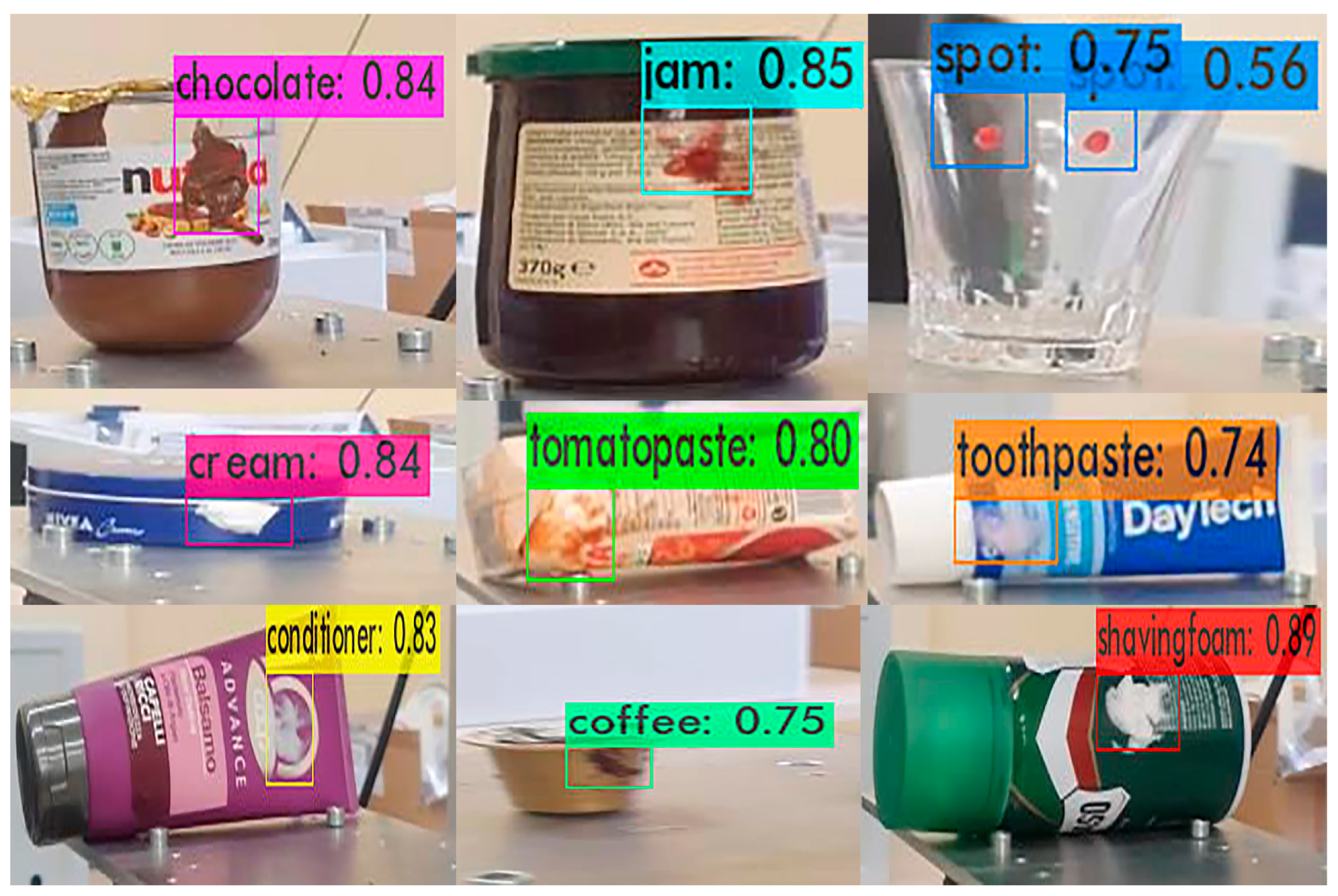
To improve our system’s performance, we coded the proximity sensor for “Safe Machine Environment Interaction.” A mechatronic platform with a camera for contamination detection and a time-of-flight sensor for safe machine-environment interaction was used for the experiment. The experiment findings show that the reported system can identify contamination with 99.74% mean average precision (mAP). Figure 1 depicts the experimental results, and the publication can be found here [1].

Figure 1. Experimental trials of real-time detection using the reported CNN [1].
Future Directions
Future work may concentrate on adding more contamination classes in order to create a more thorough and improved contamination detection system. The algorithm might also be applied in a real robot with a conveyor belt to create an industrial quality inspection setup. However, the journey does not finish here. We’re devoted to improving our methodology and investigating new applications. We’re thrilled to be at the forefront of the deep learning revolution.

Acknowledgments
I want to express my heartfelt gratitude to my Supervisor, colleagues, and the entire research team who played a pivotal role in this project. Their expertise, dedication, and collaboration made this achievement possible.

Paper Reference
[1] Hassan, Syed Ali, Muhammad Adnan Khalil, Fabrizia Auletta, Mariangela Filosa, Domenico Camboni, Arianna Menciassi, and Calogero Maria Oddo. “Contamination Detection Using a Deep Convolutional Neural Network with Safe Machine—Environment Interaction.” Electronics 12, no. 20 (2023): 4260.

Ensuring Safe Human-Robot Collaboration: The Role of Vision and Proximity Sensors

Robots working alongside humans is becoming more and more probable as robotics technology develops. But when people and robots collaborate, safety is still a major issue. Vision and proximity devices can be used in this situation to guarantee secure human-robot interaction. Robots can detect people, objects, and obstacles in their environment due to vision sensors. They track and identify motion and shapes using cameras and other tools. Robots are able to identify and steer clear of humans and other objects with the help of this ability.

  • As the use of robots spreads across a variety of sectors, safety concerns regarding human-robot collaboration have taken on greater significance.
  • Robots can sense their surroundings and identify objects, people, and obstacles with the help of vision sensors.
  • Proximity sensors can help avoid collisions by detecting the existence of an object or person and their proximity to the robot.
  • By utilizing both kinds of sensors, robots can more accurately perceive their surroundings and decide how to interact with people.
  • Human-robot collaboration is becoming more prevalent in the industrial and healthcare sectors, but safety is still of utmost importance in these environments.
  • While sensors can significantly increase safety, human supervision and training are still necessary to guarantee secure and productive human-robot interaction.

On the contrary, proximity sensors can both sense the presence of an object or person and their proximity to the robot. They employ a variety of technologies, including ultrasonic, capacitive, and infrared sensors, to identify changes in the environment and warn the robot to stop or slow down when a person is close. Robots can more accurately sense their surroundings and decide how to interact with people by combining these two kinds of devices. A robot in a manufacturing environment, for instance, could use vision sensors to recognize nearby people and proximity sensors to determine their closeness. The robot may slow down or halt if the person approaches too closely in order to prevent a collision.

Healthcare is a further application where vision and proximity sensors can be used for secure human-robot collaboration. When working with vulnerable patients, safety is of the highest importance. Robots can help medical workers with tasks like lifting and transporting patients. While proximity sensors can warn the robot to halt if the patient approaches too closely, vision sensors can track the patient’s position and movements. Additionally, sensors can be used by robots to track their own motion and recognize when something is wrong. For instance, a robot with a broken arm may be able to sense when it is moving too quickly or in the incorrect direction and stop before it does any damage. While sensors can significantly increase safety in human-robot collaboration, it is essential to remember that they are not infallible. For the collaboration between humans and robots to be secure and productive, human supervision and instruction are still necessary.

Finally, the integration of vision and proximity sensors can significantly improve the security of human-robot interaction in a variety of contexts, from manufacturing to healthcare. The distance between a person and a robot can also be determined using a depth camera, but it is more difficult to attach multiple cameras to the robot’s skin than it is to attach numerous proximity sensors to various regions of the skin in order to calculate the precise distance from various angles and prevent collisions. The project we’re working on also makes use of a camera and a proximity sensor for secure human-robot collaboration.


Robotics workshop in Odense Denmark

We travelled to Odense, Denmark in October 2022 to attend a workshop on robotics. We were able to tour two businesses, Blue Ocean Robots and Universal Robots, as well as the University of Southern Denmark (SDU), during this workshop. I’ll talk about my experiences touring two robotics companies and one university in this blog.

As a result of the several enterprises that are developing robots in Odense, the city is also known as the “city of robots.” First, we went to Blue Ocean Robotics, which has three primary robots. There, they let us interact with them and showed us some of their most important features. The CTO of Blue Ocean Robots also provided a general overview of the business, including its history, culture, technical staff, etc. Additionally, we went to their production facility and a lot of questions were answered there. Our researcher was quite curious throughout our visit, and I learned that there are still many robot advancements that can be made, and that they are actively working to do so.

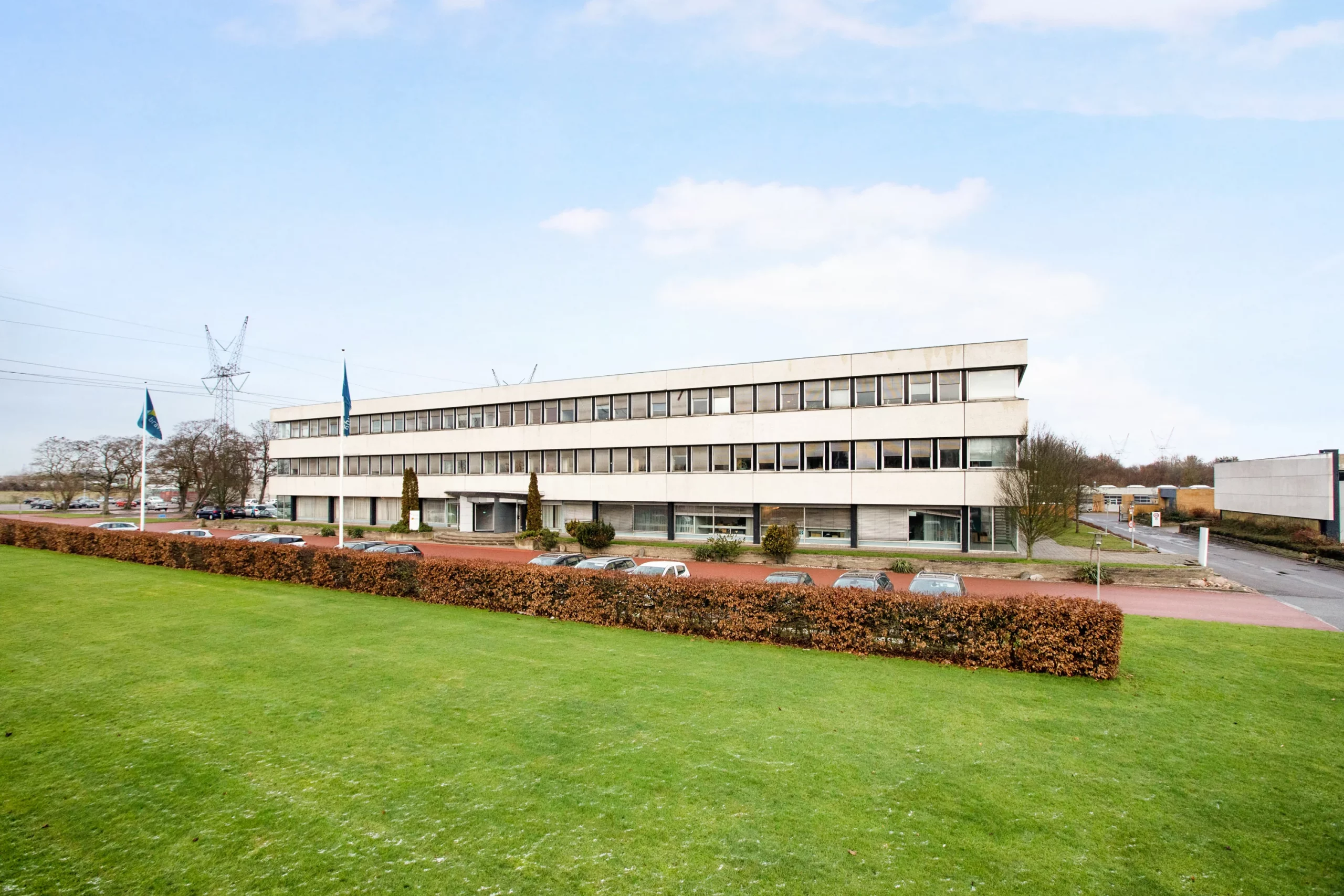
Figure 1: Blue Ocean robotics. Photo source: https://cdn2.hubspot.net/hubfs/5809782/Blue%20Ocean%20Robotics%20own%20folder/New%20Headquarters/Blue%20Ocean%20Robotics%20Domicil%202020_3.jpg

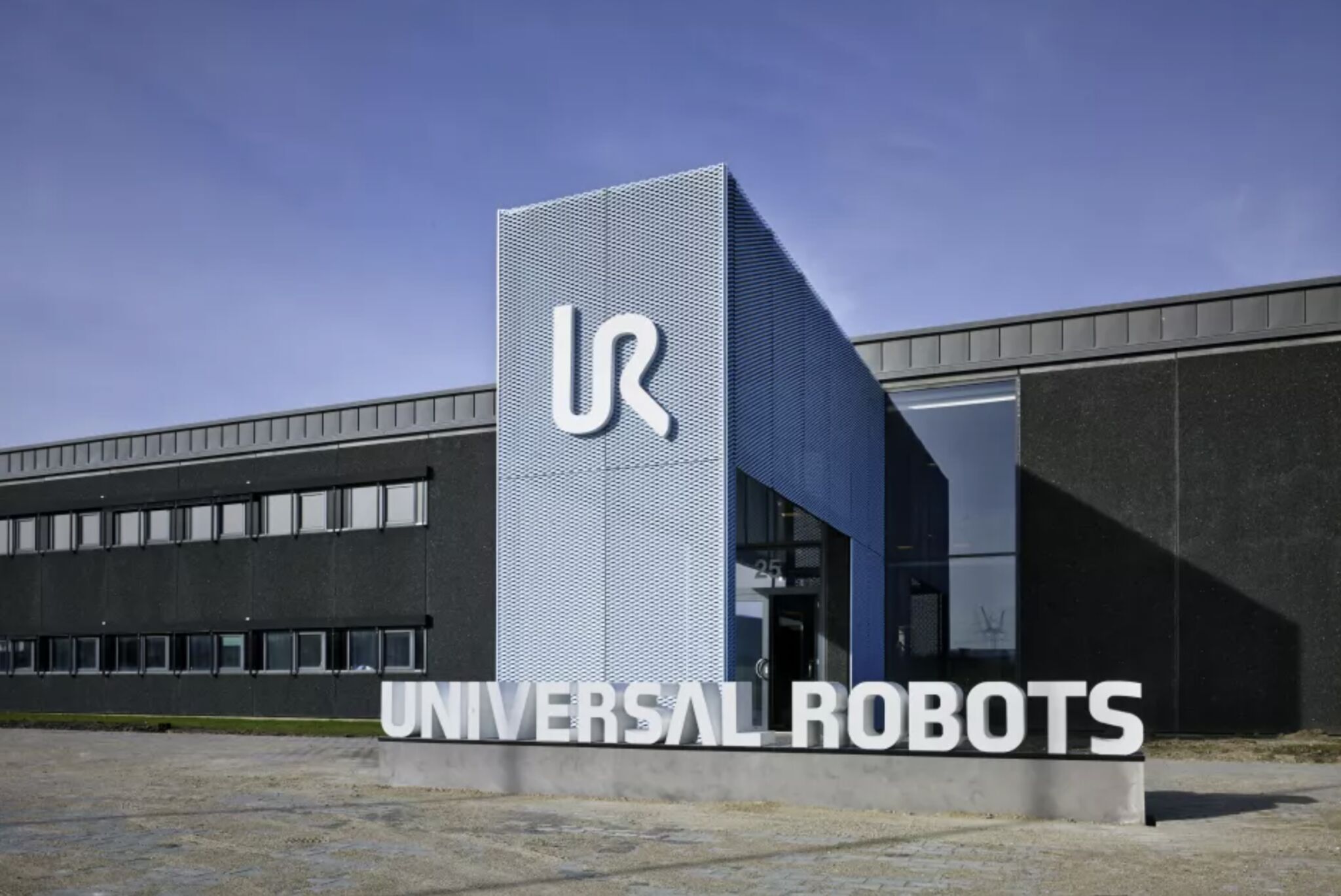
Secondly, we went to Universal Robots, where the innovation manager gave us a tour of the facility and then gave us the opportunity to program their robot. After the presentation, they also gave us access to the production site. One collaborative robot from Universal Robots is capable of carrying out a variety of activities, including screw driving and picking up and placing goods. After using their robot, I discovered that there is still room for development, and they are already enhancing and incorporating new functions into their robots.

Figure 2: Universal Robots. Photo source: https://www.universal-robots.com/media/19454/ur_domicil01_387x290.jpg

Furthermore, the next day, we went to the Southern Danish University (SDU). Professor Calogero Maria Oddo, my supervisor, and other professors from various universities presented their research. Also, I with other researchers presented my poster and described my PhD project. During my stay in Odense, I discovered a lot of new things, and this workshop enabled me to better grasp the kinds of advancements and contributions I can make to the field of robotics during my PhD. It was a fantastic session that all of the organizers did a great job of planning. I’ve included some helpful advice here for anyone planning to visit industry in the future.

  • Before visiting, try to learn about the company’s primary products.
  • Before visiting, try to learn more about the history of the firm.
  • When you visit, try to learn about the company’s vulnerabilities.
  • Speak to as many of the staff members of that firm as you can.
  • Try to determine what a firm may gain from your talents.

In conclusion, I’d like to emphasize the importance of visiting businesses and other academic institutions throughout a PhD to learn about their contributions. Additionally, working in industry for a short period of time might be helpful for a PhD thesis.  You will be able to observe the implementation in actual robots during your tour to industry, and you can learn about ongoing research at other universities by visiting them. You can expand your network by going to workshops, conferences, and industry events. I really believe that when you are surrounded by intelligent individuals, you can learn a lot and, in the future, we will be able to take positive action for the advancement of our society.


terren-hurst-blgOFmPIlr0-unsplash

My recent experience of presenting the research paper in a conference.

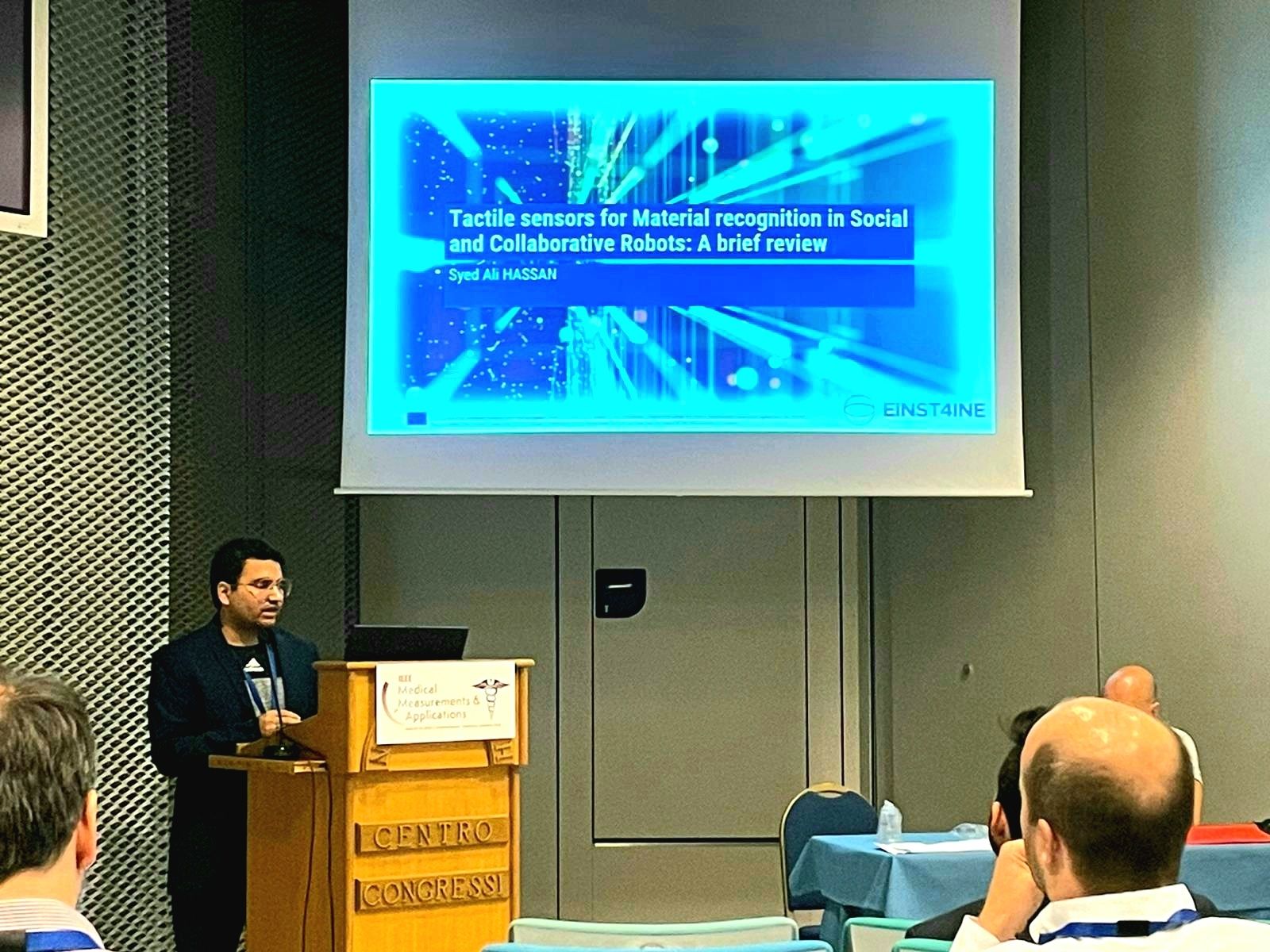
The majority of researchers hunt for a reputable conference to present their work at. As a master’s student, I presented several papers at various conferences, so I was accustomed to doing so and knew how to present my research, but as a doctoral student, this was my first conference in Italy. IEEE MeMeA 2022 is the name of the conference, which was held in Catania from June 21 to June 25, at the UNA hotel. The research papers of numerous researchers from various nations were presented. The opportunity to network with researchers from other scientific fields was a wonderful experience.

The title of my research paper on robotics is Tactile sensors for material recognition for social and collaborative robots. It was a review paper; it may be preferable to begin a research project with a review paper because it aids in a thorough understanding of the subject and stimulates reading more recent material pertinent to our investigation. After reading other people’s research on the same subject, writing a review paper might also give us fresh ideas. Anyone can read the paper I wrote by simply typing its title into IEEE Xplore, where it will be published.

The points I’m sharing for a good conference presentation are listed below:

  • Practice several times in front of a mirror.
  • Discuss your paper with your supervisor.
  • Be confident when presenting the paper.
  • Always put your presentation earlier in the conference room computer and check all slides one time to make sure all slides are working.
  • Don’t use new fonts in the presentation that are not supported in old versions of PowerPoint.
  • Use pptx or pdf format, take both formats with you.

A few researchers presented their posters on the first day of the three-day conference. Most conferences feature a poster session. During this time, researchers must display their posters on walls or on whiteboards. After that, many attendees approach the posters and ask questions about them. Poster sessions typically last for two hours or longer, during which time researchers must stand in front of their posters and answer the questions of visitors. My presentation was scheduled on the second day: I first went to see some research posters before going to the presentation room and delivering my talk. The presentation was fantastic. During my presentation, one professor asked me a few questions and said he would like to collaborate with my research.

In conclusion, I would like to address anyone who believes that if you present your study at a conference, it will be made public and someone else might steal your research concept. This is true in some cases; however, the longer portion of your work should be submitted to a reputable journal. I would suggest creating a plan whenever you begin a research project so that you can present a portion of it at a conference and later submit the entire thing to a reputable journal.

How to Create and Sell your NFT (Non-Fungible Token)

NFT (Non-Fungible Token)

As technology evolves at a breakneck pace, we are swiftly approaching Web 3.0 – NFT is one of the unique technologies introduced with this. In this article, I will cover all you need to know about NFT, including how to create and sell NFTs, NFT history, and NFT domains. This post includes a video tutorial that explains how to create and sell your NFT online using an example, as well as some of the most expensive NFTs ever sold. This is a technological awareness post that will benefit all technology freaks as well as EINST4INE ESRs.

 NFT is a type of digital ledger which is a data unit that is stored on a blockchain. NFT could be an image, audio, video and even a social media tweet. The difference between NFT and other currencies is that NFT is non-fungible and other currencies are fungible. A bitcoin, for instance, is fungible, meaning you can exchange one for another and get precisely the identical item. A one-of-a-kind trade card, on the other hand, cannot be duplicated. If you exchanged it for another card. Most NFTs are, at a high level, part of the Ethereum blockchain. Ethereum, like bitcoin and Solana, is a cryptocurrency, but its blockchain also enables these NFTs, which hold additional information that allows them to function. It’s worth mentioning that various blockchains can use NFTs in their own ways.

You can make as many copies of a digital file as you like, including the art that comes with an NFT. NFTs, on the other hand, are designed to provide you the content which can’t be copied. If someone copies your NFT art, the owner can still claim the copyrights. For instance, Monet print can be printed by anyone but only one person is the owner of the original. In order to create and sell the NFT, opensea.io is the biggest market place and it provides an easy way to create and sell the NFT online. To sell or create the NFT you need a wallet. There are several wallets available such as trust wallet, ronin wallet, metamask and so on. In the below video, metamask wallet is used and the complete NFT selling and creating process is explained. Digital or any other asset covered by a non-fungible token, NFTs give a comprehensive record and proof of ownership. This feature allows you to create one-of-a-kind digital assets and items that anybody can buy or sell on a global market.

Today, NFTs have progressed to become more useful in a range of industries:

  • It enabled users to trade game assets.
  • Ownership of your assets and username in the metaverse.
  • Ownership of your domain name.

NFTs are laying the groundwork for economies, digital communities, and assets as the online world transitions from web 2.0 to web 3.0.

Brief history (2014–present)
Anil Dash and Kevin McCoy built the first known “NFT,” Quantum, in May 2014. McCoy’s wife, created a video clip for it. Throughout a live session for the Seven-on-Seven meeting in New York City, McCoy filed the clip on the Namecoin blockchain network and sold it to Dash for $4. Three months after the Ethereum blockchain was created, the first NFT project, Etheria, was launched and showcased at DEVCON 1 in London, known as first developer conference of Ethereum. Following the launch of many NFT projects that year, the word “NFT” only gained wider popularity with the ERC-721 standard, which was initially suggested in 2017 via the Ethereum GitHub. The transferable cat NFTs were used to monetize the 2017 online game CryptoKitties, and the game’s popularity brought NFTs to the attention of the general public. The NFT market tripled in worth to US$250 million in 2020, indicating strong development. And over $200 million was put on NFTs in the first three months of 2021. In 2022 the trade of NFT is rapidly increased on several platforms such as opensea and people are also buying NFT’s in several games such as gala games and axie infinity.

NFT Domains
As we move closer to the decentralized web 3.0. NFT domains can be quite useful in web 3.0; when a person buys a NFT domain, he or she is genuinely owning that domain. Currently, in web 2.0, we rent the domain name for our website and pay each year, however with NFT domains, we just have to pay once. The largest drawback is that Google does not index the NFT domain. However, in the future, NFT domains are likely to be indexed by Google and other search engines. We rent web 2.0 domains as (.net,.com,.org,) and so on, although web 3.0 domains such as (.nft,.zil,.eth,.blockchain) and so on are available.

Finally, non-fungible tokens are becoming the core technology for assets in the metaverse. The Sandbox, a metaverse project, is already employing NFTs to represent virtual furniture, digital land, décor and much more. The Sandbox earned more than $24 million dollars in sales of NFTs representing metaverse real estate in March 2022, with Snoop Dogg, Atari and the South China Morning Post among the top businesses and celebrities to purchase plots of digital property. NFTs have just recently begun to transform digital asset ownership and exchange, setting the groundwork for tradeable in-game assets, digital communities, and the metaverse economy. NFT.com is creating the NFT world’s decentralized social network, which will be run and controlled by the owners.

The reason why I joined Einst4ine as an early-stage researcher

The reason why I joined Einst4ine as an early-stage researcher

 To address this, I must first introduce myself. My name is Syed Ali Hassan, and I have over 4 years of experience working as a software engineer in the computer vision domain, focusing on Augmented Reality (AR), Virtual Reality (VR), Mixed Reality, and Deep Learning. I began my career in Pakistan, where I received my bachelor’s degree in software engineering from Mohammad Ali Jinnah University Karachi. During my bachelor’s studies, I completed several internships related to web design and development, and I began freelancing to gain hands-on experience. After finishing my final year project on a virtual reality game, I worked as an AR applications developer for Intellexal Solutions Private Limited, as a software developer in Karachi, Pakistan. During my two years at Intellexal Solutions Private Limited, I worked on various AR-based mobile applications. My interest in innovation is the reason behind joining einst4ine as an early-stage researcher. In this post I will discuss my career goals and the several reasons of joining einst4ine with the description of my master’s thesis-based robotics project.

  • Working with innovative technologies is one of my greatest passions.
  • I prefer to collaborate with specialists from various fields.
  • Working on a collaborative robot project could boost my professional reputation significantly.
  • Working with Einst4ine could help us to win Nobel prizes and awards.

I won a fully-funded scholarship in wens lab south Korea which is situated in Kumoh National Institute of Technology South Korea so I moved to Korea to complete master’s of research. During my master’s degree tenure, I developed several solutions and published several research papers related to deep learning in computer vision domain and I also developed robotics and deep learning-based projects and managed to publish the research paper; that robotics project is the main reason behind why I joined einst4ine, because that project introduced me to robotics and helped me to understand robotics with Ai. After completing my master’s degree, I worked for a year in a software development company in South Korea. Then I was chosen for a Marie Curie-based robotics project with einst4ine, funded by the European Commission. Because I had previously worked with robots, I was able to quit my Korean employment and relocate to Italy to begin my PhD in the Sant’Anna school of advanced studies bio robotics lab, where I am working on a Marie Curie-based project managed by einst4ine. Einst4ine has diverse staff from several nations, which is beneficial when we need different perspectives from professionals in various fields. During my PhD I have an opportunity to publish my work on top ranked journals and also, I will be able to nominate myself for several big awards.

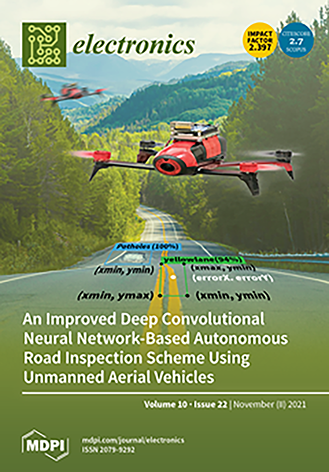
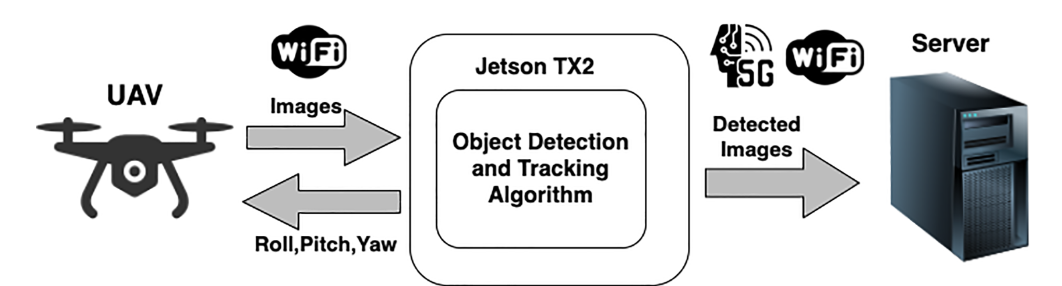
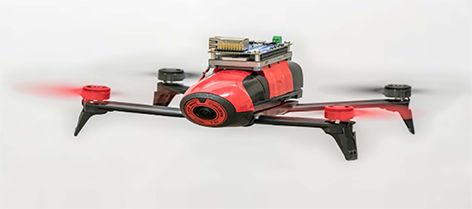
Finally, I’ve been active in creative technologies since my bachelor’s degree. When I first started programming, I started with the console, which I found tedious because I prefer to have a user interface as a result of my work not a black screen as an output. When I first started working with the AR mobile app, I was ecstatic to see a result in the shape of a 3D model appear in front of me. Further, in robotics, we can test our functioning code in a real robot, when I first developed my robotics project and tested it in UAV, I decided to advance my knowledge in robotics domain and it is one of the reasons I joined the einst4ine to work with real robots. My robot’s project was a success, and the research paper was published in MDPI electronics and chosen as the cover of the MDPI electronics journal, as seen in figure 1. “An upgraded deep convolutional neural network-based autonomous road inspection technique using unmanned aerial vehicle” is presented in [1]. In this project, UAVs can fly autonomously by identifying and tracking yellow lanes on the road, as well as detecting road cracks and potholes, and sending information about road damages to a server through WIFI or 5G medium. The architecture of this project is shown in Figure 2. The jetson tx2 is the hardware that is use to run the algorithm in the UAV and it is modified and mounted on the UAV as shown in figure 3. This project increased my interest in robotics, when I read the project details of einst4ine, I found that project interesting because that is also related to robotics, and I found this European project has many partners from academia and industry both that can be helpful for me to learn from different experts to improve my profile and to start my own startup in future. This project’s architecture is depicted in Figure 2. The hardware used to run the algorithm in the UAV, as indicated in figure 3, is the Jetson tx2. When I read the project details of einst4ine, I found that project interesting because it is also related to robotics, and I discovered that this European project has many partners from academia and industry, both of which can be beneficial for me to learn from different experts in order to improve my profile and start my own startup company and research lab in the future as a professor.


Figure 1: Paper selected as a cover in MDPI electronics journal

Figure 2: Architecture of the proposed system [1]


Figure: 3 Mounted TX2 in on UAV [1]


To conclude, I personally believe that working with innovative technologies is really important as technology is changing rapidly and we must learn new things in order to stay updated. Early adoption in robotics domain will be beneficial for my career to develop a collaborative robot in future. Einst4ine has a diversified environment, with numerous experienced researchers from several countries collaborating to deliver information from various sectors and an environment conducive to achievement.

Reference:
[1] Hassan, Syed-Ali, Tariq Rahim, and Soo-Young Shin. “An Improved Deep Convolutional Neural Network-Based Autonomous Road Inspection Scheme Using Unmanned Aerial Vehicles.” Electronics 10, no. 22 (2021): 2764.

About the Author:

I’m SYED ALI HASSAN. I have completed my graduation in Software engineering from Mohammad Ali Jinnah University-Pakistan and completed post-graduation in I.T Convergence Engineering from Kumoh National Institute Of Technology – South Korea. I have been awarded Fully funded Professor Scholarship in wens lab South Korea. I have work experience as a software engineer for more than 4 years. I have Developed Several games and AR/VR/MR based mobile applications. I won a fully-funded Marie curie scholarship funded by European commission under the organization named as einst4ine. I am working with 15 Early-stage researchers from different countries my host institute Sant’Anna Pisa Bio-Robotics lab. My responsibility is to develop robotics-based solution using collaborative robots. Below is a link of my portfolio.

http://syedalihassanzaidi.blogspot.com/2016/01/responsive-websites.html

Email: Syedali.hassan@santannapisa.it