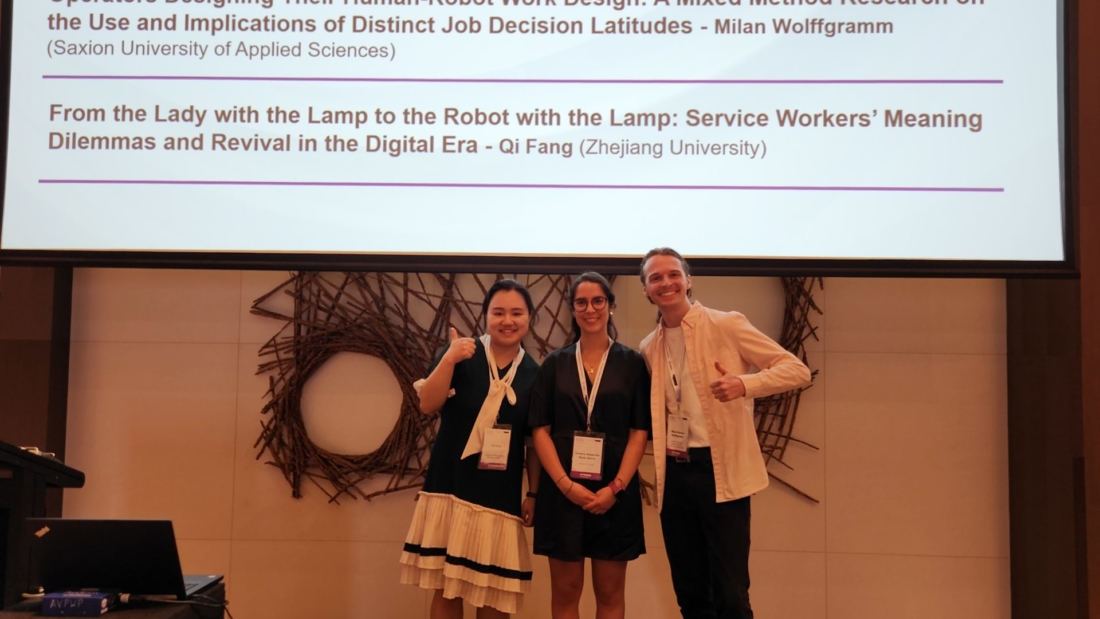
presenters and I

Transforming Healthcare Work: My experience at the CTWD Conference 2024

On February 13th and 14th I attended the Centre for Transformative Work Design Conference 2024 in Perth, Australia to enjoy all the presentations and share my research on work design as a catalyst to foster meaningful work during the implementation and use of mobile telepresence robots in healthcare settings. This conference set the stage for dynamic conversations on cultivating healthier, happier workplaces through the art and science of work design. 

EXPERT PANELS

I had the chance to attend different panels of experts where topics related to work design were discussed. It was great to learn from leading scholars and practitioners in the field of work design, gaining invaluable insights and practical knowledge from those at the forefront of innovation.

For example, Rob Baker, Founder of Tailored Thinking, led an engaging conversation with a panel of experts who delved into the current landscape of workplace quality improvements. Dave Burroughs, Chief Mental Health Officer at Westpac Group, highlighted the importance of shifting workplace mental health discussions towards prevention and offered practical advice for successful implementation. Professor Karina Jorristma, a Professor of Practice at the Future of Work Institute, Curtin University, shared insights from her experience implementing the Thrive at Work model and SMART work design across various organizations. Finally, Jim Kelly, Executive Director – Operations & Enforcement at SafeWork NSW, provided a regulatory perspective, discussing innovative initiatives to foster better work designs within industries.
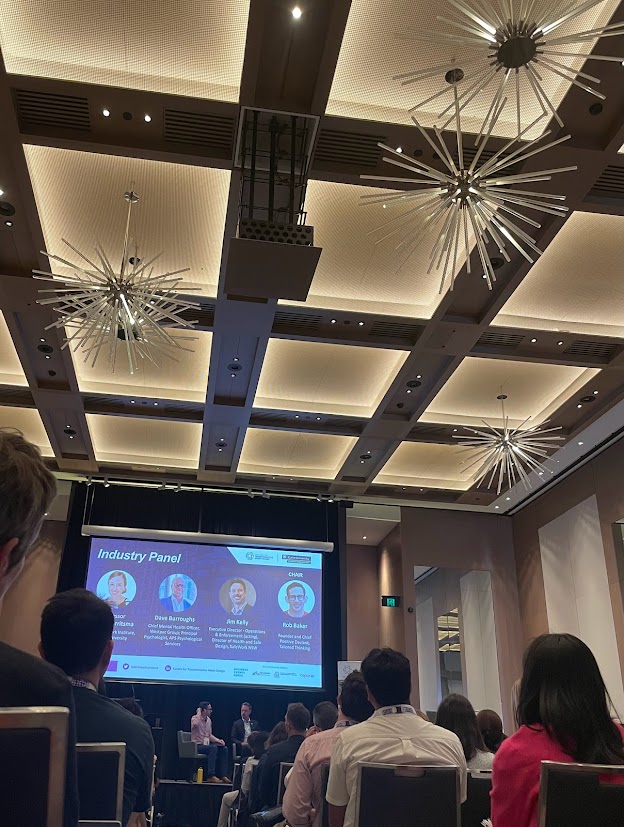
Picture taken by Alejandra Rojas

SYMPOSIUMS

Symposiums were held for group presentations that were topic-related. I was especially interested in a symposium about “A practical approach to SMART work (re)design in the care sector” where multiple projects were presented. However, the one from Dr Jane Chong (University of Western Australia) was particularly interesting for me as it showed the outcomes of a participatory work redesign intervention and its success in alleviating job demands within an aged-care environment, which is related to my Ph.D. project as I am exploring how mobile telepresence robots (MTRs) can/should assist healthcare workers in settings like a nursing home. It was wonderful to explore real-world examples of successful work redesign initiatives that have enhanced employee well-being and organizational performance.
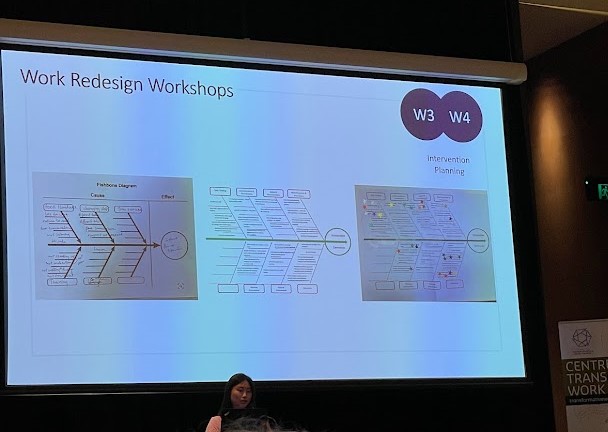
Picture taken by Alejandra Rojas

MY PRESENTATION

My presentation “Enabling Meaningful Work Through Work Design: A Study on Robots in Healthcare Settings” was on the 14th of February in a timeslot shared with Milan Wolffrgamm and Qi Fang, PhD colleagues who are also focused on the use of technologies and work design.

MTRs enable remote interactions between healthcare workers, patients, and family members in healthcare settings. However, it remains unclear how their implementation could affect meaningful work in such settings. Our qualitative study aims to investigate the types of interactions afforded by MTRs in healthcare and their implications on meaningful work. The data consisted of 25 interviews with and observations of healthcare professionals in three types of settings, where two different MTRs were tested. Findings show that substitution and coexistence interactions afforded by MTRs play a multifaceted role in meaningful work, as they simultaneously promote and inhibit it. However, we also find that meaningful work can be promoted through proper work design. Recognizing work design as a catalyst for fostering meaningful work during the implementation of MTRs in healthcare settings offers practical guidance to practitioners seeking to design, develop, implement, and utilize these robots while prioritizing meaningful work.
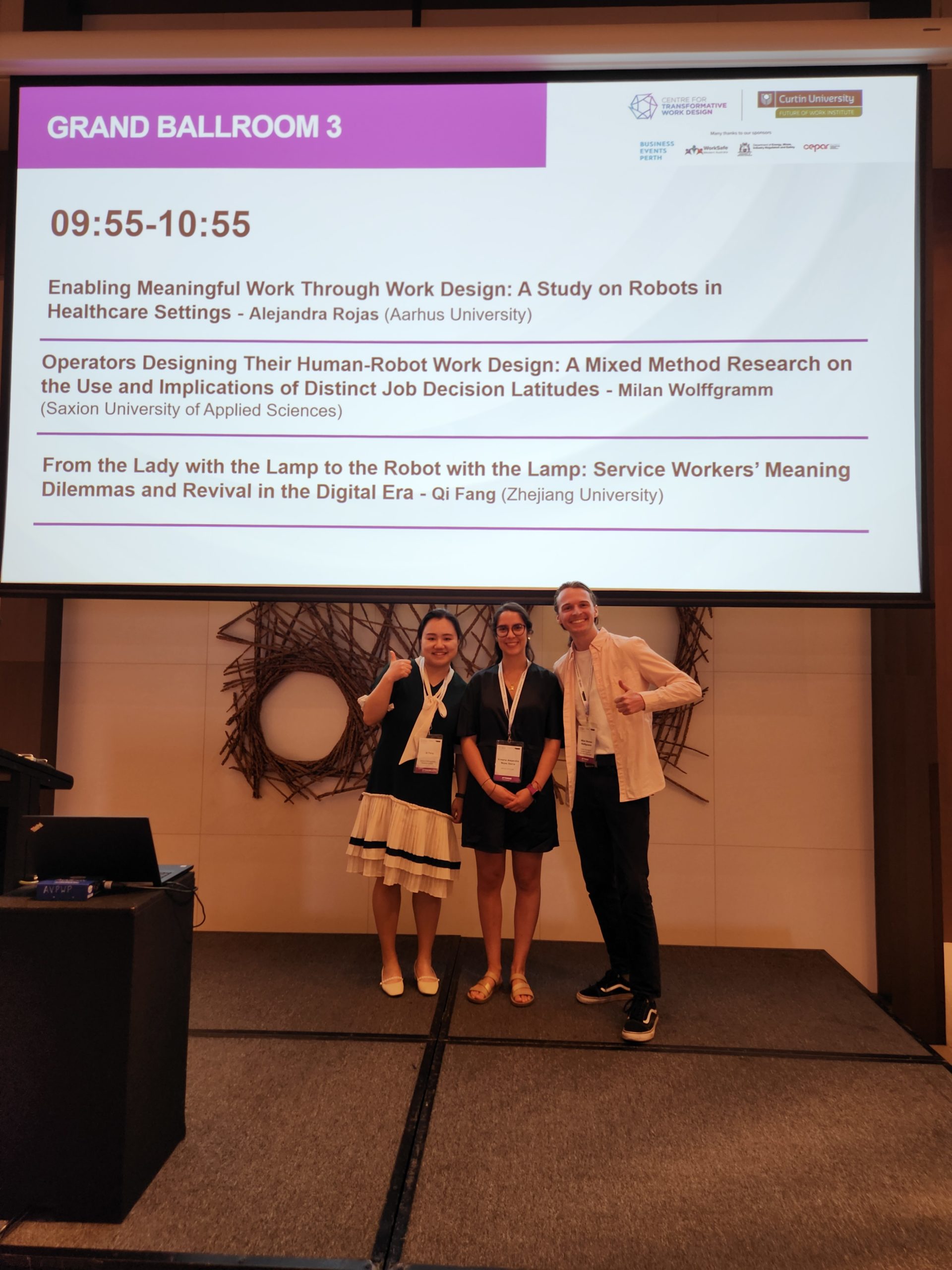
Picture taken by Henry Gunson

Overall, it was a great conference with lots of learnings and insights that helped me understand work design from different angles. Thanks to the organizers and sponsors!


thisisengineering-raeng-sbFmoKBK7jU-unsplash

Co-designing interactions to promote the meaningfulness of work

Here, I refer to AI as any ‘intelligent’ system, mainly embodied but also virtual, that allows the automation of tasks with minimum or no human intervention in uncontrolled social environments. The type of AI that is or might be clearly displacing humans in some tasks at work. While some suggest that AI could stimulate economic development and create new jobs, others fear that it may devastate the economy [1]. Work is a very important part of our life, mainly because we spent most of our lifetime working but also because it is one of the main sources of meaning in life [2] and is considered a fundamental human need [3]. Through our day-to-day work, we can achieve things that will make us feel fulfilled and complete.

Then, what if AI takes that opportunity away from us?

Photo by JESHOOTS.COM on Unsplash

For example, healthcare is a very vulnerable setting where AI can step in. Handing over activities that healthcare workers find meaningful to embodied AI technologies such as robots can lead to a loss of meaningfulness in their lives [2]. A nurse could find herself or himself asking “How to connect with patients if there is an intelligent robot taking care of them instead of me?” or “How am I going to be able to contribute to the patient’s well-being if this robot is doing what I used to do before?”. AI may represent a threat to meaningful work because tasks that were meaningful for them are not part of their routine anymore, however, there is another possibility: intelligent robots being an opportunity for meaningful work [4]. In that case, the nurse could be thinking “These robots are helping me with some tasks that I actually liked, but, in the end, it benefits the patients and that makes me feel good. Also, I have more time to focus on other meaningful activities”. As Sven Nyholm and Markus Rüther [2] put it, if AI systems take over activities that we find meaningful, then we have to find other meaningful activities or, otherwise, we will have a meaningfulness gap. According to the authors, the other option is that AI displaces humans only on mundane tasks. For this, it is necessary that AI technologies can take over these less meaningful activities without interfering with the activities that we consider meaningful [2].

Co-designing interactions for meaningful work with AI.

As we can see, there are many possible scenarios and “what if’s” for the many ways in which humans may feel about the automation of work. However, I believe that a design approach can help to give more certainty and direction to promote meaningful work. Design can be seen and defined from different perspectives; here, I talk about design as a process arrangement or rearrangement of elements in the best possible way to solve a problem. Thus, when I propose co-designing interactions, I refer to a collaborative organization and reorganization of the elements that form human-robot interactions. What are these elements? the features of the AI systems, the humans involved, the bystanders, the physical space, the role of the interactants, and the allocated tasks [5]. This list is not exhaustive, but it is a good start.

I think that interdisciplinarity may be key in navigating the ‘meaningful work with AI’ challenge. AI systems’ design, development, roles, and task allocation could be done by a group that involves or at least represents all stakeholders. Having a discussion on what tasks are meaningful, what tasks to automate, and how to balance the trade-offs can allow AI designers and developers to test their assumptions on what they thought could work in real life [1], and thus automate work in a dynamic and democratic way. The dynamism is based on the fact that many iterations and sessions with dialogue and negotiations have to be constant as part of a holistic process [6]. Meaningful work is a complex concept that most people may find difficult to define or understand if and how their own work is meaningful. Thinking about meaningful work invites self-reflection, so I think designing AI systems with meaningful work in mind is not an easy task, but it is relevant if we want a sustainable use of AI at work.

Is co-designing robotized interactions an ethical or an organizational endeavor?

We need mindful task allocation that considers the meaningfulness of work. But, who decides what tasks should be assigned to AI systems? Is it an ethical or an organizational discussion? I think it is both. Ethics can provide a list of the general criteria we should base our decisions on how to design human-robot interactions. For example, general criteria for good care involve a relevant amount of human contact [7]. Therefore, when assigning tasks between robots and healthcare workers we need to make sure that the workers have enough human contact, and for that, we need to consult them and not just assume that people from management know the answer.

Ethical discussions will allow us to design a more human work. We don’t need AI technologies to be the ones designing our work for us with systems that can predict and manage workflows for the sake of efficiency. As Kate Crawford [8] puts it, “Rather than representing a radical shift from established forms of work, the encroachment of AI into the workplace should properly be understood as a return to older practices of industrial labor exploitation established in the 1890s and early 20th century”. Indeed, research has shown that when work is designed only to improve efficiency, there is a decrease in satisfaction, but when both efficiency and satisfaction are considered, the tradeoffs are avoided [9]. This is why we need humans behind the redesign of work. Humans need to be engaged in the co-creation of meaning to feel that our lives are valuable [3].


References

[1] A. Rojas and A. Tuomi, “Reimagining the sustainable social development of AI for the service sector: the role of startups,” JEET, vol. 2, no. 1, pp. 39–54, Nov. 2022, doi: 10.1108/JEET-03-2022-0005.

[2] S. Nyholm and M. Rüther, “Meaning in Life in AI Ethics—Some Trends and Perspectives,” Philos. Technol., vol. 36, no. 2, p. 20, Jun. 2023, doi: 10.1007/s13347-023-00620-z.

[3] R. Yeoman, “Conceptualising Meaningful Work as a Fundamental Human Need,” J Bus Ethics, vol. 125, no. 2, pp. 235–251, Dec. 2014, doi: 10.1007/s10551-013-1894-9.

[4] J. Smids, S. Nyholm, and H. Berkers, “Robots in the Workplace: a Threat to—or Opportunity for—Meaningful Work?,” Philos. Technol., vol. 33, no. 3, pp. 503–522, Sep. 2020, doi: 10.1007/s13347-019-00377-4.

[5] K. Fischer et al., “Integrative Social Robotics Hands-on,” IS, vol. 21, no. 1, pp. 145–185, Jan. 2020, doi: 10.1075/is.18058.fis.

[6] R. V. Zicari et al., “Co-Design of a Trustworthy AI System in Healthcare: Deep Learning Based Skin Lesion Classifier,” Front. Hum. Dyn., vol. 3, p. 688152, Jul. 2021, doi: 10.3389/fhumd.2021.688152.

[7] M. Coeckelbergh, Robot ethics. Cambridge, Massachettes: The MIT Press, 2022.

[8] K. Crawford, Atlas of AI: power, politics, and the planetary costs of artificial intelligence. New Haven: Yale University Press, 2021.

[9] F. P. Morgeson and M. A. Campion, “Minimizing Tradeoffs When Redesigning Work: Evidence from a Longitudinal Quasi-Experiment,” Personnel Psychology, vol. 55, no. 3, pp. 589–612, Sep. 2002, doi: 10.1111/j.1744-6570.2002.tb00122.x.

Originally published at: https://www.alejandrarojasblog.com/codesigning-interactions-for-meaningful-work

aideal-hwa-OYzbqk2y26c-unsplash

Guilt and (or?) responsibility for autonomous robots.

I think that it is interesting to reflect on guilt and responsibility in relation to the impact of autonomous robots, that is, artificial agents that can do human tasks with no direct human control [1]. Even if robotics technology is not yet ready to deploy fully autonomous robots, it is a good practice to think about what could and should happen in the future. Intelligent machines will become autonomous, meaning that the designers, developers, and deployers have no full understanding and control over the behavior of such technologies. This causes challenges to assign responsibility because it seems unfair to blame humans for the actions and consequences of robots.

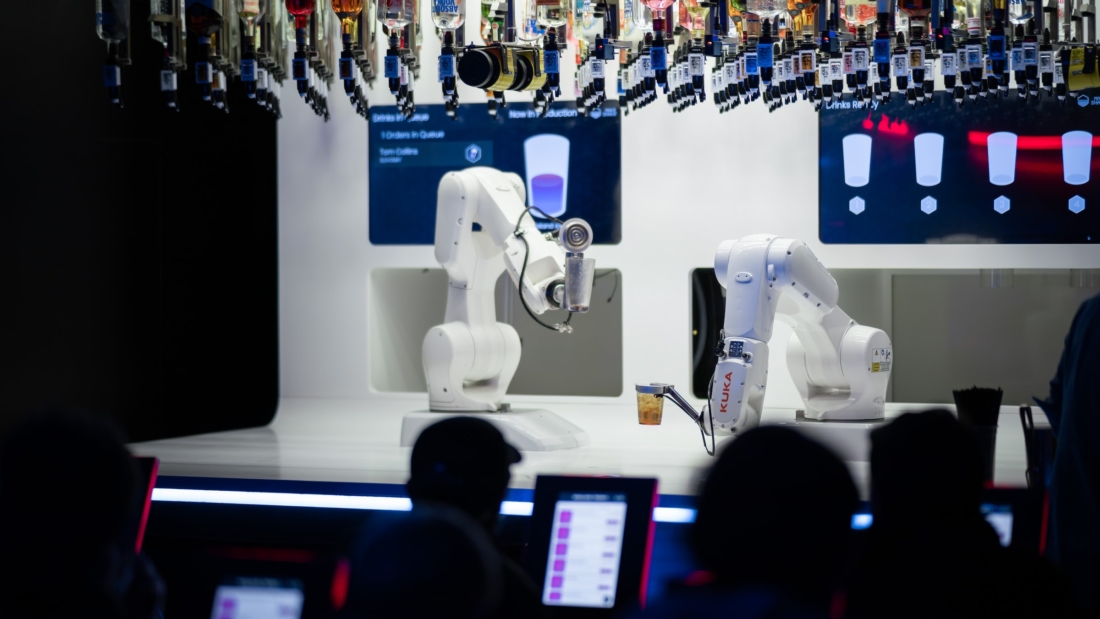
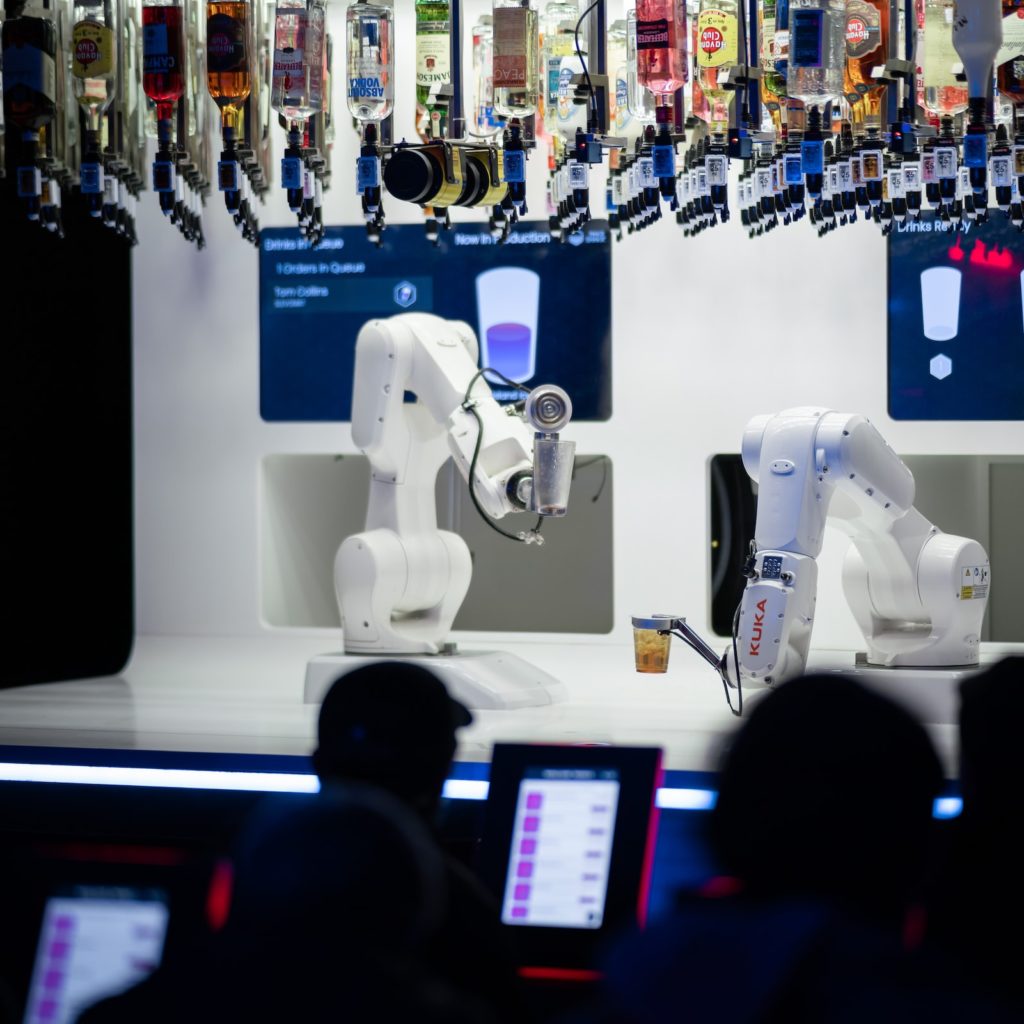
Research shows that designers and developers of AI systems in startups don’t feel responsible for the unintended consequences of technology [2]. For example, a robot designer does not feel accountable for the impact of an autonomous bartender robot on human bartenders, clients, service workers, and managers of an automated hotel bar. The robot designer is just doing his or her job: developing a new technology that solves problems.

I think a distinction between guilt and responsibility is interesting in this context because responsibility is not a feeling nor an emotion, such as guilt. When designers, developers, salespeople, -and anyone involved in the long chain of stakeholders- say they don’t feel responsible for the impact of autonomous robots, they might be thinking about guilt instead. Guilt is an unhappy emotion that arises after you consciously or subconsciously feel that you did something wrong. This might be the reason why robot designers and developers are not feeling accountable for the social impact of the technology they produce, they are just doing their job, why would that be wrong? They don’t feel guilty, and therefore, they don’t acknowledge responsibility.

Responsibility is not synonymous with guilt, it is not an emotion that arises when you did something wrong, it comes from taking accountability despite your feelings or beliefs of right and wrong. This means that people are liable even when there is no obvious reason to be guilty. I think it is relevant to understand that although it is not wrong to produce autonomous robots, and thus, it does not make you guilty, it does make you responsible because technology is not only technically constructed but also socially and politically [3]. The impact of robots does not end in the 1 to 1 human–robot interaction, it continues in sociotechnical systems [4].

What does it mean to be responsible? To be accountable. To respond. To take action that will protect someone else’s interests. Then, for what are autonomous robot producers responsible? For anticipating impacts, reflecting, engaging in dialogue, and influencing the direction of technology [5]. And to whom are autonomous robot producers responsible? Being responsible implies responding to someone, including robot users in development processes, and being open and able to answer their questions [6]. And robot implementers and users should be responsible too. We would all have a share of responsibility, we would be co-responsible [3], as we are today with everything that is happening with climate change and many other societal problems.

We need to change this worldview, from feeling guilty to being responsible, if we want to have a smooth and positive transition to the use of autonomous robots when the moment comes.


Sources:

[1] D. G. Johnson, “Technology with No Human Responsibility?,” J Bus Ethics, vol. 127, no. 4, pp. 707–715, Apr. 2015, doi: 10.1007/s10551-014-2180-1.

[2] A. Rojas and A. Tuomi, “Reimagining the sustainable social development of AI for the service sector: the role of startups,” JEET, vol. 2, no. 1, pp. 39–54, Nov. 2022, doi: 10.1108/JEET-03-2022-0005.

[3]  J. Stilgoe, R. Owen, and P. Macnaghten, “Developing a framework for responsible innovation,” Research Policy, vol. 42, no. 9, pp. 1568–1580, Nov. 2013, doi: 10.1016/j.respol.2013.05.008.

[4] A. van Wynsberghe, “Responsible Robotics and Responsibility Attribution,” in Robotics, AI, and Humanity, J. von Braun, M. S. Archer, G. M. Reichberg, and M. Sánchez Sorondo, Eds. Cham: Springer International Publishing, 2021, pp. 239–249. doi: 10.1007/978-3-030-54173-6_20.

[5] B. C. Stahl and M. Coeckelbergh, “Ethics of healthcare robotics: Towards responsible research and innovation,” Robotics and Autonomous Systems, vol. 86, pp. 152–161, Dec. 2016, doi: 10.1016/j.robot.2016.08.018.

[6] M. Coeckelbergh, Robot ethics. Cambridge, Massachettes: The MIT Press, 2022.


michael-fousert-RvmTvJ6tSwA-unsplash

Socially responsible robotics: AI and robotics startups as part of a complex system.

Startups are creating innovative robotics and AI solutions for the service sector such as an  AI-powered floor cleaning robot or a bartender robot.

Robotic bartender
Bartender robot. Photo by Michael Fousert on Unsplash

These technologies are triggering a job transformation for the service workforce that might compromise social and cultural sustainability. To frame startups’ role in the sustainable social development of the service sector we might need to look into other stakeholders’ actions. The responsibility of AI and robotics startups needs to be understood and acted upon in relation to other stakeholders. In other words, AI startups need to take responsibility internally, but they also need support externally from different actors to ensure that everybody is playing their role accordingly. This external support is based on collaborative efforts; however, sometimes it is difficult to collaborate across stakeholder borders because of the different vested interests and ensuing politics.

Here are some of the main stakeholders in the service ecosystem and how they can contribute to the sustainable social development of the service sector:

Investors: Include ethics consulting in investment decisions.

In the end, if venture capitalists or angel investors make ethics a key part of the startup funding cycle, AI and robotics startups have to pay attention. Investors should be motivated to fund ethical practices because it also protects them from risks that might damage the venture further down the line.

Academia: Promote university-led accelerator programs.

These programs can set a foundation for success and facilitate the continuous flow of information between businesses and academia. Startups can collaborate with experts in fields such as human resources and ethics to help them envision a sustainable way of using their products and services.

Social impact startups: Solve the “problem” created by AI and robotics startups.

Partnerships with social impact startups could work because the primary role of such startups is to innovate with solutions for unemployment, promoting social, economic, and cultural benefits. For example, these kinds of startups could develop tools that contribute to decent work by matching people to new jobs and finding creative ways to help people find a job. If AI startups are creating a “problem” by displacing some workers with robots, then other startups should take solving the problem as a new business opportunity.

Service providers and government: Create a balance with incentives.

Service providers should receive a public fund from the government to motivate them to hire companies with ethical solutions and for reskilling and upskilling the service workforce. Service providers’ role is also to redefine job profiles. Thus, service providers need to proactively balance task substitution and task enhancement to define new job positions.

Customers: Demand ethical practices.

Usually, AI startup founders will have no interest in ethics, but if the customer asks for an ethical approach, they might focus on it. Thus, if the main objective of a startup is to find product-market fit, and the market is asking for ethical practices, the startups have no choice but to follow the trend.

My key takeaway is that creating a more sustainable future with AI and robotics is a task we all have. It is not just about designers and developers, but also about how society understands and demands AI and robotics.


Source: Rojas, A., & Tuomi, A. (2022). Reimagining the sustainable social development of AI for the service sector: the role of startups. Journal of Ethics in Entrepreneurship and Technology, (ahead-of-print).

Exploring about meaningful work & mobile telepresence robots in healthcare

Exploring about meaningful work & mobile telepresence robots in healthcare

The data collection for my first research project about robotics and meaningful work continued in Seville. Collecting data means gathering information, in my case, by conducting interviews, observing in a real setting, and reading archival data. I started at a nursing home in Málaga, Spain where I had the chance to interview the staff and observe the dynamics of the nursing home called Vitalia Teatinos, where there are a couple of mobile telepresence robots (MTRs) being tested (GoBe and CLARC). You can read more about this stage of the data collection here. After the nursing home, the second and third settings I visited were two different hospitals in Seville. Each hospital has a GoBe robot.

Exploring about meaningful work & mobile telepresence robots in healthcare
Testing GoBe at the hospital facilities. Picture was taken by the author.

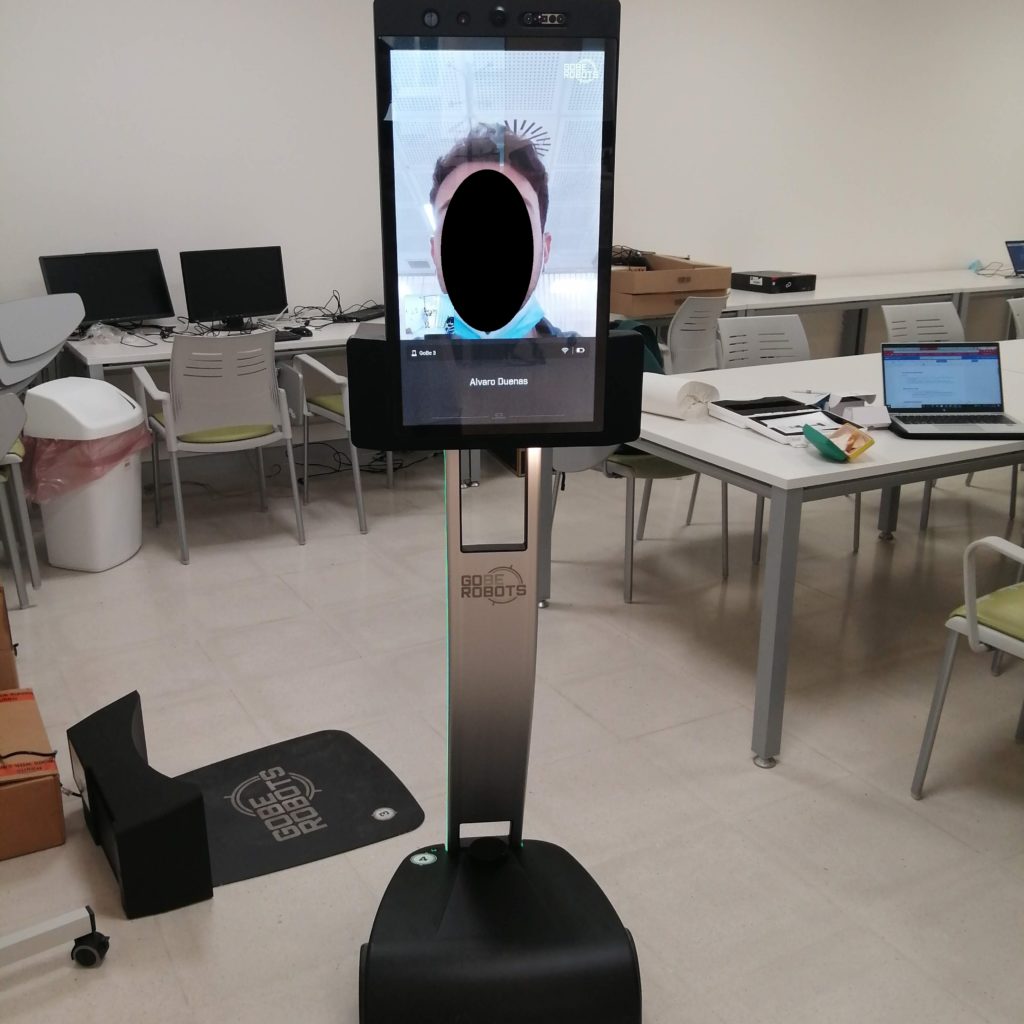
As I mentioned in my last blog post, I was able to collect data there thanks to Blue Ocean Robotics, EINST4INE’s industry partner, and thanks to the University of Málaga and the Andalusian Health Service, who are working together on a project called SUSTAIN. In this project, they are testing GoBe, a mobile telepresence robot with video calling features to facilitate doctor-patient and patient-family members interactions. The main objective of SUSTAIN project is to test these robots in healthcare settings to understand how safe and effective they can be, and also to evaluate the medical, patient, resident, and family satisfaction of such interactions.

Exploring about meaningful work & mobile telepresence robots in healthcare
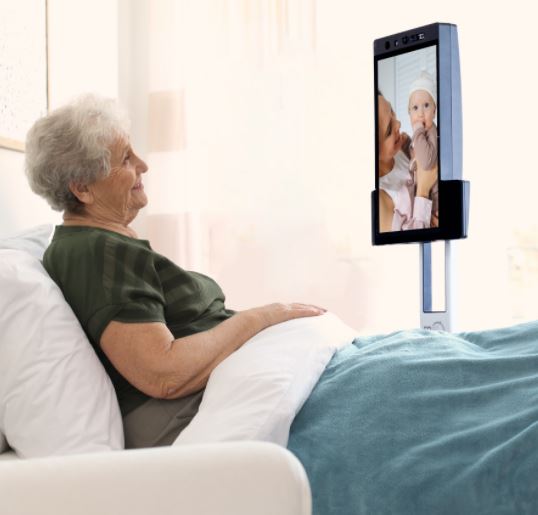
Source: GoBe Robots

In my opinion, MTRs can be a great tool to support physical presence and enable telemedicine in ways that a tablet and a mobile phone cannot provide. I think that the embodiment of the robot can provoke different sensations compared to other devices, for example, GoBe’s height resembles a human height and that may provoke a different sensation than when video calling through a mobile phone. Also, the big screen allows you to have a clear view of the face, which is sometimes hard when you have a video call via mobile phone, and you cannot show your complete face because of the camera’s limited reach.

This is only my point of view from what I have seen, but some studies have explored the use of MTRs for telemedicine and found that it can be effective indeed but also involves implementation challenges (Beane & Orlikowski, 2015; Laigaard et al., 2022). Implementing robots at the workplace implies changing organizational dynamics, work practices, and occupations challenging socio-psychological factors. This is where my research inquiry starts: robots’ impact on healthcare workers’ social dynamics has received little attention, for example, the effects on meaningful work.

Meaningful work allows employees to fulfill the purpose of their life via daily work practices and that is linked to human well-being. In healthcare and caring practices, some studies have found that the personnel finds meaningful work within social relationships (Pavlish & Hunt, 2012; Pavlish et al., 2019). For example, building relationships with patients and family members and also when they are explicitly acknowledged for their work.

Therefore, my research project will explore meaningful work perceptions of healthcare staff when interactions are afforded by MTRs. Accessing empirical data and interviewing participants at their workplaces was a great opportunity. The different settings allowed me to obtain insights into the particular perceptions of a clinician that is working at a hospital compared to one that is working at a nursing home. I was also able to interview some independent clinicians that work at private clinics or at the patients’ homes, which made it even more interesting. It was very intriguing to see the different perspectives that each of them had depending on their occupation. The participants had different occupations such as physiotherapists and psychologists and it helped me to understand what their points of view are about robotics and meaningful work, daily practices, and what they think about using MTRs in their workplace.

Now it is time to analyze the data and write up!


References:

Beane, M., & Orlikowski, W. J. (2015). What Difference Does a Robot Make? The Material Enactment of Distributed Coordination. Organization Science, 26(6), 1553–1573. https://doi.org/10.1287/orsc.2015.1004

Laigaard, J., Fredskild, T. U., & Fojecki, G. L. (2022). Telepresence Robots at the Urology and Emergency Department: A Pilot Study Assessing Patients’ and Healthcare Workers’ Satisfaction. International Journal of Telemedicine and Applications, 2022, 1–6. https://doi.org/10.1155/2022/8787882

Pavlish, C., & Hunt, R. (2012). An Exploratory Study About Meaningful Work in Acute Care Nursing: An Exploratory Study About Meaningful Work in Acute Care Nursing. Nursing Forum, 47(2), 113–122. https://doi.org/10.1111/j.1744-6198.2012.00261.x

Pavlish, C. L., Hunt, R. J., Sato, H.-W., & Brown-Saltzman, K. (2019). Finding Meaning in the Work of Caring. In R. Yeoman, C. Bailey, A. Madden, & M. Thompson (Eds.), The Oxford Handbook of Meaningful Work (pp. 236–256). Oxford University Press. https://doi.org/10.1093/oxfordhb/9780198788232.013.14

Collecting data in Málaga: Testing mobile telepresence robots in a nursing home

Collecting data in Málaga: Testing mobile telepresence robots in a nursing home

For the past month and a half, I have been collecting data for my first research project about robotics and meaningful work. Collecting data means gathering information, in my case, by conducting interviews, observing in a real setting, and reading internal communication files. I really like the experience because it is a process of constant learning, where I get to interact with people and obtain new insights that take me to new concepts and understandings.

The data collection took place at a nursing home in Málaga, Spain. It was very interesting to interview the staff and observe the dynamics of the nursing home called Vitalia Teatinos, where there are a couple of mobile telepresence robots being tested (GoBe and CLARC, I will tell you more about them). Vitalia Teatinos is a nursing home that centers its attention on the residents’ personal needs and quality of life. That is why they are looking into novel technologies that allow them to improve residents’ well-being and connect them to their loved ones in new and effective ways.

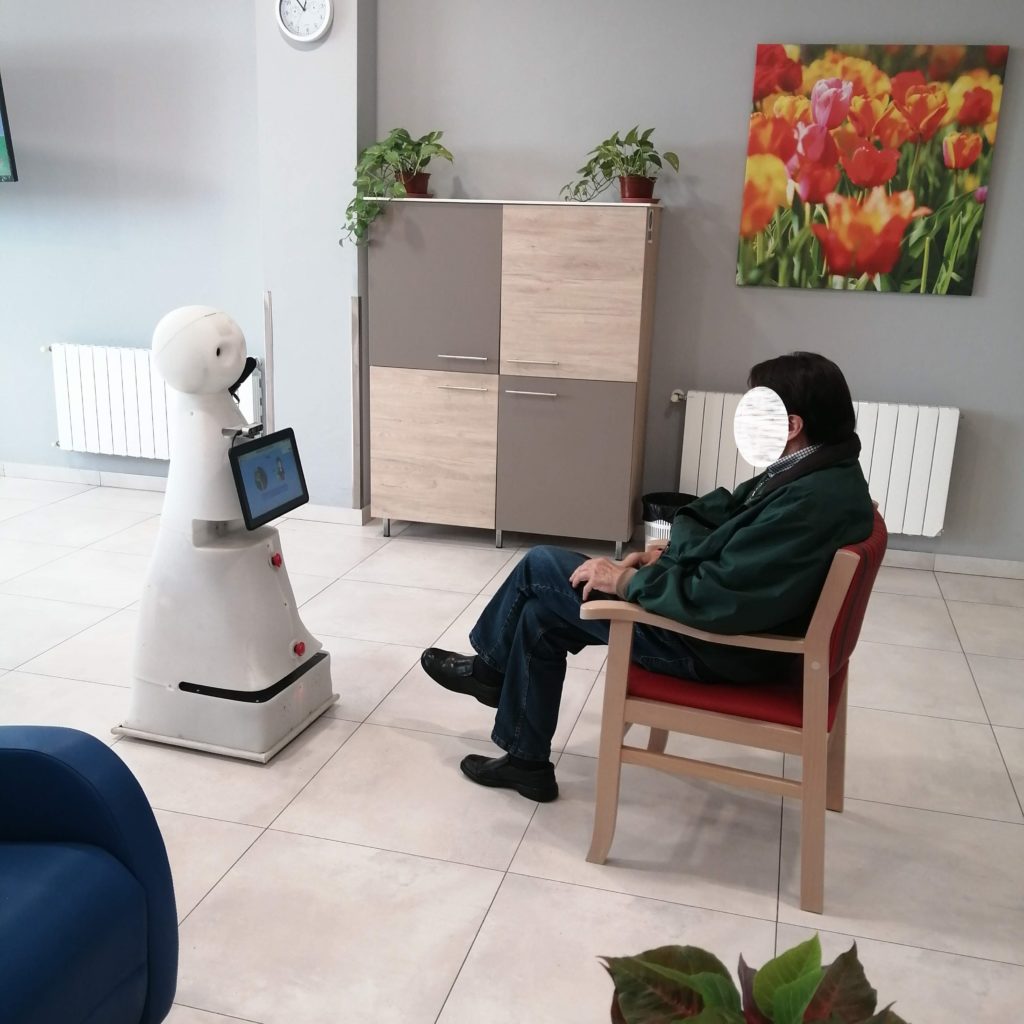
I was able to collect data there thanks to Blue Ocean Robotics, EINST4INE’s industry partner, and thanks to the University of Málaga and the Andalusian Health Service, who are working together on a project called SUSTAIN. In the past, the University of Málaga has been testing CLARC, a robot with a humanoid form that has a touch screen at the torso, a shotgun microphone, speakers, and a webcam that is able to perform autonomously routinely geriatric tests and thus leaving clinicians with more time for doing other tasks that seem more meaningful for their work purpose. Nowadays, CLARC is being tested to help residents video call their family members, which is a need that intensified during the COVID-19 lockdown, where the staff had to organize video calls for around 100 residents and their families. This situation was a turning point to finding technology that helps to overcome loneliness in isolation times.

Collecting data in Málaga: Testing mobile telepresence robots in a nursing home
Resident video calling with CLARC. Picture taken by the author.

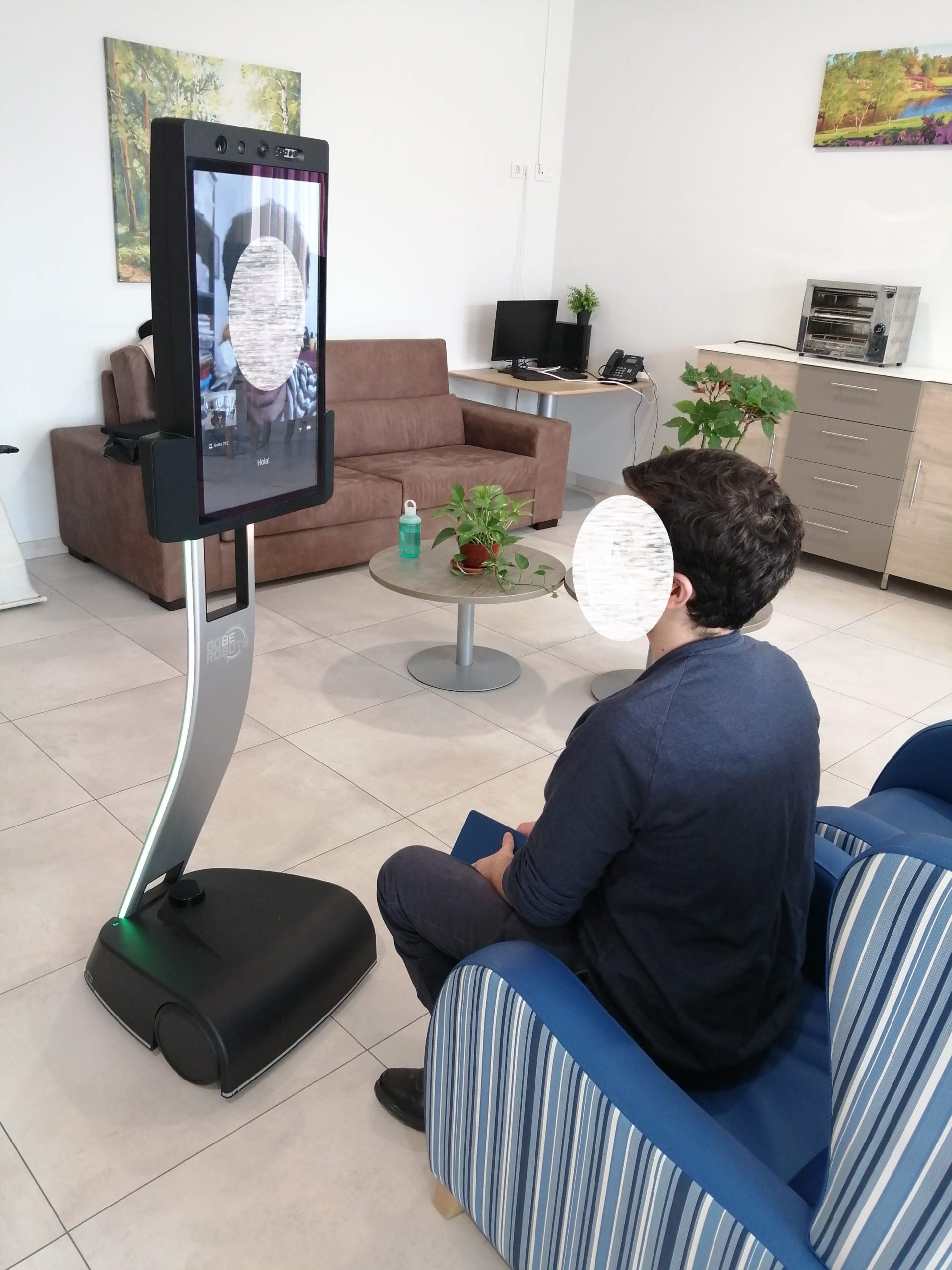
The other robot, GoBe, is a technology developed by Blue Ocean Robotics that has proven to be effective in facilitating telepresence. Its video calling features to facilitate doctor-patient and patient-family interaction is a breakthrough innovation that needs to be tested in healthcare settings to understand how safe and effective it can be. That is the main objective of SUSTAIN project: to evaluate the effectiveness of this technology to make video calls safely and also evaluate the medical, patient, resident, and family satisfaction of such interactions. Mobile telepresence robots are not new on the market, but they have not been tested in the healthcare sector with an emphasis on the potential to assist in crises such as the COVID-19 pandemic.

Collecting data in Málaga: Testing mobile telepresence robots in a nursing home
Videocall test with GoBe. Picture taken by the author.

It has been a great experience for the academic research opportunities and, of course, for the place and the people. Málaga is a very vibrant city with amazing food and friendly people. The Málagueños are very welcoming and will try to do anything so that you feel comfortable. It is also a student city with multiple faculties and a General Library, where I go to transcribe and code the interviews.

Collecting data in Málaga: Testing mobile telepresence robots in a nursing home
General Library from de University of Málaga. Picture taken by the author.

I am looking forward to continuing writing for this project. Having empirical studies in real settings is a great opportunity, and even more relevant in the field of robotics, where the majority of studies are in labs. It is true that there is a need to focus more on the effect of implementing robots in organizations from an employee perspective. It was an opportunity that I am very grateful for!


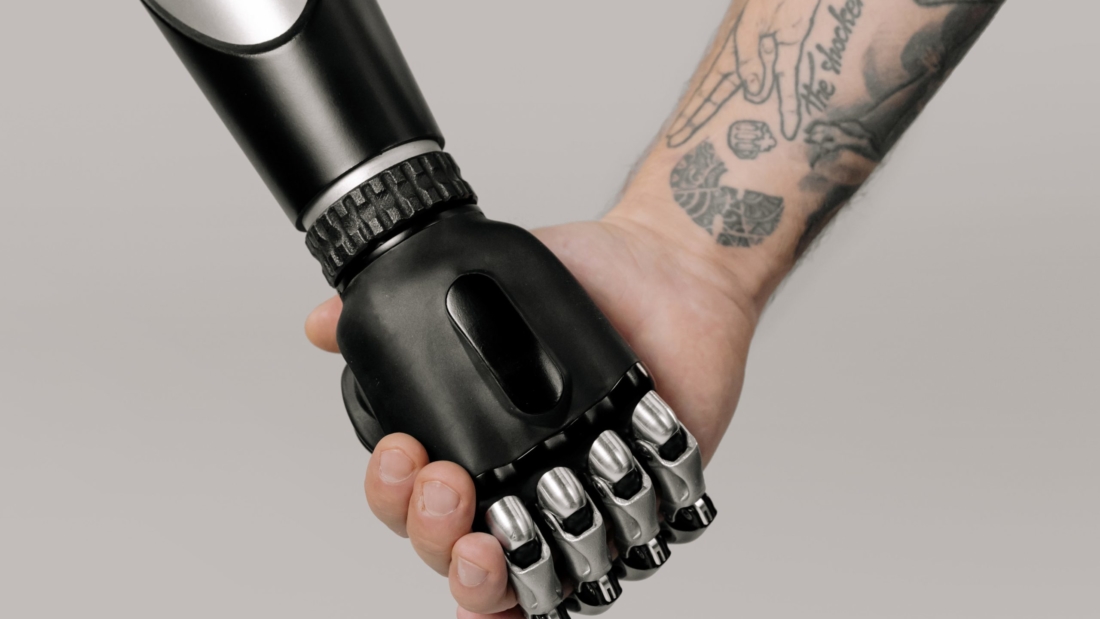
Photo by cottonbro from Pexels

What is life without an intention?

I believe in the power of setting an intention and seeing where it takes you. Being more abstract than a goal, an intention can guide you and allow the flexibility of taking different paths. In the last semester of my master’s degree in Tourism Management, I set my intention of contributing to the human side of digital transformation. Humans and technology co-create the present and the future. I firmly believe that digital transformation is not just about technology, it is about how it strategically works together with (and for) humans. 

Why?

Why would I set that intention when studying tourism? In the first semester of the Erasmus Mundus European Master in Tourism Management, I led a project on Big Data as an open innovation source to accelerate innovation in the tourism ecosystem. This research project opened my eyes to the amazing world of emerging technologies, open innovation, and sustainable development. Then, I wrote my master’s thesis about Intelligent automation and robotics in the service sector and the job transformation it brings. My goal was to understand how can tech start-ups develop Intelligent automation solutions that contribute to sustainable development’s socio-economic sphere. I got so many interesting insights from this research! By interviewing start-ups members and policymakers, I could have the perspectives of two actors that seem crucial for the ethical development of technology.  I wanted to continue this research journey, and when I found the EINST4INE project I thought it was the perfect opportunity.  

How?

How can I be part of the human side of digital transformation? By investigating robots from a social approach and bringing new perspectives of human-robot interaction. I believe in research that can make a difference in how technology is used and how it affects humans. This is why I want to fill some knowledge gaps and contribute to the strategic introduction and implementation of social robots. In the end, social robots should enhance humans’ interactions, not diminish them.

What is knowledge for if not for sharing it and putting it into practice? I think it is very important to disseminate all the findings, theories, and whatever we think might help someone. We have to share it, mostly with young generations because that is where the hope is placed right now (at least mine). So, at some point, I might also be teaching about the human side of digital transformation hoping to have an impact on future decision-makers.

What?

What kind of robots am I going to investigate? Social robots, for example, Mobile telepresence robots (MTRs) allow people to communicate remotely and have a physical presence. These robots are changing organizational dynamics, work practices and processes, occupations, and challenging the psycho-social factors in organizations. In the following years, I will be studying robots from a social approach and aiming to ultimately help people to use social robots in a way that benefits humans. 

Where?

My host is Aarhus University, in the Department of Business Development and Technology located in Herning, Denmark, a very cozy little town. I am part of the Advanced Interdisciplinary Research on Organisational Development (AIROD) and supervised by Sladjana Nørskov. I am very grateful to be part of the Aarhus University team and to have Sladjana guiding me through this path. Also, I am collaborating with our industry partner Blue Ocean Robotics which offers professional service robots mainly in healthcare and hospitality. Exciting research stays abroad are coming, but that would be the topic for another blog post.

I am very happy to have set that intention that brought me to where I am now. Let’s see what the future brings!

Photo by Possessed Photography on Unsplash