AI sustainability_chayanuphol_Shutterstock

When in Paris… talk about AI

Exploring AI Beyond the Hype: Reflections from the second edition of our workshop

I recently had the honor of co-organizing (together with my fellow colleague Domenico Di Prisco) and participating in the second edition of the workshop titled “Emerging Technology and AI: Beyond the Hype.” This initiative, launched by Prof. Lauren Waardenburg and my supervisor, Cristina Alaimo, aims to foster a deeper understanding of AI, cut through the surrounding hype, and explore its broader implications for management, society, and institutions.

First workshop “Emerging Technology and AI: Beyond the Hype” at LUISS in 2023:
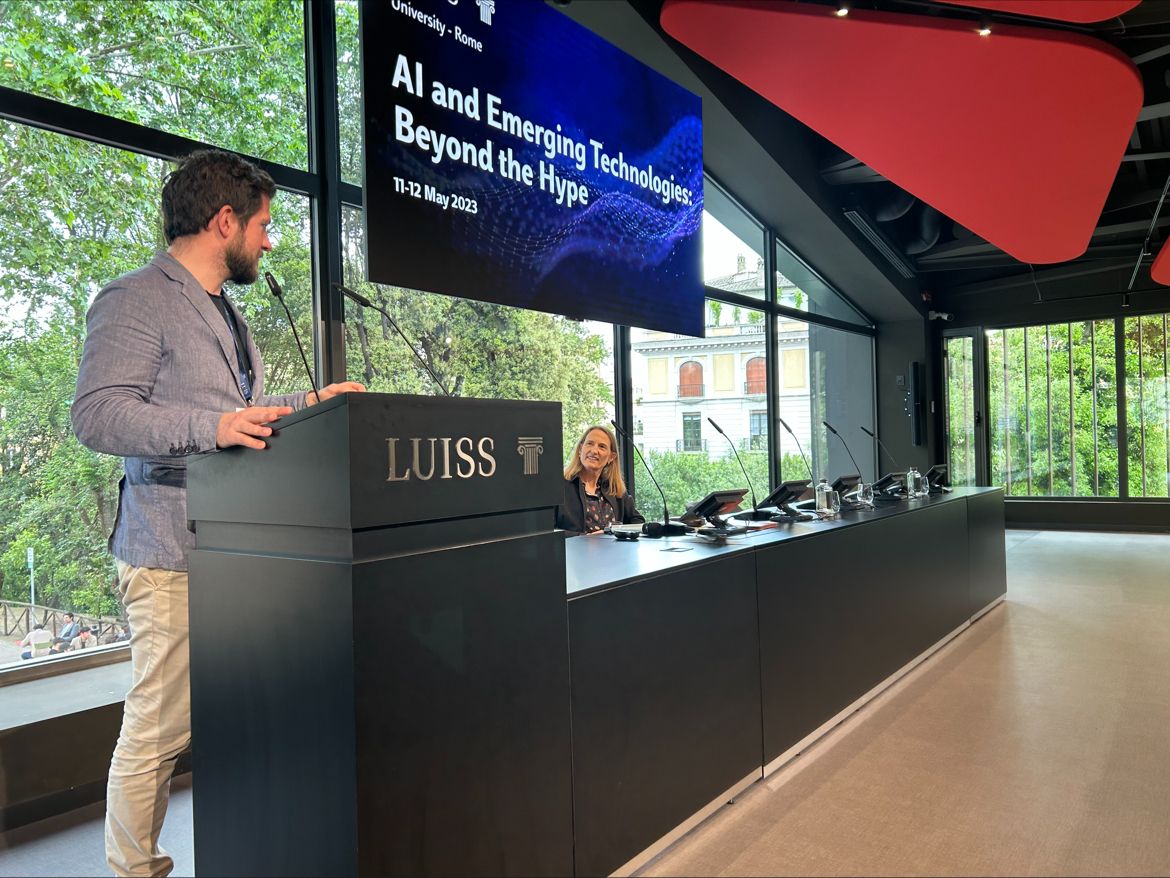
Source: Author

After the inaugural workshop at the LUISS campus in 2023, this second edition was held at the ESSEC campus in Paris. The event brought together experts from various disciplines, including information studies, organization and management theory, marketing, and even sociologists. They were all focused on studying the intricate impacts of AI on organizations and society and how these entities, in turn, shape AI.

2nd workshop edition in ESSEC Paris in May 2024:
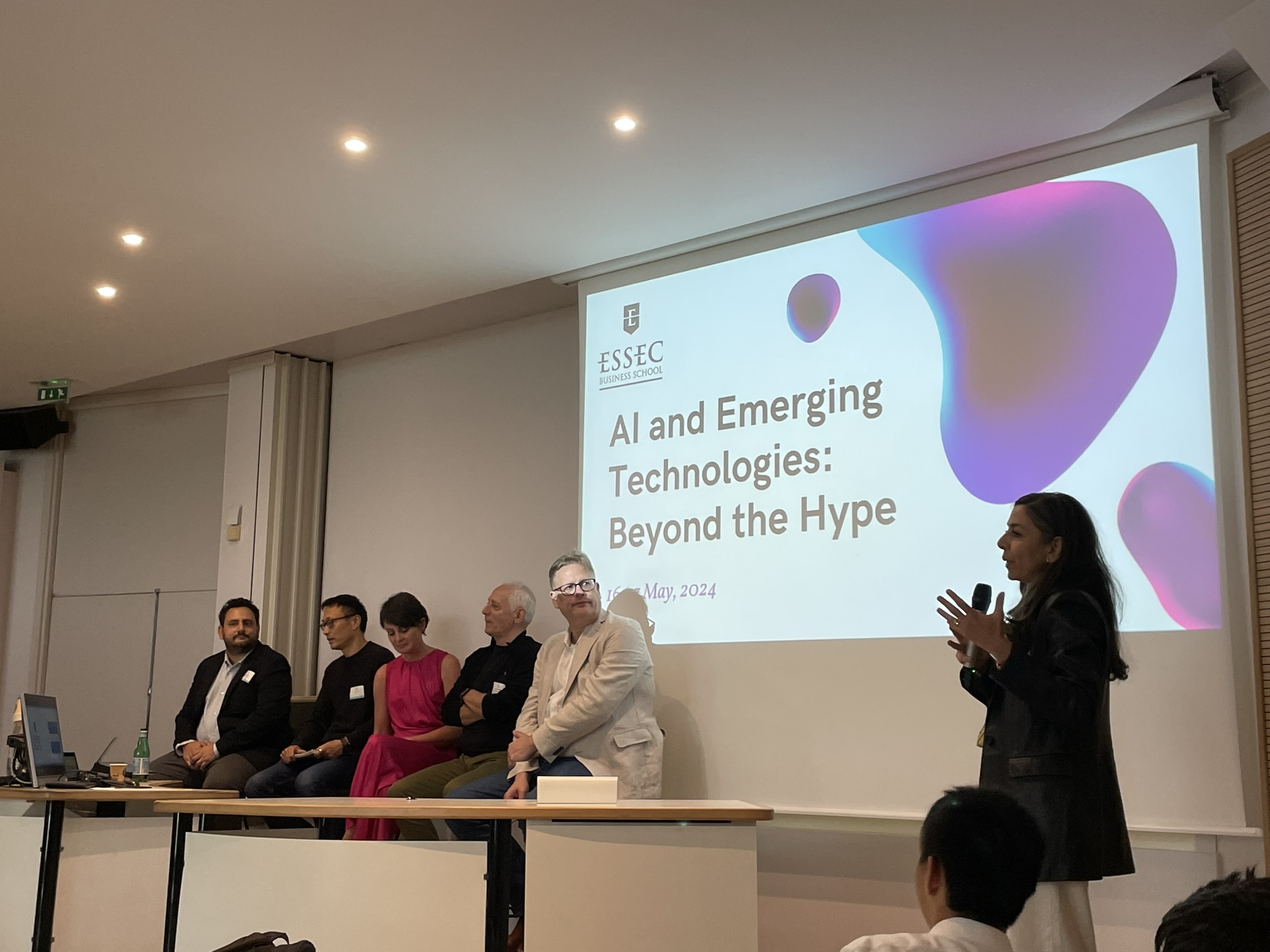
Source: Author

Over the course of two days, the workshop featured a series of insightful keynote speeches. The introductory keynote was delivered by Professor Jan Recker, who set the tone with his thought-provoking topic “Responsible AI = Sustainable AI?” He challenged the assumption that responsible AI is inherently sustainable, suggesting that we need to approach these concepts differently to ensure both responsibility and sustainability in AI development.

Following this, Prof. Elena Esposito delivered a compelling keynote on the transformative power of AI in making predictions actionable. She illustrated how, unlike traditional predictions like weather forecasts that merely prepare us for the future, AI enables proactive interventions to alter the predicted outcomes. This represents a significant shift in the role of predictions, akin to changing the weather itself rather than just dressing appropriately for it.

The second day of the workshop continued with equally engaging keynotes. Prof. Harris Kyriakou discussed the “Implications of AI for Research & Practice,” offering valuable insights into how AI is reshaping both academic research and practical applications. Prof. Melissa Valentine from Stanford University captivated the audience (making us solve math equations!) with her ethnographic study of an online clothing retailer. She demonstrated how introducing an algorithm transformed the organizational structure, with data science approaches to buying and planning redefining existing departmental boundaries.

These keynote speeches, followed by dynamic roundtables and project presentations, provided me with a lot of answers about AI, but it also left me with some new questions (which, I think, is a good thing?):

  • We still don’t truly know what falls under the category of AI. While many consider it an emerging technology, some argue that parts of it have reached the level of a general-purpose technology. As various fields navigate the creation and adoption of digital and advanced technologies, it’s uncertain whether we will have a clear answer to this question even next year.
  • This uncertainty leads to broader questions about our common understanding. Do we mean the same things when we talk about AI, sustainability, responsibility, accountability, and the role of data in addressing problems and finding solutions? How does this ambiguity impact our research? Are we experiencing an epistemological crisis due to the lack of clear definitions and shared understanding?
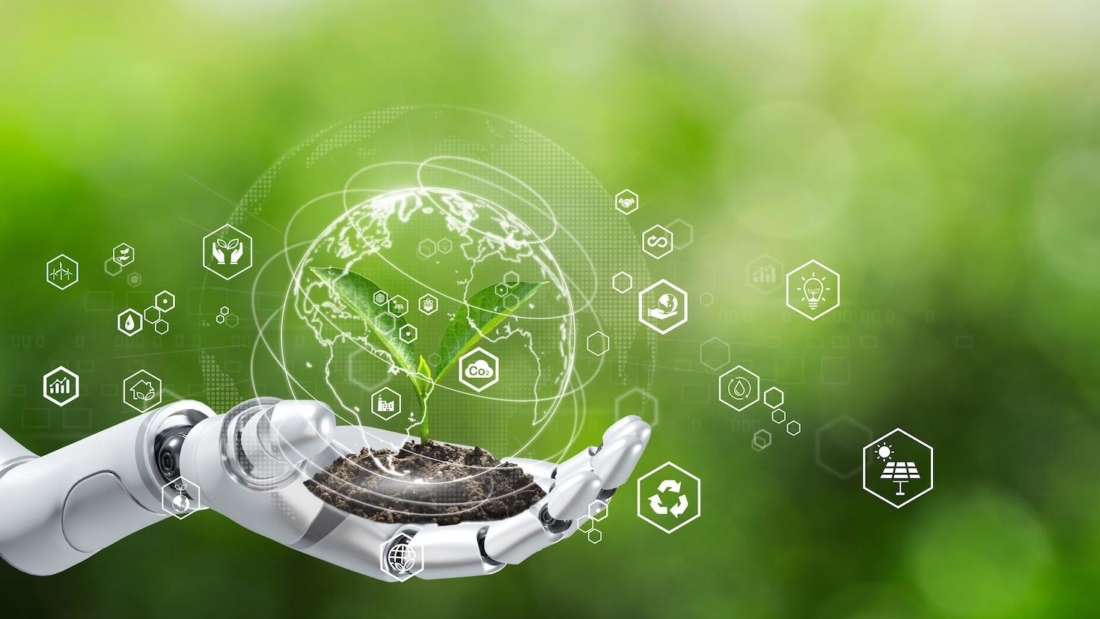
  • This also raised important questions about AI and sustainability. While AI is often touted as a contributor to sustainable solutions and development, it’s essential to consider the substantial resources these processes consume. Although AI can indeed foster sustainable outcomes, the experimentation process itself, even when shifted from physical to digital realms, still consumes a significant amount of resources. How, then, do we address this issue effectively?
  • As AI continues to become smarter and more autonomous, questions about accountability arise. Who is responsible for the good and bad decisions we outsource to AI? What decisions can we ethically and effectively delegate to non-human entities, and which should remain under human control? This issue is particularly pertinent in the use of AI for human resources, such as in the hiring process.

This workshop was and will continue to be an incredible opportunity to delve into these questions, fostering a deeper understanding of AI’s role and potential in society.

Looking forward to next year!

Source: Rahul/Adobe Stock

A practical look at Large Language Models

Good day, developers and aspiring coders! The potential of Large Language Models (LLMs) has sparked excitement in the AI community. These AI superstars are transforming how we interact with computers, and comprehending them is an essential skill for any developer or student interested in the future of technology. So buckle up and prepare to dive into the exciting world of LLMs!

Consider a neural network on a data binge, consuming mountains of text and code. That’s basically what an LLM is. These models are trained on large datasets, allowing them to understand the complexities of language, including grammar, syntax, etc. What’s the secret weapon behind this learning process? Transformers are a specific type of neural network architecture that excels at analysing sequential data such as text. By analysing these massive amounts of data, LLMs become experts in predicting the next word in a sequence, translating languages, creating unique material, and even answering your questions in an informative manner.

LLMs are a developer’s toolkit, full of potential applications. Here are a few ways to use their power:

Code completion and bug detection: Are you stuck on a particular line of code? LLMs can analyse your existing code and provide improvements or even uncover possible flaws. Consider your friendly neighbourhood debugging assistant, all powered by AI!

NLP projects: Create chatbots, virtual assistants, or sentiment analysis tools. LLMs can be an invaluable resource. They can assist you in training your models on large amounts of text data, enhancing their capacity to interpret and respond to real language.

Creative Text Generation: Looking for a clever tagline or some code documentation inspiration? LLMs can generate a variety of imaginative text formats, serving as a catalyst for your own creative spark.

Machine Translation Integration: Developing a Global App? LLMs can assist you with implementing seamless machine translation services, allowing your users to communicate with your application in their native language.

These are just a few ways developers can use LLMs. As the field advances, we should expect even more fascinating applications to emerge.

Getting Started with LLMs: A Developers Playground
Are you ready to try with LLMs? Here’s a simple roadmap to help you get started:

  1. Choose Your Platform: Several cloud platforms provide access to pre-trained LLM models via API. Popular choices include Google AI Platform, OpenAI API, and Amazon Comprehend.
  2. Explore Tutorials and Documentation: Most platforms provide extensive documentation and tutorials to assist you get started with their LLM services. These tools will walk you through the process of configuring your environment, submitting requests to the LLM, and analysing the outcomes.
  3. Begin with Simple Tasks: Don’t plunge right into creating a sophisticated chatbot! Start by experimenting with simple tasks such as text generation and sentiment analysis. Before moving on to more complicated projects, be sure you have a strong understanding of how LLMs work.
  4. Explore Existing Libraries: The open-source community is constantly creating libraries and frameworks for working with LLMs. Consider using libraries like TensorFlow or PyTorch to simplify your development process.

Remember that the field of LLMs continually evolving. Continue to be interested, investigate other platforms and libraries, and stay up to date on the latest developments. There’s a whole world of possibilities waiting to be discovered!

This is only the first step in your LLM journey. As these models evolve, they have the potential to become a valuable tool in your development toolkit. So, continue to study, experiment, and help shape the future of AI with LLMs!

wasen

Wasen Beers, Workshop Cheers, and Cobot Gears: Stuttgart’s Workshop Fiesta

Hey everyone!

If you think life as a PhD student is just about boring books and endless research, think again! My last few weeks have been a whirlwind of cool events, amazing people, and lots of learning. Let me take you on a quick tour.

A Dive into Enabling Technologies at Stuttgart

In the heart of October, I found myself amidst the historic beauty of Stuttgart, ready to attend a workshop hosted by the University of Stuttgart. The central theme of the event revolved around enabling technologies and their pivotal role in the digital transformation.

The workshop spread over three days, promised – and delivered – a potpourri of informative sessions, panel discussions with industry stalwarts, and glimpses into the future of digital advancements. From discussing AI and data’s role in research to exploring the dynamics of enabling technologies for ecosystems was genuinely enriching.

A personal highlight for me was the chance to present my ongoing research project on the implementation of collaborative robots (or cobots) in SMEs. It’s a subject I’m deeply passionate about, as emphasized in my paper titled “Cobots in SMEs: Processes, Challenges, and Success Factors”. The feedback and interactions that followed the presentation were invaluable, offering diverse perspectives and new angles to consider in my research.

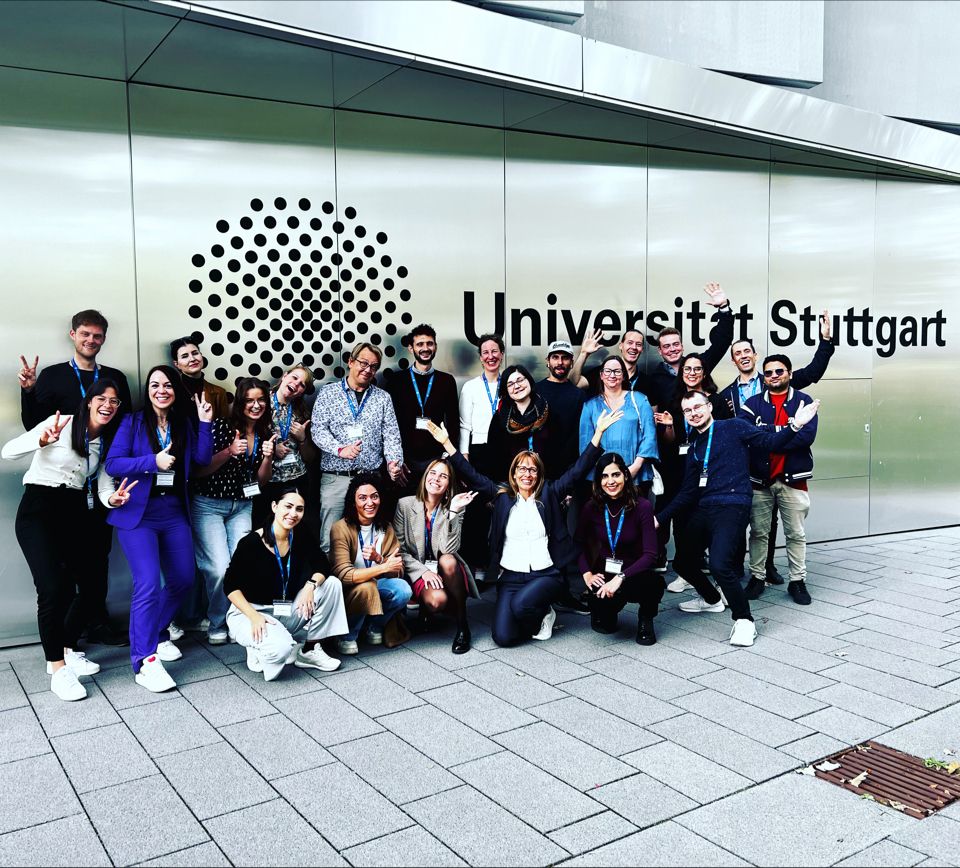
Participants at the EINST4INE Workshop in Stuttgart
Participants at the EINST4INE Workshop in Stuttgart (Source: photo taken by Christina Theodoraki)

A Taste of Local Culture

Before the intellectual marathon began, a few colleagues and I took a cultural detour to the vibrant Wasen event in Stuttgart. It was a delightful amalgamation of tradition, laughter, and shared memories – a perfect start to an intense week.

Reaching Out to the World

Another proud moment was presenting my conference paper remotely at the IEEE TEMs conference in Lithuania. The virtual platform extended the reach of my work to a global audience. Engaging with professionals and academicians from different corners of the world brought forth a myriad of viewpoints, making the experience thoroughly enlightening.

Looking Ahead

The journey, as they say, is never-ending. As I pen down these words, I’m in the midst of preparing a poster presentation for the upcoming World Open Innovation Conference in Bilbao, Spain, this November. I’m eagerly looking forward to further collaborations, feedback, and the joy of sharing my work with a broader audience.

In the world of academia, every day brings new challenges and revelations. These events and interactions have been instrumental in shaping my thought processes and providing direction to my research. I’m grateful for these opportunities and excited for the road ahead.

Until my next update, stay curious and keep exploring!

Ensuring Safe Human-Robot Collaboration: The Role of Vision and Proximity Sensors

Robots working alongside humans is becoming more and more probable as robotics technology develops. But when people and robots collaborate, safety is still a major issue. Vision and proximity devices can be used in this situation to guarantee secure human-robot interaction. Robots can detect people, objects, and obstacles in their environment due to vision sensors. They track and identify motion and shapes using cameras and other tools. Robots are able to identify and steer clear of humans and other objects with the help of this ability.

  • As the use of robots spreads across a variety of sectors, safety concerns regarding human-robot collaboration have taken on greater significance.
  • Robots can sense their surroundings and identify objects, people, and obstacles with the help of vision sensors.
  • Proximity sensors can help avoid collisions by detecting the existence of an object or person and their proximity to the robot.
  • By utilizing both kinds of sensors, robots can more accurately perceive their surroundings and decide how to interact with people.
  • Human-robot collaboration is becoming more prevalent in the industrial and healthcare sectors, but safety is still of utmost importance in these environments.
  • While sensors can significantly increase safety, human supervision and training are still necessary to guarantee secure and productive human-robot interaction.

On the contrary, proximity sensors can both sense the presence of an object or person and their proximity to the robot. They employ a variety of technologies, including ultrasonic, capacitive, and infrared sensors, to identify changes in the environment and warn the robot to stop or slow down when a person is close. Robots can more accurately sense their surroundings and decide how to interact with people by combining these two kinds of devices. A robot in a manufacturing environment, for instance, could use vision sensors to recognize nearby people and proximity sensors to determine their closeness. The robot may slow down or halt if the person approaches too closely in order to prevent a collision.

Healthcare is a further application where vision and proximity sensors can be used for secure human-robot collaboration. When working with vulnerable patients, safety is of the highest importance. Robots can help medical workers with tasks like lifting and transporting patients. While proximity sensors can warn the robot to halt if the patient approaches too closely, vision sensors can track the patient’s position and movements. Additionally, sensors can be used by robots to track their own motion and recognize when something is wrong. For instance, a robot with a broken arm may be able to sense when it is moving too quickly or in the incorrect direction and stop before it does any damage. While sensors can significantly increase safety in human-robot collaboration, it is essential to remember that they are not infallible. For the collaboration between humans and robots to be secure and productive, human supervision and instruction are still necessary.

Finally, the integration of vision and proximity sensors can significantly improve the security of human-robot interaction in a variety of contexts, from manufacturing to healthcare. The distance between a person and a robot can also be determined using a depth camera, but it is more difficult to attach multiple cameras to the robot’s skin than it is to attach numerous proximity sensors to various regions of the skin in order to calculate the precise distance from various angles and prevent collisions. The project we’re working on also makes use of a camera and a proximity sensor for secure human-robot collaboration.


robot-g78f84ae61_1920

Robots, Drones, and Robo-Dogs, Oh My! A Journey Through the World of Robotics

“The best way to predict the future is to invent it.” – Alan Kay

Hello everyone! I’m happy to share some experiences that I’ve made during the last month. Recently, I had the incredible opportunity to accomplish my academic secondment at Aarhus University in Denmark and attend the European Robotics Forum in Odense with my EINST4INE colleague Alejandra Rojas.

ERF23

The European Robotics Forum (ERF) is an annual event that brings together experts in robotics from industry, academia, and government to discuss the latest developments in the field and explore potential collaborations. The forum is organized by the European Robotics Association (ERA) and typically features keynote speeches, technical sessions, panel discussions, and exhibitions showcasing the latest robotics technologies and applications.

The ERF serves as a platform for researchers, engineers, and entrepreneurs to exchange ideas and knowledge on a wide range of topics related to robotics, including industrial automation, healthcare robotics, service robotics, and artificial intelligence. It is also a forum for policy makers and industry leaders to discuss the challenges and opportunities presented by the rapidly evolving field of robotics, such as ethical and legal considerations, workforce training, and investment strategies. Even Crown Prince Frederick, His Royal Highness of Denmark, attended the event this year!

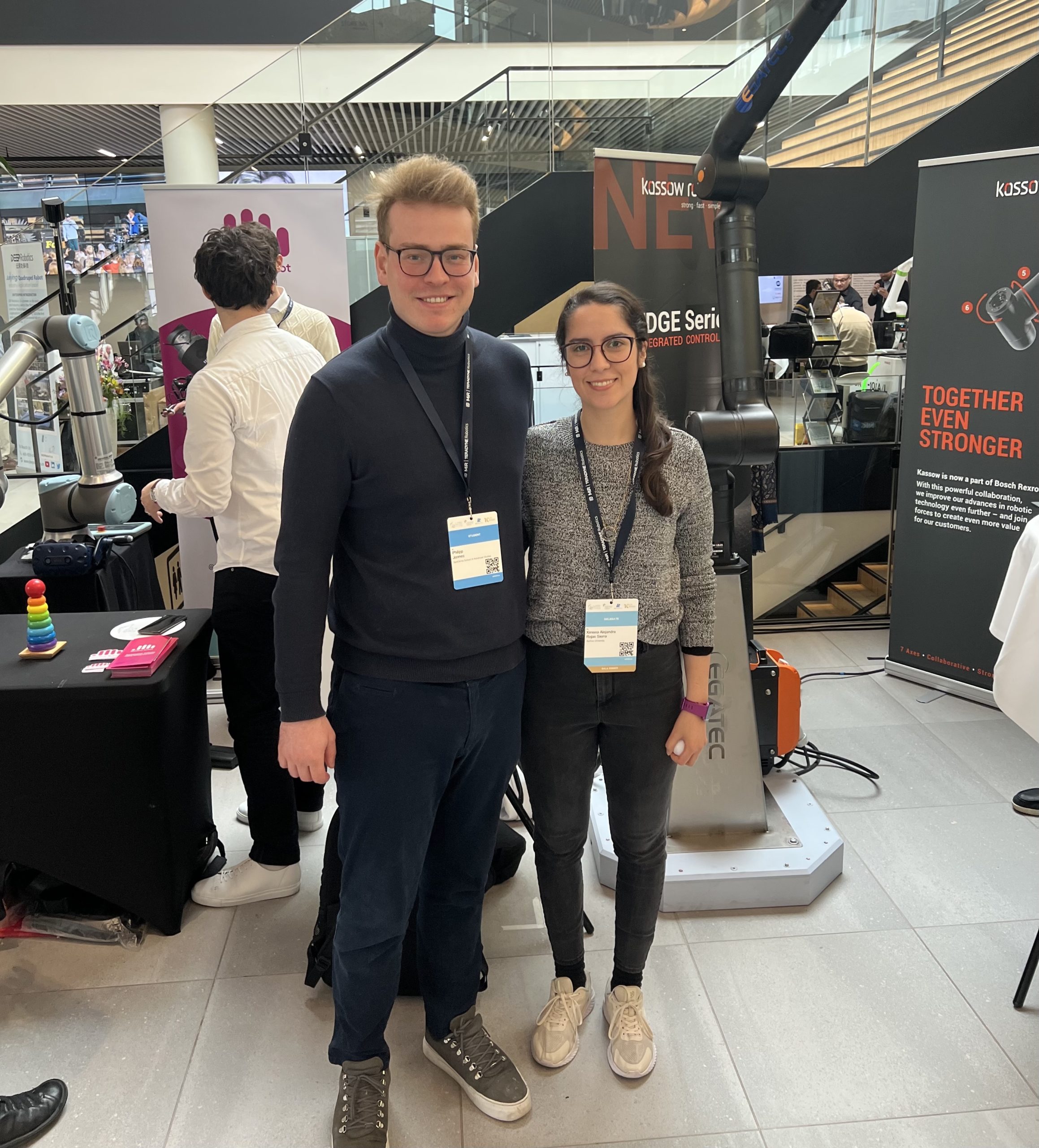
ERF with EINST4INE colleague Alejandra Rojas
ERF23 with EINST4INE colleague Alejandra Rojas. Source: own photo.

As a visiting researcher, I was thrilled to be able to connect with so many people who are passionate about robotics and human-robot interaction. I was able to learn about the latest developments in this field. I was particularly interested in discussions surrounding collaborative robots, which are designed to work alongside humans in manufacturing and other industries. During the forum, I had the pleasure of engaging with some brilliant minds, from both the academic and practitioner side. Their contributions to the discussions were invaluable, and I learned a lot from them.

Exploring the Fascinating World of Robotics

In addition to my research on collaborative robots, I’m also fascinated by other robotic technologies such as drones and robotic dogs. These technologies are shaping our world in profound ways, and I believe they have enormous potential to improve our lives. For example, drones have the ability to conduct aerial surveys, deliver packages, and even help with search and rescue missions. Robotic dogs, on the other hand, can be used in a wide range of applications, from military and law enforcement to assisting people with disabilities. I find the intersection between these technologies and human needs to be particularly interesting, as it challenges us to think about how we can design and use robots in ways that are safe, ethical, and beneficial for society as a whole.

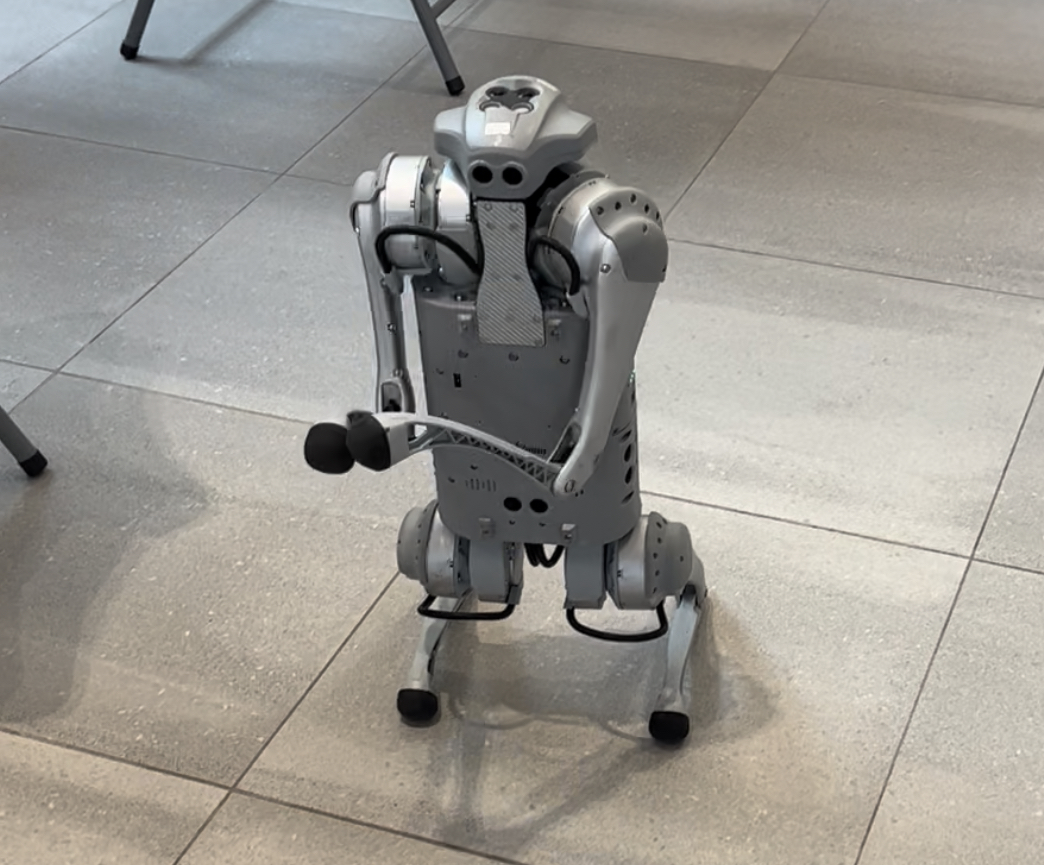
Robotic Dog ERF23
Robotic Dog ERF23. Source: own photo.


The Journey Goes On

Aside from the forum, I also spent time at Aarhus University, where I was conducting interviews with SMEs located around Denmark. These interviews are an important part of my research, as I’m studying the implementation of social and collaborative robots in organizations. By understanding the effects of cobots on an individual and firm-level, I hope to achieve a clearer understanding of cobot implementation processes, organizational opportunities and challenges.


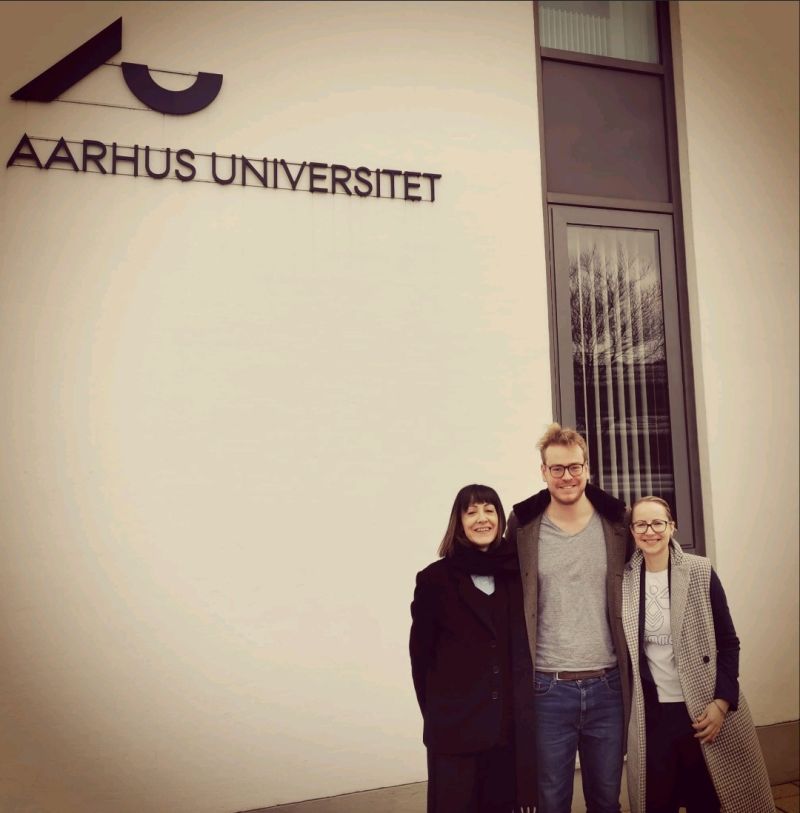
Visit at AU with Agnieszka Radziwon and Cristina Marullo
Visit at AU with Agnieszka Radziwon and Cristina Marullo. Source: own photo.

Overall, my trip to Denmark was an amazing experience, and I’m so grateful for the opportunity to connect with so many brilliant minds in the robotics field. I’m excited to continue my research and see what developments the future holds for human-machine interaction models. I am also looking forward to the next EINST4INE Summer school and see my ESR friends in person again. Thanks for reading!


aideal-hwa-OYzbqk2y26c-unsplash

Guilt and (or?) responsibility for autonomous robots.

I think that it is interesting to reflect on guilt and responsibility in relation to the impact of autonomous robots, that is, artificial agents that can do human tasks with no direct human control [1]. Even if robotics technology is not yet ready to deploy fully autonomous robots, it is a good practice to think about what could and should happen in the future. Intelligent machines will become autonomous, meaning that the designers, developers, and deployers have no full understanding and control over the behavior of such technologies. This causes challenges to assign responsibility because it seems unfair to blame humans for the actions and consequences of robots.

Research shows that designers and developers of AI systems in startups don’t feel responsible for the unintended consequences of technology [2]. For example, a robot designer does not feel accountable for the impact of an autonomous bartender robot on human bartenders, clients, service workers, and managers of an automated hotel bar. The robot designer is just doing his or her job: developing a new technology that solves problems.

I think a distinction between guilt and responsibility is interesting in this context because responsibility is not a feeling nor an emotion, such as guilt. When designers, developers, salespeople, -and anyone involved in the long chain of stakeholders- say they don’t feel responsible for the impact of autonomous robots, they might be thinking about guilt instead. Guilt is an unhappy emotion that arises after you consciously or subconsciously feel that you did something wrong. This might be the reason why robot designers and developers are not feeling accountable for the social impact of the technology they produce, they are just doing their job, why would that be wrong? They don’t feel guilty, and therefore, they don’t acknowledge responsibility.

Responsibility is not synonymous with guilt, it is not an emotion that arises when you did something wrong, it comes from taking accountability despite your feelings or beliefs of right and wrong. This means that people are liable even when there is no obvious reason to be guilty. I think it is relevant to understand that although it is not wrong to produce autonomous robots, and thus, it does not make you guilty, it does make you responsible because technology is not only technically constructed but also socially and politically [3]. The impact of robots does not end in the 1 to 1 human–robot interaction, it continues in sociotechnical systems [4].

What does it mean to be responsible? To be accountable. To respond. To take action that will protect someone else’s interests. Then, for what are autonomous robot producers responsible? For anticipating impacts, reflecting, engaging in dialogue, and influencing the direction of technology [5]. And to whom are autonomous robot producers responsible? Being responsible implies responding to someone, including robot users in development processes, and being open and able to answer their questions [6]. And robot implementers and users should be responsible too. We would all have a share of responsibility, we would be co-responsible [3], as we are today with everything that is happening with climate change and many other societal problems.

We need to change this worldview, from feeling guilty to being responsible, if we want to have a smooth and positive transition to the use of autonomous robots when the moment comes.


Sources:

[1] D. G. Johnson, “Technology with No Human Responsibility?,” J Bus Ethics, vol. 127, no. 4, pp. 707–715, Apr. 2015, doi: 10.1007/s10551-014-2180-1.

[2] A. Rojas and A. Tuomi, “Reimagining the sustainable social development of AI for the service sector: the role of startups,” JEET, vol. 2, no. 1, pp. 39–54, Nov. 2022, doi: 10.1108/JEET-03-2022-0005.

[3]  J. Stilgoe, R. Owen, and P. Macnaghten, “Developing a framework for responsible innovation,” Research Policy, vol. 42, no. 9, pp. 1568–1580, Nov. 2013, doi: 10.1016/j.respol.2013.05.008.

[4] A. van Wynsberghe, “Responsible Robotics and Responsibility Attribution,” in Robotics, AI, and Humanity, J. von Braun, M. S. Archer, G. M. Reichberg, and M. Sánchez Sorondo, Eds. Cham: Springer International Publishing, 2021, pp. 239–249. doi: 10.1007/978-3-030-54173-6_20.

[5] B. C. Stahl and M. Coeckelbergh, “Ethics of healthcare robotics: Towards responsible research and innovation,” Robotics and Autonomous Systems, vol. 86, pp. 152–161, Dec. 2016, doi: 10.1016/j.robot.2016.08.018.

[6] M. Coeckelbergh, Robot ethics. Cambridge, Massachettes: The MIT Press, 2022.


thisisengineering-raeng-Bg0Geue-cY8-unsplash

Digital industrial platforms

During my PhD studies in the third semester, I had the opportunity to assist and teach some classes about the digital economy and specifically about digital platforms and ecosystems. While I hope that the students learnt as much as I did, I became highly interested in one topic:

Digital Industrial Platforms

Before diving into what digital industrial platforms are, it seems useful to define what digital platforms are:
Dating back to the nineties with the onset of the Internet and the increased communication and creation of online communities, native digital platforms such as eBay started to emerge, facilitating online commerce. Later, Amazon and Google made the most of the power of the network to become what they are today.

Nowadays, as technology continues to advance and pierces through new industry boundaries, new types of platforms have emerged. Industry 4.0 and the Internet of Things have led to the emergence of digital industrial platforms which allow firms to connect and collect data from industrial machinery and their environment in order to co-create new solutions and services.

GE’s Predix is one example of a digital industrial platform.

Check out GE’s “Predix” platform:

But, unlike commercial platforms, digital industrial platforms serve as both innovation and transaction platforms. They collect and analyze data from different industrial assets and make this information available to third-party companies so that they can create complementary products and services. Many of these platforms also act as a marketplace where they sell these solutions to industrial customers.

Another difference between B2C and B2B platforms relates to the way they are “built”. The rules that apply in the B2B sector may not apply to the B2C, as network effects are not as prevalent in the manufacturing industry due to the more complex nature of industrial products and the relationships between the third-party developers as well as the customers and the sellers.

What we can say, is that all digital platforms have a technological basis. Industrial platforms are an interesting case as they converge different types of machinery, digital, enabling, and general-purpose technologies. A recent paper by Jovanovic et al. (2022) assessing the creation of different industrial platforms illustrates the evolution of the connection between these technologies:

  • Most platforms start with collecting data about each machine or product through the installation of sensors. With this, companies gain a better understanding of their machinery and the connected processes.
  • Through analytics, the use of “advanced” sensors can give more information about the performance and weaknesses of the machines. With this, they are able to gather huge amounts of data that they store in a cloud (e.g. Microsoft Azure, AWS, etc.). This helps companies to proactively discover anomalies, and react before a problem arises.
  • Finally, AI technologies can help assess the technicalities and data generated by machines and their surroundings. Most importantly AI technologies contribute to the autonomy of the system, like the GE Predix platform, where trains can accelerate and decelerate depending on if you’re driving up a hill or down a hill.

So, even though most scholars have agreed that technology can drive the growth of ecosystems, we still don’t know much about the interaction of these technologies and how they are connected to the formation and expansion of ecosystems. .. So stay tuned while we find out!


References:

Jovanovic, M., Sjödin, D., & Parida, V. (2022). Co-evolution of platform architecture, platform services, and platform governance: Expanding the platform value of industrial digital platforms. Technovation118, 102218. https://doi.org/10.1016/j.technovation.2020.102218

Extended Reality

XR – Extended Reality

Immersive experiences are constructed by merging the physical and virtual worlds. Among the technologies that are gaining more popularity are Virtual Reality (VR), Augmented Reality (AR), and Mixed Reality (MR). Recently interest in Extended Reality (XR) has grown rapidly.

Current developments in technology have led to the extension of the terminology used to describe the merging of the physical or real world with a virtual world. All mentioned terms refer to a combination of virtual and physical worlds using various digital media to create new, blended spaces. In recent years, we have heard and read a lot about Virtual Reality and Augmented Reality.

Virtual Reality (VR) is like a new reality that is created. It is a simulation of an environment or a three-dimensional image. People can interact with that virtual environment by using equipment such as headsets, helmets, glasses, or gloves. Increasingly such equipment comes with more sophisticated sensors, enabling more refined experiences. A headset allows the user to be immersed in the VR experience; the user can see a virtual world delivered by computer-simulated images and sounds.

Augmented Reality (AR) is often described as the merging of our normal reality with computer-generated digital graphics. Unlike virtual reality, users do not experience being in a virtual world, but they see the real world with an additional digital layer. Often used by enabling the camera of handheld devices such as mobile phones or tablet computers, AR allows a new kind of display which is usually portable.

Picture: Freepik.com 

Mixed Reality (MR) combines the features of VR and AR. A more recent term, mixed reality is often used in a similar way as augmented reality. MR is used to create three-dimensional images of realistic objects or complex environments where real and virtual worlds are blended. The interaction of digital and physical elements in real-time constructs a new space. MR is defined as a “continuum between the real and the virtual environments” [1].

In addition to the combination of real-world overlaid with a virtual layer as provided by AR, digital environments for mixed reality can use not only portable devices but physical environmental elements such as rooms or buildings. The fact that both sellers and users or buyers can interact with these objects or environments makes MR attractive for application in business. Sellers can provide immersive experiences with MR that help demonstrate how a product will look in a certain space. For instance, fitting furniture into a client´s home or demonstrating how a building looks and how it will fit into an area or neighborhood are useful features for marketing and sales. Other examples include head-up displays as used in the automotive industry. Using MR, clients can interact with the object and experience it in a new way.

Picture: Freepik.com

So, VR constructs a new reality, AR consists of the physical world that is overlaid with a digital layer, and MR allows new experiences through interaction with an object or a product… what about Extended Reality?

Extended Reality (XR)

Extended Reality or XR is a relatively new expression. It is an emerging umbrella term that includes Virtual Reality (VR), Augmented Reality (AR), and Mixed Reality (MR). The full spectrum of real and virtual environments is covered by XR. [2] It refers to computer-generated environments. By overlaying a virtual layer over the physical reality, XR creates entirely immersive user experiences using computer-generated images and sensors.

In 2019, many stakeholders of XR product companies predicted that XR will become mainstream in the next five years. [3] Industry use cases are predicted to be mainly in the medical and manufacturing industries for business XR, whereas consumer XR will be mainly focused on media and entertainment, movies, television, and the gaming industry.

In education augmented and virtual reality technology offers new training opportunities that cannot be found in traditional classroom settings. XR will allow educators to explore new educational territory. Furthermore, XR helps facilitate new experiences for students, such as observing certain topics at different points in time throughout history or exploring distant places on earth with virtual visits. Students exposed to XR are enabled to experiment and engage in new ways. They may not only learn better but could also improve crucial skills like problem-solving or other abilities that are useful in daily life.

Multisensory Extended Reality is often used together with the term extended reality. In addition to the visual and the auditory senses, which have been mainly highlighted by VR and AR, it refers to immersion into a new reality through additional senses. The human senses are extended with sensory-enabling XR technology. These include the haptic sense, enabling the touch of objects with gloves, the sense of taste, simulated with an electronic tongue, and the sense of smell, simulated through an electronic nose or diffuser technology. [4]

Picture: Freepik.com

Which reality?

The possibilities offered by XR technology are seemingly endless. Businesses have begun to leverage this cutting-edge technology for a variety of purposes such as entertainment, education, or remote tours for remote visits to museums or tourist attractions. Marketing, real estate, the medical industry, media, and entertainment were the first to adopt it, but many more will follow soon. In 2022, the worldwide market for extended reality was valued at $38.3 billion. Predictions for 2030 see the market rise up to $394.8 billion. [5] The European XR industry is fragmented and less well-known than its competitors in Asia or the US. [6]

Industry has discovered what XR technology can do for them and has developed innovative ways to make use of these advanced technologies. As AR and VR are increasingly adopted, a rapidly growing list of sectors invests in the development of new applications.

New technologies are likely to continue the creation of additional new realities. People are given more control over how they interact with their physical or digital environment. Use cases for XR are seen in almost every industry. As potential applications for XR may go far beyond the sectors mentioned, XR is foreseen to revolutionize every industry in the near future.

References

[1] https://xr4all.eu/xr/

[2] XR4ALL is an initiative by the European Commission to strengthen the European XR industry. For more information see https://xr4all.eu/xr/

[3] https://www.visualcapitalist.com/extended-reality-xr/

[4] Santoso, H. B., Wang, J. C., & Windasari, N. A. (2022). Impact of multisensory extended reality on tourism experience journey. Journal of Hospitality and Tourism Technology.

[5] https://www.psmarketresearch.com/market-analysis/extended-reality-xr-market-insights

[6] https://xr4all.eu/about/