
AI sustainability_chayanuphol_Shutterstock

When in Paris… talk about AI

Exploring AI Beyond the Hype: Reflections from the second edition of our workshop

I recently had the honor of co-organizing (together with my fellow colleague Domenico Di Prisco) and participating in the second edition of the workshop titled “Emerging Technology and AI: Beyond the Hype.” This initiative, launched by Prof. Lauren Waardenburg and my supervisor, Cristina Alaimo, aims to foster a deeper understanding of AI, cut through the surrounding hype, and explore its broader implications for management, society, and institutions.

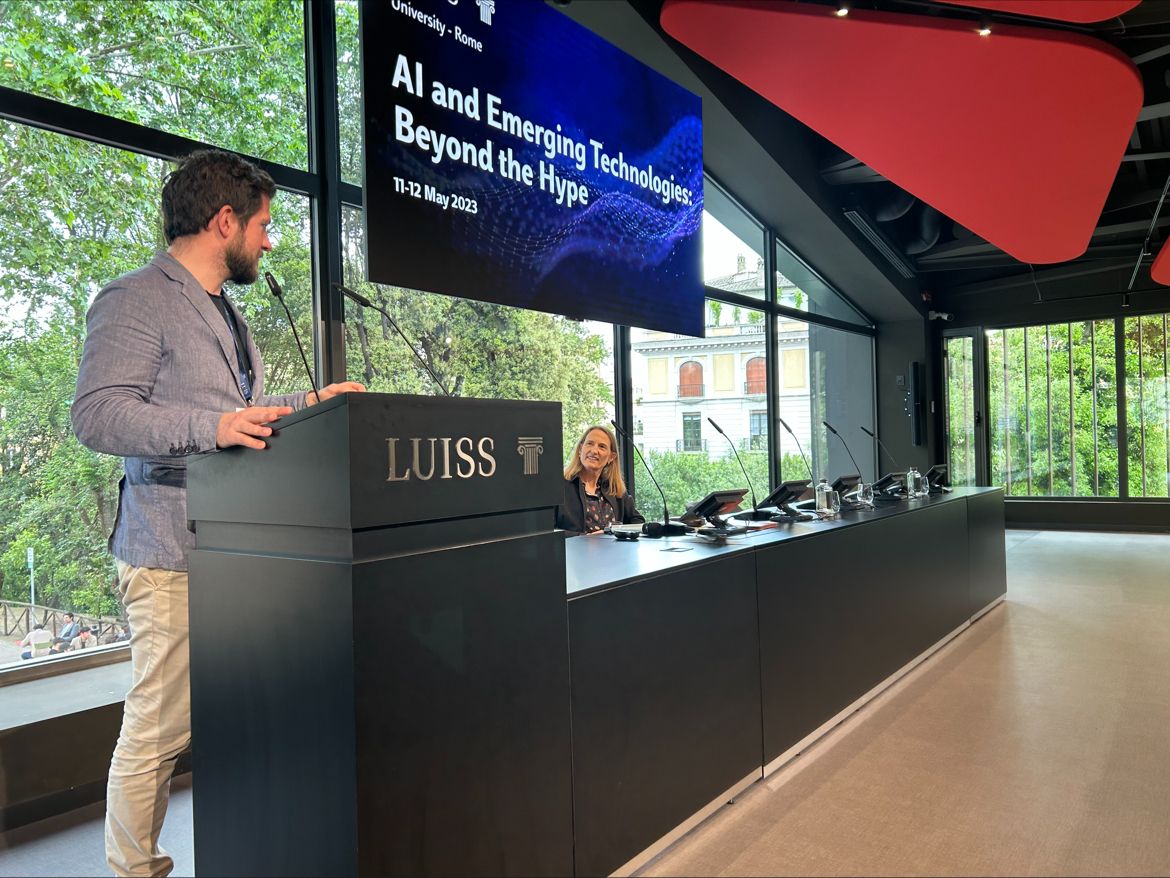
First workshop “Emerging Technology and AI: Beyond the Hype” at LUISS in 2023:
Source: Author

After the inaugural workshop at the LUISS campus in 2023, this second edition was held at the ESSEC campus in Paris. The event brought together experts from various disciplines, including information studies, organization and management theory, marketing, and even sociologists. They were all focused on studying the intricate impacts of AI on organizations and society and how these entities, in turn, shape AI.

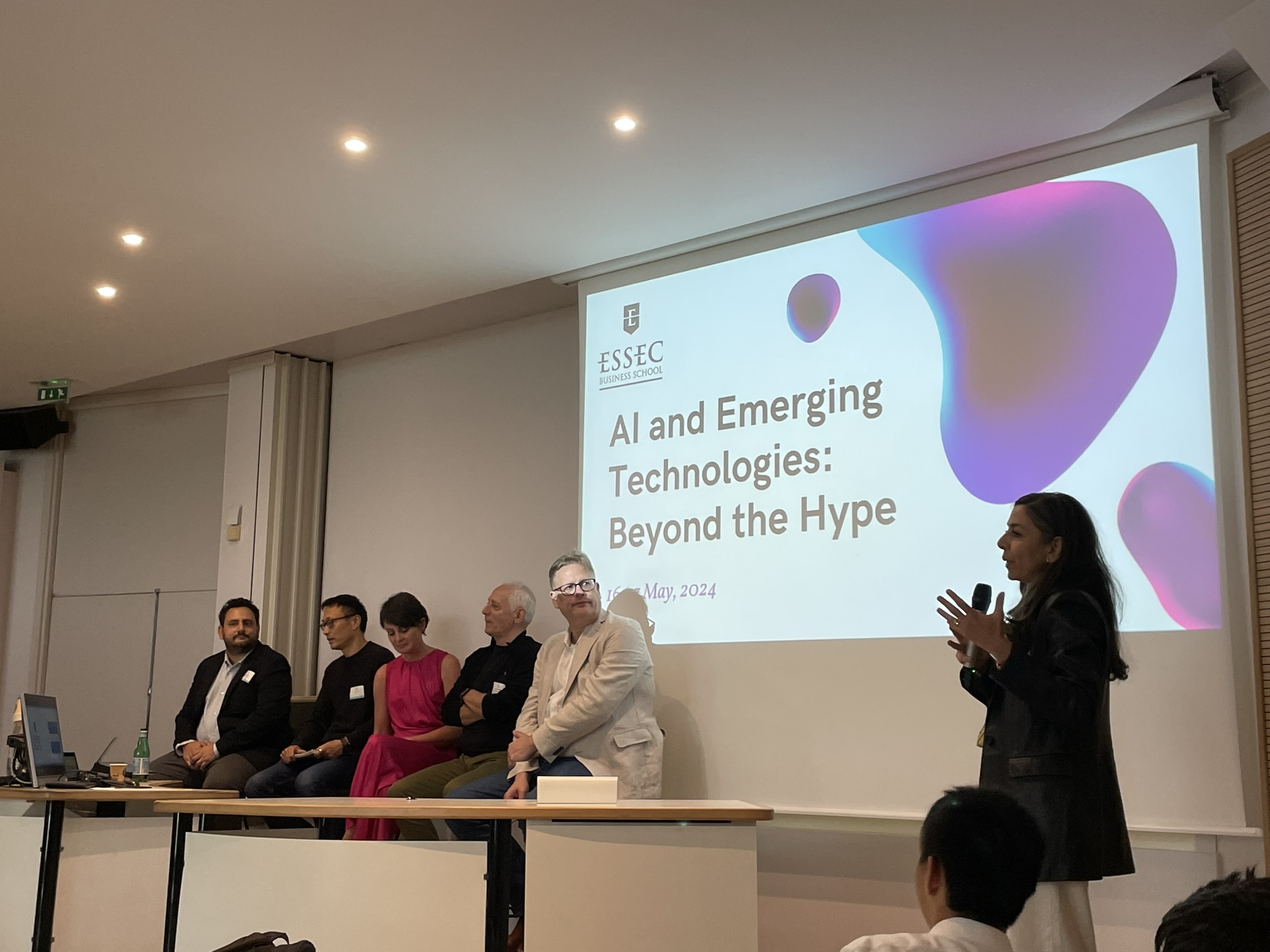
2nd workshop edition in ESSEC Paris in May 2024:
Source: Author

Over the course of two days, the workshop featured a series of insightful keynote speeches. The introductory keynote was delivered by Professor Jan Recker, who set the tone with his thought-provoking topic “Responsible AI = Sustainable AI?” He challenged the assumption that responsible AI is inherently sustainable, suggesting that we need to approach these concepts differently to ensure both responsibility and sustainability in AI development.

Following this, Prof. Elena Esposito delivered a compelling keynote on the transformative power of AI in making predictions actionable. She illustrated how, unlike traditional predictions like weather forecasts that merely prepare us for the future, AI enables proactive interventions to alter the predicted outcomes. This represents a significant shift in the role of predictions, akin to changing the weather itself rather than just dressing appropriately for it.

The second day of the workshop continued with equally engaging keynotes. Prof. Harris Kyriakou discussed the “Implications of AI for Research & Practice,” offering valuable insights into how AI is reshaping both academic research and practical applications. Prof. Melissa Valentine from Stanford University captivated the audience (making us solve math equations!) with her ethnographic study of an online clothing retailer. She demonstrated how introducing an algorithm transformed the organizational structure, with data science approaches to buying and planning redefining existing departmental boundaries.

These keynote speeches, followed by dynamic roundtables and project presentations, provided me with a lot of answers about AI, but it also left me with some new questions (which, I think, is a good thing?):

  • We still don’t truly know what falls under the category of AI. While many consider it an emerging technology, some argue that parts of it have reached the level of a general-purpose technology. As various fields navigate the creation and adoption of digital and advanced technologies, it’s uncertain whether we will have a clear answer to this question even next year.
  • This uncertainty leads to broader questions about our common understanding. Do we mean the same things when we talk about AI, sustainability, responsibility, accountability, and the role of data in addressing problems and finding solutions? How does this ambiguity impact our research? Are we experiencing an epistemological crisis due to the lack of clear definitions and shared understanding?
  • This also raised important questions about AI and sustainability. While AI is often touted as a contributor to sustainable solutions and development, it’s essential to consider the substantial resources these processes consume. Although AI can indeed foster sustainable outcomes, the experimentation process itself, even when shifted from physical to digital realms, still consumes a significant amount of resources. How, then, do we address this issue effectively?
  • As AI continues to become smarter and more autonomous, questions about accountability arise. Who is responsible for the good and bad decisions we outsource to AI? What decisions can we ethically and effectively delegate to non-human entities, and which should remain under human control? This issue is particularly pertinent in the use of AI for human resources, such as in the hiring process.

This workshop was and will continue to be an incredible opportunity to delve into these questions, fostering a deeper understanding of AI’s role and potential in society.

Looking forward to next year!

jcob-nasyr-PItsVmyu34Q-unsplash

“No project is an island”

In the world of academic research, it’s common to embark on a journey with a specific destination in mind (at least that was my path). Guided by established theories and prior studies, we often believe we know where our research will take us. My recent experience with a case study on innovation ecosystems, particularly focusing on environmental sustainability, was a humbling reminder of the unpredictable nature of inquiry.

As is the beauty—and sometimes, the frustration—of qualitative research (though it’s worth noting that surprises aren’t exclusive to this methodology), I was in for some revelations, when taking a closer look at how companies carry out projects…

… As I was delving into the practices of companies engaged in green transition projects, I encountered a case that exemplifies this perfectly: the renowned CopenHill facility in Copenhagen.

Source: (Rasmus Hjortshoj, Architect Magazine: https://www.architectmagazine.com/project-gallery/copenhill_o)

CopenHill is an example of a new breed of sustainability projects that are simultaneously functional and hedonistic. With its waste-to-energy plant, ski slope, and restaurant, CopenHill epitomizes the concept of “hedonistic sustainability”, a term brought to life by Bjarke Ingels, the architect behind the facility (Estika et al., 2020). Aimed at merging environmental responsibility with pleasure and aesthetic appeal, many of these new facilities stand as a testament to the interconnectedness of green projects with the social, cultural, and environmental fabric of their communities. They are “history-dependent and organizationally-embedded units of analysis” (Engwall, 2003), each following a unique trajectory influenced by a variety of factors.

Thus, the creation of such multifaceted projects involves a collaborative effort extending beyond the realms of engineering or business. To assess their success or failure, there is an increasing need to adopt inter- or multi-disciplinary approaches, as their implementation and development cannot be fully understood or effectively managed through a single field of knowledge. Instead, it requires the collaboration and integration of diverse disciplines, as I have come to realize. For this reason, the current findings of my case study research are steering me in a more sociological direction, to better understand the complexities of the green transition. In pursuit of this, I have enrolled in an immersive three-day course at Aarhus University, where I’ll delve into various sociological theories, including Actor-Network Theory and Transition Theory, to name a few. My aim is to enrich my comprehension of the historical and environmental contexts that surround my case study.

Of course, I’m eager to share my discoveries along the way, so stay tuned for more updates and revelations!


References:

Engwall, M. (2003). No project is an island: Linking projects to history and context. Research Policy, 32(5), 789–808. https://doi.org/10.1016/S0048-7333(02)00088-4

Estika, N. D., Kusuma, Y., Prameswari, D. R., & Sudradjat, I. (2020). The hedonistic sustainability concept in the works of Bjarke Ingels. ARTEKS : Jurnal Teknik Arsitektur, 5(3), 339–346. https://doi.org/10.30822/arteks.v5i3.487

Image by Macrovector on Freepik

The energy transition and the NIMBY syndrome

The global energy transition towards renewable and sustainable resources has been nudged by institutions such as the UN setting universal standards for social and environmental welfare, and external shocks have questioned the current standards of operation. As they show a pressing necessity to (not only) address issues like climate change, several clusters of organizations, and institutions have started to come together to tackle this challenge.

By “transforming the environmental crisis from a problem into an opportunity” (Fabrizio Di Amato, CEO of Maire Tecnimont during a talk about Leadership at LUISS in Rome), various industries have developed promising solutions like the production of green hydrogen and more.
However, some of these technologies remain costly, and more solutions are needed at a faster pace. The EU has financed and granted several European initiatives like the introduction of hydrogen valleys. Recently, the Important Projects of Common European Interests (IPCEI) (a European Union framework that supports large-scale, transnational projects in strategic industries, like the energy infrastructure) has granted NextChem, an Italian leader in energy transition technologies, and a subsidiary of the Maire Group, 194 € million, as part of the “IPCEI Hy2USE” EU project, for the development of one of the first Waste to Hydrogen plant in the world. The goal of the project is to set up the first industrial-scale technology hub for the development of the entire national hydrogen supply chain.
Projects which include plants like these use specific technologies to transform waste into hydrogen and/or other industrial products and represent a promising solution to address both waste management and energy transition challenges. By converting waste into valuable products, different transformational processes can be applied, and all this, by reducing greenhouse gas emissions, minimizing landfill use, and contributing to renewable energy production.

However, as with other infrastructure projects, like the infamous project of subway building in the Netherlands, they can often be met with community resistance. Concerns about potential impacts on health, the environment, property values, and aesthetics can lead to delays in project approvals, increased costs, and even project cancelations. Coined as the NIMBY syndrome (Not In My Back Yard), communities are often rooting for innovative solutions, as long as they are not close to them.

So, what can be done?

When planning the construction of a plant, the use of digital technologies can limit the environmental impact of the design and experimentation (for example through 3D mappings, like digital twins). But the actual construction of such projects needs strong incentives to attract stakeholders.

Even though this list is not extensive, there are several ways in which companies are adopting a proactive strategy to get various people and institutions on board:

  1. Engaging and including them early on in the decision-making process by maintaining open and transparent communication throughout the implementation and activity of the project.
  2. By collaborating with research institutions and other leaders in the field, projects can gain increasing legitimacy, for instance through grants and scientific outputs.
  3. Collaboration with local organizations and communities: while research centers and higher institutions advocate for the technology itself and the benefit it provides at a broader level, partnering with local organizations like NGOs and community leaders can help gain insights into community concerns and use their networks to facilitate communication.

While these are just general comments that I have been able to observe throughout my research, the energy sector remains a highly debated sector, undergoing major changes. Thus, there is a lot more to it than communication and engagement, and preparing the field to build an ecosystem infrastructure around a green transition can be very complex. With the most promising efforts, projects can still fail. Factual information may provide the technical arguments that speak for the plant, but effective stakeholder engagement fosters trust, cooperation, and shared value among different participants and could help create a supportive environment for problem-solving and innovation.


thisisengineering-raeng-Bg0Geue-cY8-unsplash

Digital industrial platforms

During my PhD studies in the third semester, I had the opportunity to assist and teach some classes about the digital economy and specifically about digital platforms and ecosystems. While I hope that the students learnt as much as I did, I became highly interested in one topic:

Digital Industrial Platforms

Before diving into what digital industrial platforms are, it seems useful to define what digital platforms are:
Dating back to the nineties with the onset of the Internet and the increased communication and creation of online communities, native digital platforms such as eBay started to emerge, facilitating online commerce. Later, Amazon and Google made the most of the power of the network to become what they are today.

Nowadays, as technology continues to advance and pierces through new industry boundaries, new types of platforms have emerged. Industry 4.0 and the Internet of Things have led to the emergence of digital industrial platforms which allow firms to connect and collect data from industrial machinery and their environment in order to co-create new solutions and services.

GE’s Predix is one example of a digital industrial platform.

Check out GE’s “Predix” platform:

But, unlike commercial platforms, digital industrial platforms serve as both innovation and transaction platforms. They collect and analyze data from different industrial assets and make this information available to third-party companies so that they can create complementary products and services. Many of these platforms also act as a marketplace where they sell these solutions to industrial customers.

Another difference between B2C and B2B platforms relates to the way they are “built”. The rules that apply in the B2B sector may not apply to the B2C, as network effects are not as prevalent in the manufacturing industry due to the more complex nature of industrial products and the relationships between the third-party developers as well as the customers and the sellers.

What we can say, is that all digital platforms have a technological basis. Industrial platforms are an interesting case as they converge different types of machinery, digital, enabling, and general-purpose technologies. A recent paper by Jovanovic et al. (2022) assessing the creation of different industrial platforms illustrates the evolution of the connection between these technologies:

  • Most platforms start with collecting data about each machine or product through the installation of sensors. With this, companies gain a better understanding of their machinery and the connected processes.
  • Through analytics, the use of “advanced” sensors can give more information about the performance and weaknesses of the machines. With this, they are able to gather huge amounts of data that they store in a cloud (e.g. Microsoft Azure, AWS, etc.). This helps companies to proactively discover anomalies, and react before a problem arises.
  • Finally, AI technologies can help assess the technicalities and data generated by machines and their surroundings. Most importantly AI technologies contribute to the autonomy of the system, like the GE Predix platform, where trains can accelerate and decelerate depending on if you’re driving up a hill or down a hill.

So, even though most scholars have agreed that technology can drive the growth of ecosystems, we still don’t know much about the interaction of these technologies and how they are connected to the formation and expansion of ecosystems. .. So stay tuned while we find out!


References:

Jovanovic, M., Sjödin, D., & Parida, V. (2022). Co-evolution of platform architecture, platform services, and platform governance: Expanding the platform value of industrial digital platforms. Technovation118, 102218. https://doi.org/10.1016/j.technovation.2020.102218

What ecosystems are not and related challenges...

What ecosystems are not and related challenges…

As the four main pillars that constitute my research topic at EINST4INE relate to ecosystem research, digital transformation, environmental sustainability, and Open Innovation, I would like to tell you a little about what I have learned in the intersection between technology and ecosystems. While some of my fellow EINST4INERs have similar research interests in ecosystem research, I hope to complement their thoughts on what ecosystems actually are and how they form.

Many paradigms nowadays emphasize the need for companies to adopt novel and disruptive technologies to stay afloat. Through such paradigms, like Open Innovation, business executives in today’s digital age have access to hundreds of new technologies that may revolutionize their operations and the quality of service they provide to customers, as collaborations and other types of connections enable companies to leverage the force of digital technologies, without having to create them in-house.
However, adopting cutting-edge technology isn’t enough to achieve these objectives; companies also need to know how to put such tools to good use for their operations and their consumers. This requires resources like time, funds, and expertise, which may be in short supply.

As such, how can businesses use the benefits of cutting-edge innovation and speed up the delivery of value to their customers?
Curating ecosystems is one solution: businesses should collaborate with one another, aligning talents and pool resources to develop ground-breaking new goods and services and shorten the time it takes to get them to market. And this is precisely what many businesses are doing.

As Gianlorenzo has given an overview of the different types of existing ecosystems, I felt the need to set the prerequisite of what ecosystems are not (based on Adner, 2017):

  • Business models based on ecosystems are not the same as supply chains. Tiers of suppliers in a supply chain feed into an ultimate point of value creation, but the suppliers themselves are neither part of the brand promise nor material to the value generated, although top suppliers may be quite important.
  • Then, platforms per se, are not ecosystems. While every platform has an ecosystem and is often the keystone actor (an ecosystem actor with a strong influence despite being relatively few in number. The term comes from the biological term of keystone species), there is a narrow focus on technology and transactions. Indeed, while platforms are concerned with interface governance, ecosystems are concerned with structures of interdependence.
  • Older terms and arrangements like Networks and Alliances have a similar connection as in ecosystems, however, these mostly focus on patterns of connectivity. In this sense, for Networks and Alliances, the focus lies more on actor ties rather than the value proposition, and just like for platforms, there is not enough focus on the structure of interdependence.
  • Open Innovation (OI) has also been related to ecosystem research. One could argue that OI provides a rather micro-perspective, taking into account the firm strategies. However, ecosystem literature applies a rather macro-vision, which helps us gain insights into the multilateral coordination between ecosystem partners in their quest to align their strategies to provide value.

Adner (2017) finds other similar structures which can be distinguished from ecosystems.

But, if we take a glance around, we can see that businesses of all stripes are attempting to implement ecosystem business models and, in many instances, even orchestrating their own ecosystems in an effort to generate profits. In Jessica’s post, ecosystem orchestration is defined as “hub players” taking the lead, where she clearly defined what an orchestrator is.
Of course, for companies, occupying the orchestrator or “hub actor” position can be beneficial for several reasons such as having a more centralized knowledge about the ecosystem, compared to other actors. However, orchestration is not necessarily easy:
The present academic literature tends to focus on successful long-standing ecosystems, which greatly looks at the organizational capabilities of firms, related to the success of their overall ecosystem. However, some scholars have extended this notion to the capabilities of the environment in which an orchestrator thrives, meaning that the success of the hub actor and the ecosystem depend on the architecture of the network, and how the network interacts with its environment.
From this, two streams of literature have emerged:
First, we can consider intentionally created ecosystems, departing from the definition of the overall value proposition that the ecosystem is supposed to achieve, and assembling actors that can contribute to the value creation and transfer in the ecosystem.
Second, we can consider the assemblage of different actors, who create and co-evolve a common value proposition together.

There are certainly differences in terms of processes and mechanisms of orchestration between the two approaches, however, some universal challenges that can impact orchestration overall can be distinguished (among others):

  • Leadership: some researchers argue for the importance of a hub actor who should facilitate the interaction between actors. However, not every firm has the capabilities to become an orchestrator and gather the efforts of all actors that ultimately define the success of the ecosystem.
  • Platforms: most platforms offer a space for orchestration as they, in some way, build the base for the ecosystem. Here the platform orchestrators can leverage several benefits such as Network Effects (when the value or utility of a service or product is defined by the number of users). Platforms and their surrounding ecosystem represent the most successful businesses nowadays as they achieve economies of scale very rapidly. That does not mean, however, that being successful is given… first, because network effects can also backfire (e.g. see Network Effects Aren’t Enough) and second, because what makes your platform successful can also make another platform successful!
  • Actor role & position: one of the dangers of maintaining good relationships with actors is the way an orchestrator treats its connections. When shifting from a traditional business model, some focal firms tend to see actors as suppliers rather than a relationships. This implies a shift or adaptation of business models to current ecosystem standards.
  • Finding the right business model: Ecosystem relationships imply a different strategic model that needs to contemplate the management of inter-and intra-actor relationships as well as the governance and coordination between multiple parties
  • External factors: As trust is crucial for successful collaborations, hub actors need to depart from their self-interest view and focus on shared efforts, which is necessary for the long-term success of an ecosystem. This can be understood as gaining legitimacy, not only within a given ecosystem but also gaining acceptance from the environment and society, and other institutions as a whole. Other external factors can also comprise the competition: an ecosystem formation can improve the current market conditions for the players, but also for the competition. Thus, orchestration necessitates a lot of coordination, management, and governance efforts to not be overthrown by competing ecosystems and their value propositions.

Although there are other factors that play a role in ecosystem orchestration (e.g. capabilities, modularity, complementarity, bottlenecks, etc.) for the sake of brevity and comprehension I have limited these to the challenges mentioned above.

What amounts to all of this is that the current literature provides examples of how ecosystems can be orchestrated, but there is still a lot to learn from failed ecosystems. Successes can give a lot of insights into “good practice” strategies, but these are not said to work for every ecosystem, precisely because of the heterogeneous nature of participating actors, and their environments.

Thus, while some research has looked at the “dark side of ecosystem orchestration” (Oliveira & Lumineau, 2019), which can impact a firm and impede the capacity of complementors and consumers to innovate, more insights from failures cases could tell us a lot more about what can go wrong during the orchestration process, as well as insights into ecosystem governance mechanisms and even organizational capabilities needed to support ecosystem orchestration.
While we will see or recognize more such failures in the future, I am sure that their lost efforts will have an ultimate purpose, which is the benefit for academia to study why some ecosystems fail and others thrive and thus, creating several implications for businesses.

References

Adner, R. (2017) Ecosystem as Structure: An Actionable Construct for Strategy. Journal of Management, 34: 39-58.

Oliveira, N., & Lumineau, F. 2019. The dark side of interorganizational relationships: An integrative review and research agenda. Journal of Management, 45(1): 231-261.

How thinking about publishing can help your research

How thinking about publishing can help your research

You are probably wondering why a first-year PhD student is already talking about how to get published. Even though my natural thought has always been to think about publishing after actually having written something, I have attended a course on How To Get Published taught by Prof. Dries Faems which has shown me otherwise.

As PhD students, and Early-Stage Researchers at EINST4INE, we should be able to recognize and apply the basic structure of an academic text, which includes an abstract, an introduction, a literature review, a method section, and a conclusion (at the least). This might differ according to the nature of our research, different journals might have different requirements – but the truth is that the academic world is competitive, so you might as well start now.

First, before you fit your paper into a specific journal, ask yourself these questions:

  • What is your research question?
  • How is your research question related to the current literature?
  • How will you use your data to answer your research question?

These are questions that both, author and reader need to be able to answer.

The next step would be to choose a journal.

After having established what kind of paper you are planning to write (conceptual, quantitative/qualitative, positivistic/interpretative), you will probably recognize the community of scholars who are working and have published in your line of study, and thus you can identify which people should read your work, and where they have published.

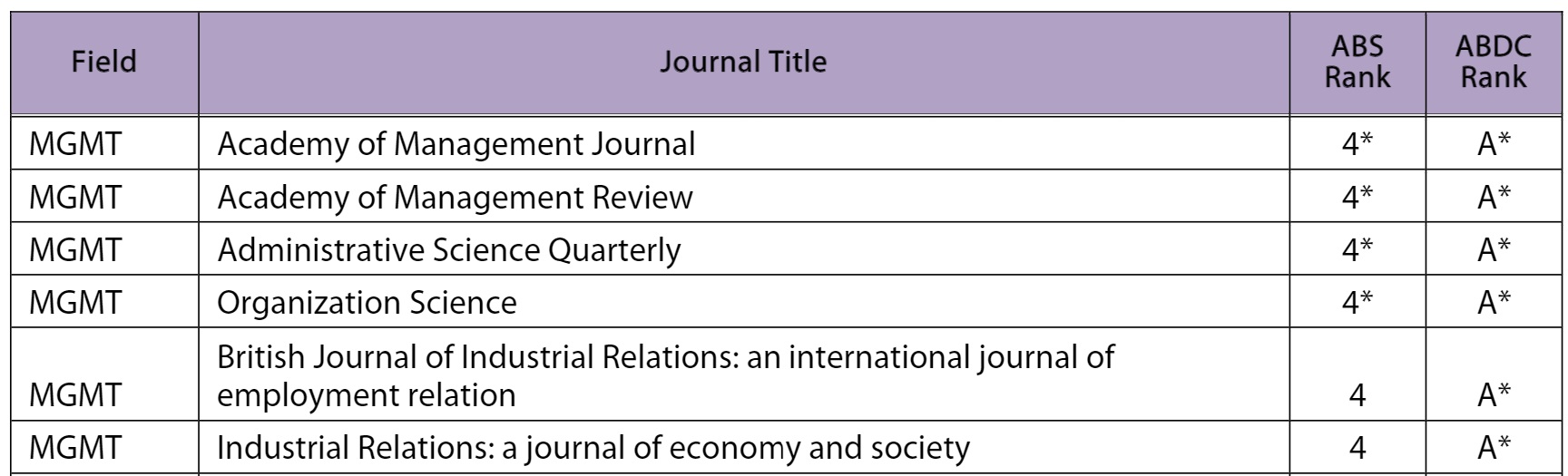
There are a number of websites and services which publish journal rankings according to their impact factor. Here, the impact factor represents the frequency with which an average article in a journal within a given year has been cited. Counting the number of times its articles are mentioned, determines the standing or prominence of a journal.

Example of the ABS ranking for Management (MGMT) journals [Image source: ABS (Association of Business Schools) and ABDC (Australian Business Deans Council)].
Being a Management scholar myself, I look at the yearly published ABS list, however other websites might publish similar information, and universities usually also offer guidance on the rank, reputation, and purpose of journals.
Then, another useful step would be to get to know the editors of the journals as well as assess the reputation of these journals in terms of processing time/quality of the feedback that they give (don’t forget to check the Open Access criteria/options). This can be done by contacting people that have had experience with the journal. You might also find that you want to target other journals which are not included in the big journal list but are still very relevant to your field of study. For instance, as a Management scholar, I might focus on the Academy of Management Journal (impact factor 10.2). But with a specialization in ecosystem research, the R&D Management (impact factor 4.3) Journal might also be a great fit.

Once you have made your selection of qualified journals, start writing your paper with the criteria of the journal in mind. This has definitely helped me not only to narrow down the most crucial sources of information for my research but also helped me find a research focus.

… So how do you write a paper that might get accepted?

According to Prof. Faems, there are a number of reasons a paper might get rejected, one of them simply being the reason that the paper does not fit the personality of the journal, emphasizing the need to work towards that target journal. Some other reasons include an absence of a clear theoretical contribution, a lack of novelty, and methodological issues.

Unfortunately, I don’t think there is a specific recipe that mixes a set of ingredients for success. But there are still some basic ingredients that might help:

  • Clearly position your project against existing research and theories
  • Formulate a good theoretical contribution
  • Good data and methodology won’t hurt

The best way to understand how you can embed your project in existing research is to visualize it:

Imagine you are entering a house and you have to choose to enter a room, which goes in line with your research. So, you enter the room of Management research. You try to find a table of people who you understand and where you feel comfortable enough to contribute to the conversation. So, you go sit at the table that talks about, let’s say Open Innovation. So, you’ve already positioned yourself in the Management field, focusing on Open Innovation. At the Open Innovation table, you are trying to recognize the recurrent themes and findings that are being reported and you identify the most important people at this table.
Once you have done that, you might be able to recognize missing links in the current research or you might make new links that you wish to develop in your research.

One challenge that many scholars and reviewers report is the clear positioning in one specific area of research. For instance, while I can identify a particular gap in the Open Innovation literature, I realize that I can address this gap with findings from the Ecosystem literature (for instance), which puts me at two different tables in my Management room. In this case, making links between two literature streams is good, if I make it clear. However, the more links I have, the more delicate it becomes and can confuse some people at my main table.

In terms of the novelty of the paper, reviewers are often looking for interesting ideas that have the potential to impact future research, i.e. a strong contribution. This process seems tricky, as novelty does not necessarily mean interesting. Imagine you have found a research gap in your given field… This doesn’t imply that it’s a novel idea, it might well be an idea that has already been thought of but is not worth researching further. Thus, an editor might reject your paper on the basis of lacking a novel and relevant contribution. This is the reason why having good data doesn’t hurt. While your theoretical part might lack some grounding and novelty (which, for the record, it shouldn’t), having a unique and well-developed dataset that is difficult to access, can become an advantage during the review process.

The theoretical grounding, novelty, and contribution of your research, along with your data (depending on the nature of your research) are the main selling points of your research, which should be communicated at the beginning.

And the best way to communicate it is through the introduction, which is the gateway to a good paper. Indeed, apart from the abstract which swiftly summarizes your research, the introduction is one of the most important written parts of your research. In fact, editors make a first judgment based on the quality of the introduction which should include:

  • The community you want to talk to
  • Your research gap
  • How you address the research gap
  • Your main findings and contributions

Of course, this does not mean that one should disregard other sections like the discussion section, where you can go more in-depth into discussing the implications of your findings and iterate on the practical and theoretical contribution you wish to make.

Finally submitting it…

Once you think you have managed to position your research in a clear and concise manner, the last step is to get some friendly reviewers (such as fellow researchers, supervisors, etc.) to look over your work before submitting it to your journal of choice.

And then you wait…

You will most probably receive feedback from the editor with reviews from researchers in the same or related field (some that might even be cited in your paper!) who will either have immediately rejected it or might have accepted it with some changes. This return can provide you with a relevant critique on how to improve your paper, and (hopefully) arm you with the tools necessary to survive the next round of reviews and get you published.

I hope I was able to provide a little insight into what I have learned about publishing and how I aim to tackle my research. Of course, there are different ways to conduct research and get published. I have certainly started following my own advice from this post, which was mostly inspired by what I have learned following Prof. Faems’ How to Get Published course.
And who knows, this might even be helpful for becoming a good reviewer or even editor at some point…


You need to get lost before you find your way

You need to get lost before you find your way

Looking back at the first term of my experience as a Ph.D. researcher at LUISS Guido Carli University in Rome and as a member of the EINST4INE program, here are some things that I have learned…

  • Classes have a lot to offer
  • In today’s digital world, social media is essential
  • You need to get lost before you find your way

I was previously employed at a firm that specialized in market and consumer data before commencing my PhD in September 2021. And while I learned a lot about recognizing new trends and the way to do research there, I became increasingly intrigued by the way society and the economy are being transformed by digital technology. That’s why I began looking at ways that my future employment may have a positive influence on society and help to address key developments and concerns that we’re all grappling with. Because of this, when I applied to the EINST4INE program, I was eager to collaborate with like-minded academics, educators, and industry practitioners throughout Europe and beyond.

Now the beauty of the program is the established network, where we’re able to share our own experiences and build a communal one. As a result, one of the first things my close friends and family asked when I informed them I was relocating to a new country to begin my academic career was “what are you going to do there?”, “what is the program of the PhD?”

Some people were taken aback when I told them I was a PhD student taking classes, but now that I’ve been in those classes for over six months, I can see how beneficial they have been:

One of the first steps in doing research is to choose the appropriate approach. And while the topic of my research as the Early-Stage Researcher (ESR) 15 is “Linking open innovation mechanisms to reach environmentally sustainable goals”, qualitative research seems the most fitting because of the exploratory nature of the topic, quantitative research is all I’ve ever done before. Thanks to one of my supervisors, Prof. Luca Giustiniano’s contribution to the qualitative methods course as an instructor, my fellow students and I gained a thorough understanding of the many sorts of qualitative research methodologies. The course provided an overview of key perspectives related to the design of qualitative research, with emphasis on theory framing, purpose statement definition, research questions development, and sampling in the qualitative research traditions. More specifically, I had the opportunity to work with data analysis tools such as NVivo, which help with the coding, transcription, and interpretation of qualitative outputs (such as interviews).

Epistemology was another class that I learned a lot from during my first six months as an ESR. Here we touched upon the topics of philosophy of science, rationality, games and institutions, and social norms. While the most important value of the course was to iterate the reason why we do research in the first place, the course also helped us appreciate the importance of the ties that bind academics, business, and society as a whole.

Many of the other courses in the program, such as Digital Ecosystems, Digital Business Transformation, and Organization and Technology, dealt with the present impact of digital technology on the corporate environment. While open innovation seems to be a good way for organizations to remain competitive and innovative, the engagement of sources like Artificial Intelligence (AI) and Big Data appears to be essential. And, especially because the COVID crisis has prompted many businesses to go digital, I am trying to relate how companies are becoming digital and work together to eventually be environmentally sustainable.

I am able to apply the knowledge I’ve gained from LUISS courses in the weekly EINST4INE Reading Club, where we discuss research articles on a wide range of contemporary problems and connect our own research to the study of others. We engage and discuss what the readings teach us, and typically broadcast the major learnings on a social media site such as Twitter or LinkedIn.

And while I’ve never really been a social-media-savvy person, my first LinkedIn post enabled me to connect with individuals from all over the globe and from a variety of study fields. I also recognized that if I want my work to have any significance, it has to be made public. Still, my private Instagram account is largely dedicated to posting photographs of my dog, but I also make an effort to speak about my research on sites like LinkedIn, Researchgate, and other similar ones since it is a fantastic way for researchers to network and keep their creative juices flowing.

For now, as an early-stage researcher, my primary focus is acquiring as much knowledge as possible on the subjects of Open Innovation, digital technologies, and sustainability. And this involves a lot of reading, which can be confusing at times…
For example, have you ever been overwhelmed by the sheer number of options of jams and chocolate spreads you can find in a supermarket? Everything about this first term has seemed the same. The more I read and attempt to understand complex concepts, the more confused I get. When I confided in my supervisor about it, she said, “This is normal, you need to get lost before you find your way”.

So while this may seem a little cheesy, it truly is the journey that matters and not the destination since you learn and give so much along the way.