
No need for metaverse, cheer physical reality

No need for metaverse, cheer physical reality

No need for metaverse, cheer physical reality

“The 3 C’s of Life: Choices, Chances, Changes. You must make a choice to take a chance or your life will never change.”- Zig Ziglar

At crossroads of our life journey, we get to make small casual choices, take end of the road turns, but sometimes decisions are huge and disruptive. It is up to us on how much of the change we seek. Regarding career, there used to be limited option and as borders have opened, trotting the world became easier. The average job tenure for Gen X workers in EU was around 8.5 years in 2020, while baby boomers stayed at one workplace 12.5 years on average (Eurostat “Labour Force survey”, 2020). As some of the positions are becoming redundant due to Digital Transformation (e.g. Administrative and Executive Secretaries, Accounting, Bookkeeping (WEF, the Future of Jobs Report, 2020)), people seek for self-realisation. Now more than ever we can fulfil our needs just like we would do on the SIMS.

After 7 cumulative years in industry, working as a Teacher, Project and Product Manager, in employed or co-founding positions, I have spent a year in Australia trying to figure out my next steps and find my calling. After over 300 job applications, these are a few insights that guided me towards career in academia.

  1. Reflect. I believe this is the hardest but the most crucial step of the whole journey – pause for a moment and connect the dots. One recruiter helped me by asking to list the tasks I liked and didn’t enjoy doing at each workplace. I believe there is no perfect job that has no chores, but these questions narrow down the search. Later on, I discovered that a few more things are as vital to identify: an environment that helps you thrive (solitude, crowd, international, etc.), strengths and personality traits that make you flourish, and finally, extremely important things to you in the workplace. This reflection should not only help you understand yourself but also your career aspirations, reducing the surrounding noise to inner silence.
  2. Play. When life happens, we tend to forget our inner child, but this is the place where all the secrets are and this is the person that holds the key to the problems one has created. I have learned that the career that is meant for you is not the hardest or most serious one, but the one that is fun in daily tasks. Ambition, challenges and personal / professional development are important but only as long as this brings you joy. Life is a sandbox, and we are just kids playing. Think for a moment, what was the game you liked most when you were a child? The answer might give you useful hints for the future career. E.g. My favourite toy was a teacher’s journal.
  3. Use resources. Internet with its collective knowledge and science research offers plenty of resources for solving any problem. So why not take self-discovery as a projects or scientific study? There are coaches that can guide you through the journey, podcasts and literature to learn from other mistakes and discoveries, finally, there are tools tailored to find specific answers like ikigai or SWOT. In the end, there are so many options and solutions that we only need to ask the right question and be determined to find the answer.
  4. Listen. There is so much noise in our surrounding that the actually important skills nowadays are critical thinking and filtering. Foremost, we need to hear ourselves (previous steps can help on that). I love the saying that “the self should not be found or created, but heard and discovered”. When in line with the self, you might start paying attention to your environment. Hear what people who know you and occurring life events try to tell you. Life sometimes tries to tell us something, but our stubbornness does not allow us to see it. In my case, my family and relatives were calling me professor for as far as I can remember, and I was getting coaching jobs from random people in my network. Again, having clear questions and ability to trust the process can open serendipitous opportunities.
  5. Dare. Have you ever had shivers because of applying for a dream job? I had when sending my first email to my research supervisor to be. There is no point applying for hundreds of jobs if the job description and idea of working there does not give you shivers of excitement. This is a first step towards your future, so this must be thrilling! As our energy is in high frequency at that moment, there is no other option but getting the acceptance – we attract same frequency as we share. Our desired change sometimes requires lowering the ego and to start over. That is extremely hard but essential for career shifts. In a long run, purposeful and sincere career choices take you further and bring financial success as a byproduct.
  6. Validate. Some career change choices are built, some are snapped, but as startup world and transformations in business teaches – incremental and validated steps can save the day. Therefore, it is advised to test yourself in the new field and aspired role, the game might be different there, so it’s good to know the rules and take informed decisions. So, internships or temporary non-binding roles can not only answer your questions and see your fit, but also open opportunities for faster, smoother and more fulfilled integration in the new world. As for me, I have started my career in academia as a Junior Researcher in a pre-PhD position and I could not be happier. This experience opened many doors for me and surrounded me with like-minded people that made me feel home.

As a junior researcher at EINST4INE, I did a research not only on state-of-the-art practices and supportive mechanisms managing Digital Transformation across industries, but also on career in academia, preparation for a PhD, and integration in a different country, learning the rules of the life game board. Not sure whether the wind will be favourable for me continuing on this path, but I know myself and my strengths better now to say that academia is my fit. I hope these insights will encourage you to drift towards your fulfilment.

AI sustainability_chayanuphol_Shutterstock

When in Paris… talk about AI

Exploring AI Beyond the Hype: Reflections from the second edition of our workshop

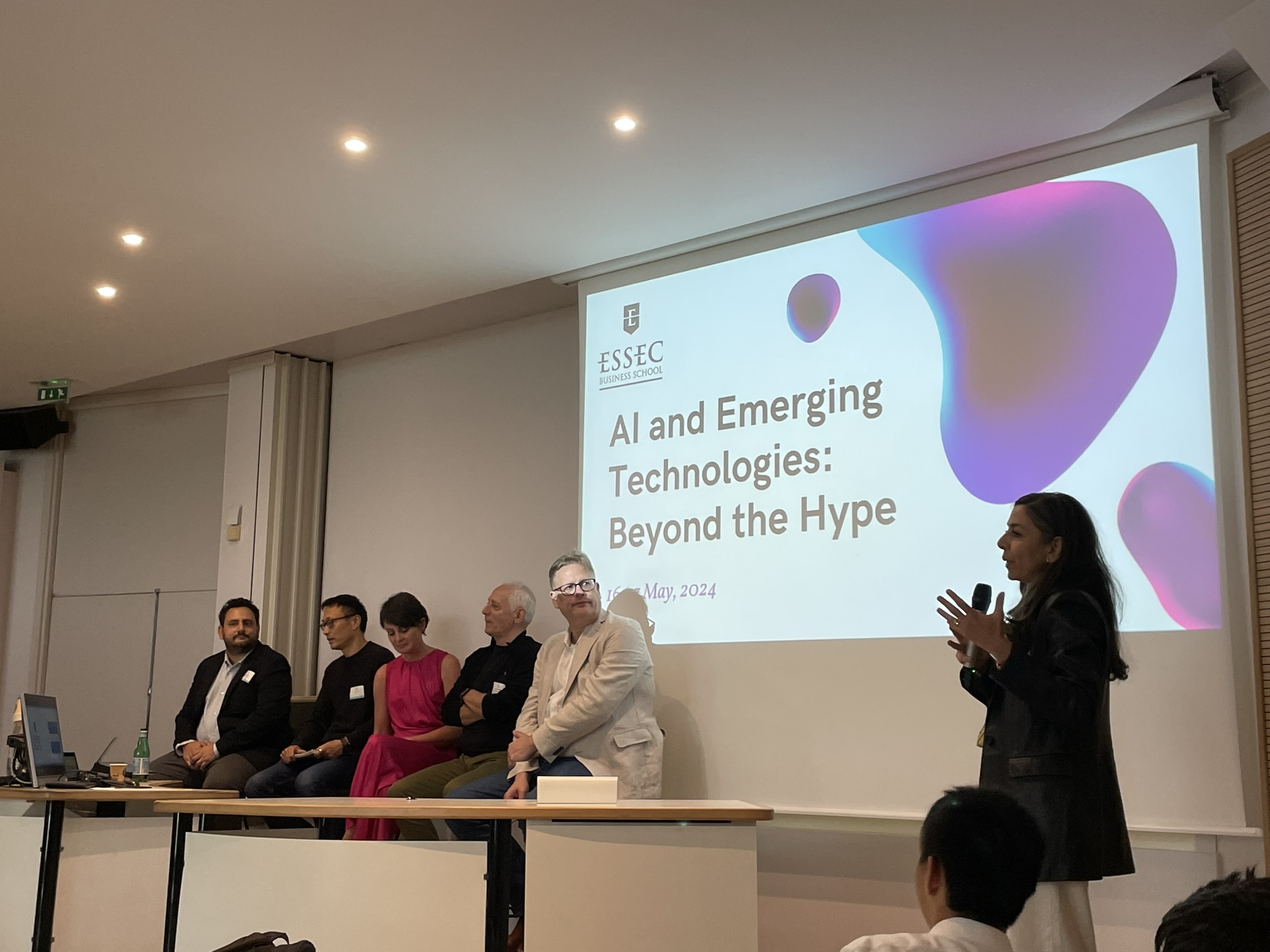
I recently had the honor of co-organizing (together with my fellow colleague Domenico Di Prisco) and participating in the second edition of the workshop titled “Emerging Technology and AI: Beyond the Hype.” This initiative, launched by Prof. Lauren Waardenburg and my supervisor, Cristina Alaimo, aims to foster a deeper understanding of AI, cut through the surrounding hype, and explore its broader implications for management, society, and institutions.

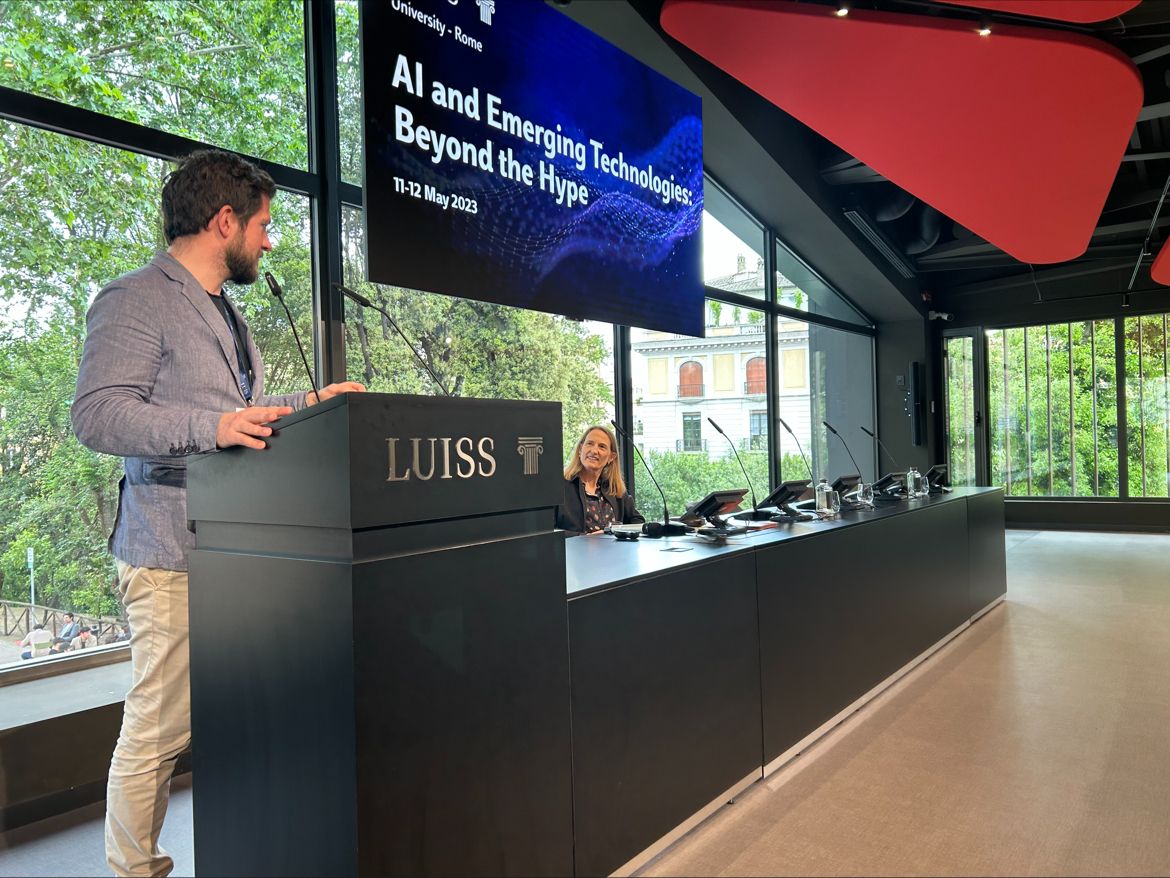
First workshop “Emerging Technology and AI: Beyond the Hype” at LUISS in 2023:
Source: Author

After the inaugural workshop at the LUISS campus in 2023, this second edition was held at the ESSEC campus in Paris. The event brought together experts from various disciplines, including information studies, organization and management theory, marketing, and even sociologists. They were all focused on studying the intricate impacts of AI on organizations and society and how these entities, in turn, shape AI.

2nd workshop edition in ESSEC Paris in May 2024:
Source: Author

Over the course of two days, the workshop featured a series of insightful keynote speeches. The introductory keynote was delivered by Professor Jan Recker, who set the tone with his thought-provoking topic “Responsible AI = Sustainable AI?” He challenged the assumption that responsible AI is inherently sustainable, suggesting that we need to approach these concepts differently to ensure both responsibility and sustainability in AI development.

Following this, Prof. Elena Esposito delivered a compelling keynote on the transformative power of AI in making predictions actionable. She illustrated how, unlike traditional predictions like weather forecasts that merely prepare us for the future, AI enables proactive interventions to alter the predicted outcomes. This represents a significant shift in the role of predictions, akin to changing the weather itself rather than just dressing appropriately for it.

The second day of the workshop continued with equally engaging keynotes. Prof. Harris Kyriakou discussed the “Implications of AI for Research & Practice,” offering valuable insights into how AI is reshaping both academic research and practical applications. Prof. Melissa Valentine from Stanford University captivated the audience (making us solve math equations!) with her ethnographic study of an online clothing retailer. She demonstrated how introducing an algorithm transformed the organizational structure, with data science approaches to buying and planning redefining existing departmental boundaries.

These keynote speeches, followed by dynamic roundtables and project presentations, provided me with a lot of answers about AI, but it also left me with some new questions (which, I think, is a good thing?):

  • We still don’t truly know what falls under the category of AI. While many consider it an emerging technology, some argue that parts of it have reached the level of a general-purpose technology. As various fields navigate the creation and adoption of digital and advanced technologies, it’s uncertain whether we will have a clear answer to this question even next year.
  • This uncertainty leads to broader questions about our common understanding. Do we mean the same things when we talk about AI, sustainability, responsibility, accountability, and the role of data in addressing problems and finding solutions? How does this ambiguity impact our research? Are we experiencing an epistemological crisis due to the lack of clear definitions and shared understanding?
  • This also raised important questions about AI and sustainability. While AI is often touted as a contributor to sustainable solutions and development, it’s essential to consider the substantial resources these processes consume. Although AI can indeed foster sustainable outcomes, the experimentation process itself, even when shifted from physical to digital realms, still consumes a significant amount of resources. How, then, do we address this issue effectively?
  • As AI continues to become smarter and more autonomous, questions about accountability arise. Who is responsible for the good and bad decisions we outsource to AI? What decisions can we ethically and effectively delegate to non-human entities, and which should remain under human control? This issue is particularly pertinent in the use of AI for human resources, such as in the hiring process.

This workshop was and will continue to be an incredible opportunity to delve into these questions, fostering a deeper understanding of AI’s role and potential in society.

Looking forward to next year!

Source: Rahul/Adobe Stock

A practical look at Large Language Models

Good day, developers and aspiring coders! The potential of Large Language Models (LLMs) has sparked excitement in the AI community. These AI superstars are transforming how we interact with computers, and comprehending them is an essential skill for any developer or student interested in the future of technology. So buckle up and prepare to dive into the exciting world of LLMs!

Consider a neural network on a data binge, consuming mountains of text and code. That’s basically what an LLM is. These models are trained on large datasets, allowing them to understand the complexities of language, including grammar, syntax, etc. What’s the secret weapon behind this learning process? Transformers are a specific type of neural network architecture that excels at analysing sequential data such as text. By analysing these massive amounts of data, LLMs become experts in predicting the next word in a sequence, translating languages, creating unique material, and even answering your questions in an informative manner.

LLMs are a developer’s toolkit, full of potential applications. Here are a few ways to use their power:

Code completion and bug detection: Are you stuck on a particular line of code? LLMs can analyse your existing code and provide improvements or even uncover possible flaws. Consider your friendly neighbourhood debugging assistant, all powered by AI!

NLP projects: Create chatbots, virtual assistants, or sentiment analysis tools. LLMs can be an invaluable resource. They can assist you in training your models on large amounts of text data, enhancing their capacity to interpret and respond to real language.

Creative Text Generation: Looking for a clever tagline or some code documentation inspiration? LLMs can generate a variety of imaginative text formats, serving as a catalyst for your own creative spark.

Machine Translation Integration: Developing a Global App? LLMs can assist you with implementing seamless machine translation services, allowing your users to communicate with your application in their native language.

These are just a few ways developers can use LLMs. As the field advances, we should expect even more fascinating applications to emerge.

Getting Started with LLMs: A Developers Playground
Are you ready to try with LLMs? Here’s a simple roadmap to help you get started:

  1. Choose Your Platform: Several cloud platforms provide access to pre-trained LLM models via API. Popular choices include Google AI Platform, OpenAI API, and Amazon Comprehend.
  2. Explore Tutorials and Documentation: Most platforms provide extensive documentation and tutorials to assist you get started with their LLM services. These tools will walk you through the process of configuring your environment, submitting requests to the LLM, and analysing the outcomes.
  3. Begin with Simple Tasks: Don’t plunge right into creating a sophisticated chatbot! Start by experimenting with simple tasks such as text generation and sentiment analysis. Before moving on to more complicated projects, be sure you have a strong understanding of how LLMs work.
  4. Explore Existing Libraries: The open-source community is constantly creating libraries and frameworks for working with LLMs. Consider using libraries like TensorFlow or PyTorch to simplify your development process.

Remember that the field of LLMs continually evolving. Continue to be interested, investigate other platforms and libraries, and stay up to date on the latest developments. There’s a whole world of possibilities waiting to be discovered!

This is only the first step in your LLM journey. As these models evolve, they have the potential to become a valuable tool in your development toolkit. So, continue to study, experiment, and help shape the future of AI with LLMs!

car-6943487_1280

Why it is important to scan the horizon – The German car industry during Industry evolution

The automotive sector has undergone a significant transformation with the advent of electromobility. This revolutionary shift is reshaping the way vehicles are powered, manufactured, and utilized, with profound implications for the industry, the environment, and society as a whole.

Electromobility refers to the use of electric propulsion systems, primarily batteries or fuel cells, to power vehicles instead of traditional internal combustion engines. This transition is driven by various factors, including concerns about climate change, air pollution, and the finite nature of fossil fuels. As a result, automakers are increasingly investing in electric vehicles (EVs) and developing advanced technologies to improve their performance, range, and affordability.

Tesla has played a pivotal role in driving the adoption of electromobility and reshaping the automotive industry. However, Tesla’s success has also posed a significant challenge for traditional automakers, many of whom have struggled to catch up in the rapidly evolving electric vehicle market. Despite their substantial resources and manufacturing capabilities, legacy automakers have faced obstacles in developing competitive electric vehicles that can match Tesla’s performance, range, and brand appeal. Additionally, the transition to electromobility requires significant investment in research and development which can be daunting for established automakers.

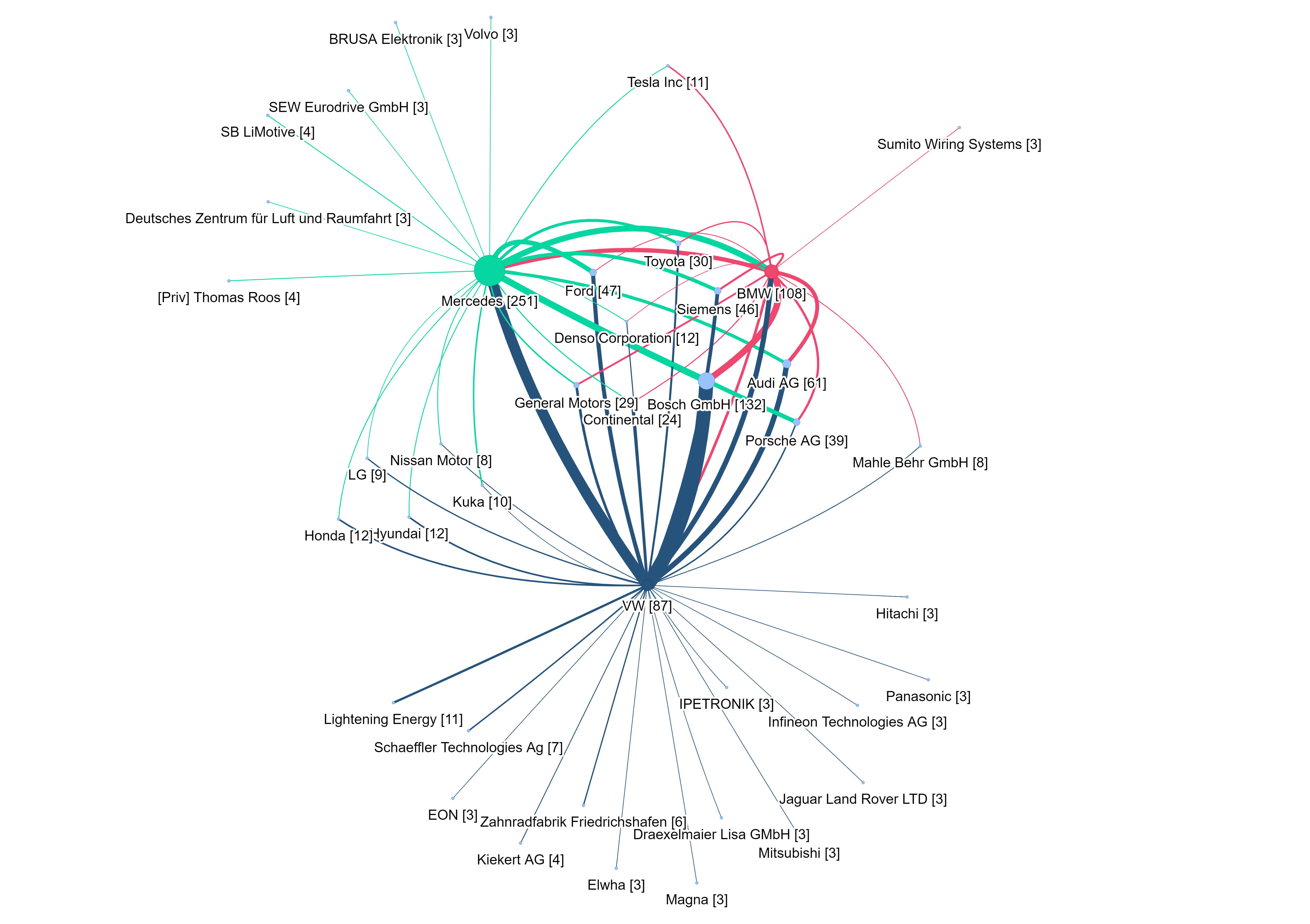
Nevertheless, traditional car manufacturers had plenty of time and resources to search for and integrate external knowledge and identify the market changes. We investigated how the German car manufacturing sector prepared and responded to electromobility in our latest paper. What we find is that they delayed their response significantly and heavily relied on local knowledge – rather than sourcing missing knowledge early and integrating it. Using patent data, we mapped the knowledge flows for the three major players in the German car manufacturing sector and visualized the network.

Our most important finding is, that someone else in the innovation ecosystem managed to step up when the car manufacturers were not. Bosch became essential for all three car manufacturers and shows that it is essential to scan the peripheral of the industry. Otherwise you risk your position in the market and empower potential competitors to take your spot during the industry evolution.

If you want to know more, feel free to check out the full article, available here: https://doi.org/10.1111/radm.12689


Knowledge flows at the later stages of the industry evolution. Bosch managed to become a central source for knowledge, granting them the power to control knowledge in the new ecosystem.
Screenshot 2024-03-05 at 14.32.13

Tackling the Internal Transition to Scale of Digital Innovations

Aiming at being more effective and efficient in exploring digital innovations and new digital business ideas, incumbent firms have adopted separated structures such as innovation units, new business units, internal incubators and accelerators, digital labs, etc. While these structures have been successful in spurring new initiatives, they have not as effective in bringing these to scale. Part of the challenge is the need to transfer the new digital offerings, processes and models to core business and technology structures suitable for operationalising and/or commercialising these at scale – in other words, activities to explore new ideas in separated structures need to transition to become exploitative activities in core business and technology structures. This process, however, is far from simple as core business and technology structures are not naturally equipped with the needed capabilities and resources and its structures practices are often compatible with new digital solutions. 

In a recent publication, I aimed at tackling this challenge by embarking on a journey to dissect the transition to scale of eight digital service innovations developed in a large Asian incumbent bank. This exploration, detailed in the International Journal of Innovation Management, pivots around the intricate dance of transitioning digital innovations from their development in the Bank’s innovation unit to full-scale operationalisation and/or commercialisation in core business structures, with a focus on understanding the practices and challenges of enabling an aligned business-technology transition of digital innovations.  

Here, I present the essence of our findings and their implications for both academic research and industry practice: 

Key Highlights: 

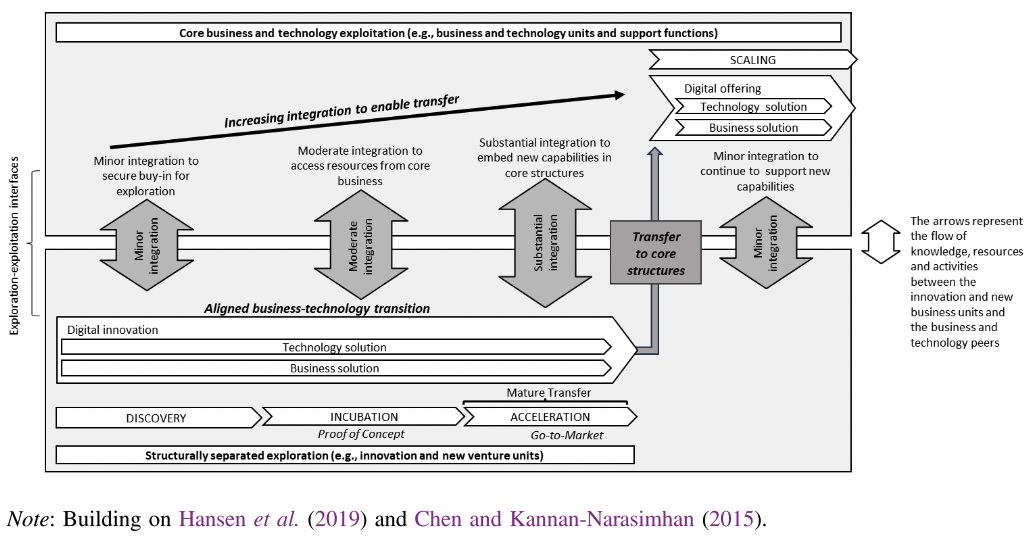
  • Introduction of a Dual Transition-to-Scale Model: We describe a nuanced framework that delineates the variegated intensities of integration, characterised by the flow of knowledge and resources between exploration and exploitation structures, required for digital innovations to seamlessly transition into scalable solutions. This model, described by innovation managers, focusses on manipulating the degree of integration to secure buy-in for the innovation, access core assets from business and technology peers, and embed new capabilities and resources in core structures to able the transfer of innovations to core business and technology actors.  

Aligned business-technology transition of DI with integration and transfer.Illustration 1. Aligned business-technology transition of DI with integration and transfer 

  • Diverse Project Scaling Trajectories: We outline three distinct scenarios of project scaling journeys, offering a granular view into the strategic integration and transition tactics pivotal for digital innovation scalability. In this, we describe how innovation managers deviate from the model that they describe by taking actions to cope with the challenges of pursuing digital innovation in an organisation still undergoing digital transformation. These coping actions, although aimed at creating the enabling conditions for innovations to transition, also created a disconnect between the business and technology transition of digital transformation, creating transition challenges at a later stage.  

Contributions to Academic Research: 

Our study enriches the academic investigation by presenting a model of how innovation managers expect to enable an aligned business-technology transition to scale and showing that integration and transfer decisions along the innovation process significantly impact the business-technology transition of digital innovations and, thus, need to be carefully managed to avoid misalignment.  

Contributions to Practice: 

For practitioners, this study offers actionable insights to orchestrate the scaling process effectively, ensuring that digital innovations are not only developed but also successfully operationalised and/or commercialised to achieve their full market potential. Innovation managers should be aware of their role in transition and of how their decisions around integration could affect transfer in the later stages. They should be careful not to create a disconnect between business and technology transition, which could have consequences not only for the scaling of the digital innovation but also for exploitation in the organisation. 

With this study, we aimed at expanding the scientific investigation into exploration-exploitation of digital innovations in the context of digital transformation. Yet, much remains to be understood and explored. In particular, how the orchestration of internal transition to scale might be effectively and efficiently aligned with go-to-market offers a promising area of investigation as innovation managers face the significant challenge of pursuing commercial success while needed to navigate the complex corporate environment. In short, companies need to be better in enabling internal transition and research has much to contribute.  

artificial-intelligence-3706562_1280

Clustering texts using Latent Dirichlet Allocation

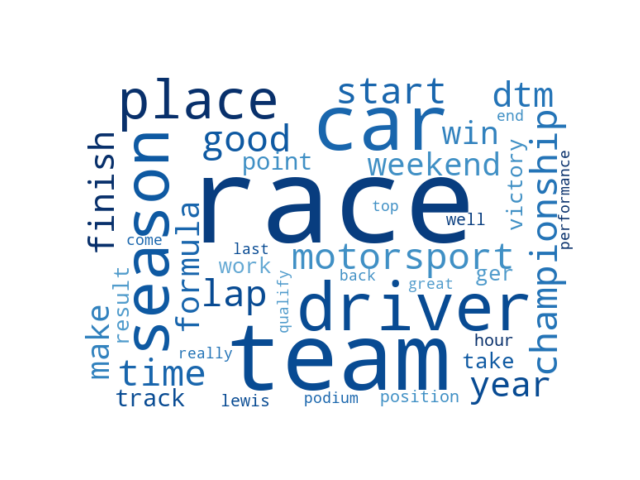
Analysing large bodies of text can be challenging, especially when with limited previous knowledge about the topics in the text. For one of my ongoing projects, I tackled this problem applying Latent Dirichlet Allocation (LDA). LDA is a machine learning algorithm that treats each text in the whole set as a “bag of words” – a collection of words with different frequencies that are used to describe the article’s content. It then tries to find words and weight for each word to best group all texts into topics, with the least overlap of topics. These topics do not inherently have meaning, but it is possible to plot the words and weights to visualize which topic has been identified to group the texts. As an example the following wordcloud represents one of the topics:

Clearly this is a topic regarding racing! Now that the LDA is trained, we can use it to categorize all the texts that we have.

While this kind of analysis seems intimidating, it is not hard to get started using python, thanks to great libraries and documentation. Here are my favorite examples:

Natural Language Toolkit https://www.nltk.org/ – A great library to work with human language

Gensim: https://radimrehurek.com/gensim/ – Topic modelling library (which also has an LDA implementation)


I can only recommend trying out this method when working with texts, so maybe give it a try yourself.

Entertainment technology VR background in blue circuit lines remixed media

Enter the Matrix: VR Glasses and Cobots Dance the Tango

Hello everyone!

Today, let’s delve into the realm of VR glasses. With the recent unveiling of the Apple Vision Pro, there’s been quite a buzz surrounding these devices. But what exactly is driving the excitement, and how do VR glasses intersect with the intriguing domain of human-robot collaboration?

First, let’s zoom out and consider the broader landscape. In recent years, there’s been a notable push towards crafting more agile and adaptable automation systems. This has spurred increased interest in HRC solutions, where both automated processes and human dexterity can coexist seamlessly, without sacrificing complexity or flexibility.

Bridging the Gap: VR Glasses and Human-Robot Collaboration

However, a significant challenge in HRC lies in communication. Interactions between humans and robots aren’t always smooth, intuitive, or quick. This is where emerging technologies like Augmented Reality (AR), Virtual Reality (VR), and Mixed Reality (XR) come into play. These technologies offer promising avenues for enhancing communication between humans and machines across various phases of design, commissioning, and operation (Badia et al., 2022).

VR and AR technologies, in particular, offer immersive experiences that can revolutionize how we visualize and analyze procedures in HRC systems. From evaluating layout designs to analyzing task scenarios, programming robots, calculating cycle times, and ensuring safety, VR and AR provide powerful tools for fostering collaboration between humans and robots.

Additionally, the concept of digital twins has emerged as a compelling complement to VR and AR technologies in the realm of HRC. Digital twins, virtual replicas of physical systems or processes, offer a means to simulate, monitor, and optimize operations in real-time. By integrating digital twins with VR glasses, users can immerse themselves in virtual environments that mirror physical realities, enabling enhanced training, troubleshooting, and decision-making in HRC scenarios (Malik & Bilberg, 2018). Check out this video by rfin.tech R&D to see how digital twins can be applied in human-robot collaboration:

Evaluating the Current State: VR and AR Solutions in HRC

So, what does this mean for the future of human-robot collaboration? VR glasses are not just a passing fad; they represent a significant step towards creating more efficient and flexible automation systems. By harnessing the immersive capabilities of VR and AR technologies, coupled with digital twins, we can unlock new possibilities for enhancing communication and interaction between humans and robots.

As we continue to explore this exciting intersection, it’s crucial to leverage insights from research and real-world applications. By doing so, we can pave the way for a future where humans and robots collaborate seamlessly to achieve remarkable outcomes.

Stay tuned for more updates on the captivating fusion of VR glasses, digital twins, and human-robot collaboration!

Until next time!


References:

Badia, S. B., Silva, P. A., Branco, D., Pinto, A., Carvalho, C., Menezes, P., Almeida, J., & Pilacinski, A. (2022). Virtual Reality for Safe Testing and Development in Collaborative Robotics: Challenges and Perspectives. Electronics, 11, 1726. https://doi.org/10.3390/electronics11111726

Malik, A. A., & Bilberg, A. (2018). Digital twins of human robot collaboration in a production setting. Procedia Manufacturing, 17, 278-285. https://doi.org/10.1016/j.promfg.2018.10.047.

1709163213610xy

18 things I have learned in the first half of my PhD (part 2)

After a small interruption to reflect on what the movie “Oppenheimer” can teach academics working in innovation-related fields, I am now getting back to the list of “18 things I have learned in the first half of my PhD”. Without further ado, you can find the remaining nine points below:

10. The importance of changing research environment

Even though you are enrolled in a specific University, the life of a researcher goes way beyond the boundaries of your office. Most of your community (and readers) will be outside your faculty and this is a strong incentive to plan short research visits, conferences or PhD courses abroad, in addition to your main environment change. Speaking with researchers outside your inner circle will allow you to collect more feedback on the ongoing projects, get rid of the less promising ideas and expand your network (something that could benefit also the search for your next position).
Despite these pros, there are also some challenges related to it. First, you may need to complement your funding with some additional grants. Second, finding an accomodation for you (and potentially, your partner or family) may not be straightforward. As this may take time, I would suggest to plan our research stay as much in advance as possible, in accordance with your supervisor and your loved ones.

11. The importance of being able to describe your PhD in a few words

Even though you are studying and trying to extend human knowledge on a very complex phenomenon, this does not mean that you are grandma should not be able to understand the value added through your research. This blog aims at disseminating to the general public some of the main findings of our research, but there are also competitions called ‘3 Minute Thesis Competition’, where PhDs from very different fields try to condensate their work in just 3 minutes.
In one of the Doctoral consortia that I attended, I have been told to prepare three different ways of pitching my research: the first, shorter (around 10 seconds), where you offer a more general understanding of your research. A second one, more conversational, where you provide more details on the topic, without being too technical. And a third one, longer, that you should usually share with other experts in the field. That way you should be able to communicate your research with any kind of interlocutor.

Nevertheless, even funnier ways exist:

12. Find your tribe

As said before, changing research environment can help you meet people working on similar topics and socialize your ideas outside your comfort zone. One of the most important consequences of “going outside” is that you will start reflecting on your own identity as a researcher. Accordingly, you will seek to engage with like-minded people that can either help you improve your papers or just represent a source of inspiration. This means finding your own “tribe”. As time passes by, I suspect this will become even more important, if someone wants to remain in academia: first, to maximize your impact and ensure funding for your research projects, you cannot be alone. Thus, finding co-authors or collaborators in your field may be necessary to achieve these goals. Second, I believe that the risk of feeling alone is quite high in this field; thus, feeling part of a community may help you reduce the risk of feeling lonely on an ivory tower.

13. Web3

Talking about your tribe, during my PhD I have changed ideas about the framing of my dissertation multiple times. Nevertheless, I have now understood that one pillar of my work concerns Web3. Digital Wallets, DAOs and tokens are all concepts that will most likely become even more important in the future. Even though I have so far focused on more incremental innovations that build on blockchain, I believe that being able to witness and study this (r)evolution is fascinating and is one of the main practical values added through my PhD Project. At the very least, because this is a rapidly-evolving field, where even those working in it still struggle to fully grasp its potential. If you want to know more about it, I dedicated one episode of my blog to this term.

14. AI can enhance our research:

Raise your hand if you have used ChatGPT or any other Large Language Models to boost your productivity. I believe that few people will not raise their hands. However, beyond ChatGPT (which has been already discussed by Vivian in a recent article), there are also other AI-powered tools that you may find useful. I share below a bunch of links:

      • Despite the cringe caption, I believe that this post offers some useful tips.

      • Tired of manually transcribing your interviews? If there is no sensitive information and your data protection office agrees, you should try Otter.ai or goodtape , which allows you to record and transcribe your interviews seamlessly .
      • ResearchRabbit is a nice website to look for papers and authors, monitor new literature or visualize research landscapes, while Elicit can be helpful if you need a quick literature review on a topic that you don’t know.

15. Cool geeky things

Talking about random but potentially cool tools, in the past few months I discovered these two websites:

  • Zoom has become an indispensable tool for attending online meetings or seminars. However, it’s normal to feel sometimes tired/bored after a day of online workshops or even just a long presentation.
    In this context, you may consider utilizing the “Sharing slides as a Virtual Background” Zoom function. This tool enables you to maintain eye contact with your audience while seamlessly transitioning through your presentation materials.
  • Bionic Reading This app aims at promoting reading and comprehension of textual content in a hectic and noisy world. Bionic Reading® revises texts so that the most concise parts of words are highlighted. This guides the eye over the text and the brain remembers previously learned words more quickly. Quite powerful (but pricey).

16. Differentiate between shadow and deep focus 

Talking about productivity and personal development, I believe that understanding the distinction between shadow and deep focus working is paramount. Inspired by the insightful teachings of Cal Newport in his book “Deep Work,” this concept emphasizes the significance of immersing oneself in undistracted, concentrated tasks. Shadow work, on the other hand, involves scattered attention and constant multitasking, often resulting in a superficial understanding of the work at hand. Newport’s book advocates for the cultivation of deep focus as a means to enhance creativity, productivity, and overall job satisfaction. As we navigate the fast-paced digital landscape, discerning between these two modes of working may help harnessing our full potential. Therefore, try to split your days in two moments: a longer timeframe when you deep focus, and a shorter when you answer to emails, make calls etc.

17. The importance of planning your next steps

While the intensity of thesis work may be all-consuming, taking the time to plan for post-Ph.D. life is a necessary investment. Whether pursuing a career in academia, industry, or entrepreneurship, having a well-thought-out plan enhances the transition. By incorporating future-oriented considerations towards the end of the Ph.D., you (I) can try to anticipate some challenges, e.g., funding, and explore possible solutions. Even though it is not easy, talking explicitly with your supervisor and peers about them is very helpful. This is why, as EINST4INE, we have been organizing a few events that aim at kickstarting these conversations.

18. The importance of making lists

Well, if you dared reading until this point, I hope you would agree with me that making lists is pretty useful. Both for the reader, and the writer. In the realm of academia, where the sheer volume of data and tasks can be overwhelming, lists serve as a compass, providing direction and focus. And, as in this case, may be a funny thing to read after sometime to reflect in hindsight on what I have done and to what extent I agree with the myself of some years ago!


Newnham Donor Dinner

So, what’s your research about? – Presenting to a non-expert audience

The question: “So, what is your research about?” is one that many of us have heard several times during our PhD. Sometimes we are asked this question by other researchers in our field, sometimes by people that are no experts. While all PhDs are trained in how to present their research to other experts – via conferences, academic abstracts, papers, etc. – not all are exposed or learn how to present their research to non-experts.
In this blog post, I will share my thoughts on why knowing how to present your research to a non-expert audience is important and will also share some of my experiences in doing so.

Why it is useful to learn to present your research to a non-expert audience

  • Outreach: give knowledge back
    Speaking to non-experts ensures that you are passing on your knowledge and also give it back to those that have helped you create it. This is not only the case, if you present to your research participants – but also to anybody else. Maybe your funding comes from the government, which actually means taxpayers. Further, the core goal of research is to expand knowledge. However, knowledge expansion only happens if the new knowledge is shared – and this includes also outside of academia! So, I would say for a true academic and researcher it is essential to also share their knowledge outside of their field.
  • Reflect on your research
    When you prepare a talk for a non-expert audience, you have to take a step back from your research and ask yourself what it is really about. This makes you necessarily reflect on your research, makes you see the whole (or at least you can try – it can be hard) and might support you on seeing a storyline that you can extract.
  • Making it concise & easy to digest
    One of the most important things is to make your message clear, to present your research in a concise manner and to make it easy to digest. This can actually be a lot harder than it sounds – but I do think that if you manage to break your research down into easier bits, then you understand your research really well – plus, you won’t lose the attention of your non-expert audience!
  • Asking: why should one care?
    The next important thing to retain the attention of your audience is to make it interesting to them. Why should they care? How is this relevant for them? And if you feel like you just cannot make it relevant for them personally, then why is this relevant for society, knowledge extension etc.? It’s probably good to bring this message across rather early in your talk – then they know why they should continue to listen. Best is, if you manage to bring it up in the end again – this is not only a nice rhetorical closure than, but also leaves them with a take-home message that makes them remember that your research connects to them.
  • Grounding in reality
    I am serious with this – sometimes presenting your research to non-experts does help you ground your research (and maybe yourself) back in reality. Stepping away from very theoretical concepts and abstract ideas and tying them back to things that matter in everyday lives. This might sound hard for some topics, but there is always a connection. Be creative! For example, my master thesis topic on a specific semi-conductor detector and how it is sensitive for specific energy ranges was relevant in reality, because in theory (and more years) this kind of detector could be relevant in medicine.
  • Learning new vocabulary to describe your research
    When you speak with a new audience, you should understand them a bit first: who are they? What might they know already? Based on this, you might know what kind of vocabulary you should use. Here, I don’t only mean field specific vocabulary. Also consider if maybe this word has other connotations for some audiences (e.g., “coding” can mean programming for some audiences and “using the Gioia method” for others). Plus, we know that it is always easier to learn about a new topic, if it is presented in familiar terms.
  • Exposure to other opinions
    Lastly, presenting to non-expert audiences will ensure that you get exposed to other opinions, other perspectives and you might learn about a new way of looking at your research. In addition, especially people who do not know much about your topic are often good at spotting “obvious” inconsistencies or “obvious” questions. Often just because they are curious and don’t know what questions have an easy answer (i.e., you just didn’t mention it because you thought it was not worth the time) and which ones are actually not easy to answer.

While I am always asked to present my research to industry at various events (e.g., through the STIM consortium in Cambridge), this year I was also asked to give talks to non-expert audiences. Thus, I was giving talks to three quite different non-expert audiences. I will shortly share some experiences and insights about each of them.

Industry audience

In this case, I was presenting my research to people from various industries holding different positions (but mostly management level).

  • Really important here: ask yourself, what is important to them? What is interesting for them? Industry people are really busy, if you don’t capture their attention you might lose them quickly. In addition, if you are interested in a collaboration, you also want to show them why they should want to collaborate with you!
  • Use words that they can understand and relate to (linking to my note above). Use terms that are used in companies to explain things, or words that are in everyday use. Of course, you don’t have to through all of your nice-expert-words out of the window, do keep some in – but then make sure to clearly explain them.
  • Graphics and pictures are very powerful. They capture attention and can sometimes simplify things (plus people enjoy having to read less).
  • Highlight how research can be done together, how industry and research can support each other. Speaking of co-creation, action research, etc. is powerful and creates an atmosphere of community.
Newnham Donor Dinner

Non-academic audience

Here I was asked to give a short, easy talk at a dinner for donors of my college. My talk was in between courses and should showcase what different types of research is happening in Cambridge.

  • If you are asked to do something like this – remember, this is not a talk, it is a speech! It was the first time for me too, and was not super easy at first. Concentrate on the story line, and that it really flows. Don’t put too much content in here, it’s more important that people can follow you and that you highlight important things several times.
  • You likely won’t have visuals, so try to make things tangible by giving examples people can relate to, using things that are relevant in everyday life or for this specific audience, etc.
  • You might face different generations in your audience – do consider this and explain your research in terms that can be understood by varying age levels.
  • Likely your goal here is to make people excited about your topic – try to engage a discussion for after your talk. So it is less about presenting yourself or your research, but more about showing that this is relevant.
  • I do think that word games, a catchy phrase etc. can be really helpful to capture attention – plus, it is easier to remember then.

Audience of academics from other fields

Giving a talk to academics outside of my field.

As there are many graduate students in Cambridge, there are also many events organised by students related to research. I was asked by my college and another college to present my research at one of their student-run events. This was for other students from various fields, other researchers – anybody who is interested.

  • Likely you are speaking to other academics in this case. This means that lots of words can have other meanings to them (think of my example of “coding” from above). Consider this when writing your talk. Think about what they might already know and what not. But don’t just leave out the things you think they will know, but still mention them and then add: “as you probably know” – or ask if you should elaborate or not.
  • Do explain concepts and theories in this setting, your audience will be familiar with more abstract explanations. However, still make sure that it is understandable without knowing the details. For example, try to stay away from too much specific vocabulary and only use it when necessary.
  • Again, graphs, symbols, pictures, etc. make it easier to capture and retain attention. And it can also help you to explain things more clearly.
  • A good storyline that people can follow does help a lot. Even if you feel like your research does not have a nice story line (yet) – your talk can still have one. Include an agenda in the beginning and tell people how your talk will be structured. And then of course, follow that structure!
  • Even though the audience consists of academics, you can still give them too much information – try not to create information overload but stick to the important bits.
  • A catchy title can do wonders, do try to think of one, as this can really capture a lot of attention!

You see, speaking to non-experts can be quite diverse and is definitely very useful for you, apart from outreach activity! I encourage everyone to consider presenting outside of academia, it is really rewarding and can be lots of fun.

presenters and I

Transforming Healthcare Work: My experience at the CTWD Conference 2024

On February 13th and 14th I attended the Centre for Transformative Work Design Conference 2024 in Perth, Australia to enjoy all the presentations and share my research on work design as a catalyst to foster meaningful work during the implementation and use of mobile telepresence robots in healthcare settings. This conference set the stage for dynamic conversations on cultivating healthier, happier workplaces through the art and science of work design. 

EXPERT PANELS

I had the chance to attend different panels of experts where topics related to work design were discussed. It was great to learn from leading scholars and practitioners in the field of work design, gaining invaluable insights and practical knowledge from those at the forefront of innovation.

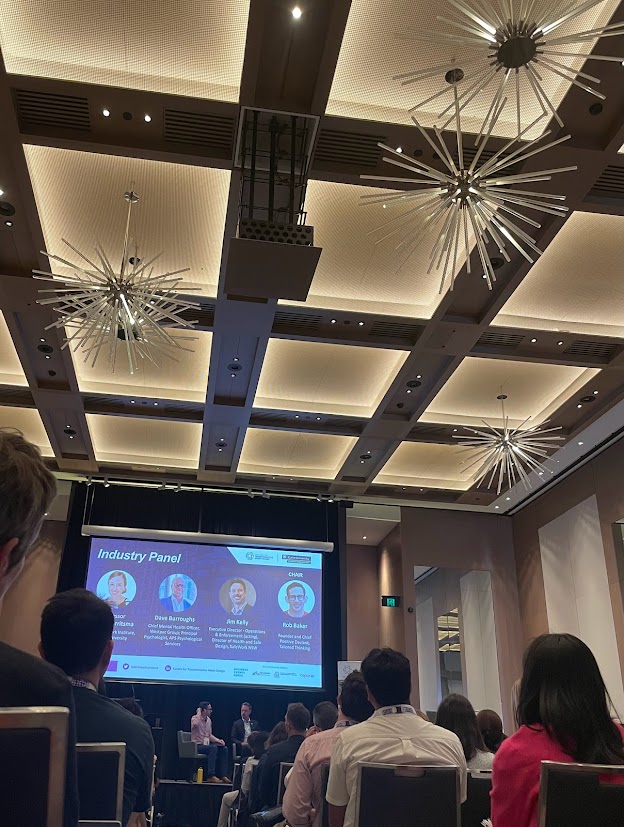
For example, Rob Baker, Founder of Tailored Thinking, led an engaging conversation with a panel of experts who delved into the current landscape of workplace quality improvements. Dave Burroughs, Chief Mental Health Officer at Westpac Group, highlighted the importance of shifting workplace mental health discussions towards prevention and offered practical advice for successful implementation. Professor Karina Jorristma, a Professor of Practice at the Future of Work Institute, Curtin University, shared insights from her experience implementing the Thrive at Work model and SMART work design across various organizations. Finally, Jim Kelly, Executive Director – Operations & Enforcement at SafeWork NSW, provided a regulatory perspective, discussing innovative initiatives to foster better work designs within industries.

Picture taken by Alejandra Rojas

SYMPOSIUMS

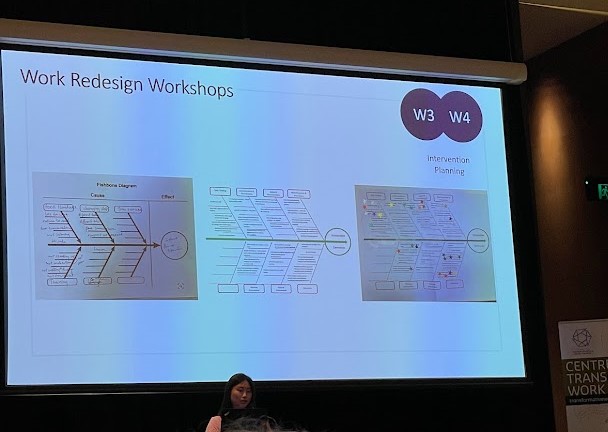
Symposiums were held for group presentations that were topic-related. I was especially interested in a symposium about “A practical approach to SMART work (re)design in the care sector” where multiple projects were presented. However, the one from Dr Jane Chong (University of Western Australia) was particularly interesting for me as it showed the outcomes of a participatory work redesign intervention and its success in alleviating job demands within an aged-care environment, which is related to my Ph.D. project as I am exploring how mobile telepresence robots (MTRs) can/should assist healthcare workers in settings like a nursing home. It was wonderful to explore real-world examples of successful work redesign initiatives that have enhanced employee well-being and organizational performance.

Picture taken by Alejandra Rojas

MY PRESENTATION

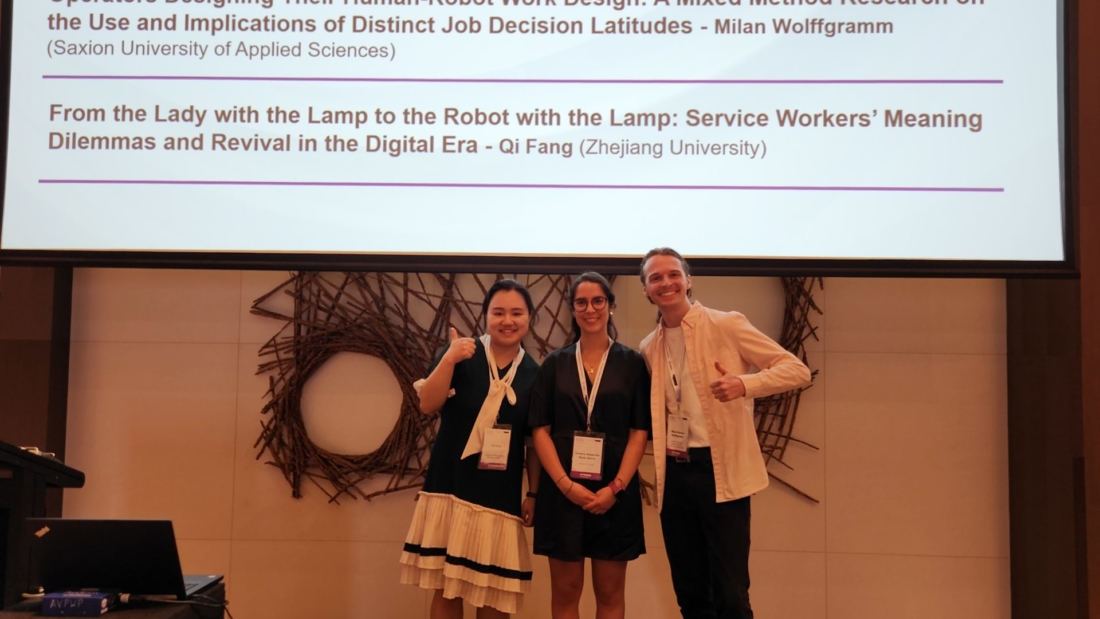
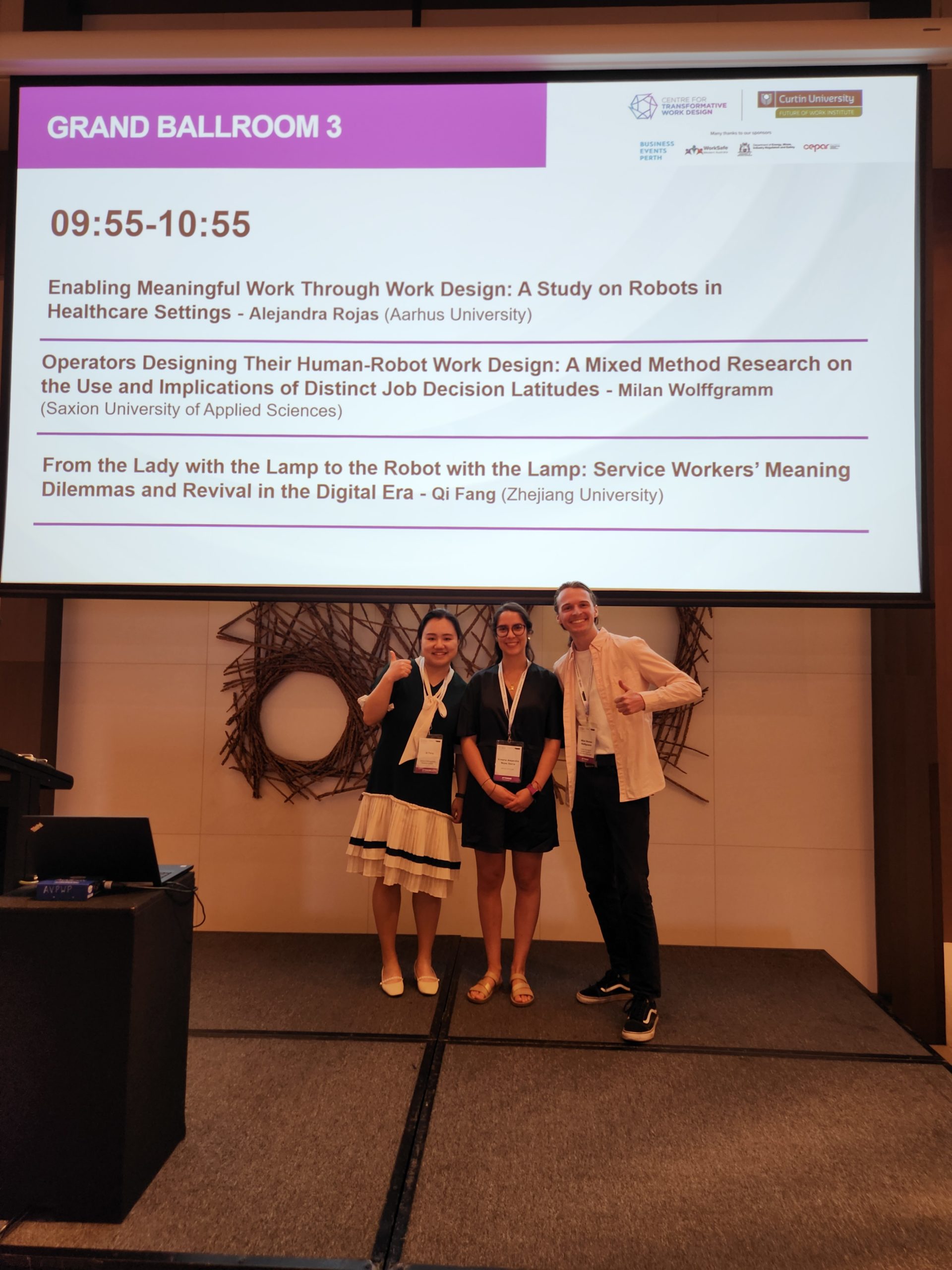
My presentation “Enabling Meaningful Work Through Work Design: A Study on Robots in Healthcare Settings” was on the 14th of February in a timeslot shared with Milan Wolffrgamm and Qi Fang, PhD colleagues who are also focused on the use of technologies and work design.

MTRs enable remote interactions between healthcare workers, patients, and family members in healthcare settings. However, it remains unclear how their implementation could affect meaningful work in such settings. Our qualitative study aims to investigate the types of interactions afforded by MTRs in healthcare and their implications on meaningful work. The data consisted of 25 interviews with and observations of healthcare professionals in three types of settings, where two different MTRs were tested. Findings show that substitution and coexistence interactions afforded by MTRs play a multifaceted role in meaningful work, as they simultaneously promote and inhibit it. However, we also find that meaningful work can be promoted through proper work design. Recognizing work design as a catalyst for fostering meaningful work during the implementation of MTRs in healthcare settings offers practical guidance to practitioners seeking to design, develop, implement, and utilize these robots while prioritizing meaningful work.

Picture taken by Henry Gunson

Overall, it was a great conference with lots of learnings and insights that helped me understand work design from different angles. Thanks to the organizers and sponsors!

Our recent research has been published in a journal!

I’m delighted to share our study, “Contamination Detection Using a Deep Convolutional Neural Network with Safe Machine Environment Interaction,” has been accepted for publication in MDPI Electronics Journal. This journey has been an effort of dedication, and I can’t wait to share our groundbreaking findings with you.

Understanding the Problem
Contamination detection is an important issue in many industries, including food processing, healthcare, and others. A primary focus is ensuring product quality and safety, and this is where our research comes in. Manual examination gets laborious and may result in contamination occurring along the production line. To solve this issue, a contamination detection system based on an enhanced deep convolutional neural network (CNN) in a human-robot collaboration framework is proposed.

Deep Learning: The Key to Precision
In our research, we enhanced Deep Convolutional Neural Networks (CNNs) to detect contaminants in food packages. CNNs are well-known for their ability to extract intricate patterns from complex data, making them perfect for tasks like object detection and analysis.

Safe Machine Environment Interaction
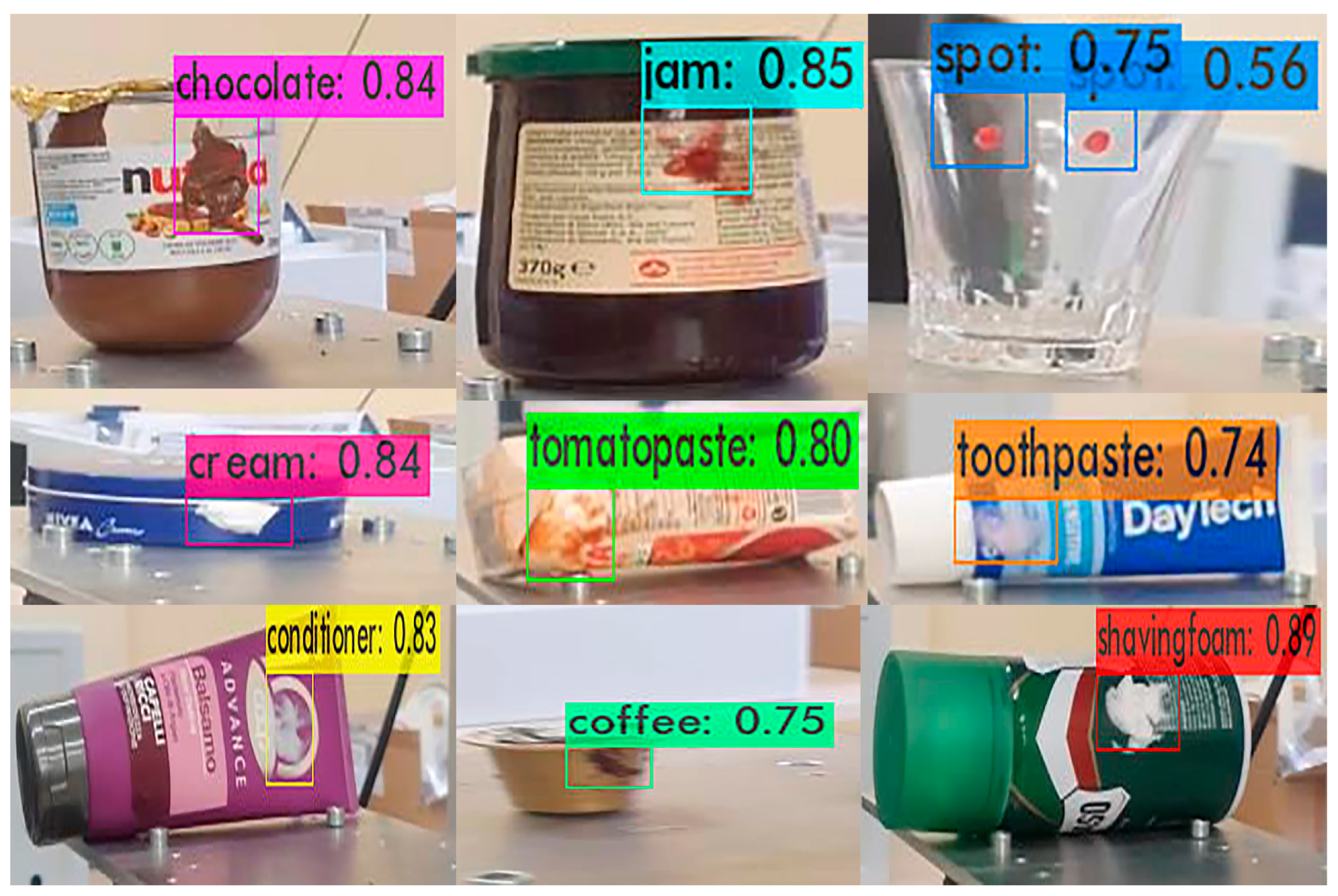
To improve our system’s performance, we coded the proximity sensor for “Safe Machine Environment Interaction.” A mechatronic platform with a camera for contamination detection and a time-of-flight sensor for safe machine-environment interaction was used for the experiment. The experiment findings show that the reported system can identify contamination with 99.74% mean average precision (mAP). Figure 1 depicts the experimental results, and the publication can be found here [1].

Figure 1. Experimental trials of real-time detection using the reported CNN [1].
Future Directions
Future work may concentrate on adding more contamination classes in order to create a more thorough and improved contamination detection system. The algorithm might also be applied in a real robot with a conveyor belt to create an industrial quality inspection setup. However, the journey does not finish here. We’re devoted to improving our methodology and investigating new applications. We’re thrilled to be at the forefront of the deep learning revolution.

Acknowledgments
I want to express my heartfelt gratitude to my Supervisor, colleagues, and the entire research team who played a pivotal role in this project. Their expertise, dedication, and collaboration made this achievement possible.

Paper Reference
[1] Hassan, Syed Ali, Muhammad Adnan Khalil, Fabrizia Auletta, Mariangela Filosa, Domenico Camboni, Arianna Menciassi, and Calogero Maria Oddo. “Contamination Detection Using a Deep Convolutional Neural Network with Safe Machine—Environment Interaction.” Electronics 12, no. 20 (2023): 4260.

476_1996_1-32_CCCR-Press Site

What Art can tell us about Digital Societies

What Art can tell us about Digital Societies

The representation of our society in cultural forms has fascinated me for a long time. Theatre, opera, dance, film, photography all have shaped my upbringing. It was during years of studying digital and creative media that I learnt more about the versatility of media and its representation of life and society at large—from a practical as well as theoretical lens.

First signs of art go back to the Stone ages. As put by Prof. Xiang Xiong Lin in this article in the Humanities, Arts and Society magazine, “Artistic cells are born within human blood. […] Art is the carrier of human culture, and culture is the platform of human civilization.“ Art holds a mirror to the time when it was created. As highlighted by the MET, “art from the past holds clues to life in the past. By looking at a work of art’s symbolism, colors, and materials, we can learn about the culture that produced it.” Equally, art from this century truly tells a lot about the times we live in today. How does technology change the perception about our identity? How does data drive objectivity and erase individuality? How do robots interact with humans?

I want to highlight here a few contemporary artworks that fascinated me in the past and may tell us, step by step, a little bit more about the era we call ourselves a part of or, at least, provide some thought provoking perspectives—on human civilisation in the digital era:

Exploratory Selfie or Selfiecity.Net, 2014, L.MANOVICH

© Lev Manovich

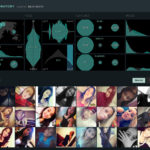
The presentation of the self. A topic that probably never experienced such a dramatic change like right now and within the digital age. Our self-representation is even so important since Instagram, and selfie-camera that Manovich decided to do an artwork on the topic “selfie”. The project is an interactive web app of 3200 Instagram selfies from different countries in the world (Bangkok, Berlin, Moscow, New York, and Sao Paulo). A software creates a certain visualisation of the photos. Via a computer that shows the web app the visitor can explore the dataset of selfies that is then projected onto the wall infront of the visitor. With other artists and specialists, Manovich wants to discuss the construction of self-representation in the digital age. He started analyzing the selfies with a special software, and visualizes the received data. The portraiture of a single person changes through history – from the art of painting, to the photography, to the selfie. The way the self is portrait changes with its society. The project of Manovich even argues if the selfie can be seen as a new sub-genre of photography.

“Selfie is not only a photographic image that we recognize as a self-portrait and which bears a formal resemblance to numerous canonical photographic self-portraits from the nineteenth and twentieth centuries. Instead, selfie is a product of a networked camera. […] While focusing on Instagram, one of several available platforms of online image-sharing, Selfiecity comments on the social media in general. The project views social media as a vehicle of voluntary interpersonal communication, and discusses the visual component of such communication.” (Tifentale and Manovich, 2015)

Face Cages, 2013-2015, Z.BLAS

© Zach Blas

Face Cages is an artwork that is critizising the biometric industry. Its measuring in an objective way is creating a cage. There is either 1 or 0. If you are too extraordinary for the system what are you then? Do you have to worry if your smile is not detected as a smile – by a software? The face cages are inflexible metal constructions for the face that look like a biometrical measurement of the facial factors. These biometric systems are a generalization of the human individuum that create stereotypes. The result is either discrimination, racism, sexism, transphobia or even homophobia. The discomfort the cages entail, dramatizes the discrepancy of the interaction of biometric norms and the individual person.

“Blas fabricated face masks that resemble iron muzzles based on the shape of biometric diagrams, evoking resonances with prison bars, the Scold’s Bridle, and torture devices used during slavery in the U.S. and in the Medieval period in Europe.”; “The different machinations of faciality […]—as a singular, unique, personal and identifiable security-check, as the imposition of a political norm, as collective empowerment, as a plural, multi-form, malleable and amendable canvas, as a means to play with identity, similarity and difference, and as a source of data extraction—indicate that supra-individual cultural narratives and concerns about policing and governance are braided around the algorithmic capture of the face.” (de Vries, 2020)


Drawings by Robot Paul, about 2013, P.TRESSET

© Patrick Tresset, Galleries West

After Tresset lost his passion for his hand drawn paintings he started building robots and he named them Paul. Paul is a robotic arm mounted on a table. Paul uses computer vision to recognize faces he then starts drawing on a paper in about 30 minutes. Through Paul, a robot becomes human. Art used to be made by human kind – what changes now, that even robots know how to draw a portrait? The boarders merge. But what stays is the fascination of only one human-like robotic arm that has the ability to identify a human face and to draw it.

“Paul is a naive drawer: it does not have highlevel knowledge of the structures constitutive of the human face (such as the mouth, nose, eyes) nor the capability of learning expertise based on experience as a human would. However, Paul is able to draw using the equivalent of an artist’s stylistic signature based on a number of processes mimicking drawing skills and technique, which together form a drawing cycle. […] Although the individual algorithms driving Paul are relatively simple and not particularly novel, the way in which they are combined is of interest as the drawings Paul produces are considered by professionals as being of artistic value, which is unusual for computer-generated figurative portraits” (Tresset and Leymarie, 2013)


Hysterical Machines, 2006, B.VORN

© Bill Vorn

Vorn creates a huge impressive installation with up to eleven dysfunctional machines hanging from the ceiling of the room. Each machine has eight arms made of aluminium reaching out from a spherical body. The machine works like a nervous system made of motor-, sensing-, and a controlling-system. This allows the machine to detect the visitors and react to them. The Hysterical Machines serve to exemplify the paradoxal nature of artificial intelligence. They provoke the visitor’s empathy as they are reacting to their appearance.

In addition to physically interacting with the audience, Hysterical Machines also initiate or establish an emotional relationship with the audience. Their hybrid status, combining the properties of living organisms (their behavior) and technical machinery (their appearance) causes viewers to re-act with a similarly structured ambiguity and ambivalence, in which affective emotions combine with cognitive interest and empathy mixes with primal anxiety and technophobia.” (Kluszczyński 2018)


What artworks do you find most remarkable for our digital lives?

To me, art still represents much about us, our past, our present, and makes us think about our future. To close, I choose the words of a popart legend:

“You need to let the little things that would ordinarily bore you suddenly thrill you.”  – Andy Warhol