
Source: Rahul/Adobe Stock

A practical look at Large Language Models

Good day, developers and aspiring coders! The potential of Large Language Models (LLMs) has sparked excitement in the AI community. These AI superstars are transforming how we interact with computers, and comprehending them is an essential skill for any developer or student interested in the future of technology. So buckle up and prepare to dive into the exciting world of LLMs!

Consider a neural network on a data binge, consuming mountains of text and code. That’s basically what an LLM is. These models are trained on large datasets, allowing them to understand the complexities of language, including grammar, syntax, etc. What’s the secret weapon behind this learning process? Transformers are a specific type of neural network architecture that excels at analysing sequential data such as text. By analysing these massive amounts of data, LLMs become experts in predicting the next word in a sequence, translating languages, creating unique material, and even answering your questions in an informative manner.

LLMs are a developer’s toolkit, full of potential applications. Here are a few ways to use their power:

Code completion and bug detection: Are you stuck on a particular line of code? LLMs can analyse your existing code and provide improvements or even uncover possible flaws. Consider your friendly neighbourhood debugging assistant, all powered by AI!

NLP projects: Create chatbots, virtual assistants, or sentiment analysis tools. LLMs can be an invaluable resource. They can assist you in training your models on large amounts of text data, enhancing their capacity to interpret and respond to real language.

Creative Text Generation: Looking for a clever tagline or some code documentation inspiration? LLMs can generate a variety of imaginative text formats, serving as a catalyst for your own creative spark.

Machine Translation Integration: Developing a Global App? LLMs can assist you with implementing seamless machine translation services, allowing your users to communicate with your application in their native language.

These are just a few ways developers can use LLMs. As the field advances, we should expect even more fascinating applications to emerge.

Getting Started with LLMs: A Developers Playground
Are you ready to try with LLMs? Here’s a simple roadmap to help you get started:

  1. Choose Your Platform: Several cloud platforms provide access to pre-trained LLM models via API. Popular choices include Google AI Platform, OpenAI API, and Amazon Comprehend.
  2. Explore Tutorials and Documentation: Most platforms provide extensive documentation and tutorials to assist you get started with their LLM services. These tools will walk you through the process of configuring your environment, submitting requests to the LLM, and analysing the outcomes.
  3. Begin with Simple Tasks: Don’t plunge right into creating a sophisticated chatbot! Start by experimenting with simple tasks such as text generation and sentiment analysis. Before moving on to more complicated projects, be sure you have a strong understanding of how LLMs work.
  4. Explore Existing Libraries: The open-source community is constantly creating libraries and frameworks for working with LLMs. Consider using libraries like TensorFlow or PyTorch to simplify your development process.

Remember that the field of LLMs continually evolving. Continue to be interested, investigate other platforms and libraries, and stay up to date on the latest developments. There’s a whole world of possibilities waiting to be discovered!

This is only the first step in your LLM journey. As these models evolve, they have the potential to become a valuable tool in your development toolkit. So, continue to study, experiment, and help shape the future of AI with LLMs!
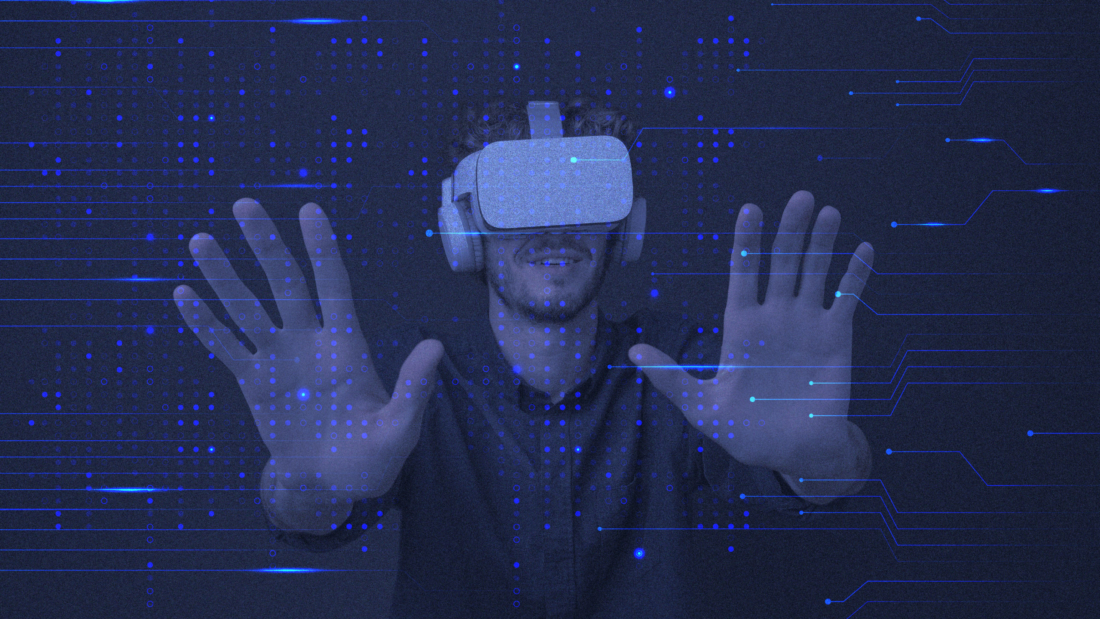
Entertainment technology VR background in blue circuit lines remixed media

Enter the Matrix: VR Glasses and Cobots Dance the Tango

Hello everyone!

Today, let’s delve into the realm of VR glasses. With the recent unveiling of the Apple Vision Pro, there’s been quite a buzz surrounding these devices. But what exactly is driving the excitement, and how do VR glasses intersect with the intriguing domain of human-robot collaboration?

First, let’s zoom out and consider the broader landscape. In recent years, there’s been a notable push towards crafting more agile and adaptable automation systems. This has spurred increased interest in HRC solutions, where both automated processes and human dexterity can coexist seamlessly, without sacrificing complexity or flexibility.

Bridging the Gap: VR Glasses and Human-Robot Collaboration

However, a significant challenge in HRC lies in communication. Interactions between humans and robots aren’t always smooth, intuitive, or quick. This is where emerging technologies like Augmented Reality (AR), Virtual Reality (VR), and Mixed Reality (XR) come into play. These technologies offer promising avenues for enhancing communication between humans and machines across various phases of design, commissioning, and operation (Badia et al., 2022).

VR and AR technologies, in particular, offer immersive experiences that can revolutionize how we visualize and analyze procedures in HRC systems. From evaluating layout designs to analyzing task scenarios, programming robots, calculating cycle times, and ensuring safety, VR and AR provide powerful tools for fostering collaboration between humans and robots.

Additionally, the concept of digital twins has emerged as a compelling complement to VR and AR technologies in the realm of HRC. Digital twins, virtual replicas of physical systems or processes, offer a means to simulate, monitor, and optimize operations in real-time. By integrating digital twins with VR glasses, users can immerse themselves in virtual environments that mirror physical realities, enabling enhanced training, troubleshooting, and decision-making in HRC scenarios (Malik & Bilberg, 2018). Check out this video by rfin.tech R&D to see how digital twins can be applied in human-robot collaboration:

Evaluating the Current State: VR and AR Solutions in HRC

So, what does this mean for the future of human-robot collaboration? VR glasses are not just a passing fad; they represent a significant step towards creating more efficient and flexible automation systems. By harnessing the immersive capabilities of VR and AR technologies, coupled with digital twins, we can unlock new possibilities for enhancing communication and interaction between humans and robots.

As we continue to explore this exciting intersection, it’s crucial to leverage insights from research and real-world applications. By doing so, we can pave the way for a future where humans and robots collaborate seamlessly to achieve remarkable outcomes.

Stay tuned for more updates on the captivating fusion of VR glasses, digital twins, and human-robot collaboration!

Until next time!


References:

Badia, S. B., Silva, P. A., Branco, D., Pinto, A., Carvalho, C., Menezes, P., Almeida, J., & Pilacinski, A. (2022). Virtual Reality for Safe Testing and Development in Collaborative Robotics: Challenges and Perspectives. Electronics, 11, 1726. https://doi.org/10.3390/electronics11111726

Malik, A. A., & Bilberg, A. (2018). Digital twins of human robot collaboration in a production setting. Procedia Manufacturing, 17, 278-285. https://doi.org/10.1016/j.promfg.2018.10.047.

compressed_img-ke6zEy5YkDqIdpTzPfHkmYHZ

Who Cares? Beyond the Hypes of Fast Technology

Crowd of visitors at CES. Source: Imagist3ds

Every year in January, Las Vegas becomes the epicentre for tech enthusiasts, innovators, and industry leaders who gather to witness the spectacle of the Consumer Electronics Show (CES). Advertised as ‘the most powerful tech event in the world’ by its organizers, CES stands as a platform for unveiling the latest advancements in consumer electronics. Is between the myriad of products and technologies showcased there that tech giants like Google, Microsoft and Netflix built their bones back in their early days.

The significance of CES goes beyond flashy presentations and product unveilings. It serves as a compass for forthcoming trends and innovations in the consumer electronics industry. The prototypes and concepts showcased at CES often foreshadow the direction of technological development in the coming year. However, amidst the excitement and anticipation, lies the inevitable phenomenon of hype cycles.

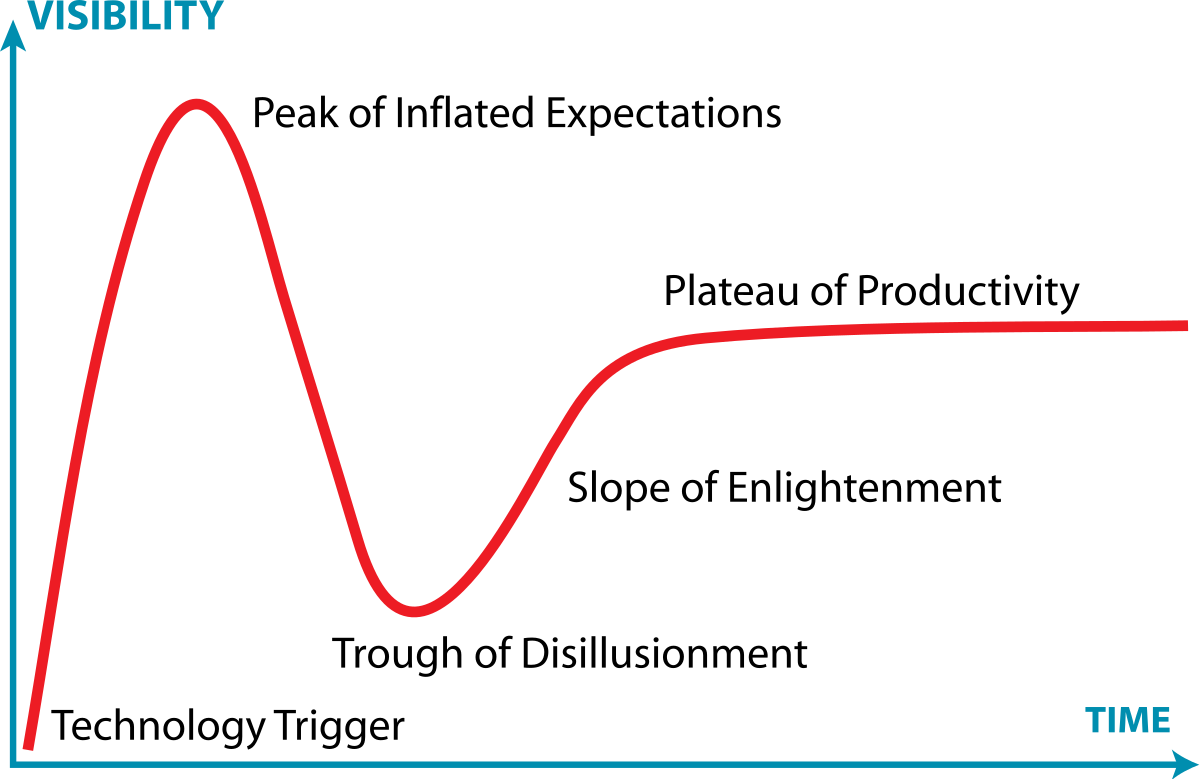
The Gartner ‘hype’ cycle, introduced by the IT firm Gartner. Source: Wikipedia.

A hype cycle reflects the evolution of specific technologies over time, encompassing their maturity, adoption rates, and societal impacts. It begins with an initial surge of excitement and inflated expectations, fuelled by media coverage and investor interest. However, this euphoria is often followed by a period of disillusionment and scepticism as the technology fails to meet exaggerated expectations. Over time, as the technology matures and its real-world applications become clearer, a more balanced perspective emerges.

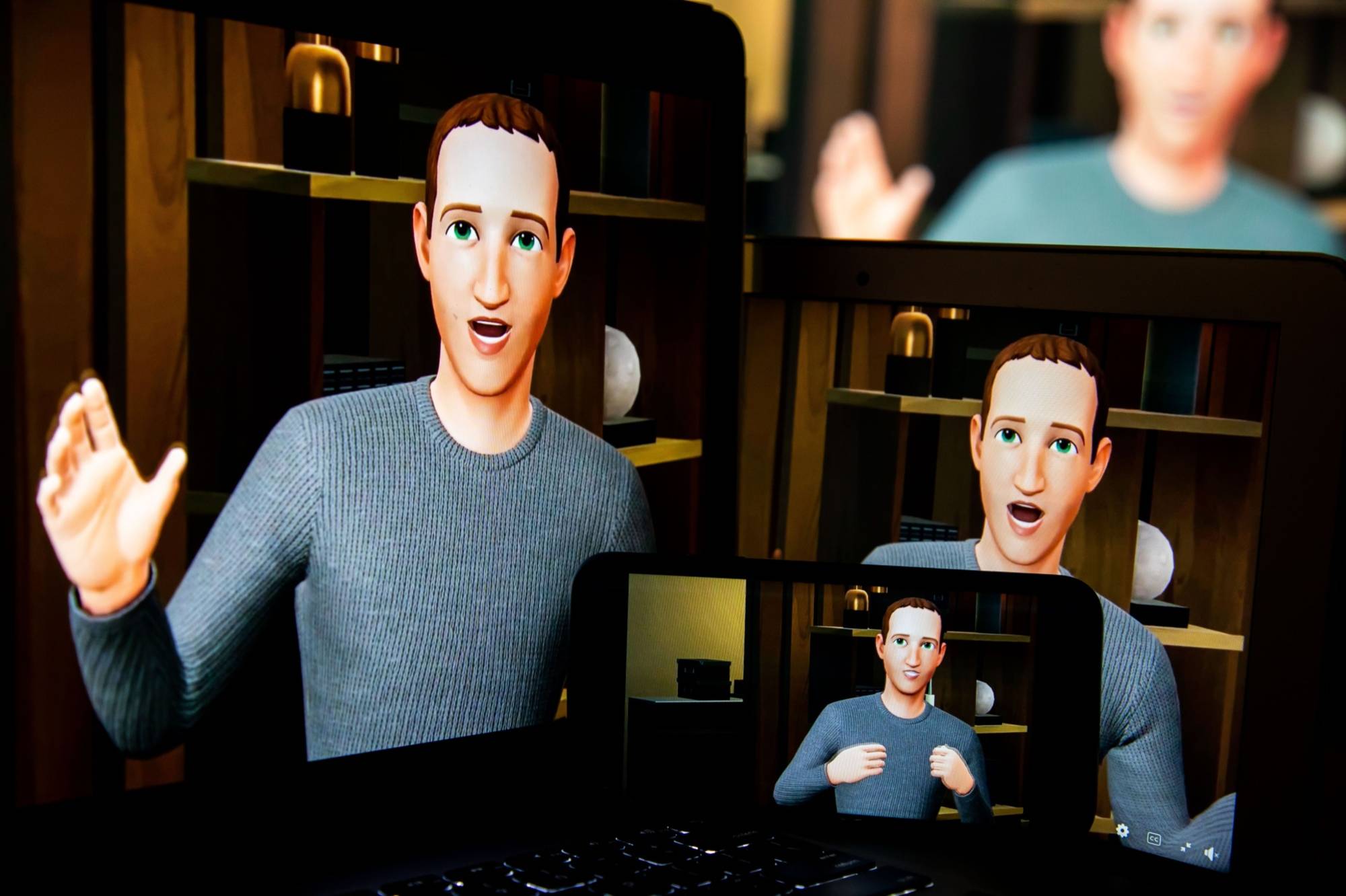
A notable recent example of a hype cycle is the fervour surrounding the metaverse. Presented as the next evolution of the internet, the metaverse captured the imagination of industry leaders and the public alike. However, just a year after its grand unveiling by Mark Zuckerberg, the metaverse faced scrutiny and scepticism. Reality Labs, the division responsible for metaverse-related initiatives, reported an operating loss of $13.7bn last year (1.6 million every hour!) [1], highlighting the challenges of translating hype into tangible market traction. Mark Zuckerberg itself went from “metaverse-first, not Facebook-first” in 2021 [2] to saying that the metaverse is “not the majority of what we’re doing” in 2022 [3].

Meta Platforms CEO Mark Zuckerberg’s avatar speaks during a virtual reality event. Source: Bloomberg.

But the metaverse and its promised marvels are only the most recent hype cycle. Prior to the metaverse, blockchain technology – to name one example – experienced a similar trajectory of hype and disillusionment.

Unsurprisingly, this year at CES was all about artificial intelligence, which has sucked all the air out of the room. The technology you heard about everywhere was AI [4]. Investors are surfing the wave and floods of money are being thrown at AI start-ups [5]. Time will tell us whether AI can deliver on its promises and overcome the challenges that lie ahead.

Hype cycles, while often viewed negatively, are an inherent part of technological progress. They reflect the tumultuous journey from concepts to reality, where expectations collide with the complexities of implementation and adoption. These waves of ‘next big things’ can be bewildering, confusing and erode confidence towards technology. It is true in fact that many of the technology are just “flashes in the pan” and die before reaching any kind of matureness [6].

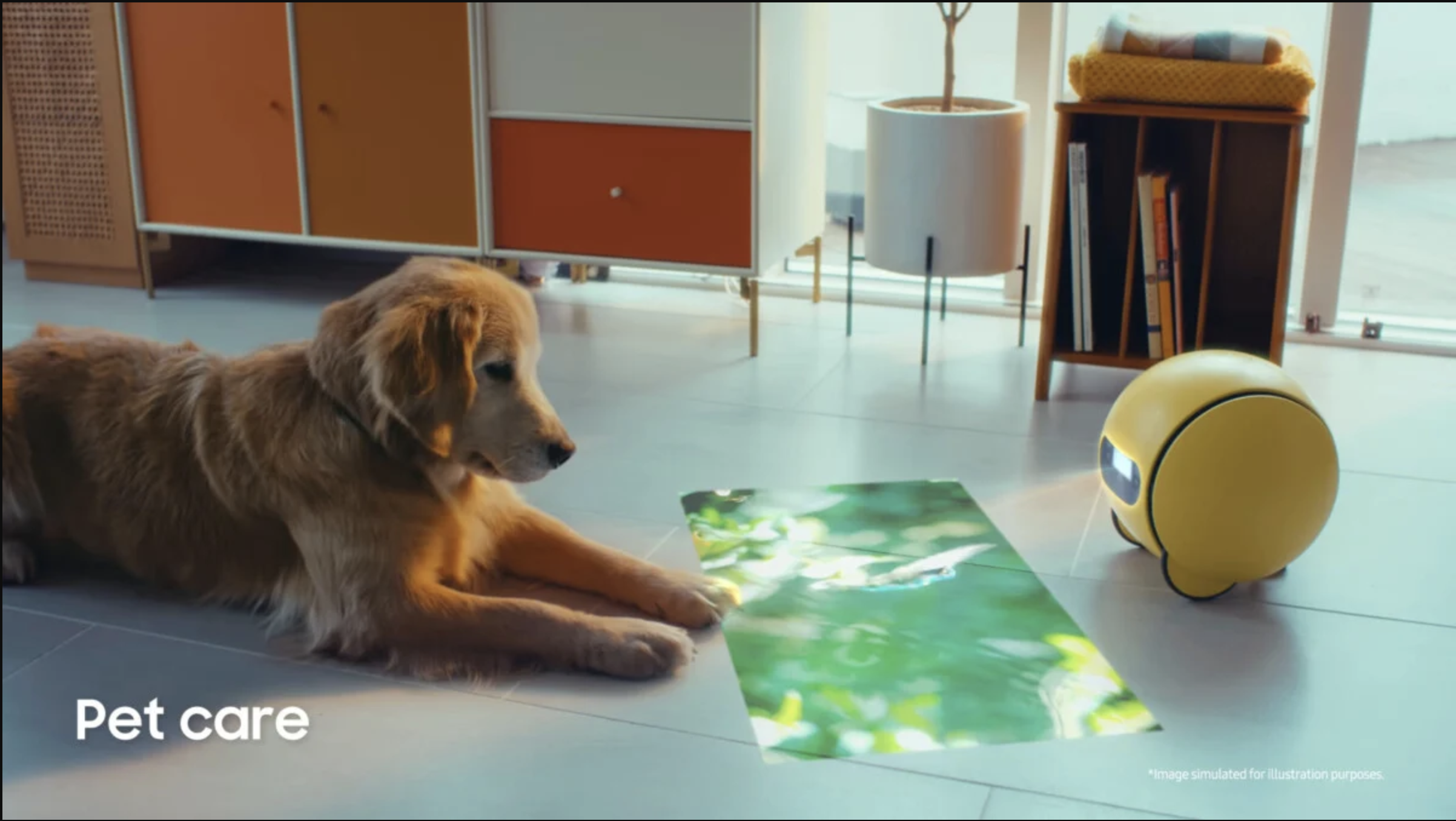
Introduced by Samsung during the last CES, ‘Ballie: your perfect home AI companion’ (at least for your pet). Source: Samsung electronics.

Amidst the buzz of tech shows and the frenzy of media coverage, it’s essential to adopt a discerning perspective. Rather than succumbing to the appeal of hype, it’s crucial to focus on the core features and affordances of what is presented to us as ‘the next big thing’. Core features represent the essential capabilities that define a technology’s identity [7], while affordances denote the possibilities of action that it offers to users [8]. By evaluating technologies through this lens, we can better discern their true value and potential impact.

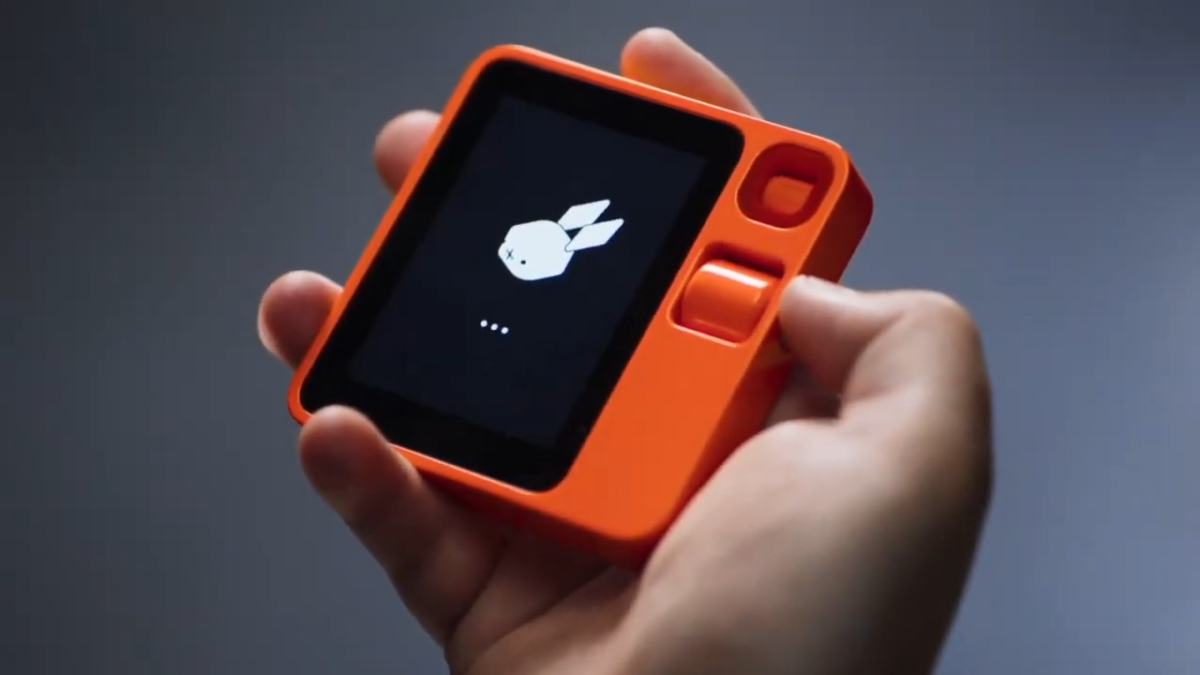
For instance, at CES last January Samsung presented an AI (of course) home assistant that follows you in your daily tasks. Is it just an Alexa on wheels or something more? A start-up called Rabbit presented a handheld device capable of control your music, order you a car, buy your groceries, send your messages, and more, all through a single interface. Have they just reinvented the smartphone?

Rabbit R1 from the AI startup Rabbit. It promises to be a universal controller for apps and services without any login. One device to rule them all. Source: The Decorder.

In the vast sea of gadgets and innovations at CES, the question “who cares?” takes on new significance. By interrogating the core features and affordances of emerging technologies, we can identify the tools, services, and devices that truly offer value to users.

What are the core features of the device? What those functionalities afford me to do? Given such functionalities and affordances, should I buy it? Which other tools are available out there with the same features or affordances? This critical perspective enables us to navigate hype cycles with clarity and discernment, separating ephemeral trends from transformative innovations.

As we await the next wave of gadgets from Vegas, let’s embrace a (positively) critical mindset. By focusing on the substance behind the hype, we can uncover the technologies that will shape our digital future in meaningful ways. In a landscape dominated by novelty and excitement, it’s the thoughtful consideration of core features and affordances that ultimately guides us towards genuine progress.


[1] https://www.cnbc.com/2023/02/01/meta-lost-13point7-billion-on-reality-labs-in-2022-after-metaverse-pivot.html

[2] https://about.fb.com/news/2021/10/founders-letter/

[3] https://www.businessinsider.com/mark-zuckerberg-metaverse-not-majority-were-doing-facebook-meta-focus-2022-11?r=US&IR=T

[4] https://www.theverge.com/2024/1/13/24035152/ces-generative-ai-hype-robots

[5] https://www.ft.com/content/9c5f7154-5222-4be3-a6a9-f23879fd0d6a

[6] https://www.linkedin.com/pulse/8-lessons-from-20-years-hype-cycles-michael-mullany/

[7] DeSanctis, G. and Poole, M.S. (1994), “Capturing the complexity in advanced technology use: Adaptive structuration theory”, Organization Science, INFORMS, Vol. 5 No. 2, pp. 121–147.

[8] Markus, M.L. and Silver, M.S. (2008), “A foundation for the study of IT effects: A new look at DeSanctis and Poole’s concepts of structural features and spirit”, Journal of the Association for Information Systems, Vol. 9 No. 10, p. 5.

476_1996_1-32_CCCR-Press Site

What Art can tell us about Digital Societies

What Art can tell us about Digital Societies

The representation of our society in cultural forms has fascinated me for a long time. Theatre, opera, dance, film, photography all have shaped my upbringing. It was during years of studying digital and creative media that I learnt more about the versatility of media and its representation of life and society at large—from a practical as well as theoretical lens.

First signs of art go back to the Stone ages. As put by Prof. Xiang Xiong Lin in this article in the Humanities, Arts and Society magazine, “Artistic cells are born within human blood. […] Art is the carrier of human culture, and culture is the platform of human civilization.“ Art holds a mirror to the time when it was created. As highlighted by the MET, “art from the past holds clues to life in the past. By looking at a work of art’s symbolism, colors, and materials, we can learn about the culture that produced it.” Equally, art from this century truly tells a lot about the times we live in today. How does technology change the perception about our identity? How does data drive objectivity and erase individuality? How do robots interact with humans?

I want to highlight here a few contemporary artworks that fascinated me in the past and may tell us, step by step, a little bit more about the era we call ourselves a part of or, at least, provide some thought provoking perspectives—on human civilisation in the digital era:

Exploratory Selfie or Selfiecity.Net, 2014, L.MANOVICH

© Lev Manovich

The presentation of the self. A topic that probably never experienced such a dramatic change like right now and within the digital age. Our self-representation is even so important since Instagram, and selfie-camera that Manovich decided to do an artwork on the topic “selfie”. The project is an interactive web app of 3200 Instagram selfies from different countries in the world (Bangkok, Berlin, Moscow, New York, and Sao Paulo). A software creates a certain visualisation of the photos. Via a computer that shows the web app the visitor can explore the dataset of selfies that is then projected onto the wall infront of the visitor. With other artists and specialists, Manovich wants to discuss the construction of self-representation in the digital age. He started analyzing the selfies with a special software, and visualizes the received data. The portraiture of a single person changes through history – from the art of painting, to the photography, to the selfie. The way the self is portrait changes with its society. The project of Manovich even argues if the selfie can be seen as a new sub-genre of photography.

“Selfie is not only a photographic image that we recognize as a self-portrait and which bears a formal resemblance to numerous canonical photographic self-portraits from the nineteenth and twentieth centuries. Instead, selfie is a product of a networked camera. […] While focusing on Instagram, one of several available platforms of online image-sharing, Selfiecity comments on the social media in general. The project views social media as a vehicle of voluntary interpersonal communication, and discusses the visual component of such communication.” (Tifentale and Manovich, 2015)

Face Cages, 2013-2015, Z.BLAS

© Zach Blas

Face Cages is an artwork that is critizising the biometric industry. Its measuring in an objective way is creating a cage. There is either 1 or 0. If you are too extraordinary for the system what are you then? Do you have to worry if your smile is not detected as a smile – by a software? The face cages are inflexible metal constructions for the face that look like a biometrical measurement of the facial factors. These biometric systems are a generalization of the human individuum that create stereotypes. The result is either discrimination, racism, sexism, transphobia or even homophobia. The discomfort the cages entail, dramatizes the discrepancy of the interaction of biometric norms and the individual person.

“Blas fabricated face masks that resemble iron muzzles based on the shape of biometric diagrams, evoking resonances with prison bars, the Scold’s Bridle, and torture devices used during slavery in the U.S. and in the Medieval period in Europe.”; “The different machinations of faciality […]—as a singular, unique, personal and identifiable security-check, as the imposition of a political norm, as collective empowerment, as a plural, multi-form, malleable and amendable canvas, as a means to play with identity, similarity and difference, and as a source of data extraction—indicate that supra-individual cultural narratives and concerns about policing and governance are braided around the algorithmic capture of the face.” (de Vries, 2020)


Drawings by Robot Paul, about 2013, P.TRESSET

© Patrick Tresset, Galleries West

After Tresset lost his passion for his hand drawn paintings he started building robots and he named them Paul. Paul is a robotic arm mounted on a table. Paul uses computer vision to recognize faces he then starts drawing on a paper in about 30 minutes. Through Paul, a robot becomes human. Art used to be made by human kind – what changes now, that even robots know how to draw a portrait? The boarders merge. But what stays is the fascination of only one human-like robotic arm that has the ability to identify a human face and to draw it.

“Paul is a naive drawer: it does not have highlevel knowledge of the structures constitutive of the human face (such as the mouth, nose, eyes) nor the capability of learning expertise based on experience as a human would. However, Paul is able to draw using the equivalent of an artist’s stylistic signature based on a number of processes mimicking drawing skills and technique, which together form a drawing cycle. […] Although the individual algorithms driving Paul are relatively simple and not particularly novel, the way in which they are combined is of interest as the drawings Paul produces are considered by professionals as being of artistic value, which is unusual for computer-generated figurative portraits” (Tresset and Leymarie, 2013)


Hysterical Machines, 2006, B.VORN

© Bill Vorn

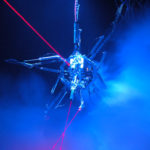
Vorn creates a huge impressive installation with up to eleven dysfunctional machines hanging from the ceiling of the room. Each machine has eight arms made of aluminium reaching out from a spherical body. The machine works like a nervous system made of motor-, sensing-, and a controlling-system. This allows the machine to detect the visitors and react to them. The Hysterical Machines serve to exemplify the paradoxal nature of artificial intelligence. They provoke the visitor’s empathy as they are reacting to their appearance.

In addition to physically interacting with the audience, Hysterical Machines also initiate or establish an emotional relationship with the audience. Their hybrid status, combining the properties of living organisms (their behavior) and technical machinery (their appearance) causes viewers to re-act with a similarly structured ambiguity and ambivalence, in which affective emotions combine with cognitive interest and empathy mixes with primal anxiety and technophobia.” (Kluszczyński 2018)


What artworks do you find most remarkable for our digital lives?

To me, art still represents much about us, our past, our present, and makes us think about our future. To close, I choose the words of a popart legend:

“You need to let the little things that would ordinarily bore you suddenly thrill you.”  – Andy Warhol

wasen

Wasen Beers, Workshop Cheers, and Cobot Gears: Stuttgart’s Workshop Fiesta

Hey everyone!

If you think life as a PhD student is just about boring books and endless research, think again! My last few weeks have been a whirlwind of cool events, amazing people, and lots of learning. Let me take you on a quick tour.

A Dive into Enabling Technologies at Stuttgart

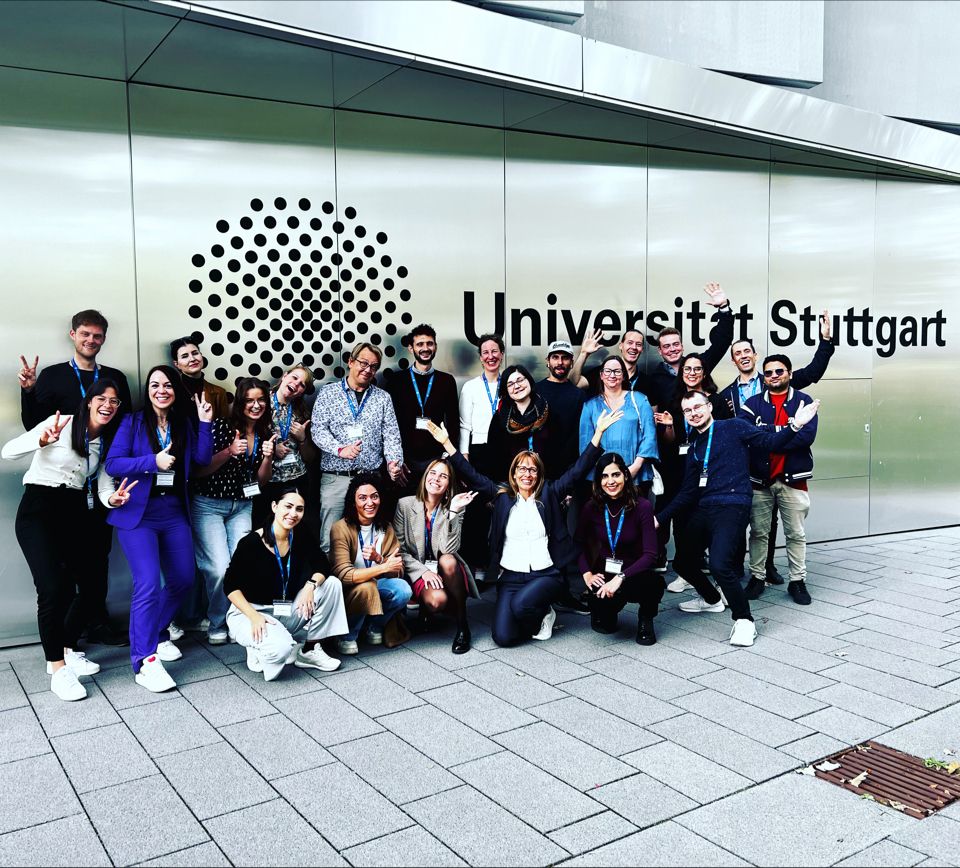
In the heart of October, I found myself amidst the historic beauty of Stuttgart, ready to attend a workshop hosted by the University of Stuttgart. The central theme of the event revolved around enabling technologies and their pivotal role in the digital transformation.

The workshop spread over three days, promised – and delivered – a potpourri of informative sessions, panel discussions with industry stalwarts, and glimpses into the future of digital advancements. From discussing AI and data’s role in research to exploring the dynamics of enabling technologies for ecosystems was genuinely enriching.

A personal highlight for me was the chance to present my ongoing research project on the implementation of collaborative robots (or cobots) in SMEs. It’s a subject I’m deeply passionate about, as emphasized in my paper titled “Cobots in SMEs: Processes, Challenges, and Success Factors”. The feedback and interactions that followed the presentation were invaluable, offering diverse perspectives and new angles to consider in my research.

Participants at the EINST4INE Workshop in Stuttgart
Participants at the EINST4INE Workshop in Stuttgart (Source: photo taken by Christina Theodoraki)

A Taste of Local Culture

Before the intellectual marathon began, a few colleagues and I took a cultural detour to the vibrant Wasen event in Stuttgart. It was a delightful amalgamation of tradition, laughter, and shared memories – a perfect start to an intense week.

Reaching Out to the World

Another proud moment was presenting my conference paper remotely at the IEEE TEMs conference in Lithuania. The virtual platform extended the reach of my work to a global audience. Engaging with professionals and academicians from different corners of the world brought forth a myriad of viewpoints, making the experience thoroughly enlightening.

Looking Ahead

The journey, as they say, is never-ending. As I pen down these words, I’m in the midst of preparing a poster presentation for the upcoming World Open Innovation Conference in Bilbao, Spain, this November. I’m eagerly looking forward to further collaborations, feedback, and the joy of sharing my work with a broader audience.

In the world of academia, every day brings new challenges and revelations. These events and interactions have been instrumental in shaping my thought processes and providing direction to my research. I’m grateful for these opportunities and excited for the road ahead.

Until my next update, stay curious and keep exploring!

Background

Making Connections: My Boston Odyssey with the Academy of Management

The faint hum of discussion, the air imbued with intellectual verve, and Boston’s ever-endearing charm as the backdrop: this year’s Annual Meeting of the Academy of Management (AoM) was nothing short of enlightening.

A Beacon of Knowledge in Boston

With the banner “Putting the Worker Front and Center,” the 83rd Annual Meeting brought the academic world alive in the heart of Boston, a city recognized globally for its synergy of historic charm and intellectual prowess. The AoM’s return to Boston was a significant affair, given its reputation as the most highly attended location in previous years. Over 10,000 attendees from diverse corners of the globe congregated, epitomizing Boston’s allure as an international hotspot for research and learning.

This year’s conference was a veritable smorgasbord of academic feasting. From over 1,500 in-person sessions to the inaugural Annual Meeting Opening Reception, where attendees could engage with AoM’s past and present leaders. Notably, a cutting-edge online platform facilitated interactions, allowing participants to review the program, coordinate schedules, and immerse in spirited discussions.

AoM23 Welcome Sign. Source: own photo.

A Day at the Doctoral Consortium

Among the variety of events, one that significantly resonated with my academic pursuits was the Doctoral Consortium at the Boston Hynes Convention Center. This event holds a unique significance, bridging doctoral students from across the world, facilitating discussions on a myriad of topics and workshops tailored to mold the academic leaders of tomorrow.

The day began with the scent of freshly brewed coffee and a light breakfast, providing an informal ambience for attendees to mingle. As the hours unfolded, the consortium delved into a range of sessions: from crafting job talks to understanding the emotional and mental nuances of transitioning to faculty roles. One particularly poignant segment was the Keynote Speech by Rajshree Agarwal on “Fostering your own enterprise.” Her insights, combined with the wisdom imparted by various faculty panels, made the consortium an enriching experience.

The lunchtime roundtable on research pitches was particularly close to my heart. It was here I had the opportunity to present my project, focused on understanding the interaction models of collaborative robots in organizations. The feedback from peers and mentors was invaluable, aligning with my objectives, such as exploring technology acceptance and its overarching impact on organizational performance. This consortium, coupled with the insights and critiques I received, has been instrumental in steering my research of collaborative human-robot interaction towards a clearer goal.

As dusk approached, the consortium attendees gathered for an off-site dinner at the Back Bay Social. While enjoying Boston’s tasty food and nice atmosphere, our day’s talks easily turned into friendly chats, helping us build work friendships.

Reflecting on the Odyssey

Attending the 83rd Annual Meeting of the AoM has been more than just an academic excursion; it was a journey of personal and professional growth. The myriad discussions, panels, and networking opportunities bolstered my understanding, expanded my horizons, and solidified my passion for exploring the realms of collaborative robots in organizations.

In essence, this Boston odyssey has not just been about gaining knowledge but about making connections – with academia, peers, and the deeper nuances of my own research. As I left the city, I carried with me not just memories but a renewed zeal, ready to tackle the challenges of the 21st century related to management and organizations.

Ensuring Safe Human-Robot Collaboration: The Role of Vision and Proximity Sensors

Robots working alongside humans is becoming more and more probable as robotics technology develops. But when people and robots collaborate, safety is still a major issue. Vision and proximity devices can be used in this situation to guarantee secure human-robot interaction. Robots can detect people, objects, and obstacles in their environment due to vision sensors. They track and identify motion and shapes using cameras and other tools. Robots are able to identify and steer clear of humans and other objects with the help of this ability.

  • As the use of robots spreads across a variety of sectors, safety concerns regarding human-robot collaboration have taken on greater significance.
  • Robots can sense their surroundings and identify objects, people, and obstacles with the help of vision sensors.
  • Proximity sensors can help avoid collisions by detecting the existence of an object or person and their proximity to the robot.
  • By utilizing both kinds of sensors, robots can more accurately perceive their surroundings and decide how to interact with people.
  • Human-robot collaboration is becoming more prevalent in the industrial and healthcare sectors, but safety is still of utmost importance in these environments.
  • While sensors can significantly increase safety, human supervision and training are still necessary to guarantee secure and productive human-robot interaction.

On the contrary, proximity sensors can both sense the presence of an object or person and their proximity to the robot. They employ a variety of technologies, including ultrasonic, capacitive, and infrared sensors, to identify changes in the environment and warn the robot to stop or slow down when a person is close. Robots can more accurately sense their surroundings and decide how to interact with people by combining these two kinds of devices. A robot in a manufacturing environment, for instance, could use vision sensors to recognize nearby people and proximity sensors to determine their closeness. The robot may slow down or halt if the person approaches too closely in order to prevent a collision.

Healthcare is a further application where vision and proximity sensors can be used for secure human-robot collaboration. When working with vulnerable patients, safety is of the highest importance. Robots can help medical workers with tasks like lifting and transporting patients. While proximity sensors can warn the robot to halt if the patient approaches too closely, vision sensors can track the patient’s position and movements. Additionally, sensors can be used by robots to track their own motion and recognize when something is wrong. For instance, a robot with a broken arm may be able to sense when it is moving too quickly or in the incorrect direction and stop before it does any damage. While sensors can significantly increase safety in human-robot collaboration, it is essential to remember that they are not infallible. For the collaboration between humans and robots to be secure and productive, human supervision and instruction are still necessary.

Finally, the integration of vision and proximity sensors can significantly improve the security of human-robot interaction in a variety of contexts, from manufacturing to healthcare. The distance between a person and a robot can also be determined using a depth camera, but it is more difficult to attach multiple cameras to the robot’s skin than it is to attach numerous proximity sensors to various regions of the skin in order to calculate the precise distance from various angles and prevent collisions. The project we’re working on also makes use of a camera and a proximity sensor for secure human-robot collaboration.


robot-g78f84ae61_1920

Robots, Drones, and Robo-Dogs, Oh My! A Journey Through the World of Robotics

“The best way to predict the future is to invent it.” – Alan Kay

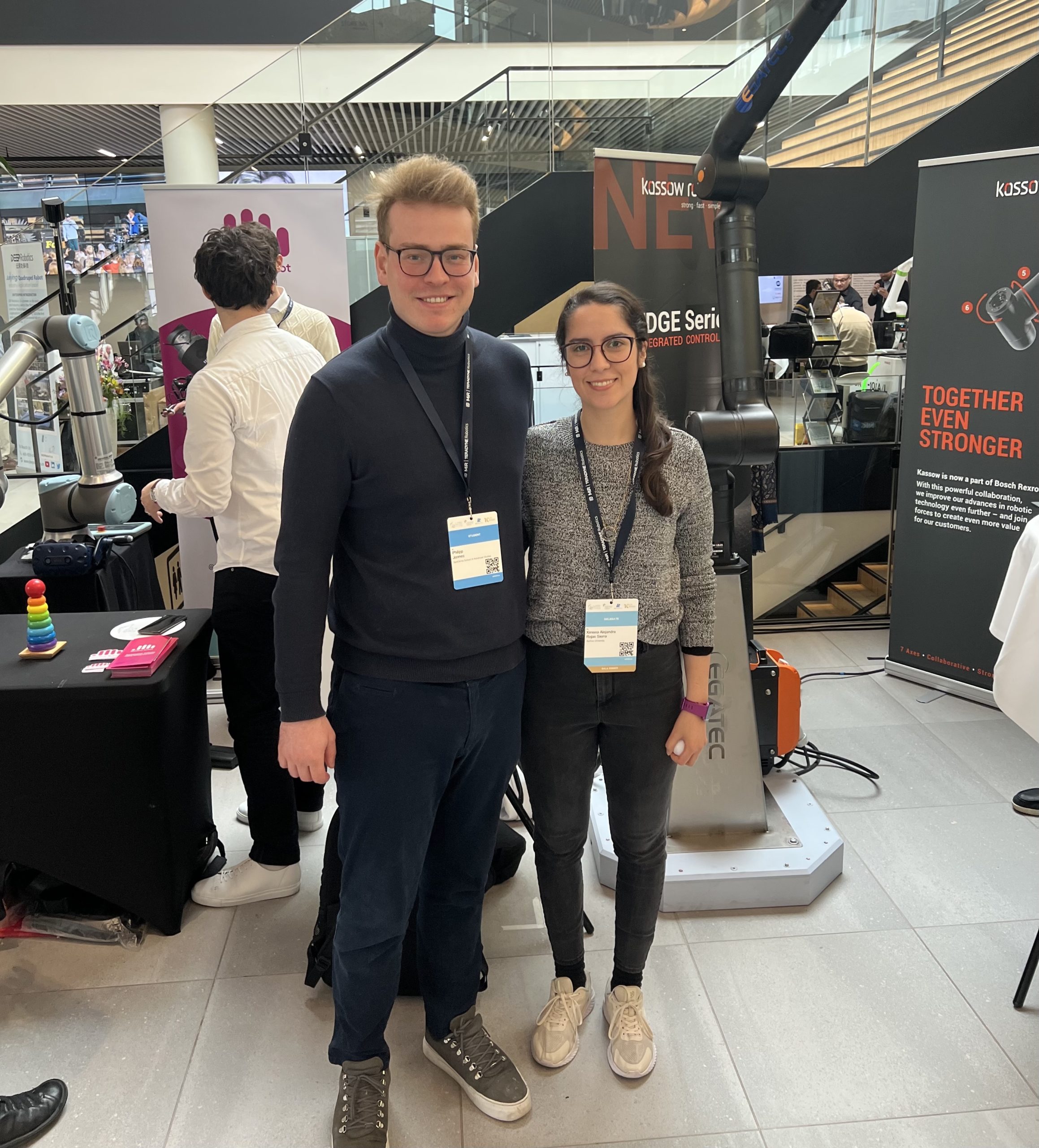
Hello everyone! I’m happy to share some experiences that I’ve made during the last month. Recently, I had the incredible opportunity to accomplish my academic secondment at Aarhus University in Denmark and attend the European Robotics Forum in Odense with my EINST4INE colleague Alejandra Rojas.

ERF23

The European Robotics Forum (ERF) is an annual event that brings together experts in robotics from industry, academia, and government to discuss the latest developments in the field and explore potential collaborations. The forum is organized by the European Robotics Association (ERA) and typically features keynote speeches, technical sessions, panel discussions, and exhibitions showcasing the latest robotics technologies and applications.

The ERF serves as a platform for researchers, engineers, and entrepreneurs to exchange ideas and knowledge on a wide range of topics related to robotics, including industrial automation, healthcare robotics, service robotics, and artificial intelligence. It is also a forum for policy makers and industry leaders to discuss the challenges and opportunities presented by the rapidly evolving field of robotics, such as ethical and legal considerations, workforce training, and investment strategies. Even Crown Prince Frederick, His Royal Highness of Denmark, attended the event this year!

ERF with EINST4INE colleague Alejandra Rojas
ERF23 with EINST4INE colleague Alejandra Rojas. Source: own photo.

As a visiting researcher, I was thrilled to be able to connect with so many people who are passionate about robotics and human-robot interaction. I was able to learn about the latest developments in this field. I was particularly interested in discussions surrounding collaborative robots, which are designed to work alongside humans in manufacturing and other industries. During the forum, I had the pleasure of engaging with some brilliant minds, from both the academic and practitioner side. Their contributions to the discussions were invaluable, and I learned a lot from them.

Exploring the Fascinating World of Robotics

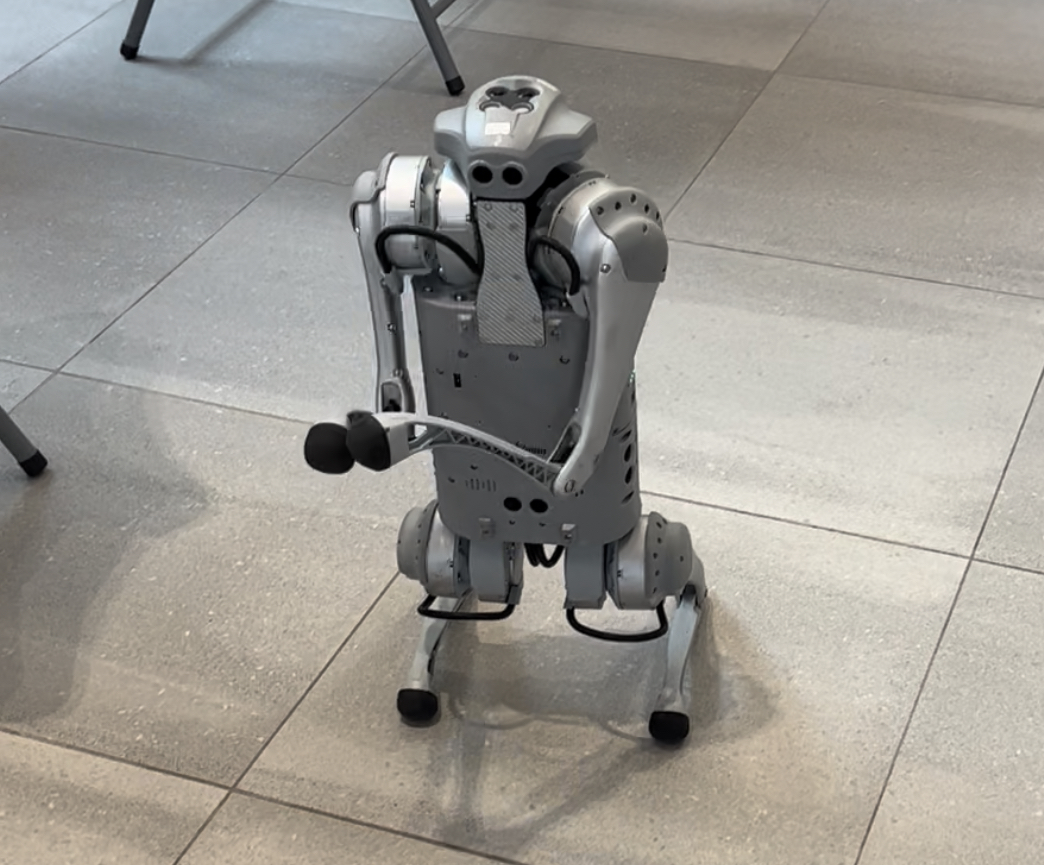
In addition to my research on collaborative robots, I’m also fascinated by other robotic technologies such as drones and robotic dogs. These technologies are shaping our world in profound ways, and I believe they have enormous potential to improve our lives. For example, drones have the ability to conduct aerial surveys, deliver packages, and even help with search and rescue missions. Robotic dogs, on the other hand, can be used in a wide range of applications, from military and law enforcement to assisting people with disabilities. I find the intersection between these technologies and human needs to be particularly interesting, as it challenges us to think about how we can design and use robots in ways that are safe, ethical, and beneficial for society as a whole.

Robotic Dog ERF23
Robotic Dog ERF23. Source: own photo.


The Journey Goes On

Aside from the forum, I also spent time at Aarhus University, where I was conducting interviews with SMEs located around Denmark. These interviews are an important part of my research, as I’m studying the implementation of social and collaborative robots in organizations. By understanding the effects of cobots on an individual and firm-level, I hope to achieve a clearer understanding of cobot implementation processes, organizational opportunities and challenges.


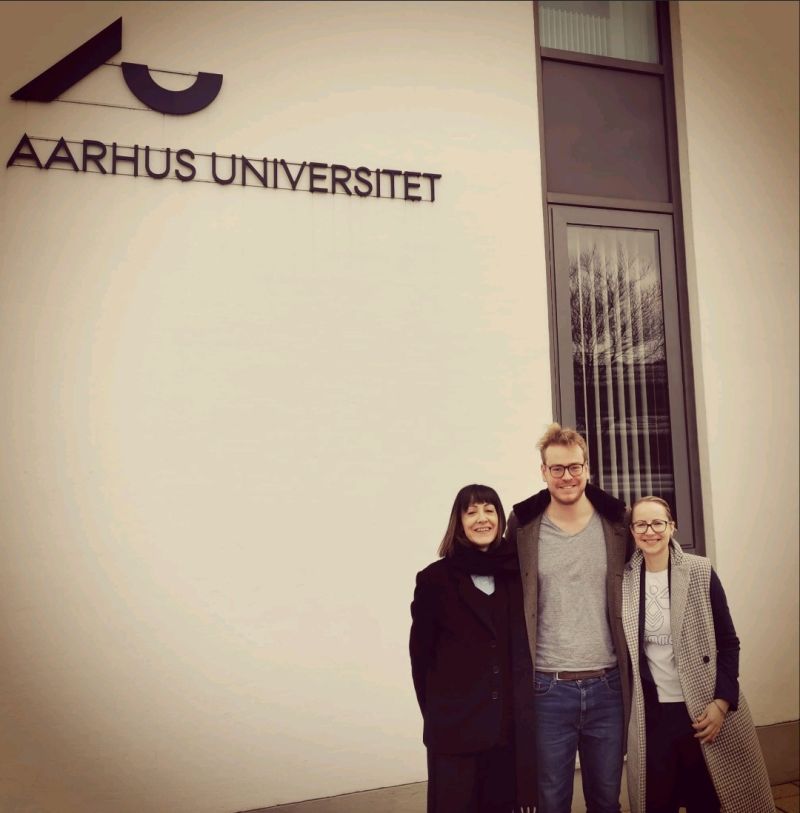
Visit at AU with Agnieszka Radziwon and Cristina Marullo
Visit at AU with Agnieszka Radziwon and Cristina Marullo. Source: own photo.

Overall, my trip to Denmark was an amazing experience, and I’m so grateful for the opportunity to connect with so many brilliant minds in the robotics field. I’m excited to continue my research and see what developments the future holds for human-machine interaction models. I am also looking forward to the next EINST4INE Summer school and see my ESR friends in person again. Thanks for reading!


thisisengineering-raeng-Bg0Geue-cY8-unsplash

Digital industrial platforms

During my PhD studies in the third semester, I had the opportunity to assist and teach some classes about the digital economy and specifically about digital platforms and ecosystems. While I hope that the students learnt as much as I did, I became highly interested in one topic:

Digital Industrial Platforms

Before diving into what digital industrial platforms are, it seems useful to define what digital platforms are:
Dating back to the nineties with the onset of the Internet and the increased communication and creation of online communities, native digital platforms such as eBay started to emerge, facilitating online commerce. Later, Amazon and Google made the most of the power of the network to become what they are today.

Nowadays, as technology continues to advance and pierces through new industry boundaries, new types of platforms have emerged. Industry 4.0 and the Internet of Things have led to the emergence of digital industrial platforms which allow firms to connect and collect data from industrial machinery and their environment in order to co-create new solutions and services.

GE’s Predix is one example of a digital industrial platform.

Check out GE’s “Predix” platform:

But, unlike commercial platforms, digital industrial platforms serve as both innovation and transaction platforms. They collect and analyze data from different industrial assets and make this information available to third-party companies so that they can create complementary products and services. Many of these platforms also act as a marketplace where they sell these solutions to industrial customers.

Another difference between B2C and B2B platforms relates to the way they are “built”. The rules that apply in the B2B sector may not apply to the B2C, as network effects are not as prevalent in the manufacturing industry due to the more complex nature of industrial products and the relationships between the third-party developers as well as the customers and the sellers.

What we can say, is that all digital platforms have a technological basis. Industrial platforms are an interesting case as they converge different types of machinery, digital, enabling, and general-purpose technologies. A recent paper by Jovanovic et al. (2022) assessing the creation of different industrial platforms illustrates the evolution of the connection between these technologies:

  • Most platforms start with collecting data about each machine or product through the installation of sensors. With this, companies gain a better understanding of their machinery and the connected processes.
  • Through analytics, the use of “advanced” sensors can give more information about the performance and weaknesses of the machines. With this, they are able to gather huge amounts of data that they store in a cloud (e.g. Microsoft Azure, AWS, etc.). This helps companies to proactively discover anomalies, and react before a problem arises.
  • Finally, AI technologies can help assess the technicalities and data generated by machines and their surroundings. Most importantly AI technologies contribute to the autonomy of the system, like the GE Predix platform, where trains can accelerate and decelerate depending on if you’re driving up a hill or down a hill.

So, even though most scholars have agreed that technology can drive the growth of ecosystems, we still don’t know much about the interaction of these technologies and how they are connected to the formation and expansion of ecosystems. .. So stay tuned while we find out!


References:

Jovanovic, M., Sjödin, D., & Parida, V. (2022). Co-evolution of platform architecture, platform services, and platform governance: Expanding the platform value of industrial digital platforms. Technovation118, 102218. https://doi.org/10.1016/j.technovation.2020.102218

Extended Reality

XR – Extended Reality

Immersive experiences are constructed by merging the physical and virtual worlds. Among the technologies that are gaining more popularity are Virtual Reality (VR), Augmented Reality (AR), and Mixed Reality (MR). Recently interest in Extended Reality (XR) has grown rapidly.

Current developments in technology have led to the extension of the terminology used to describe the merging of the physical or real world with a virtual world. All mentioned terms refer to a combination of virtual and physical worlds using various digital media to create new, blended spaces. In recent years, we have heard and read a lot about Virtual Reality and Augmented Reality.

Virtual Reality (VR) is like a new reality that is created. It is a simulation of an environment or a three-dimensional image. People can interact with that virtual environment by using equipment such as headsets, helmets, glasses, or gloves. Increasingly such equipment comes with more sophisticated sensors, enabling more refined experiences. A headset allows the user to be immersed in the VR experience; the user can see a virtual world delivered by computer-simulated images and sounds.

Augmented Reality (AR) is often described as the merging of our normal reality with computer-generated digital graphics. Unlike virtual reality, users do not experience being in a virtual world, but they see the real world with an additional digital layer. Often used by enabling the camera of handheld devices such as mobile phones or tablet computers, AR allows a new kind of display which is usually portable.

Picture: Freepik.com 

Mixed Reality (MR) combines the features of VR and AR. A more recent term, mixed reality is often used in a similar way as augmented reality. MR is used to create three-dimensional images of realistic objects or complex environments where real and virtual worlds are blended. The interaction of digital and physical elements in real-time constructs a new space. MR is defined as a “continuum between the real and the virtual environments” [1].

In addition to the combination of real-world overlaid with a virtual layer as provided by AR, digital environments for mixed reality can use not only portable devices but physical environmental elements such as rooms or buildings. The fact that both sellers and users or buyers can interact with these objects or environments makes MR attractive for application in business. Sellers can provide immersive experiences with MR that help demonstrate how a product will look in a certain space. For instance, fitting furniture into a client´s home or demonstrating how a building looks and how it will fit into an area or neighborhood are useful features for marketing and sales. Other examples include head-up displays as used in the automotive industry. Using MR, clients can interact with the object and experience it in a new way.

Picture: Freepik.com

So, VR constructs a new reality, AR consists of the physical world that is overlaid with a digital layer, and MR allows new experiences through interaction with an object or a product… what about Extended Reality?

Extended Reality (XR)

Extended Reality or XR is a relatively new expression. It is an emerging umbrella term that includes Virtual Reality (VR), Augmented Reality (AR), and Mixed Reality (MR). The full spectrum of real and virtual environments is covered by XR. [2] It refers to computer-generated environments. By overlaying a virtual layer over the physical reality, XR creates entirely immersive user experiences using computer-generated images and sensors.

In 2019, many stakeholders of XR product companies predicted that XR will become mainstream in the next five years. [3] Industry use cases are predicted to be mainly in the medical and manufacturing industries for business XR, whereas consumer XR will be mainly focused on media and entertainment, movies, television, and the gaming industry.

In education augmented and virtual reality technology offers new training opportunities that cannot be found in traditional classroom settings. XR will allow educators to explore new educational territory. Furthermore, XR helps facilitate new experiences for students, such as observing certain topics at different points in time throughout history or exploring distant places on earth with virtual visits. Students exposed to XR are enabled to experiment and engage in new ways. They may not only learn better but could also improve crucial skills like problem-solving or other abilities that are useful in daily life.

Multisensory Extended Reality is often used together with the term extended reality. In addition to the visual and the auditory senses, which have been mainly highlighted by VR and AR, it refers to immersion into a new reality through additional senses. The human senses are extended with sensory-enabling XR technology. These include the haptic sense, enabling the touch of objects with gloves, the sense of taste, simulated with an electronic tongue, and the sense of smell, simulated through an electronic nose or diffuser technology. [4]

Picture: Freepik.com

Which reality?

The possibilities offered by XR technology are seemingly endless. Businesses have begun to leverage this cutting-edge technology for a variety of purposes such as entertainment, education, or remote tours for remote visits to museums or tourist attractions. Marketing, real estate, the medical industry, media, and entertainment were the first to adopt it, but many more will follow soon. In 2022, the worldwide market for extended reality was valued at $38.3 billion. Predictions for 2030 see the market rise up to $394.8 billion. [5] The European XR industry is fragmented and less well-known than its competitors in Asia or the US. [6]

Industry has discovered what XR technology can do for them and has developed innovative ways to make use of these advanced technologies. As AR and VR are increasingly adopted, a rapidly growing list of sectors invests in the development of new applications.

New technologies are likely to continue the creation of additional new realities. People are given more control over how they interact with their physical or digital environment. Use cases for XR are seen in almost every industry. As potential applications for XR may go far beyond the sectors mentioned, XR is foreseen to revolutionize every industry in the near future.

References

[1] https://xr4all.eu/xr/

[2] XR4ALL is an initiative by the European Commission to strengthen the European XR industry. For more information see https://xr4all.eu/xr/

[3] https://www.visualcapitalist.com/extended-reality-xr/

[4] Santoso, H. B., Wang, J. C., & Windasari, N. A. (2022). Impact of multisensory extended reality on tourism experience journey. Journal of Hospitality and Tourism Technology.

[5] https://www.psmarketresearch.com/market-analysis/extended-reality-xr-market-insights

[6] https://xr4all.eu/about/

Web3: a democratic revolution?

Web3: a democratic revolution?

Old wine, new bottles

In the early 1980s, in a Brazil plagued by dictatorship and economic stagnation, a soccer player succeeded in transforming the structure of one of the most famous Brazilian football teams, named Corinthians, into the only shared governance laboratory in the football world.
A revolution that has gone down in history as Democracia Corinthiana.

Tired of the way the players were treated and some of the decisions made by the previous president, Socrates, in agreement with the rest of the team, convinced the club’s new management that any decisions would have to be discussed at an assembly and then put to a vote by all employees. From the transfer window to the redistribution of the economic income, everything had to be decided in a democratic manner (1).
The experiment had its ups and downs, including a brief period of rather confusing total self-management that led to much criticism from the club’s advisors. At that moment, the team realized that the only way to continue the experiment was to win. And so it did.
Between 1982 and 1983 Corinthians returned to win the championship for two consecutive years, as it had not happened since the 1950s (2).

Web3: a democratic revolution?
Figure1: Socrates wearing the Corinthians’ shirt. Source: Medium


Inspired by the reading of a recent book called “Think Blockchain“, written by Jerry Cuomo (IBM Fellow, VP and CTO of Technology & Consulting), I will explain in the next sections why this ideal of shifting profit and control from the managers to the content creators stands at the foundation of the Web3 development and how things are going so far.


Context

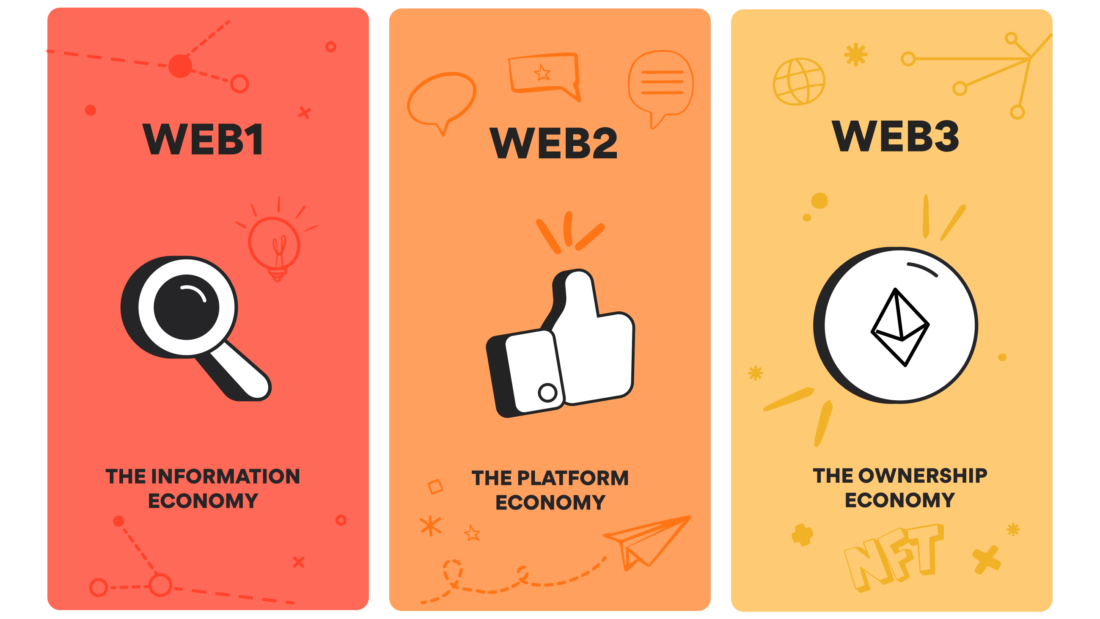
The current phase of the internet is defined by accessing and creating content. Web2 is dominated by centralized companies, e.g., Big Tech such as MAMAA, which provide services in exchange for accessing and monetizing users’ personal data. On the contrary, the next phase aims at leaving the ownership of data and information to the content producers, i.e., us, without transferring the potential value created.

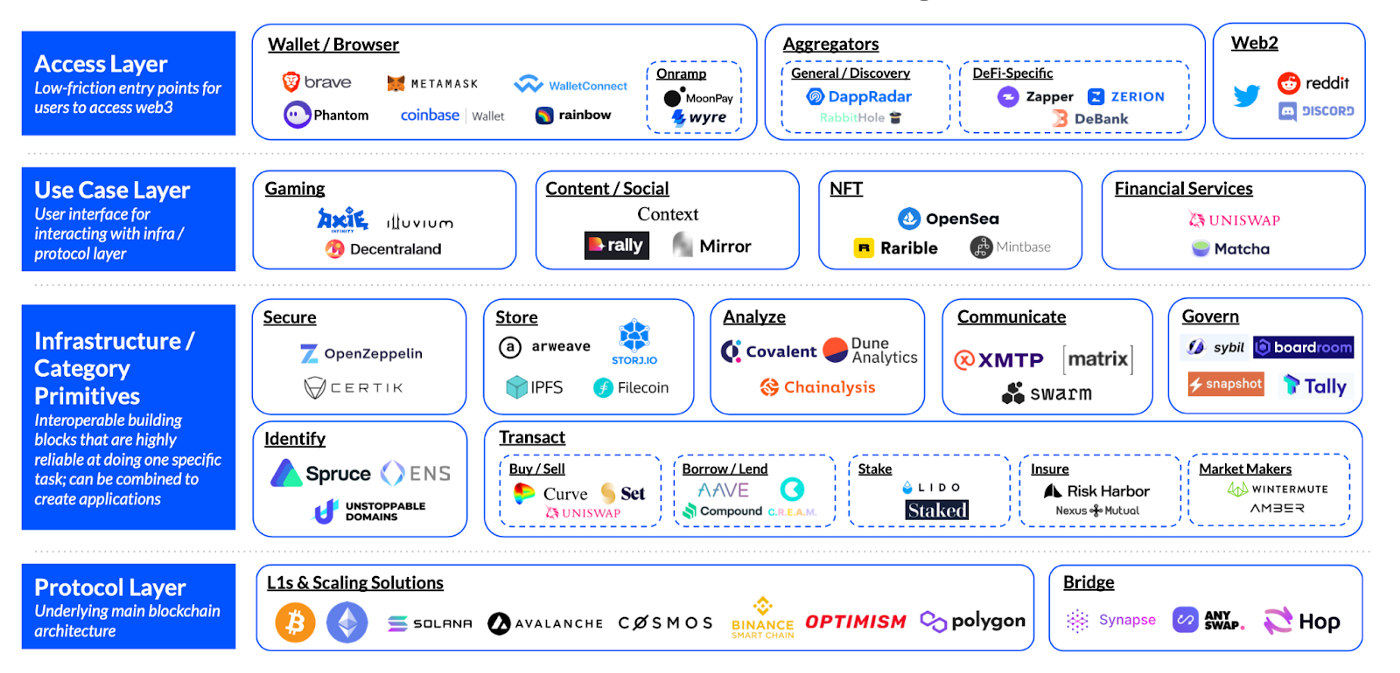
However, the Web3, term originally coined by Ethereum co-founder Gavin Wood in 2014, offers much more than this. The rise of products related to the token-economy, e.g., NFTs, is an example, but Figure 2 offers a more comprehensive overview of the different use cases and of the companies involved at each layer.

The Web 3 Stack
Figure2: Companies operating in the Web3 space divided per layer of the Web3 Stack. Source: Coinbase

Architecture

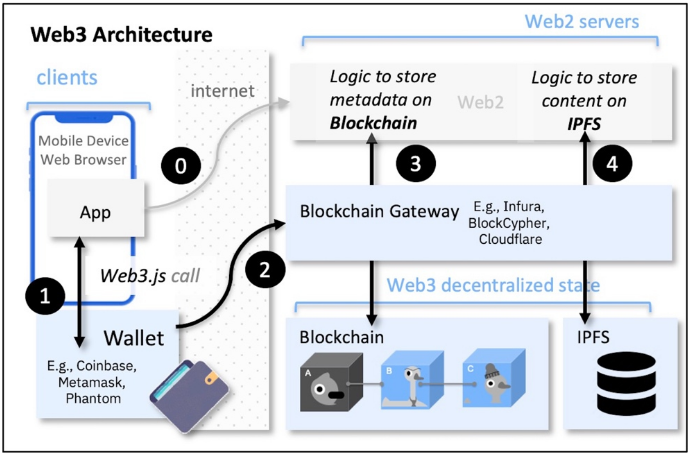
Contrary to its previous version, Web3 will be built using Decentralized Peer-to-Peer networks, Artificial Intelligence, Crypto-wallets, and distributed ownership of Protocols rather than corporate servers. Nevertheless, Web3 represents an extension more than a replacement of Web2, as it will enable to “off-board” key personal and application data from centralized organizations to decentralized wallets, blockchain and storage networks, under the control of the user (3).

Web3: a democratic revolution?
Figure3: Web3 Architecture taken from J. Cuomo’s book “Think Blockchain”

Characteristics

After having spoken about the architecture, we should now move to the main features characterizing Web3: (3) (4)

  • Distributed and Decentralized Governance:
    • Respectively, the record of all transactions is stored and shared across all the actors of the network and no single actor controls the operation of the blockchain.
      For more details of this process, check Philipp‘s blog on the topic.
  • Universal Identity:
    • An anonymous single-sign-on will allow to use just one username and authentication method across all websites, rather than individual logins, without the need to share personal information. In fact, thanks to Web3 wallets backed by blockchain, the user always retains control of the personal data and login credential.
      • An example of a Crypto-wallet is CoinBase, already valued more than $11 billion in terms of market cap.
  • Token-based:
    • Activities that contribute to Web3 will be rewarded by a token (either NFT or fungible) to incentivize participation and distribute ownership. This token can be “minted” (generated) and stored into a crypto-wallet.
      • An example is Pixie, the world’s first fully functional decentralized photo and video sharing social network based on blockchain crypto economics. Pixie, like a crypto version of TikTok or Instagram, encouraging users to create quality content and interact constructively with fellow users, thus all the content can circulate inside Pixie effectively (5).
  • Self-governing:
    • Blockchains will rely on the entire network to verify an activity via consensus. However, specific governance mechanisms can be established to democratize decisions, based on the quality or volume of a user’s investment into a site or DApp. Thus, when the rules are set, new forms of organization can arise, thanks to the execution of smart contracts.
      • An example is BitDAO, a Decentralized Autonomous Organization (DAO) with one of the largest and most diverse token-governed treasuries in the world and more than $2.5 billion invested (3).
  • Immersive and augmented experience
    • As described by Nicola in a previous blog post, the combination of decentralized solutions and immersive technologies coming to maturity may give birth to decentralized Metaverses, providing an open exchange of digital assets.
      To give you a sense of what this buzzword means, here there is a list of examples coming from the manufacturing industry and the entertainment sector.

      • BMW’s future factory developed on Omniverse platform;
      • Volkswagen’s experience with Web3;
      • Renault unveiled a partnership geared towards offering virtual automobile experiences by leveraging blockchain technology and Web3-based solution;
      • For entertainment there are a lot of examples like, Sandbox and Decentraland.

A longer list spanning across different industries has been prepared by Rejolut and can be found here.


Critics

As for every innovation, limits and possible negative externalities have to be considered. In this case, the criticism concerns its feasibility, due to hurdles around scalability, control, and adoption that must be overcome (4). You can find some interesting commentaries below:

Moreover, a policy brief published last March by the Bennett Institute for Public Policy in Cambridge warned against several risks related to the immutability of the blockchain (Online safety), the diffusion of cryptocurrencies as an incentive to ransomware attacks and a possible threat for unprepared consumers.
The report concludes that even though some market intermediaries are extractive rentiers, many others play value-adding governance roles that cannot be replicated with smart contract code. Thus, trusted central authorities will still keep a key role, making blockchain a redundant solution.


Conclusion

Being a new phenomenon, there are still more questions than answers about the future of Web3. However, I hope that this blog has helped to clarify some aspects related to its architecture, its relationship with blockchain, and has sparked interest in critically analysing its pros and cons.

Now, let’s move to the third episode of my column!


Surfin’ Internet


Feel free to comment and share your thoughts on this topic, see you soon!


References

(1) https://www.ultimouomo.com/buon-compleanno-dottor-socrates/

(2) https://www.ilpost.it/2021/12/16/socrates-democrazia-corinthiana/

(3) Jerry Cuomo, Mark Parzygnat, Shaun Lynch, Irving Wladawsky-Berger. (2022). “Think Blockchain: A Student’s Guide to Blockchain’s Evolution from Bitcoin, Ethereum, Hyperledger to Web3.”

(4) https://eco.brainsy.com/kb/article/web3-defined

(5) Pixie: The blockchain social platform taking the internet by storm (cointelegraph.com)

Alex Murray, Dennie Kim, Jordan Combs. (2022). The promise of a decentralized internet: What is Web3 and how can firms prepare?. Business Horizons.