The automotive sector has undergone a significant transformation with the advent of electromobility. This revolutionary shift is reshaping the way vehicles are powered, manufactured, and utilized, with profound implications for the industry, the environment, and society as a whole.
Electromobility refers to the use of electric propulsion systems, primarily batteries or fuel cells, to power vehicles instead of traditional internal combustion engines. This transition is driven by various factors, including concerns about climate change, air pollution, and the finite nature of fossil fuels. As a result, automakers are increasingly investing in electric vehicles (EVs) and developing advanced technologies to improve their performance, range, and affordability.
Tesla has played a pivotal role in driving the adoption of electromobility and reshaping the automotive industry. However, Tesla’s success has also posed a significant challenge for traditional automakers, many of whom have struggled to catch up in the rapidly evolving electric vehicle market. Despite their substantial resources and manufacturing capabilities, legacy automakers have faced obstacles in developing competitive electric vehicles that can match Tesla’s performance, range, and brand appeal. Additionally, the transition to electromobility requires significant investment in research and development which can be daunting for established automakers.
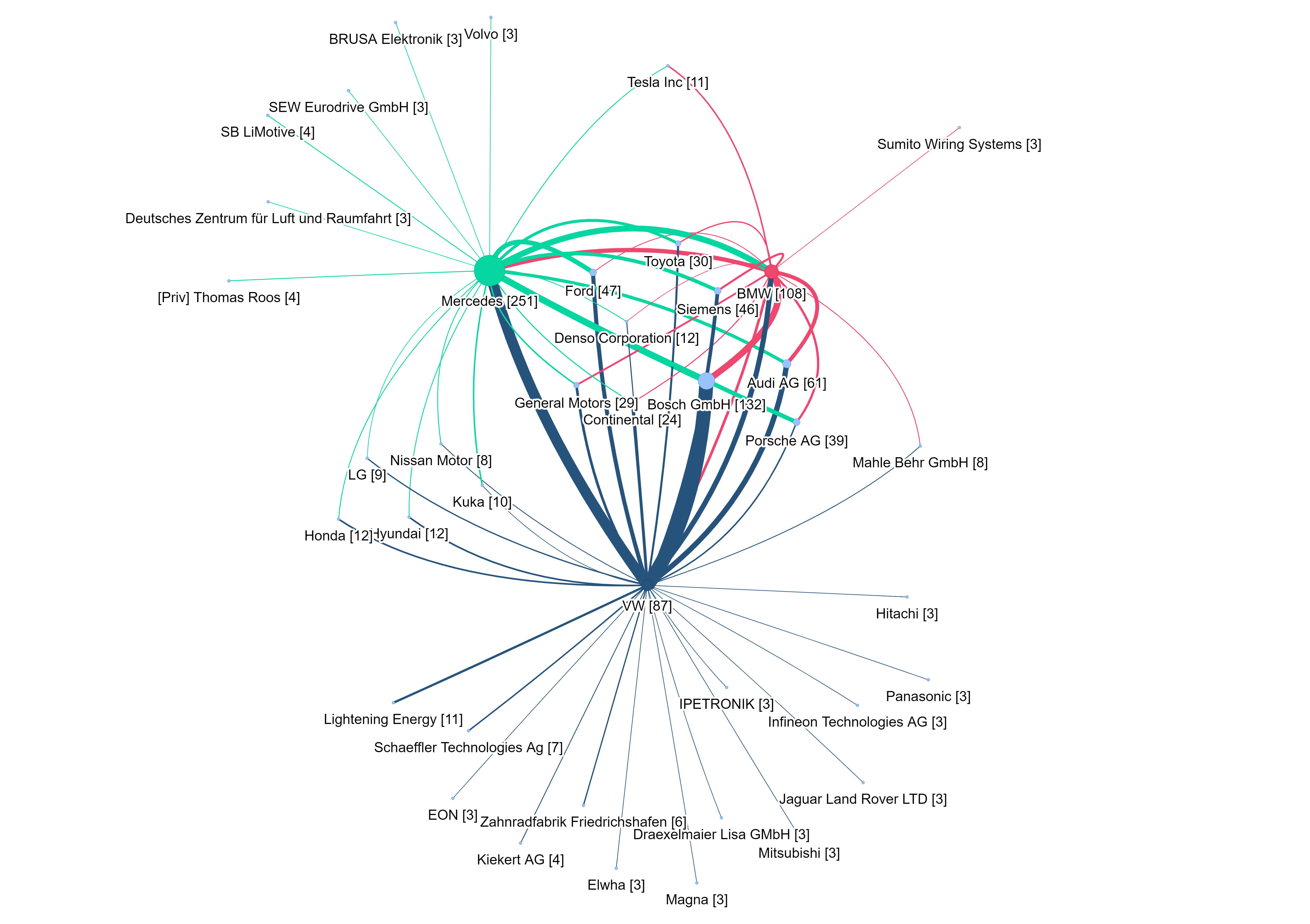
Nevertheless, traditional car manufacturers had plenty of time and resources to search for and integrate external knowledge and identify the market changes. We investigated how the German car manufacturing sector prepared and responded to electromobility in our latest paper. What we find is that they delayed their response significantly and heavily relied on local knowledge – rather than sourcing missing knowledge early and integrating it. Using patent data, we mapped the knowledge flows for the three major players in the German car manufacturing sector and visualized the network.
Our most important finding is, that someone else in the innovation ecosystem managed to step up when the car manufacturers were not. Bosch became essential for all three car manufacturers and shows that it is essential to scan the peripheral of the industry. Otherwise you risk your position in the market and empower potential competitors to take your spot during the industry evolution.
Knowledge flows at the later stages of the industry evolution. Bosch managed to become a central source for knowledge, granting them the power to control knowledge in the new ecosystem.
Data monetization refers to the process of capturing monetary value from data by generating revenue through selling data, data-based products, and data-based services. It involves converting the intangible value of data into tangible financial returns.
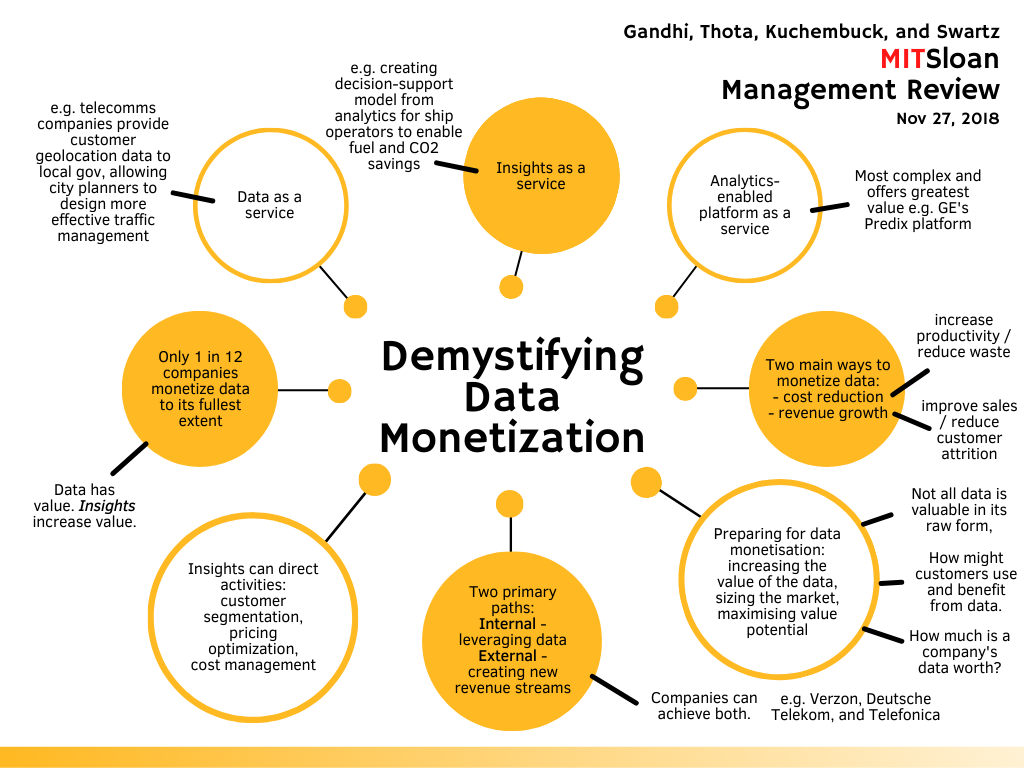
Summary of ‘Demystifying Data Monetization’ (Gandhi et al., 2018). Created by author.
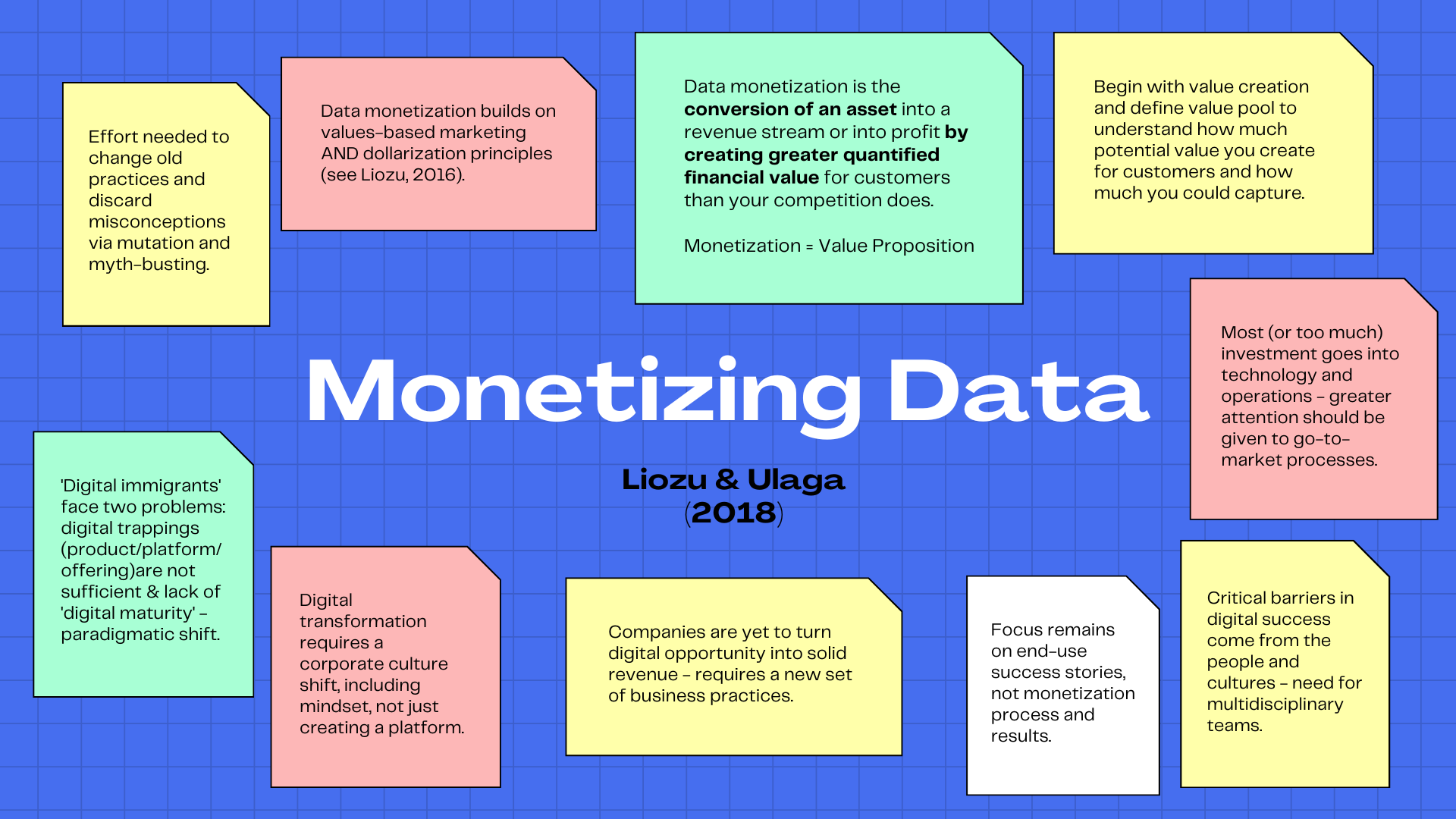
I was actually very new to this topic when I started this project, so as a fun way to get into the literature I generated a few visuals to help concretize the key learnings and takeaway. I share them here (above and below) to help give a snapshot of some of the foundational reading. At this time, I was lucky enough to gain the experienced wisdom from my co-authors, who publish works in this area such as ‘Three Ways to Sell Value in B2B Markets‘ (Keränen et al., 2021) and ‘Growth Reinvented: Turn your data and artificial intelligence into money‘ (Ruokonen, 2020).
Summary of ‘Monetizing Data’ (Liozu & Ulaga, 2018). Created by author.
Data monetization is crucial for organizations as it presents opportunities to create new revenue streams, drive innovation, enhance competitiveness, and unlock the full potential of data assets which can also contribute to environmental and social benefits. Despite the increasing trend towards data-driven offerings, many B2B firms face difficulties in effectively selling and monetizing their data.
How can data be monetized – what did we find?
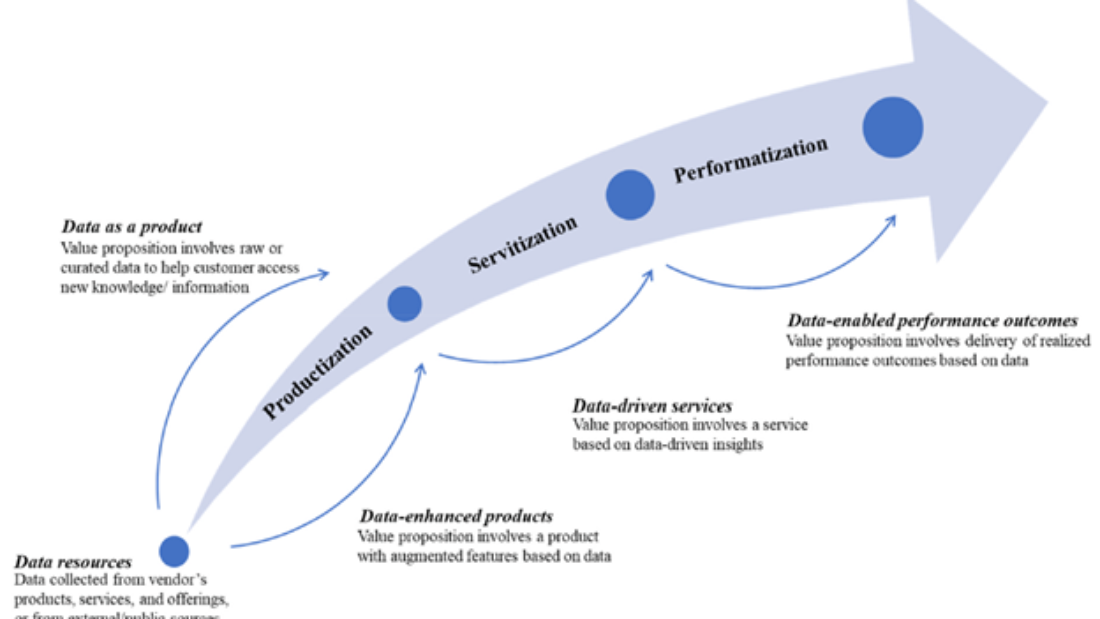
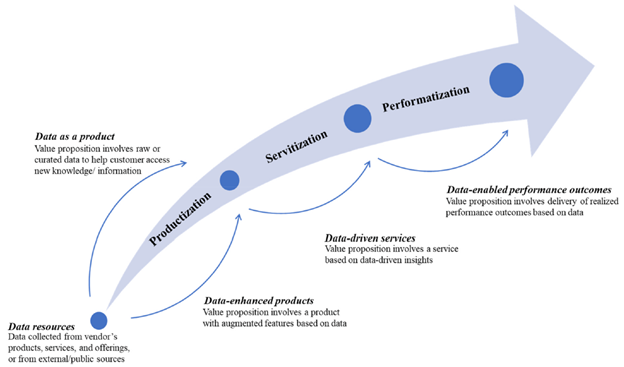
We studied data-driven value propositions by 14 B2B companies, including ABB Group, Hilti Group, Kemira, Eagle Alpha, Kyndryl, Metso Outotec, Jakamo, and many others. Accumulating evidence from some of the authors’ previous work, the literature, and predominantly the interviews we conducted with key informants from our case companies, we were able to identify four different data-driven value propositions that B2B firms can use to sell and monetize data-driven offerings. These are:
Data as a product – where raw or processed data is sold or shared with customers as a stand-alone offering. In this model, vendors typically sell their own data or data collected from public domains or other companies.
Data-enhanced products– where existing product offerings are enhanced with data-driven features and functionalities. In this model, vendors embed for instance smart sensors, software, and IoT applications into physical products to collect, analyze, and monitor data on how customers use their products.
Data-driven services – where vendors use accumulated data to analyze, predict, and optimize customers’ processes. In this model, vendors sell intangible insights and know-how through consulting services.
Data-enabled performance outcomes – where vendors combine data-enhanced products and data-driven services to deliver complete smart solutions that guarantee specific performance outcomes. In this model, vendors take responsibility for specific processes on behalf of their customers and sell measurable and guaranteed performance, capacity, or availability outcomes.
Each of these value propositions has its unique characteristics, capabilities, and challenges, and the study provides insights into how firms can transition between them and develop their data-driven offerings (see Table 2 in the paper).
These four propositions are not a step-by-step progression, as a firm can choose to develop one or more of these propositions and expand in either direction that suits the firm’s capabilities, resources, and goals at any given time. Although, it can be said there is a higher investment of resources and increasing complexity and challenges as you progress from 1 to 4 of the labelled propositions above.
We developed a continuum to visualize how firms often navigate between these different value propositions.
Data-driven value proposition continuum (Source: Ritala et al., 2023)
For example, Telia told us about their data-driven services such as Crowd Insights, where for instance they work with cities to support decision-making and planning for a more efficient and optimized city. Using aggregated mobile data (meaning it is anonymized and cannot be traced to the individual) the city can understand the movements of people to better organise road traffic and general services such as events. This innovation allows Telia to make use of their otherwise untapped data and open additional revenue streams, while creating both social and environmental benefits with better traffic flow and less crowding.
As another example, at Johnson & Johnson MedTech they design healthcare solutions that are smarter, less invasive, and more personalized. They told us about how they monetize data via their smart product and technologies (data-enabled products). Ultimately, the goal is to make surgery safer and to reduce complications. Additionally, with data-enabled performance outcomes such as their Surgical Process Manager, they are able to standardize processes better which reduces errors and thus reduces complications in surgery.
Key implications for managers
We suggest that firms need to carefully develop and pilot new data-driven value propositions with their customers.
During this process, they should engage in organizational up-skilling, especially in terms of acquiring and developing new capabilities related to data collection and analysis, tech architecture, commercialization, sales, and marketing.
While the softer sales and marketing capabilities needed to understand and communicate the value of data-driven value propositions are often possible to learn and (re)train in-house, the more complex technical capabilities related to data collection, analysis, and interpretation usually need to be acquired externally through hiring or partnering with other firms.
It’s also important for firms to consider strategically how and to what extent they can monetize the data they can access and to address challenges with customer or industry maturity in terms of accepting and using novel data-driven solutions, which often require extra effort from suppliers to educate and shape those markets.
Gandhi, S., Thota, B., Kuchembuck, R., Swartz, J., 2018. Demystifying Data Monetization. https://sloanreview.mit.edu/article/demystifying-data-monetization/
Keränen, J., Terho, H. and Saurama, A., 2021. Three ways to sell value in B2B markets. MIT Sloan Management Review, 63(1).
Liozu, S., Ulaga, W., 2018. Monetizing Data: A Practical Roadmap for Framing, Pricing & Selling Your B2B Digital Offers. Value Innoruption Advisors Publishing.
Ritala, P., Keränen, J., Fishburn, J. and Ruokonen, M., 2024. Selling and monetizing data in B2B markets: Four data-driven value propositions. Technovation, 130, p.102935.
Ruokonen, M. 2020. Growth Reinvetned: How to turn your data and artificial intelligence into money. Independently published.
“The best way to predict the future is to invent it.” – Alan Kay
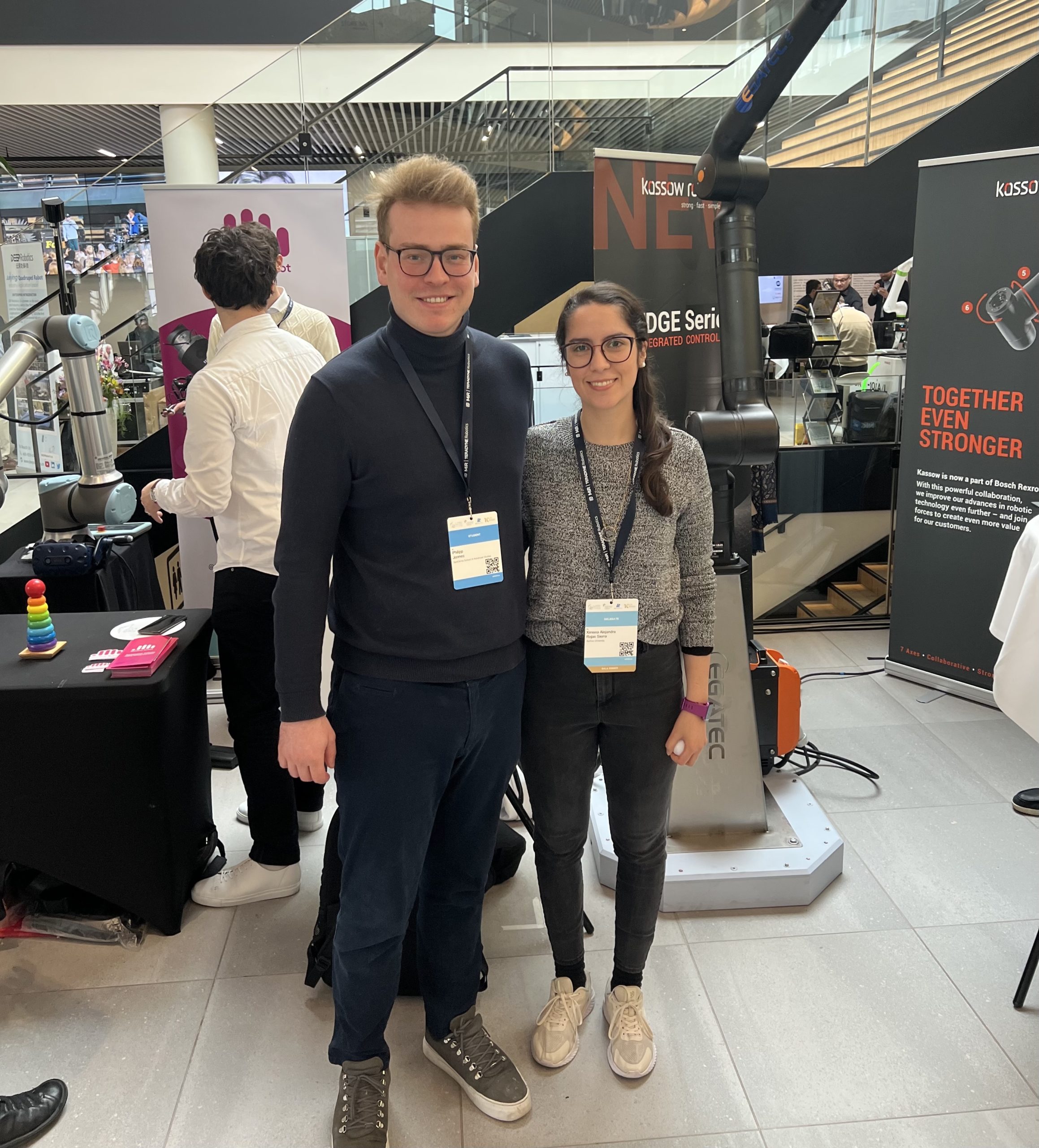
Hello everyone! I’m happy to share some experiences that I’ve made during the last month. Recently, I had the incredible opportunity to accomplish my academic secondment at Aarhus University in Denmark and attend the European Robotics Forum in Odense with my EINST4INE colleague Alejandra Rojas.
ERF23
The European Robotics Forum (ERF) is an annual event that brings together experts in robotics from industry, academia, and government to discuss the latest developments in the field and explore potential collaborations. The forum is organized by the European Robotics Association (ERA) and typically features keynote speeches, technical sessions, panel discussions, and exhibitions showcasing the latest robotics technologies and applications.
The ERF serves as a platform for researchers, engineers, and entrepreneurs to exchange ideas and knowledge on a wide range of topics related to robotics, including industrial automation, healthcare robotics, service robotics, and artificial intelligence. It is also a forum for policy makers and industry leaders to discuss the challenges and opportunities presented by the rapidly evolving field of robotics, such as ethical and legal considerations, workforce training, and investment strategies. Even Crown Prince Frederick, His Royal Highness of Denmark, attended the event this year!
ERF23 with EINST4INE colleague Alejandra Rojas. Source: own photo.
As a visiting researcher, I was thrilled to be able to connect with so many people who are passionate about robotics and human-robot interaction. I was able to learn about the latest developments in this field. I was particularly interested in discussions surrounding collaborative robots, which are designed to work alongside humans in manufacturing and other industries. During the forum, I had the pleasure of engaging with some brilliant minds, from both the academic and practitioner side. Their contributions to the discussions were invaluable, and I learned a lot from them.
Exploring the Fascinating World of Robotics
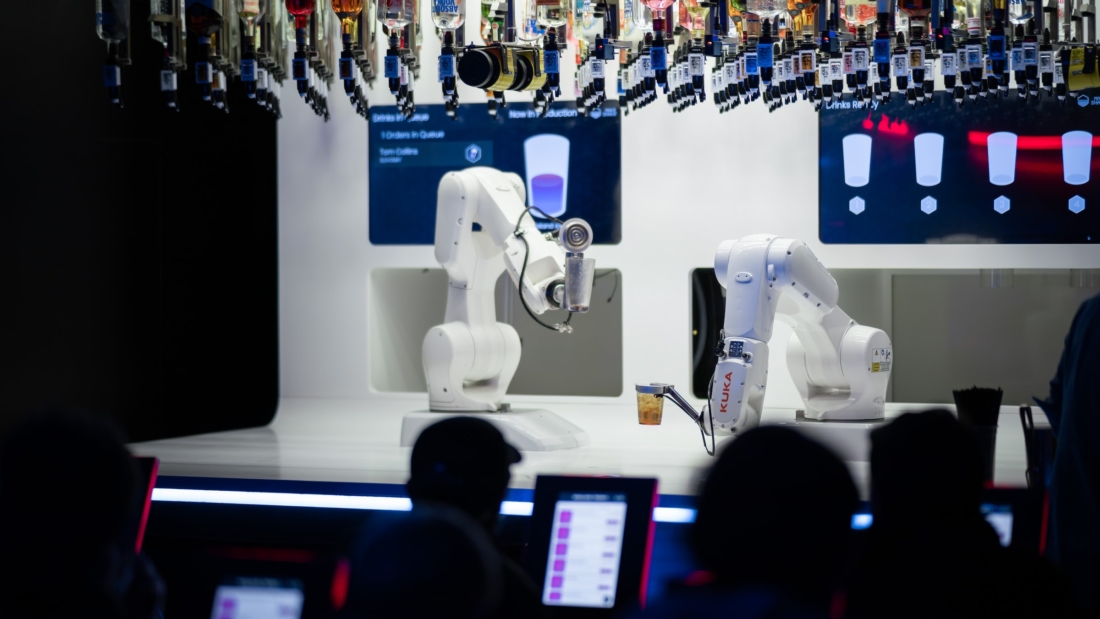
In addition to my research on collaborative robots, I’m also fascinated by other robotic technologies such as drones and robotic dogs. These technologies are shaping our world in profound ways, and I believe they have enormous potential to improve our lives. For example, drones have the ability to conduct aerial surveys, deliver packages, and even help with search and rescue missions. Robotic dogs, on the other hand, can be used in a wide range of applications, from military and law enforcement to assisting people with disabilities. I find the intersection between these technologies and human needs to be particularly interesting, as it challenges us to think about how we can design and use robots in ways that are safe, ethical, and beneficial for society as a whole.
Robotic Dog ERF23. Source: own photo.
The Journey Goes On
Aside from the forum, I also spent time at Aarhus University, where I was conducting interviews with SMEs located around Denmark. These interviews are an important part of my research, as I’m studying the implementation of social and collaborative robots in organizations. By understanding the effects of cobots on an individual and firm-level, I hope to achieve a clearer understanding of cobot implementation processes, organizational opportunities and challenges.
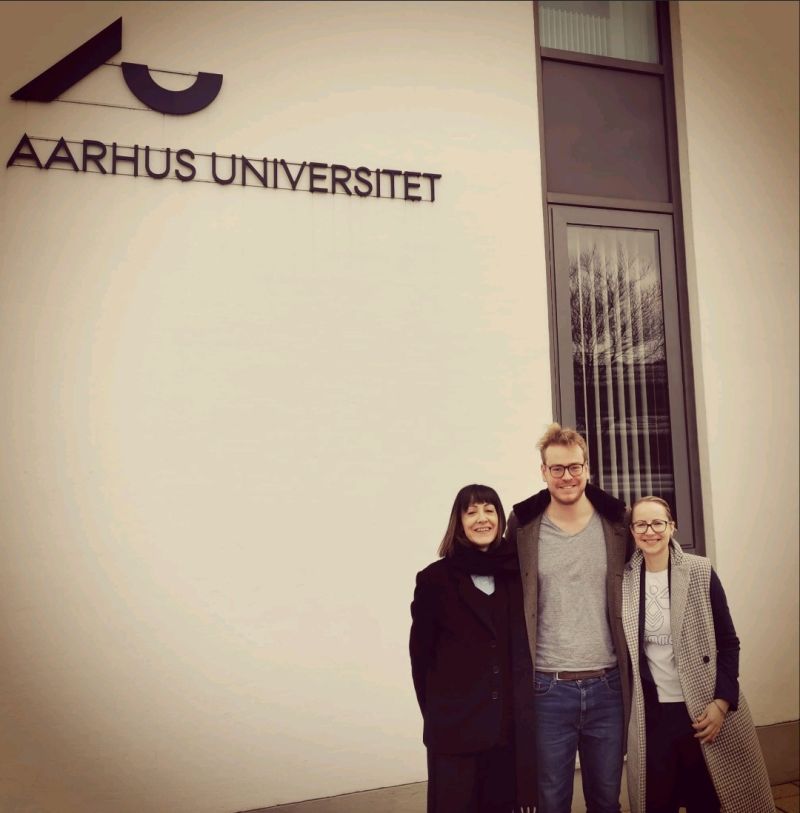
Visit at AU with Agnieszka Radziwon and Cristina Marullo. Source: own photo.
Overall, my trip to Denmark was an amazing experience, and I’m so grateful for the opportunity to connect with so many brilliant minds in the robotics field. I’m excited to continue my research and see what developments the future holds for human-machine interaction models. I am also looking forward to the next EINST4INE Summer school and see my ESR friends in person again. Thanks for reading!
These technologies are triggering a job transformation for the service workforce that might compromise social and cultural sustainability. To frame startups’ role in the sustainable social development of the service sector we might need to look into other stakeholders’ actions. The responsibility of AI and robotics startups needs to be understood and acted upon in relation to other stakeholders. In other words, AI startups need to take responsibility internally, but they also need support externally from different actors to ensure that everybody is playing their role accordingly. This external support is based on collaborative efforts; however, sometimes it is difficult to collaborate across stakeholder borders because of the different vested interests and ensuing politics.
Here are some of the main stakeholders in the service ecosystem and how they can contribute to the sustainable social development of the service sector:
Investors: Include ethics consulting in investment decisions.
In the end, if venture capitalists or angel investors make ethics a key part of the startup funding cycle, AI and robotics startups have to pay attention. Investors should be motivated to fund ethical practices because it also protects them from risks that might damage the venture further down the line.
These programs can set a foundation for success and facilitate the continuous flow of information between businesses and academia. Startups can collaborate with experts in fields such as human resources and ethics to help them envision a sustainable way of using their products and services.
Social impact startups: Solve the “problem” created by AI and robotics startups.
Partnerships with social impact startups could work because the primary role of such startups is to innovate with solutions for unemployment, promoting social, economic, and cultural benefits. For example, these kinds of startups could develop tools that contribute to decent work by matching people to new jobs and finding creative ways to help people find a job. If AI startups are creating a “problem” by displacing some workers with robots, then other startups should take solving the problem as a new business opportunity.
Service providers and government: Create a balance with incentives.
Service providers should receive a public fund from the government to motivate them to hire companies with ethical solutions and for reskilling and upskilling the service workforce. Service providers’ role is also to redefine job profiles. Thus, service providers need to proactively balance task substitution and task enhancement to define new job positions.
Customers: Demand ethical practices.
Usually, AI startup founders will have no interest in ethics, but if the customer asks for an ethical approach, they might focus on it. Thus, if the main objective of a startup is to find product-market fit, and the market is asking for ethical practices, the startups have no choice but to follow the trend.
My key takeaway is that creating a more sustainable future with AI and robotics is a task we all have. It is not just about designers and developers, but also about how society understands and demands AI and robotics.
Source: Rojas, A., & Tuomi, A. (2022). Reimagining the sustainable social development of AI for the service sector: the role of startups. Journal of Ethics in Entrepreneurship and Technology, (ahead-of-print).
Shopping Basket
This website collects cookies to enable the proper functioning and security of the website, and help us offer you a better browsing experience. By using our website you agree we can place functional and analytical cookies on your device. Find out more about cookies and how to manage them by visiting the RMIT Privacy Statement link in the website footer. If you're happy to continue, please press accept. You can opt-out if you wish but this may affect how the website functions. Cookie settingsACCEPT
Privacy and Cookies Policy
Privacy Overview
This website uses cookies to improve your experience while you navigate through the website. Out of these cookies, the cookies that are categorized as necessary are stored on your browser as they are essential for the working of basic functionalities of the website. We also use third-party cookies that help us analyze and understand how you use this website. These cookies will be stored in your browser only with your consent. You also have the option to opt-out of these cookies. But opting out of some of these cookies may have an effect on your browsing experience.
Necessary cookies are absolutely essential for the website to function properly. This category only includes cookies that ensures basic functionalities and security features of the website. These cookies do not store any personal information.
Any cookies that may not be particularly necessary for the website to function and is used specifically to collect user personal data via analytics, ads, other embedded contents are termed as non-necessary cookies. It is mandatory to procure user consent prior to running these cookies on your website.