Today, let’s delve into the realm of VR glasses. With the recent unveiling of the Apple Vision Pro, there’s been quite a buzz surrounding these devices. But what exactly is driving the excitement, and how do VR glasses intersect with the intriguing domain of human-robot collaboration?
First, let’s zoom out and consider the broader landscape. In recent years, there’s been a notable push towards crafting more agile and adaptable automation systems. This has spurred increased interest in HRC solutions, where both automated processes and human dexterity can coexist seamlessly, without sacrificing complexity or flexibility.
Bridging the Gap: VR Glasses and Human-Robot Collaboration
However, a significant challenge in HRC lies in communication. Interactions between humans and robots aren’t always smooth, intuitive, or quick. This is where emerging technologies like Augmented Reality (AR), Virtual Reality (VR), and Mixed Reality (XR) come into play. These technologies offer promising avenues for enhancing communication between humans and machines across various phases of design, commissioning, and operation (Badia et al., 2022).
VR and AR technologies, in particular, offer immersive experiences that can revolutionize how we visualize and analyze procedures in HRC systems. From evaluating layout designs to analyzing task scenarios, programming robots, calculating cycle times, and ensuring safety, VR and AR provide powerful tools for fostering collaboration between humans and robots.
Additionally, the concept of digital twins has emerged as a compelling complement to VR and AR technologies in the realm of HRC. Digital twins, virtual replicas of physical systems or processes, offer a means to simulate, monitor, and optimize operations in real-time. By integrating digital twins with VR glasses, users can immerse themselves in virtual environments that mirror physical realities, enabling enhanced training, troubleshooting, and decision-making in HRC scenarios (Malik & Bilberg, 2018). Check out this video by rfin.tech R&D to see how digital twins can be applied in human-robot collaboration:
Evaluating the Current State: VR and AR Solutions in HRC
So, what does this mean for the future of human-robot collaboration? VR glasses are not just a passing fad; they represent a significant step towards creating more efficient and flexible automation systems. By harnessing the immersive capabilities of VR and AR technologies, coupled with digital twins, we can unlock new possibilities for enhancing communication and interaction between humans and robots.
As we continue to explore this exciting intersection, it’s crucial to leverage insights from research and real-world applications. By doing so, we can pave the way for a future where humans and robots collaborate seamlessly to achieve remarkable outcomes.
Stay tuned for more updates on the captivating fusion of VR glasses, digital twins, and human-robot collaboration!
Until next time!
References:
Badia, S. B., Silva, P. A., Branco, D., Pinto, A., Carvalho, C., Menezes, P., Almeida, J., & Pilacinski, A. (2022). Virtual Reality for Safe Testing and Development in Collaborative Robotics: Challenges and Perspectives. Electronics, 11, 1726. https://doi.org/10.3390/electronics11111726
Malik, A. A., & Bilberg, A. (2018). Digital twins of human robot collaboration in a production setting. Procedia Manufacturing, 17, 278-285. https://doi.org/10.1016/j.promfg.2018.10.047.
If you think life as a PhD student is just about boring books and endless research, think again! My last few weeks have been a whirlwind of cool events, amazing people, and lots of learning. Let me take you on a quick tour.
A Dive into Enabling Technologies at Stuttgart
In the heart of October, I found myself amidst the historic beauty of Stuttgart, ready to attend a workshop hosted by the University of Stuttgart. The central theme of the event revolved around enabling technologies and their pivotal role in the digital transformation.
The workshop spread over three days, promised – and delivered – a potpourri of informative sessions, panel discussions with industry stalwarts, and glimpses into the future of digital advancements. From discussing AI and data’s role in research to exploring the dynamics of enabling technologies for ecosystems was genuinely enriching.
A personal highlight for me was the chance to present my ongoing research project on the implementation of collaborative robots (or cobots) in SMEs. It’s a subject I’m deeply passionate about, as emphasized in my paper titled “Cobots in SMEs: Processes, Challenges, and Success Factors”. The feedback and interactions that followed the presentation were invaluable, offering diverse perspectives and new angles to consider in my research.
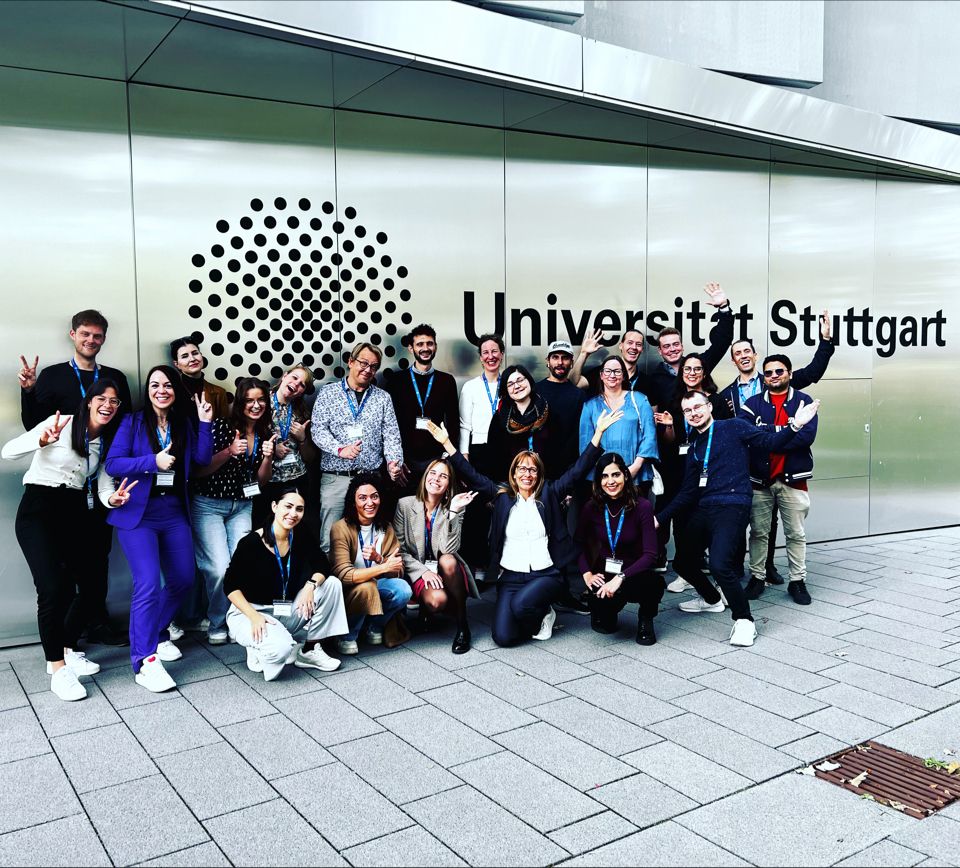
Participants at the EINST4INE Workshop in Stuttgart (Source: photo taken by Christina Theodoraki)
A Taste of Local Culture
Before the intellectual marathon began, a few colleagues and I took a cultural detour to the vibrant Wasen event in Stuttgart. It was a delightful amalgamation of tradition, laughter, and shared memories – a perfect start to an intense week.
Reaching Out to the World
Another proud moment was presenting my conference paper remotely at the IEEE TEMs conference in Lithuania. The virtual platform extended the reach of my work to a global audience. Engaging with professionals and academicians from different corners of the world brought forth a myriad of viewpoints, making the experience thoroughly enlightening.
Looking Ahead
The journey, as they say, is never-ending. As I pen down these words, I’m in the midst of preparing a poster presentation for the upcoming World Open Innovation Conference in Bilbao, Spain, this November. I’m eagerly looking forward to further collaborations, feedback, and the joy of sharing my work with a broader audience.
In the world of academia, every day brings new challenges and revelations. These events and interactions have been instrumental in shaping my thought processes and providing direction to my research. I’m grateful for these opportunities and excited for the road ahead.
Until my next update, stay curious and keep exploring!
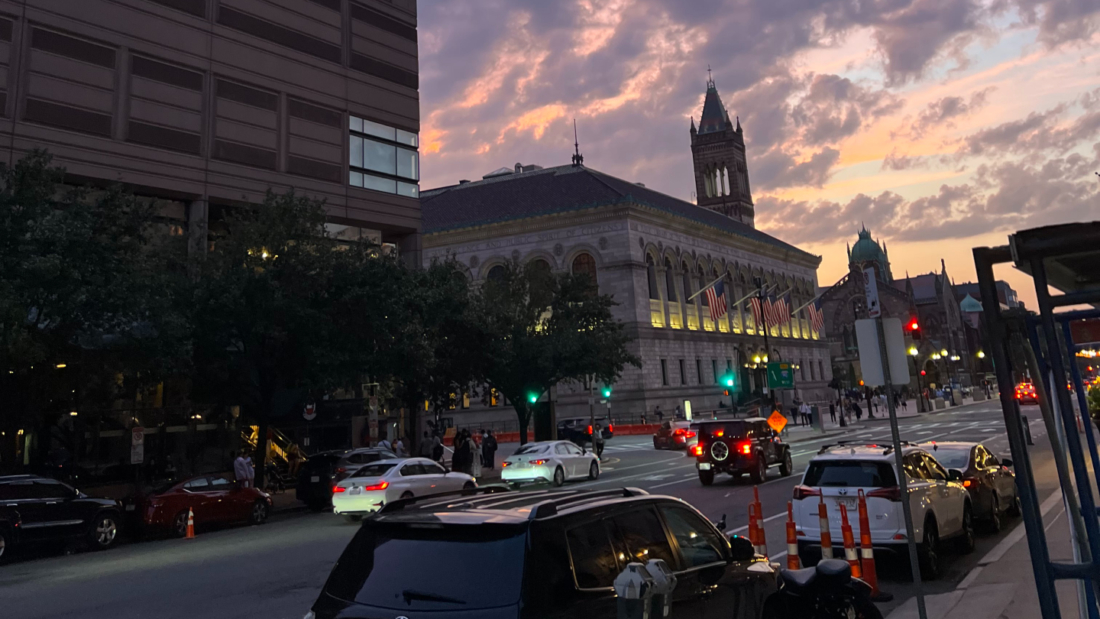
The faint hum of discussion, the air imbued with intellectual verve, and Boston’s ever-endearing charm as the backdrop: this year’s Annual Meeting of the Academy of Management (AoM) was nothing short of enlightening.
A Beacon of Knowledge in Boston
With the banner “Putting the Worker Front and Center,” the 83rd Annual Meeting brought the academic world alive in the heart of Boston, a city recognized globally for its synergy of historic charm and intellectual prowess. The AoM’s return to Boston was a significant affair, given its reputation as the most highly attended location in previous years. Over 10,000 attendees from diverse corners of the globe congregated, epitomizing Boston’s allure as an international hotspot for research and learning.
This year’s conference was a veritable smorgasbord of academic feasting. From over 1,500 in-person sessions to the inaugural Annual Meeting Opening Reception, where attendees could engage with AoM’s past and present leaders. Notably, a cutting-edge online platform facilitated interactions, allowing participants to review the program, coordinate schedules, and immerse in spirited discussions.
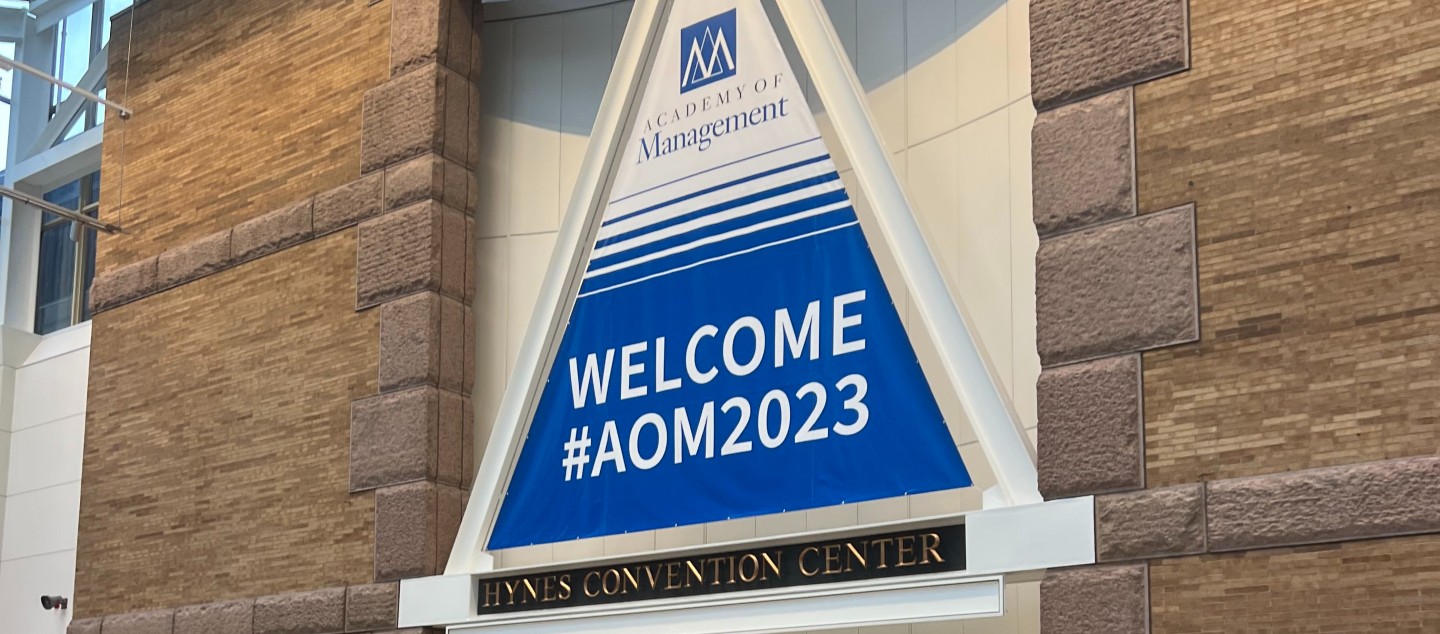
AoM23 Welcome Sign. Source: own photo.
A Day at the Doctoral Consortium
Among the variety of events, one that significantly resonated with my academic pursuits was the Doctoral Consortium at the Boston Hynes Convention Center. This event holds a unique significance, bridging doctoral students from across the world, facilitating discussions on a myriad of topics and workshops tailored to mold the academic leaders of tomorrow.
The day began with the scent of freshly brewed coffee and a light breakfast, providing an informal ambience for attendees to mingle. As the hours unfolded, the consortium delved into a range of sessions: from crafting job talks to understanding the emotional and mental nuances of transitioning to faculty roles. One particularly poignant segment was the Keynote Speech by Rajshree Agarwal on “Fostering your own enterprise.” Her insights, combined with the wisdom imparted by various faculty panels, made the consortium an enriching experience.
The lunchtime roundtable on research pitches was particularly close to my heart. It was here I had the opportunity to present my project, focused on understanding the interaction models of collaborative robots in organizations. The feedback from peers and mentors was invaluable, aligning with my objectives, such as exploring technology acceptance and its overarching impact on organizational performance. This consortium, coupled with the insights and critiques I received, has been instrumental in steering my research of collaborative human-robot interaction towards a clearer goal.
As dusk approached, the consortium attendees gathered for an off-site dinner at the Back Bay Social. While enjoying Boston’s tasty food and nice atmosphere, our day’s talks easily turned into friendly chats, helping us build work friendships.
Reflecting on the Odyssey
Attending the 83rd Annual Meeting of the AoM has been more than just an academic excursion; it was a journey of personal and professional growth. The myriad discussions, panels, and networking opportunities bolstered my understanding, expanded my horizons, and solidified my passion for exploring the realms of collaborative robots in organizations.
In essence, this Boston odyssey has not just been about gaining knowledge but about making connections – with academia, peers, and the deeper nuances of my own research. As I left the city, I carried with me not just memories but a renewed zeal, ready to tackle the challenges of the 21st century related to management and organizations.
“The best way to predict the future is to invent it.” – Alan Kay
Hello everyone! I’m happy to share some experiences that I’ve made during the last month. Recently, I had the incredible opportunity to accomplish my academic secondment at Aarhus University in Denmark and attend the European Robotics Forum in Odense with my EINST4INE colleague Alejandra Rojas.
ERF23
The European Robotics Forum (ERF) is an annual event that brings together experts in robotics from industry, academia, and government to discuss the latest developments in the field and explore potential collaborations. The forum is organized by the European Robotics Association (ERA) and typically features keynote speeches, technical sessions, panel discussions, and exhibitions showcasing the latest robotics technologies and applications.
The ERF serves as a platform for researchers, engineers, and entrepreneurs to exchange ideas and knowledge on a wide range of topics related to robotics, including industrial automation, healthcare robotics, service robotics, and artificial intelligence. It is also a forum for policy makers and industry leaders to discuss the challenges and opportunities presented by the rapidly evolving field of robotics, such as ethical and legal considerations, workforce training, and investment strategies. Even Crown Prince Frederick, His Royal Highness of Denmark, attended the event this year!
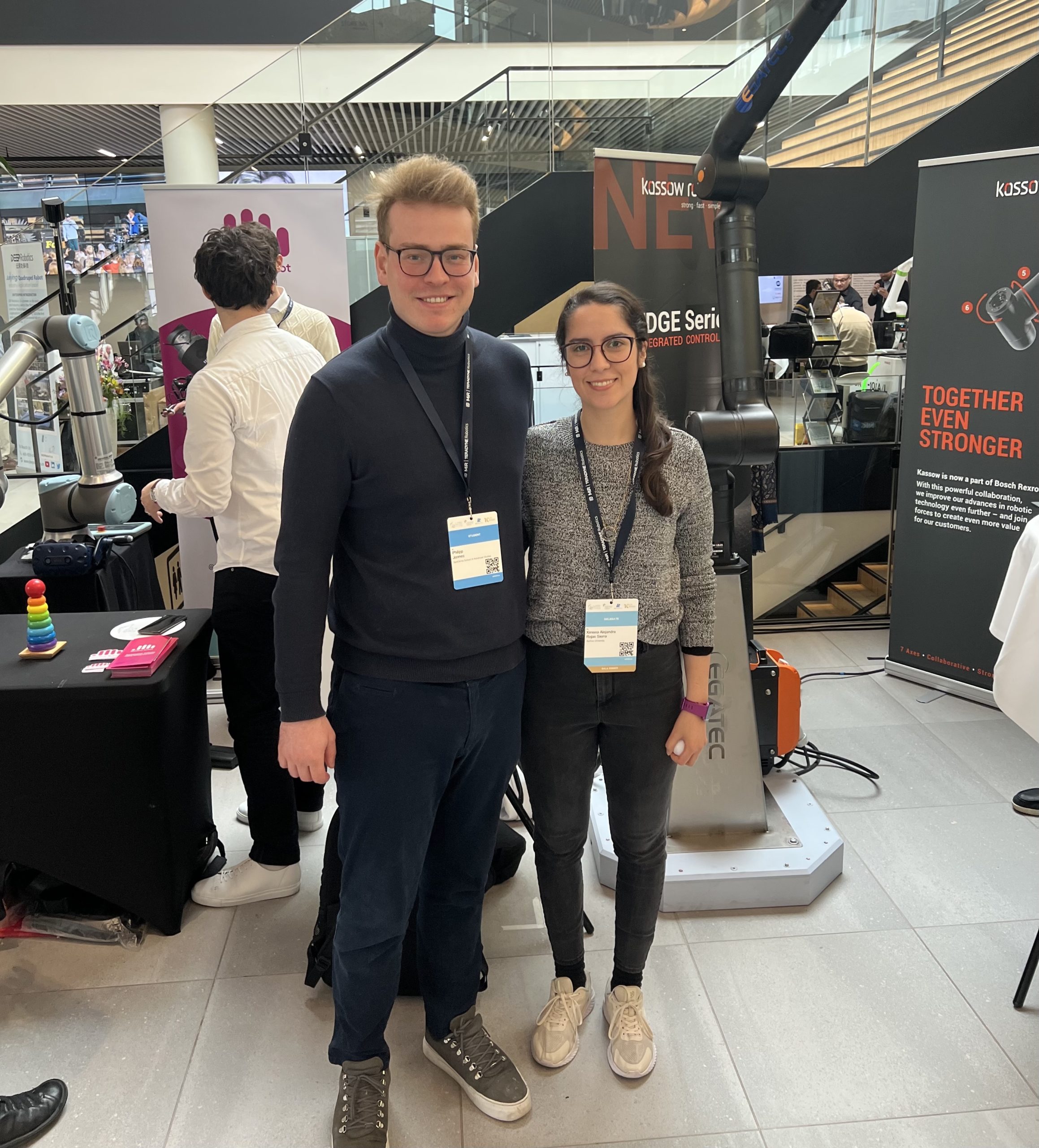
ERF23 with EINST4INE colleague Alejandra Rojas. Source: own photo.
As a visiting researcher, I was thrilled to be able to connect with so many people who are passionate about robotics and human-robot interaction. I was able to learn about the latest developments in this field. I was particularly interested in discussions surrounding collaborative robots, which are designed to work alongside humans in manufacturing and other industries. During the forum, I had the pleasure of engaging with some brilliant minds, from both the academic and practitioner side. Their contributions to the discussions were invaluable, and I learned a lot from them.
Exploring the Fascinating World of Robotics
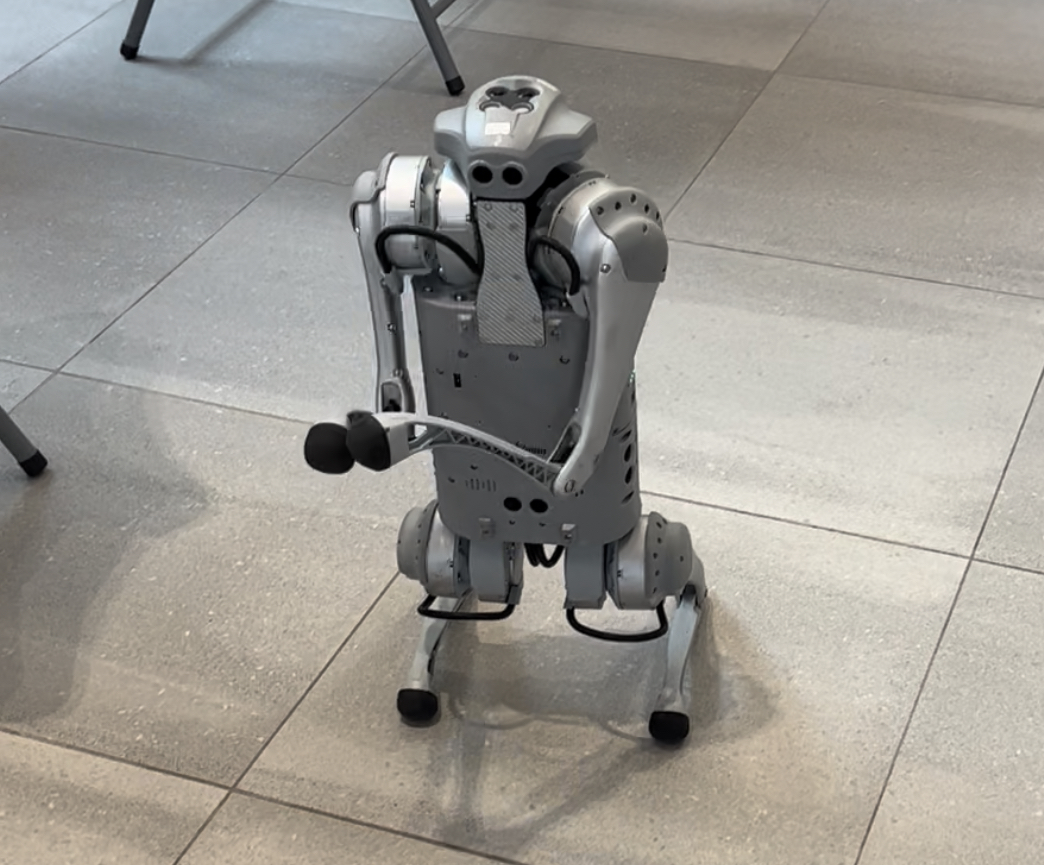
In addition to my research on collaborative robots, I’m also fascinated by other robotic technologies such as drones and robotic dogs. These technologies are shaping our world in profound ways, and I believe they have enormous potential to improve our lives. For example, drones have the ability to conduct aerial surveys, deliver packages, and even help with search and rescue missions. Robotic dogs, on the other hand, can be used in a wide range of applications, from military and law enforcement to assisting people with disabilities. I find the intersection between these technologies and human needs to be particularly interesting, as it challenges us to think about how we can design and use robots in ways that are safe, ethical, and beneficial for society as a whole.
Robotic Dog ERF23. Source: own photo.
The Journey Goes On
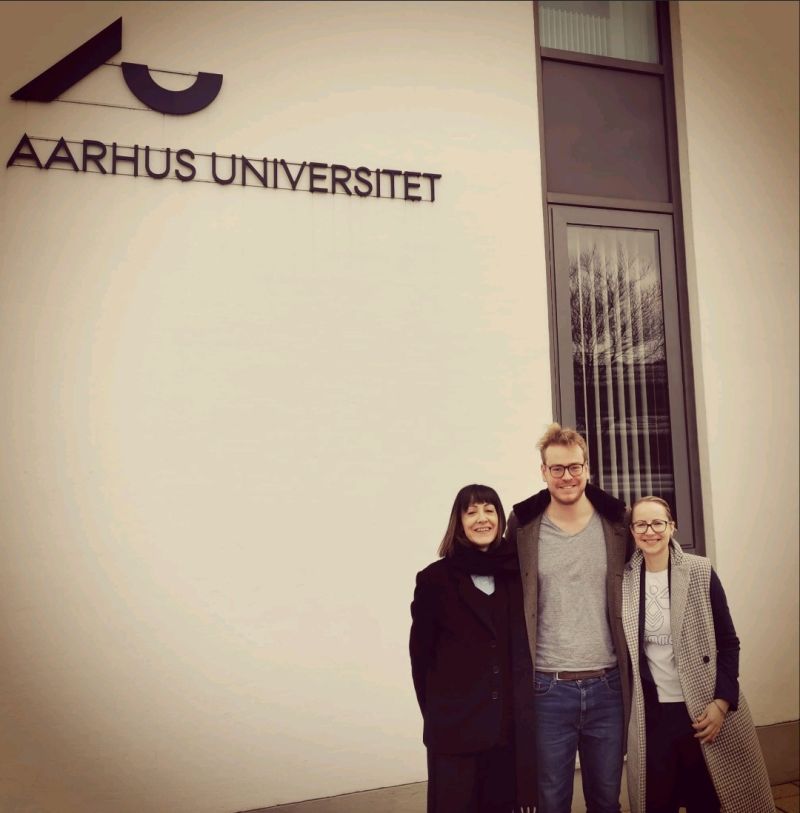
Aside from the forum, I also spent time at Aarhus University, where I was conducting interviews with SMEs located around Denmark. These interviews are an important part of my research, as I’m studying the implementation of social and collaborative robots in organizations. By understanding the effects of cobots on an individual and firm-level, I hope to achieve a clearer understanding of cobot implementation processes, organizational opportunities and challenges.
Visit at AU with Agnieszka Radziwon and Cristina Marullo. Source: own photo.
Overall, my trip to Denmark was an amazing experience, and I’m so grateful for the opportunity to connect with so many brilliant minds in the robotics field. I’m excited to continue my research and see what developments the future holds for human-machine interaction models. I am also looking forward to the next EINST4INE Summer school and see my ESR friends in person again. Thanks for reading!
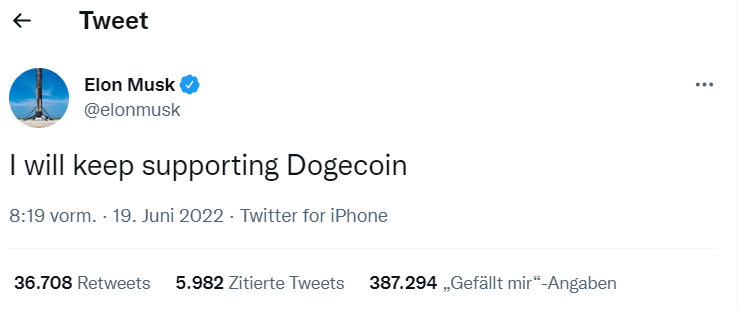
Tweets like these are thought-provoking. It’s fascinating how far technologies like blockchain have come in our everyday lives. New cryptocurrencies are being created every day, and at the moment technological achievements seem to be expanding (check out Ali Syed Hassan’s blog post about NFTs).
This blog entry is dedicated to the technological awareness of blockchain technology. As we live in a rapidly changing world, it is important to keep up with the pace and understand how new technological innovations work.
So what is blockchain in the first place and what are the connections to distributed ledger technology (DLT), NFTs and cryptocrurrencies?
What is it all about?
Blockchain technology (BCT) is already established as an innovative component of society that continues to gain increasing relevance, especially for private financial usage. Key features of this distributed ledger technology ensure transparency between all parties, enhanced traceability and security and therefore provide a promising information technology system. BCT potential application reaches beyond digital currencies (such as Bitcoin and Dogecoin) and financial assets as its potential has been stated as “endless” with already established functions, for instance with financial transactions and blockchain enabled smart contracts (Abeyratne & Monfared, 2016).
Satoshi Nakamoto, the inventor of the first cryptocurrency, Bitcoin, developed a peer-to-peer network concept in 2008 which is the foundation of all cryptocurrencies (Nakamoto, 2008). Since many components of the Bitcoin blockchain are used for other virtual currencies, the focus in explaining the principle will be highlighted on the Bitcoin blockchain.
Peer-to-peer networks
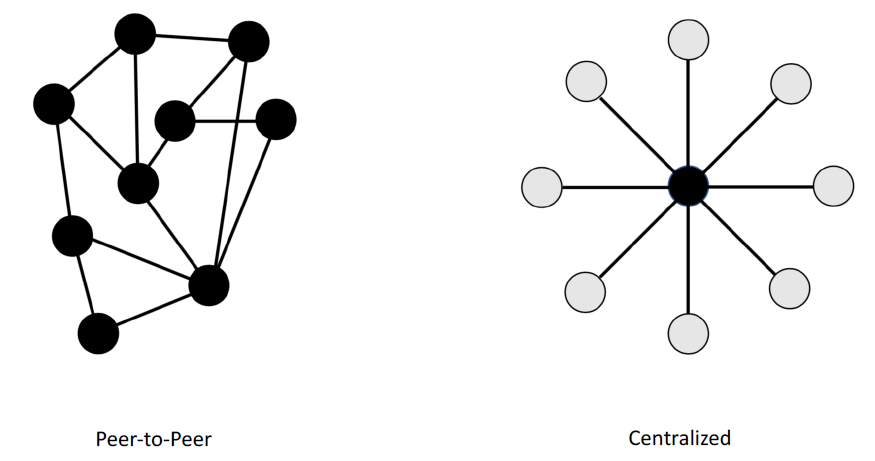
A peer-to-peer network is a decentralized network in which every participant is treated equally. The users are linked with one another and have a large number of connections. Moreover, each participant is able to verify the legitimacy of the transactions carried out in the network by holding and forwarding a local copy of the decentralized database, the so-called blockchain register (Berentsen & Schär, 2017).
Figure 1: Types of network structures (Own representation based on Berentsen & Schär, 2018)
Figure 1 illustrates the principle of the classic central network concept and the decentralized network concept. While a classic Internet application is divided into one service provider and many clients, the functionality in a decentralized network is provided by the cooperation of the existing participants. The decentralized infrastructure offers many advantages, such as its resistance to failures and attacks because it doesn’t rely on a central instance.
Network Participants
Cooperating computers in peer-to-peer networks have been referred to as participants. These participants are also called network nodes and facilitate three different functions: the verification function, the wallet function and mining (Sixt, 2017).
The verification function
This function describes all activities that are required for network participation. The task is fulfilled when nodes save local copies of the blockchain register and verify incoming transaction information, just before this information is stored and transmitted to other nodes.
The wallet function
This function covers the storage of public and private keys (cryptographic security units) of Bitcoin users. In
addition, a graphical user interface is usually integrated in order to simplify the receipt and dispatch of Bitcoin units.
The mining process
Nodes that perform a mining function are also called miners. They invest a great amount of computing power in order to participate in the generation process of new blocks which expand the blockchain register.
Executing the Transaction
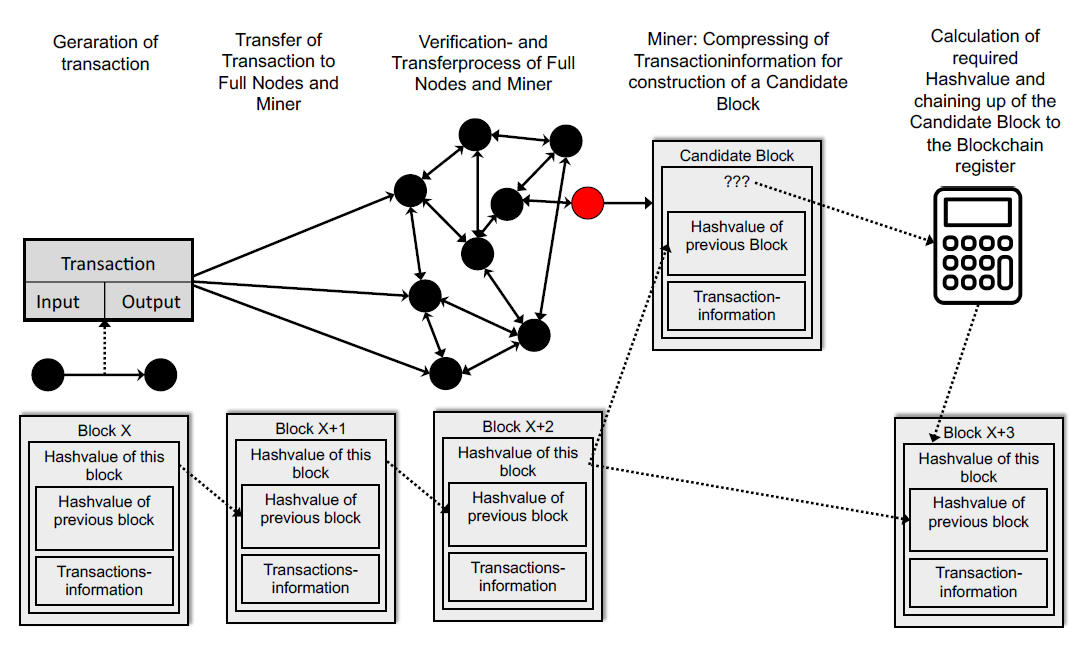
Since there are no traditional banking accounts in the Bitcoin network, the coins are transferred to so-called Bitcoin addresses. A Bitcoin address is created with the wallet software by generating a cryptographic key pair, that are assigned to the users. The transfer plus an optional transaction fee is send to the network. The first node to receive the transaction executes the verification function by checking several factors. The transaction is considered as valid after this process, and the transaction is ready to be executed after feeding it into a new block.
Figure 2: Blockchain structure (Own representation based on Berentsen & Schär, 2017)
Expanding the Blockchain Register
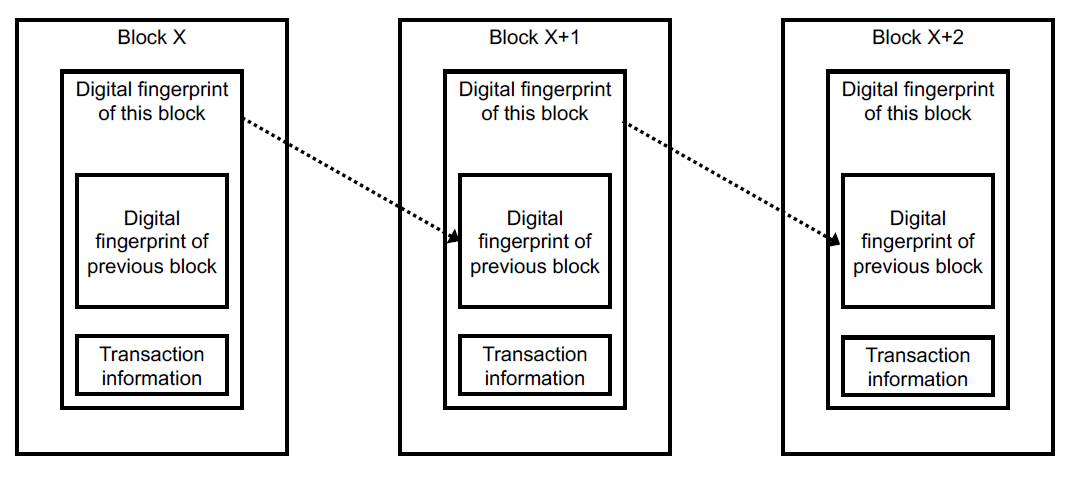
The generation of a new block is known as mining. This mining activity processes all validated transactions in an irreversible way in the network. Each node that performs the mining function is able to create new block candidates by bundling unconfirmed transactions from their local transaction store (Sixt, 2017). In addition to transaction information, this block candidate contains a so-called block header, which contains descriptive information for the identification and localization of the block, as well as an identification number which references the previous block (Berentsen & Schär, 2017). Each block thus references the digital fingerprint of its respective predecessor block, which is why these blocks are firmly anchored in the structure and are dependent on one another (Berentsen & Schär, 2017). Figure 2 illustrates the dependency of the blocks.
Figure 3: Simplified transaction process (Own representation based on Berentsen & Schär, 2017)
Proof-of-work and outview
The original blockchain consensus mechanism achieves consensus among the miners via a so-called proof-of-work scheme (Sixt, 2017). This scheme classifies a certain block of candidates as valid after a high level of computing power has been used. Each miner tries to solve a given problem that is extremely energy-intensive in order to be the first node to provide the proof-of-work and, ultimately, to chain the candidate block he has created in the blockchain register (Zohar, 2015).
The proof-of-work sets an increasing security factor for the register, since the chain is secured by computing power and strictly linked to costs. Figure 3 visualizes the complete transaction and mining process.
All in all it can be said that this system was brought to prominence due to cryptocurrencies. Nowadays, a variety of fields, including:
healthcare
real estate
government and
music
are finding applications for blockchain’s powerful architecture and secure way of storing, verifying, as well as encrypting data. As my research topic is also connected to implementation barriers of novel technologies and adoption behaviour, the evolution of blockchain that is applied to more and more sectors is an extremely interesting trend to follow for me.
For more information on blockchain and NFTs, check out the official website.
References
ABEYRATNE, S. & MONFARED, R. 2016. Blockchain Ready Manufacturing Supply
Chain Using Distributed Ledger. International Journal of Research in
Engineering and Technology, 05.
BERENTSEN, A. & SCHÄR, F. 2017. Bitcoin, Blockchain und Kryptoassets.
NAKAMOTO, S. 2008. Bitcoin: A Peer-to-Peer Electronic Cash System. Cryptography
Mailing list at https://metzdowd.com
SIXT, E. 2017. Bitcoins und andere dezentrale Transaktionssysteme: Blockchains als
Basis einer Kryptoökonomie.
ZOHAR, A. 2015. Bitcoin: Under the hood. Commun ACM Communications of the
ACM, 58, 104-113.
Did you know that material handling is projected to be the biggest area of application for collaborative robots (cobots) in 2022?
Nowadays, the cobot market is booming, because this technology ensures a high-level of flexibility during manufacturing processes, economic benefits and individuals’ ergonomic advantages. But what are cobots in the first place? To develop a better understanding on what cobots are, it is important to consider the way they interact with workers.
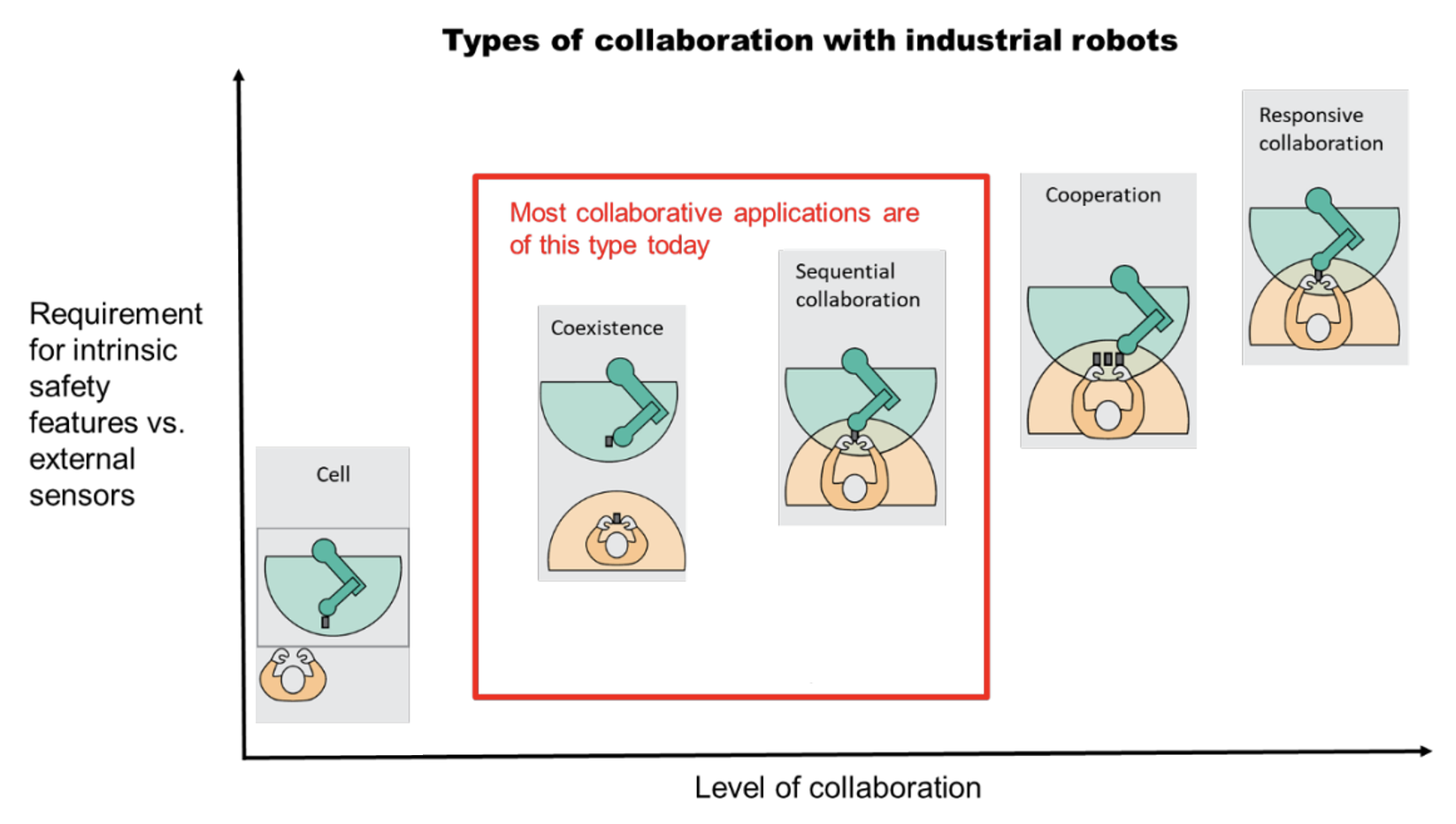
The International Federation of Robotics distinguishes between four types of collaboration between robots and human workers:
Types of collaboration with industrial robots (Source: IFA, 2018)
The interaction can be designed in a coexistent environment, in the sense that workers and robots work together without security barriers, but the workplace is not shared. This kind of interaction represents the safest type of collaboration between robots and humans. In sequential collaboration, the robot and the human worker share a workspace but the work process and movements are designed sequentially.
Furthermore, robots and human can work in motion and at the same time, which is called cooperative collaboration. Finally, responsive collaboration represents the kind of collaboration where robots respond to workers movements in real time. This type of interaction is classified as the highest level of collaboration and sets huge emphasis on requirements for robotic sensors and worker’s safety and security standards.
Nowadays, the most applicable types of collaboration are coexistence and sequential collaboration. The integration of cobots help the workers in terms of ergonomics, as the purpose of implementation is not only to increase the production efficiency but also to reduce workers’ biomechanical overload.
Conducting research
Thus, the implementation of cobots is extremely beneficial for companies that aim to improve their manufacturing processes, but also for worker’s safety.
However, the integration of this technology can be assumed as biggest challenges for companies, because of missing methodology for the analysis of workplaces. In order to detect possible workloads and fields of application, research has to be conducted. Currently I’m synthesizing and analyzing the literature in order to develop a deep understanding of the general implementation of cobots in organizations. My goal is to cluster the knowledge gained from the review and extract factors that facilitate the integration and adoption of cobots.
The journey goes on
Personally, it is an exciting and wonderful task to delve into the subject and to be guided by different perspectives and aims. It is becoming more and more apparent that technology is not just about technology alone, but much more about people. The expansion of people’s capabilities is central here.
During the last weeks we have established task forces within the EINST4INE team in order to practice and experiment some of the usual roles of a researcher including exploring matters and being empowered on project management activities. I’m happy to be part of the task forces that are responsible for technology awareness and socializing.
I’m looking forward to attend the Summer School (Spain) during July and the Robotic Conference NordiCHI (Denmark) in October. These events certainly contribute to my research as synergy drivers and it will be great to see my EINST4INE colleagues in person again.
References:
International Federation of Robotics, Demystifying Collaborative Industrial Robots, 2018. Source: https://web.archive.org/web/20190823143255/https://ifr.org/downloads/papers/IFR_Demystifying_Collaborative_Robots.pdf
The EINST4INE project turns out to be the perfect opportunity to move forward and to develop myself personally and professionally.
Shopping Basket
This website collects cookies to enable the proper functioning and security of the website, and help us offer you a better browsing experience. By using our website you agree we can place functional and analytical cookies on your device. Find out more about cookies and how to manage them by visiting the RMIT Privacy Statement link in the website footer. If you're happy to continue, please press accept. You can opt-out if you wish but this may affect how the website functions. Cookie settingsACCEPT
Privacy and Cookies Policy
Privacy Overview
This website uses cookies to improve your experience while you navigate through the website. Out of these cookies, the cookies that are categorized as necessary are stored on your browser as they are essential for the working of basic functionalities of the website. We also use third-party cookies that help us analyze and understand how you use this website. These cookies will be stored in your browser only with your consent. You also have the option to opt-out of these cookies. But opting out of some of these cookies may have an effect on your browsing experience.
Necessary cookies are absolutely essential for the website to function properly. This category only includes cookies that ensures basic functionalities and security features of the website. These cookies do not store any personal information.
Any cookies that may not be particularly necessary for the website to function and is used specifically to collect user personal data via analytics, ads, other embedded contents are termed as non-necessary cookies. It is mandatory to procure user consent prior to running these cookies on your website.