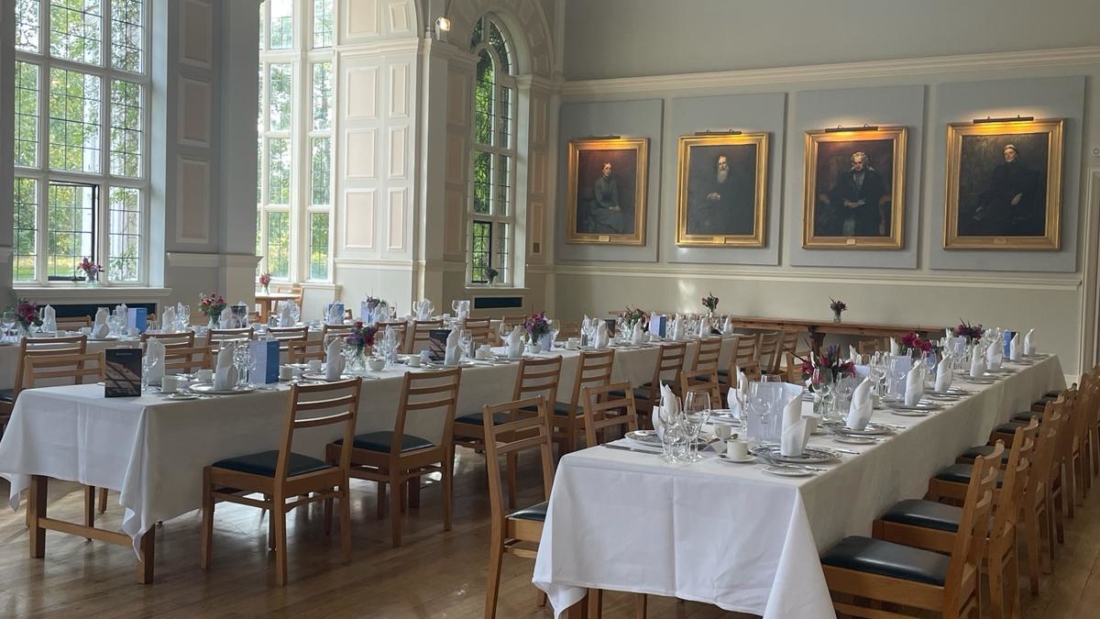
Newnham Donor Dinner

So, what’s your research about? – Presenting to a non-expert audience

The question: “So, what is your research about?” is one that many of us have heard several times during our PhD. Sometimes we are asked this question by other researchers in our field, sometimes by people that are no experts. While all PhDs are trained in how to present their research to other experts – via conferences, academic abstracts, papers, etc. – not all are exposed or learn how to present their research to non-experts.
In this blog post, I will share my thoughts on why knowing how to present your research to a non-expert audience is important and will also share some of my experiences in doing so.

Why it is useful to learn to present your research to a non-expert audience

  • Outreach: give knowledge back
    Speaking to non-experts ensures that you are passing on your knowledge and also give it back to those that have helped you create it. This is not only the case, if you present to your research participants – but also to anybody else. Maybe your funding comes from the government, which actually means taxpayers. Further, the core goal of research is to expand knowledge. However, knowledge expansion only happens if the new knowledge is shared – and this includes also outside of academia! So, I would say for a true academic and researcher it is essential to also share their knowledge outside of their field.
  • Reflect on your research
    When you prepare a talk for a non-expert audience, you have to take a step back from your research and ask yourself what it is really about. This makes you necessarily reflect on your research, makes you see the whole (or at least you can try – it can be hard) and might support you on seeing a storyline that you can extract.
  • Making it concise & easy to digest
    One of the most important things is to make your message clear, to present your research in a concise manner and to make it easy to digest. This can actually be a lot harder than it sounds – but I do think that if you manage to break your research down into easier bits, then you understand your research really well – plus, you won’t lose the attention of your non-expert audience!
  • Asking: why should one care?
    The next important thing to retain the attention of your audience is to make it interesting to them. Why should they care? How is this relevant for them? And if you feel like you just cannot make it relevant for them personally, then why is this relevant for society, knowledge extension etc.? It’s probably good to bring this message across rather early in your talk – then they know why they should continue to listen. Best is, if you manage to bring it up in the end again – this is not only a nice rhetorical closure than, but also leaves them with a take-home message that makes them remember that your research connects to them.
  • Grounding in reality
    I am serious with this – sometimes presenting your research to non-experts does help you ground your research (and maybe yourself) back in reality. Stepping away from very theoretical concepts and abstract ideas and tying them back to things that matter in everyday lives. This might sound hard for some topics, but there is always a connection. Be creative! For example, my master thesis topic on a specific semi-conductor detector and how it is sensitive for specific energy ranges was relevant in reality, because in theory (and more years) this kind of detector could be relevant in medicine.
  • Learning new vocabulary to describe your research
    When you speak with a new audience, you should understand them a bit first: who are they? What might they know already? Based on this, you might know what kind of vocabulary you should use. Here, I don’t only mean field specific vocabulary. Also consider if maybe this word has other connotations for some audiences (e.g., “coding” can mean programming for some audiences and “using the Gioia method” for others). Plus, we know that it is always easier to learn about a new topic, if it is presented in familiar terms.
  • Exposure to other opinions
    Lastly, presenting to non-expert audiences will ensure that you get exposed to other opinions, other perspectives and you might learn about a new way of looking at your research. In addition, especially people who do not know much about your topic are often good at spotting “obvious” inconsistencies or “obvious” questions. Often just because they are curious and don’t know what questions have an easy answer (i.e., you just didn’t mention it because you thought it was not worth the time) and which ones are actually not easy to answer.

While I am always asked to present my research to industry at various events (e.g., through the STIM consortium in Cambridge), this year I was also asked to give talks to non-expert audiences. Thus, I was giving talks to three quite different non-expert audiences. I will shortly share some experiences and insights about each of them.

Industry audience

In this case, I was presenting my research to people from various industries holding different positions (but mostly management level).

  • Really important here: ask yourself, what is important to them? What is interesting for them? Industry people are really busy, if you don’t capture their attention you might lose them quickly. In addition, if you are interested in a collaboration, you also want to show them why they should want to collaborate with you!
  • Use words that they can understand and relate to (linking to my note above). Use terms that are used in companies to explain things, or words that are in everyday use. Of course, you don’t have to through all of your nice-expert-words out of the window, do keep some in – but then make sure to clearly explain them.
  • Graphics and pictures are very powerful. They capture attention and can sometimes simplify things (plus people enjoy having to read less).
  • Highlight how research can be done together, how industry and research can support each other. Speaking of co-creation, action research, etc. is powerful and creates an atmosphere of community.
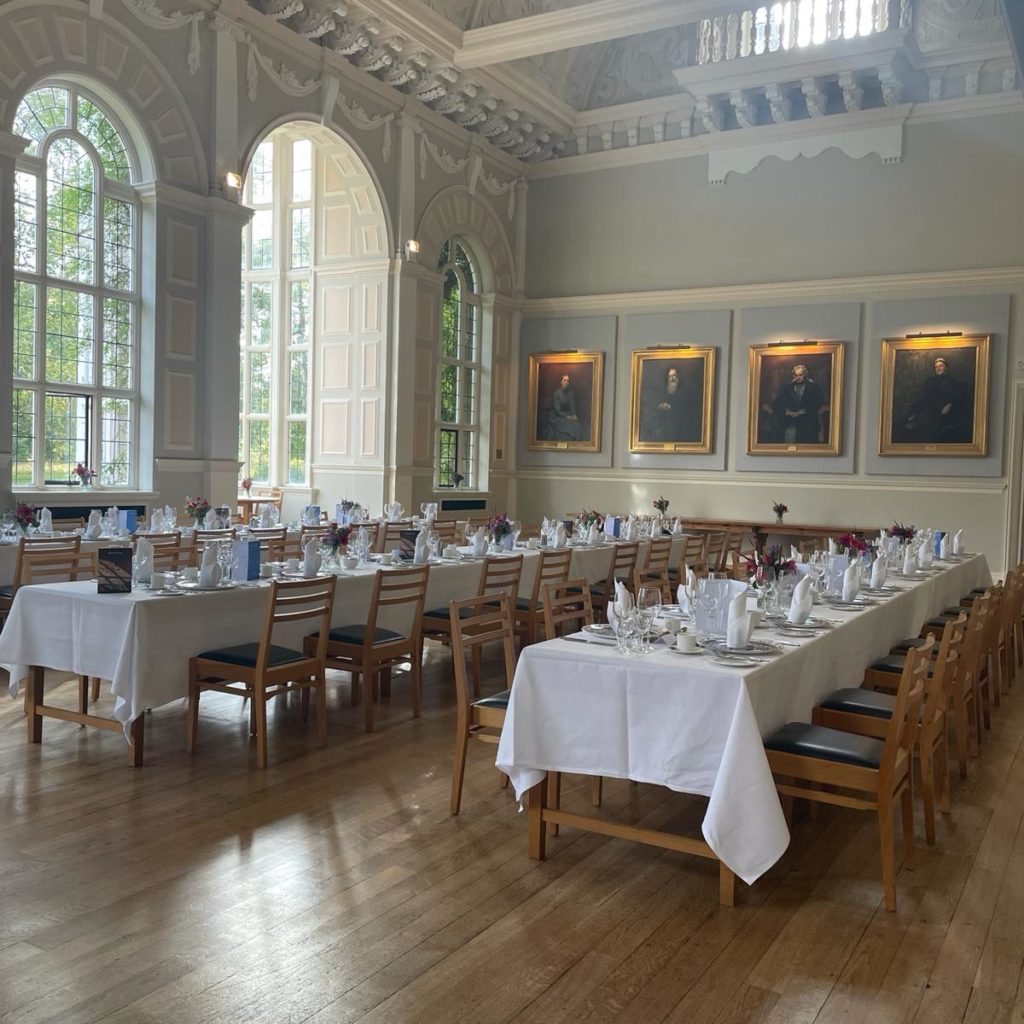
Newnham Donor Dinner

Non-academic audience

Here I was asked to give a short, easy talk at a dinner for donors of my college. My talk was in between courses and should showcase what different types of research is happening in Cambridge.

  • If you are asked to do something like this – remember, this is not a talk, it is a speech! It was the first time for me too, and was not super easy at first. Concentrate on the story line, and that it really flows. Don’t put too much content in here, it’s more important that people can follow you and that you highlight important things several times.
  • You likely won’t have visuals, so try to make things tangible by giving examples people can relate to, using things that are relevant in everyday life or for this specific audience, etc.
  • You might face different generations in your audience – do consider this and explain your research in terms that can be understood by varying age levels.
  • Likely your goal here is to make people excited about your topic – try to engage a discussion for after your talk. So it is less about presenting yourself or your research, but more about showing that this is relevant.
  • I do think that word games, a catchy phrase etc. can be really helpful to capture attention – plus, it is easier to remember then.

Audience of academics from other fields
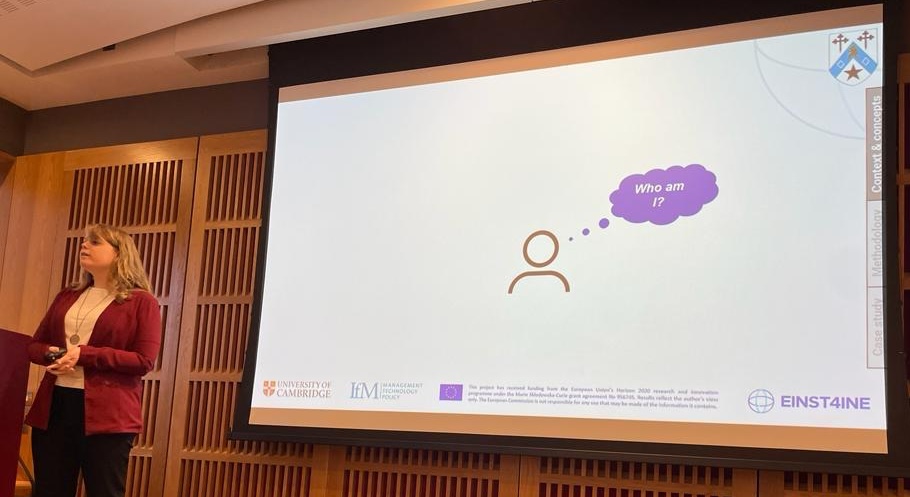
Giving a talk to academics outside of my field.

As there are many graduate students in Cambridge, there are also many events organised by students related to research. I was asked by my college and another college to present my research at one of their student-run events. This was for other students from various fields, other researchers – anybody who is interested.

  • Likely you are speaking to other academics in this case. This means that lots of words can have other meanings to them (think of my example of “coding” from above). Consider this when writing your talk. Think about what they might already know and what not. But don’t just leave out the things you think they will know, but still mention them and then add: “as you probably know” – or ask if you should elaborate or not.
  • Do explain concepts and theories in this setting, your audience will be familiar with more abstract explanations. However, still make sure that it is understandable without knowing the details. For example, try to stay away from too much specific vocabulary and only use it when necessary.
  • Again, graphs, symbols, pictures, etc. make it easier to capture and retain attention. And it can also help you to explain things more clearly.
  • A good storyline that people can follow does help a lot. Even if you feel like your research does not have a nice story line (yet) – your talk can still have one. Include an agenda in the beginning and tell people how your talk will be structured. And then of course, follow that structure!
  • Even though the audience consists of academics, you can still give them too much information – try not to create information overload but stick to the important bits.
  • A catchy title can do wonders, do try to think of one, as this can really capture a lot of attention!

You see, speaking to non-experts can be quite diverse and is definitely very useful for you, apart from outreach activity! I encourage everyone to consider presenting outside of academia, it is really rewarding and can be lots of fun.
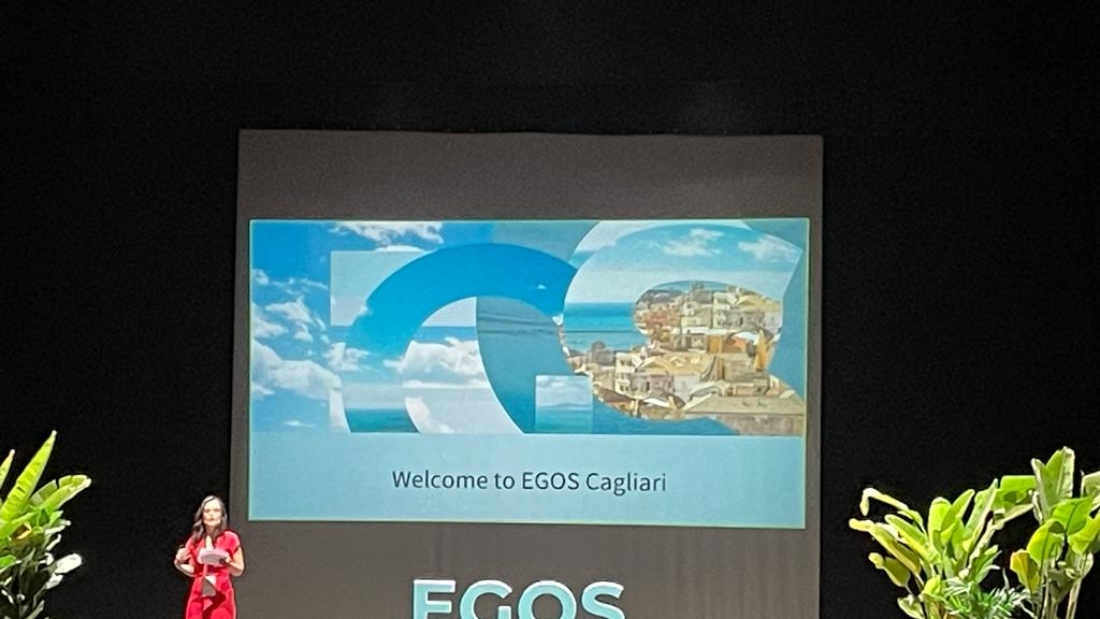
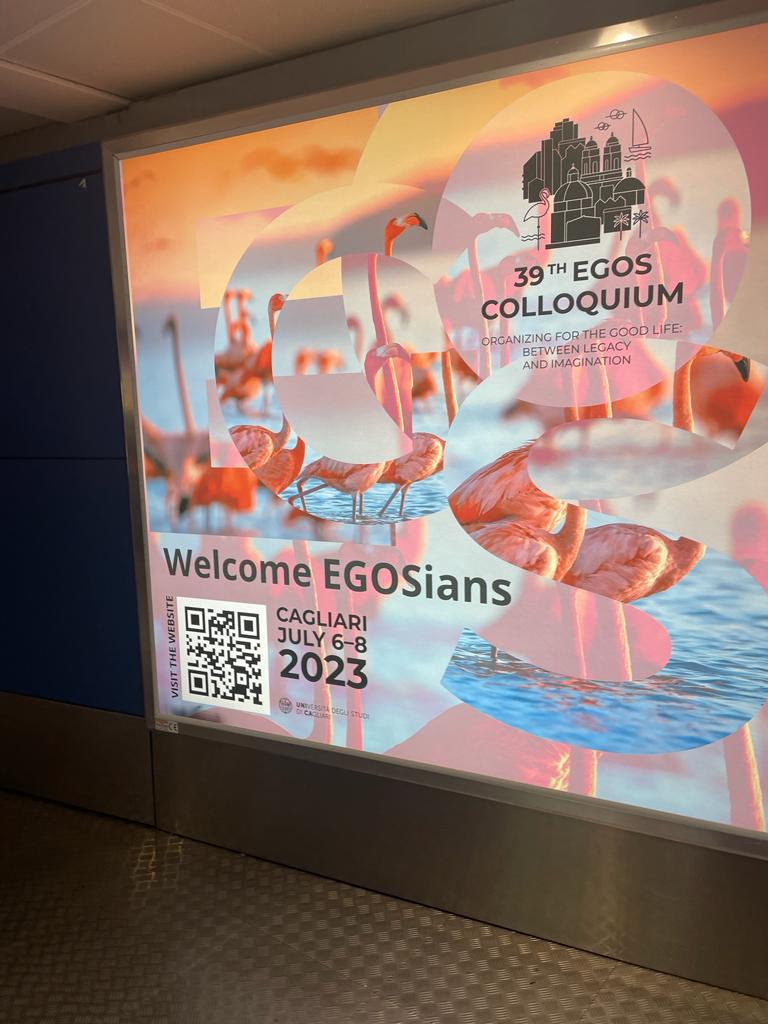
Attending the EGOS Colloquium & EGOS PhD Colloquium 2023 in Cagliari

Attending the EGOS Colloquium & EGOS PhD Colloquium 2023 in Cagliari

As a researcher, often summertime is conference time – this was true for me this year as well. Like some other ESRs’, I attended and presented at R&D Management Conference 2023 in Seville in June. In July I travelled again, this time to Cagliari, Italy to attend and present at the EGOS Colloquium 2023. In addition, I got a spot at the EGOS PhD Colloquium, which is a one-day event before the conference itself. In the following blog post, I will share some insights from my time there – EGOS is indeed a really good conference and the research there is so amazing and high quality, I can totally recommend going!

Attending the EGOS Colloquium & EGOS PhD Colloquium 2023 in Cagliari
Poster at Cagliari airport welcoming all EGOSians (picture taken by C. Leeb).

The EGOS PhD Colloquium

PhD Colloquia are an excellent opportunity for any PhD student and I highly recommend attending one or several! This year I attended the one from R&D Management and the one from EGOS. Jess already wrote an insightful summary of the PhD Colloquium with R&D, and I thought it could be useful to share how the EGOS one looks like.

It was a one-day event before the main conference and we heard some talks by senior scholars about writing theory papers, the art of reviewing, and insights on how to publish in Organization Studies. In addition, the EGOS PhD Colloquium consists of small table rounds of a few students and one senior researcher. Each student submits a thesis proposal which is then being discussed in these smaller groups. This way you get to meet fellow PhD students from around the world, as well as brilliant researchers from various fields within organisational studies.
Even though it can be daunting to share your thoughts, especially as everybody is doing such great work, it is a great opportunity! This part was extremely productive and useful for me – I learned so much and got very valuable tips from the other PhDs and my facilitator. In addition, you already get to meet other people you will see again at the main conference!

In general, I would recommend doing PhD Colloquia as early as possible in your PhD – it sometimes is a bit hard to be ready for these in your first year. At the EGOS colloquium, I felt like most people were in their 3rdyear of PhD (also depending on the PhD system of their home country), so it is for more “advanced” PhDs.

Attending the EGOS Colloquium & EGOS PhD Colloquium 2023 in Cagliari
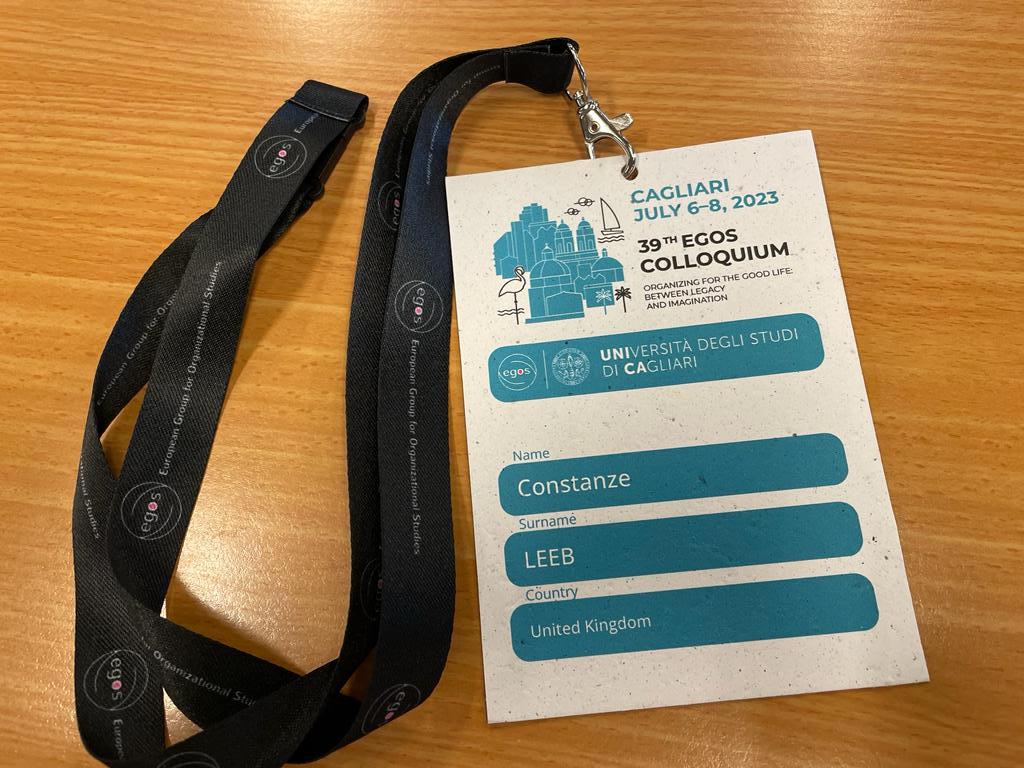
Sustainable conference badge, which can be planted! (picture taken by C.Leeb).

The main EGOS colloquium

Don’t get confused – the main EGOS colloquium is the name of the conference, and it is really a big conference! We were spread out in 3 different locations across the city, and I heard from others that it really was a conference with thousands of people.
Something really great about EGOS is that they are trying to be as sustainable as possible. One example is their conference badges (see picture)!

What is specific for EGOS is that they have a track-based system. That means that you submit your work to one specific track and if you get selected to present, you are asked to attend all sessions in this track throughout the conference. This way, they are trying to build a community around a topic – which is really nice! I presented in the track “Professions in an Age of Intelligent Technologies”.
It was such an amazing experience for me to join this as such a junior researcher. In my track, there were so many excellent researchers, whose papers I had read in top journals – just incredible! The feedback I got was so useful and of excellent quality. Many of the attendees had read my paper and were really trying to give useful feedback to help me progress further. In addition, every single presentation in my track was interesting to listen to and the topic was relevant to my research – incredible!

Of course, this can also be intimidating, and it is normal to start questioning what you do, etc. – but courage, it is part of the PhD journey (what I have been told from senior researchers) and it’s just an amazing opportunity to connect with great scholars from your field!

At EGOS I did not know many people. Alejandra was there as well, which was really nice for some social events, and also another friend that I met at my placement at RMIT Australia was there. However, as noted above, the conference is really big, which meant that I did not meet them during coffee breaks and was alone – something daunting as well! As in most conferences, people travel with colleagues or have their community already, so it can feel a bit lonely and overwhelming. But, don’t be afraid – you will meet people that you can have a chat with or you can just approach new people to make some small talk. Or, what happened to me, is you meet somebody who is really well connected and who introduces you (in person or via e-mail) to other scholars. And don’t forget: it’s also totally ok to take breaks from socialising now and then, conferences are exhausting!

Even though it was harder to meet people at EGOS than it was at R&D (where I already knew many people through EINST4INE, especially more senior scholars), I still met a few new people who do similar things to me, some of whom I will also try to visit when I pass by their university.

As a summary: EGOS is an amazing and excellent conference. It was daunting, exciting and brought me invaluable and extremely helpful insights into my research – I can only recommend everybody to attend EGOS if you get a chance to!

Attending a Digital Ethnography summer school in Australia

Attending a Digital Ethnography summer school in Australia

During my current academic placement with RMIT in Melbourne, Australia I have the chance to network with colleagues from the School of Business, attend talks and seminars and collaborate with other departments and researchers from different fields!

One example is the summer school led by the Digital Ethnography Research Centre (DERC) [https://digital-ethnography.com] here at RMIT Melbourne which I attended at the end of February. During the summer school Early Career Researchers (mostly PhDs) from all over the world got together to learn from Annette Markham and Larissa Hjorth about “Digital Ethnography Fieldwork and Analysis: Studying hybrid contexts of human+ non-human+ more-than-human entanglements.

What is Digital Ethnography?

Attending a Digital Ethnography summer school in Australia
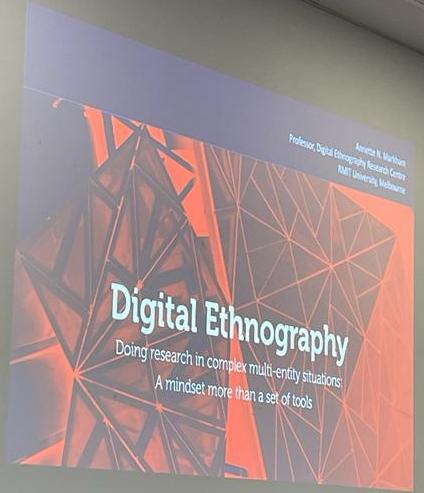
Slide from the summer school (Source: picture taken by C. Leeb).

Digital ethnography encompasses a lot of things. In general, it means investigating how digital technology impacts humans and society by using ethnographic tools. For example, how people use and interact in the digital space (e.g., on social media platforms like Instagram or Twitter, online forums, games, etc.) and trying to understand how this impacts the end-user. Just like the EINST4INE researchers, digital ethnographers investigate digital transformation. They are taking a very human-centred approach to this and are interested in the lived experience and feelings of the people using digital tools. I was lucky enough to be able to participate in this summer school, and I can only say: What an amazing summer school and what a great fit to my research!


The Summer School

The summer school lasted a week, plus an extra day for PhDs to present their work.

We heard lectures on various topics, such as how to do ethical research or on important themes in fieldwork (e.g., immersion, continuous documentation, using “what’s at hand” to generate material). Further, a penal discussion of former PhD students doing Digital Ethnography gave us insights about the possibilities in this research area. We heard from Marissa Willcox (University of Amsterdam), Zöe Glatt (London School of Economics), Kelly Chan (RMIT University) and Jess Hardley (RMIT University). We also had workshops in which we did our first ethnographic fieldwork, we learned how to write field notes and how to use video and photos to document our experiences.

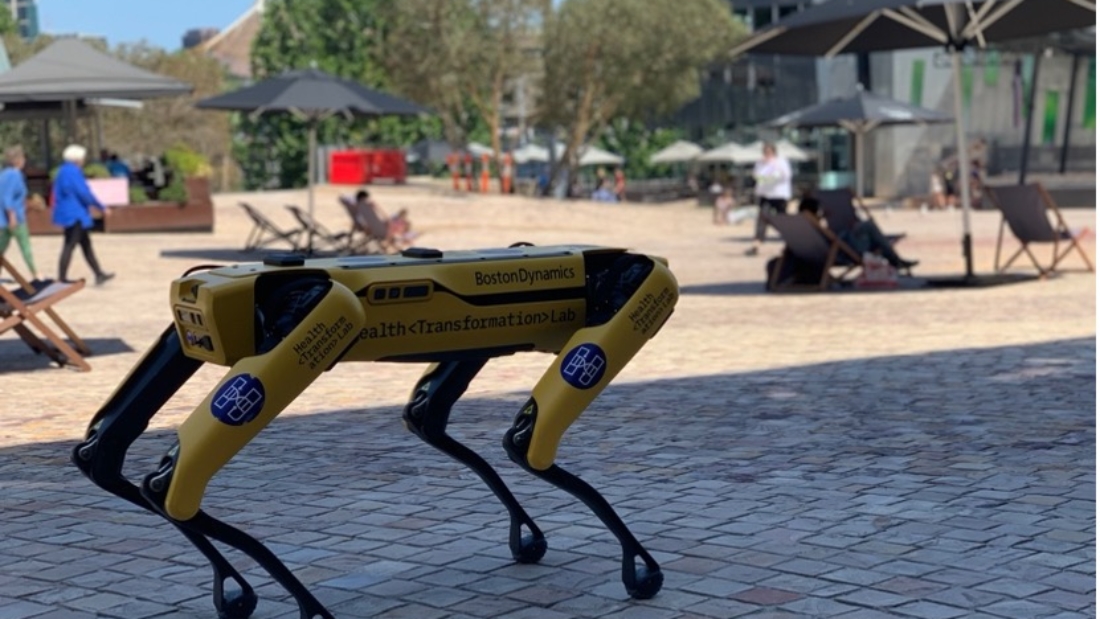
Halfway through the summer school, we did one day of fieldwork out in the public space. We were divided into 6 groups. Half of the groups observed the interactions inside the Australian Centre for the Moving Image (ACMI) and the other half on Federation Square in Melbourne. But – this was not all!

We actually observed something very specific, as we had another participant joining us: Boston Dynamic’s robot Spot!

Attending a Digital Ethnography summer school in Australia
Spot on Federation Square (Source: picture credits to Alison Starr).

The focus of our observation and field day was to see how people of the public react and interact with Spot. This day was very insightful and lots of fun!

After that, we started reflecting on our experiences as a group and heard lectures on some useful tools for the analytical processing of the data, namely on Situational Mapping and Critical Making techniques. Then, each group put together two presentations to share with the other participants: one on our initial reflections of the field day and one on initial findings from the first attempts of analysing some data.

Personal key take-aways

I will very shortly touch upon 3 key take-aways from this summer school:

  • Ethical considerations: Before, during, and after doing research.

It was great to discuss this central topic in research again: how important it is for a researcher to constantly reflect on ethical considerations.

Before the research this seems obvious to most: often simply because you need to obtain ethical approval to do your study. But it doesn’t end there, continuously throughout your data collection time – you need to be aware of your positionality (am I an outsider, an insider?), what effect your research or your presence in the field could have on others, and that you will always bring in subjectivity when entering a field. The more you reflect on these things, the better and the more you can ensure that your research will be ethical. Ethics is not simply an approval to obtain – it is there to support you to do the right thing. It helps you to reflect on possible issues that might arise and to plan ahead on how you will react to them.

  • Looking at the data in a group: Surprises can emerge.

During the analysis stage, we had access to the data we collected ourselves and the data from all other researchers. A key take-away for me here is that looking at data in a group can lead to many different insights and surprising themes! It enriches the analysis process greatly as every member brings a unique point of view into the discussion.

It was exciting to see all the interesting themes that emerged during the analysis process with my group. We talked about the agency of oneself and how we ascribe agency to others (e.g., Spot). While I wasn’t too surprised that participants seemed to struggle to categorize Spot (Is it a dog? A horse? A spider?), I was intrigued by the fact that most people really wanted to categorize it. They either asked a lot of questions or started treating it in a certain way (e.g., petting it etc). Other interesting topics that emerged were control (people started giving Spot commands) and embodiment (participants reflected on their feelings in a bodily sensation).

Attending a Digital Ethnography summer school in Australia
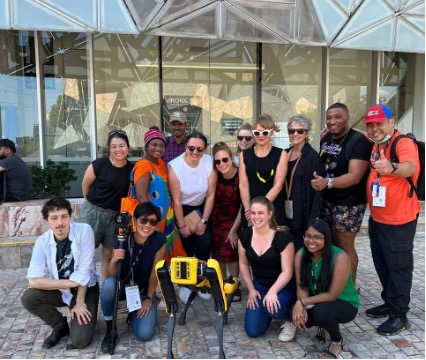
About half of the participants of the summer school + Spot at Federation Square. (Picture credits to Haryo Jiwandono).
  • Not just valuable learnings: Good company & good food.

The last key take-away is clearly that I learned a lot and enjoyed the summer school greatly. I met fascinating people from all (literally every continent except Antarctica was represented) over the world from various disciplines (architecture, urban studies, anthropology, design, journalism, organisational studies…). Actually – one of them, Kateryna Kryzhanivska, who is also a visiting PhD researcher at RMIT, and she is from LUT University, Business School! (which shows again that the world can be really small as well).
Who knows – maybe some of these connections will last and result in future collaborations!

Further, good food is a great plus in any event.

Attending a Digital Ethnography summer school in Australia
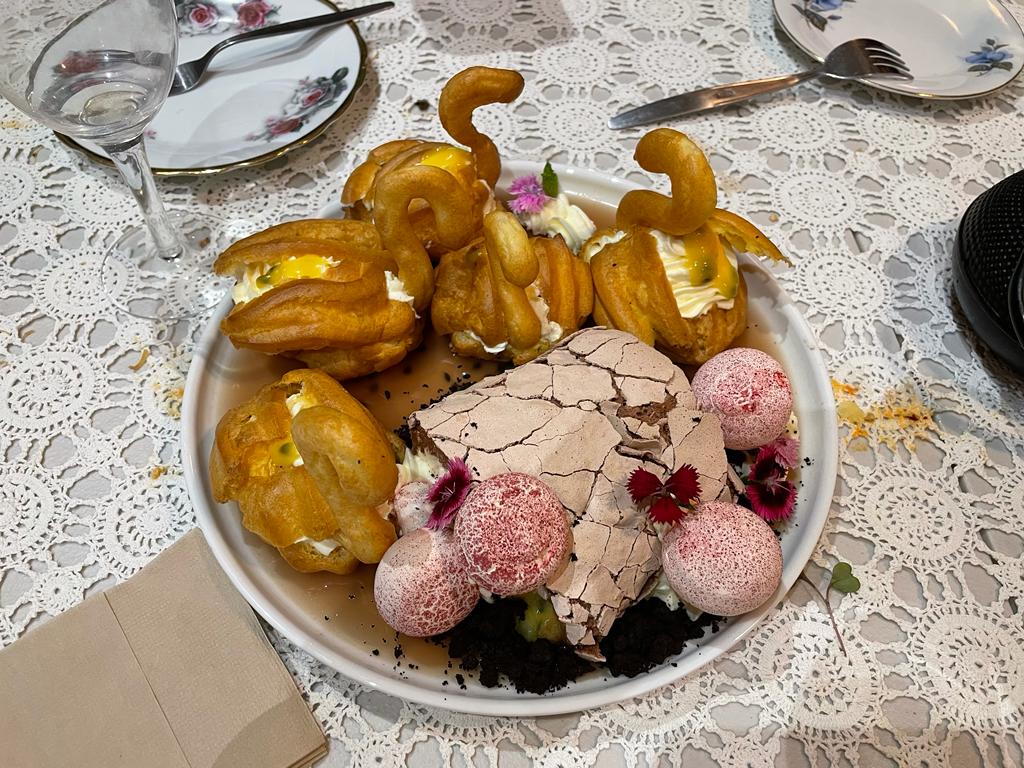
The desert at the Welcome Dinner provided by “Piecurious” run by Helen Addison-Smith (picture taken by Constanze Leeb).

All in all I can say:

It was intense, insightful and amazing – a week well spent!

My first secondment with AMPLYFI

My first secondment with AMPLYFI

So, one step further in my PhD journey: my first secondment with EINST4INE is in the books. I spenT some time with one of my industry partners: AMPLYFI in Cardiff. Here, I summarise a few useful learnings that might be helpful for your research as well!

AMPLYFI

My first secondment with AMPLYFI
Cardiff Bay (picture taken by Constanze Leeb).

The company I visited during my first secondment is part of the EINST4INE consortium. AMPLYFI is a company providing a research platform which uses AI to analyse content and uncover previously hidden trends and opportunities. For this, I moved to Cardiff, Wales (so once across the U.K. from East to West) where the company is headquartered  and spent a few weeks with AMPLYFI. If you have never been – Cardiff is a great city, with an amazing castle, lots of nice arcades and it’s next to the sea (and if you time it right and are lucky, like me – you can maybe see the King)! Hint: bring a waterproof jacket (and backpack) and no umbrella – it can get quite rainy and windy.

Real fieldwork – A typical day at AMPLYFI

My days at AMPLYFI were always interesting and fun. First, the team is really nice and the atmosphere very motivating. Second, I was able to participate in many things during my time there. I had a desk in a shared working space, could come to the office every day, met many of the team, and was able to participate in most things, which enabled me to really experience the company and their activities. I talked to many colleagues, sat-in on meetings and calls, participated in workshops and was able to get hands-on experience with AMPLYFI’s tools.

Industry vs. Academia

You have all heard this before, but it really is true: the pace is very different in the industry. Everything happens faster – especially at a young company like AMPLYFI! A colleague has an idea, a small team gets together to look into it, and a few weeks later you can see the results. It is incredible how quickly AMPLYFI’s tools develop, I am sure there will be something new when I return for my second placement with them!

My first secondment with AMPLYFI
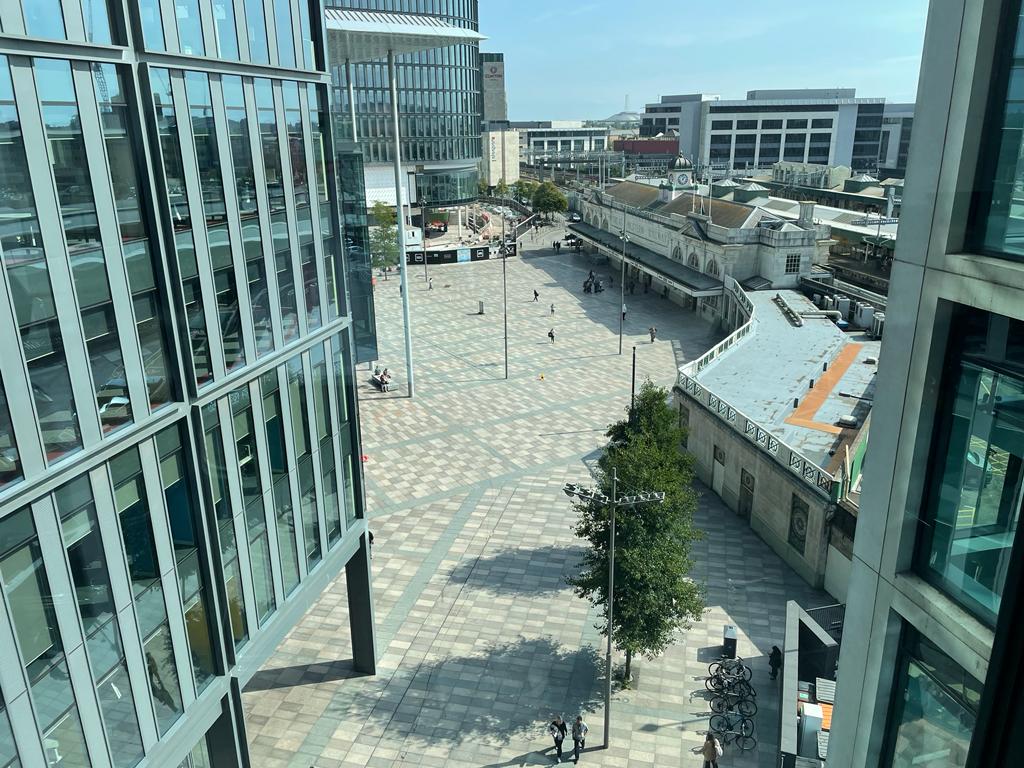
AMPLYFI’s Board Room (picture taken by Constanze Leeb).

What impressed me as well is how well organised AMPLYFI is. They are working closely across teams, keep each other up to date on their work, and have detailed documentation of their tasks performed – something that academia can benefit from as well!

Lastly, I have always studied intelligence work from a distance – reading about it and hearing others talk about it. But I have never had to perform it myself. During my time at AMPLYFI I was able to do a little research project on a topic of my choice using AMPLYFI tools, which was an invaluable practical experience. What I definitely learned from it is that intelligence work is just as hard and complex as I thought it is and my respect for all people performing intelligence work has increased even more.

Learnings for and from fieldwork

My first experience in fieldwork was great, but I did realise that many of the things that made it great came from my Sociology background and me taking time before the secondment to visualise what it would be like. Therefore, I am summarising some of my learnings here:

  • Be well organised!
    When you enter the field, it can be overwhelming. So, it is best if you already thought about a few things and prepared them. For example:

    • Know where you want to take which kind of notes. Especially, if your fieldwork will entail data that is not being recorded on audio or video!
    • Prepare folders beforehand for your data, e.g.: interviews with employees, interviews with customers, etc.
    • Think about a naming system for your data. Are you going to number your interview partners? Are you going to name the files after the interview partners, the day of the interview, etc.?
      My first secondment with AMPLYFI
      View from AMPLYFI’s Board Room.
  • Be part of everything you can!
    Often you learn the most interesting things in situations least expected. So, if you have dedicated time for fieldwork – use it and participate in everything you can.

    • You will not only learn a lot by participating in meetings, events, social activities etc. – you will also meet people! And this in turn can give you access to new interview partners or new events.
    • When you hear about an interesting event. – just ask if you can participate. The answer will likely be yes, as you will have some form of NDA/CDA in place anyways. Remember: others don’t know what you need or are specifically interested in! And also: Worst case – the answer is no, but at least you asked!
    • If you feel like you have no idea of what is happening – just participate anyways, you will figure it out on the way. Or not – and then you can ask about it afterwards.
  • Just ask!
    We all know the fear of asking questions from school or university. Of course, also back then the lesson was: just ask! This is also true here, especially as you are entering the field from outside – nobody expects you to know everything!

    • If you don’t understand something – ask about it. Usually, people are very happy to help and to explain something. Even if it is basic for them, they understand that it isn’t basic for you. Also – this is what research is sometimes about right? Asking the obvious questions to understand deeper underlying concepts.
    • Ask for access to internal documentation and access to internal communication! This will give you invaluable insights and help you understand your field a lot better! Just ask and explain that it’s insightful for a comprehensive understanding – if they are not happy to share, they will tell you so.

If you are interested to hear more about my time at AMPLYFI: I also wrote a blog post for the AMPLYFI website! You can check it out here, next to other interesting blogs on the AMPLYFI website.

Organising a one-day conference

Organising a one-day conference

As part of the first-year assessment at the University of Cambridge our institute, the Institute of Manufacturing (IfM), has the tradition of having a “IfM PhD conference” happening each year in May. All 1st year PhDs share their research progress so far and their plans for the next few years. Everybody needs to hand in an abstract, create a poster for a poster session and present their research in a short talk followed by Q&As. Further, this conference day is organised by volunteers who are themselves 1st year PhDs of the institute. And guess who was one of the four volunteers – me! Further, we were supported by the PhD administrator and two researchers who helped us with advice etc.

In the following post I will share my experiences and learnings – maybe it helps you organising a small event yourself!

The start – important things to consider first

Organising a one-day conference
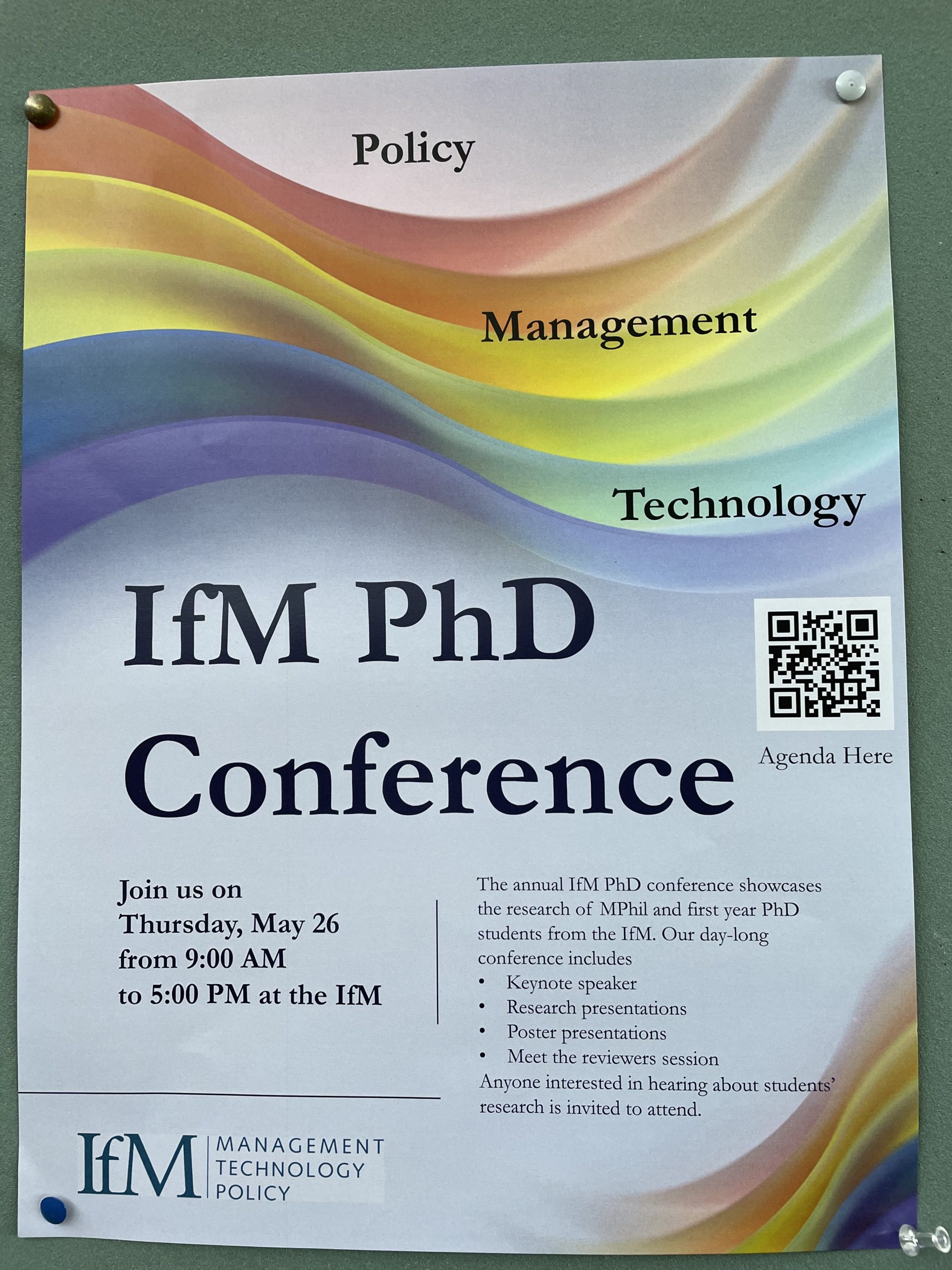
Flyer to advertise the conference (Picture taken by C.Leeb).

Of course, the organisation of the event started well before the conference. There are many things that need to get sorted beforehand. The first ones that we found most relevant are: (i) How much budget is there? This will determine many aspects, such as what kind of food you can provide. (ii) Where is it going to take place? Often, another crucial thing is the venue – in our case we were lucky, as we could use the seminar rooms at the IfM. (iii) When is it going to be? The question of the date needs to be settled early on as well – again, this had been decided for us.

Knowing about it – advertisement & contacting people

Another important thing is that people know about the event. For us, that meant contacting the other 1st year PhDs and informing them about the deliverables. Further, we wanted other members from IfM to join. We made sure that the conference was advertised through different channels: (i) our weekly IfM-news mail starting 1 month before the event (ii) The monthly newsletter for the month April and May and (iii) posters that we put up across the building a few days before the event (see picture).
Of course, we also had to contact many other people, which is related to the next point – our agenda. 

Putting together the agenda

We started the day off with introduction words by the head of IfM followed by a keynote speaker. Finding a keynote speaker turned out to be difficult – because the one we had planned canceled close to the event! From this we learnt that it is very helpful to know people who are well connected and can find another keynote speaker on short notice, luckily, one of the supporting senior researchers could help us.

Another aspect to coordinate was the talks: due to the high number of PhD students we ran two tracks in parallel, in blocks of 3-5 students with breaks between blocks. We decided that it would be best to have people in each block that could make sure that it ran smoothly. Therefore, we appointed 2 PhD students in each block (in which they were not presenting): one was responsible for time keeping (i.e., 2 and 1 min. warnings) and a second one to chair the sessions (i.e., coordinating the Q&A and asking questions, putting up the slides). It really paid of to have these special roles – everybody that got assigned a special role (i.e., timekeeper & chairing) did a wonderful job – so the talk tracks ran smoothly without any trouble! 

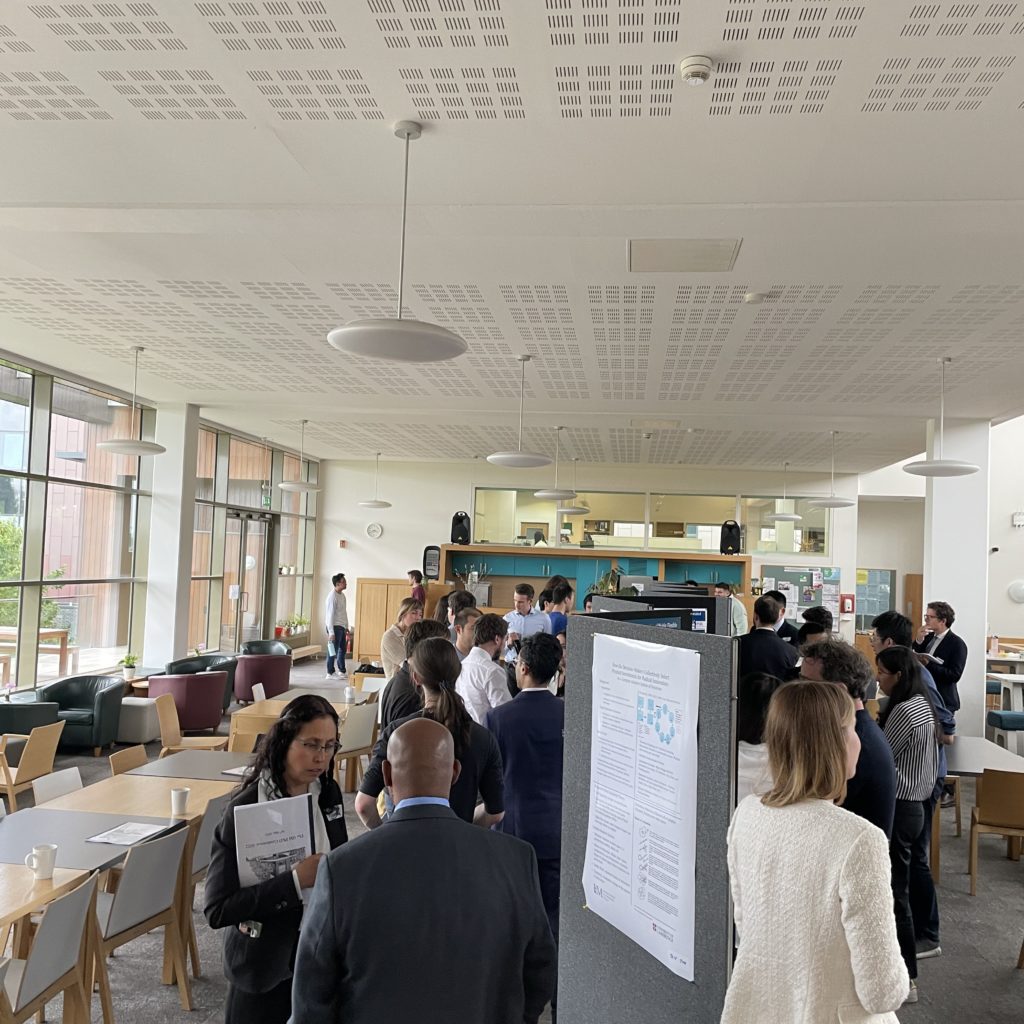
In the afternoon we had a poster session (see picture), during which students were standing next to their poster and others could walk around to ask questions. Here my learning is: putting up the posters can be tricky – in total we needed 4-6 people to put up the posters, because it requires a lot of force to punch the thumbtacks in the unstable boards (at least in our case) – thanks for our friends who helped us out!

Organising a one-day conference
The poster session (Picture taken by C.Leeb).

Another successful aspect of our conference was the best talk & poster competition we organised. We put together a jury of senior researchers, which we divided between the tracks. In the end, we had one best talk per track and 3 best posters. The competition worked really well – I think the fact that we had a clear scoring scheme and that we picked jury members from different research areas helped.

Before we had closing remarks from the two senior researchers that supported us, we decided that we would put together a “Meet the reviewers”-panel with three senior researchers from our institute. They came from different areas and shared their experiences in the publication process. The insights were extremely insightful– as PhDs we got a lot of useful tips for our careers!


Submissions

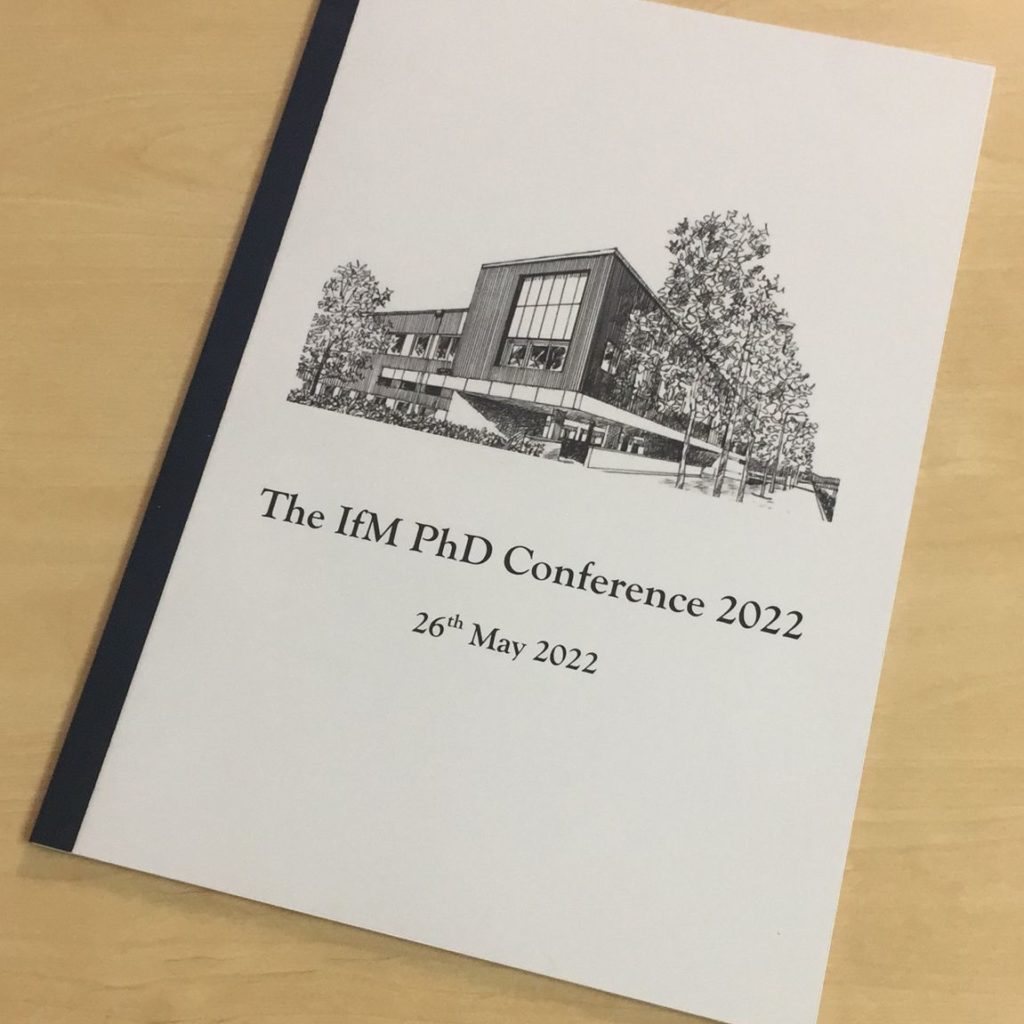
One of my main tasks was putting together a booklet of all the abstracts students submitted (see picture). This was a lot of work, despite having set a quite early deadline that every student followed (!). Mostly, I had to ask people to resend their submissions and follow the template we had provided beforehand. So my recommendation: ALWAYS provide a template that people need to follow (it makes your life much easier and also everything looks nicer) – and make it as detailed as you can, I realised a few things I had not specified only after it was too late. But the product looks really nice and the booklet was also a great take-home gift for everybody. Another perk of it: we included the agenda in the booklet – so everybody had it with them throughout the day and knew where to be when.

Organising a one-day conference
Booklet with abstracts (Picture taken by C.Leeb).

Some final learnings

My learnings from organising this one-day event are summarised here, some of which I learned the hard way through extra work:

  • Try to think of all the details! Try to picture the day and run through the agenda/day – this will help you think of (tiny) aspects!
    E.g.,: who is registering the participants? Do you have lunch, will there be coffee breaks? If yes – where and with snacks or not? Is everything printed in time? Do the participants know when to be where? How can they get this information during the day? When are you putting up posters and how are you fixing them? Etc.
  • Try to plan/setup as much as you can before the event starts! Also, try to delegate tasks that are needed on the day of the event to other people – you will be busy with little (unexpected) things anyways!
  • Bring extra laser-pointers/clickers! One of ours died in the middle of the second talk, and it was really good that I had a spare one with me.
  • The more detailed information you give the better – it saves you time in the end! More concrete information means (typically) fewer questions/less editing.
    E.g.,: giving clear instructions to people who are taking up roles (e.g., timekeepers, chairing a session), giving clear instructions on how to format documents (e.g., abstracts).
  • What really safes you is good team communication and team work!
    Best is to divide tasks between the team members, making it very clear who is responsible for what – here it is crucial that you are able to rely on your team members (or know what aspects you might have to have a watchful eye on).
  • It is an amazing opportunity to connect with many people!
    E.g., other PhDs, researchers across areas, senior researchers, etc.
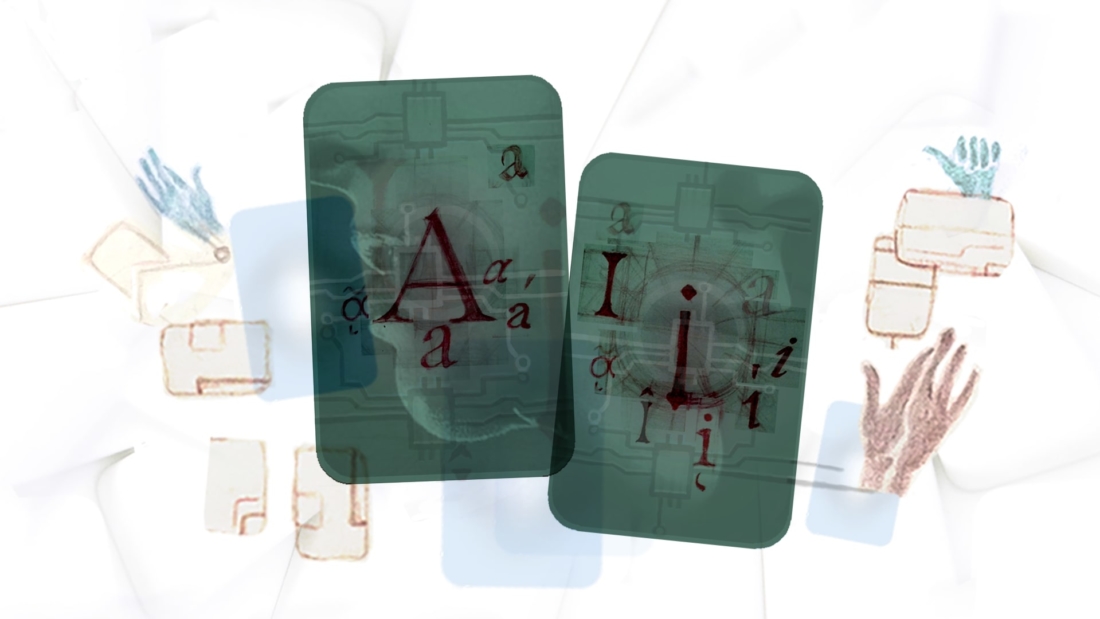
Two digitally illustrated green playing cards on a white background, with the letters A and I in capitals and lowercase calligraphy over modified photographs of human mouths in profile.

What is AI?

Artificial intelligence, or short AI – we all have heard this term and probably we also use it now and then. It is one of the current buzz words. But what do we actually mean when we speak of AI?

Definitions

There are many definitions of artificial intelligence floating around. Some define it through the machine aspect and (human) intelligence:

“Artificial Intelligence (AI) may be defined as the branch of computer science that is concerned with the automation of intelligent behaviour.” (Luger, 2009, p.1).

or:

“Artificial intelligence (AI) represents a highly capable and complex technology that aims to simulate human intelligence.” (Glikson & Woolley, 2020, p.627)

Others through the machine aspect and its abilities:

“An AI system is a machine-based system that is capable of influencing the environment by producing recommendations, predictions or other outcomes for a given set of objectives.” (OECD, 2022, p.23).

Some avoid using difficult terms and define it reversely:

“[Artificial Intelligence is] the collection of problems and methodologies studied by artificial intelligence researchers.” (Luger, 2009, p.2).

And again, others as a process:

“[…] we conceive of AI as a process, rather than a phenomenon in itself. We define AI as the frontier of computational advancements that references human intelligence in addressing ever more complex decision-making problems. In short, AI is whatever we are doing next in computing.” (Berente et al., 2021, p.1435).

The tricky word

Why are there so many different definitions for AI? Well, artificial intelligence is a tricky word. Maybe most of us can agree on the definition of artificial: something that does not occur naturally, something that is human made. But what about the term intelligence? When is somebody, or something intelligent? Is it the IQ, how good they are at calculating, how well they can judge other people’s emotional states? What are the criteria for intelligence?
And then: is artificial intelligence in its core the same as human intelligence? (If you thought: well, of course! Then just another aspect: what about creativity? Or self-awareness? Is this part of intelligence?) Can we use the same criteria to judge AI and human intelligence?

What is AI?
The Turing Test (Source: Juan Alberto Sánchez Margallo).

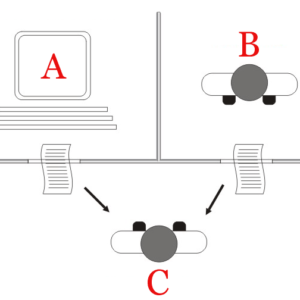
A famous test for judging the intelligence of AI is the Turing Test, originally called the Imitation Game.  As the name hints, it was invented by famous Alan Turing and is a (theoretical) test in which a machine needs to perform a task (e.g., answer questions). The original name also hints at the idea behind the test: Based on the output of the machine (e.g., an answer to a question) a human needs to judge whether they are interacting with a machine or another human being. If the machine manages to pass as a human, the AI has passed the Turing Test and is considered intelligent (Luger, 2009).

You can see that the Turing Test has a quite specific definition of intelligence – if a machine appears to be human.


Narrow vs. general AI

But is this really what we mean with intelligence? What about a machine that is able to compute extremely fast and to give you an answer to a problem in less than a second, while a human needs days, if not years to solve it – is this machine not intelligent? Most would say it is very intelligent, as it outperforms a human! On the other hand – ask this same machine to perform the task of distinguishing a person crying from laughter and another person crying from sadness. It will fail in giving you the correct answer. Now we would say it is not intelligent at all. And this is because machines are only intelligent in a narrow field.

One speaks of narrow/weak vs. general/strong AI (Glikson & Woolley, 2020). Narrow/weak AI can perform specific tasks, for example, face recognition. General AI refers to a machine that is super-intelligent in “all” aspects. Strong AI is usually what is envisioned in dystopian futuristic books and movies (e.g., 2001 Space Odyssey or the robots in the Alien movies).
However, it is important to note down that we are far away from general AI.
Some think there are aspects of human intelligence that we will never be able to implement or that we do not need/want general AI, others believe that it is just a question of time until we reach strong AI.

So, what are examples for AI?

What is AI?
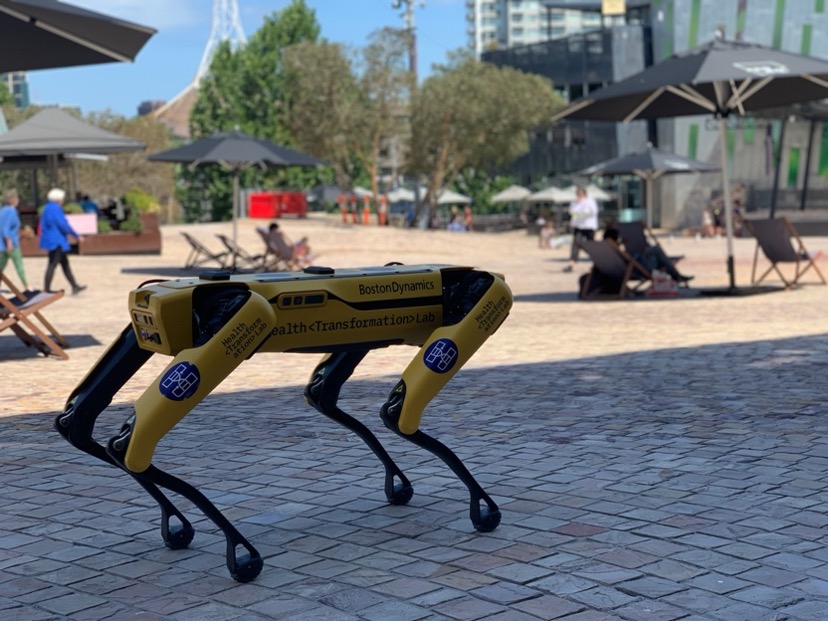
Boston Dynamic’s dog Spot (Source: Spectrum).

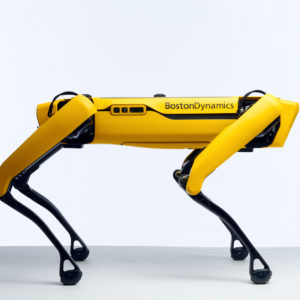
AI encompasses a variety of intelligent systems with many different algorithms. Some follow rational programmed rules, some are agent-based and situated (Luger, 2009). Some of them come with a body, like robots. Boston Dynamics are an impressive example of smart robots (see the picture of their dog Spot) already in use or co-bots on shop floors or mobile telepresence robots in hospitals (this is what Alejandra is looking at!). On the other side are bodyless intelligent systems. AI encompasses a variety of these, a subpart being machine learning (ML). Note that often Machine Learning is what people refer to when they talk about AI.

We speak of machine learning if the machine learns by itself without somebody explicitly programming a set of rules it needs to follow. The system manages to learn from the given inputs. Machine learning itself is again a huge field and can be divided into different approaches (e.g., unsupervised learning, supervised learning, reinforcement learning – I can recommend Daugherty & Wilson’s book: Human + Machine for more details (Daugherty & Wilson, 2018)).

Some concrete examples of AI that you have probably encountered already: Apple’s Siri, Amazon’s Alexa, GoogleMaps, Instagram/Facebook sorting your feed and giving you suggestions, Amazon suggesting related products, or Netflix recommending what to watch next.


So you see – already knowing what AI is can be difficult! Maybe next time you read or hear the word AI you will take a minute to think about the use of the word in the context and figure out what kind of AI they mean.  🙂


P.S.: Credits for the featured image to Alina Constantin / Better Images of AI / Handmade A.I / CC-BY 4.0.

Bibliography

Berente, N., Gu, B., Recker, J., & Santhanam, R. (2021). Managing Artificial Intelligence. MIS Quarterly, 45(3), 1433–1450. https://doi.org/10.25300/MISQ/2021/16274

Daugherty, P. R., & Wilson, H. J. (2018). Human + Machine: Reimagining Work in the Age of AI (1st ed.). Harvard Business Review Press.

Glikson, E., & Woolley, A. W. (2020). Human trust in artificial intelligence: Review of empirical research. Academy of Management Annals, 14(2), 627–660. https://doi.org/10.5465/annals.2018.0057

Luger, G. F. (2009). Artificial intelligence: structures and strategies for complex problem solving (6th ed.). Pearson Education.

OECD. (2022). OECD Framework for the Classification of AI Systems. OECD Digital Economy Papers, 323(February). https://doi.org/https://doi.org/10.1787/cb6d9eca-en

The Long and Winding Road of Finding one’s Research Area or The Agony of Choice

The Long and Winding Road of Finding one’s Research Area or The Agony of Choice

A warm welcome to my blog! 🙂

When asked about my background, I often give the short version: “it is diverse and in lots of different fields”. In my first blog post, I want to give a little bit more detail about what I did before joining EINST4INE.

Why not?

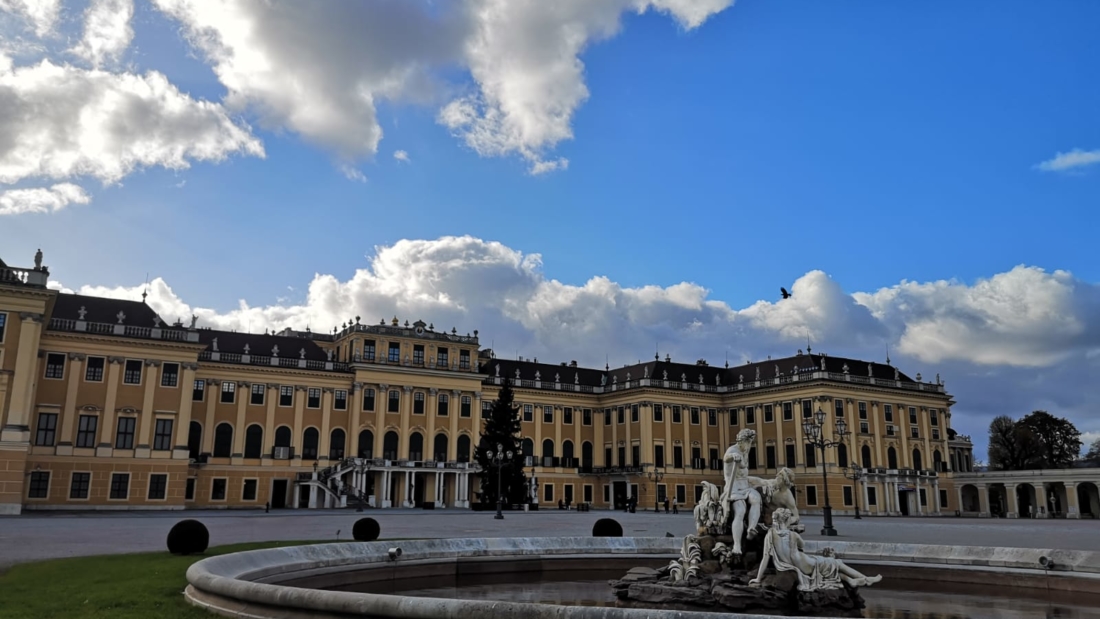
I am from Austria and went to high school in Vienna (see the featured picture – that’s Vienna! (: ). I had the amazing opportunity to be part of the high school Sir-Karl-Popper-Schule, which gave me the opportunity to choose most of my subjects flexibly and to pick rather specific courses (e.g., Nuclear Physics or English Literature). In those years, I realized that I liked many different areas and that I was fascinated by diverse topics within Natural Sciences and Social Sciences – I picked courses across disciplines, following the motto: “Why not?”.
During high school I was also able to spend a semester abroad in South Carolina, U.S. which influenced my choice of studies greatly. It was luck that I ended up in a Sociology class, encountering for the first time terms like “social role” or “social identity”. I was fascinated – these concepts gave names to the things that were happening around me! And so I started to appreciate how much Sociology could explain human interactions.

The agony of choice

Then, within no time, high school was over and I was faced with the dreadful task of choosing what I wanted to do next. I knew I wanted to study at university – but what? After visiting many orientation events, drafting countless lists, and trying to reduce the number of degrees I was interested in, I finally settled for two. I thought they complemented each other amazingly because they both tried to explain the world surrounding us – one from a natural science perspective and the other one from a social science perspective. But in administrative terms, they did not complement each other at all. So during my two bachelor’s degrees in Physics and Sociology, I not only learned important concepts of these disciplines but also how to organize my time effectively and efficiently.

The (particle) physics trajectory

So, here I was – studying Physics, even though I skipped some basic physics courses during high school so that I could take more specific classes. The result was lots and lots of struggles and work. But, I have to agree with what many people say about a degree in Physics: What you really learn during a Physics degree is to not give up.
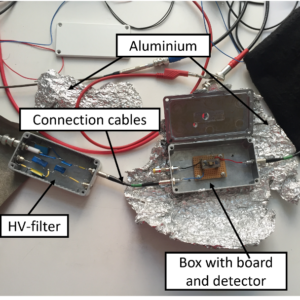
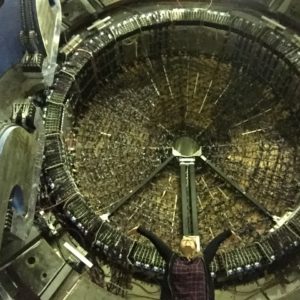
During my time in Physics at the University of Vienna, I found my passions in this area: (1.) Lab work & (2.) nuclear and particle physics. Luckily, I was able to pursue both of them during my bachelor’s and master’s thesis, as I was based at the Stefan-Meyer Institute for Subatomic Physics. In other words – I was soldering, measuring signals with oscilloscopes, and testing detectors (just as you can see in the left picture).

The Long and Winding Road of Finding one’s Research Area or The Agony of Choice
Experimental work in the lab (Physics master thesis: Leeb, 2021).
The Long and Winding Road of Finding one’s Research Area or The Agony of Choice
At the LNF (picture by Constanze Leeb).


I did this in the lab there, and also helped out at an experiment at CERN, Switzerland, and at the LNF in Frascati, Italy (see the right picture) – as you can see, I was a bit excited to be there :).

But, now you might be wondering – how did I end up on this website and with EINST4INE?
Well, this is because this is just one part of what I am passionate about. While working in the lab, doing calculations, and trying to understand the physics behind the mechanisms of the physical world – I was always very much aware of the fact that we humans are partially constructing (as we are interpreting, deciding what to look at, etc.) this research, its results, and outcomes. I was missing another important factor in the equation – the human.


The human-centered path & exploring other countries

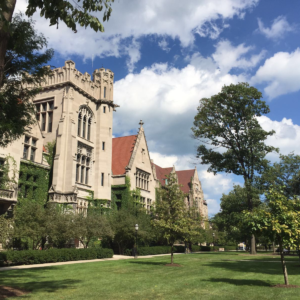
I undertook bachelor’s studies in Sociology at the University of Vienna at the same time as my physics degree. The two worlds of Physics and Sociology that I encountered clashed a lot, not just administratively, but also in their way of thinking, phrasing, and approaching problems. Quickly, I was questioning the extent to which human aspects are left out in Physics, even though there is so much social interaction involved in the research process. Guess what – there is a whole research area on this, called Science, Technology, and Society. Excited as I was, I started taking courses there and focused on this area, which looks into how science, technology, and society interact with each other and co-evolve. When I decided that I wanted to do a semester abroad, one professor in this field was one of my motivations to pick the University of Chicago, Illinois, U.S. for my exchange. My time in Chicago was amazing – apart from many great cultural experiences and traveling the country, I realized that I really liked to also do qualitative, human-centered research.

The Long and Winding Road of Finding one’s Research Area or The Agony of Choice
UChicago (picture by Constanze Leeb).

Back at home, I finished my bachelor’s degree with a thesis on identity construction of people from the Bahá’í faith that had to flee from Iran to Austria. The refugee situation during that time in combination with a visit to the Bahá’í temple in Chicago got me interested and I decided to do interviews and write about it. But what now? I knew that I wanted to continue with Physics (if you have managed the bachelor’s – you kind of want the master’s as well), but also that I did not want to stop learning more about the human side. However, I felt like most of the areas in Sociology were very specific and I was keen on learning very broadly again (I know, funny to hear, when I was still studying things on completely different ends of the academic spectrum. But that was the issue – what about the things in between?).


After many more lists and the agony of choice again, I decided that I would study the Middle European interdisciplinary master’s programme in Cognitive Science at the University of Vienna. This degree did exactly what I wanted: it opened many more doors to peak into, such as in the research areas of Linguistics, Artificial Intelligence, Neuroscience, Psychology, Philosophy, and Anthropology. Just like in high school, I was able to pick many different courses and did three projects on completely different topics. First, I was involved in a Social Data Science project with the Complexity Science Hub, Vienna. I did data analysis (topic modeling, descriptive statistics, etc.) on the topic of the spread of misinformation and conspiracy theories in an online comments section of an Austrian newspaper during the first few months of the COVID-19 pandemic. You can check out the website I created for the project and my results – https://cleeb94.github.io/covidinfspreading/!
Deciding that COVID would not stop me, I went on another semester abroad at the University of Ljubljana, Slovenia. Apart from an almost constant lockdown and some anthropology classes that I took, I spend my time on a project on Music Perception with the Faculty of Medicine. Due to the pandemic, I was again, mainly involved in data analysis of a questionnaire looking at the influence of self-chosen vs. pre-selected music pieces on the listener’s well-being.

The Long and Winding Road of Finding one’s Research Area or The Agony of Choice
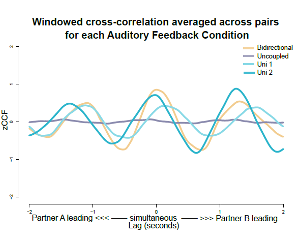
Windowed cross-correlation of auditory-motor rhythms (Cognitive Science master thesis: Leeb, 2021).

At that time I was already applying to PhD programs and knew that I would not be going in this direction for my next research topic, as I wanted to do something that was (i) new, (ii) broader, and (iii) would let me combine my technical and social background. Counterintuitively, I still decided that I wanted to do my thesis on more music research. I joined another lab of the Central European University in Vienna: the Social Mind and Body lab. Here, I conducted experiments on interpersonal coordination of rhythmic movements under different auditory feedback conditions (see picture).


Who needs a break?

The Long and Winding Road of Finding one’s Research Area or The Agony of Choice
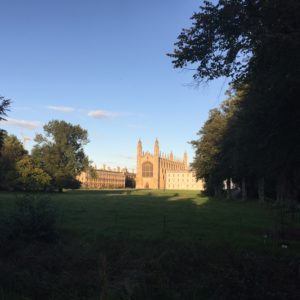
University of Cambridge (picture by Constanze Leeb).

During that time, I discovered EINST4INE and fell in love – I wanted to be part of it as ESR7, working on the integration of “digitally” and “socially”-driven approaches to decision making in contemporary industries. I was already writing my two master’s theses (at the same time, which I would not recommend to anybody) and had a very ambitious time schedule to finish before my next adventure at the University of Cambridge, United Kingdom.

I ended up finishing my physics master end of July, finalizing my cognitive science thesis in August and September, and doing my defense in cognitive science end of September – online and 4 days after I had already moved to Cambridge.
After having studied for so many years, the last months raced by extremely fast, and suddenly here I was – with 4 degrees in 3 different areas, in another country, about to start my PhD position with EINST4INE at the University of Cambridge and not realizing what just happened.
Even though it was a bunch of work, not easy and I did not have a break – I would not want to have it any other way! 🙂