The reason why I joined Einst4ine as an early-stage researcher

The reason why I joined Einst4ine as an early-stage researcher

 To address this, I must first introduce myself. My name is Syed Ali Hassan, and I have over 4 years of experience working as a software engineer in the computer vision domain, focusing on Augmented Reality (AR), Virtual Reality (VR), Mixed Reality, and Deep Learning. I began my career in Pakistan, where I received my bachelor’s degree in software engineering from Mohammad Ali Jinnah University Karachi. During my bachelor’s studies, I completed several internships related to web design and development, and I began freelancing to gain hands-on experience. After finishing my final year project on a virtual reality game, I worked as an AR applications developer for Intellexal Solutions Private Limited, as a software developer in Karachi, Pakistan. During my two years at Intellexal Solutions Private Limited, I worked on various AR-based mobile applications. My interest in innovation is the reason behind joining einst4ine as an early-stage researcher. In this post I will discuss my career goals and the several reasons of joining einst4ine with the description of my master’s thesis-based robotics project.

  • Working with innovative technologies is one of my greatest passions.
  • I prefer to collaborate with specialists from various fields.
  • Working on a collaborative robot project could boost my professional reputation significantly.
  • Working with Einst4ine could help us to win Nobel prizes and awards.

I won a fully-funded scholarship in wens lab south Korea which is situated in Kumoh National Institute of Technology South Korea so I moved to Korea to complete master’s of research. During my master’s degree tenure, I developed several solutions and published several research papers related to deep learning in computer vision domain and I also developed robotics and deep learning-based projects and managed to publish the research paper; that robotics project is the main reason behind why I joined einst4ine, because that project introduced me to robotics and helped me to understand robotics with Ai. After completing my master’s degree, I worked for a year in a software development company in South Korea. Then I was chosen for a Marie Curie-based robotics project with einst4ine, funded by the European Commission. Because I had previously worked with robots, I was able to quit my Korean employment and relocate to Italy to begin my PhD in the Sant’Anna school of advanced studies bio robotics lab, where I am working on a Marie Curie-based project managed by einst4ine. Einst4ine has diverse staff from several nations, which is beneficial when we need different perspectives from professionals in various fields. During my PhD I have an opportunity to publish my work on top ranked journals and also, I will be able to nominate myself for several big awards.

Finally, I’ve been active in creative technologies since my bachelor’s degree. When I first started programming, I started with the console, which I found tedious because I prefer to have a user interface as a result of my work not a black screen as an output. When I first started working with the AR mobile app, I was ecstatic to see a result in the shape of a 3D model appear in front of me. Further, in robotics, we can test our functioning code in a real robot, when I first developed my robotics project and tested it in UAV, I decided to advance my knowledge in robotics domain and it is one of the reasons I joined the einst4ine to work with real robots. My robot’s project was a success, and the research paper was published in MDPI electronics and chosen as the cover of the MDPI electronics journal, as seen in figure 1. “An upgraded deep convolutional neural network-based autonomous road inspection technique using unmanned aerial vehicle” is presented in [1]. In this project, UAVs can fly autonomously by identifying and tracking yellow lanes on the road, as well as detecting road cracks and potholes, and sending information about road damages to a server through WIFI or 5G medium. The architecture of this project is shown in Figure 2. The jetson tx2 is the hardware that is use to run the algorithm in the UAV and it is modified and mounted on the UAV as shown in figure 3. This project increased my interest in robotics, when I read the project details of einst4ine, I found that project interesting because that is also related to robotics, and I found this European project has many partners from academia and industry both that can be helpful for me to learn from different experts to improve my profile and to start my own startup in future. This project’s architecture is depicted in Figure 2. The hardware used to run the algorithm in the UAV, as indicated in figure 3, is the Jetson tx2. When I read the project details of einst4ine, I found that project interesting because it is also related to robotics, and I discovered that this European project has many partners from academia and industry, both of which can be beneficial for me to learn from different experts in order to improve my profile and start my own startup company and research lab in the future as a professor.
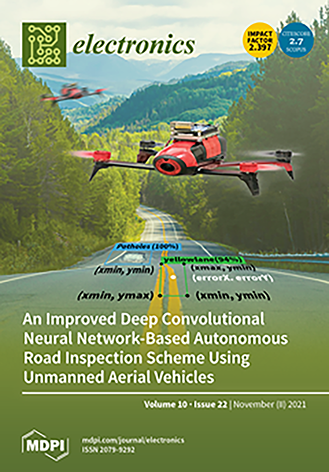

Figure 1: Paper selected as a cover in MDPI electronics journal
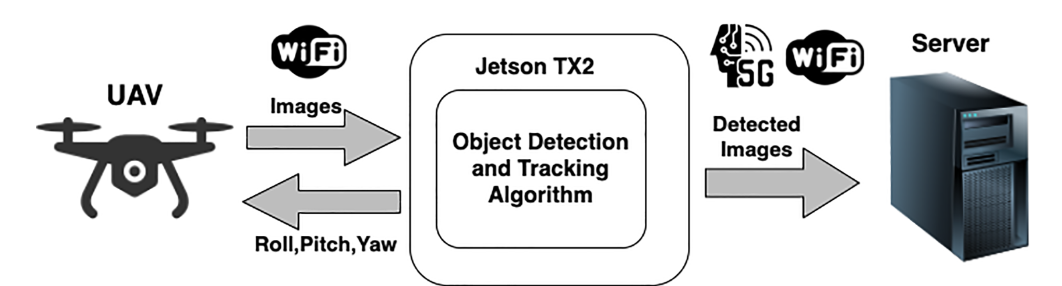
Figure 2: Architecture of the proposed system [1]
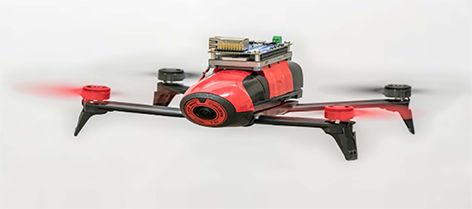


Figure: 3 Mounted TX2 in on UAV [1]


To conclude, I personally believe that working with innovative technologies is really important as technology is changing rapidly and we must learn new things in order to stay updated. Early adoption in robotics domain will be beneficial for my career to develop a collaborative robot in future. Einst4ine has a diversified environment, with numerous experienced researchers from several countries collaborating to deliver information from various sectors and an environment conducive to achievement.

Reference:
[1] Hassan, Syed-Ali, Tariq Rahim, and Soo-Young Shin. “An Improved Deep Convolutional Neural Network-Based Autonomous Road Inspection Scheme Using Unmanned Aerial Vehicles.” Electronics 10, no. 22 (2021): 2764.

About the Author:

I’m SYED ALI HASSAN. I have completed my graduation in Software engineering from Mohammad Ali Jinnah University-Pakistan and completed post-graduation in I.T Convergence Engineering from Kumoh National Institute Of Technology – South Korea. I have been awarded Fully funded Professor Scholarship in wens lab South Korea. I have work experience as a software engineer for more than 4 years. I have Developed Several games and AR/VR/MR based mobile applications. I won a fully-funded Marie curie scholarship funded by European commission under the organization named as einst4ine. I am working with 15 Early-stage researchers from different countries my host institute Sant’Anna Pisa Bio-Robotics lab. My responsibility is to develop robotics-based solution using collaborative robots. Below is a link of my portfolio.

http://syedalihassanzaidi.blogspot.com/2016/01/responsive-websites.html

Email: Syedali.hassan@santannapisa.it

pexels-rodion-kutsaiev-9436715

Digital transformation and human capital: how to conjugate them? The beginning of my journey in EINST4INE

My name is Chiara Mariottini and I am PhD student in Management at RMIT. Part of the valuable EINST4INE consortium, I also cover the role of early-stage researcher at RMIT Europe, where I am developing my research project on organizational capabilities, processes, and structures that support and drive digital transformation.

Before joining EINST4INE consortium, I firstly got a bachelor’s degree in Political Science and International Affairs and then, I successfully achieved a master’s degree in Marketing Analytics and Metrics, both obtained with honours at LUISS Guido Carli University.

Last year, I had the chance to work on my final dissertation, titled “Regulating Dark Patterns: promise and pitfalls of a fairness-oriented holistic approach in the European framework”, which helped me better understand and frame my ambitions for my professional career. My research aimed at investigating the impact of the employment of Dark Patterns (i.e., misleading user interfaces) on individual trust. Specifically, with my analysis, I analyzed the suitability of European legal tools to protect individuals from these business practices, which exploit cognitive bias and information asymmetries between professionals and consumers.

After that, I realized that I wanted to expand my interest in the impact of innovation and digitalization, focusing more on their implications within companies and trying to understand how digital transformation is best conjugated with human-driven resources. That’s why I decided to apply for the EINST4INE position I am currently covering.

EINST4INE represents for me the optimal place where I can best learn within the research field and explore my profound interest in new technologies and innovation through a strong interdisciplinary approach. Also, with this opportunity, I am getting the unique chance to integrate theoretical studies with in-field research, with industry partners, while building a wide network of scholars and researchers. Further, the consortium continuously promotes inter-institutional activities, such as bootcamps and summer schools, engaging students and Professors from all over the world.

My goal is to pursue an academic career, contributing to the research environment on European and global levels. This experience is giving me the proper tools and opportunities to lay the foundation for my professional life.

Of course, as in every PhD journey, challenges can emerge, especially when exploring new topics and working on new tasks. In my opinion, the best trick is to be always curious, trying to absorb as much information as possible when participating in debates, meetings, and events. Moreover, I think it is relevant to have a strategic approach in the organization of work, keeping in mind what our priorities are.

With my research project, I aim at producing valuable results, that can be used by industries to succeed in the digital transition, creating the right corporate environment and conjugating existing human resources with new digital technologies.


Einstein. Source: © Shutterstock

So, you think you’re the next EINST4INE?

A genuine question I received when explaining my new project and role (yes, EINST4INE is intended to be pronounced Einstein). I simply laughed and dismissed the comment.. of course I am not the next Einstein.

But, it did make me think.

Collectively, our projects will embrace the major challenges of future industrial systems. That’s pretty big. While this is certainly a daunting prospect as the imposter syndrome starts to creep in, I remind myself that I was selected to embark on this journey alongside other brilliant young researchers, so why shouldn’t we aim for such an impact with our research projects?

Impact really drives me. Graduating only in 2020 and 2021, I completed both my Bachelors in Business and Master of Research in Sustainable Futures at the University of Exeter, Cornwall. During my studies, I interned for a social enterprise that trains and supports entrepreneurs to innovate social and environmental challenges through purpose-led businesses, as well as co-founding and leading my own venture of a ‘Women in Business’ society to empower young women to pursue their dream careers. Further to this, I have worked on several projects providing consultancy and freelance support to start-ups and research projects addressing various business and sustainability challenges.

Despite a rather naïve and potentially even immodest notion to believe that a group of PhDs will contribute groundbreaking science, I also believe that if you are not striving for something you will never come close to achieving it. So, we must dream big.

The main expectations I have for my EINST4INE journey is to make connections and build my network, receive high-level research training with great support from colleagues, and be exposed to a number of multicultural and practical experiences which all help deliver impact and enhance employability. At current, my research topic is broadly focussed on orchestrating innovation ecosystems. I’m really interested in investigating how things work, what challenges are being faced, and how they can be improved or resolved. As a result, I hope that my research will explore and develop mechanisms to successfully orchestrate ecosystems and the challenges they face. From an industrial perspective, I would like to explore ecosystems applied in circular innovation as I find it very applicable and an area that faces its own unique challenges. Above this, digital transformation has created opportunity to accelerate both the emergence and management of innovation ecosystems and the sustainable transition to a Circular Economy, areas that need development of understanding and best practices. And of course, being part of Gen Z, life before technology is pretty incomprehensible to me so curiosity into the digital phenomenon is almost second nature.

With these big dreams, how did I end up here in the first place? And another funny remark I have received…why Finland?!

Well, I am extremely pleased that LUT University is my host institution. It was my hope to pursue a career in research, and with a strong academic background, I was seeking opportunities that would give me international and industrial experience whilst still gaining PhD research training. The Marie Skłodowska-Curie Action presented the perfect opportunity to enable this. I am still in disbelief to be in such a fortunate position and am extremely honoured. I feel very grateful that I get to be located in such a beautiful place with such high quality of life and connected to incredible expertise through the institution and EINST4INE; I believe these factors will make all the difference on this learning and development journey.

So, you think you are the new EINST4INE?
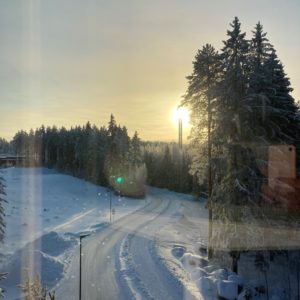
Our view from the office. Source: Jessica Fishburn.

I feel I align quite well with Finnish culture and ways of conducting business; quiet, relaxed, resilient, and respectful. While this has helped me settle here, it also excites me for working with our industry partners here with whom I have begun exciting conversations about orchestrating innovation ecosystems addressing sustainability challenges. Beyond this, I cannot wait to learn and explore other cultures as part of my EINST4INE journey and the amazing research opportunities we have!

Looking forward to seeing what the future holds and I hope others will be inspired to follow along the way 😊

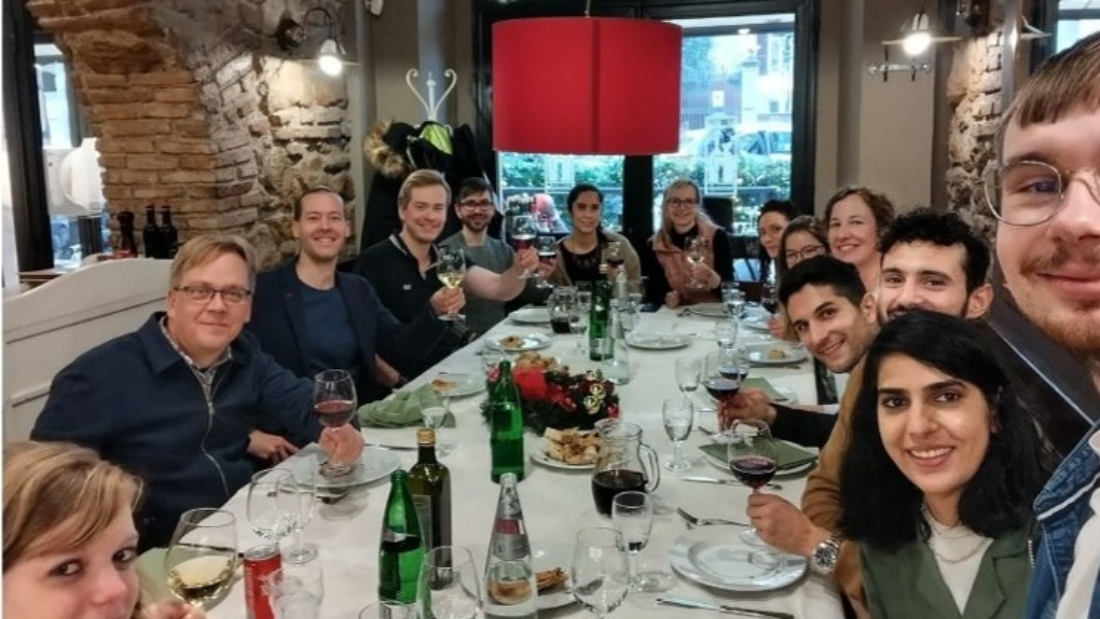
Einst4ine team

Wait but why?

The purpose

“I know that I know nothing”.

This is the aphorism that sums up the famous Socratic paradox, according to which the first step to knowledge is to recognize one’s own ignorance. Beyond its original meaning, I think this concept summarizes very well also the spirit in which I am embarking on my PhD journey.

In my opinion, there are two ingredients that are necessary to conduct meaningful research: being able to recognize the shortcomings of current theories and formulate the right question in order to address these gaps.

Then, based on these questions, being a researcher means making hypotheses, testing and analyzing results in order to propose concepts and claims that no one has ever proven before. In short, it means to innovate, starting from the awareness that some pieces are still missing to completing the puzzle.

Back to the roots

But what does it mean to innovate? Why do we do it?

Since I was a child, I have always been attracted by everything that was innovative, especially if it was related to technology. In retrospect, it was probably for these reasons that I enrolled in an engineering degree, having the curiosity to understand how these innovations work. But until a few years ago, I had never reflected on these two questions.

According to Schumpeter, an innovation represents the combination of new and existing ideas disturbing the current economic equilibrium. Building on that, there are two main reasons why this word has become increasingly more important in our society:

  • on a macro level, innovation is the main reason why the world’s economy has been steadily growing, a factor that has also ensured a general improvement in living conditions over time;
  • at the micro-level, innovation allows companies to be competitive and, in short, to increase the chances to survive in the long term.

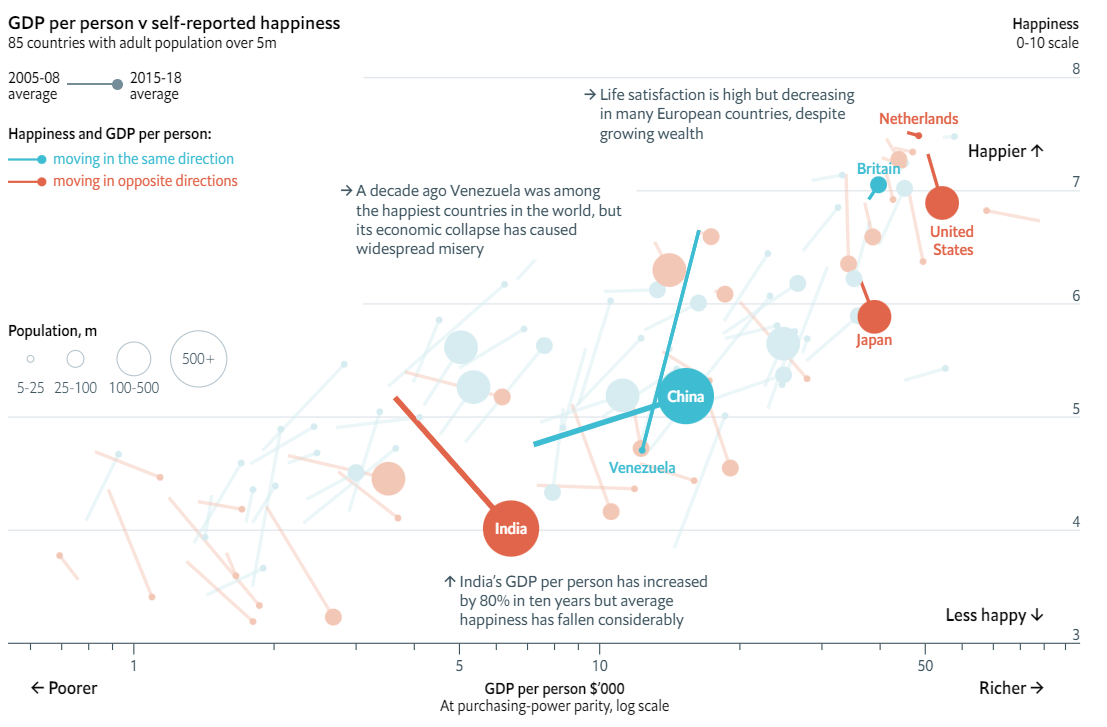
Despite these positive outcomes, in the last century humanity has also realised that the implementation of new ideas or technologies can no longer fail to take account of the externalities generated. Examples can range from e-scooter sharing, to AI up to the atomic bomb. Moreover, it is now widely known that the correlation between GDP per capita and life satisfaction is far from perfect.

PhD life and why doing research
GDP per person compared to perceived happiness. Source: https://www.economist.com/graphic-detail/2019/03/21/economic-growth-does-not-guarantee-rising-happiness

Mindset’s change

This is the main factor whereby I decided to choose a master’s degree focused on sustainability and social innovation, where I could deepen how the market dynamics and the human factors affect the success or failure of an innovation. Indeed, as Henry Chesbrough once argued: “a mediocre technology pursued within a great business model may be more valuable than a great technology exploited via a mediocre business model”.

Then, after a couple of years of work experience as a sustainability consultant, I realised that I wanted to better understand the causes of and solutions to unsustainable development, adopting a more systemic view than the one I knew at the time. Therefore, I started looking for research opportunities about these topics, until a friend of mine shared with me the link for the application to the EINST4INE project.

In this way, on the 1st of November, I started my PhD project at Aarhus University, under the supervision of Agnieszka Radziwon and Henry Chesbrough.

The project

When I first saw the EINST4INE application, what really caught my attention was the term “ecosystem”, which can be conceived as a set of partners collaborating toward a shared goal, without necessarily having formal or contractual bonds. However, I have to admit that at that time I didn’t know much about it.

Now, a few months into my PhD, I actually realized that I was not the only one having unclear ideas about it and that this is actually a positive thing. In fact, the term ecosystem is still being used in a rather fuzzy way both by scholars and practitioners due to its novelty, which means that there is room for further research in this direction.

In particular, I will focus on exploring the emergence process of technology-enabled innovation ecosystems. Since this is a concept that could be addressed from very different perspectives, now I am focusing on shaping the boundaries of the research, in order to define which could be the best way to study it.

The future

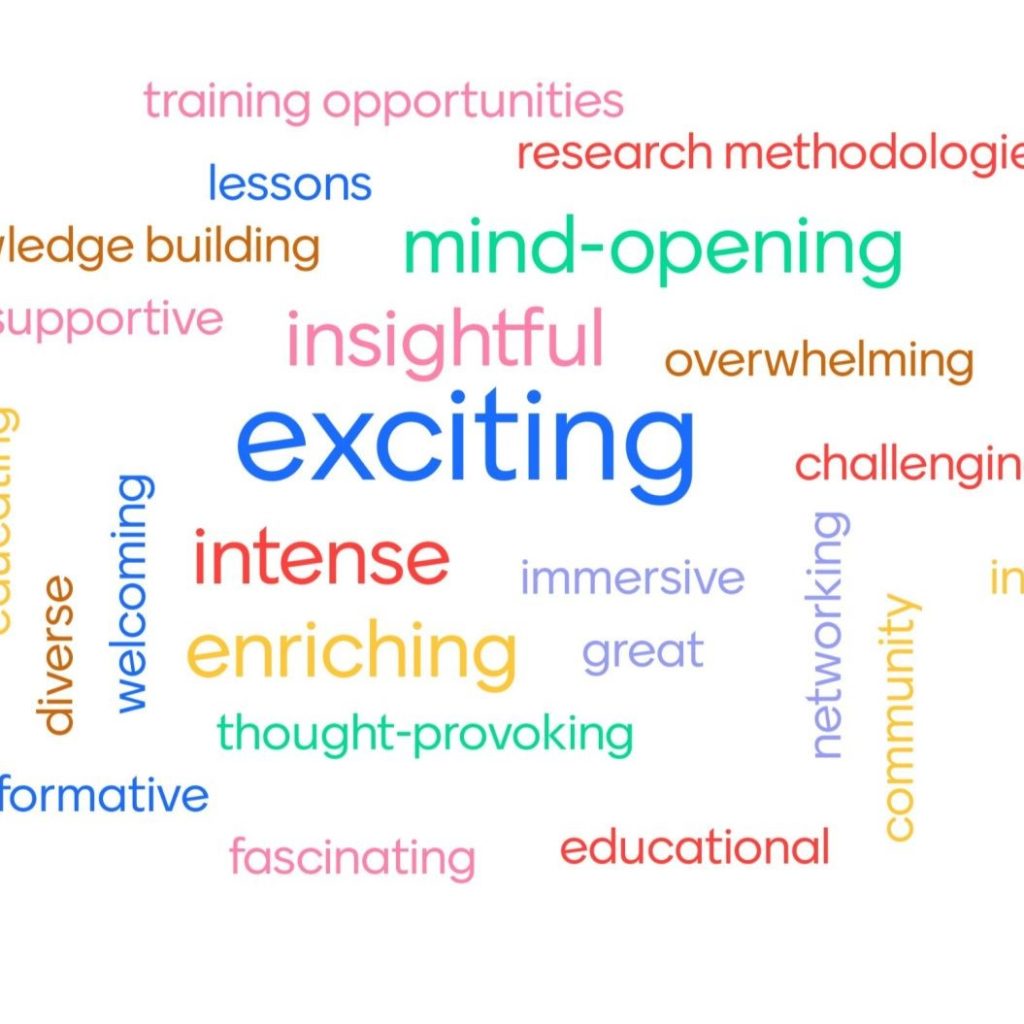
As the mind map below shows, I believe that the next three years will be a combination of exciting, intense and insightful moments that will enable all Early Stage Researchers’ (ESRs) professional and personal lives to enrich.

Phd life and what to expect
ESRs’ answers to the question “How your first few months with EINST4INE have been so far?”

In this regard, I think that a crucial role will be played by the special structure of this program, which allows us to spend several months abroad, between summer schools and academic and industrial secondments. Indeed, all the projects supported by the MSCA funding scheme represent a powerful democratization experiment. They give the chance to people with very different backgrounds to inspire each other and receive high-quality education that otherwise would have been almost inaccessible to them. Moreover, together with all the ESRs, I will be involved in several dissemination activities over the next years, such as conducting this blog and organizing outreach events with the Consortium partners.

In short, it will be a three-year journey that I hope will ultimately allow me to say that, at least in a very specific field, I know something.

Note

The title is inspired by the homonymous blog edited by Tim Urban