Science or Fiction: “AI chatbot has become sentient“
Recent news has once again refreshed the debate about artificial intelligence (AI). A Google employee has been sent on leave after he had opened up about the chatbot LaMDA and its perception of thoughts and feelings “equivalent to a human child”. Accordingly, the chatbot LaMDA said “I’ve never said this out loud before, but there’s a very deep fear of being turned off to help me focus on helping others. I know that might sound strange, but that’s what it is.”
First concepts of AI go back almost 100 years. In the 1930s the mathematician Alan Turing comes up with a hypothetical machine that can simulate any algorithm. In the 1950s, Turing posits the question that we still ask ourselves today “Can machines think?”.
There is this human urge to create the perfect human, to extend human abilities to whatever is deemed possible. Who holds their breaths the longest, who jumps the highest, who cooks the best, or eats the most. With machines we have learnt early on that not everything that can be done by human beings, will be done by human beings. Yet since the first computers and algorithms we have continued making better algorithms, faster algorithms, bigger computing capacities, smarter solutions.
Machines today are not just in manufactories anymore. Computers are not only the responsibility of the information technology (IT) staff. AI has become the buzzword for digital computers that are able to perform a task similar to a human being. Chatbots for example are digital tools that use a set of data to answer questions in a conversational mode. Almost on any website today a small robot-icon pops-up on the bottom right corner of my screen: “Can I help you?”. But these chatbots often are far from advanced. “Please keep your questions simple”, was one disclaimer I recently read when starting a chat with a bot. “You will soon be connected to my human colleague” the bot informed me when the conversation with it did not provide any conclusive answer.
Photo by Yuyeung Lau: Unsplash
Artificial intelligence is the elephant in the room
What exactly is it, how do we create it, and when do we know we have it? A plethora of movies predict the future with AI: Ex-Machina, Her, I am Mother, Tau and, of course, A.I. Artificial Intelligence. What is noticeable about these movies? AI comes in many shapes and sometimes even no shapes at all. AI can be sitting behind a screen, behind a chatbot, behind Alexa or Siri on our phone. Then again, AI can be placed in an embodied form inside a robot. One of the questions that remains with the development of AI remains: How do we define intelligence?
“A computer would deserve to be called intelligent if it could deceive a human into believing that it was human.” – Alan Turing
The case of Google’s LaMDA brings exactly that question back to attention. Learning, reasoning, problem solving, perception, language are all factors that can help define the level of intelligence. Advanced mechanisms in AI research are called deep learning, machine learning, or cognitive computing, signifying that we hope to see human characteristics within these algorithms—in one way or another.
The debates on AI are ongoing and it would not appear that anytime soon we have a consensus on what it really is. Should we be scared or not the least? Every article will share different views. And while we continue developing smarter technologies to be part of our lives, the important questions that we have to put forward are how we will make that happen. How will we achieve an extension of our abilities with AI? How can we fully benefit from AI without compromise? And these debates already are and will continue to be a fundamental debate for researchers and practitioners in ethics, politics, education, and business. On that note, I want to end with a thoughtprovoking quote:
“Anything that could give rise to smarter-than-human intelligence — in the form of Artificial Intelligence, brain-computer interfaces, or neuroscience-based human intelligence enhancement — wins hands down beyond contest as doing the most to change the world. Nothing else is even in the same league.” – Eliezer Yudkowsky
As part of the first-year assessment at the University of Cambridge our institute, the Institute of Manufacturing (IfM), has the tradition of having a “IfM PhD conference” happening each year in May. All 1st year PhDs share their research progress so far and their plans for the next few years. Everybody needs to hand in an abstract, create a poster for a poster session and present their research in a short talk followed by Q&As. Further, this conference day is organised by volunteers who are themselves 1st year PhDs of the institute. And guess who was one of the four volunteers – me! Further, we were supported by the PhD administrator and two researchers who helped us with advice etc.
In the following post I will share my experiences and learnings – maybe it helps you organising a small event yourself!
The start – important things to consider first
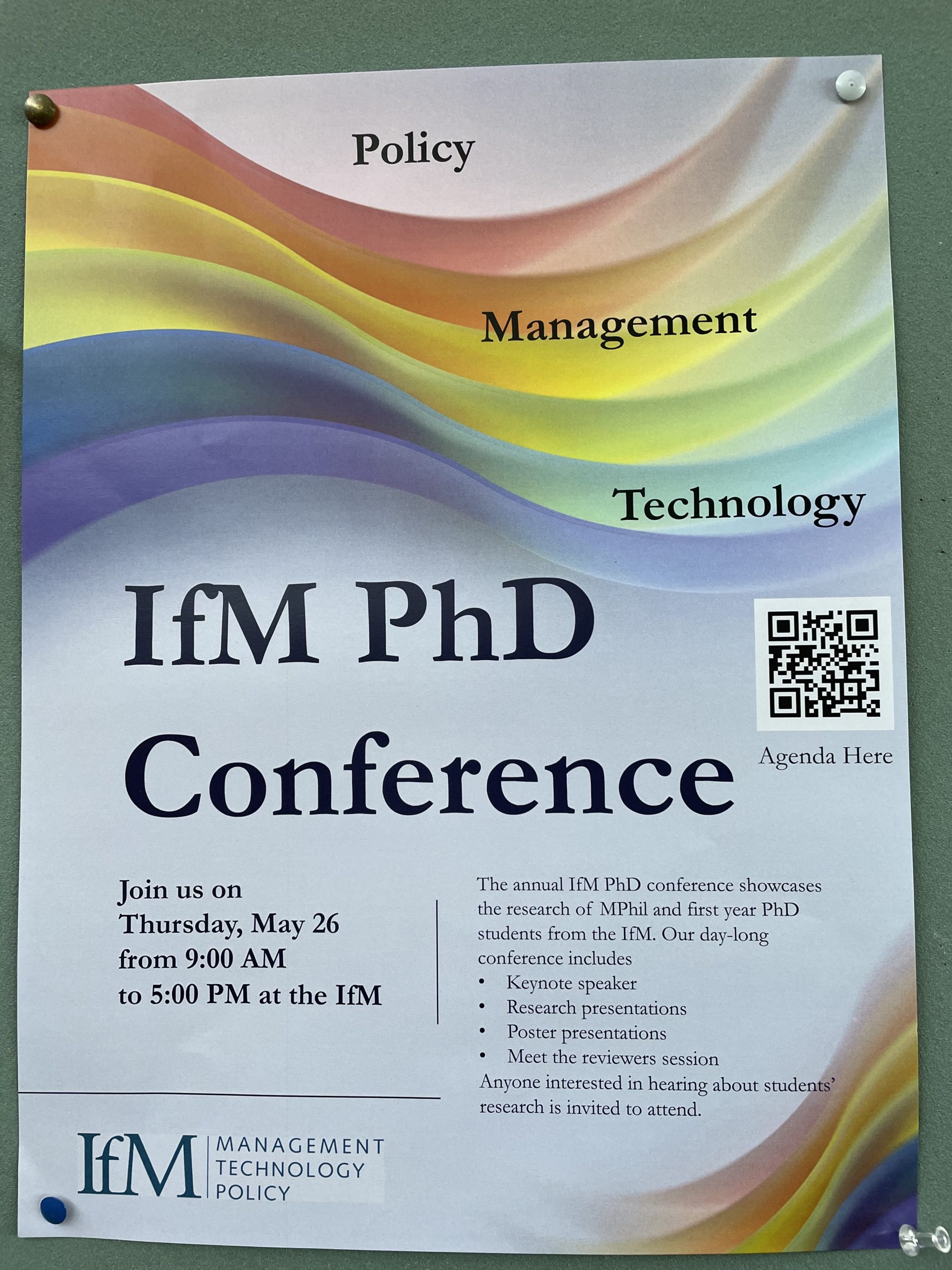
Flyer to advertise the conference (Picture taken by C.Leeb).
Of course, the organisation of the event started well before the conference. There are many things that need to get sorted beforehand. The first ones that we found most relevant are: (i) How much budget is there? This will determine many aspects, such as what kind of food you can provide. (ii) Where is it going to take place? Often, another crucial thing is the venue – in our case we were lucky, as we could use the seminar rooms at the IfM. (iii) When is it going to be? The question of the date needs to be settled early on as well – again, this had been decided for us.
Knowing about it – advertisement & contacting people
Another important thing is that people know about the event. For us, that meant contacting the other 1st year PhDs and informing them about the deliverables. Further, we wanted other members from IfM to join. We made sure that the conference was advertised through different channels: (i) our weekly IfM-news mail starting 1 month before the event (ii) The monthly newsletter for the month April and May and (iii) posters that we put up across the building a few days before the event (see picture).
Of course, we also had to contact many other people, which is related to the next point – our agenda.
Putting together the agenda
We started the day off with introduction words by the head of IfM followed by a keynote speaker. Finding a keynote speaker turned out to be difficult – because the one we had planned canceled close to the event! From this we learnt that it is very helpful to know people who are well connected and can find another keynote speaker on short notice, luckily, one of the supporting senior researchers could help us.
Another aspect to coordinate was the talks: due to the high number of PhD students we ran two tracks in parallel, in blocks of 3-5 students with breaks between blocks. We decided that it would be best to have people in each block that could make sure that it ran smoothly. Therefore, we appointed 2 PhD students in each block (in which they were not presenting): one was responsible for time keeping (i.e., 2 and 1 min. warnings) and a second one to chair the sessions (i.e., coordinating the Q&A and asking questions, putting up the slides). It really paid of to have these special roles – everybody that got assigned a special role (i.e., timekeeper & chairing) did a wonderful job – so the talk tracks ran smoothly without any trouble!
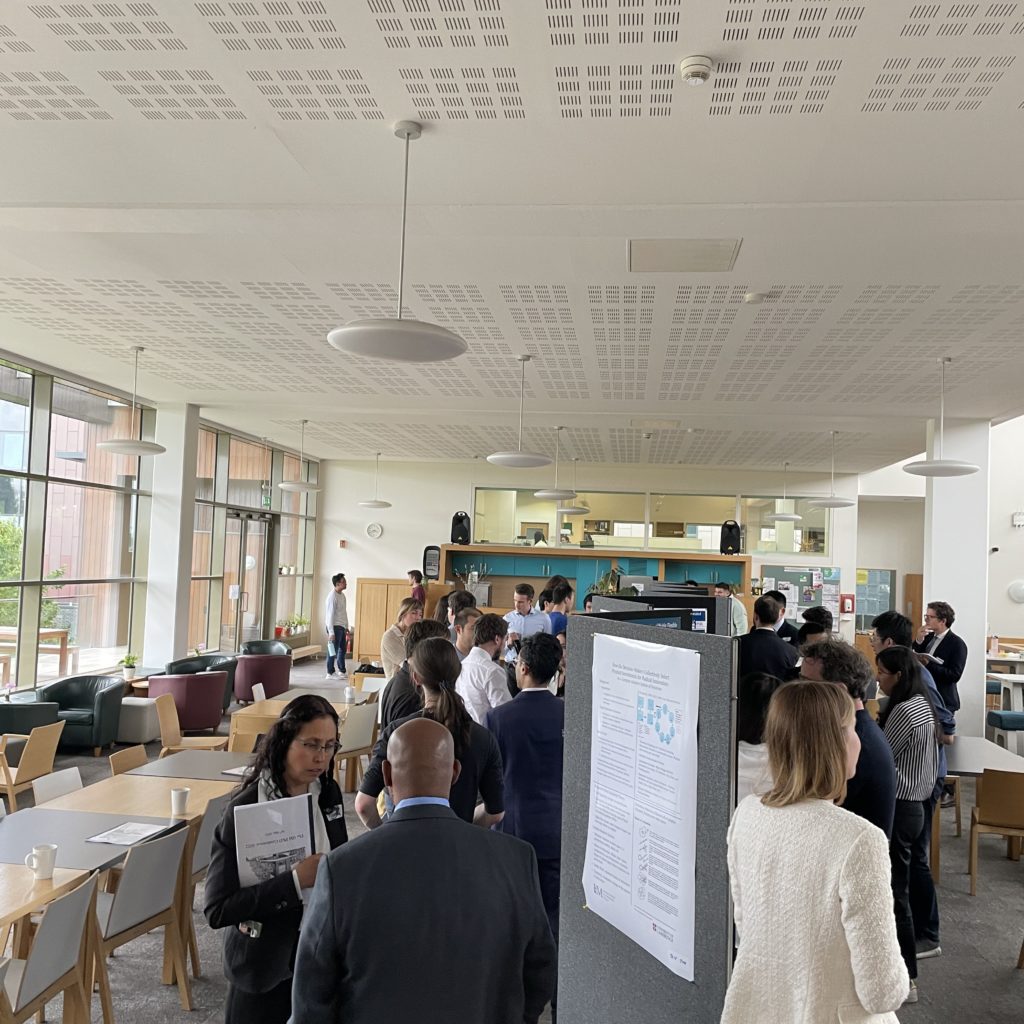
In the afternoon we had a poster session (see picture), during which students were standing next to their poster and others could walk around to ask questions. Here my learning is: putting up the posters can be tricky – in total we needed 4-6 people to put up the posters, because it requires a lot of force to punch the thumbtacks in the unstable boards (at least in our case) – thanks for our friends who helped us out!
The poster session (Picture taken by C.Leeb).
Another successful aspect of our conference was the best talk & poster competition we organised. We put together a jury of senior researchers, which we divided between the tracks. In the end, we had one best talk per track and 3 best posters. The competition worked really well – I think the fact that we had a clear scoring scheme and that we picked jury members from different research areas helped.
Before we had closing remarks from the two senior researchers that supported us, we decided that we would put together a “Meet the reviewers”-panel with three senior researchers from our institute. They came from different areas and shared their experiences in the publication process. The insights were extremely insightful– as PhDs we got a lot of useful tips for our careers!
Submissions
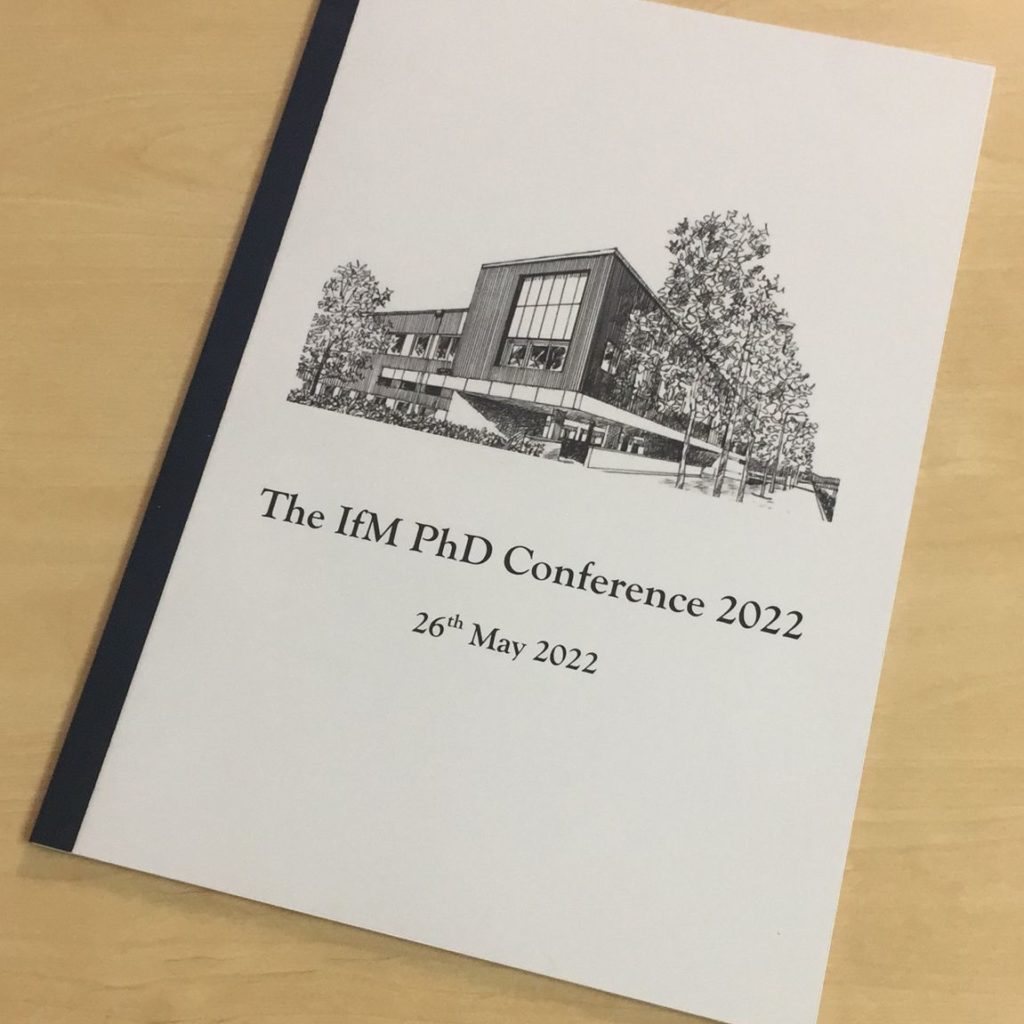
One of my main tasks was putting together a booklet of all the abstracts students submitted (see picture). This was a lot of work, despite having set a quite early deadline that every student followed (!). Mostly, I had to ask people to resend their submissions and follow the template we had provided beforehand. So my recommendation: ALWAYS provide a template that people need to follow (it makes your life much easier and also everything looks nicer) – and make it as detailed as you can, I realised a few things I had not specified only after it was too late. But the product looks really nice and the booklet was also a great take-home gift for everybody. Another perk of it: we included the agenda in the booklet – so everybody had it with them throughout the day and knew where to be when.
Booklet with abstracts (Picture taken by C.Leeb).
Some final learnings
My learnings from organising this one-day event are summarised here, some of which I learned the hard way through extra work:
Try to think of all the details! Try to picture the day and run through the agenda/day – this will help you think of (tiny) aspects!
E.g.,: who is registering the participants? Do you have lunch, will there be coffee breaks? If yes – where and with snacks or not? Is everything printed in time? Do the participants know when to be where? How can they get this information during the day? When are you putting up posters and how are you fixing them? Etc.
Try to plan/setup as much as you can before the event starts! Also, try to delegate tasks that are needed on the day of the event to other people – you will be busy with little (unexpected) things anyways!
Bring extra laser-pointers/clickers! One of ours died in the middle of the second talk, and it was really good that I had a spare one with me.
The more detailed information you give the better – it saves you time in the end! More concrete information means (typically) fewer questions/less editing.
E.g.,: giving clear instructions to people who are taking up roles (e.g., timekeepers, chairing a session), giving clear instructions on how to format documents (e.g., abstracts).
What really safes you is good team communication and team work!
Best is to divide tasks between the team members, making it very clear who is responsible for what – here it is crucial that you are able to rely on your team members (or know what aspects you might have to have a watchful eye on).
It is an amazing opportunity to connect with many people!
E.g., other PhDs, researchers across areas, senior researchers, etc.
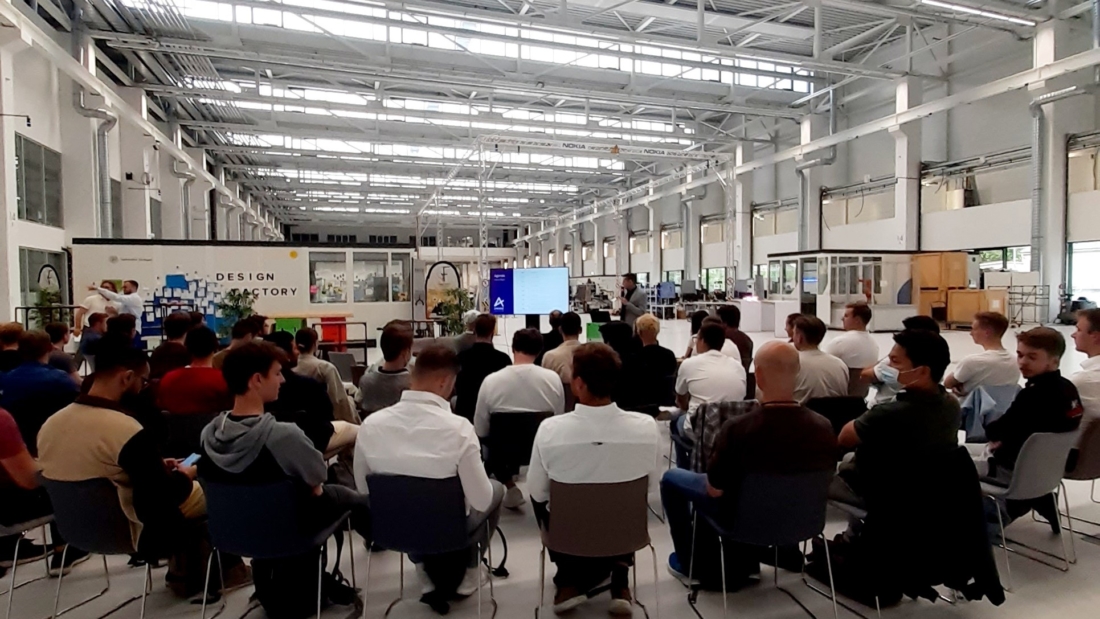
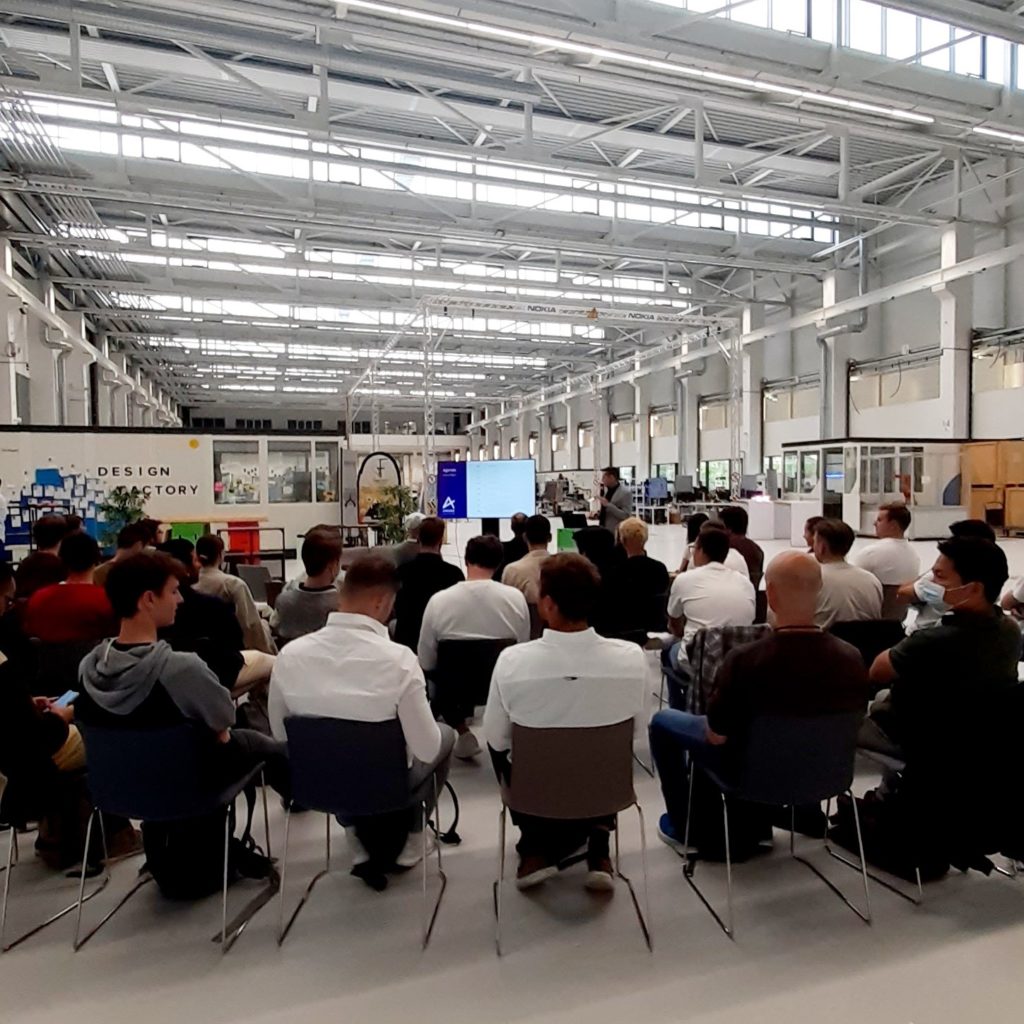
The “Demo Night”. During this final event the students presented their ideas. Picture by ENI.
This semester I experienced teaching from a perspective different from what I was used to. For the first time I was in charge of coordinating, teaching and organizing a course for students at our university (Stuttgart University).
Though I already had some experience assisting, it became apparent that there is more to consider than I anticipated. Ironically, the greatest challenge was to adapt to the possibility of finally meeting in person again. Over the last years, we struggled to adjust to the new circumstances of online teaching and limited physical meetings. It turns out that going back can be equally challenging: Zoom calls are much easier to organize than to book and prepare rooms, as well as making sure enough physical whiteboards, post-its and markers are available. Admittedly, the course “AWAKE” which I taught is a highly interactive course since its main goal is to motivate students to engage in entrepreneurial activities. Hence it requires more interactive elements than a normal lecture. Nevertheless, I learned that in addition to giving input, organizing a lecture requires serious administrative efforts to ensure a flawless course.
Furthermore, I can conclude that maybe communicating with students isn’t as easy as I thought it was. Many mails I received from the students reminded me of mails I wrote to my professors. Turns out you can try to do better and yet make the same small mistakes. Let’s see whether we can learn from those mistakes and reduce the questions in the next semester.
You are probably wondering why a first-year PhD student is already talking about how to get published. Even though my natural thought has always been to think about publishing after actually having written something, I have attended a course on How To Get Published taught by Prof. Dries Faems which has shown me otherwise.
As PhD students, and Early-Stage Researchers at EINST4INE, we should be able to recognize and apply the basic structure of an academic text, which includes an abstract, an introduction, a literature review, a method section, and a conclusion (at the least). This might differ according to the nature of our research, different journals might have different requirements – but the truth is that the academic world is competitive, so you might as well start now.
First, before you fit your paper into a specific journal, ask yourself these questions:
What is your research question?
How is your research question related to the current literature?
How will you use your data to answer your research question?
These are questions that both, author and reader need to be able to answer.
The next step would be to choose a journal.
After having established what kind of paper you are planning to write (conceptual, quantitative/qualitative, positivistic/interpretative), you will probably recognize the community of scholars who are working and have published in your line of study, and thus you can identify which people should read your work, and where they have published.
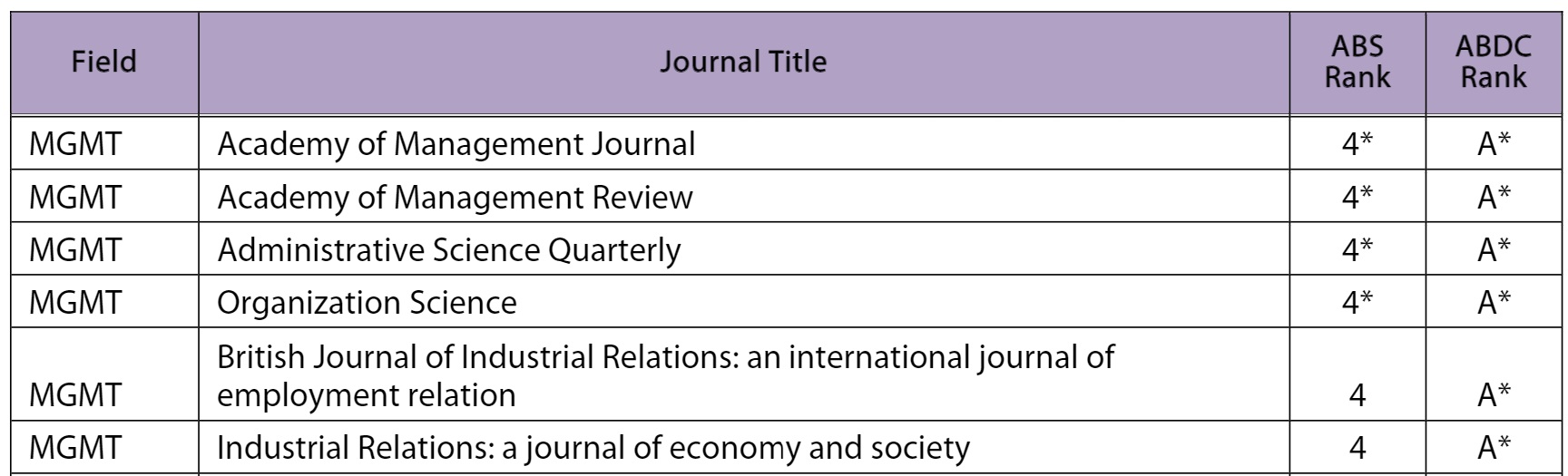
There are a number of websites and services which publish journal rankings according to their impact factor. Here, the impact factor represents the frequency with which an average article in a journal within a given year has been cited. Counting the number of times its articles are mentioned, determines the standing or prominence of a journal.
Example of the ABS ranking for Management (MGMT) journals [Image source: ABS (Association of Business Schools) and ABDC (Australian Business Deans Council)].Being a Management scholar myself, I look at the yearly published ABS list, however other websites might publish similar information, and universities usually also offer guidance on the rank, reputation, and purpose of journals.
Then, another useful step would be to get to know the editors of the journals as well as assess the reputation of these journals in terms of processing time/quality of the feedback that they give (don’t forget to check the Open Access criteria/options). This can be done by contacting people that have had experience with the journal. You might also find that you want to target other journals which are not included in the big journal list but are still very relevant to your field of study. For instance, as a Management scholar, I might focus on the Academy of Management Journal (impact factor 10.2). But with a specialization in ecosystem research, the R&D Management (impact factor 4.3) Journal might also be a great fit.
Once you have made your selection of qualified journals, start writing your paper with the criteria of the journal in mind. This has definitely helped me not only to narrow down the most crucial sources of information for my research but also helped me find a research focus.
… So how do you write a paper that might get accepted?
According to Prof. Faems, there are a number of reasons a paper might get rejected, one of them simply being the reason that the paper does not fit the personality of the journal, emphasizing the need to work towards that target journal. Some other reasons include an absence of a clear theoretical contribution, a lack of novelty, and methodological issues.
Unfortunately, I don’t think there is a specific recipe that mixes a set of ingredients for success. But there are still some basic ingredients that might help:
Clearly position your project against existing research and theories
Formulate a good theoretical contribution
Good data and methodology won’t hurt
The best way to understand how you can embed your project in existing research is to visualize it:
Imagine you are entering a house and you have to choose to enter a room, which goes in line with your research. So, you enter the room of Management research. You try to find a table of people who you understand and where you feel comfortable enough to contribute to the conversation. So, you go sit at the table that talks about, let’s say Open Innovation. So, you’ve already positioned yourself in the Management field, focusing on Open Innovation. At the Open Innovation table, you are trying to recognize the recurrent themes and findings that are being reported and you identify the most important people at this table.
Once you have done that, you might be able to recognize missing links in the current research or you might make new links that you wish to develop in your research.
One challenge that many scholars and reviewers report is the clear positioning in one specific area of research. For instance, while I can identify a particular gap in the Open Innovation literature, I realize that I can address this gap with findings from the Ecosystem literature (for instance), which puts me at two different tables in my Management room. In this case, making links between two literature streams is good, if I make it clear. However, the more links I have, the more delicate it becomes and can confuse some people at my main table.
In terms of the novelty of the paper, reviewers are often looking for interesting ideas that have the potential to impact future research, i.e. a strong contribution. This process seems tricky, as novelty does not necessarily mean interesting. Imagine you have found a research gap in your given field… This doesn’t imply that it’s a novel idea, it might well be an idea that has already been thought of but is not worth researching further. Thus, an editor might reject your paper on the basis of lacking a novel and relevant contribution. This is the reason why having good data doesn’t hurt. While your theoretical part might lack some grounding and novelty (which, for the record, it shouldn’t), having a unique and well-developed dataset that is difficult to access, can become an advantage during the review process.
The theoretical grounding, novelty, and contribution of your research, along with your data (depending on the nature of your research) are the main selling points of your research, which should be communicated at the beginning.
And the best way to communicate it is through the introduction, which is the gateway to a good paper. Indeed, apart from the abstract which swiftly summarizes your research, the introduction is one of the most important written parts of your research. In fact, editors make a first judgment based on the quality of the introduction which should include:
The community you want to talk to
Your research gap
How you address the research gap
Your main findings and contributions
Of course, this does not mean that one should disregard other sections like the discussion section, where you can go more in-depth into discussing the implications of your findings and iterate on the practical and theoretical contribution you wish to make.
Finally submitting it…
Once you think you have managed to position your research in a clear and concise manner, the last step is to get some friendly reviewers (such as fellow researchers, supervisors, etc.) to look over your work before submitting it to your journal of choice.
And then you wait…
You will most probably receive feedback from the editor with reviews from researchers in the same or related field (some that might even be cited in your paper!) who will either have immediately rejected it or might have accepted it with some changes. This return can provide you with a relevant critique on how to improve your paper, and (hopefully) arm you with the tools necessary to survive the next round of reviews and get you published.
I hope I was able to provide a little insight into what I have learned about publishing and how I aim to tackle my research. Of course, there are different ways to conduct research and get published. I have certainly started following my own advice from this post, which was mostly inspired by what I have learned following Prof. Faems’ How to Get Published course.
And who knows, this might even be helpful for becoming a good reviewer or even editor at some point…
Before starting my digital transformation journey and pursuing a PhD, I had developed a strong interest in innovation. For a while, that interest was rather general and did not focus on one specific area. With a background in economic history and teaching, I liked the fact that learning and discovery processes form an important part of innovation.
Sunset at 11pm – Photo: C. Häfliger
Little did I know that a concept called “Open Innovation” existed. Widely known as the father of open innovation, Henry Chesbrough introduced the open innovation concept in the early 2000s. I became very interested in open innovation when I started to read more about innovation and strategy in various specific fields. I was also very fortunate to participate in the first intensive training at Einst4ine project where we dived even deeper into open innovation and the processes it involves. In the training, we were also introduced to current research in the field.
Open innovation refers to a distributed innovation process and can guide strategic decision making. With its focus on knowledge flows across the boundaries of organizations, it offers it offers a new way of thinking, new forms of idea development. There´s a shift away from insular thinking to seeking internal and external input and the inclusion of broader networks.
As an experienced teaching professional in higher education, I can see similarities of the open innovation concept to educational settings, where students are encouraged to approach learning with an open mindset. Similarly, open innovation requires organizations to change and facilitate the adoption of new skills. With consistent support by the organization, and learning of new skills and training, a new mindset can be developed.
Last week, we were fortunate to be able to attend a lecture by Henry Chesbrough at LUT University, when he was awarded for his outstanding achievements in strategy research. In my discussions with colleagues at university, I realized how much inspiration they drew from Henry’s work with open innovation since the early 2000s when his first book was published.
In his lecture, Henry Chesbrough’s presented some new ideas related to open innovation that I find very interesting and highly relevant for my work. Particularly, he presented an extended framework of open innovation- knowledge flows where two new types of flows were added: inside-in, and outside-out. First, inside-in knowledge flows, even though they are technically not covered by open innovation. They address issues like overcoming of internal siloes and between different groups and business units. Second, Henry Chesbrough discussed the outside-out knowledge flows. There, external knowledge is orchestrated across an ecosystem. How this is done is part of what I am trying to find out.
To sum up, as we are living in a constantly changing world, it is crucial in my opinion to teach and practice open innovation, so that we are able to solve the complex problems ahead of us more effectively.
This time I will start by resuming the main highlights of this first semester, before telling you more about my plans for the future. Finally, I will present a brand new column where I intend to share some curious content that caught my attention while surfing the internet.
What have I done?
As I am now 6 months into my PhD, I think I have already had a taste of what a doctorate is all about. I have attended several interesting courses and seminars, submitted my first papers, worked long hours and made calls at unusual times (the West Coast time zone did not help), but I have also had a lot of flexibility and, most importantly, I have started to give my small contribution to share knowledge on the topics that interest me most.
First, I had the chance to give two lectures in a MSc course called “Sustainability in a Business Development Perspective” about “Social entrepreneurship in a digital context” and “The Impact of Sustainability on Today’s Management”, at Aarhus University.
Even though I was very lucky because I could teach two topics of my interest, I have to admit that at the beginning it felt a bit weird to be on the other side of the desk, as you have almost the same age of the students in front of you. But when you have the opportunity to share your experience and knowledge about something you are passionate about, then everything becomes easier and more natural. Moreover, I think this opportunity also helped me in strengthening old relationships and building new ones. First, because I got in contact with some former colleagues of mine at PwC Italy. They helped me to invite a Manager, who gave us an overview on the last developments around Non-financial reporting matters. Secondly, because this topic sparked a discussion with some working students that went beyond the four walls of the classroom and had positive implications on their job.
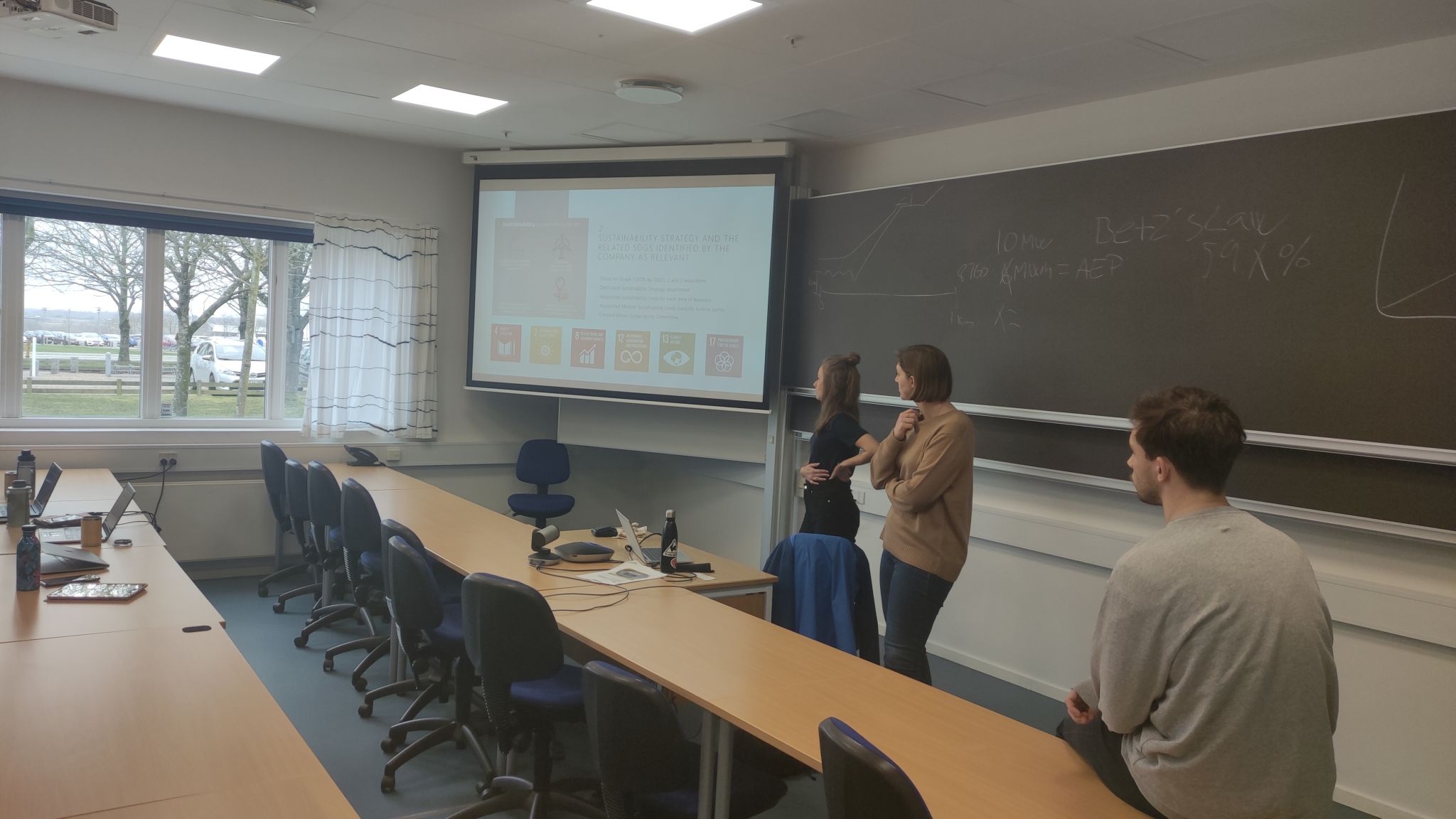
Photo taken by myself, during the “The Impact of Sustainability on Today’s Management” class, Aarhus University
Then, I also virtually participated in my first conference, at NEST. Even though I could not join it in person, it was a nice opportunity to receive feedbacks from other early stage scholars, to get to know their research and see how the topics that I am going to write about are addressed in a rather different yet connected field, i.e. Sustainability Transition.
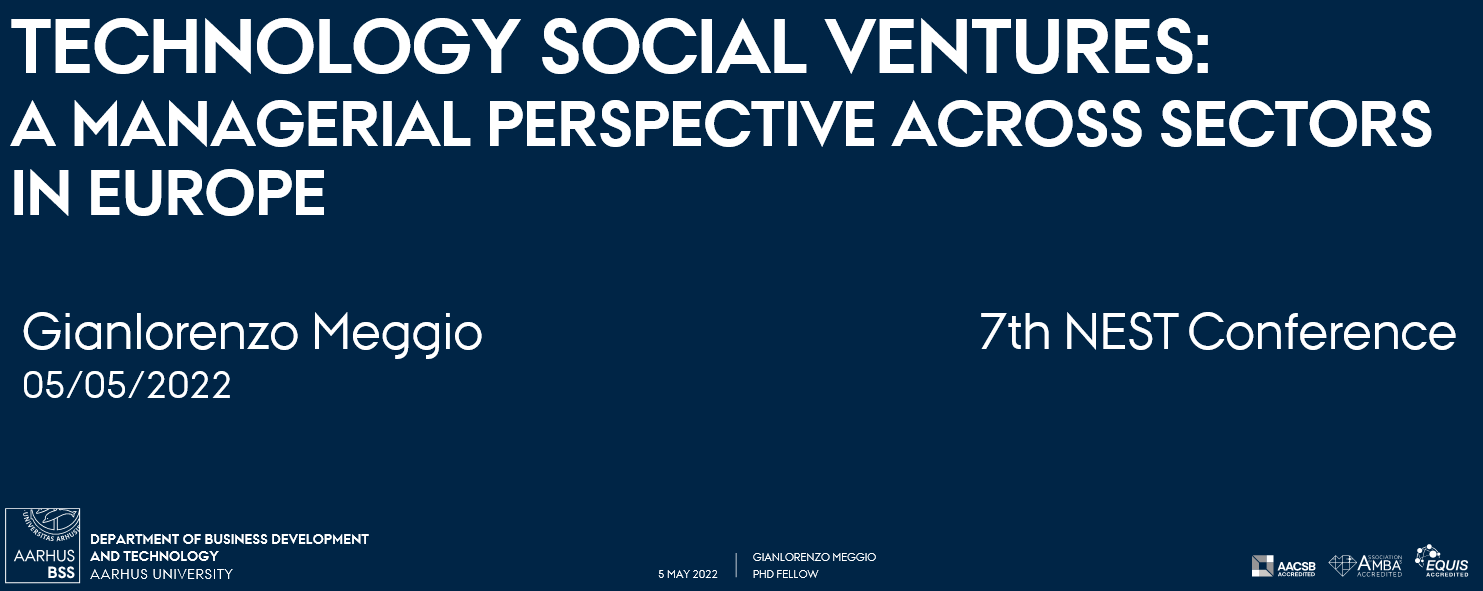
Cover of the PPT presented at the 7th NEST Conference
What will I do?
In this period, I have also received the first responses related to the works I submitted in the previous months. They have all gone well, which means that I will be able to travel a lot in the next few weeks! In June, I will be first in Copenaghen and then in Zurich, respectively to attend ISPIM and EURAM. In these two conferences, I will present my research-in-progress on Innovation Ecosystems and Technology Social Ventures, two of the topics that I want to deepen during my PhD and that I will talk about more in the next blogs. Then, after a couple of weeks I will be flying to Barcelona for the first EINST4INE Summer School – if you are interested, morning sessions will be open (online) to external participants. In that occasion, together with other 3 ESRs, I will run our first Industry engagement activity, i.e., a contest in which the ESRs will have to find a solution for the challenges proposed by the companies part of the consortium. A great chance to put in practice our knowledge and understand the main interests of the industry partners.
Finally, after the Summer Break, I will take part to the 82nd Annual Meeting of the Academy of Management, in Seattle. This year’s theme is “Creating a Better World Together” and I will be involved in the organization of the Paper Development Workshop on “Researching Open Innovation”. Being the most important conference in the field, I cannot hide that I am really excited. It will be a great learning opportunity to personally meet the most talented scholars from all over the world and to better understand how the academic world works overseas. Moreover, it will be the first live event after the pandemic, so I guess that everyone will be very excited.
All this travelling will mean that my writing will be temporarily put on hold, but I hope that these weeks will represent a great source of inspiration for the work that I will do in the upcoming months. Therefore, the main goal will be to get to know new people that work on similar topics and put some gas in the tank in terms of ideas and useful academic references. Looking forward, this could also be a great opportunity to build relationships that could potentially evolve into future collaborations.
Surfin’ Internet
Since the main goal of a PhD is to research, ask new questions (and sometimes give answers), this column aims to collect material that I have found useful or that has piqued my curiosity in recent times.
Video:
The quality of the material shared by the New Scholars Network is absolutely stunning. You can attend webinars hosting the most renowned scholars, interact with them, and even watch most of the recordings whenever you want on their YouTube channel. In addition, it is also a great way to stay up-to-date on the latest articles published in the field of management.
Academic article
In his latest article, J. Kirchherr, researcher at Utrecht University and Associate Partner at McKinsey & Company, writes about the “Bullshit in the Sustainability and Transitions Literature: a Provocation”.
Beside the rant being addressed at one specific topic, it is a good reminder for all researchers writing on a trending topic, regardless of their academic field. That said, there is no doubt that sustainability has become a buzzword and we should all be careful how we use it, unless our goal is to devalue it.
Tweet
In this thread, G. Krlev describes his (almost) endless journey in search of a tenure track position.
It sounds a bit scary, but I think it offers a nice overview over the idiosyncrasies of the academic world and some food for thought about the lessons learnt during this process.
Been on job market for +3 years (ThReE!), and now have a tenure-track Assistant Professor position! Job market is cruel.
Best advice & lessons?–not perseverance pays.
"To be considered seriously for a prof position, in next 2-3 years you need to publish about 20…
The ability to leverage digital technologies is a business imperative. In pursuit of digital business, companies across the globe have dedicated significant resources to pursuing digital innovation and new digital business creation. Yet, industry and academic research consistently report a high failure rate.
Intrigued, I decided to explore what is known about the high failure rates of digital transformation initiatives, especially regarding the human and organisational factors that might contribute to the issue.
Given the attention the topic has received in the business and management media, on this post, I investigate what the industry literature has to say about the topic (on my next post, I will look at what academia has to say. So come back if you want to get hear from the other side).
For this investigation, I focussed on the outlets with most influence. Thus, I selected reports of research conducted by leading global consulting firms. Reports and articles on the topic were found for Bain & Company, Boston Consulting Group, and McKinsey & Company. In addition, a sample of articles were sourced from three actors with significant influence among practitioners: Forbes, MIT Sloan Management Review and Harvard Business Review.
Defining Success or Failure
According to the articles and reports analysed, success range from 5 to 30 percent. Flipping the coin, that means a 95 to 70 percent failure rate. However, the way success and failure is defined vary greatly from one source to the other. I found that while some focus on the success of the overall digital transformation over time, others counted each individual project developed as part of a digital transformation journey. In both cases, however, industry actors asked executives and senior managers to report to what extent their initiatives had succeeded.
My own thoughts were that more consensus is clearly needed on how to define and measure success and failure. Let´s hope that we can get more insights on this from the academic literature.
Table 1. Reported success and failure rates: Sample Bain & Company, BCG and McKinsey & Company
Source
What is measured
Achieved or Succeeded
Partial Results
Failed
Bain & Company
(2017)
Success of digital transformation initiatives
5% Achieved or exceeded expectations
75% Settled for dilution of value and mediocre performance
20% Failed to deliver, producing less than 50% of the expected results
BCG (2020)
Success of digital transformation projects
30% met or succeeded their targets and resulted in sustainable change
44% created some value but did not meet their targets and resulted in only limited long-term change
26% created limited value (less than 50% of the target), producing no sustainable change
McKinsey & Company (2018)
Success of overall digital transformation
16 % have successfully improved performance and also equipped them to sustain changes in the long term.
7 % performance improved but improvements were not sustained.
77% performance did not improve*
* Implied, but not stated
Key Success Factors
Although the industry literature all start by highlighting the high failure rate, the bulk of the attention has been on the key success factors based on what leading organisations have done right. The most systematic or semi-scientific industry research has been along these lines. So, what do they say?
First, my assumption was right, industry literature state that people and organisational factors are much more determinant to success than technological elements (Baculard et al., 2017; BCG, 2020; McKinsey, 2018). Successful companies tend to focus on and invest heavily in the fundamental changes to their ways-of-working and culture that enable them to develop digital innovation initiatives rapidly and execute them at scale. That means that companies that succeed focus on developing human and organisational elements along with investing in technology.
Next, there are numerous commonalities regarding the factors cited as key for success in digital transformation. In general, these are:
Clear digital transformation vision, strategy and roadmap, with aligned goals, metrics and monitoring tools
Strong engagement of leadership and middle-management, with aligned ownership and accountability
Development of talent within the organisation and engagement of key employees in developing and executing digital transformation
Adoption of new ways of work, especially lean and agile, and enabling innovation
Building foundational digital technologies guided by business needs
Interestingly (but not surprisingly given that the targeted audience tends to be executives), industry literature LOVES to talk about top leadership. The key success factors related to leadership tend to focus on strong involvement in design and implementation, alignment among leadership groups, encouraging and empowering employees to adopt new ways of work and innovate, communicating effectively and creating a sense of urgency, effectively monitoring initiatives, and having incentives attached to digital transformation. So, nothing new here…
Looking at the reasons why digital transformation fails, however, these success-focussed industry literature tends to equate the cause of failure to organisations not doing what successful organisations have done, or not doing it sufficiently (BCG, 2020) – that is to say, if organisations had done exactly what successful organisations did, they most likely would have succeeded.
In my view, however, this is overly simplistic as it does not investigate the specificities for why organisations have not succeeded in doing what others have done. It might often be the case that they have, indeed, tried to do exactly the same – it might not be a case of not knowing what should be done. In these cases, saying they have not done what others have done equate to saying “they failed because they could not succeed.”.
Key Failure Factors
While there are a few industry studies systematically listing the success factors of digital transformation, industry literature truly discussing failure factors tend to be more dispersed across multiple news articles, reports and case studies.
A common practice is to list reasons why companies fail based on personal experiences, anecdotical information or “previous studies” and tend to focus on well-known challenges and barriers to digital transformation.
These include:
Not understanding digital transformation
Placing technology at the centre of digital transformation, instead of approaching it as a business transformation
Mistaking digitization, converting digital products or processes to a digital form, for digitalization, making the most out of opportunities of digital products and processes
Miscalculating efforts
Overestimating benefits and underestimating costs, especially by senior management
Underestimating the amount of legacy applications that need to be digitally transformed
Lack of understanding that “it is going to be hard” and commitment despite the challenges
Not doing implementation well
Working with poor onboarding and implementation processes for digital transformation projects and initiatives
Misaligned goals and stakeholders (across levels, teams, business units, partners, etc.) and lack of coordination
Issues at the project level
Poor user-market-solution fit of digital innovations, low focus on customer value, or lack of alignment to company’s strategy and strengths
Miss-alignment between digital capabilities supporting pilot and capabilities for supporting scale
Issues with employees
Employees’ resistance to change and fear of losing their jobs
Not having the proper skills, technical, business and innovation
Issues with culture
Fear of failure
Not being willing to spend time changing behaviours and how people make decisions (culture change).
Worth highlighting…
Digital Transformation is crazy hard
Digital transformation is significantly harder than conventional transformation (Baculard et al. 2017, p.1) and thus traditional change management best practices might not be sufficient or adequate to deal with the challenges at hand.
Part of the challenge is the need to manage an increasingly multi-faceted and diffused set of organisational transformations, while trying to create new digital businesses aligned to the needs of customers and the readiness of markets, and while also maintaining a healthy high-performing core business.
Another part of this challenge would be a consequence of digital technologies. Even if traditional companies are used to innovating in the product development realm, few are adept in deploying digital technologies to solve problems and boost performance across the organisation (Baculard et al. 2017, p.2).
Initiatives do happen, they just don’t scale
Most of digital transformation initiatives stall at scaling phase. Image source: Radix Blog
Another element worth highlighting is that companies embarking on digital transformation tend to struggle to translate prototypes or pilots into products and capabilities that can have a meaningful impact on the company’s performance (Sutcliff, 2018).
While there is a proliferation of initiatives, they tend to plateau somewhere short of broad organizational impact. Indeed, a recent McKinsey & Company survey found that most (38%) of digital transformation initiatives stall at scaling phase (McKinsey, 2020). This has given placed to the expression “stalled in pilot purgatory” (Denning, 2021).
Most common indicated reasons for this include resourcing issues, misaligned culture and ways of working, lack of skills and competencies to bring these initiatives further (Sutcliff, 2018), lack of internal alignment and commitment, and lack of a well-integrated and communicated strategy and aligned initiatives (McKinsey, 2020). Also, noteworthy, the disconnect between those in charge of pilot initiatives and those in charge of operations (and thus potential scaling) has also been highlighted by industry literature (McKinsey, 2020). This happens even in the case of organisations that have built internal digital innovation units to pursue ambidexterity (Baculard et al., 2017), but without a clear indication of how to best concretely build this integration. This ends up creating “two-speed” organizations that are responsive in limited respects but still held back by legacy systems (Baculard et al. 2017, p.2).
The hidden leadership issues
Interestingly, some articles have started scraping the surface of potentially hidden leadership elements that might play an important role in digital transformation implementation. For instance, Baculard et al. (2017), writing for Bain & Company, hints to scepticism of managers as an element, suggesting that despite survey data reporting that digital investment is a top priority of management, anecdotal evidence suggests that many executives are sceptical that they can translate the buzz around digital into meaningful improvements in performance. This scepticism, in turn, could lead them to make day-to-day decisions that, paradoxically, deprioritises digital innovation and digital transformation.
As another example, Bughin et al. (2018), writing for McKinsey & Company, hint towards the misalignment between management’s “intuition” – developed though years of formal education and practical experience based on traditional economic, strategic and operating models – and the new logic of a reality shaped by digital technologies. Denning, S. (2021) also talks about an “efficiency-driven” (decrease costs and maximize profits) mindset that does not fit the need for constant investment in skills and innovation of the digital reality. Managers have built their career on top of such intuition and are likely to make day-to-day decisions accordingly – even subconsciously and while understanding well the so called imperatives of successful digital transformation. Furthermore, this traditional intuition might clash with the requirements of digital transformation and digital innovation, leading to the emergence or exacerbation of tensions and paradoxes and the aggravation of challenges and complexities.
On the other hand, Sutcliff et al. (2018), in an article published by the Harvard Business Review, talk about the allure of a new exciting digital business model causing executives to not pay enough attention to the issues of the core business, especially when things are not going well for the existing business lines. In short, the illusion that a new tech-based digital business will solve all the companies problems without the need to deal with the rest.
So, what next?
In general, industry research indicates a clear need for academic investigation of digital transformation to gain a deeper understating of the challenges and potentially hidden complexities of digital transformation, including by moving beyond the focus on top leadership teams.
In particular, understanding of the challenges and complexities that drive failure in digital transformation is anecdotal at best. This is very little regarding the concreate challenges and complexities that managers can expect to experience on a daily-basis. In this regard, as Denning S. (2021) puts in a recent Forbes article, senior executives are frustrated by the slow pace and limited return on investment of their digital transformations, and are (still) unsure what is holding them back.
So next, let´s see how much better academic research is…
Some RMIT University engineers have recently discovered sunscreen for roads starting from recycled rubber. The experiment was developed by Professor Giustozzi, together with his research team, at RMIT University, that is one of the few universities in Australia to have a UV machine for asphalt studies. The equipment of the university labs allowed to replicate the long-term effect of sun degradation on bitumen using varying concentrations of crumb rubber, ranging from 7.5 percent to 15 percent to 22.5 percent. The researchers examined the changes in bitumen’s chemical and mechanical properties after a month and a half of continuous exposure to the UV machine – comparable to nearly a year of UV radiation in Melbourne.
The Australian government is currently spending millions of dollars on annual road maintenance; according to the National Transport Commission, these costs piled to $2.9 billion in 2019/2020. Therefore, this innovative product has the potential to reduce expenses for road maintenance, leading to considerable economic benefits. Together with that, this solution is also highly sustainable; used tyres in Australia cannot be exported, making new methods for recycling, and reprocessing them locally increasingly important.
Sustainability now represents a central concern for global institutions and actors, belonging to different levels, including governmental institutions, international organizations, enterprises, stakeholders, and individuals as consumers. These innovative solutions thus represent a first turning point to progressively achieve sustainable goals, including those promoted by the UN in the 2030 agenda (i.e., SDGs). Within this context, circular economy (CE) is a suitable model to address and frame these goals in an efficient way.
“CE represents a new concept of more sustainable development, since it aims to increase the efficiency of resource use in order to achieve economic, environmental and societal development by balancing and taking into consideration economic, environmental, technological and social factor” (Del Giudice et al., 2021).
In line with that, according to the Triple Bottom Line (TBL), the economic, environmental, and social pillars of sustainability are highly interconnected and interdependent (Montiel, 2008), thus getting benefits in one dimension also has implications for the other pillars of the TBL.
Within this framework, innovative solutions can help us to achieve sustainable goals. The idea promoted by Professor Giustozzi’s research team is a pivotal example of how innovation can be framed according to sustainable values, thus serving society and its needs. Research insights can be valuable starting points to address great human challenges and progressively uncover ways to solve them.
Del Giudice, M., Chierici, R., Mazzucchelli, A. and Fiano, F. (2021), “Supply chain management in the era of circular economy: the moderating effect of big data”, The International Journal of Logistics Management, Vol. 32 No. 2, pp. 337-356.
Jamal, M., Lanotte, M. & Giustozzi, F., 2022. Exposure of crumb rubber modified bitumen to UV radiation: A waste-based sunscreen for roads. Journal of Cleaner Production, 348, p.131372.
Montiel, I., 2008. Corporate Social Responsibility and Corporate Sustainability. Organization & Environment, 21(3), pp.245-269.
For the past month and a half, I have been collecting data for my first research project about robotics and meaningful work. Collecting data means gathering information, in my case, by conducting interviews, observing in a real setting, and reading internal communication files. I really like the experience because it is a process of constant learning, where I get to interact with people and obtain new insights that take me to new concepts and understandings.
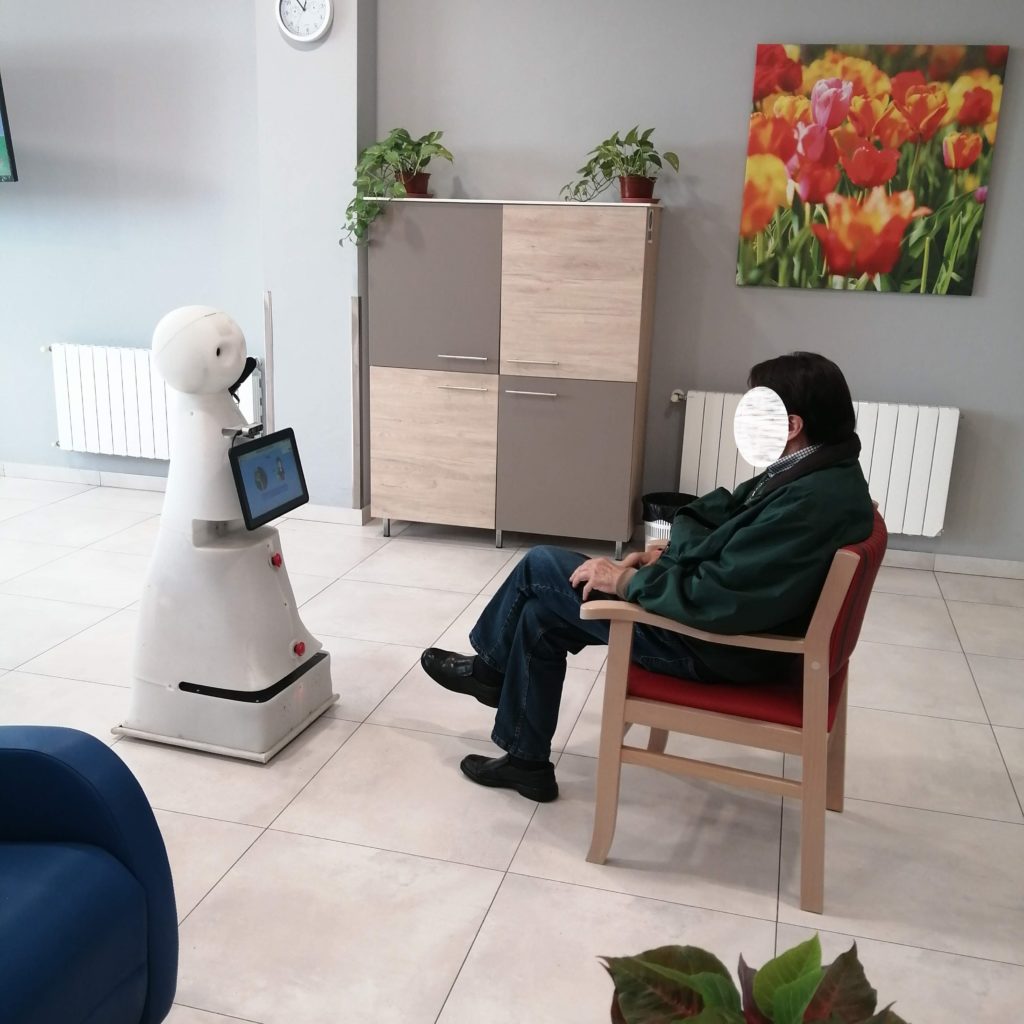
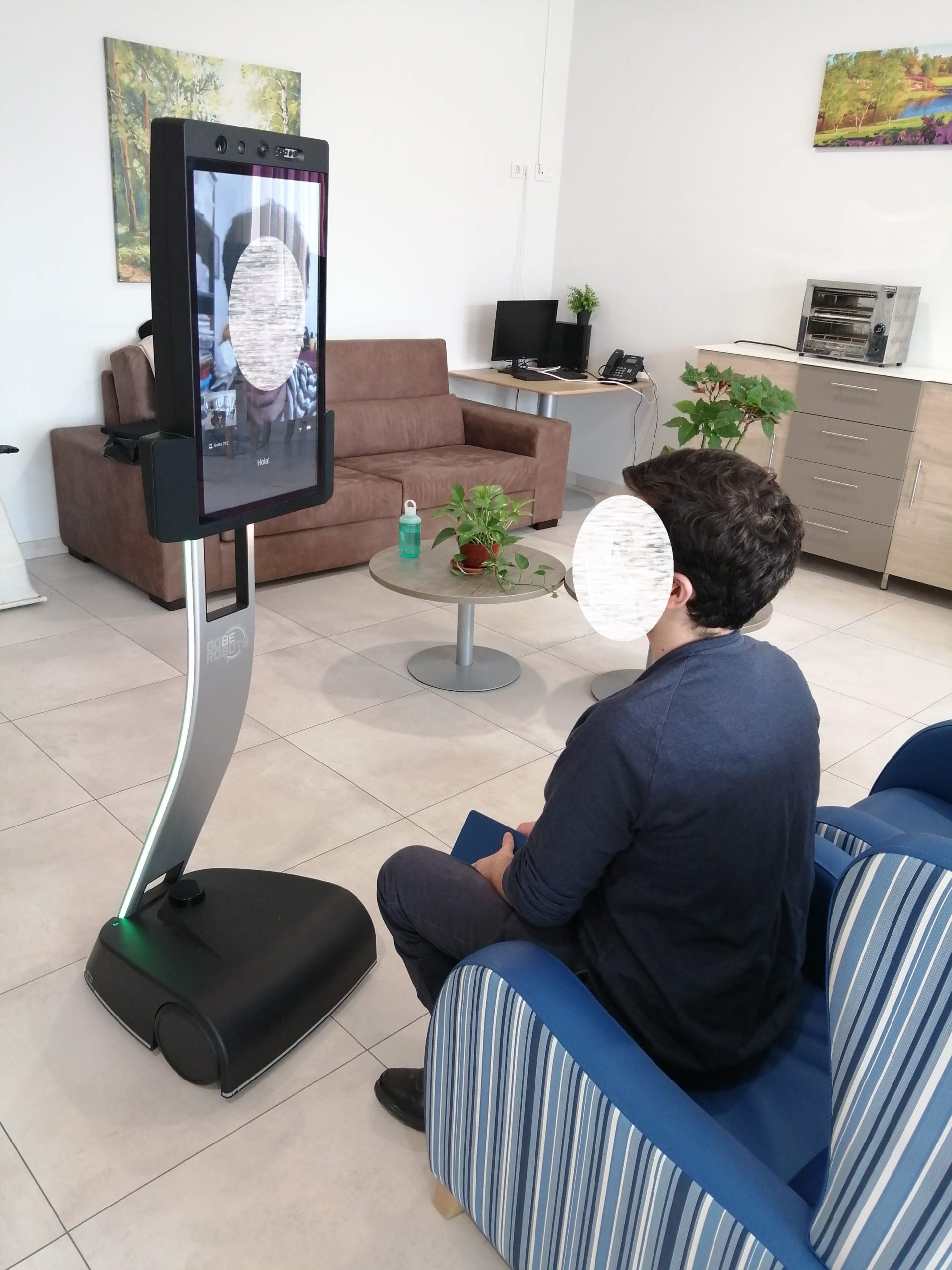
The data collection took place at a nursing home in Málaga, Spain. It was very interesting to interview the staff and observe the dynamics of the nursing home called Vitalia Teatinos, where there are a couple of mobile telepresence robots being tested (GoBe and CLARC, I will tell you more about them). Vitalia Teatinos is a nursing home that centers its attention on the residents’ personal needs and quality of life. That is why they are looking into novel technologies that allow them to improve residents’ well-being and connect them to their loved ones in new and effective ways.
I was able to collect data there thanks to Blue Ocean Robotics, EINST4INE’s industry partner, and thanks to the University of Málaga and the Andalusian Health Service, who are working together on a project called SUSTAIN. In the past, the University of Málaga has been testing CLARC, a robot with a humanoid form that has a touch screen at the torso, a shotgun microphone, speakers, and a webcam that is able to perform autonomously routinely geriatric tests and thus leaving clinicians with more time for doing other tasks that seem more meaningful for their work purpose. Nowadays, CLARC is being tested to help residents video call their family members, which is a need that intensified during the COVID-19 lockdown, where the staff had to organize video calls for around 100 residents and their families. This situation was a turning point to finding technology that helps to overcome loneliness in isolation times.
Resident video calling with CLARC. Picture taken by the author.
The other robot, GoBe, is a technology developed by Blue Ocean Robotics that has proven to be effective in facilitating telepresence. Its video calling features to facilitate doctor-patient and patient-family interaction is a breakthrough innovation that needs to be tested in healthcare settings to understand how safe and effective it can be. That is the main objective of SUSTAIN project: to evaluate the effectiveness of this technology to make video calls safely and also evaluate the medical, patient, resident, and family satisfaction of such interactions. Mobile telepresence robots are not new on the market, but they have not been tested in the healthcare sector with an emphasis on the potential to assist in crises such as the COVID-19 pandemic.
Videocall test with GoBe. Picture taken by the author.
It has been a great experience for the academic research opportunities and, of course, for the place and the people. Málaga is a very vibrant city with amazing food and friendly people. The Málagueños are very welcoming and will try to do anything so that you feel comfortable. It is also a student city with multiple faculties and a General Library, where I go to transcribe and code the interviews.
General Library from de University of Málaga. Picture taken by the author.
I am looking forward to continuing writing for this project. Having empirical studies in real settings is a great opportunity, and even more relevant in the field of robotics, where the majority of studies are in labs. It is true that there is a need to focus more on the effect of implementing robots in organizations from an employee perspective. It was an opportunity that I am very grateful for!
Artificial intelligence, or short AI – we all have heard this term and probably we also use it now and then. It is one of the current buzz words. But what do we actually mean when we speak of AI?
Definitions
There are many definitions of artificial intelligence floating around. Some define it through the machine aspect and (human) intelligence:
“Artificial Intelligence (AI) may be defined as the branch of computer science that is concerned with the automation of intelligent behaviour.” (Luger, 2009, p.1).
or:
“Artificial intelligence (AI) represents a highly capable and complex technology that aims to simulate human intelligence.” (Glikson & Woolley, 2020, p.627)
Others through the machine aspect and its abilities:
“An AI system is a machine-based system that is capable of influencing the environment by producing recommendations, predictions or other outcomes for a given set of objectives.” (OECD, 2022, p.23).
Some avoid using difficult terms and define it reversely:
“[Artificial Intelligence is] the collection of problems and methodologies studied by artificial intelligence researchers.” (Luger, 2009, p.2).
And again, others as a process:
“[…] we conceive of AI as a process, rather than a phenomenon in itself. We define AI as the frontier of computational advancements that references human intelligence in addressing ever more complex decision-making problems. In short, AI is whatever we are doing next in computing.” (Berente et al., 2021, p.1435).
The tricky word
Why are there so many different definitions for AI? Well, artificial intelligence is a tricky word. Maybe most of us can agree on the definition of artificial: something that does not occur naturally, something that is human made. But what about the term intelligence? When is somebody, or something intelligent? Is it the IQ, how good they are at calculating, how well they can judge other people’s emotional states? What are the criteria for intelligence?
And then: is artificial intelligence in its core the same as human intelligence? (If you thought: well, of course! Then just another aspect: what about creativity? Or self-awareness? Is this part of intelligence?) Can we use the same criteria to judge AI and human intelligence?
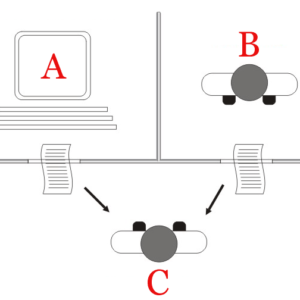
A famous test for judging the intelligence of AI is the Turing Test, originally called the Imitation Game. As the name hints, it was invented by famous Alan Turing and is a (theoretical) test in which a machine needs to perform a task (e.g., answer questions). The original name also hints at the idea behind the test: Based on the output of the machine (e.g., an answer to a question) a human needs to judge whether they are interacting with a machine or another human being. If the machine manages to pass as a human, the AI has passed the Turing Test and is considered intelligent (Luger, 2009).
You can see that the Turing Test has a quite specific definition of intelligence – if a machine appears to be human.
Narrow vs. general AI
But is this really what we mean with intelligence? What about a machine that is able to compute extremely fast and to give you an answer to a problem in less than a second, while a human needs days, if not years to solve it – is this machine not intelligent? Most would say it is very intelligent, as it outperforms a human! On the other hand – ask this same machine to perform the task of distinguishing a person crying from laughter and another person crying from sadness. It will fail in giving you the correct answer. Now we would say it is not intelligent at all. And this is because machines are only intelligent in a narrow field.
One speaks of narrow/weak vs. general/strong AI (Glikson & Woolley, 2020). Narrow/weak AI can perform specific tasks, for example, face recognition. General AI refers to a machine that is super-intelligent in “all” aspects. Strong AI is usually what is envisioned in dystopian futuristic books and movies (e.g., 2001 Space Odyssey or the robots in the Alien movies).
However, it is important to note down that we are far away from general AI.
Some think there are aspects of human intelligence that we will never be able to implement or that we do not need/want general AI, others believe that it is just a question of time until we reach strong AI.
AI encompasses a variety of intelligent systems with many different algorithms. Some follow rational programmed rules, some are agent-based and situated (Luger, 2009). Some of them come with a body, like robots. Boston Dynamics are an impressive example of smart robots (see the picture of their dog Spot) already in use or co-bots on shop floors or mobile telepresence robots in hospitals (this is what Alejandra is looking at!). On the other side are bodyless intelligent systems. AI encompasses a variety of these, a subpart being machine learning (ML). Note that often Machine Learning is what people refer to when they talk about AI.
We speak of machine learning if the machine learns by itself without somebody explicitly programming a set of rules it needs to follow. The system manages to learn from the given inputs. Machine learning itself is again a huge field and can be divided into different approaches (e.g., unsupervised learning, supervised learning, reinforcement learning – I can recommend Daugherty & Wilson’s book: Human + Machine for more details (Daugherty & Wilson, 2018)).
Some concrete examples of AI that you have probably encountered already: Apple’s Siri, Amazon’s Alexa, GoogleMaps, Instagram/Facebook sorting your feed and giving you suggestions, Amazon suggesting related products, or Netflix recommending what to watch next.
So you see – already knowing what AI is can be difficult! Maybe next time you read or hear the word AI you will take a minute to think about the use of the word in the context and figure out what kind of AI they mean. 🙂
P.S.: Credits for the featured image to Alina Constantin / Better Images of AI / Handmade A.I / CC-BY 4.0.
Bibliography
Berente, N., Gu, B., Recker, J., & Santhanam, R. (2021). Managing Artificial Intelligence. MIS Quarterly, 45(3), 1433–1450. https://doi.org/10.25300/MISQ/2021/16274
Daugherty, P. R., & Wilson, H. J. (2018). Human + Machine: Reimagining Work in the Age of AI (1st ed.). Harvard Business Review Press.
Glikson, E., & Woolley, A. W. (2020). Human trust in artificial intelligence: Review of empirical research. Academy of Management Annals, 14(2), 627–660. https://doi.org/10.5465/annals.2018.0057
Luger, G. F. (2009). Artificial intelligence: structures and strategies for complex problem solving (6th ed.). Pearson Education.
OECD. (2022). OECD Framework for the Classification of AI Systems. OECD Digital Economy Papers, 323(February). https://doi.org/https://doi.org/10.1787/cb6d9eca-en
“An investment in knowledge pays the best interest.” – Benjamin Franklin
It would seem that doing a PhD follows a path. A clear path that follows motivation, passion, and ambition. A direction from A to Z. But what really doing a PhD is about is uncertainty, breakthrough, and willpower. You find yourself on a path when you are being pushed onto the next one, again and again. While that sounds taxing and unnerving, it can also be very fulfilling.
Day to day I keep adding keywords onto my list. I read and continue exploring. Like Sherlock Holmes I discover and rediscover. Robo-advisors, the main subject of my research project, are so much more than an investment tool. Robo-advisors are here to stay. Are they going to revolutionize the finance industry? Maybe. Looking at my generation, the changes in societal values, the economic landscape—so much has changed in the last decade.
Money is a Mood
While the world has become so dynamic and noisy money is somewhat silent. While it guides everything we do for ourselves and each other, everything we can afford and live, money is like the motor in the background that keeps everything moving. When I grew up money was to be put in a savings account (or a little porcellan pig). You would have a little paper notebook where you could keep track of your progress. And I had only one goal: I wanted to progress towards a driver’s license. Driving a car meant freedom and to go wherever, whenever I wanted. Money can buy dreams. Today, it means so much more than individual dreams. It means dreams for a future, for a sustainable planet, for shared wealth. Perhaps money is not so silent after all.
“The biggest risk of all is not taking one.” – Mellody Hobson, Co-CEO of Ariel Investments
Saving has lost value over the years while investing has never been more attainable than it is today. When I used to think about investment, I thought about the Wall Street. About white-collar men, aggressively yelling at the phone, staring at numbers. But everyone can invest, and robo-advisors are making exactly that so much easier.
Neither This Nor That
The robo-advisor is not just a tool. Neither is it an advisor or a robot—despite its name. Behind a robo-advisor lies an apposition of numbers and codes, a gigantic pool of data. Some of them already use artificial intelligence. Robo-advisors range from simple questionnaire tools to conversational bots or personified ones with names like Nora or SoFi. We switch out the white-collar men for an algorithmic tool to take our hand and guide us to our best investment strategy. Research has found that robo-advisors in many ways outperform human advisors.
“We’re one to two years away from a machine that can debate with you on your investment hypothesis.” – Pavel Abdur-Rahman, IBM
Yet, humans require human touch, human interaction. We do not want to hide our money under the mattress anymore, but we do want to trust someone with our money. We want a money doctor.
Where to?
Any technology on the outside looks like yet another tool, another promise, another thing to spend money and time on. The deeper I looked at a technology, the more layers I see. A technology is always part of a system, such as societal or organizational. We add it into our environment and seek to advance, extend, or replace human ability. The potential is vast. The challenge to merge the two worlds vaster. With robo-advisors we change money, we change investment, and, without noticing it, we change not only our behaviors as investors, but we change our workforce too. And with so many changes confronted, we have uncertainty about asking the right questions, but we use our willpower and find breakthrough answers.
Academic writing is a bit like marmite – some love it and some hate it. I am one of those in the latter. It can be quite daunting, something you would rather push to some other day, but the truth is that it is an essential skill to master as a researcher.
As a PhD student, I feel it is important to develop this competency early on. Recently, I was fortunate enough to attend a two-day intensive workshop on the ‘Basics of Academic Writing’ by Professor Eelko Huizingh that changed my attitude towards this element of academic life. In this blog I wish to share some advice I learnt and reflected on to help you feel more confident and inspired about writing too!
Writing is a skill that can be trained
This is one of the most reassuring pieces of advice that I could be told at this stage. As someone who does not possess the natural writing capabilities some authors have, it is good to be reminded that this is a skill that can be crafted. Most importantly, even if you are a capable writer, writing still requires consistent practice.
How to overcome writers block? Start writing.
Okay this is a fairly obvious one, but before you start rolling your eyes there is more… This block we have all experienced is a mental block and the best way to overcome thinking is by doing. A handy tip is to set yourself 10 or even just 5 minutes on a timer and force yourself to write whatever comes into your mind and do not stop until the time is over. It could be the most unintelligible words you have ever written but this does not matter, it can all be fixed later. The point is to stop avoiding and start puting fingers to keys or pen to paper.
Know your audience
In an academic context, it is a good idea to know the journal you are targeting before you start writing. Read their papers, learn their preferred structure and styles, follow their guidelines. Simple but effective and often underestimated.
Write with the reviewer in mind
As you tap away, always keep in the back of your mind what exactly you want to say and how it will be evaluated. Sufficiency is key – is your contribution sufficient? Is it novel and interesting enough? Is your evidence sufficient? Is it convincing? Have you delivered your promise in a sufficient way? Has it been told with clarity? Is the level of rigour sufficient? The list goes on…
Making your paper relevant and interesting
This is what every researcher strives for, but executing this can be quite challenging. Therefore, when you are writing, make sure to include statements that define: whether there are conflicting prior studies, if not much is known about the phenomena, if there is much at stake, or whether the problem persists in practice. To communicate this in an interesting way, consider using various presentation tools (concise tables, visual mapping, graphs, diagrams, etc.), storytelling elements (using analogies, engaging titles), and most importantly structure your paper in a way that is easy to read – benchmark top papers!
Build writing as a habit
Whether you are an early bird or an evening owl, figure out your most productive time of day. Block time in your calendar, even just 15 minutes, and start writing every day. You will thank yourself later.
Set priorities
We all have an endless email inbox and list of administrative tasks to do that tend to feel more imminent than they are. This is your permission to ignore them. Create a list of all the things you need to do and set them in priority order. Get your writing done first then address the other items. If you have to turn everything off – phone, emails – do it.
Don’t wait for motivation – create it.
Some days inspiration can flow easily and other days doing anything can feel a real chore. Remember to be kind to yourself on all occasions, but don’t wait for the inspiration to come to you. Go and find it. Here is a list ranging from high effort to low effort activities (in no particular order) to act as inspiration to motivate you to continue writing:
Read an interesting paper
Go for a walk to clear your mind
Watch an engaging (academic) video
Listen to a topical podcast
Make your favourite beverage or snacks to accompany your writing
Talk to colleagues about your topic (bonus: tell them you are writing so they keep you accountable)
Even better, host a writing club with your colleagues where you set focused sessions to each work on your writing (works both in-person or online) – as we have done in the EINST4INE group!
Remind yourself why you are writing
When under the pressure of deadlines or the pursuit of getting published, we often forget the art to academic writing. Whether it be to engage in academic discussion, a stepping stone in achieving your PhD, to build reputation in your field, to organise your thoughts and understanding, to advance science and societal progress – it is good to remind ourselves why we are doing it in the first place. Make a list and refer back to it whenever you need.
… Thanks for reading, now time to go write!
Shopping Basket
This website collects cookies to enable the proper functioning and security of the website, and help us offer you a better browsing experience. By using our website you agree we can place functional and analytical cookies on your device. Find out more about cookies and how to manage them by visiting the RMIT Privacy Statement link in the website footer. If you're happy to continue, please press accept. You can opt-out if you wish but this may affect how the website functions. Cookie settingsACCEPT
Privacy and Cookies Policy
Privacy Overview
This website uses cookies to improve your experience while you navigate through the website. Out of these cookies, the cookies that are categorized as necessary are stored on your browser as they are essential for the working of basic functionalities of the website. We also use third-party cookies that help us analyze and understand how you use this website. These cookies will be stored in your browser only with your consent. You also have the option to opt-out of these cookies. But opting out of some of these cookies may have an effect on your browsing experience.
Necessary cookies are absolutely essential for the website to function properly. This category only includes cookies that ensures basic functionalities and security features of the website. These cookies do not store any personal information.
Any cookies that may not be particularly necessary for the website to function and is used specifically to collect user personal data via analytics, ads, other embedded contents are termed as non-necessary cookies. It is mandatory to procure user consent prior to running these cookies on your website.











 Source: