
aideal-hwa-OYzbqk2y26c-unsplash

Guilt and (or?) responsibility for autonomous robots.

I think that it is interesting to reflect on guilt and responsibility in relation to the impact of autonomous robots, that is, artificial agents that can do human tasks with no direct human control [1]. Even if robotics technology is not yet ready to deploy fully autonomous robots, it is a good practice to think about what could and should happen in the future. Intelligent machines will become autonomous, meaning that the designers, developers, and deployers have no full understanding and control over the behavior of such technologies. This causes challenges to assign responsibility because it seems unfair to blame humans for the actions and consequences of robots.

Research shows that designers and developers of AI systems in startups don’t feel responsible for the unintended consequences of technology [2]. For example, a robot designer does not feel accountable for the impact of an autonomous bartender robot on human bartenders, clients, service workers, and managers of an automated hotel bar. The robot designer is just doing his or her job: developing a new technology that solves problems.

I think a distinction between guilt and responsibility is interesting in this context because responsibility is not a feeling nor an emotion, such as guilt. When designers, developers, salespeople, -and anyone involved in the long chain of stakeholders- say they don’t feel responsible for the impact of autonomous robots, they might be thinking about guilt instead. Guilt is an unhappy emotion that arises after you consciously or subconsciously feel that you did something wrong. This might be the reason why robot designers and developers are not feeling accountable for the social impact of the technology they produce, they are just doing their job, why would that be wrong? They don’t feel guilty, and therefore, they don’t acknowledge responsibility.

Responsibility is not synonymous with guilt, it is not an emotion that arises when you did something wrong, it comes from taking accountability despite your feelings or beliefs of right and wrong. This means that people are liable even when there is no obvious reason to be guilty. I think it is relevant to understand that although it is not wrong to produce autonomous robots, and thus, it does not make you guilty, it does make you responsible because technology is not only technically constructed but also socially and politically [3]. The impact of robots does not end in the 1 to 1 human–robot interaction, it continues in sociotechnical systems [4].

What does it mean to be responsible? To be accountable. To respond. To take action that will protect someone else’s interests. Then, for what are autonomous robot producers responsible? For anticipating impacts, reflecting, engaging in dialogue, and influencing the direction of technology [5]. And to whom are autonomous robot producers responsible? Being responsible implies responding to someone, including robot users in development processes, and being open and able to answer their questions [6]. And robot implementers and users should be responsible too. We would all have a share of responsibility, we would be co-responsible [3], as we are today with everything that is happening with climate change and many other societal problems.

We need to change this worldview, from feeling guilty to being responsible, if we want to have a smooth and positive transition to the use of autonomous robots when the moment comes.


Sources:

[1] D. G. Johnson, “Technology with No Human Responsibility?,” J Bus Ethics, vol. 127, no. 4, pp. 707–715, Apr. 2015, doi: 10.1007/s10551-014-2180-1.

[2] A. Rojas and A. Tuomi, “Reimagining the sustainable social development of AI for the service sector: the role of startups,” JEET, vol. 2, no. 1, pp. 39–54, Nov. 2022, doi: 10.1108/JEET-03-2022-0005.

[3]  J. Stilgoe, R. Owen, and P. Macnaghten, “Developing a framework for responsible innovation,” Research Policy, vol. 42, no. 9, pp. 1568–1580, Nov. 2013, doi: 10.1016/j.respol.2013.05.008.

[4] A. van Wynsberghe, “Responsible Robotics and Responsibility Attribution,” in Robotics, AI, and Humanity, J. von Braun, M. S. Archer, G. M. Reichberg, and M. Sánchez Sorondo, Eds. Cham: Springer International Publishing, 2021, pp. 239–249. doi: 10.1007/978-3-030-54173-6_20.

[5] B. C. Stahl and M. Coeckelbergh, “Ethics of healthcare robotics: Towards responsible research and innovation,” Robotics and Autonomous Systems, vol. 86, pp. 152–161, Dec. 2016, doi: 10.1016/j.robot.2016.08.018.

[6] M. Coeckelbergh, Robot ethics. Cambridge, Massachettes: The MIT Press, 2022.



Robot handshake human background, futuristic digital age

How can AI technologies such as ChatGPT help us in our PhD journey?

Completing a PhD is an intensive and demanding task. As a PhD student, we spend countless hours scouring through academic literature, collecting data, analysing information, etc.. The good news is that advanced technologies, such as ChatGPT, can help make this process much easier.

ChatGPT is an artificial intelligence (AI) chatbot developed by OpenAI designed to understand and generate human-like language. The advantage of ChatGPT is that it can help make the process of searching and analysing online information much faster.

Here are some ways ChatGPT can help PhD students do research:

Finding relevant literature

One of the most time-consuming tasks for PhD students is finding relevant literature for their research. ChatGPT can help by providing instant access to a vast collection of academic literature. With the help of natural language processing (NLP), ChatGPT can quickly search and retrieve relevant papers, books, and other academic sources, saving you valuable time and effort.

Generating research questions

ChatGPT can also help PhD students brainstorm research questions. By inputting keywords or phrases related to your research topic, ChatGPT can generate a list of potential research questions. This can be especially helpful when you’re stuck and need some inspiration to jump-start your research.

Data analysis

Data analysis is an essential aspect of many research projects. ChatGPT can be used to help with this by assisting in the analysis of complex data sets. With its NLP capabilities, ChatGPT can quickly identify patterns, trends, and correlations in data, providing valuable insights that can help support your research conclusions.

Writing assistance

Another critical aspect of the research process is writing. ChatGPT can help PhD students with their writing by providing suggestions for grammar, style, and tone. It can also generate summaries, abstracts, and even full paragraphs, which can be useful when you’re struggling to articulate your ideas.

Literature reviews

ChatGPT can be used to assist with writing literature reviews. It can help to summarize key findings and highlight important points from multiple sources, making the process of synthesizing and analysing academic literature much more manageable.

Of course, ChatGPT does not work miracles and should also not be trusted blindly. PhD students need to be attentive to potential biases, as an example. They will also need to make sure that the answers provided by ChatGPT are used as a brainstorming or supporting tool, and not as something that limits their thinking. Yet, as we move to a world increasingly dominated by advanced technologies such as AI, we would benefit from thinking about how we can use it to advance our work, making us more efficient and effective researchers.

In short, ChatGPT can be an incredibly valuable tool for PhD students, helping to streamline the research process and save time and effort.

thisisengineering-raeng-Bg0Geue-cY8-unsplash

Digital industrial platforms

During my PhD studies in the third semester, I had the opportunity to assist and teach some classes about the digital economy and specifically about digital platforms and ecosystems. While I hope that the students learnt as much as I did, I became highly interested in one topic:

Digital Industrial Platforms

Before diving into what digital industrial platforms are, it seems useful to define what digital platforms are:
Dating back to the nineties with the onset of the Internet and the increased communication and creation of online communities, native digital platforms such as eBay started to emerge, facilitating online commerce. Later, Amazon and Google made the most of the power of the network to become what they are today.

Nowadays, as technology continues to advance and pierces through new industry boundaries, new types of platforms have emerged. Industry 4.0 and the Internet of Things have led to the emergence of digital industrial platforms which allow firms to connect and collect data from industrial machinery and their environment in order to co-create new solutions and services.

GE’s Predix is one example of a digital industrial platform.

Check out GE’s “Predix” platform:

But, unlike commercial platforms, digital industrial platforms serve as both innovation and transaction platforms. They collect and analyze data from different industrial assets and make this information available to third-party companies so that they can create complementary products and services. Many of these platforms also act as a marketplace where they sell these solutions to industrial customers.

Another difference between B2C and B2B platforms relates to the way they are “built”. The rules that apply in the B2B sector may not apply to the B2C, as network effects are not as prevalent in the manufacturing industry due to the more complex nature of industrial products and the relationships between the third-party developers as well as the customers and the sellers.

What we can say, is that all digital platforms have a technological basis. Industrial platforms are an interesting case as they converge different types of machinery, digital, enabling, and general-purpose technologies. A recent paper by Jovanovic et al. (2022) assessing the creation of different industrial platforms illustrates the evolution of the connection between these technologies:

  • Most platforms start with collecting data about each machine or product through the installation of sensors. With this, companies gain a better understanding of their machinery and the connected processes.
  • Through analytics, the use of “advanced” sensors can give more information about the performance and weaknesses of the machines. With this, they are able to gather huge amounts of data that they store in a cloud (e.g. Microsoft Azure, AWS, etc.). This helps companies to proactively discover anomalies, and react before a problem arises.
  • Finally, AI technologies can help assess the technicalities and data generated by machines and their surroundings. Most importantly AI technologies contribute to the autonomy of the system, like the GE Predix platform, where trains can accelerate and decelerate depending on if you’re driving up a hill or down a hill.

So, even though most scholars have agreed that technology can drive the growth of ecosystems, we still don’t know much about the interaction of these technologies and how they are connected to the formation and expansion of ecosystems. .. So stay tuned while we find out!


References:

Jovanovic, M., Sjödin, D., & Parida, V. (2022). Co-evolution of platform architecture, platform services, and platform governance: Expanding the platform value of industrial digital platforms. Technovation118, 102218. https://doi.org/10.1016/j.technovation.2020.102218

James Gill

If you can write it, you can do it: the rise of AI-generated content

In 2019 at the preview for Art Basel Miami Beach a banana taped to the wall (Figure 1) was sold as a piece of art at the cool price of 120.000 dollars. Subsequent versions from the same artist saw an increase in their price [1]. In August 2022, Jason M. Allen won the first prize (300 dollars) at a Fine Arts Competition in Colorado by submitting a digital image (Figure 2) [2]. Both recent art episodes provoked turmoil. The first, for obvious reasons. The second, because the winning image was generated entirely by an artificial intelligence (AI) program.

The debate around what’s art and what’s not has puzzled numerous cultures and societies. Far from being solved, the appearance of the ‘AI artist’ in the scene has already rocked the boat.


Figure 1: Maurizio Cattelan’s Comedian, for sale from Perrotin at Art Basel Miami Beach. Source: Sarah Cascone [1].
Figure 2*: Jason M. Allen’s piece “Théâtre D’opéra Spatial” which he created with AI image generator Midjourney. Source: Rachel Metz [2].
In recent years, artificial intelligence (AI) has made significant strides in its ability to generate content, including images, text, and video. This development has the potential to revolutionize a wide range of industries and has already begun to have a significant impact on fields such as media, advertising, and entertainment.

One of the most impressive examples of AI-generated content is the development of machine learning algorithms that can create realistic images and videos. These algorithms, known as generative adversarial networks (GANs), work by training a machine learning model on a large dataset of images or videos. The model then uses this training to generate new content that is similar to the examples in the dataset.

Figure 3*. Source: Ido Beeri [6].
The results of these AI-generated images and videos can be truly impressive. In many cases, it is difficult to distinguish AI-generated content from real images or videos. This has led to the use of AI-generated content in a variety of applications, including the creation of virtual reality environments, the development of video game graphics, and the creation of advertising materials.

AI is also being used to generate text content, such as news articles and social media posts. In some cases, these AI-generated texts are indistinguishable from those written by humans. This has led to concerns about the potential for AI to replace human writers and journalists in the future. However, it is also worth noting that AI-generated text has the potential to assist human writers in the creative process and to enhance the efficiency of certain tasks, such as data analysis and research.

Figure 4*. Source: Keith Burgess [7].
While the use of AI to generate content has many potential benefits, it also raises a number of ethical and societal concerns. One concern is the potential for AI to be used to create fake or misleading content. For example, AI-generated images or videos could be used to create fake news or to manipulate public opinion. There is also the risk that AI-generated content could be used to exploit vulnerable populations, such as by creating targeted advertising that preys on people’s insecurities or by creating fake social media profiles to spread misinformation.

In light of these concerns, it is important that the development and use of AI-generated content be carefully regulated and monitored. This may require the development of new ethical guidelines and the creation of oversight bodies to ensure that AI is used responsibly and ethically.

Overall, the ability of AI to generate content is an impressive and potentially transformative development. However, it is important to approach this technology with caution and to consider the potential risks and ethical implications of its use. By carefully managing the development and use of AI-generated content, we can ensure that it is used for the benefit of society and not to the detriment of individuals or groups.

Figure 5*. Source: James Gill [8].

The above paragraphs in italics have been generated by an AI algorithm, called ChatGPT [3], from an input of a few words:

Write a 700 words essay about AI now being able to generate content (e.g., images, text, video).

The information written in those paragraphs has not been fact-checked, therefore could be inaccurate. Whereas the images marked with an asterisk have been generated by another AI, DALL-E 2 [4], always from a text string.


Having tried the AI to generate content for this and other exercises, the best summary of what AI like ChatGPT constitutes is: “a plausible idiot” [5]:

“It gets just enough right, saying just enough words, to sound plausible and authoritative to anyone who doesn’t know the subject matter well. But it also gets enough wrong that you cannot rely on its accuracy, and if it is talking about a subject you know well it is sometimes laughable how wrong it is.”

Clearly, this technology is not able to entirely replace human creativity (yet). Surely, AI has the potential to support and complement the work of humans by providing them with new tools and resources to create content at an unprecedented speed and ease. Humans bring a unique and valuable perspective that cannot be replicated, however AI has already changed the industry of content creation as we used to know it.


[1] Cascone (2019). Maurizio Cattelan Is Taping Bananas to a Wall at Art Basel Miami Beach and Selling Them for $120,000 Each. https://news.artnet.com/market/maurizio-cattelan-banana-art-basel-miami-beach-1722516. Accessed on 17/12/2022.

[2] Metz (2022). AI won an art contest, and artists are furious. https://edition.cnn.com/2022/09/03/tech/ai-art-fair-winner-controversy/index.html. Accessed on 17/12/2022.

[3] codingdave. https://news.ycombinator.com/item?id=33863563. Accessed on 17/12/2022.

[4] https://chat.openai.com/chat. Accessed on 17/12/2022.

[5] https://openai.com/dall-e-2/. Accessed on 17/12/2022.

[6] Ido Beeri. Generated using DALL-E 2 from the prompt: “A children’s book with beautiful elephant trunks made of hyperrealistic impossible tesseracts, about the boy who wanted to be a cauliflower. Written by Joan of Arc and Illustrated by Albert Einstein himself. In shades of red, embossed in papers made of iron. Extremely detailed photography with all elements, f/1.8.” https://www.facebook.com/photo?fbid=5749060345181941&set=pcb.686953656332661. Accessed on 17/12/2022.

[7] Keith Burgess. Generated using DALL-E 2 from the prompt: “Salticidae Celebrating Saturnalia.” https://www.facebook.com/groups/dalle2.art/permalink/684302463264447/. Accessed on 17/12/2022.

[8] James Gill. Generated using DALL-E 2 from the prompt: “Superman saves Christmas, painted by William-Adolphe Bouguereau.” https://www.facebook.com/photo.php?fbid=10159273294882333&set=p.10159273294882333&type=3. Accessed on 17/12/2022.

Robotics workshop in Odense Denmark

We travelled to Odense, Denmark in October 2022 to attend a workshop on robotics. We were able to tour two businesses, Blue Ocean Robots and Universal Robots, as well as the University of Southern Denmark (SDU), during this workshop. I’ll talk about my experiences touring two robotics companies and one university in this blog.

As a result of the several enterprises that are developing robots in Odense, the city is also known as the “city of robots.” First, we went to Blue Ocean Robotics, which has three primary robots. There, they let us interact with them and showed us some of their most important features. The CTO of Blue Ocean Robots also provided a general overview of the business, including its history, culture, technical staff, etc. Additionally, we went to their production facility and a lot of questions were answered there. Our researcher was quite curious throughout our visit, and I learned that there are still many robot advancements that can be made, and that they are actively working to do so.

Figure 1: Blue Ocean robotics. Photo source: https://cdn2.hubspot.net/hubfs/5809782/Blue%20Ocean%20Robotics%20own%20folder/New%20Headquarters/Blue%20Ocean%20Robotics%20Domicil%202020_3.jpg

Secondly, we went to Universal Robots, where the innovation manager gave us a tour of the facility and then gave us the opportunity to program their robot. After the presentation, they also gave us access to the production site. One collaborative robot from Universal Robots is capable of carrying out a variety of activities, including screw driving and picking up and placing goods. After using their robot, I discovered that there is still room for development, and they are already enhancing and incorporating new functions into their robots.

Figure 2: Universal Robots. Photo source: https://www.universal-robots.com/media/19454/ur_domicil01_387x290.jpg

Furthermore, the next day, we went to the Southern Danish University (SDU). Professor Calogero Maria Oddo, my supervisor, and other professors from various universities presented their research. Also, I with other researchers presented my poster and described my PhD project. During my stay in Odense, I discovered a lot of new things, and this workshop enabled me to better grasp the kinds of advancements and contributions I can make to the field of robotics during my PhD. It was a fantastic session that all of the organizers did a great job of planning. I’ve included some helpful advice here for anyone planning to visit industry in the future.

  • Before visiting, try to learn about the company’s primary products.
  • Before visiting, try to learn more about the history of the firm.
  • When you visit, try to learn about the company’s vulnerabilities.
  • Speak to as many of the staff members of that firm as you can.
  • Try to determine what a firm may gain from your talents.

In conclusion, I’d like to emphasize the importance of visiting businesses and other academic institutions throughout a PhD to learn about their contributions. Additionally, working in industry for a short period of time might be helpful for a PhD thesis.  You will be able to observe the implementation in actual robots during your tour to industry, and you can learn about ongoing research at other universities by visiting them. You can expand your network by going to workshops, conferences, and industry events. I really believe that when you are surrounded by intelligent individuals, you can learn a lot and, in the future, we will be able to take positive action for the advancement of our society.


Extended Reality

XR – Extended Reality

Immersive experiences are constructed by merging the physical and virtual worlds. Among the technologies that are gaining more popularity are Virtual Reality (VR), Augmented Reality (AR), and Mixed Reality (MR). Recently interest in Extended Reality (XR) has grown rapidly.

Current developments in technology have led to the extension of the terminology used to describe the merging of the physical or real world with a virtual world. All mentioned terms refer to a combination of virtual and physical worlds using various digital media to create new, blended spaces. In recent years, we have heard and read a lot about Virtual Reality and Augmented Reality.

Virtual Reality (VR) is like a new reality that is created. It is a simulation of an environment or a three-dimensional image. People can interact with that virtual environment by using equipment such as headsets, helmets, glasses, or gloves. Increasingly such equipment comes with more sophisticated sensors, enabling more refined experiences. A headset allows the user to be immersed in the VR experience; the user can see a virtual world delivered by computer-simulated images and sounds.

Augmented Reality (AR) is often described as the merging of our normal reality with computer-generated digital graphics. Unlike virtual reality, users do not experience being in a virtual world, but they see the real world with an additional digital layer. Often used by enabling the camera of handheld devices such as mobile phones or tablet computers, AR allows a new kind of display which is usually portable.

Picture: Freepik.com 

Mixed Reality (MR) combines the features of VR and AR. A more recent term, mixed reality is often used in a similar way as augmented reality. MR is used to create three-dimensional images of realistic objects or complex environments where real and virtual worlds are blended. The interaction of digital and physical elements in real-time constructs a new space. MR is defined as a “continuum between the real and the virtual environments” [1].

In addition to the combination of real-world overlaid with a virtual layer as provided by AR, digital environments for mixed reality can use not only portable devices but physical environmental elements such as rooms or buildings. The fact that both sellers and users or buyers can interact with these objects or environments makes MR attractive for application in business. Sellers can provide immersive experiences with MR that help demonstrate how a product will look in a certain space. For instance, fitting furniture into a client´s home or demonstrating how a building looks and how it will fit into an area or neighborhood are useful features for marketing and sales. Other examples include head-up displays as used in the automotive industry. Using MR, clients can interact with the object and experience it in a new way.

Picture: Freepik.com

So, VR constructs a new reality, AR consists of the physical world that is overlaid with a digital layer, and MR allows new experiences through interaction with an object or a product… what about Extended Reality?

Extended Reality (XR)

Extended Reality or XR is a relatively new expression. It is an emerging umbrella term that includes Virtual Reality (VR), Augmented Reality (AR), and Mixed Reality (MR). The full spectrum of real and virtual environments is covered by XR. [2] It refers to computer-generated environments. By overlaying a virtual layer over the physical reality, XR creates entirely immersive user experiences using computer-generated images and sensors.

In 2019, many stakeholders of XR product companies predicted that XR will become mainstream in the next five years. [3] Industry use cases are predicted to be mainly in the medical and manufacturing industries for business XR, whereas consumer XR will be mainly focused on media and entertainment, movies, television, and the gaming industry.

In education augmented and virtual reality technology offers new training opportunities that cannot be found in traditional classroom settings. XR will allow educators to explore new educational territory. Furthermore, XR helps facilitate new experiences for students, such as observing certain topics at different points in time throughout history or exploring distant places on earth with virtual visits. Students exposed to XR are enabled to experiment and engage in new ways. They may not only learn better but could also improve crucial skills like problem-solving or other abilities that are useful in daily life.

Multisensory Extended Reality is often used together with the term extended reality. In addition to the visual and the auditory senses, which have been mainly highlighted by VR and AR, it refers to immersion into a new reality through additional senses. The human senses are extended with sensory-enabling XR technology. These include the haptic sense, enabling the touch of objects with gloves, the sense of taste, simulated with an electronic tongue, and the sense of smell, simulated through an electronic nose or diffuser technology. [4]

Picture: Freepik.com

Which reality?

The possibilities offered by XR technology are seemingly endless. Businesses have begun to leverage this cutting-edge technology for a variety of purposes such as entertainment, education, or remote tours for remote visits to museums or tourist attractions. Marketing, real estate, the medical industry, media, and entertainment were the first to adopt it, but many more will follow soon. In 2022, the worldwide market for extended reality was valued at $38.3 billion. Predictions for 2030 see the market rise up to $394.8 billion. [5] The European XR industry is fragmented and less well-known than its competitors in Asia or the US. [6]

Industry has discovered what XR technology can do for them and has developed innovative ways to make use of these advanced technologies. As AR and VR are increasingly adopted, a rapidly growing list of sectors invests in the development of new applications.

New technologies are likely to continue the creation of additional new realities. People are given more control over how they interact with their physical or digital environment. Use cases for XR are seen in almost every industry. As potential applications for XR may go far beyond the sectors mentioned, XR is foreseen to revolutionize every industry in the near future.

References

[1] https://xr4all.eu/xr/

[2] XR4ALL is an initiative by the European Commission to strengthen the European XR industry. For more information see https://xr4all.eu/xr/

[3] https://www.visualcapitalist.com/extended-reality-xr/

[4] Santoso, H. B., Wang, J. C., & Windasari, N. A. (2022). Impact of multisensory extended reality on tourism experience journey. Journal of Hospitality and Tourism Technology.

[5] https://www.psmarketresearch.com/market-analysis/extended-reality-xr-market-insights

[6] https://xr4all.eu/about/

Credit: Ulia Koltyrina / Adobe Stock

Is it useful to distinguish between theory and theorize?

During my recent secondment in Germany with University of Stuttgart and ARENA2036, I had the honour to participate in a 3-day seminar ‘On Theorizing’ by Professor José López from University of Ottawa. This provided me the opportunity to reflect on a fundamental element of science – theory building. As researchers we are consistently asked to consider our theoretical contribution, to justify what theories we are using, to understand complex theories, and how we are building upon this. It dawned on me as an early-stage researcher, we are never really explicitly told how to do all of these things. We are aware this is crucial, but the ways in which we can do this are not clear.


What exactly is ‘theory’? And how do you ‘theorize’?


Distinguishing between theory and theorizing was a key takeaway for me. Perhaps this comes from imposter syndrome to an extent, but I always considered that creating ‘theory’ was for the grand theorists and thought leaders of our generation and those before us. Therefore, the rest of us simply chip away at the edges of this, either confirming or disproving these grand theories. I needed to be reminded this is only one way to think about theory and, in fact, there is always big T Theory and little t theory – both of which are as important as each other.


Theory remains abstract and ambiguous; this is largely due to the contestations on the nature of truth. Theory can be defined as a formal statement of ideas that are suggested to explain a fact, or event, or how something works. Essentially, we are trying to explain truths. When different people have different ideas on what the truth is, this gets complicated. Thus, attempting to build theory becomes even more complex.


Putting a different perspective on this, we can think about theorizing instead. The forming of a theory seems somewhat more achievable than facing the Theory beast head on and ill-equipped. Abend (2008) suggests 8 ways in which theories can be developed from causal explanations to social interpretation. While this isn’t an exhaustive list, it is rather inclusive of various epistemological standpoints and opened my mind to more ways that theorizing can be done.


How useful is this really?


Personally, I find it useful to distinguish between theory and theorizing because the language itself infers whether it is passive (theory) or active (theorize). In addition, I feel more comfortable with the idea of theorizing as opposed to making or creating theory. While these are both simply cognitive influences, this is nonetheless important and useful if it enables researchers to engage with theory more proactively. You might disagree if you feel that it complicates the process of theory building, in which case, find whatever suits you.


Regardless, I hope it was useful to reflect on this with me. I have recommended a few readings if you would like to further your thoughts on theory and how to make your own contributions! Feel free to comment additional resources you have found useful too 😊


Recommended readings:

Abend, G. 2008. The Meaning of ‘Theory.’ Sociological Theory, 26(2), pp. 173–199. https://doi.org/10.1111/j.1467-9558.2008.00324.x

Corley, K.G. and Gioia, D.A., 2011. Building theory about theory building: what constitutes a theoretical contribution? Academy of management review, 36(1), pp.12-32. https://doi.org/10.5465/amr.2009.0486

Makadok, R., Burton, R. and Barney, J., 2018. A practical guide for making theory contributions in strategic management. Strategic Management Journal, 39(6), pp.1530-1545. https://doi.org/10.1002/smj.2789

Sutton, R. I., & Staw, B. M. 1995. What theory is not. Administrative science quarterly, 40(3), pp. 371-384. https://doi.org/10.2307/2393788

Photo by Jacek Dylag: Unsplash

Two Steps Forward One Step Back: Why do we still fail at digital transformation?

Spending one year in a PhD program gets you on that rollercoaster ride. What excited me about the PhD was the deep engagement with a topic I truly feel passionate about – digital transformation. A word so powerful, a phenomenon everyone seems to talk about these days. From success fairy tales to failure stories, I have come to wonder why is digital transformation still such a mammoth project? Technologies are ubiquitous, smartphones an extension of ourselves. Yet, the prospects seem brighter than the actual results.

In a Forbes article this year, Dr. Corrie Block asked a provocative question:

“If you were to go in for heart surgery, buy a new car or say your wedding vows to someone knowing that there was an 84% chance of failure… would you even bother?”

84% – that is the estimated risk of failure in digital transformation. And, according to the article, there are twelve reasons for it. Including e.g., lack of awareness within the organisation, micromanagement/mismanagement of agile teams, inability to translate into executive language, lack of training for internal users, loss of talent to competitors, resistance for fear of being replaced (full list here).

Two million years ago humans started to use stone tools just as we use technologies to enhance our daily lives today. While the tools change one factor remains: the human being at the other end of the tool. Today we not only use tools at home, but they have become embedded into organisational structures. However, most reasons why digital transformation fails has to do with our dealing with technology, may it be lack of skills or fear of replacement. Technology has undoubtedly become increasingly complex. And while a stone tool could help prepare food, an artificially intelligent chatbot erases another human on the other end.

Photo by Josh Calabrese: Unsplash

But humans are made of emotions; According to Maslow’s hierarchy of needs, human beings have, next to a physiological one, a need for self-actualisation, esteem, love and belonging, as well as safety. While technology can provide increased safety, connection to loved ones or a motivating quote notification per day, it is still just a tool. The study of human computer interaction goes back a few decades, trying to best design interactions of the two. But what do we still need in order to reduce risk of failure and design efficient workplaces where intelligent machines can support human capabilities? The 12 listed reasons provide a good indication of what to avoid and what to leverage in order to succeed. Further expanding on this – digital transformation efforts are human efforts. We have to fully understand the intersection of human and technology to work out the best solutions by respecting human individuality and technology potential while upscaling organisational efficiency.

Despite all the merging of business and technology roles, perhaps not everyone will be a good data analyst and not everyone will be a good communicator. People will shine at what they are good at, and, across disciplines, we should be able to develop and provide clear pathways that exploit technological accuracy ingeniously combined with human wit. Because otherwise… why even bother…?

Web3: a democratic revolution?

Web3: a democratic revolution?

Old wine, new bottles

In the early 1980s, in a Brazil plagued by dictatorship and economic stagnation, a soccer player succeeded in transforming the structure of one of the most famous Brazilian football teams, named Corinthians, into the only shared governance laboratory in the football world.
A revolution that has gone down in history as Democracia Corinthiana.

Tired of the way the players were treated and some of the decisions made by the previous president, Socrates, in agreement with the rest of the team, convinced the club’s new management that any decisions would have to be discussed at an assembly and then put to a vote by all employees. From the transfer window to the redistribution of the economic income, everything had to be decided in a democratic manner (1).
The experiment had its ups and downs, including a brief period of rather confusing total self-management that led to much criticism from the club’s advisors. At that moment, the team realized that the only way to continue the experiment was to win. And so it did.
Between 1982 and 1983 Corinthians returned to win the championship for two consecutive years, as it had not happened since the 1950s (2).

Web3: a democratic revolution?
Figure1: Socrates wearing the Corinthians’ shirt. Source: Medium


Inspired by the reading of a recent book called “Think Blockchain“, written by Jerry Cuomo (IBM Fellow, VP and CTO of Technology & Consulting), I will explain in the next sections why this ideal of shifting profit and control from the managers to the content creators stands at the foundation of the Web3 development and how things are going so far.


Context

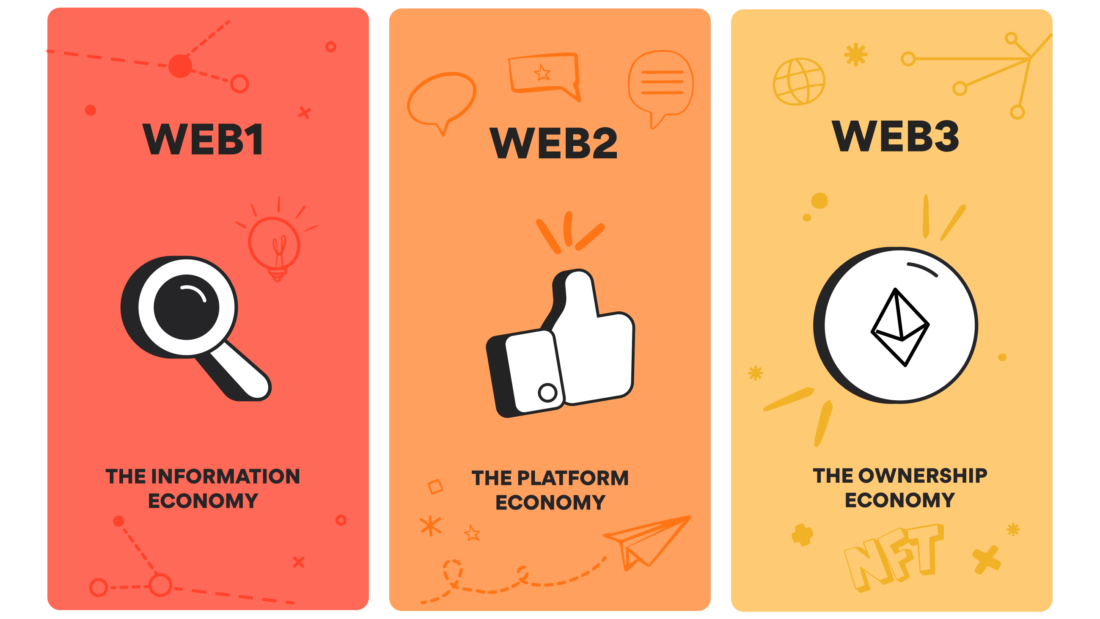
The current phase of the internet is defined by accessing and creating content. Web2 is dominated by centralized companies, e.g., Big Tech such as MAMAA, which provide services in exchange for accessing and monetizing users’ personal data. On the contrary, the next phase aims at leaving the ownership of data and information to the content producers, i.e., us, without transferring the potential value created.

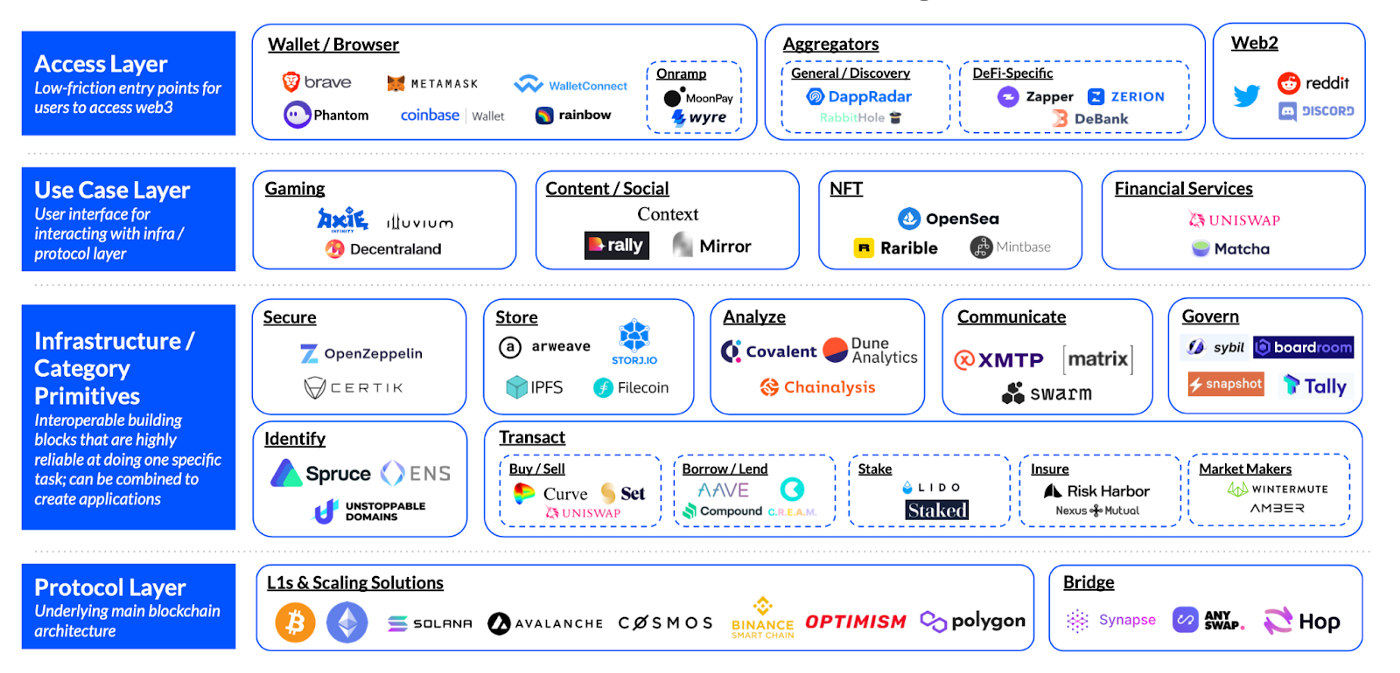
However, the Web3, term originally coined by Ethereum co-founder Gavin Wood in 2014, offers much more than this. The rise of products related to the token-economy, e.g., NFTs, is an example, but Figure 2 offers a more comprehensive overview of the different use cases and of the companies involved at each layer.

The Web 3 Stack
Figure2: Companies operating in the Web3 space divided per layer of the Web3 Stack. Source: Coinbase

Architecture

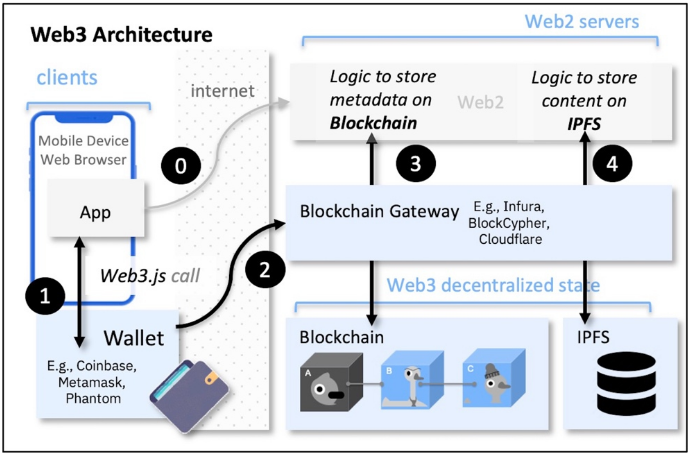
Contrary to its previous version, Web3 will be built using Decentralized Peer-to-Peer networks, Artificial Intelligence, Crypto-wallets, and distributed ownership of Protocols rather than corporate servers. Nevertheless, Web3 represents an extension more than a replacement of Web2, as it will enable to “off-board” key personal and application data from centralized organizations to decentralized wallets, blockchain and storage networks, under the control of the user (3).

Web3: a democratic revolution?
Figure3: Web3 Architecture taken from J. Cuomo’s book “Think Blockchain”

Characteristics

After having spoken about the architecture, we should now move to the main features characterizing Web3: (3) (4)

  • Distributed and Decentralized Governance:
    • Respectively, the record of all transactions is stored and shared across all the actors of the network and no single actor controls the operation of the blockchain.
      For more details of this process, check Philipp‘s blog on the topic.
  • Universal Identity:
    • An anonymous single-sign-on will allow to use just one username and authentication method across all websites, rather than individual logins, without the need to share personal information. In fact, thanks to Web3 wallets backed by blockchain, the user always retains control of the personal data and login credential.
      • An example of a Crypto-wallet is CoinBase, already valued more than $11 billion in terms of market cap.
  • Token-based:
    • Activities that contribute to Web3 will be rewarded by a token (either NFT or fungible) to incentivize participation and distribute ownership. This token can be “minted” (generated) and stored into a crypto-wallet.
      • An example is Pixie, the world’s first fully functional decentralized photo and video sharing social network based on blockchain crypto economics. Pixie, like a crypto version of TikTok or Instagram, encouraging users to create quality content and interact constructively with fellow users, thus all the content can circulate inside Pixie effectively (5).
  • Self-governing:
    • Blockchains will rely on the entire network to verify an activity via consensus. However, specific governance mechanisms can be established to democratize decisions, based on the quality or volume of a user’s investment into a site or DApp. Thus, when the rules are set, new forms of organization can arise, thanks to the execution of smart contracts.
      • An example is BitDAO, a Decentralized Autonomous Organization (DAO) with one of the largest and most diverse token-governed treasuries in the world and more than $2.5 billion invested (3).
  • Immersive and augmented experience
    • As described by Nicola in a previous blog post, the combination of decentralized solutions and immersive technologies coming to maturity may give birth to decentralized Metaverses, providing an open exchange of digital assets.
      To give you a sense of what this buzzword means, here there is a list of examples coming from the manufacturing industry and the entertainment sector.

      • BMW’s future factory developed on Omniverse platform;
      • Volkswagen’s experience with Web3;
      • Renault unveiled a partnership geared towards offering virtual automobile experiences by leveraging blockchain technology and Web3-based solution;
      • For entertainment there are a lot of examples like, Sandbox and Decentraland.

A longer list spanning across different industries has been prepared by Rejolut and can be found here.


Critics

As for every innovation, limits and possible negative externalities have to be considered. In this case, the criticism concerns its feasibility, due to hurdles around scalability, control, and adoption that must be overcome (4). You can find some interesting commentaries below:

Moreover, a policy brief published last March by the Bennett Institute for Public Policy in Cambridge warned against several risks related to the immutability of the blockchain (Online safety), the diffusion of cryptocurrencies as an incentive to ransomware attacks and a possible threat for unprepared consumers.
The report concludes that even though some market intermediaries are extractive rentiers, many others play value-adding governance roles that cannot be replicated with smart contract code. Thus, trusted central authorities will still keep a key role, making blockchain a redundant solution.


Conclusion

Being a new phenomenon, there are still more questions than answers about the future of Web3. However, I hope that this blog has helped to clarify some aspects related to its architecture, its relationship with blockchain, and has sparked interest in critically analysing its pros and cons.

Now, let’s move to the third episode of my column!


Surfin’ Internet


Feel free to comment and share your thoughts on this topic, see you soon!


References

(1) https://www.ultimouomo.com/buon-compleanno-dottor-socrates/

(2) https://www.ilpost.it/2021/12/16/socrates-democrazia-corinthiana/

(3) Jerry Cuomo, Mark Parzygnat, Shaun Lynch, Irving Wladawsky-Berger. (2022). “Think Blockchain: A Student’s Guide to Blockchain’s Evolution from Bitcoin, Ethereum, Hyperledger to Web3.”

(4) https://eco.brainsy.com/kb/article/web3-defined

(5) Pixie: The blockchain social platform taking the internet by storm (cointelegraph.com)

Alex Murray, Dennie Kim, Jordan Combs. (2022). The promise of a decentralized internet: What is Web3 and how can firms prepare?. Business Horizons.

Innovation competitions

Innovation competitions

Digital technologies have changed innovation in organizations. Online communities, digital content providers, or online platforms are new formats that make collaboration between many innovators possible. Innovation nowadays can take many different forms; one is hackathons.

Hackathons

Innovation competitions
Hackathon participants at work (picture: Ultrahack).

The fast-paced innovation format is based on the collaboration of a group of people, sometimes friends or colleagues, or strangers, that meet up to find solutions to specific problems.

Hackathons are usually two to three-day events at which many people come together to be creative and develop solutions to challenges. An event commonly lasts for about 48 hours, but the exact duration can vary.

The group of people that cooperate in a hackathon generally consists of around 2-6 individuals. They collaboratively analyze a problem and develop a solution for a challenge. Many hackathon participants regularly compete in hackathons. Participants work on their own laptops and communicate and collaborate in person or online through digital platforms. Inclusion is an important part of hackathons, and including colleagues is key, particularly those participants that have not attended an innovation competition before.

What participants like about hackathons and what makes an event interesting for them are:

  • a positive atmosphere
  • developing or learning new skills
  • collaborating with nice people

Group communication among all hackathon participants and for each team is set up in a way that participants and team members can easily stay in touch with one another. Digital platforms are often used for this purpose, such as Slack, which offers various chat rooms for teams to collaborate.

Hackathon events often include some of the following aspects:

  • Well-defined challenges with clearly identified problems
  • Solvable challenges – the stated challenge(s) can be solved, and coming up with a solution is achievable
  • The challenge can be accomplished in the limited time of the hackathon
  • Registration deadline for participants – the organizer often defines a maximum number of participants that can join a hackathon
  • Various skill levels can be integrated

In a broader sense, hackathons are nowadays also used as a creative format for problem-solving. The format can be centered around technology, but it does not necessarily have to be that way.

The organization of an interesting hackathon event is often built around:

  • A welcoming session with a short welcome to everyone present (online or on-site)
  • An introduction of the organizers
  • Acknowledging the event sponsors
  • Mentioning the hackathon purpose
  • Practicalities such as the schedule of the hackathon, important steps along the way, and information regarding the sessions for workshops, lunches, and dinners
  • Information about some basic rules or a code of conduct, to give a guideline and make the event enjoyable for everyone
  • Information regarding mentoring for participants etc.
  • Encouraging people to share information and communicate about the progress of their projects

At the end of a hackathon, after the award ceremony, applause is given to the winners. Yet the community celebrates not only the winners but all participants for having participated, as participation is seen as an achievement by itself.

hans-peter-gauster-3y1zF4hIPCg-unsplash

10 aspects to consider for SOLID research work


As I completed one year with EINST4INE and transitioned from Industry to Academia, I reflected on what I learned last year through interactions with senior scholars and peers.

I aim to share a few learnings and best practices on this blog as I learned with time, successes, and failures along the way. In my experience, these are the ten easy yet challenging aspects one should consider as founding principles for solid and rigorous research.

  1. Passion as the driving force
  2. Ethics as the moral force of self-regulation
  3. Finding the Gold in deep mines
  4. Use of technology to augment your mental capabilities
  5. Avoiding the common traps
  6. Best Practices to sail through the writers’ block
  7. Portfolio Theory in Research
  8. What’s your Goal
  9. Collaboration and Engagement with Practice and Policy
  10. Make it Fun or Have Fun

As a practice-oriented researcher closely looking into what’s happening in the industry from a corporate innovation perspective, I also observe blurred lines between Practice-oriented Research and consultancy work. Research works aim to be more rigorous and contribute to theory and practical implications. Also, as researchers, we are neutral observers of the phenomenon for a relatively long time rather than a consultant whose scope is limited to the work and tied to the organization/employer for a fixed short time (relatively speaking).

Now I deep dive into the 10 Aspects to consider for SOLID research work, starting with the basics.

  1. Passion as the driving force
  • First things first, and get the fundamentals right.
  • One should/MUST be passionate about the research area. Otherwise, it’s not worth it.
  1. Ethics as the moral force of self-regulation
  • Ethics are the most crucial aspect.
  • Always be TRANSPARENT in your reporting and findings.
  1. Finding the Gold in deep mines
  • Know the best standard of Gold from Master Goldsmith. The same thing works in research: learn from the best in the field, i.e. get the best state-of-the-art knowledge from the best sources.
  • Be careful with Tom, Dick, and Harry available on social media without credentials. They can consume a lot of crucial time but no benefit from purely a research perspective.
  1. Use of technology to augment your mental capabilities
  • To find the Gold faster, enhance your capabilities with digital tools for data analysis.
  • Take the help of digital tools but with a complete understanding of the pros and cons of using them. I use the following for my qualitative research work to organize large archival and interview data.

Eg.

Max QDA for making sense of extensive qualitative data in one place

https://www.maxqda.com/

Eg. Reference Management – Mendeley

https://www.mendeley.com/

There are countless others.

  1. Avoiding the common traps
    1. Quality over Quantity ALWAYS.
      1. Read only what’s the best and then reflect on them with your own thinking and experiences.
    2. Sponge principle for information absorption
      1. You will get the maximum benefits from the first squeeze. Rest is not worth it, given other time tradeoffs and balancing the work-life aspect.
      2. I Learn by interacting with others about the literature. Hence, it sticks better than sitting in front of the screen alone.
  2.  Best Practices to sail through the Writer’s block
  • Dedicated writing time

This is the most important routine I learned from my supervisors.

There are many best practices in this. Some say just dedicate time every day when you are fresh and energetic. Block everything else: mails, emails, etc …max 2 hrs…not more than that. Often called shut up and write i.e free flow writing.

  • Benefits and Pitfalls of templates

We use templates to structure your thinking, later or in the beginning depending on how your mind works. But also beware of Template thinking…it can sometimes be restrictive to think beyond. I try to think of different geometrical shapes and ways to represent a new concept.

  • Keep track of your activity – LOG IT down every single day.

This is the most crucial aspect of qualitative research, as the information can be overwhelming later. I struggle with it, but this small practice will save me a lot of headaches, and I am learning with time this best practice.

From Our new scholar’s network, there are also good videos to develop Academic writing :

Developing Academic Writing

https://www.youtube.com/watch?v=zOcDQ-ZR-Z0&t=182s

The Five Cs Framework for Scholarly Writing

https://www.youtube.com/watch?v=VgI91r_HTho

The Nuts and Bolts of Writing a Theory Paper

https://www.youtube.com/watch?v=HE_BBop69IA&t=1201s

STR Virtual Panel: Work Habits and Productivity

https://www.youtube.com/watch?v=gUFGda5I6y4&t=16s

  1. Portfolio Theory in Research

Portfolio of Research projects – be clear about this – Each project should have different cost-time dynamics. The best ones will take more time.

  • Best
  • Good
  • Average
  • Below average
  • Others
  1. What’s your Goal?
  • Who is your audience?
  • What kind of researcher do you want to be?
  • What for you want to be known?
  • What is your contribution?
  • Whom do you engage?
  • Questions like these…..so that you have the correct alignment of expectations

Remember, you are not going to solve all the problems in the world, you have to be a world-leading expert in one niche area and have a basic overview of others.

  1. Collaboration and Engagement with practice and policy

The power lies in collaboration, and I learn through interactions with practice and policy, especially about new mechanisms to fuel more innovations for energy transition, which requires a multi-stakeholder collaboration approach. It also leads to producing research that impacts the industry and society in general to address grand and complex challenges.

  1. Make it Fun or Have Fun

Last but not least and most crucial for mental well-being, given that most researchers go through depression once. Don’t work endlessly. It will make everything worse.

This completes the list of best practices I learned last year with interactions during conferences and in-person discussions with senior scholars and peers. I look forward to learning more with time and being better organized as a researcher managing my curiosity and time to produce rigorous research.

What have you learned from your research experiences? Please feel free to contact me to discuss common interests during a virtual coffee meeting. Reach out to me on Linkedin.


What ecosystems are not and related challenges...

What ecosystems are not and related challenges…

As the four main pillars that constitute my research topic at EINST4INE relate to ecosystem research, digital transformation, environmental sustainability, and Open Innovation, I would like to tell you a little about what I have learned in the intersection between technology and ecosystems. While some of my fellow EINST4INERs have similar research interests in ecosystem research, I hope to complement their thoughts on what ecosystems actually are and how they form.

Many paradigms nowadays emphasize the need for companies to adopt novel and disruptive technologies to stay afloat. Through such paradigms, like Open Innovation, business executives in today’s digital age have access to hundreds of new technologies that may revolutionize their operations and the quality of service they provide to customers, as collaborations and other types of connections enable companies to leverage the force of digital technologies, without having to create them in-house.
However, adopting cutting-edge technology isn’t enough to achieve these objectives; companies also need to know how to put such tools to good use for their operations and their consumers. This requires resources like time, funds, and expertise, which may be in short supply.

As such, how can businesses use the benefits of cutting-edge innovation and speed up the delivery of value to their customers?
Curating ecosystems is one solution: businesses should collaborate with one another, aligning talents and pool resources to develop ground-breaking new goods and services and shorten the time it takes to get them to market. And this is precisely what many businesses are doing.

As Gianlorenzo has given an overview of the different types of existing ecosystems, I felt the need to set the prerequisite of what ecosystems are not (based on Adner, 2017):

  • Business models based on ecosystems are not the same as supply chains. Tiers of suppliers in a supply chain feed into an ultimate point of value creation, but the suppliers themselves are neither part of the brand promise nor material to the value generated, although top suppliers may be quite important.
  • Then, platforms per se, are not ecosystems. While every platform has an ecosystem and is often the keystone actor (an ecosystem actor with a strong influence despite being relatively few in number. The term comes from the biological term of keystone species), there is a narrow focus on technology and transactions. Indeed, while platforms are concerned with interface governance, ecosystems are concerned with structures of interdependence.
  • Older terms and arrangements like Networks and Alliances have a similar connection as in ecosystems, however, these mostly focus on patterns of connectivity. In this sense, for Networks and Alliances, the focus lies more on actor ties rather than the value proposition, and just like for platforms, there is not enough focus on the structure of interdependence.
  • Open Innovation (OI) has also been related to ecosystem research. One could argue that OI provides a rather micro-perspective, taking into account the firm strategies. However, ecosystem literature applies a rather macro-vision, which helps us gain insights into the multilateral coordination between ecosystem partners in their quest to align their strategies to provide value.

Adner (2017) finds other similar structures which can be distinguished from ecosystems.

But, if we take a glance around, we can see that businesses of all stripes are attempting to implement ecosystem business models and, in many instances, even orchestrating their own ecosystems in an effort to generate profits. In Jessica’s post, ecosystem orchestration is defined as “hub players” taking the lead, where she clearly defined what an orchestrator is.
Of course, for companies, occupying the orchestrator or “hub actor” position can be beneficial for several reasons such as having a more centralized knowledge about the ecosystem, compared to other actors. However, orchestration is not necessarily easy:
The present academic literature tends to focus on successful long-standing ecosystems, which greatly looks at the organizational capabilities of firms, related to the success of their overall ecosystem. However, some scholars have extended this notion to the capabilities of the environment in which an orchestrator thrives, meaning that the success of the hub actor and the ecosystem depend on the architecture of the network, and how the network interacts with its environment.
From this, two streams of literature have emerged:
First, we can consider intentionally created ecosystems, departing from the definition of the overall value proposition that the ecosystem is supposed to achieve, and assembling actors that can contribute to the value creation and transfer in the ecosystem.
Second, we can consider the assemblage of different actors, who create and co-evolve a common value proposition together.

There are certainly differences in terms of processes and mechanisms of orchestration between the two approaches, however, some universal challenges that can impact orchestration overall can be distinguished (among others):

  • Leadership: some researchers argue for the importance of a hub actor who should facilitate the interaction between actors. However, not every firm has the capabilities to become an orchestrator and gather the efforts of all actors that ultimately define the success of the ecosystem.
  • Platforms: most platforms offer a space for orchestration as they, in some way, build the base for the ecosystem. Here the platform orchestrators can leverage several benefits such as Network Effects (when the value or utility of a service or product is defined by the number of users). Platforms and their surrounding ecosystem represent the most successful businesses nowadays as they achieve economies of scale very rapidly. That does not mean, however, that being successful is given… first, because network effects can also backfire (e.g. see Network Effects Aren’t Enough) and second, because what makes your platform successful can also make another platform successful!
  • Actor role & position: one of the dangers of maintaining good relationships with actors is the way an orchestrator treats its connections. When shifting from a traditional business model, some focal firms tend to see actors as suppliers rather than a relationships. This implies a shift or adaptation of business models to current ecosystem standards.
  • Finding the right business model: Ecosystem relationships imply a different strategic model that needs to contemplate the management of inter-and intra-actor relationships as well as the governance and coordination between multiple parties
  • External factors: As trust is crucial for successful collaborations, hub actors need to depart from their self-interest view and focus on shared efforts, which is necessary for the long-term success of an ecosystem. This can be understood as gaining legitimacy, not only within a given ecosystem but also gaining acceptance from the environment and society, and other institutions as a whole. Other external factors can also comprise the competition: an ecosystem formation can improve the current market conditions for the players, but also for the competition. Thus, orchestration necessitates a lot of coordination, management, and governance efforts to not be overthrown by competing ecosystems and their value propositions.

Although there are other factors that play a role in ecosystem orchestration (e.g. capabilities, modularity, complementarity, bottlenecks, etc.) for the sake of brevity and comprehension I have limited these to the challenges mentioned above.

What amounts to all of this is that the current literature provides examples of how ecosystems can be orchestrated, but there is still a lot to learn from failed ecosystems. Successes can give a lot of insights into “good practice” strategies, but these are not said to work for every ecosystem, precisely because of the heterogeneous nature of participating actors, and their environments.

Thus, while some research has looked at the “dark side of ecosystem orchestration” (Oliveira & Lumineau, 2019), which can impact a firm and impede the capacity of complementors and consumers to innovate, more insights from failures cases could tell us a lot more about what can go wrong during the orchestration process, as well as insights into ecosystem governance mechanisms and even organizational capabilities needed to support ecosystem orchestration.
While we will see or recognize more such failures in the future, I am sure that their lost efforts will have an ultimate purpose, which is the benefit for academia to study why some ecosystems fail and others thrive and thus, creating several implications for businesses.

References

Adner, R. (2017) Ecosystem as Structure: An Actionable Construct for Strategy. Journal of Management, 34: 39-58.

Oliveira, N., & Lumineau, F. 2019. The dark side of interorganizational relationships: An integrative review and research agenda. Journal of Management, 45(1): 231-261.