Credit: Ulia Koltyrina / Adobe Stock

Is it useful to distinguish between theory and theorize?

During my recent secondment in Germany with University of Stuttgart and ARENA2036, I had the honour to participate in a 3-day seminar ‘On Theorizing’ by Professor José López from University of Ottawa. This provided me the opportunity to reflect on a fundamental element of science – theory building. As researchers we are consistently asked to consider our theoretical contribution, to justify what theories we are using, to understand complex theories, and how we are building upon this. It dawned on me as an early-stage researcher, we are never really explicitly told how to do all of these things. We are aware this is crucial, but the ways in which we can do this are not clear.


What exactly is ‘theory’? And how do you ‘theorize’?


Distinguishing between theory and theorizing was a key takeaway for me. Perhaps this comes from imposter syndrome to an extent, but I always considered that creating ‘theory’ was for the grand theorists and thought leaders of our generation and those before us. Therefore, the rest of us simply chip away at the edges of this, either confirming or disproving these grand theories. I needed to be reminded this is only one way to think about theory and, in fact, there is always big T Theory and little t theory – both of which are as important as each other.


Theory remains abstract and ambiguous; this is largely due to the contestations on the nature of truth. Theory can be defined as a formal statement of ideas that are suggested to explain a fact, or event, or how something works. Essentially, we are trying to explain truths. When different people have different ideas on what the truth is, this gets complicated. Thus, attempting to build theory becomes even more complex.


Putting a different perspective on this, we can think about theorizing instead. The forming of a theory seems somewhat more achievable than facing the Theory beast head on and ill-equipped. Abend (2008) suggests 8 ways in which theories can be developed from causal explanations to social interpretation. While this isn’t an exhaustive list, it is rather inclusive of various epistemological standpoints and opened my mind to more ways that theorizing can be done.


How useful is this really?


Personally, I find it useful to distinguish between theory and theorizing because the language itself infers whether it is passive (theory) or active (theorize). In addition, I feel more comfortable with the idea of theorizing as opposed to making or creating theory. While these are both simply cognitive influences, this is nonetheless important and useful if it enables researchers to engage with theory more proactively. You might disagree if you feel that it complicates the process of theory building, in which case, find whatever suits you.


Regardless, I hope it was useful to reflect on this with me. I have recommended a few readings if you would like to further your thoughts on theory and how to make your own contributions! Feel free to comment additional resources you have found useful too 😊


Recommended readings:

Abend, G. 2008. The Meaning of ‘Theory.’ Sociological Theory, 26(2), pp. 173–199. https://doi.org/10.1111/j.1467-9558.2008.00324.x

Corley, K.G. and Gioia, D.A., 2011. Building theory about theory building: what constitutes a theoretical contribution? Academy of management review, 36(1), pp.12-32. https://doi.org/10.5465/amr.2009.0486

Makadok, R., Burton, R. and Barney, J., 2018. A practical guide for making theory contributions in strategic management. Strategic Management Journal, 39(6), pp.1530-1545. https://doi.org/10.1002/smj.2789

Sutton, R. I., & Staw, B. M. 1995. What theory is not. Administrative science quarterly, 40(3), pp. 371-384. https://doi.org/10.2307/2393788

Photo by Jacek Dylag: Unsplash

Two Steps Forward One Step Back: Why do we still fail at digital transformation?

Spending one year in a PhD program gets you on that rollercoaster ride. What excited me about the PhD was the deep engagement with a topic I truly feel passionate about – digital transformation. A word so powerful, a phenomenon everyone seems to talk about these days. From success fairy tales to failure stories, I have come to wonder why is digital transformation still such a mammoth project? Technologies are ubiquitous, smartphones an extension of ourselves. Yet, the prospects seem brighter than the actual results.

In a Forbes article this year, Dr. Corrie Block asked a provocative question:

“If you were to go in for heart surgery, buy a new car or say your wedding vows to someone knowing that there was an 84% chance of failure… would you even bother?”

84% – that is the estimated risk of failure in digital transformation. And, according to the article, there are twelve reasons for it. Including e.g., lack of awareness within the organisation, micromanagement/mismanagement of agile teams, inability to translate into executive language, lack of training for internal users, loss of talent to competitors, resistance for fear of being replaced (full list here).

Two million years ago humans started to use stone tools just as we use technologies to enhance our daily lives today. While the tools change one factor remains: the human being at the other end of the tool. Today we not only use tools at home, but they have become embedded into organisational structures. However, most reasons why digital transformation fails has to do with our dealing with technology, may it be lack of skills or fear of replacement. Technology has undoubtedly become increasingly complex. And while a stone tool could help prepare food, an artificially intelligent chatbot erases another human on the other end.

Photo by Josh Calabrese: Unsplash

But humans are made of emotions; According to Maslow’s hierarchy of needs, human beings have, next to a physiological one, a need for self-actualisation, esteem, love and belonging, as well as safety. While technology can provide increased safety, connection to loved ones or a motivating quote notification per day, it is still just a tool. The study of human computer interaction goes back a few decades, trying to best design interactions of the two. But what do we still need in order to reduce risk of failure and design efficient workplaces where intelligent machines can support human capabilities? The 12 listed reasons provide a good indication of what to avoid and what to leverage in order to succeed. Further expanding on this – digital transformation efforts are human efforts. We have to fully understand the intersection of human and technology to work out the best solutions by respecting human individuality and technology potential while upscaling organisational efficiency.

Despite all the merging of business and technology roles, perhaps not everyone will be a good data analyst and not everyone will be a good communicator. People will shine at what they are good at, and, across disciplines, we should be able to develop and provide clear pathways that exploit technological accuracy ingeniously combined with human wit. Because otherwise… why even bother…?

Innovation competitions

Innovation competitions

Digital technologies have changed innovation in organizations. Online communities, digital content providers, or online platforms are new formats that make collaboration between many innovators possible. Innovation nowadays can take many different forms; one is hackathons.

Hackathons

Innovation competitions
Hackathon participants at work (picture: Ultrahack).

The fast-paced innovation format is based on the collaboration of a group of people, sometimes friends or colleagues, or strangers, that meet up to find solutions to specific problems.

Hackathons are usually two to three-day events at which many people come together to be creative and develop solutions to challenges. An event commonly lasts for about 48 hours, but the exact duration can vary.

The group of people that cooperate in a hackathon generally consists of around 2-6 individuals. They collaboratively analyze a problem and develop a solution for a challenge. Many hackathon participants regularly compete in hackathons. Participants work on their own laptops and communicate and collaborate in person or online through digital platforms. Inclusion is an important part of hackathons, and including colleagues is key, particularly those participants that have not attended an innovation competition before.

What participants like about hackathons and what makes an event interesting for them are:

  • a positive atmosphere
  • developing or learning new skills
  • collaborating with nice people

Group communication among all hackathon participants and for each team is set up in a way that participants and team members can easily stay in touch with one another. Digital platforms are often used for this purpose, such as Slack, which offers various chat rooms for teams to collaborate.

Hackathon events often include some of the following aspects:

  • Well-defined challenges with clearly identified problems
  • Solvable challenges – the stated challenge(s) can be solved, and coming up with a solution is achievable
  • The challenge can be accomplished in the limited time of the hackathon
  • Registration deadline for participants – the organizer often defines a maximum number of participants that can join a hackathon
  • Various skill levels can be integrated

In a broader sense, hackathons are nowadays also used as a creative format for problem-solving. The format can be centered around technology, but it does not necessarily have to be that way.

The organization of an interesting hackathon event is often built around:

  • A welcoming session with a short welcome to everyone present (online or on-site)
  • An introduction of the organizers
  • Acknowledging the event sponsors
  • Mentioning the hackathon purpose
  • Practicalities such as the schedule of the hackathon, important steps along the way, and information regarding the sessions for workshops, lunches, and dinners
  • Information about some basic rules or a code of conduct, to give a guideline and make the event enjoyable for everyone
  • Information regarding mentoring for participants etc.
  • Encouraging people to share information and communicate about the progress of their projects

At the end of a hackathon, after the award ceremony, applause is given to the winners. Yet the community celebrates not only the winners but all participants for having participated, as participation is seen as an achievement by itself.

hans-peter-gauster-3y1zF4hIPCg-unsplash

10 aspects to consider for SOLID research work


As I completed one year with EINST4INE and transitioned from Industry to Academia, I reflected on what I learned last year through interactions with senior scholars and peers.

I aim to share a few learnings and best practices on this blog as I learned with time, successes, and failures along the way. In my experience, these are the ten easy yet challenging aspects one should consider as founding principles for solid and rigorous research.

  1. Passion as the driving force
  2. Ethics as the moral force of self-regulation
  3. Finding the Gold in deep mines
  4. Use of technology to augment your mental capabilities
  5. Avoiding the common traps
  6. Best Practices to sail through the writers’ block
  7. Portfolio Theory in Research
  8. What’s your Goal
  9. Collaboration and Engagement with Practice and Policy
  10. Make it Fun or Have Fun

As a practice-oriented researcher closely looking into what’s happening in the industry from a corporate innovation perspective, I also observe blurred lines between Practice-oriented Research and consultancy work. Research works aim to be more rigorous and contribute to theory and practical implications. Also, as researchers, we are neutral observers of the phenomenon for a relatively long time rather than a consultant whose scope is limited to the work and tied to the organization/employer for a fixed short time (relatively speaking).

Now I deep dive into the 10 Aspects to consider for SOLID research work, starting with the basics.

  1. Passion as the driving force
  • First things first, and get the fundamentals right.
  • One should/MUST be passionate about the research area. Otherwise, it’s not worth it.
  1. Ethics as the moral force of self-regulation
  • Ethics are the most crucial aspect.
  • Always be TRANSPARENT in your reporting and findings.
  1. Finding the Gold in deep mines
  • Know the best standard of Gold from Master Goldsmith. The same thing works in research: learn from the best in the field, i.e. get the best state-of-the-art knowledge from the best sources.
  • Be careful with Tom, Dick, and Harry available on social media without credentials. They can consume a lot of crucial time but no benefit from purely a research perspective.
  1. Use of technology to augment your mental capabilities
  • To find the Gold faster, enhance your capabilities with digital tools for data analysis.
  • Take the help of digital tools but with a complete understanding of the pros and cons of using them. I use the following for my qualitative research work to organize large archival and interview data.

Eg.

Max QDA for making sense of extensive qualitative data in one place

https://www.maxqda.com/

Eg. Reference Management – Mendeley

https://www.mendeley.com/

There are countless others.

  1. Avoiding the common traps
    1. Quality over Quantity ALWAYS.
      1. Read only what’s the best and then reflect on them with your own thinking and experiences.
    2. Sponge principle for information absorption
      1. You will get the maximum benefits from the first squeeze. Rest is not worth it, given other time tradeoffs and balancing the work-life aspect.
      2. I Learn by interacting with others about the literature. Hence, it sticks better than sitting in front of the screen alone.
  2.  Best Practices to sail through the Writer’s block
  • Dedicated writing time

This is the most important routine I learned from my supervisors.

There are many best practices in this. Some say just dedicate time every day when you are fresh and energetic. Block everything else: mails, emails, etc …max 2 hrs…not more than that. Often called shut up and write i.e free flow writing.

  • Benefits and Pitfalls of templates

We use templates to structure your thinking, later or in the beginning depending on how your mind works. But also beware of Template thinking…it can sometimes be restrictive to think beyond. I try to think of different geometrical shapes and ways to represent a new concept.

  • Keep track of your activity – LOG IT down every single day.

This is the most crucial aspect of qualitative research, as the information can be overwhelming later. I struggle with it, but this small practice will save me a lot of headaches, and I am learning with time this best practice.

From Our new scholar’s network, there are also good videos to develop Academic writing :

Developing Academic Writing

https://www.youtube.com/watch?v=zOcDQ-ZR-Z0&t=182s

The Five Cs Framework for Scholarly Writing

https://www.youtube.com/watch?v=VgI91r_HTho

The Nuts and Bolts of Writing a Theory Paper

https://www.youtube.com/watch?v=HE_BBop69IA&t=1201s

STR Virtual Panel: Work Habits and Productivity

https://www.youtube.com/watch?v=gUFGda5I6y4&t=16s

  1. Portfolio Theory in Research

Portfolio of Research projects – be clear about this – Each project should have different cost-time dynamics. The best ones will take more time.

  • Best
  • Good
  • Average
  • Below average
  • Others
  1. What’s your Goal?
  • Who is your audience?
  • What kind of researcher do you want to be?
  • What for you want to be known?
  • What is your contribution?
  • Whom do you engage?
  • Questions like these…..so that you have the correct alignment of expectations

Remember, you are not going to solve all the problems in the world, you have to be a world-leading expert in one niche area and have a basic overview of others.

  1. Collaboration and Engagement with practice and policy

The power lies in collaboration, and I learn through interactions with practice and policy, especially about new mechanisms to fuel more innovations for energy transition, which requires a multi-stakeholder collaboration approach. It also leads to producing research that impacts the industry and society in general to address grand and complex challenges.

  1. Make it Fun or Have Fun

Last but not least and most crucial for mental well-being, given that most researchers go through depression once. Don’t work endlessly. It will make everything worse.

This completes the list of best practices I learned last year with interactions during conferences and in-person discussions with senior scholars and peers. I look forward to learning more with time and being better organized as a researcher managing my curiosity and time to produce rigorous research.

What have you learned from your research experiences? Please feel free to contact me to discuss common interests during a virtual coffee meeting. Reach out to me on Linkedin.


What ecosystems are not and related challenges...

What ecosystems are not and related challenges…

As the four main pillars that constitute my research topic at EINST4INE relate to ecosystem research, digital transformation, environmental sustainability, and Open Innovation, I would like to tell you a little about what I have learned in the intersection between technology and ecosystems. While some of my fellow EINST4INERs have similar research interests in ecosystem research, I hope to complement their thoughts on what ecosystems actually are and how they form.

Many paradigms nowadays emphasize the need for companies to adopt novel and disruptive technologies to stay afloat. Through such paradigms, like Open Innovation, business executives in today’s digital age have access to hundreds of new technologies that may revolutionize their operations and the quality of service they provide to customers, as collaborations and other types of connections enable companies to leverage the force of digital technologies, without having to create them in-house.
However, adopting cutting-edge technology isn’t enough to achieve these objectives; companies also need to know how to put such tools to good use for their operations and their consumers. This requires resources like time, funds, and expertise, which may be in short supply.

As such, how can businesses use the benefits of cutting-edge innovation and speed up the delivery of value to their customers?
Curating ecosystems is one solution: businesses should collaborate with one another, aligning talents and pool resources to develop ground-breaking new goods and services and shorten the time it takes to get them to market. And this is precisely what many businesses are doing.

As Gianlorenzo has given an overview of the different types of existing ecosystems, I felt the need to set the prerequisite of what ecosystems are not (based on Adner, 2017):

  • Business models based on ecosystems are not the same as supply chains. Tiers of suppliers in a supply chain feed into an ultimate point of value creation, but the suppliers themselves are neither part of the brand promise nor material to the value generated, although top suppliers may be quite important.
  • Then, platforms per se, are not ecosystems. While every platform has an ecosystem and is often the keystone actor (an ecosystem actor with a strong influence despite being relatively few in number. The term comes from the biological term of keystone species), there is a narrow focus on technology and transactions. Indeed, while platforms are concerned with interface governance, ecosystems are concerned with structures of interdependence.
  • Older terms and arrangements like Networks and Alliances have a similar connection as in ecosystems, however, these mostly focus on patterns of connectivity. In this sense, for Networks and Alliances, the focus lies more on actor ties rather than the value proposition, and just like for platforms, there is not enough focus on the structure of interdependence.
  • Open Innovation (OI) has also been related to ecosystem research. One could argue that OI provides a rather micro-perspective, taking into account the firm strategies. However, ecosystem literature applies a rather macro-vision, which helps us gain insights into the multilateral coordination between ecosystem partners in their quest to align their strategies to provide value.

Adner (2017) finds other similar structures which can be distinguished from ecosystems.

But, if we take a glance around, we can see that businesses of all stripes are attempting to implement ecosystem business models and, in many instances, even orchestrating their own ecosystems in an effort to generate profits. In Jessica’s post, ecosystem orchestration is defined as “hub players” taking the lead, where she clearly defined what an orchestrator is.
Of course, for companies, occupying the orchestrator or “hub actor” position can be beneficial for several reasons such as having a more centralized knowledge about the ecosystem, compared to other actors. However, orchestration is not necessarily easy:
The present academic literature tends to focus on successful long-standing ecosystems, which greatly looks at the organizational capabilities of firms, related to the success of their overall ecosystem. However, some scholars have extended this notion to the capabilities of the environment in which an orchestrator thrives, meaning that the success of the hub actor and the ecosystem depend on the architecture of the network, and how the network interacts with its environment.
From this, two streams of literature have emerged:
First, we can consider intentionally created ecosystems, departing from the definition of the overall value proposition that the ecosystem is supposed to achieve, and assembling actors that can contribute to the value creation and transfer in the ecosystem.
Second, we can consider the assemblage of different actors, who create and co-evolve a common value proposition together.

There are certainly differences in terms of processes and mechanisms of orchestration between the two approaches, however, some universal challenges that can impact orchestration overall can be distinguished (among others):

  • Leadership: some researchers argue for the importance of a hub actor who should facilitate the interaction between actors. However, not every firm has the capabilities to become an orchestrator and gather the efforts of all actors that ultimately define the success of the ecosystem.
  • Platforms: most platforms offer a space for orchestration as they, in some way, build the base for the ecosystem. Here the platform orchestrators can leverage several benefits such as Network Effects (when the value or utility of a service or product is defined by the number of users). Platforms and their surrounding ecosystem represent the most successful businesses nowadays as they achieve economies of scale very rapidly. That does not mean, however, that being successful is given… first, because network effects can also backfire (e.g. see Network Effects Aren’t Enough) and second, because what makes your platform successful can also make another platform successful!
  • Actor role & position: one of the dangers of maintaining good relationships with actors is the way an orchestrator treats its connections. When shifting from a traditional business model, some focal firms tend to see actors as suppliers rather than a relationships. This implies a shift or adaptation of business models to current ecosystem standards.
  • Finding the right business model: Ecosystem relationships imply a different strategic model that needs to contemplate the management of inter-and intra-actor relationships as well as the governance and coordination between multiple parties
  • External factors: As trust is crucial for successful collaborations, hub actors need to depart from their self-interest view and focus on shared efforts, which is necessary for the long-term success of an ecosystem. This can be understood as gaining legitimacy, not only within a given ecosystem but also gaining acceptance from the environment and society, and other institutions as a whole. Other external factors can also comprise the competition: an ecosystem formation can improve the current market conditions for the players, but also for the competition. Thus, orchestration necessitates a lot of coordination, management, and governance efforts to not be overthrown by competing ecosystems and their value propositions.

Although there are other factors that play a role in ecosystem orchestration (e.g. capabilities, modularity, complementarity, bottlenecks, etc.) for the sake of brevity and comprehension I have limited these to the challenges mentioned above.

What amounts to all of this is that the current literature provides examples of how ecosystems can be orchestrated, but there is still a lot to learn from failed ecosystems. Successes can give a lot of insights into “good practice” strategies, but these are not said to work for every ecosystem, precisely because of the heterogeneous nature of participating actors, and their environments.

Thus, while some research has looked at the “dark side of ecosystem orchestration” (Oliveira & Lumineau, 2019), which can impact a firm and impede the capacity of complementors and consumers to innovate, more insights from failures cases could tell us a lot more about what can go wrong during the orchestration process, as well as insights into ecosystem governance mechanisms and even organizational capabilities needed to support ecosystem orchestration.
While we will see or recognize more such failures in the future, I am sure that their lost efforts will have an ultimate purpose, which is the benefit for academia to study why some ecosystems fail and others thrive and thus, creating several implications for businesses.

References

Adner, R. (2017) Ecosystem as Structure: An Actionable Construct for Strategy. Journal of Management, 34: 39-58.

Oliveira, N., & Lumineau, F. 2019. The dark side of interorganizational relationships: An integrative review and research agenda. Journal of Management, 45(1): 231-261.

Analog Twin

Analog Twin

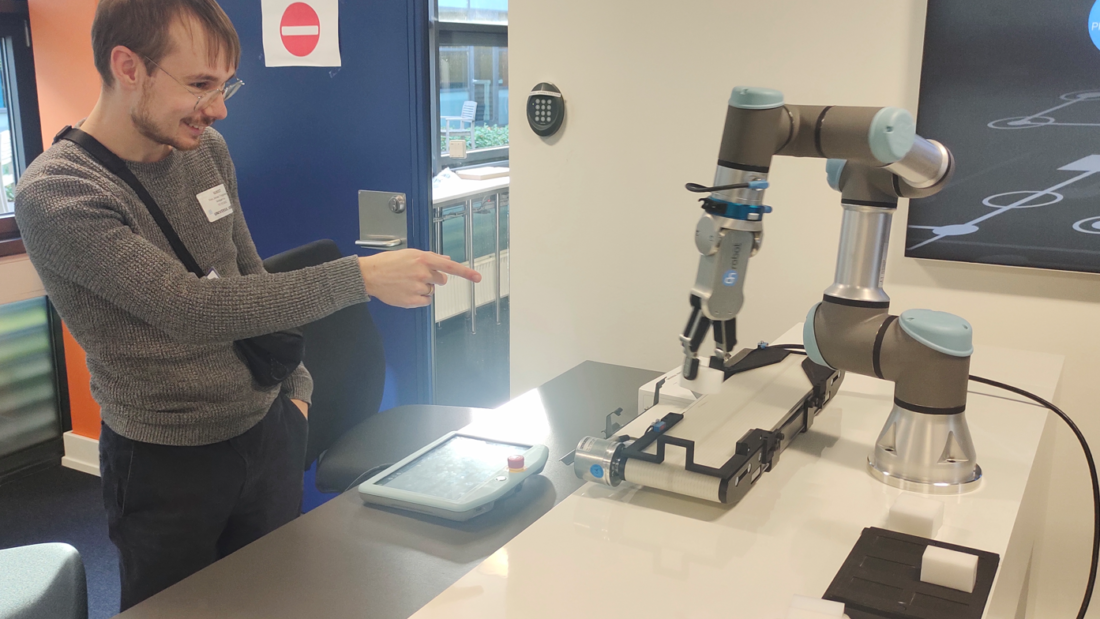
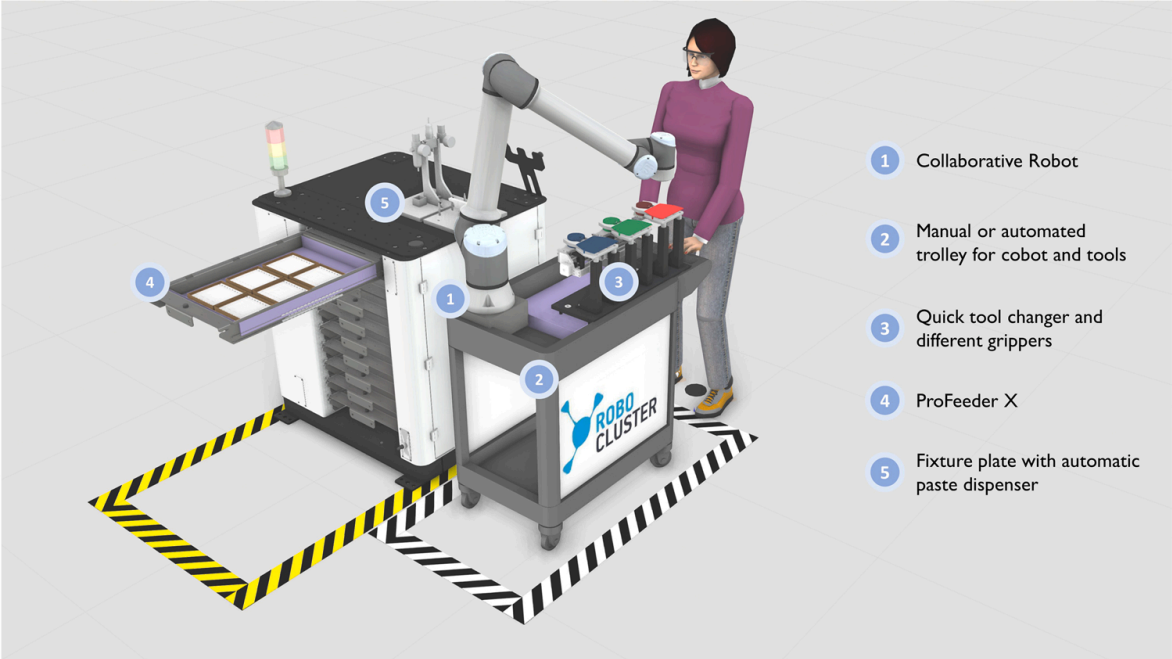
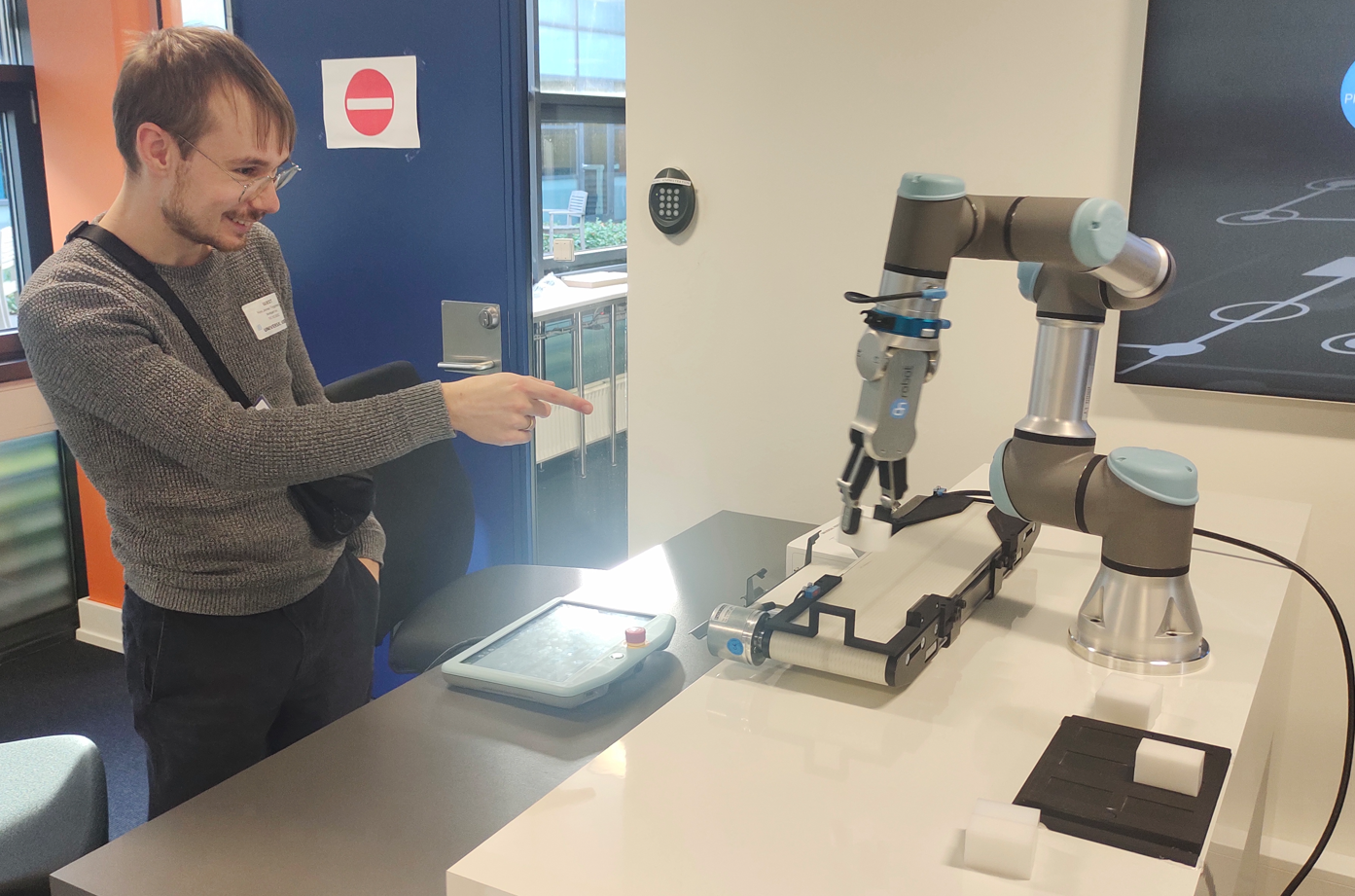
During our recent ENST4INE workshop in Denmark, we had an insightful tour at Universal Robot’s (UR). Part of the tour was an introduction to the programming of their robots in their educational facilities. While brief, it was amazing to get the robot to do some simple stacking tasks. Previously I had been working with a virtual version of the UR robot as part of a paper with my professor at the University of Southern Denmark (SDU), where we investigated different flexible production scenarios using simulation (see Figure below). It was surprising, how much of the knowledge I acquired during this project was directly transferable to programming the robot in real life. While the simulation clearly does not suffice to fully teach how to program a robot, many processes and concepts were almost the same. After this workshop I am convinced, that the simulation work I had been doing before can aid me in understanding real world applications and is suitable to evaluate a possible set up in a production line.

Analog Twin
Picture from: Ribeiro da Silva, E., Schou, C., Hjorth, S., Tryggvason, F., & Sørensen, M. S. (2022). Plug & Produce robot assistants as shared resources: A simulation approach. Journal of Manufacturing Systems, 63(March), 107–117. https://doi.org/10.1016/j.jmsy.2022.03.004
Analog Twin
Programming the robot (Picture taken by Parul).
My first secondment with AMPLYFI

My first secondment with AMPLYFI

So, one step further in my PhD journey: my first secondment with EINST4INE is in the books. I spenT some time with one of my industry partners: AMPLYFI in Cardiff. Here, I summarise a few useful learnings that might be helpful for your research as well!

AMPLYFI

My first secondment with AMPLYFI
Cardiff Bay (picture taken by Constanze Leeb).

The company I visited during my first secondment is part of the EINST4INE consortium. AMPLYFI is a company providing a research platform which uses AI to analyse content and uncover previously hidden trends and opportunities. For this, I moved to Cardiff, Wales (so once across the U.K. from East to West) where the company is headquartered  and spent a few weeks with AMPLYFI. If you have never been – Cardiff is a great city, with an amazing castle, lots of nice arcades and it’s next to the sea (and if you time it right and are lucky, like me – you can maybe see the King)! Hint: bring a waterproof jacket (and backpack) and no umbrella – it can get quite rainy and windy.

Real fieldwork – A typical day at AMPLYFI

My days at AMPLYFI were always interesting and fun. First, the team is really nice and the atmosphere very motivating. Second, I was able to participate in many things during my time there. I had a desk in a shared working space, could come to the office every day, met many of the team, and was able to participate in most things, which enabled me to really experience the company and their activities. I talked to many colleagues, sat-in on meetings and calls, participated in workshops and was able to get hands-on experience with AMPLYFI’s tools.

Industry vs. Academia

You have all heard this before, but it really is true: the pace is very different in the industry. Everything happens faster – especially at a young company like AMPLYFI! A colleague has an idea, a small team gets together to look into it, and a few weeks later you can see the results. It is incredible how quickly AMPLYFI’s tools develop, I am sure there will be something new when I return for my second placement with them!

My first secondment with AMPLYFI
AMPLYFI’s Board Room (picture taken by Constanze Leeb).

What impressed me as well is how well organised AMPLYFI is. They are working closely across teams, keep each other up to date on their work, and have detailed documentation of their tasks performed – something that academia can benefit from as well!

Lastly, I have always studied intelligence work from a distance – reading about it and hearing others talk about it. But I have never had to perform it myself. During my time at AMPLYFI I was able to do a little research project on a topic of my choice using AMPLYFI tools, which was an invaluable practical experience. What I definitely learned from it is that intelligence work is just as hard and complex as I thought it is and my respect for all people performing intelligence work has increased even more.

Learnings for and from fieldwork

My first experience in fieldwork was great, but I did realise that many of the things that made it great came from my Sociology background and me taking time before the secondment to visualise what it would be like. Therefore, I am summarising some of my learnings here:

  • Be well organised!
    When you enter the field, it can be overwhelming. So, it is best if you already thought about a few things and prepared them. For example:

    • Know where you want to take which kind of notes. Especially, if your fieldwork will entail data that is not being recorded on audio or video!
    • Prepare folders beforehand for your data, e.g.: interviews with employees, interviews with customers, etc.
    • Think about a naming system for your data. Are you going to number your interview partners? Are you going to name the files after the interview partners, the day of the interview, etc.?
      My first secondment with AMPLYFI
      View from AMPLYFI’s Board Room.
  • Be part of everything you can!
    Often you learn the most interesting things in situations least expected. So, if you have dedicated time for fieldwork – use it and participate in everything you can.

    • You will not only learn a lot by participating in meetings, events, social activities etc. – you will also meet people! And this in turn can give you access to new interview partners or new events.
    • When you hear about an interesting event. – just ask if you can participate. The answer will likely be yes, as you will have some form of NDA/CDA in place anyways. Remember: others don’t know what you need or are specifically interested in! And also: Worst case – the answer is no, but at least you asked!
    • If you feel like you have no idea of what is happening – just participate anyways, you will figure it out on the way. Or not – and then you can ask about it afterwards.
  • Just ask!
    We all know the fear of asking questions from school or university. Of course, also back then the lesson was: just ask! This is also true here, especially as you are entering the field from outside – nobody expects you to know everything!

    • If you don’t understand something – ask about it. Usually, people are very happy to help and to explain something. Even if it is basic for them, they understand that it isn’t basic for you. Also – this is what research is sometimes about right? Asking the obvious questions to understand deeper underlying concepts.
    • Ask for access to internal documentation and access to internal communication! This will give you invaluable insights and help you understand your field a lot better! Just ask and explain that it’s insightful for a comprehensive understanding – if they are not happy to share, they will tell you so.

If you are interested to hear more about my time at AMPLYFI: I also wrote a blog post for the AMPLYFI website! You can check it out here, next to other interesting blogs on the AMPLYFI website.

Photo by Michael Dziedzic on Unsplash

Digital Transformation Success and Failure – Part II Insights from the Academic Literature

Digital Transformation Success and Failure – Part II Insights from Academic Literature 

In my previous blog post – check it out if you have not seen it yet – I explored the industry and grey literature to find out what is known about the high failure rate of digital transformation initiatives, especially regarding the human and organisational factors that might contribute to the issue. 

This time, I am delving into the academic literature. Quick disclaimer, this is by no means a literature review. I have no intention of summarising the whole literature on the topic. Rather, you might approach this blog post as “scraping the surface” to get an initial general idea of what is said. 

Defining Success or Failure 

When looking at what defined success or failure in digital transformation, and how to measure it, I am sad to conclude that academic literature did not have great new insights. In general, my thoughts remain the same; more consensus is clearly needed on how to define and measure success and failure of digital transformation.  

That said, there are some interesting discussions regarding what it means to “digitally transform”. While in the industry literature there was little, if any, discussions regarding what defines digital transformation in the first place, the academic literature is very concerned with this matter.  

What is digital transformation?  

There are numerous definitions of digital transformation (DT) in the literature, but in general, DT is seen as process through which organizations leverage information, computing, communication, and connectivity technologies to trigger significant changes to its properties. Some authors see DT as a stage of transformation that follows the IT enabled transformation phenomenon in organisations and is particularly differentiated from digitalisation and digitisation for its transformation or redefinition of value creation paths. In general, academic literature points out to the disruptions and opportunities that digital technologies bring for business model transformation and the strategic renewal of firms.  

Along these lines, the understanding of success and failure in DT should be concerned with extent to which organisations are able to leverage digital technologies to redefine how the create and deliver value to customers.  

Challenges and Barriers in Digital Transformation 

Research and practice show that the pursuit of DT, and the related business model redefinition and transformation, is far from a simple and straightforward endeavour. In fact, the process is plagued by significant challenges and barriers.  

DT scholars have repeatedly stated that digital transformation is a huge and extremely difficult endeavour and that organisations attempting to digitally transform face significant challenges in making the change. 

First, at the organisational level, digital transformation scholars have paid particular attention to the issues of rigidity, change resistance and inertia. Further, they highlight that digital transformation requires organizational processes, structures, and capabilities that firms often lack. 

Firms also face the challenge of balancing the successful management of a healthy core businesses with the diverse development of multiple innovation efforts and the overall transformation process that entails substantial changes at all levels of the organisation. This is far from simple. In fact, trying to balance these efforts often lead to managerial paradoxes and tensions that are difficult, if not impossible to solve. 

Is leadership that important? 

Yes, but not alone. Aligned to the huge attention given to leadership in the grey literature, numerous digital transformations analysed the role of top management involvement and leadership in solving the challenges of innovation and transformation. In this regard, the literature agrees that yes, leadership is very important. However, studies also found that leadership involvement alone is not sufficient to solve the challenges of DT, with organisational design and competencies, being of key importance. 

Is scaling really a big issue? 

Yes, but it is seems like it still not as well understood as we would have expected. The academic literature seems to agree that firms often fail to bring DT initiatives to grow into a stage where they have transformational power. However, the academic literature tends to do the same as the grey literature; it focusses on the success factors as to demonstrate “how they succeed”, instead of “why they fail so much”.  

That said, so interesting insights do exist in the DT and aligned literature. Mostly, the academic literature highlights the same challenges as the grey literature but goes further in explaining why these challenges exist. 

Key Failure Factors 

In the scaling phase, projects face several uncertainties: 

  • Technical uncertainties related to the underlying scientific knowledge, including technical feasibility, manufacturing, and maintainability.  
  • Market uncertainties comprise to what extent customer needs are understood, transformed into products, and superior customer value is generated compared to competition.  
  • Organizational uncertainties address the organizational and managerial conflict of fostering innovation while pursuing operational activities.  
  • Resource uncertainties embrace all difficulties of internally and externally acquiring needed resources for innovation.  

Additionally, the academic literature points out that, especially regarding the new business models that are expected to come from digital transformation, the economic logic makes it hard for leaders and managers to prioritise these projects. That is to say, before scale, new business initiatives will never be as economically viable as the core businesses. Investing in the scale of these initiatives only makes sense if a future lens is applied. Because of these many uncertainties, innovation and transformation activities often get neglected in favour of day-to-day business needs.  

Further, multiple actors in the organisation will have different perspectives on the economic value of such new business and just the decision to scale is far from sufficient to guarantee scaling.  In fact, the academic literature highlights that scaling initiatives require significant changes for the core business units of the organisation. For digital transformation to succeed, the core of the organisation needs to migrate towards operating digital businesses.  

Thus, in additional to managing the successful scaling in the commercialisation of new digital businesses initiatives, companies need to manage the successful scaling in the transformational effect of these. Double the effort, double the trouble… 

What is next? 

Well, I just started to scrape the surface of the literature in digital transformation, so more insights will come soon. I will keep updating on the interesting discussions I find in the literature. Also, please do contribute! Any interesting insights into why digital transformation is so hard to scale? 


REFERENCES 

Appio, F. P., Frattini, F., Petruzzelli, A. M., & Neirotti, P. (2021). Digital Transformation and Innovation Management: A Synthesis of Existing Research and an Agenda for Future Studies. In Journal of Product Innovation Management (Vol. 38, Issue 1, pp. 4–20). Blackwell Publishing Ltd. https://doi.org/10.1111/jpim.12562 

Baculard, L.-P., Colombani, L., Flam, V., Lancry, O., & Spaulding, E. (2017). Orchestrating a Successful Digital Transformation. 

Bosler, M., Burr, W., & Ihring, L. (2021). Digital Innovation in Incumbent Firms: An Exploratory Analysis of Value Creation. International Journal of Innovation and Technology Management, 18(2). https://doi.org/10.1142/S0219877020400039 

Burgers, J. H., Jansen, J. J., van den Bosch, F. A., & Volberda, H. W. (2009). Structural Differentiation and Corporate Venturing: The Moderating Role of Formal and Informal Integration Mechanisms. Journal of Business Venturing,24(3), 206–220. 

Campbell, A., & Park, R. (2005). The Growth Gamble: When Leaders Should Bet Big on New Business and How They Can Avoid Expensive Failures. Nicholas Brealey International. 

Colarelli, O’Connor G., & Demartino, R. (2006). Organizing for Radical Innovation: An Exploratory Study of the Structural Aspects of RI Management Systems in Large Established Firms. Journal of Product Innovation Managemement , 23, 475–497. 

Correani, A., de Massis, A., Frattini, F., Petruzzelli, A. M., & Natalicchio, A. (2020). Implementing a Digital Strategy: Learning from the Experience of Three Digital Transformation Projects. California Management Review, 62(4), 37–56. https://doi.org/10.1177/0008125620934864 

Cozzolino, A., Verona, G., & Rothaermel, F. T. (2018). Unpacking the Disruption Process: New Technology, Business Models, and Incumbent Adaptation. Journal of Management Studies, 55(7), 1166–1202. https://doi.org/10.1111/joms.12352 

Gassmann, O., Widenmayer, B., & Zeschky, M. (2012). Implementing radical innovation in the business: the role of transition modes in large firms. 

Hanelt, A., Bohnsack, R., Marz, D., & Antunes Marante, C. (2021). A Systematic Review of the Literature on Digital Transformation: Insights and Implications for Strategy and Organizational Change. Journal of Management Studies, 58(5), 1159–1197. https://doi.org/10.1111/joms.12639 

Hill, S. A., & Georgoulas, S. (2016). Internal Corporate Venturing: A Review of (Al-most) Five Decades of Literature. In S. A. Zahra, J. Hayton, & D. O. Neubaum(Eds.),Handbook of corporate entrepreneurship(pp. 13–63). Cheltenham, UK:Edward Elgar. 

Hoonsopon, D., & Ruenrom, G. (2012). The Impact of Organizational Capabilities on the Development of Radical and Incremental Product Innovation and Product Innovation Performance. In Journal Of Managerial Issues: Vol. XXIV. 

Lanzolla, G., Lorenz, A., Miron-Spektor, E., Schilling, M., Solinas, G., & Tucci, C. L. (2020). Digital transformation: What is new if anything? Emerging patterns and management research. Academy of Management Discoveries , 341–350.  

Menz, M., Kunisch, S., Birkinshaw, J., Collis, D. J., Foss, N. J., Hoskisson, R. E., & Prescott, J. E. (2021). Corporate Strategy and the Theory of the Firm in the Digital Age. Journal of Management Studies, 58(7), 1695–1720. https://doi.org/10.1111/joms.12760 

Nadkarni, S., & Prügl, R. (2021). Digital transformation: a review, synthesis and opportunities for future research. Management Review Quarterly, 71(2), 233–341. https://doi.org/10.1007/s11301-020-00185-7 

Nambisan, S., Lyytinen, K., Majchrzak, A., & Song, M. (2017). Digital Innovation Management: Reinventing Innovation Management. Research in a Digital World. MIS Quarterly, 41(1), 223–238. https://doi.org/10.25300/MISQ/2017/41:1.03 

Raisch, S., & Tushman, M. L. (2016). Growing New Corporate Businesses: From Initiation to Graduation. Organization Science, 27 (5), 1237–1257 

Schneckenberg, D., Matzler, K., & Spieth, P. (2021). Theorizing business model innovation: an organizing framework of research dimensions and future perspectives. R&D Management, 2021, 10(13). 

Siachou, Evangelina, Vontris, Demetris and Trichina, Eleni, 2021. Can traditional organizations be digitally transformed by themselves? The moderating role of absorptive capacity and strategic interdependence.  Journal of Business Research, 124, pp. 408-421.  

Slater, S. F., Mohr, J. J., & Sengupta, S. (2014). Radical product innovation capability: Literature review, synthesis, and illustrative research propositions. Journal of Product Innovation Management, 31(3), 552–566. https://doi.org/10.1111/jpim.12113 

Smith, P., & Beretta, M. (2021). The Gordian Knot of Practicing Digital Transformation: Coping with Emergent Paradoxes in Ambidextrous Organizing Structures*. Journal of Product Innovation Management, 38(1), 166–191. https://doi.org/10.1111/jpim.12548  

Vial, G. (2019). Understanding digital transformation: A review and a research agenda. In Journal of Strategic Information Systems (Vol. 28, Issue 2, pp. 118–144). Elsevier B.V. https://doi.org/10.1016/j.jsis.2019.01.003 

Wessel, L., Baiyere, A., Ologeanu-Taddei, R., Cha, J., & Jensen, T. B. (2021). Unpacking the difference between digital transformation and IT-enabled organizational transformation. Journal of the Association for Information Systems, 22(1), 102–129. https://doi.org/10.17705/1jais.00655 

Zott, C., Amit, R., & Massa, L. (2011). The business model: Recent developments and future research. In Journal of Management (Vol. 37, Issue 4, pp. 1019–1042). https://doi.org/10.1177/0149206311406265 

Zott, C., & Amit, R. (2015). Business model innovation: Toward a process perspective. In C. Shalley, M. A. Hitt, & J. Zhou (Eds.), The Oxford Handbook of Creativity, Innovation and Entrepreneurship(pp. 1–14). Oxford: Oxford University Press 

 

patrick-perkins-ETRPjvb0KM0-unsplash

The importance of conjugating academic insights with industry engagement in management field

From the 4th to the 8th of July, my institute, RMIT Europe, hosted the first EINST4INE Summer School. Over the course of the week, numerous activities took place, enabling us, ESRs, to expand our academic knowledge, from one side, and understand the new horizons and frontiers in innovation and digital transformation, from the other.

On Tuesday, the 5th of July, we got the opportunity to participate in an industrial challenge involving two of our consortium partners: Innoget and Enel.

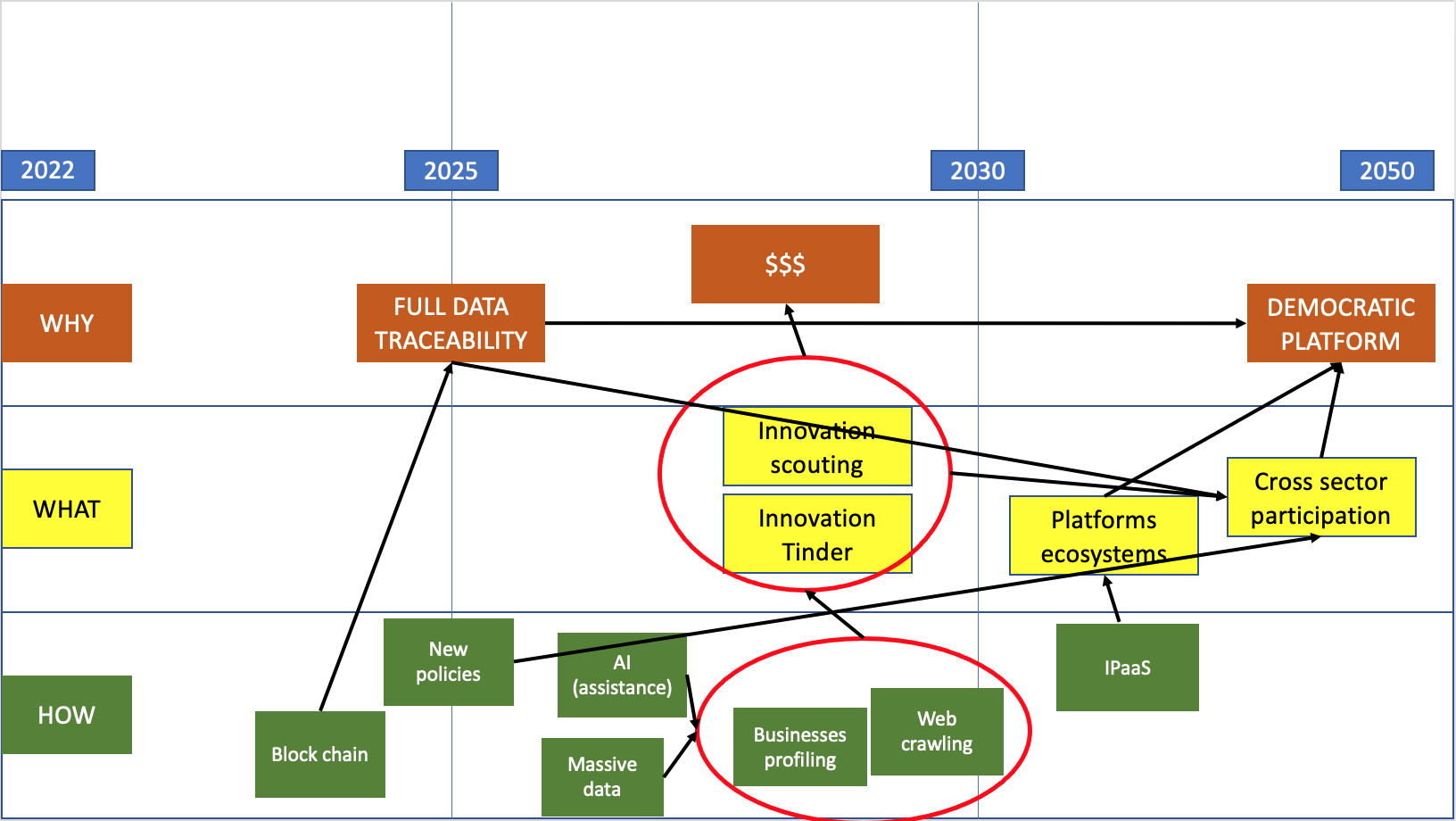
I took part in the challenge proposed by Innoget, which expected us to draw an applied technology roadmap for a clear understanding of potentially available digital solutions to improve the interactions among the different stakeholders.

Roadmaps are practical tools that help to clearly visualize plans for long-term objectives. During the summer school we attended a lecture by Dr. Rob Phaal who gave us a theoretical understanding of “roadmapping” and its potential applications in numerous fields, including our PhD journey.

During the Innoget challenge, people from my team and I firstly set a horizontal timeline on the top and a vertical column on the left, including the “why” (i.e., the objectives), the “what” (i.e., the elements we need to get the objectives) and the “how” (i.e., elements to build the “what”, in other words, the foundation of the plan).

Afterwards, we started to think about the goals, in particular those in the long-run, and then we progressively built the whole map accordingly. Building roadmaps is an iterative process, where many trials and errors take place. A first brainstorming session was essential for us to think outside the box and imagine big long-term goals for Innoget; we used sticky notes to collect and share ideas.

The picture was taken by Chiara Mariottini – from Innoget challenge – group presentation

This challenge was particularly useful because we got the chance to apply something theoretical from the management field to a practical industrial case, building a roadmap according to the expectations and the needs of an industrial partner.

Understanding the new horizons, needs, and frontiers in innovation and digital transformation is particularly important to identify hot topics and outline research projects that can practically solve specific issues or produce impactful results for companies operating in the market.

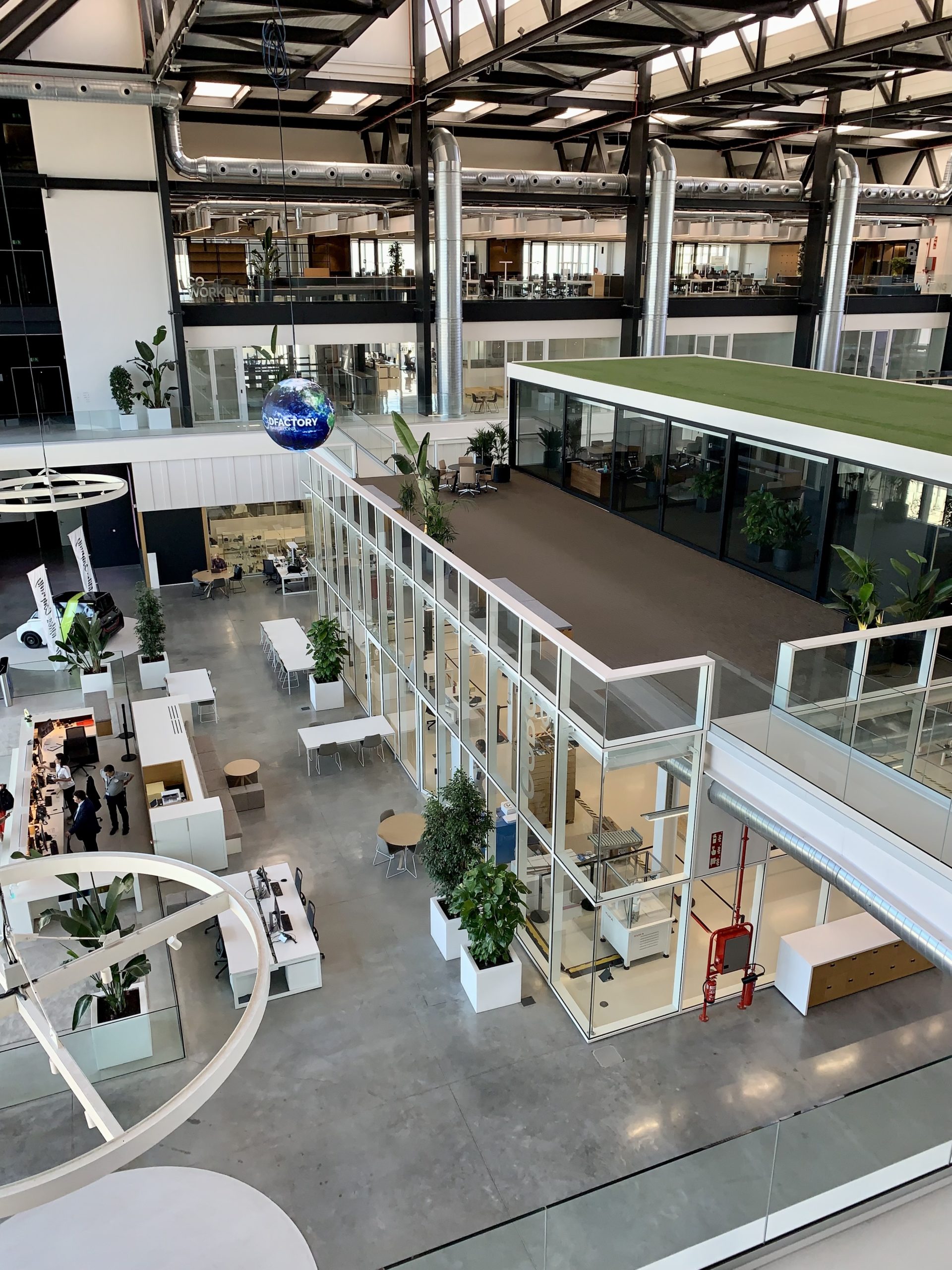
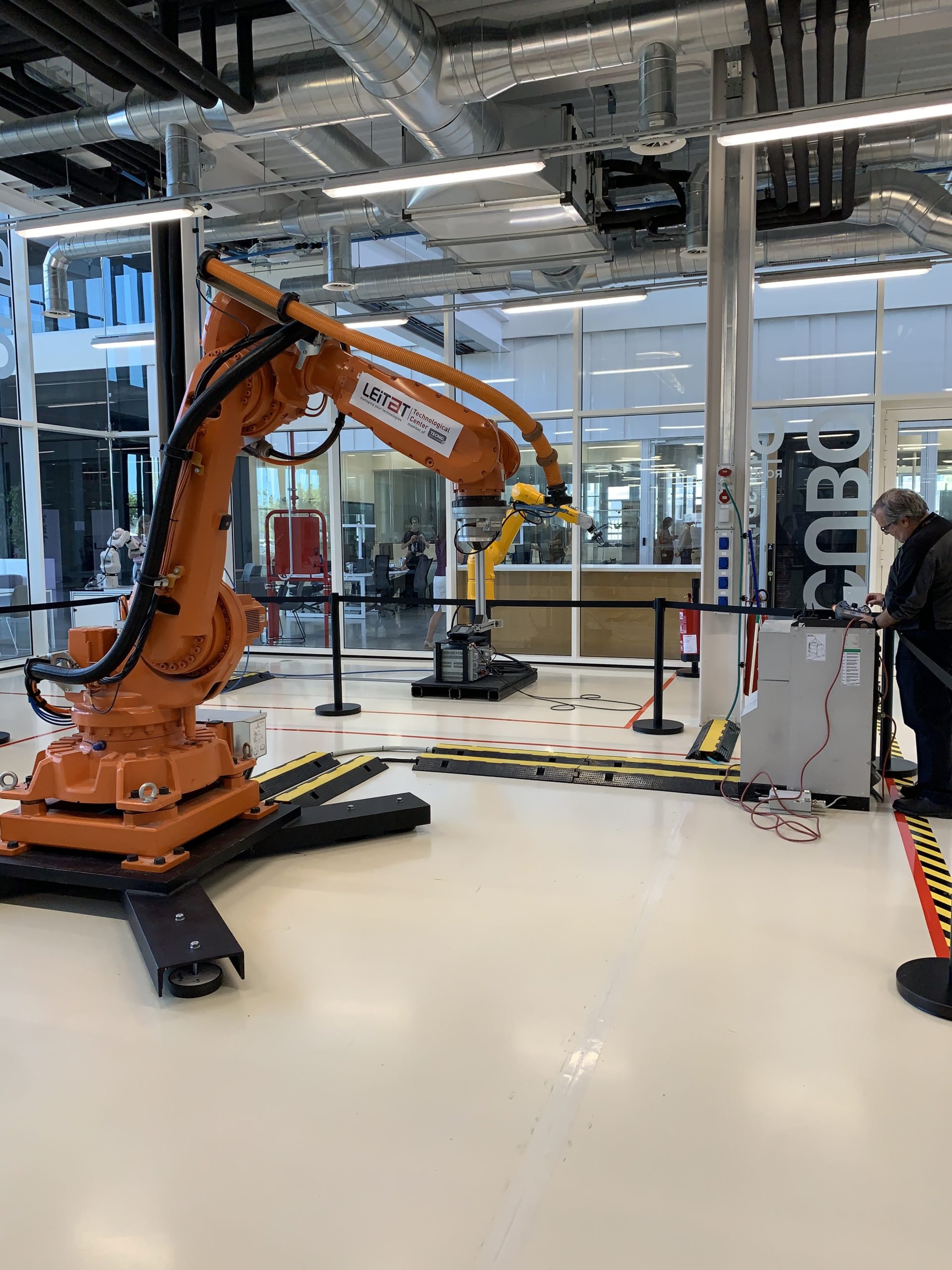
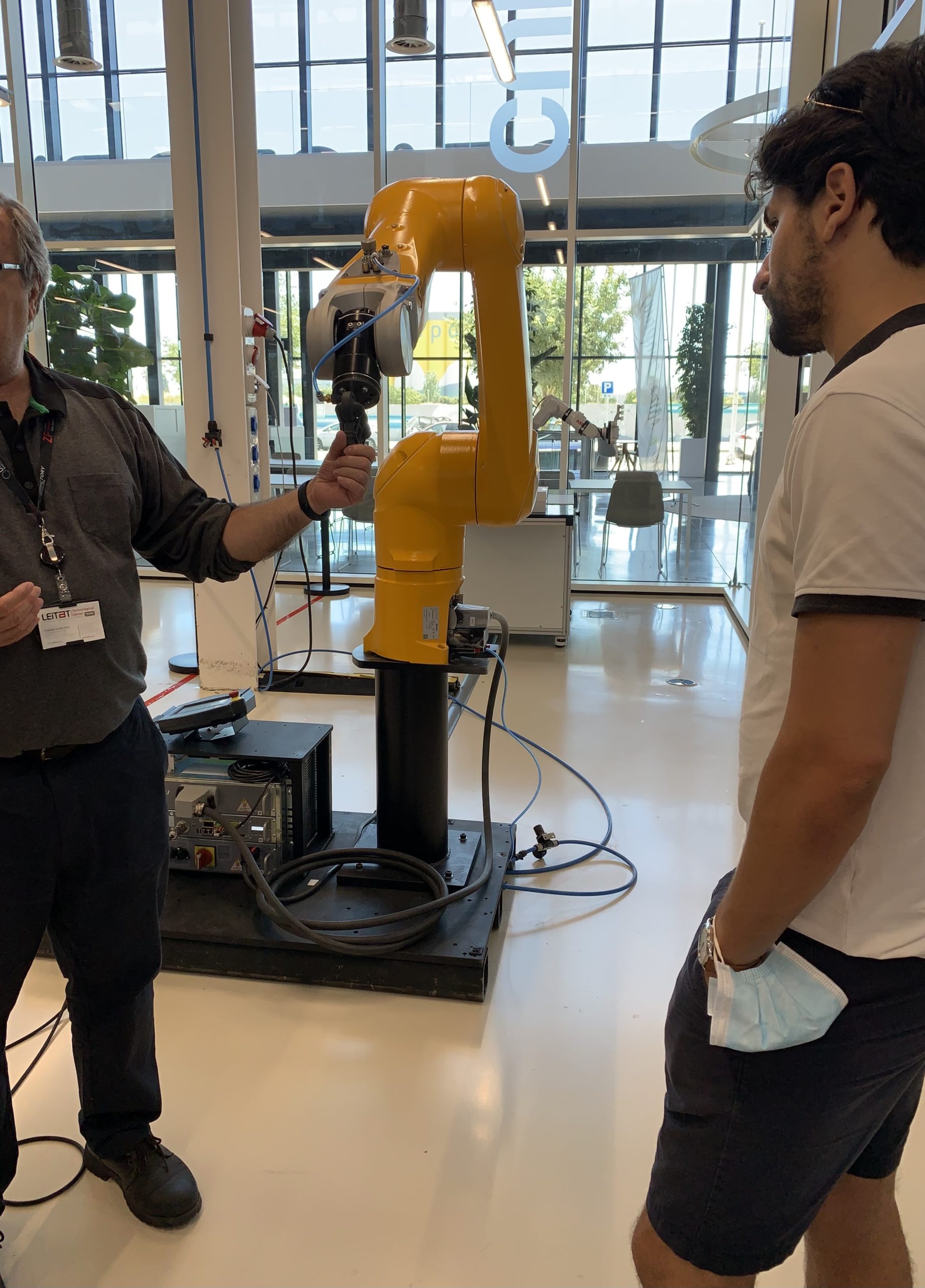
During the summer school we also got the chance to visit DFactory, a hub for the creation of an ecosystem to encourage the promotion and development of 4.0 industry. We saw robots, 3D printing, and other advanced Industry 4.0 technologies in action, understanding their functioning and their practical applications.

All these inputs were extremely valuable starting points to expand my practical knowledge about Digital Transformation, Industry 4.0, and innovation, and gave me new lenses for the exploration of the topics I am now addressing in my research projects.

Picture taken by Chiara Mariottini – DFactory – 08/07/2022

terren-hurst-blgOFmPIlr0-unsplash

My recent experience of presenting the research paper in a conference.

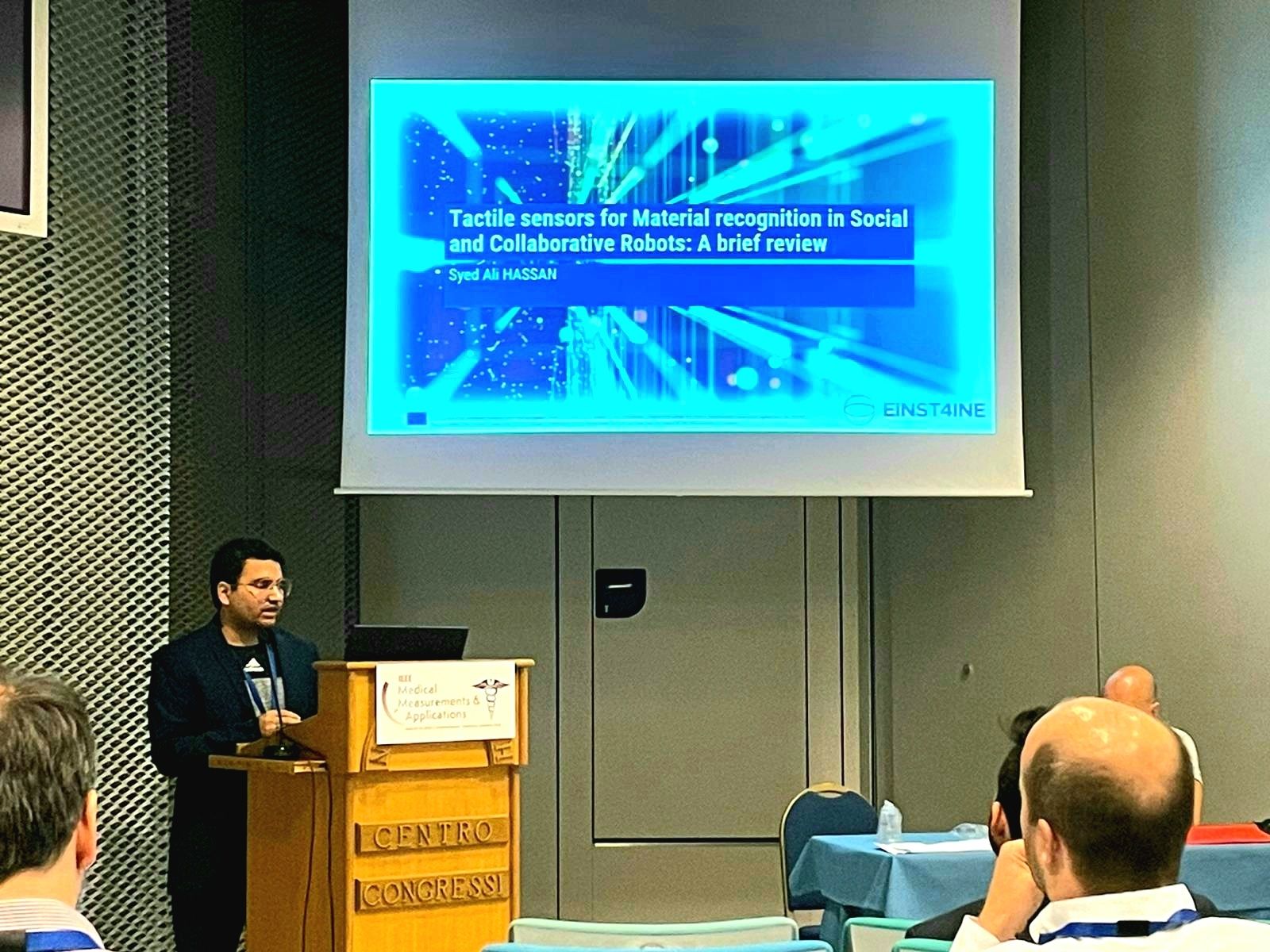
The majority of researchers hunt for a reputable conference to present their work at. As a master’s student, I presented several papers at various conferences, so I was accustomed to doing so and knew how to present my research, but as a doctoral student, this was my first conference in Italy. IEEE MeMeA 2022 is the name of the conference, which was held in Catania from June 21 to June 25, at the UNA hotel. The research papers of numerous researchers from various nations were presented. The opportunity to network with researchers from other scientific fields was a wonderful experience.

The title of my research paper on robotics is Tactile sensors for material recognition for social and collaborative robots. It was a review paper; it may be preferable to begin a research project with a review paper because it aids in a thorough understanding of the subject and stimulates reading more recent material pertinent to our investigation. After reading other people’s research on the same subject, writing a review paper might also give us fresh ideas. Anyone can read the paper I wrote by simply typing its title into IEEE Xplore, where it will be published.

The points I’m sharing for a good conference presentation are listed below:

  • Practice several times in front of a mirror.
  • Discuss your paper with your supervisor.
  • Be confident when presenting the paper.
  • Always put your presentation earlier in the conference room computer and check all slides one time to make sure all slides are working.
  • Don’t use new fonts in the presentation that are not supported in old versions of PowerPoint.
  • Use pptx or pdf format, take both formats with you.

A few researchers presented their posters on the first day of the three-day conference. Most conferences feature a poster session. During this time, researchers must display their posters on walls or on whiteboards. After that, many attendees approach the posters and ask questions about them. Poster sessions typically last for two hours or longer, during which time researchers must stand in front of their posters and answer the questions of visitors. My presentation was scheduled on the second day: I first went to see some research posters before going to the presentation room and delivering my talk. The presentation was fantastic. During my presentation, one professor asked me a few questions and said he would like to collaborate with my research.

In conclusion, I would like to address anyone who believes that if you present your study at a conference, it will be made public and someone else might steal your research concept. This is true in some cases; however, the longer portion of your work should be submitted to a reputable journal. I would suggest creating a plan whenever you begin a research project so that you can present a portion of it at a conference and later submit the entire thing to a reputable journal.

What is an ecosystem? Comparing industrial and academic perspectives

What is an ecosystem? Comparing industrial and academic perspectives

A terminology swamp

As I wrote in the last post, in June I participated in the first two live conferences of my PhD.
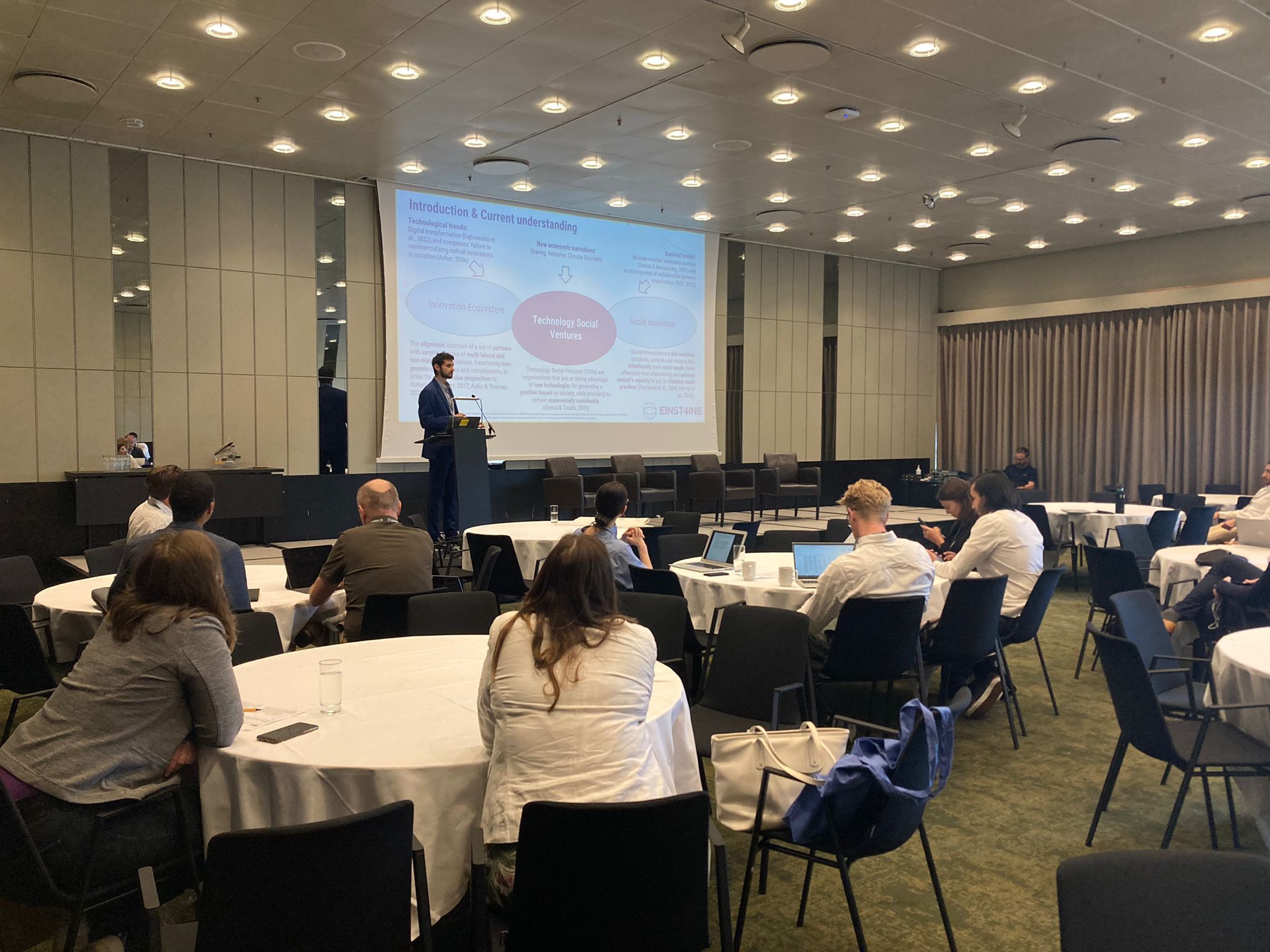
At ISPIM, I presented a preliminary study on Technology Social Ventures (TSVs), namely companies with a social mission and a tech-based strategy, taking an ecosystem perspective. Instead, at EURAM, I shared the findings of a work focusing on the entrepreneurial level, to understand how TSVs manage the social and technological component of their strategy.

Photo taken during my presentation at ISPIM 2022, Copenhagen


Based on that, you may have realized that my main research interests lie at the intersection between technological innovation, societal challenges and ecosystems. Today, I would like to talk about this last topic.
Indeed, taking inspiration from the conversations I had at ISPIM conference, I realized:

  • First, how difficult it is explaining what an “ecosystem” is to someone not working in the field.
  • Second, scholars apply this concept in different ways and contexts, not always highlighting the differences.
  • Third, despite its wide adoption in the industry, practitioners usually refer to the classic conceptualization of business ecosystem, neglecting the other definitions identified in the literature.

Therefore, in this blog I would like try to address this mismatch providing a brief overview on what characterizes an ecosystem, according to the literature.

Why

But before that, why are we even talking about ecosystems in the management literature? To answer this question, we should go back to the early 90s, when J.F. Moore adopted a Darwinian perspective to describe market competition’s dynamics. He argued that:

“Successful businesses are those that evolve rapidly and effectively.”

That is, those who are best able to adapt to the environment. Yet innovative businesses can’t evolve in a vacuum.
In fact, drawing from other recent anthropological and biological discoveries, he suggests that a company can be viewed not as a member of a single industry but as part of a business ecosystem that crosses a variety of industries (Moore, 1993).

However, the diffusion of this concept remained latent for almost a decade, until Iansiti and Levien (2004) recalled it in their HBR Article titled “Strategy as Ecology”. Finally, it is a few years later, when Adner (2006) showed how most traditional companies fail to commercialize breakthrough innovations in isolation, that the ecosystem concept definitely took hold.

Most likely, one of the enabling factors of the increasing adoption of this term in the late 2000s is the advent of digital technologies. Accordingly, collaborations between organizations became easier and more frequent, making the proper management of interdependencies crucial, as predicted by Moore three decades ago.

What

That said, what is an ecosystem?

An ecosystem can be defined as “an interdependent network of self-interested actors jointly creating value” (Bogers et al., 2019). In other words, we can see an ecosystem as a set of organizations collaborating to offer a specific product or service, without having formal bonds or hierarchical relations.

However, ecosystems can take several forms, which makes our blog even more interesting (or complex, depending on the perspective 🙂 ). Here, I will briefly present four of them (Scaringella & Radziwon, 2018), starting from the most embedded in the geography literature to the most abstract one:

  • Entrepreneurial Ecosystem:
    • “a set of interdependent actors and factors coordinated in such a way that they enable productive entrepreneurship within a specific institutional context” (Stam, 2016);
      • Example: Typically these studies examine a high-technology cluster or the linkage between universities and local companies, such as Silicon Valley.
  • Knowledge Ecosystem:
    • “users and producers of knowledge that are organized around a joint knowledge search, and as such need to be located in close proximity” (Järvi et al., 2018; Van der Borgh et al., 2012).
      • Example: The High-Tech Campus Eindhoven (HTCE), in the Netherlands, served as the object of the study for Van der Borgh et al. (2012).
  • Business Ecosystem:
    • “a system in which companies coevolve capabilities around a new innovation, developed by a focal firm. They work cooperatively and competitively to support new products, satisfy customer needs, and eventually incorporate the next round of innovations” (Jacobides et al., 2018; Moore, 1993).
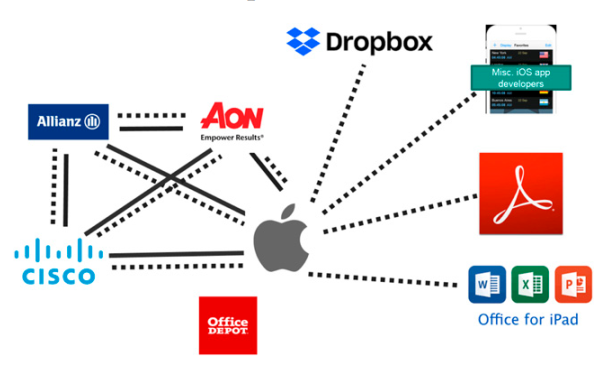
      • Example: Apple is the leader of an ecosystem that crosses at least four major industries: personal computers, consumer electronics, information, and communications (Moore, 1993).
  • Innovation Ecosystem:
    • “the alignment structure of a set of actors with varying degrees of multi-lateral, non-generic complementarities that are not fully hierarchically controlled, providing components and complements, in order for a focal value proposition to materialise” (Adner, 2017; Jacobides et al., 2018)
      • Example: Digital platforms such as the Apple Store can be described as innovation ecosystems. Instead, the Michelin’s PAX run-flat tire system presented by Adner (2017), represents an example of a non-platform based ecosystem, requiring an alignment between the actors to let the innovation materialize.
Description of the iOS ecosystem, taken from Shipilov and Gawer (2020)
Description of the Apple Store ecosystem, taken from Shipilov and Gawer (2020).

How

After having seen the definition, now I will report some of the main elements that help to identify an ecosystem from other concepts.

Among the most relevant factors, we can mention:

  • Complementarities
    • Three types of complementarities exist.
      • Unique: The first one means that A wouldn’t function without B (and, in case of co-specialization, viceversa), requiring coordination among the actors to achieve success.
      • Supermodular or “Edgeworth”: complementarities describe a relation between two objects, which can be two different products, assets, or activities, where more of A makes B more valuable.
      • Generic: even though a particular good or service may be needed for the production of a complex value proposition or innovation, that good or service may be generic (i.e., standardized) enough for firms to draw on it with little concern for governance structure or risks of misappropriation.

Ecosystems must be identified just with the first two typologies (Jacobides et al., 2018).

  • Interdependencies

While complementarities represent an economic relationship in terms of the potential for value creation, interdependencies represent a structural relationship between offers, in terms of how they are connected for the value to be created (Kapoor, 2018).
In a nutshell, this means that they are even more complex to manage, because they are not directly related to an economic exchange.
To be clearer, I will report an example related to Tesla, drawn from Kapoor (2018):

  • The structure of interdependencies between car producer and cell producer is distinct from the structure of interdependencies between car producer and charging infrastructure provider:
    • The first one has a direct relation;
    • The second one has a indirect relation, mediated by the user;
    • Moreover there are other interdependencies between cell producer and charging infrastructure provider or even between charging infrastructure and the electricity grid.

Therefore, the core concern for research grounded in an ecosystem perspective is to explain firms’ strategies and outcomes through the lens of such complementarities and interdependencies.
It follows that the co-evolution of actor’s strategies represents another key element, given the kind of relationships that exist between them (Ritala & Almpanopoulou, 2017), as well as the existance of a system-level outcome (Autio & Thomas, 2021).

Finally, we should highlight that these relations between different parties are usually multi-lateral and not hierarchically or formally controlled, compared to the dyadic relations that can be found in other structures, such as supply chains, markets and networks (Adner, 2017; Shipilov and & Gawer, 2020).

As you can see, talking about ecosystem means looking beyond the strict boundaries of an organization, something that now is more needed than never, given the complex societal challenges we are facing. And this is what I like the most about this concept, as it is an example of how and why managers should adopt wider lenses to define their strategies (Adner, 2012), aligning them with all the relevant stakeholders.

I hope that this post helped to clarify (even though in a non-exhaustive way) the ongoing conversation about ecosystems.

Now, it’s time for the second episode of my column!


Surfin’ Internet

  • Video:
    • If you haven’t had enough on ecosystems yet, this Debate from DRUID Conference 2019 won’t let you down.


  • Academic article
    • In this recent article introduced by Denny Gioia, Gabriela Rivera displays all the contradictions and mixed messages PhD Students have to deal with, while embarking in the first year of their Doctoral Program.
  • Tweet
    • Unless you have a natural talent, writing is never easy. And writing with an academic style can be even more painful. Here you can find a nice tip to improve your writing style.


Bibliography

Adner, R. (2006). Match your innovation strategy to your innovation ecosystem. Harvard business review84(4), 98.

Adner, R. (2012). The wide lens: A new strategy for innovation (Vol. 34, No. 9). Penguin Uk.

Adner, R. (2017). Ecosystem as structure: An actionable construct for strategy. Journal of management43(1), 39-58.

Autio, E., & Thomas, L. D. (2021). Researching ecosystems in innovation contexts. Innovation & Management Review.

Bogers, M., Sims, J., & West, J. (2019). What is an ecosystem? Incorporating 25 years of ecosystem research. Proceedings. https://doi.org/10.5465/AMBPP.2019.11080abstract

Iansiti, M., & Levien, R. (2004). The keystone advantage: what the new dynamics of business ecosystems mean for strategy, innovation, and sustainability. Harvard Business Press.

Jacobides, M. G., Cennamo, C., & Gawer, A. (2018). Towards a theory of ecosystems. Strategic management journal39(8), 2255-2276.

Järvi, K., Almpanopoulou, A., & Ritala, P. (2018). Organization of knowledge ecosystems: Prefigurative and partial forms. Research Policy47(8), 1523-1537.

Kapoor, R. (2018). Ecosystems: broadening the locus of value creation. Journal of Organization Design, 7(1), 1-16.

Moore, J. F. (1993). Predators and prey: a new ecology of competition. Harvard business review71(3), 75-86.

Ritala, P., & Almpanopoulou, A. (2017). In defense of ‘eco’in innovation ecosystem. Technovation60, 39-42.

Scaringella, L., & Radziwon, A. (2018). Innovation, entrepreneurial, knowledge, and business ecosystems: Old wine in new bottles?. Technological Forecasting and Social Change136, 59-87.

Shipilov, A., & Gawer, A. (2020). Integrating research on interorganizational networks and ecosystems. Academy of Management Annals14(1), 92-121.

Stam, F. C., & Spigel, B. (2016). Entrepreneurial ecosystems. USE Discussion paper series16(13).

Van der Borgh, M., Cloodt, M., & Romme, A. G. L. (2012). Value creation by knowledge‐based ecosystems: evidence from a field study. R&D Management42(2), 150-169.

Blockchain - Revolution or Buzzword?

Blockchain – Revolution or Buzzword?

Blockchain - Revolution or Buzzword?
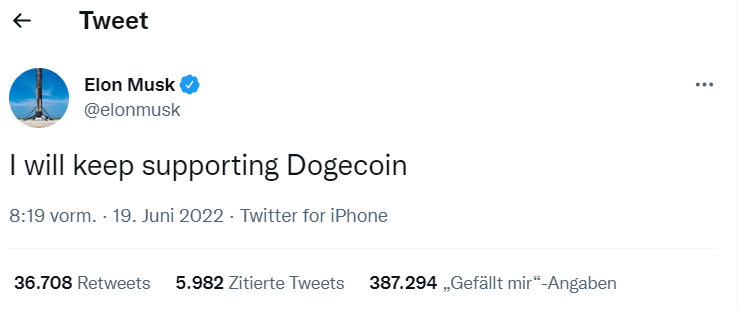
Tweet by Elon Musk (19.06.2022)

Tweets like these are thought-provoking. It’s fascinating how far technologies like blockchain have come in our everyday lives. New cryptocurrencies are being created every day, and at the moment technological achievements seem to be expanding (check out Ali Syed Hassan’s blog post about NFTs).

This blog entry is dedicated to the technological awareness of blockchain technology. As we live in a rapidly changing world, it is important to keep up with the pace and understand how new technological innovations work.

So what is blockchain in the first place and what are the connections to distributed ledger technology (DLT), NFTs and cryptocrurrencies?

What is it all about?

Blockchain technology (BCT) is already established as an innovative component of society that continues to gain increasing relevance, especially for private financial usage. Key features of this distributed ledger technology ensure transparency between all parties, enhanced traceability and security and therefore provide a promising information technology system. BCT potential application reaches beyond digital currencies (such as Bitcoin and Dogecoin) and financial assets as its potential has been stated as “endless” with already established functions, for instance with financial transactions and blockchain enabled smart contracts (Abeyratne & Monfared, 2016).

Satoshi Nakamoto, the inventor of the first cryptocurrency, Bitcoin, developed a peer-to-peer network concept in 2008 which is the foundation of all cryptocurrencies (Nakamoto, 2008). Since many components of the Bitcoin blockchain are used for other virtual currencies, the focus in explaining the principle will be highlighted on the Bitcoin blockchain.

Peer-to-peer networks

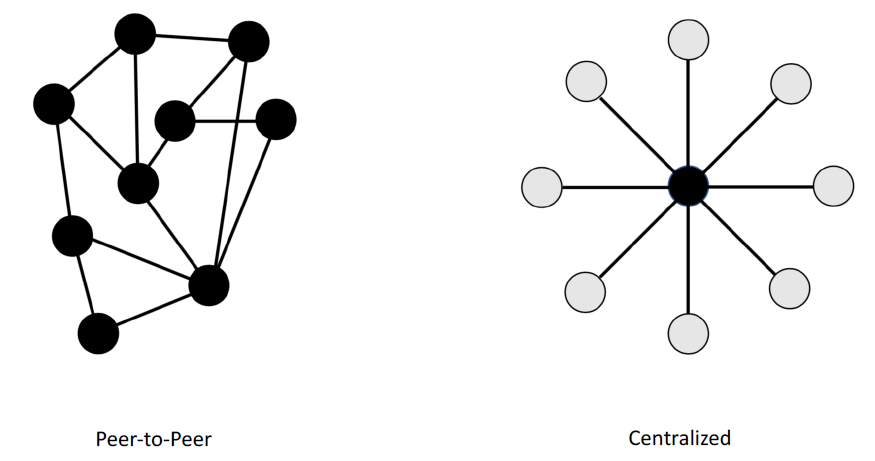
A peer-to-peer network is a decentralized network in which every participant is treated equally. The users are linked with one another and have a large number of connections. Moreover, each participant is able to verify the legitimacy of the transactions carried out in the network by holding and forwarding a local copy of the decentralized database, the so-called blockchain register (Berentsen & Schär, 2017).

Types of network structures (Own representation based on Berentsen & Schär (2018)
Figure 1: Types of network structures (Own representation based on Berentsen & Schär, 2018)

Figure 1 illustrates the principle of the classic central network concept and the decentralized network concept. While a classic Internet application is divided into one service provider and many clients, the functionality in a decentralized network is provided by the cooperation of the existing participants. The decentralized infrastructure offers many advantages, such as its resistance to failures and attacks because it doesn’t rely on a central instance.

Network Participants

Cooperating computers in peer-to-peer networks have been referred to as participants. These participants are also called network nodes and facilitate three different functions: the verification function, the wallet function and mining (Sixt, 2017).

  • The verification function

This function describes all activities that are required for network participation. The task is fulfilled when nodes save local copies of the blockchain register and verify incoming transaction information, just before this information is stored and transmitted to other nodes.

  • The wallet function

This function covers the storage of public and private keys (cryptographic security units) of Bitcoin users. In
addition, a graphical user interface is usually integrated in order to simplify the receipt and dispatch of Bitcoin units.

  • The mining process

Nodes that perform a mining function are also called miners. They invest a great amount of computing power in order to participate in the generation process of new blocks which expand the blockchain register.

Executing the Transaction

Since there are no traditional banking accounts in the Bitcoin network, the coins are transferred to so-called Bitcoin addresses. A Bitcoin address is created with the wallet software by generating a cryptographic key pair, that are assigned to the users. The transfer plus an optional transaction fee is send to the network. The first node to receive the transaction executes the verification function by checking several factors. The transaction is considered as valid after this process, and the transaction is ready to be executed after feeding it into a new block.

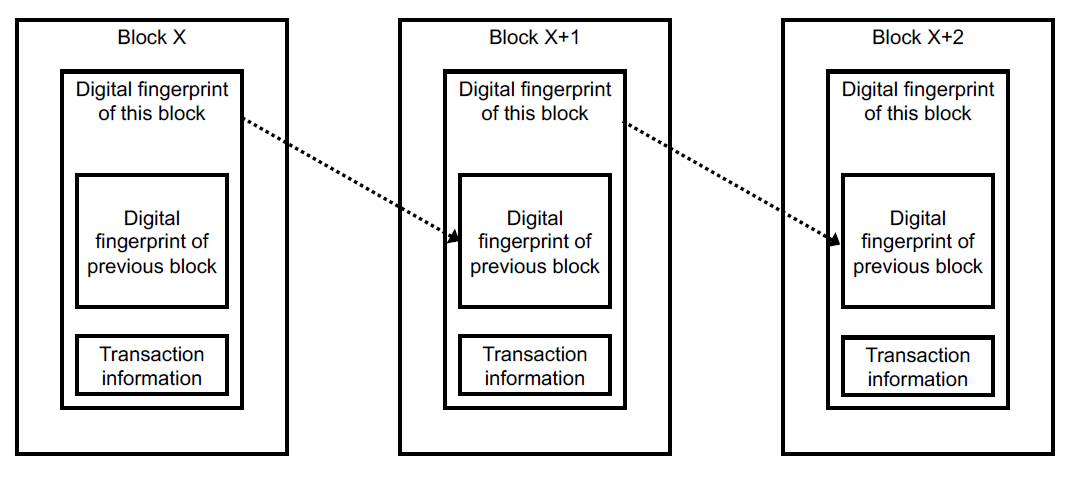
Blockchain structure (Own representation based on Berentsen & Schär (2017))
Figure 2: Blockchain structure (Own representation based on Berentsen & Schär, 2017)

Expanding the Blockchain Register

The generation of a new block is known as mining. This mining activity processes all validated transactions in an irreversible way in the network. Each node that performs the mining function is able to create new block candidates by bundling unconfirmed transactions from their local transaction store (Sixt, 2017). In addition to transaction information, this block candidate contains a so-called block header, which contains descriptive information for the identification and localization of the block, as well as an identification number which references the previous block (Berentsen & Schär, 2017). Each block thus references the digital fingerprint of its respective predecessor block, which is why these blocks are firmly anchored in the structure and are dependent on one another (Berentsen & Schär, 2017). Figure 2 illustrates the dependency of the blocks.

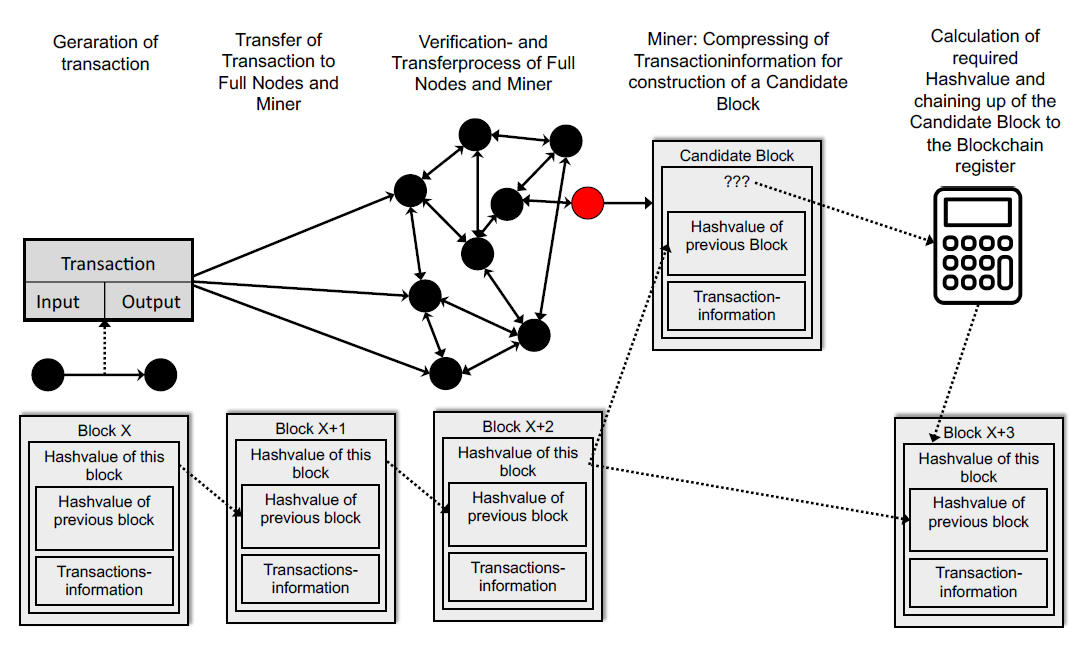
Simplified transaction process (Own representation based on Berentsen & Schär (2017))
Figure 3: Simplified transaction process (Own representation based on Berentsen & Schär, 2017)

Proof-of-work and outview

The original blockchain consensus mechanism achieves consensus among the miners via a so-called proof-of-work scheme (Sixt, 2017). This scheme classifies a certain block of candidates as valid after a high level of computing power has been used. Each miner tries to solve a given problem that is extremely energy-intensive in order to be the first node to provide the proof-of-work and, ultimately, to chain the candidate block he has created in the blockchain register (Zohar, 2015).

The proof-of-work sets an increasing security factor for the register, since the chain is secured by computing power and strictly linked to costs. Figure 3 visualizes the complete transaction and mining process.

All in all it can be said that this system was brought to prominence due to cryptocurrencies. Nowadays, a variety of fields, including:

  • healthcare
  • real estate
  • government and
  • music

are finding applications for blockchain’s powerful architecture and secure way of storing, verifying, as well as encrypting data. As my research topic is also connected to implementation barriers of novel technologies and adoption behaviour, the evolution of blockchain that is applied to more and more sectors is an extremely interesting trend to follow for me.

For more information on blockchain and NFTs, check out the official website.


References

ABEYRATNE, S. & MONFARED, R. 2016. Blockchain Ready Manufacturing Supply
Chain Using Distributed Ledger. International Journal of Research in
Engineering and Technology, 05.

BERENTSEN, A. & SCHÄR, F. 2017. Bitcoin, Blockchain und Kryptoassets.

NAKAMOTO, S. 2008. Bitcoin: A Peer-to-Peer Electronic Cash System. Cryptography
Mailing list at https://metzdowd.com

SIXT, E. 2017. Bitcoins und andere dezentrale Transaktionssysteme: Blockchains als
Basis einer Kryptoökonomie.

ZOHAR, A. 2015. Bitcoin: Under the hood. Commun ACM Communications of the
ACM, 58, 104-113.