I think that it is interesting to reflect on guilt and responsibility in relation to the impact of autonomous robots, that is, artificial agents that can do human tasks with no direct human control [1]. Even if robotics technology is not yet ready to deploy fully autonomous robots, it is a good practice to think about what could and should happen in the future. Intelligent machines will become autonomous, meaning that the designers, developers, and deployers have no full understanding and control over the behavior of such technologies. This causes challenges to assign responsibility because it seems unfair to blame humans for the actions and consequences of robots.
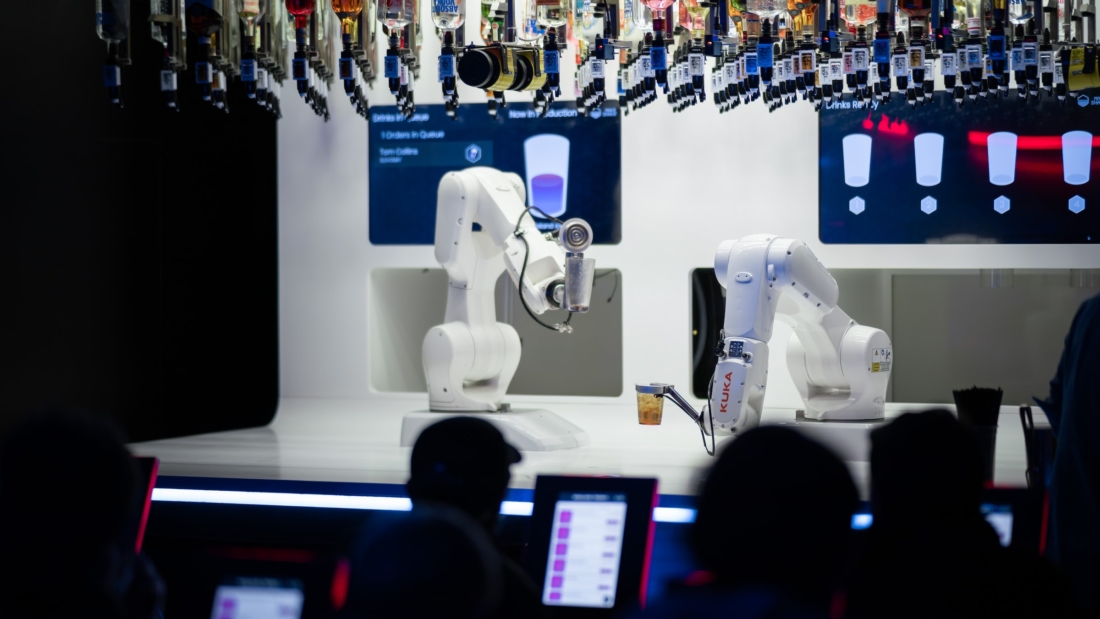
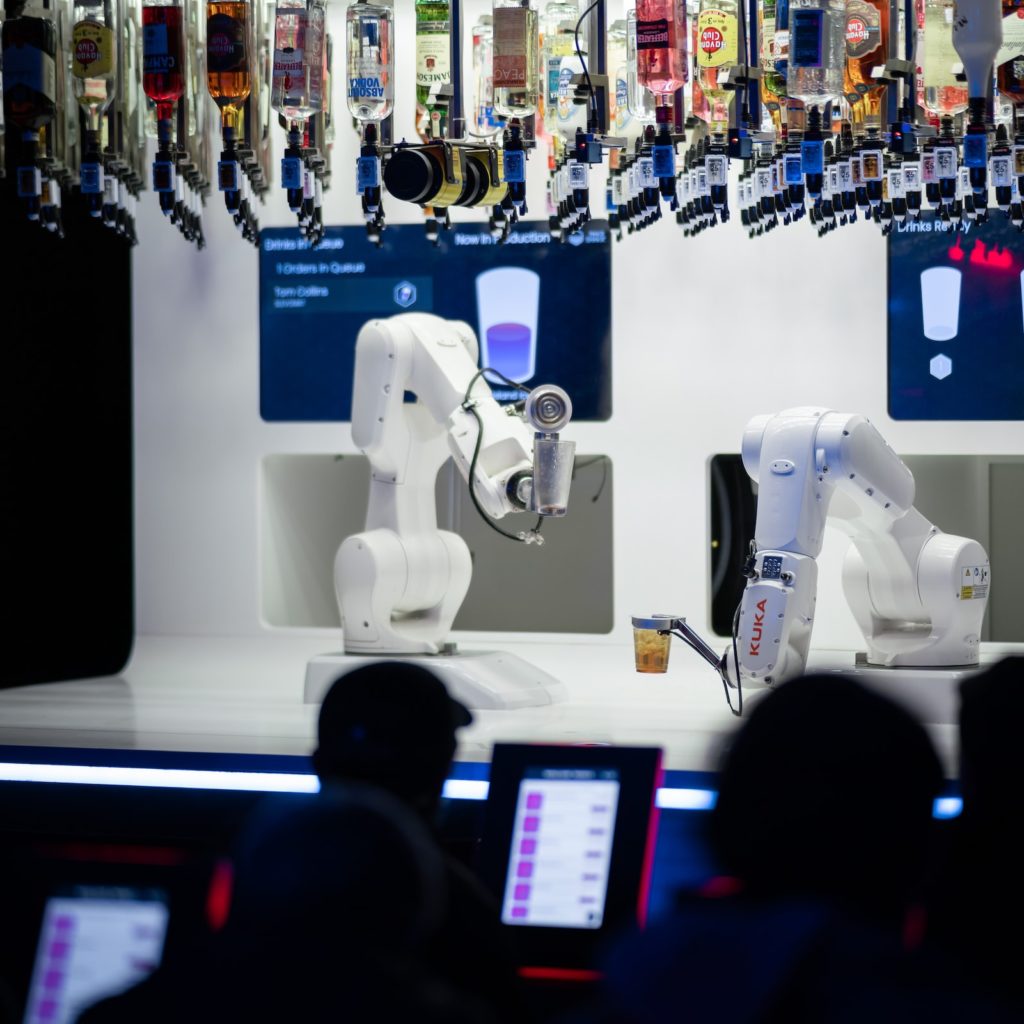
Research shows that designers and developers of AI systems in startups don’t feel responsible for the unintended consequences of technology [2]. For example, a robot designer does not feel accountable for the impact of an autonomous bartender robot on human bartenders, clients, service workers, and managers of an automated hotel bar. The robot designer is just doing his or her job: developing a new technology that solves problems.
I think a distinction between guilt and responsibility is interesting in this context because responsibility is not a feeling nor an emotion, such as guilt. When designers, developers, salespeople, -and anyone involved in the long chain of stakeholders- say they don’t feel responsible for the impact of autonomous robots, they might be thinking about guilt instead. Guilt is an unhappy emotion that arises after you consciously or subconsciously feel that you did something wrong. This might be the reason why robot designers and developers are not feeling accountable for the social impact of the technology they produce, they are just doing their job, why would that be wrong? They don’t feel guilty, and therefore, they don’t acknowledge responsibility.
Responsibility is not synonymous with guilt, it is not an emotion that arises when you did something wrong, it comes from taking accountability despite your feelings or beliefs of right and wrong. This means that people are liable even when there is no obvious reason to be guilty. I think it is relevant to understand that although it is not wrong to produce autonomous robots, and thus, it does not make you guilty, it does make you responsible because technology is not only technically constructed but also socially and politically [3]. The impact of robots does not end in the 1 to 1 human–robot interaction, it continues in sociotechnical systems [4].
What does it mean to be responsible? To be accountable. To respond. To take action that will protect someone else’s interests. Then, for what are autonomous robot producers responsible? For anticipating impacts, reflecting, engaging in dialogue, and influencing the direction of technology [5]. And to whom are autonomous robot producers responsible? Being responsible implies responding to someone, including robot users in development processes, and being open and able to answer their questions [6]. And robot implementers and users should be responsible too. We would all have a share of responsibility, we would be co-responsible [3], as we are today with everything that is happening with climate change and many other societal problems.
We need to change this worldview, from feeling guilty to being responsible, if we want to have a smooth and positive transition to the use of autonomous robots when the moment comes.
Sources:
[1] D. G. Johnson, “Technology with No Human Responsibility?,” J Bus Ethics, vol. 127, no. 4, pp. 707–715, Apr. 2015, doi: 10.1007/s10551-014-2180-1.
[2] A. Rojas and A. Tuomi, “Reimagining the sustainable social development of AI for the service sector: the role of startups,” JEET, vol. 2, no. 1, pp. 39–54, Nov. 2022, doi: 10.1108/JEET-03-2022-0005.
[3] J. Stilgoe, R. Owen, and P. Macnaghten, “Developing a framework for responsible innovation,” Research Policy, vol. 42, no. 9, pp. 1568–1580, Nov. 2013, doi: 10.1016/j.respol.2013.05.008.
[4] A. van Wynsberghe, “Responsible Robotics and Responsibility Attribution,” in Robotics, AI, and Humanity, J. von Braun, M. S. Archer, G. M. Reichberg, and M. Sánchez Sorondo, Eds. Cham: Springer International Publishing, 2021, pp. 239–249. doi: 10.1007/978-3-030-54173-6_20.
[5] B. C. Stahl and M. Coeckelbergh, “Ethics of healthcare robotics: Towards responsible research and innovation,” Robotics and Autonomous Systems, vol. 86, pp. 152–161, Dec. 2016, doi: 10.1016/j.robot.2016.08.018.
[6] M. Coeckelbergh, Robot ethics. Cambridge, Massachettes: The MIT Press, 2022.
During my PhD studies in the third semester, I had the opportunity to assist and teach some classes about the digital economy and specifically about digital platforms and ecosystems. While I hope that the students learnt as much as I did, I became highly interested in one topic:
Digital Industrial Platforms
Before diving into what digital industrial platforms are, it seems useful to define what digital platforms are:
Dating back to the nineties with the onset of the Internet and the increased communication and creation of online communities, native digital platforms such as eBay started to emerge, facilitating online commerce. Later, Amazon and Google made the most of the power of the network to become what they are today.
Nowadays, as technology continues to advance and pierces through new industry boundaries, new types of platforms have emerged. Industry 4.0 and the Internet of Things have led to the emergence of digital industrial platforms which allow firms to connect and collect data from industrial machinery and their environment in order to co-create new solutions and services.
GE’s Predix is one example of a digital industrial platform.
Check out GE’s “Predix” platform:
But, unlike commercial platforms, digital industrial platforms serve as both innovation and transaction platforms. They collect and analyze data from different industrial assets and make this information available to third-party companies so that they can create complementary products and services. Many of these platforms also act as a marketplace where they sell these solutions to industrial customers.
Another difference between B2C and B2B platforms relates to the way they are “built”. The rules that apply in the B2B sector may not apply to the B2C, as network effects are not as prevalent in the manufacturing industry due to the more complex nature of industrial products and the relationships between the third-party developers as well as the customers and the sellers.
What we can say, is that all digital platforms have a technological basis. Industrial platforms are an interesting case as they converge different types of machinery, digital, enabling, and general-purpose technologies. A recent paper by Jovanovic et al. (2022) assessing the creation of different industrial platforms illustrates the evolution of the connection between these technologies:
Most platforms start with collecting data about each machine or product through the installation of sensors. With this, companies gain a better understanding of their machinery and the connected processes.
Through analytics, the use of “advanced” sensors can give more information about the performance and weaknesses of the machines. With this, they are able to gather huge amounts of data that they store in a cloud (e.g. Microsoft Azure, AWS, etc.). This helps companies to proactively discover anomalies, and react before a problem arises.
Finally, AI technologies can help assess the technicalities and data generated by machines and their surroundings. Most importantly AI technologies contribute to the autonomy of the system, like the GE Predix platform, where trains can accelerate and decelerate depending on if you’re driving up a hill or down a hill.
So, even though most scholars have agreed that technology can drive the growth of ecosystems, we still don’t know much about the interaction of these technologies and how they are connected to the formation and expansion of ecosystems. .. So stay tuned while we find out!
References:
Jovanovic, M., Sjödin, D., & Parida, V. (2022). Co-evolution of platform architecture, platform services, and platform governance: Expanding the platform value of industrial digital platforms. Technovation, 118, 102218. https://doi.org/10.1016/j.technovation.2020.102218
Immersive experiences are constructed by merging the physical and virtual worlds. Among the technologies that are gaining more popularity are Virtual Reality (VR), Augmented Reality (AR), and Mixed Reality (MR). Recently interest in Extended Reality (XR) has grown rapidly.
Current developments in technology have led to the extension of the terminology used to describe the merging of the physical or real world with a virtual world. All mentioned terms refer to a combination of virtual and physical worlds using various digital media to create new, blended spaces. In recent years, we have heard and read a lot about Virtual Reality and Augmented Reality.
Virtual Reality (VR) is like a new reality that is created. It is a simulation of an environment or a three-dimensional image. People can interact with that virtual environment by using equipment such as headsets, helmets, glasses, or gloves. Increasingly such equipment comes with more sophisticated sensors, enabling more refined experiences. A headset allows the user to be immersed in the VR experience; the user can see a virtual world delivered by computer-simulated images and sounds.
Augmented Reality (AR) is often described as the merging of our normal reality with computer-generated digital graphics. Unlike virtual reality, users do not experience being in a virtual world, but they see the real world with an additional digital layer. Often used by enabling the camera of handheld devices such as mobile phones or tablet computers, AR allows a new kind of display which is usually portable.
Picture: Freepik.com
Mixed Reality (MR) combines the features of VR and AR. A more recent term, mixed reality is often used in a similar way as augmented reality. MR is used to create three-dimensional images of realistic objects or complex environments where real and virtual worlds are blended. The interaction of digital and physical elements in real-time constructs a new space. MR is defined as a “continuum between the real and the virtual environments” [1].
In addition to the combination of real-world overlaid with a virtual layer as provided by AR, digital environments for mixed reality can use not only portable devices but physical environmental elements such as rooms or buildings. The fact that both sellers and users or buyers can interact with these objects or environments makes MR attractive for application in business. Sellers can provide immersive experiences with MR that help demonstrate how a product will look in a certain space. For instance, fitting furniture into a client´s home or demonstrating how a building looks and how it will fit into an area or neighborhood are useful features for marketing and sales. Other examples include head-up displays as used in the automotive industry. Using MR, clients can interact with the object and experience it in a new way.
Picture: Freepik.com
So, VR constructs a new reality, AR consists of the physical world that is overlaid with a digital layer, and MR allows new experiences through interaction with an object or a product… what about Extended Reality?
Extended Reality (XR)
Extended Reality or XR is a relatively new expression. It is an emerging umbrella term that includes Virtual Reality (VR), Augmented Reality (AR), and Mixed Reality (MR). The full spectrum of real and virtual environments is covered by XR. [2] It refers to computer-generated environments. By overlaying a virtual layer over the physical reality, XR creates entirely immersive user experiences using computer-generated images and sensors.
In 2019, many stakeholders of XR product companies predicted that XR will become mainstream in the next five years. [3] Industry use cases are predicted to be mainly in the medical and manufacturing industries for business XR, whereas consumer XR will be mainly focused on media and entertainment, movies, television, and the gaming industry.
In education augmented and virtual reality technology offers new training opportunities that cannot be found in traditional classroom settings. XR will allow educators to explore new educational territory. Furthermore, XR helps facilitate new experiences for students, such as observing certain topics at different points in time throughout history or exploring distant places on earth with virtual visits. Students exposed to XR are enabled to experiment and engage in new ways. They may not only learn better but could also improve crucial skills like problem-solving or other abilities that are useful in daily life.
Multisensory Extended Reality is often used together with the term extended reality. In addition to the visual and the auditory senses, which have been mainly highlighted by VR and AR, it refers to immersion into a new reality through additional senses. The human senses are extended with sensory-enabling XR technology. These include the haptic sense, enabling the touch of objects with gloves, the sense of taste, simulated with an electronic tongue, and the sense of smell, simulated through an electronic nose or diffuser technology. [4]
Picture: Freepik.com
Which reality?
The possibilities offered by XR technology are seemingly endless. Businesses have begun to leverage this cutting-edge technology for a variety of purposes such as entertainment, education, or remote tours for remote visits to museums or tourist attractions. Marketing, real estate, the medical industry, media, and entertainment were the first to adopt it, but many more will follow soon. In 2022, the worldwide market for extended reality was valued at $38.3 billion. Predictions for 2030 see the market rise up to $394.8 billion. [5] The European XR industry is fragmented and less well-known than its competitors in Asia or the US. [6]
Industry has discovered what XR technology can do for them and has developed innovative ways to make use of these advanced technologies. As AR and VR are increasingly adopted, a rapidly growing list of sectors invests in the development of new applications.
New technologies are likely to continue the creation of additional new realities. People are given more control over how they interact with their physical or digital environment. Use cases for XR are seen in almost every industry. As potential applications for XR may go far beyond the sectors mentioned, XR is foreseen to revolutionize every industry in the near future.
References
[1] https://xr4all.eu/xr/
[2] XR4ALL is an initiative by the European Commission to strengthen the European XR industry. For more information see https://xr4all.eu/xr/
[3] https://www.visualcapitalist.com/extended-reality-xr/
[4] Santoso, H. B., Wang, J. C., & Windasari, N. A. (2022). Impact of multisensory extended reality on tourism experience journey. Journal of Hospitality and Tourism Technology.
[5] https://www.psmarketresearch.com/market-analysis/extended-reality-xr-market-insights
[6] https://xr4all.eu/about/
In the early 1980s, in a Brazil plagued by dictatorship and economic stagnation, a soccer player succeeded in transforming the structure of one of the most famous Brazilian football teams, named Corinthians, into the only shared governance laboratory in the football world.
A revolution that has gone down in history as Democracia Corinthiana.
Tired of the way the players were treated and some of the decisions made by the previous president, Socrates, in agreement with the rest of the team, convinced the club’s new management that any decisions would have to be discussed at an assembly and then put to a vote by all employees. From the transfer window to the redistribution of the economic income, everything had to be decided in a democratic manner (1).
The experiment had its ups and downs, including a brief period of rather confusing total self-management that led to much criticism from the club’s advisors. At that moment, the team realized that the only way to continue the experiment was to win. And so it did.
Between 1982 and 1983 Corinthians returned to win the championship for two consecutive years, as it had not happened since the 1950s (2).
Figure1: Socrates wearing the Corinthians’ shirt. Source: Medium
Inspired by the reading of a recent book called “Think Blockchain“, written by Jerry Cuomo (IBM Fellow, VP and CTO of Technology & Consulting), I will explain in the next sections why this ideal of shifting profit and control from the managers to the content creators stands at the foundation of the Web3 development and how things are going so far.
Context
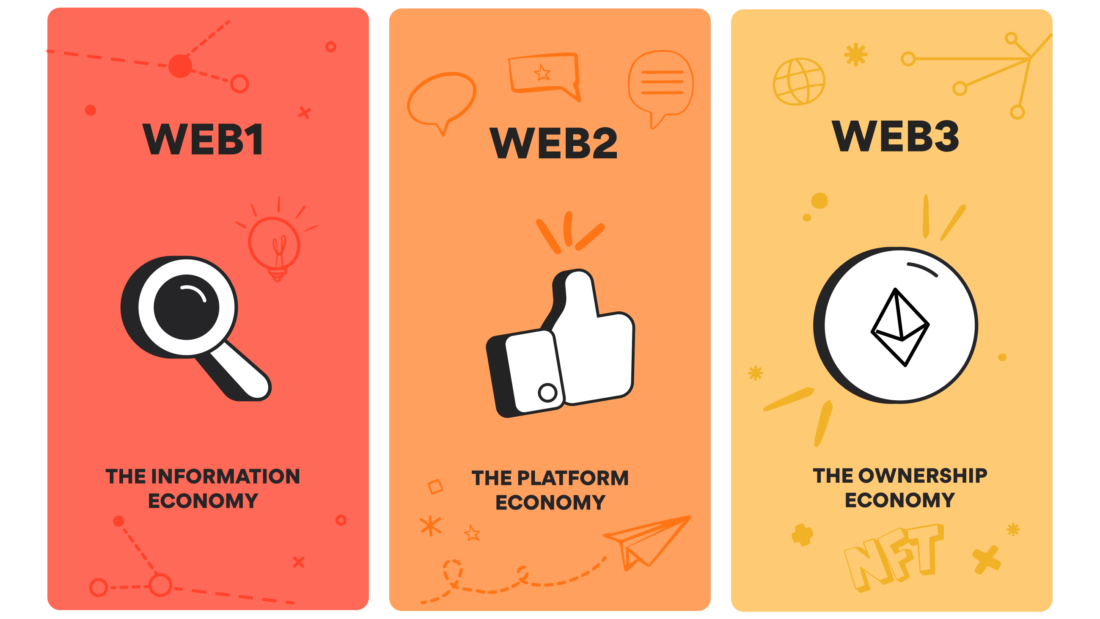
The current phase of the internet is defined by accessing and creating content. Web2 is dominated by centralized companies, e.g., Big Tech such as MAMAA, which provide services in exchange for accessing and monetizing users’ personal data. On the contrary, the next phase aims at leaving the ownership of data and information to the content producers, i.e., us, without transferring the potential value created.
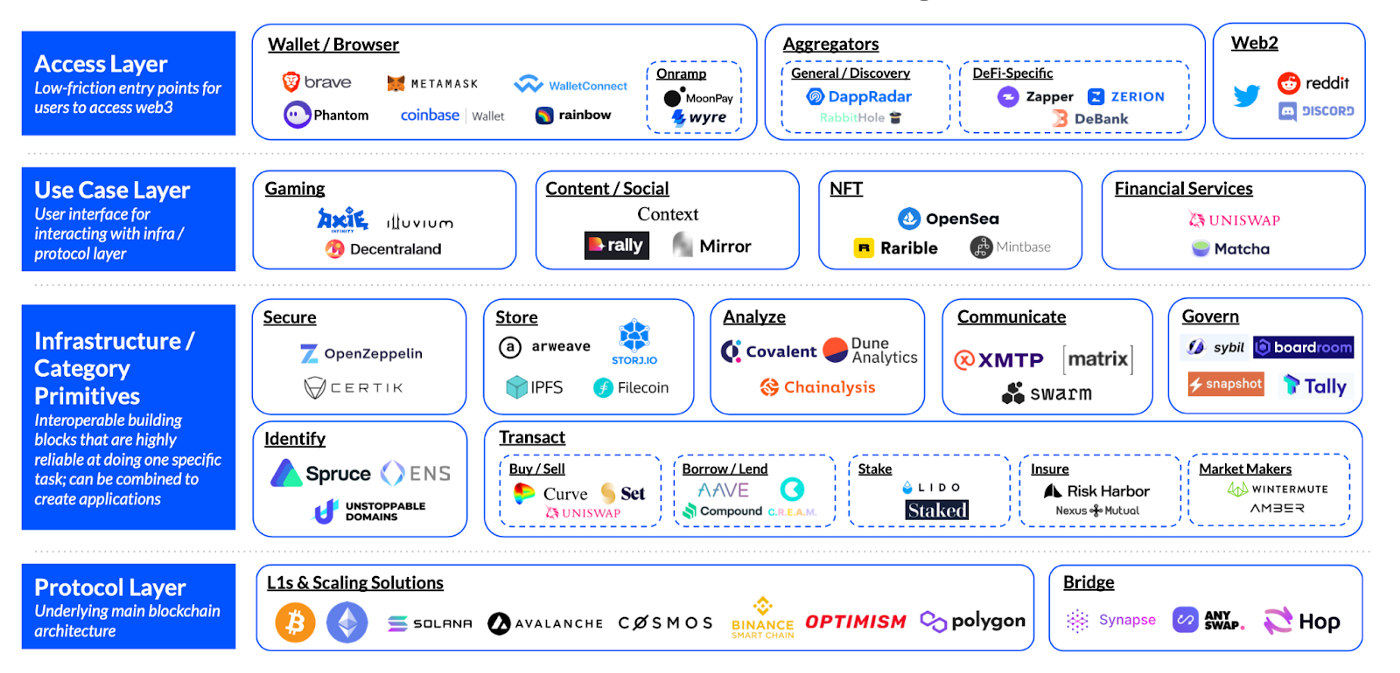
However, the Web3, term originally coined by Ethereum co-founder Gavin Wood in 2014, offers much more than this. The rise of products related to the token-economy, e.g., NFTs, is an example, but Figure 2 offers a more comprehensive overview of the different use cases and of the companies involved at each layer.
Figure2: Companies operating in the Web3 space divided per layer of the Web3 Stack. Source: Coinbase
Architecture
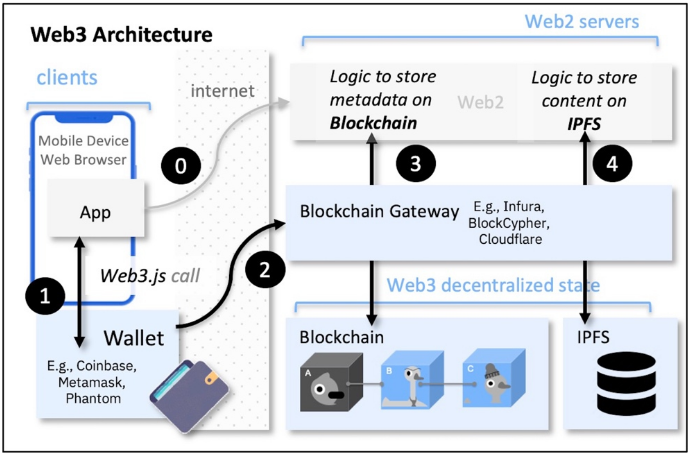
Contrary to its previous version, Web3 will be built using Decentralized Peer-to-Peer networks, Artificial Intelligence, Crypto-wallets, and distributed ownership of Protocols rather than corporate servers. Nevertheless, Web3 represents an extension more than a replacement of Web2, as it will enable to “off-board” key personal and application data from centralized organizations to decentralized wallets, blockchain and storage networks, under the control of the user (3).
Figure3: Web3 Architecture taken from J. Cuomo’s book “Think Blockchain”
Characteristics
After having spoken about the architecture, we should now move to the main features characterizing Web3: (3) (4)
Distributed and Decentralized Governance:
Respectively, the record of all transactions is stored and shared across all the actors of the network and no single actor controls the operation of the blockchain.
For more details of this process, check Philipp‘s blog on the topic.
Universal Identity:
An anonymous single-sign-on will allow to use just one username and authentication method across all websites, rather than individual logins, without the need to share personal information. In fact, thanks to Web3 wallets backed by blockchain, the user always retains control of the personal data and login credential.
An example of a Crypto-wallet is CoinBase, already valued more than $11 billion in terms of market cap.
Token-based:
Activities that contribute to Web3 will be rewarded by a token (either NFT or fungible) to incentivize participation and distribute ownership. This token can be “minted” (generated) and stored into a crypto-wallet.
An example is Pixie, the world’s first fully functional decentralized photo and video sharing social network based on blockchain crypto economics. Pixie, like a crypto version of TikTok or Instagram, encouraging users to create quality content and interact constructively with fellow users, thus all the content can circulate inside Pixie effectively (5).
Self-governing:
Blockchains will rely on the entire network to verify an activity via consensus. However, specific governance mechanisms can be established to democratize decisions, based on the quality or volume of a user’s investment into a site or DApp. Thus, when the rules are set, new forms of organization can arise, thanks to the execution of smart contracts.
An example is BitDAO, a Decentralized Autonomous Organization (DAO) with one of the largest and most diverse token-governed treasuries in the world and more than $2.5 billion invested (3).
Immersive and augmented experience
As described by Nicola in a previous blog post, the combination of decentralized solutions and immersive technologies coming to maturity may give birth to decentralized Metaverses, providing an open exchange of digital assets.
To give you a sense of what this buzzword means, here there is a list of examples coming from the manufacturing industry and the entertainment sector.
BMW’s future factory developed on Omniverse platform;
Renault unveiled a partnership geared towards offering virtual automobile experiences by leveraging blockchain technology and Web3-based solution;
For entertainment there are a lot of examples like, Sandbox and Decentraland.
A longer list spanning across different industries has been prepared by Rejolut and can be found here.
Critics
As for every innovation, limits and possible negative externalities have to be considered. In this case, the criticism concerns its feasibility, due to hurdles around scalability, control, and adoption that must be overcome (4). You can find some interesting commentaries below:
Moreover, a policy brief published last March by the Bennett Institute for Public Policy in Cambridge warned against several risks related to the immutability of the blockchain (Online safety), the diffusion of cryptocurrencies as an incentive to ransomware attacks and a possible threat for unprepared consumers.
The report concludes that even though some market intermediaries are extractive rentiers, many others play value-adding governance roles that cannot be replicated with smart contract code. Thus, trusted central authorities will still keep a key role, making blockchain a redundant solution.
Conclusion
Being a new phenomenon, there are still more questions than answers about the future of Web3. However, I hope that this blog has helped to clarify some aspects related to its architecture, its relationship with blockchain, and has sparked interest in critically analysing its pros and cons.
Now, let’s move to the third episode of my column!
Surfin’ Internet
Video:
How about combining Web3 and the World Cup?
FIFA has experimented some new solutions in Qatar
Academic article
Wondering about scientific articles on Web3?
One recent article by Murray et al. (2022) explores the promise of a decentralized internet, describing how companies can prepare for a Web3 world.
However, since there are not yet many out, you can find below a set of open Call for Papers, if you want to write a piece on this topic (or read them in the future):
(3) Jerry Cuomo, Mark Parzygnat, Shaun Lynch, Irving Wladawsky-Berger. (2022). “Think Blockchain: A Student’s Guide to Blockchain’s Evolution from Bitcoin, Ethereum, Hyperledger to Web3.”
As I completed one year with EINST4INE and transitioned from Industry to Academia, I reflected on what I learned last year through interactions with senior scholars and peers.
I aim to share a few learnings and best practices on this blog as I learned with time, successes, and failures along the way. In my experience, these are the ten easy yet challenging aspects one should consider as founding principles for solid and rigorous research.
Passion as the driving force
Ethics as the moral force of self-regulation
Finding the Gold in deep mines
Use of technology to augment your mental capabilities
Avoiding the common traps
Best Practices to sail through the writers’ block
Portfolio Theory in Research
What’s your Goal
Collaboration and Engagement with Practice and Policy
Make it Fun or Have Fun
As a practice-oriented researcher closely looking into what’s happening in the industry from a corporate innovation perspective, I also observe blurred lines between Practice-oriented Research and consultancy work. Research works aim to be more rigorous and contribute to theory and practical implications. Also, as researchers, we are neutral observers of the phenomenon for a relatively long time rather than a consultant whose scope is limited to the work and tied to the organization/employer for a fixed short time (relatively speaking).
Now I deep dive into the 10 Aspects to consider for SOLID research work, starting with the basics.
Passion as the driving force
First things first, and get the fundamentals right.
One should/MUST be passionate about the research area. Otherwise, it’s not worth it.
Ethics as the moral force of self-regulation
Ethics are the most crucial aspect.
Always be TRANSPARENT in your reporting and findings.
Finding the Gold in deep mines
Know the best standard of Gold from Master Goldsmith. The same thing works in research: learn from the best in the field, i.e. get the best state-of-the-art knowledge from the best sources.
Be careful with Tom, Dick, and Harry available on social media without credentials. They can consume a lot of crucial time but no benefit from purely a research perspective.
Use of technology to augment your mental capabilities
To find the Gold faster, enhance your capabilities with digital tools for data analysis.
Take the help of digital tools but with a complete understanding of the pros and cons of using them. I use the following for my qualitative research work to organize large archival and interview data.
Eg.
Max QDA for making sense of extensive qualitative data in one place
Read only what’s the best and then reflect on them with your own thinking and experiences.
Sponge principle for information absorption
You will get the maximum benefits from the first squeeze. Rest is not worth it, given other time tradeoffs and balancing the work-life aspect.
I Learn by interacting with others about the literature. Hence, it sticks better than sitting in front of the screen alone.
Best Practices to sail through the Writer’s block
Dedicated writing time
This is the most important routine I learned from my supervisors.
There are many best practices in this. Some say just dedicate time every day when you are fresh and energetic. Block everything else: mails, emails, etc …max 2 hrs…not more than that. Often called shut up and write i.e free flow writing.
Benefits and Pitfalls of templates
We use templates to structure your thinking, later or in the beginning depending on how your mind works. But also beware of Template thinking…it can sometimes be restrictive to think beyond. I try to think of different geometrical shapes and ways to represent a new concept.
Keep track of your activity – LOG IT down every single day.
This is the most crucial aspect of qualitative research, as the information can be overwhelming later. I struggle with it, but this small practice will save me a lot of headaches, and I am learning with time this best practice.
From Our new scholar’s network, there are also good videos to develop Academic writing :
Portfolio of Research projects – be clear about this – Each project should have different cost-time dynamics. The best ones will take more time.
Best
Good
Average
Below average
Others
What’s your Goal?
Who is your audience?
What kind of researcher do you want to be?
What for you want to be known?
What is your contribution?
Whom do you engage?
Questions like these…..so that you have the correct alignment of expectations
Remember, you are not going to solve all the problems in the world, you have to be a world-leading expert in one niche area and have a basic overview of others.
Collaboration and Engagement with practice and policy
The power lies in collaboration, and I learn through interactions with practice and policy, especially about new mechanisms to fuel more innovations for energy transition, which requires a multi-stakeholder collaboration approach. It also leads to producing research that impacts the industry and society in general to address grand and complex challenges.
Make it Fun or Have Fun
Last but not least and most crucial for mental well-being, given that most researchers go through depression once. Don’t work endlessly. It will make everything worse.
This completes the list of best practices I learned last year with interactions during conferences and in-person discussions with senior scholars and peers. I look forward to learning more with time and being better organized as a researcher managing my curiosity and time to produce rigorous research.
What have you learned from your research experiences? Please feel free to contact me to discuss common interests during a virtual coffee meeting. Reach out to me on Linkedin.
As the four main pillars that constitute my research topic at EINST4INE relate to ecosystem research, digital transformation, environmental sustainability, and Open Innovation, I would like to tell you a little about what I have learned in the intersection between technology and ecosystems. While some of my fellow EINST4INERs have similar research interests in ecosystem research, I hope to complement their thoughts on what ecosystems actually are and how they form.
Many paradigms nowadays emphasize the need for companies to adopt novel and disruptive technologies to stay afloat. Through such paradigms, like Open Innovation, business executives in today’s digital age have access to hundreds of new technologies that may revolutionize their operations and the quality of service they provide to customers, as collaborations and other types of connections enable companies to leverage the force of digital technologies, without having to create them in-house.
However, adopting cutting-edge technology isn’t enough to achieve these objectives; companies also need to know how to put such tools to good use for their operations and their consumers. This requires resources like time, funds, and expertise, which may be in short supply.
As such, how can businesses use the benefits of cutting-edge innovation and speed up the delivery of value to their customers?
Curating ecosystems is one solution: businesses should collaborate with one another, aligning talents and pool resources to develop ground-breaking new goods and services and shorten the time it takes to get them to market. And this is precisely what many businesses are doing.
As Gianlorenzo has given an overview of the different types of existing ecosystems, I felt the need to set the prerequisite of what ecosystems are not (based on Adner, 2017):
Business models based on ecosystems are not the same as supply chains. Tiers of suppliers in a supply chain feed into an ultimate point of value creation, but the suppliers themselves are neither part of the brand promise nor material to the value generated, although top suppliers may be quite important.
Then, platforms per se, are not ecosystems. While every platform has an ecosystem and is often the keystone actor (an ecosystem actor with a strong influence despite being relatively few in number. The term comes from the biological term of keystone species), there is a narrow focus on technology and transactions. Indeed, while platforms are concerned with interface governance, ecosystems are concerned with structures of interdependence.
Older terms and arrangements like Networks and Alliances have a similar connection as in ecosystems, however, these mostly focus on patterns of connectivity. In this sense, for Networks and Alliances, the focus lies more on actor ties rather than the value proposition, and just like for platforms, there is not enough focus on the structure of interdependence.
Open Innovation (OI) has also been related to ecosystem research. One could argue that OI provides a rather micro-perspective, taking into account the firm strategies. However, ecosystem literature applies a rather macro-vision, which helps us gain insights into the multilateral coordination between ecosystem partners in their quest to align their strategies to provide value.
Adner (2017) finds other similar structures which can be distinguished from ecosystems.
But, if we take a glance around, we can see that businesses of all stripes are attempting to implement ecosystem business models and, in many instances, even orchestrating their own ecosystems in an effort to generate profits. In Jessica’s post, ecosystem orchestration is defined as “hub players” taking the lead, where she clearly defined what an orchestrator is.
Of course, for companies, occupying the orchestrator or “hub actor” position can be beneficial for several reasons such as having a more centralized knowledge about the ecosystem, compared to other actors. However, orchestration is not necessarily easy:
The present academic literature tends to focus on successful long-standing ecosystems, which greatly looks at the organizational capabilities of firms, related to the success of their overall ecosystem. However, some scholars have extended this notion to the capabilities of the environment in which an orchestrator thrives, meaning that the success of the hub actor and the ecosystem depend on the architecture of the network, and how the network interacts with its environment.
From this, two streams of literature have emerged:
First, we can consider intentionally created ecosystems, departing from the definition of the overall value proposition that the ecosystem is supposed to achieve, and assembling actors that can contribute to the value creation and transfer in the ecosystem.
Second, we can consider the assemblage of different actors, who create and co-evolve a common value proposition together.
There are certainly differences in terms of processes and mechanisms of orchestration between the two approaches, however, some universal challenges that can impact orchestration overall can be distinguished (among others):
Leadership: some researchers argue for the importance of a hub actor who should facilitate the interaction between actors. However, not every firm has the capabilities to become an orchestrator and gather the efforts of all actors that ultimately define the success of the ecosystem.
Platforms: most platforms offer a space for orchestration as they, in some way, build the base for the ecosystem. Here the platform orchestrators can leverage several benefits such as Network Effects (when the value or utility of a service or product is defined by the number of users). Platforms and their surrounding ecosystem represent the most successful businesses nowadays as they achieve economies of scale very rapidly. That does not mean, however, that being successful is given… first, because network effects can also backfire (e.g. see Network Effects Aren’t Enough) and second, because what makes your platform successful can also make another platform successful!
Actor role & position:one of the dangers of maintaining good relationships with actors is the way an orchestrator treats its connections. When shifting from a traditional business model, some focal firms tend to see actors as suppliers rather than a relationships. This implies a shift or adaptation of business models to current ecosystem standards.
Finding the right business model: Ecosystem relationships imply a different strategic model that needs to contemplate the management of inter-and intra-actor relationships as well as the governance and coordination between multiple parties
External factors:As trust is crucial for successful collaborations, hub actors need to depart from their self-interest view and focus on shared efforts, which is necessary for the long-term success of an ecosystem. This can be understood as gaining legitimacy, not only within a given ecosystem but also gaining acceptance from the environment and society, and other institutions as a whole. Other external factors can also comprise the competition: an ecosystem formation can improve the current market conditions for the players, but also for the competition. Thus, orchestration necessitates a lot of coordination, management, and governance efforts to not be overthrown by competing ecosystems and their value propositions.
Although there are other factors that play a role in ecosystem orchestration (e.g. capabilities, modularity, complementarity, bottlenecks, etc.) for the sake of brevity and comprehension I have limited these to the challenges mentioned above.
What amounts to all of this is that the current literature provides examples of how ecosystems can be orchestrated, but there is still a lot to learn from failed ecosystems. Successes can give a lot of insights into “good practice” strategies, but these are not said to work for every ecosystem, precisely because of the heterogeneous nature of participating actors, and their environments.
Thus, while some research has looked at the “dark side of ecosystem orchestration” (Oliveira & Lumineau, 2019), which can impact a firm and impede the capacity of complementors and consumers to innovate, more insights from failures cases could tell us a lot more about what can go wrong during the orchestration process, as well as insights into ecosystem governance mechanisms and even organizational capabilities needed to support ecosystem orchestration.
While we will see or recognize more such failures in the future, I am sure that their lost efforts will have an ultimate purpose, which is the benefit for academia to study why some ecosystems fail and others thrive and thus, creating several implications for businesses.
References
Adner, R. (2017) Ecosystem as Structure: An Actionable Construct for Strategy. Journal of Management, 34: 39-58.
Oliveira, N., & Lumineau, F. 2019. The dark side of interorganizational relationships: An integrative review and research agenda. Journal of Management, 45(1): 231-261.
The abilities to represent and simulate have always given humankind terrific support for taking decisions. The representation of space, for instance, has been one of the most important inventions of human history. Maps still allow humans to explain and navigate the world they live in.
Architecture is one of the fields that gained more from those abilities given the complexity and costs involved in the matter, and the related critical decisions. The capacity to represent space has evolved along with technological advances. The dawn of computer graphics replaced handmade scale models and graphical representations with digital tools that allow a more accurate, fast, and flexible representation and simulation. Rapid-growing technologies like augmented reality (AR) and virtual reality (VR) have huge potential in the representation of spaces and in informing the decisions related to them.
Figure 1. Architect Norman Foster checking out a project in VR. Source: Instagram, officialnormanfoster.
The case study
A case study conducted by Bianconi et al. (2019) explored the potential of VR technology for decision-making in construction from the double perspective of the designers and the occupants of the space.
In the study, an office building was reproduced in a virtual space and made explorable using VR headsets (Figure 2). A series of experiments involved several participants which were asked to perform orientation tasks in the virtual building. The tasks required to find and reach specific rooms and to estimate their position within the facility. Collected data included the orientation success rates but also tracking of the movements of participants in the building (Figure 3) and their gaze point (where the user was looking). This information has been used to understand where the occupants got lost and where they were looking for orientation cues to reach the objectives. The data allowed to spot critical design issues and failures in the wayfinding system.
A renovation proposal has been developed and modeled in virtual space addressing the weak points that emerged from the first round of experiments. The refurbished virtual facility has then been tested in VR using the same protocol and collecting the same type of data (Figure 4). Results revealed an increased success rate of orientation tasks and less bewilderment for the participants.
Figure 2. From the left: (1) the real building’s atrium, (2) its virtual reconstruction and (3) the heatmap representing the eye-tracking data. Source: Nicola Felicini.
Figure 3. Tracking of participants’ movements in the reconstructed building (left) and its proposed renovation (right). Source: Nicola Felicini.
What have we learned?
Even in this case, the representation and simulation capacities proved to be efficient tools in informing and taking decisions. The advantages of representation, enhanced by the digital nature of this one, allowed data collection in a controlled and controllable environment.
Considering the inconveniences of testing inside an operating building or the costs of building a mock-up or the proposed renovation, the amount of work appeared negligible compared to ‘real’ test options. Virtual reality has been confirmed to be a cost-effective way of running complex spatial simulations.
Another relevant aspect of the case study was the interaction between the human and the digital environment. The value of the case was not in the representation and simulation of the building but in the interaction between it and the occupants. Wearable digital tools like VR allowed a closer look at what decisions occupants took (movement tracking), which information they needed and where they looked for them (eye-tracking). As this case exemplifies, wearable technologies can constitute means of access for humans to the digital realm (and vice-versa), enabling new ways of interaction between the ecosphere and the infosphere.
Figure 4. The atrium of the renovation proposal and the eye-tracking heatmap obtained in the second round of tests. Source: Nicola Felicini
What’s next?
With the diffusion of digital tools, we are assisting in a progressive ‘democratization’ of them. At the time of the study, the simulation presented required intense modeling work and knowledge of specific software and techniques. Current trends in building design tools allow real-time immersive simulation as the building gets ‘drawn’. In opposition to the simplification ad diffusion of digital tools, we need to clarify their actual potential and when they are worth the investment. In the presented case, which design decisions have been taken following the architect’s experience and which are derived from the simulation in the digital environment? A comparative study with analog design techniques could elucidate these aspects.
Figure 5. In recent years immersive tools have been proposed as decision-making environments for construction. But their implementation still seems a big leap compared to current practices. Source: Meta.
The other question that emerged from the study, is how much reality there is in digital reality? In other words, how applicable are the results obtained in a virtual environment, in the real world? Would those occupants take the same decisions in the real building? How much does the level of immersivity affect the behaviour? Again, a comparative study could help identify the weight of these factors.
Investigating the potential of digital simulations and their relationship with the real world are promising research directions that will acquire importance as digital tools and virtual experiences progressively gain ground in our daily lives.
Source: Bianconi, F., Filippucci, M. and Felicini, N., 2019. IMMERSIVE WAYFINDING: VIRTUAL RECONSTRUCTION AND EYE-TRACKING FOR ORIENTATION STUDIES INSIDE COMPLEX ARCHITECTURE. International Archives of the Photogrammetry, Remote Sensing & Spatial Information Sciences.
These technologies are triggering a job transformation for the service workforce that might compromise social and cultural sustainability. To frame startups’ role in the sustainable social development of the service sector we might need to look into other stakeholders’ actions. The responsibility of AI and robotics startups needs to be understood and acted upon in relation to other stakeholders. In other words, AI startups need to take responsibility internally, but they also need support externally from different actors to ensure that everybody is playing their role accordingly. This external support is based on collaborative efforts; however, sometimes it is difficult to collaborate across stakeholder borders because of the different vested interests and ensuing politics.
Here are some of the main stakeholders in the service ecosystem and how they can contribute to the sustainable social development of the service sector:
Investors: Include ethics consulting in investment decisions.
In the end, if venture capitalists or angel investors make ethics a key part of the startup funding cycle, AI and robotics startups have to pay attention. Investors should be motivated to fund ethical practices because it also protects them from risks that might damage the venture further down the line.
These programs can set a foundation for success and facilitate the continuous flow of information between businesses and academia. Startups can collaborate with experts in fields such as human resources and ethics to help them envision a sustainable way of using their products and services.
Social impact startups: Solve the “problem” created by AI and robotics startups.
Partnerships with social impact startups could work because the primary role of such startups is to innovate with solutions for unemployment, promoting social, economic, and cultural benefits. For example, these kinds of startups could develop tools that contribute to decent work by matching people to new jobs and finding creative ways to help people find a job. If AI startups are creating a “problem” by displacing some workers with robots, then other startups should take solving the problem as a new business opportunity.
Service providers and government: Create a balance with incentives.
Service providers should receive a public fund from the government to motivate them to hire companies with ethical solutions and for reskilling and upskilling the service workforce. Service providers’ role is also to redefine job profiles. Thus, service providers need to proactively balance task substitution and task enhancement to define new job positions.
Customers: Demand ethical practices.
Usually, AI startup founders will have no interest in ethics, but if the customer asks for an ethical approach, they might focus on it. Thus, if the main objective of a startup is to find product-market fit, and the market is asking for ethical practices, the startups have no choice but to follow the trend.
My key takeaway is that creating a more sustainable future with AI and robotics is a task we all have. It is not just about designers and developers, but also about how society understands and demands AI and robotics.
Source: Rojas, A., & Tuomi, A. (2022). Reimagining the sustainable social development of AI for the service sector: the role of startups. Journal of Ethics in Entrepreneurship and Technology, (ahead-of-print).
Don’t ecosystems belong in nature? Isn’t orchestration to do with music? Yes and yes, but also, no ? as you will (hopefully) find out, these metaphors effectively provide meaning to practical and theoretical management concepts.
You might realize that academics like to use big words because of the need to convey complicated things in simple ways. Likewise, businesses like to use buzzwords to stay up-to-date with the latest talk and trends. Often, this results in terms being adopted and interpreted in many different ways where they risk losing meaning and understanding. While it is not necessarily wrong for terms to be applied in different ways, and there is beauty in this creativity, it is useful if there is an agreed consensus on what is meant.
Almost a year into my PhD on innovation ecosystem orchestration mechanisms, I still wonder myself what exactly that means. So, let’s go back to basics and unpack this. Please note: this is my perspective and developed understanding so far – subject to change and interpretation!
Starting with innovation, this essentially refers to the creation of change. The scale of this change can vary from incremental improvements to completely disrupting markets, as well as radical breakthrough change or more architectural improvements to a product/service. But, creating change for what? Innovation and innovative thinking span many contexts and provide tools suited to address challenges across the board including business, social, and environmental.
For innovation to materialise, there are clever strategies that bring together diverse set of actors (private companies, startups, government, etc.) to work together towards an aligned goal in which they can co-create shared value. This is what we call an ecosystem. This can be challenging as it relies on interdependencies – the dependence of two or more entities on each other – among these actors to make this happen.
A way to approach this is for a ‘hub firm’ to take the lead and orchestrate these activities. The role of an orchestrator is multifaceted whereby they can attract new actors to the ecosystem, facilitate resources and interactions between actors, resolve any tensions that may arise, find alignments across the ecosystem, and so on. What is unique about this management style is that it is intended to be non-hierarchical and instead focused on fostering cultures that create innovative thinking. I like to think of orchestrators as positive encouragers, empowering supporters, and uplifting influencers.
As for mechanisms to do this, I will leave you on a cliffhanger for a future blog post where I can share some results from my findings!
In 2007, when only a few had a smartphone in their hand, humanity stored a hundred times more information than twenty years before [1]. More impressive is that 90 percent of that data was generated in the two previous years [2]. The pace is only accelerating. By 2025 the figure is expected to reach 463 billion or GB generated every day! [3]. This avalanche of data comes from the digitalization of our societies. We started by making our phones smarter, now we are making cities smarter.
A smart city is a technologically modern urban area. It uses a large number of sensors to collect information about buildings, assets, citizens, and devices. In return, this data is used to manage resources and services more efficiently. The concept couples with the so-called Internet of Things (IoT). The same concept but applied to a smaller scale, typically to an electronic device or a group of them. With the progressive diffusion and capillarity of connectivity, the distinction between the two might fade, leaving space for a unique network of connected assets.
Digital models of buildings are generated during the design face. If after construction are connected in real-time with the real building they become ‘digital twins’. Source: Autodesk.
The tendency of coupling digital data with real entities is already present in specific sectors. Modern buildings are digitally built using accurate 3D models before the first brick gets leaned down. The same happens with complex industrial machinery like jet engines. Digital copies of patients are being studied for healthcare applications. These ‘digital twins’ are created to collect and store data: health changes of patients, performance statistics of an engine, and energy consumption of a building. The objective is always the same: to enhance knowledge, optimize resources, and prevent failures.
Some examples of connected assets aimed to make cities smarter can already be seen around. Navigation systems already suggest the shortest route given the status of traffic. The combination of this capability with autonomous driving and different ownership models (car sharing) seems a promising solution to traffic congestion. Barcelona, Manchester, Prague, and Melbourne are experimenting with connected bins to communicate how full they are and optimize trash collection. In the Netherlands, millions of smart meters have been installed to respond to surges or reductions in demand, increasing reliability and cutting costs. The states of New York and Norway are experimenting with intelligent public illumination that allows the lights to be adjusted based on real-time data.
However, smart city development is still an infant with different cities at different maturity. Digitization of cities is an impelling challenge given their importance for the future. According to the UN, by 2050 seven people out of ten will live in cities [4].
Connected bins and interactive meters are all examples of smart city application being tested around the globe. Source: Manchester Council, Times.
Facing this perspective of pervasive digitisation and massive urbanizaton, we need to re-imagine the way we interact with urban areas and information, to get the most out of these ‘data cities’.
For decades we relied only on screens and buttons. A first change happened with the graphical user interfaces (GUIs) and the commercialisation of the mouse in the 1970s. The advent of smartphones brought touchscreens that we can tap and swipe. Cutting edge technologies like computer vision for gesture recognition, ultrasounds for mid-air haptic and wearable sensors promise to make the touch unnecessary soon. While waiting for Elon Musk to directly connect our brain to computers, augmented reality (AR) is the step further to remove barriers between digital and physical worlds.
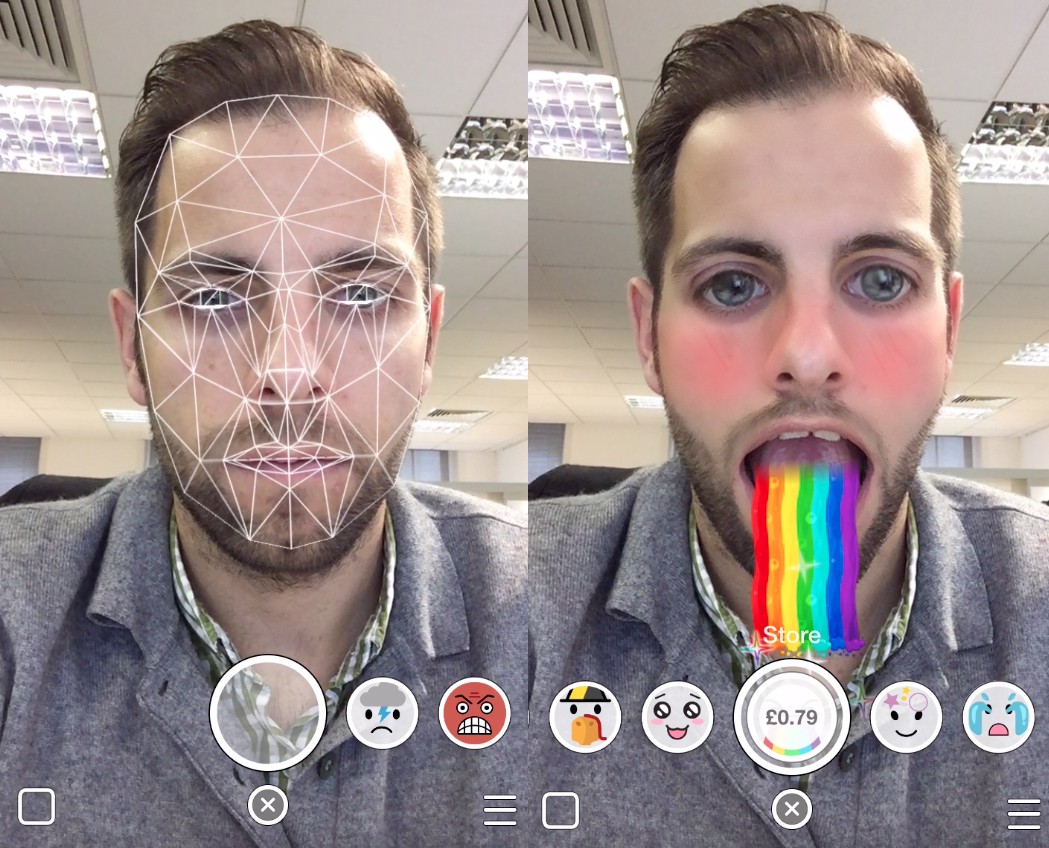
Augmented reality enhances the physical world by overlaying digital information in our field of vision. A recent study in the UK reports that only 11% of smartphone users are believed to have experienced AR [5]. This data is in contrast with the hundreds of millions of augmented pictures shared daily on social media [6] or the success of apps like Pokémon Go or Ikea Place (yes, they are all examples of AR). This unconsciousness highlights how AR is more diffused than we might think. Tim Cook, CEO of Apple compared the phenomena to the diffusion of apps. When the App Store went live in 2008 people were skeptical, saying: “mobile apps are not going to take off. And then, step by step, things start to move… and now you couldn’t imagine your life without apps. AR is like that. It will be that dramatic” [7].
Face filters are a diffused AR application used by millions of people every day. Source: Snapchat.
Even if awareness is currently low, people will progressively expect to access additional layers of content on the surfaces around them [8]. This will change our relationship with the built environment. Every object and building will become a potential trigger for digital content, which will be proactively suggested to the users at the right moment.
On top of the brick-and-mortar cities, we walk every day, we’ll see pop-up advertisements from brands, emergency alerts from authorities, service communications from institutions, and entertainment content during events. It will also work the other way around as AR will give “a face” to the smart city. Citizens will be able to upload information, report problems, and communicate with institutions from wherever they are. All things we get already, but done through the ‘diffused app’ the smart city will be; in a more frictionless, flexible, and natural way.
AR will unleash endless possibilities to add digital content in our daily experience. Consuming media on surfaces will become the norm as today is the use of a smartphone to access the internet. Source: Price Action Guide.
References:
[1] 2011, Hilmert, M & Lopéz, P. The World’s Technological Capacity to Store, Communicate, and Compute Information. Science.
[2] 2018, Bernard Marr. How Much Data Do We Create Every Day? The Mind-Blowing Stats Everyone Should Read. Forbes. Available at: https://www.forbes.com/sites/bernardmarr/2018/05/21/how-much-data-do-we-create-every-day-the-mind-blowing-stats-everyone-should-read/?sh=72c0153d60ba
[3] 2019, Desjardins Jeff. How much data is generated each day? World Economic Forum. Available at: https://www.weforum.org/agenda/2019/04/how-much-data-is-generated-each-day-cf4bddf29f/
[4] United Nations, Department of Economic and Social Affairs, Population Division (2018). The World’s Cities in 2018—Data Booklet (ST/ESA/ SER.A/417).
[5] Layered survey. April 2018, n=1000 UK.
[6] Snap Inc. Data Q3 2017.
[7] Griffin, A. (2017). Apple’s Tim Cook on iPhones, Augmented Reality, and How He Plans to Change Your World. Independent [online], 10 October 2017. Available at: https://www.independent.co.uk/life-style/gadgets-and-tech/features/apple-iphone-tim-cookinterview-features-new-augmented-reality-ar-arkit-a7993566.html (accessed 14 Aug 2022).
[8] Mindshare Futures (2018). Layered. Available at: https://d2j4z507ms5wl7.cloudfront.net/zappar_mindshare-layered-report.pdf.
The ability to leverage digital technologies is a business imperative. In pursuit of digital business, companies across the globe have dedicated significant resources to pursuing digital innovation and new digital business creation. Yet, industry and academic research consistently report a high failure rate.
Intrigued, I decided to explore what is known about the high failure rates of digital transformation initiatives, especially regarding the human and organisational factors that might contribute to the issue.
Given the attention the topic has received in the business and management media, on this post, I investigate what the industry literature has to say about the topic (on my next post, I will look at what academia has to say. So come back if you want to get hear from the other side).
For this investigation, I focussed on the outlets with most influence. Thus, I selected reports of research conducted by leading global consulting firms. Reports and articles on the topic were found for Bain & Company, Boston Consulting Group, and McKinsey & Company. In addition, a sample of articles were sourced from three actors with significant influence among practitioners: Forbes, MIT Sloan Management Review and Harvard Business Review.
Defining Success or Failure
According to the articles and reports analysed, success range from 5 to 30 percent. Flipping the coin, that means a 95 to 70 percent failure rate. However, the way success and failure is defined vary greatly from one source to the other. I found that while some focus on the success of the overall digital transformation over time, others counted each individual project developed as part of a digital transformation journey. In both cases, however, industry actors asked executives and senior managers to report to what extent their initiatives had succeeded.
My own thoughts were that more consensus is clearly needed on how to define and measure success and failure. Let´s hope that we can get more insights on this from the academic literature.
Table 1. Reported success and failure rates: Sample Bain & Company, BCG and McKinsey & Company
Source
What is measured
Achieved or Succeeded
Partial Results
Failed
Bain & Company
(2017)
Success of digital transformation initiatives
5% Achieved or exceeded expectations
75% Settled for dilution of value and mediocre performance
20% Failed to deliver, producing less than 50% of the expected results
BCG (2020)
Success of digital transformation projects
30% met or succeeded their targets and resulted in sustainable change
44% created some value but did not meet their targets and resulted in only limited long-term change
26% created limited value (less than 50% of the target), producing no sustainable change
McKinsey & Company (2018)
Success of overall digital transformation
16 % have successfully improved performance and also equipped them to sustain changes in the long term.
7 % performance improved but improvements were not sustained.
77% performance did not improve*
* Implied, but not stated
Key Success Factors
Although the industry literature all start by highlighting the high failure rate, the bulk of the attention has been on the key success factors based on what leading organisations have done right. The most systematic or semi-scientific industry research has been along these lines. So, what do they say?
First, my assumption was right, industry literature state that people and organisational factors are much more determinant to success than technological elements (Baculard et al., 2017; BCG, 2020; McKinsey, 2018). Successful companies tend to focus on and invest heavily in the fundamental changes to their ways-of-working and culture that enable them to develop digital innovation initiatives rapidly and execute them at scale. That means that companies that succeed focus on developing human and organisational elements along with investing in technology.
Next, there are numerous commonalities regarding the factors cited as key for success in digital transformation. In general, these are:
Clear digital transformation vision, strategy and roadmap, with aligned goals, metrics and monitoring tools
Strong engagement of leadership and middle-management, with aligned ownership and accountability
Development of talent within the organisation and engagement of key employees in developing and executing digital transformation
Adoption of new ways of work, especially lean and agile, and enabling innovation
Building foundational digital technologies guided by business needs
Interestingly (but not surprisingly given that the targeted audience tends to be executives), industry literature LOVES to talk about top leadership. The key success factors related to leadership tend to focus on strong involvement in design and implementation, alignment among leadership groups, encouraging and empowering employees to adopt new ways of work and innovate, communicating effectively and creating a sense of urgency, effectively monitoring initiatives, and having incentives attached to digital transformation. So, nothing new here…
Looking at the reasons why digital transformation fails, however, these success-focussed industry literature tends to equate the cause of failure to organisations not doing what successful organisations have done, or not doing it sufficiently (BCG, 2020) – that is to say, if organisations had done exactly what successful organisations did, they most likely would have succeeded.
In my view, however, this is overly simplistic as it does not investigate the specificities for why organisations have not succeeded in doing what others have done. It might often be the case that they have, indeed, tried to do exactly the same – it might not be a case of not knowing what should be done. In these cases, saying they have not done what others have done equate to saying “they failed because they could not succeed.”.
Key Failure Factors
While there are a few industry studies systematically listing the success factors of digital transformation, industry literature truly discussing failure factors tend to be more dispersed across multiple news articles, reports and case studies.
A common practice is to list reasons why companies fail based on personal experiences, anecdotical information or “previous studies” and tend to focus on well-known challenges and barriers to digital transformation.
These include:
Not understanding digital transformation
Placing technology at the centre of digital transformation, instead of approaching it as a business transformation
Mistaking digitization, converting digital products or processes to a digital form, for digitalization, making the most out of opportunities of digital products and processes
Miscalculating efforts
Overestimating benefits and underestimating costs, especially by senior management
Underestimating the amount of legacy applications that need to be digitally transformed
Lack of understanding that “it is going to be hard” and commitment despite the challenges
Not doing implementation well
Working with poor onboarding and implementation processes for digital transformation projects and initiatives
Misaligned goals and stakeholders (across levels, teams, business units, partners, etc.) and lack of coordination
Issues at the project level
Poor user-market-solution fit of digital innovations, low focus on customer value, or lack of alignment to company’s strategy and strengths
Miss-alignment between digital capabilities supporting pilot and capabilities for supporting scale
Issues with employees
Employees’ resistance to change and fear of losing their jobs
Not having the proper skills, technical, business and innovation
Issues with culture
Fear of failure
Not being willing to spend time changing behaviours and how people make decisions (culture change).
Worth highlighting…
Digital Transformation is crazy hard
Digital transformation is significantly harder than conventional transformation (Baculard et al. 2017, p.1) and thus traditional change management best practices might not be sufficient or adequate to deal with the challenges at hand.
Part of the challenge is the need to manage an increasingly multi-faceted and diffused set of organisational transformations, while trying to create new digital businesses aligned to the needs of customers and the readiness of markets, and while also maintaining a healthy high-performing core business.
Another part of this challenge would be a consequence of digital technologies. Even if traditional companies are used to innovating in the product development realm, few are adept in deploying digital technologies to solve problems and boost performance across the organisation (Baculard et al. 2017, p.2).
Initiatives do happen, they just don’t scale
Most of digital transformation initiatives stall at scaling phase. Image source: Radix Blog
Another element worth highlighting is that companies embarking on digital transformation tend to struggle to translate prototypes or pilots into products and capabilities that can have a meaningful impact on the company’s performance (Sutcliff, 2018).
While there is a proliferation of initiatives, they tend to plateau somewhere short of broad organizational impact. Indeed, a recent McKinsey & Company survey found that most (38%) of digital transformation initiatives stall at scaling phase (McKinsey, 2020). This has given placed to the expression “stalled in pilot purgatory” (Denning, 2021).
Most common indicated reasons for this include resourcing issues, misaligned culture and ways of working, lack of skills and competencies to bring these initiatives further (Sutcliff, 2018), lack of internal alignment and commitment, and lack of a well-integrated and communicated strategy and aligned initiatives (McKinsey, 2020). Also, noteworthy, the disconnect between those in charge of pilot initiatives and those in charge of operations (and thus potential scaling) has also been highlighted by industry literature (McKinsey, 2020). This happens even in the case of organisations that have built internal digital innovation units to pursue ambidexterity (Baculard et al., 2017), but without a clear indication of how to best concretely build this integration. This ends up creating “two-speed” organizations that are responsive in limited respects but still held back by legacy systems (Baculard et al. 2017, p.2).
The hidden leadership issues
Interestingly, some articles have started scraping the surface of potentially hidden leadership elements that might play an important role in digital transformation implementation. For instance, Baculard et al. (2017), writing for Bain & Company, hints to scepticism of managers as an element, suggesting that despite survey data reporting that digital investment is a top priority of management, anecdotal evidence suggests that many executives are sceptical that they can translate the buzz around digital into meaningful improvements in performance. This scepticism, in turn, could lead them to make day-to-day decisions that, paradoxically, deprioritises digital innovation and digital transformation.
As another example, Bughin et al. (2018), writing for McKinsey & Company, hint towards the misalignment between management’s “intuition” – developed though years of formal education and practical experience based on traditional economic, strategic and operating models – and the new logic of a reality shaped by digital technologies. Denning, S. (2021) also talks about an “efficiency-driven” (decrease costs and maximize profits) mindset that does not fit the need for constant investment in skills and innovation of the digital reality. Managers have built their career on top of such intuition and are likely to make day-to-day decisions accordingly – even subconsciously and while understanding well the so called imperatives of successful digital transformation. Furthermore, this traditional intuition might clash with the requirements of digital transformation and digital innovation, leading to the emergence or exacerbation of tensions and paradoxes and the aggravation of challenges and complexities.
On the other hand, Sutcliff et al. (2018), in an article published by the Harvard Business Review, talk about the allure of a new exciting digital business model causing executives to not pay enough attention to the issues of the core business, especially when things are not going well for the existing business lines. In short, the illusion that a new tech-based digital business will solve all the companies problems without the need to deal with the rest.
So, what next?
In general, industry research indicates a clear need for academic investigation of digital transformation to gain a deeper understating of the challenges and potentially hidden complexities of digital transformation, including by moving beyond the focus on top leadership teams.
In particular, understanding of the challenges and complexities that drive failure in digital transformation is anecdotal at best. This is very little regarding the concreate challenges and complexities that managers can expect to experience on a daily-basis. In this regard, as Denning S. (2021) puts in a recent Forbes article, senior executives are frustrated by the slow pace and limited return on investment of their digital transformations, and are (still) unsure what is holding them back.
So next, let´s see how much better academic research is…
Artificial intelligence, or short AI – we all have heard this term and probably we also use it now and then. It is one of the current buzz words. But what do we actually mean when we speak of AI?
Definitions
There are many definitions of artificial intelligence floating around. Some define it through the machine aspect and (human) intelligence:
“Artificial Intelligence (AI) may be defined as the branch of computer science that is concerned with the automation of intelligent behaviour.” (Luger, 2009, p.1).
or:
“Artificial intelligence (AI) represents a highly capable and complex technology that aims to simulate human intelligence.” (Glikson & Woolley, 2020, p.627)
Others through the machine aspect and its abilities:
“An AI system is a machine-based system that is capable of influencing the environment by producing recommendations, predictions or other outcomes for a given set of objectives.” (OECD, 2022, p.23).
Some avoid using difficult terms and define it reversely:
“[Artificial Intelligence is] the collection of problems and methodologies studied by artificial intelligence researchers.” (Luger, 2009, p.2).
And again, others as a process:
“[…] we conceive of AI as a process, rather than a phenomenon in itself. We define AI as the frontier of computational advancements that references human intelligence in addressing ever more complex decision-making problems. In short, AI is whatever we are doing next in computing.” (Berente et al., 2021, p.1435).
The tricky word
Why are there so many different definitions for AI? Well, artificial intelligence is a tricky word. Maybe most of us can agree on the definition of artificial: something that does not occur naturally, something that is human made. But what about the term intelligence? When is somebody, or something intelligent? Is it the IQ, how good they are at calculating, how well they can judge other people’s emotional states? What are the criteria for intelligence?
And then: is artificial intelligence in its core the same as human intelligence? (If you thought: well, of course! Then just another aspect: what about creativity? Or self-awareness? Is this part of intelligence?) Can we use the same criteria to judge AI and human intelligence?
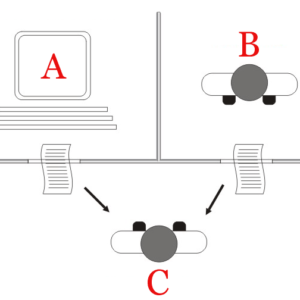
A famous test for judging the intelligence of AI is the Turing Test, originally called the Imitation Game. As the name hints, it was invented by famous Alan Turing and is a (theoretical) test in which a machine needs to perform a task (e.g., answer questions). The original name also hints at the idea behind the test: Based on the output of the machine (e.g., an answer to a question) a human needs to judge whether they are interacting with a machine or another human being. If the machine manages to pass as a human, the AI has passed the Turing Test and is considered intelligent (Luger, 2009).
You can see that the Turing Test has a quite specific definition of intelligence – if a machine appears to be human.
Narrow vs. general AI
But is this really what we mean with intelligence? What about a machine that is able to compute extremely fast and to give you an answer to a problem in less than a second, while a human needs days, if not years to solve it – is this machine not intelligent? Most would say it is very intelligent, as it outperforms a human! On the other hand – ask this same machine to perform the task of distinguishing a person crying from laughter and another person crying from sadness. It will fail in giving you the correct answer. Now we would say it is not intelligent at all. And this is because machines are only intelligent in a narrow field.
One speaks of narrow/weak vs. general/strong AI (Glikson & Woolley, 2020). Narrow/weak AI can perform specific tasks, for example, face recognition. General AI refers to a machine that is super-intelligent in “all” aspects. Strong AI is usually what is envisioned in dystopian futuristic books and movies (e.g., 2001 Space Odyssey or the robots in the Alien movies).
However, it is important to note down that we are far away from general AI.
Some think there are aspects of human intelligence that we will never be able to implement or that we do not need/want general AI, others believe that it is just a question of time until we reach strong AI.
AI encompasses a variety of intelligent systems with many different algorithms. Some follow rational programmed rules, some are agent-based and situated (Luger, 2009). Some of them come with a body, like robots. Boston Dynamics are an impressive example of smart robots (see the picture of their dog Spot) already in use or co-bots on shop floors or mobile telepresence robots in hospitals (this is what Alejandra is looking at!). On the other side are bodyless intelligent systems. AI encompasses a variety of these, a subpart being machine learning (ML). Note that often Machine Learning is what people refer to when they talk about AI.
We speak of machine learning if the machine learns by itself without somebody explicitly programming a set of rules it needs to follow. The system manages to learn from the given inputs. Machine learning itself is again a huge field and can be divided into different approaches (e.g., unsupervised learning, supervised learning, reinforcement learning – I can recommend Daugherty & Wilson’s book: Human + Machine for more details (Daugherty & Wilson, 2018)).
Some concrete examples of AI that you have probably encountered already: Apple’s Siri, Amazon’s Alexa, GoogleMaps, Instagram/Facebook sorting your feed and giving you suggestions, Amazon suggesting related products, or Netflix recommending what to watch next.
So you see – already knowing what AI is can be difficult! Maybe next time you read or hear the word AI you will take a minute to think about the use of the word in the context and figure out what kind of AI they mean. 🙂
P.S.: Credits for the featured image to Alina Constantin / Better Images of AI / Handmade A.I / CC-BY 4.0.
Bibliography
Berente, N., Gu, B., Recker, J., & Santhanam, R. (2021). Managing Artificial Intelligence. MIS Quarterly, 45(3), 1433–1450. https://doi.org/10.25300/MISQ/2021/16274
Daugherty, P. R., & Wilson, H. J. (2018). Human + Machine: Reimagining Work in the Age of AI (1st ed.). Harvard Business Review Press.
Glikson, E., & Woolley, A. W. (2020). Human trust in artificial intelligence: Review of empirical research. Academy of Management Annals, 14(2), 627–660. https://doi.org/10.5465/annals.2018.0057
Luger, G. F. (2009). Artificial intelligence: structures and strategies for complex problem solving (6th ed.). Pearson Education.
OECD. (2022). OECD Framework for the Classification of AI Systems. OECD Digital Economy Papers, 323(February). https://doi.org/https://doi.org/10.1787/cb6d9eca-en
Shopping Basket
This website collects cookies to enable the proper functioning and security of the website, and help us offer you a better browsing experience. By using our website you agree we can place functional and analytical cookies on your device. Find out more about cookies and how to manage them by visiting the RMIT Privacy Statement link in the website footer. If you're happy to continue, please press accept. You can opt-out if you wish but this may affect how the website functions. Cookie settingsACCEPT
Privacy and Cookies Policy
Privacy Overview
This website uses cookies to improve your experience while you navigate through the website. Out of these cookies, the cookies that are categorized as necessary are stored on your browser as they are essential for the working of basic functionalities of the website. We also use third-party cookies that help us analyze and understand how you use this website. These cookies will be stored in your browser only with your consent. You also have the option to opt-out of these cookies. But opting out of some of these cookies may have an effect on your browsing experience.
Necessary cookies are absolutely essential for the website to function properly. This category only includes cookies that ensures basic functionalities and security features of the website. These cookies do not store any personal information.
Any cookies that may not be particularly necessary for the website to function and is used specifically to collect user personal data via analytics, ads, other embedded contents are termed as non-necessary cookies. It is mandatory to procure user consent prior to running these cookies on your website.