
1709163213610xy

18 things I have learned in the first half of my PhD (part 2)

After a small interruption to reflect on what the movie “Oppenheimer” can teach academics working in innovation-related fields, I am now getting back to the list of “18 things I have learned in the first half of my PhD”. Without further ado, you can find the remaining nine points below:

10. The importance of changing research environment

Even though you are enrolled in a specific University, the life of a researcher goes way beyond the boundaries of your office. Most of your community (and readers) will be outside your faculty and this is a strong incentive to plan short research visits, conferences or PhD courses abroad, in addition to your main environment change. Speaking with researchers outside your inner circle will allow you to collect more feedback on the ongoing projects, get rid of the less promising ideas and expand your network (something that could benefit also the search for your next position).
Despite these pros, there are also some challenges related to it. First, you may need to complement your funding with some additional grants. Second, finding an accomodation for you (and potentially, your partner or family) may not be straightforward. As this may take time, I would suggest to plan our research stay as much in advance as possible, in accordance with your supervisor and your loved ones.

11. The importance of being able to describe your PhD in a few words

Even though you are studying and trying to extend human knowledge on a very complex phenomenon, this does not mean that you are grandma should not be able to understand the value added through your research. This blog aims at disseminating to the general public some of the main findings of our research, but there are also competitions called ‘3 Minute Thesis Competition’, where PhDs from very different fields try to condensate their work in just 3 minutes.
In one of the Doctoral consortia that I attended, I have been told to prepare three different ways of pitching my research: the first, shorter (around 10 seconds), where you offer a more general understanding of your research. A second one, more conversational, where you provide more details on the topic, without being too technical. And a third one, longer, that you should usually share with other experts in the field. That way you should be able to communicate your research with any kind of interlocutor.

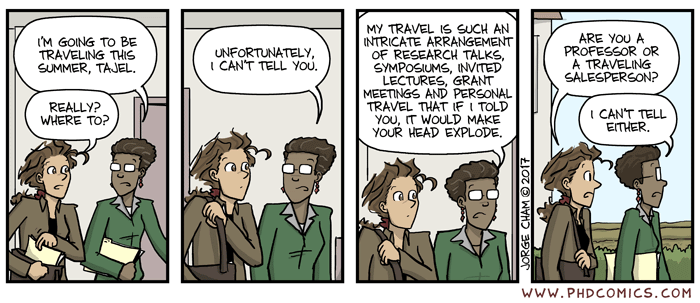
Nevertheless, even funnier ways exist:

12. Find your tribe

As said before, changing research environment can help you meet people working on similar topics and socialize your ideas outside your comfort zone. One of the most important consequences of “going outside” is that you will start reflecting on your own identity as a researcher. Accordingly, you will seek to engage with like-minded people that can either help you improve your papers or just represent a source of inspiration. This means finding your own “tribe”. As time passes by, I suspect this will become even more important, if someone wants to remain in academia: first, to maximize your impact and ensure funding for your research projects, you cannot be alone. Thus, finding co-authors or collaborators in your field may be necessary to achieve these goals. Second, I believe that the risk of feeling alone is quite high in this field; thus, feeling part of a community may help you reduce the risk of feeling lonely on an ivory tower.

13. Web3

Talking about your tribe, during my PhD I have changed ideas about the framing of my dissertation multiple times. Nevertheless, I have now understood that one pillar of my work concerns Web3. Digital Wallets, DAOs and tokens are all concepts that will most likely become even more important in the future. Even though I have so far focused on more incremental innovations that build on blockchain, I believe that being able to witness and study this (r)evolution is fascinating and is one of the main practical values added through my PhD Project. At the very least, because this is a rapidly-evolving field, where even those working in it still struggle to fully grasp its potential. If you want to know more about it, I dedicated one episode of my blog to this term.

14. AI can enhance our research:

Raise your hand if you have used ChatGPT or any other Large Language Models to boost your productivity. I believe that few people will not raise their hands. However, beyond ChatGPT (which has been already discussed by Vivian in a recent article), there are also other AI-powered tools that you may find useful. I share below a bunch of links:

      • Despite the cringe caption, I believe that this post offers some useful tips.

      • Tired of manually transcribing your interviews? If there is no sensitive information and your data protection office agrees, you should try Otter.ai or goodtape , which allows you to record and transcribe your interviews seamlessly .
      • ResearchRabbit is a nice website to look for papers and authors, monitor new literature or visualize research landscapes, while Elicit can be helpful if you need a quick literature review on a topic that you don’t know.

15. Cool geeky things

Talking about random but potentially cool tools, in the past few months I discovered these two websites:

  • Zoom has become an indispensable tool for attending online meetings or seminars. However, it’s normal to feel sometimes tired/bored after a day of online workshops or even just a long presentation.
    In this context, you may consider utilizing the “Sharing slides as a Virtual Background” Zoom function. This tool enables you to maintain eye contact with your audience while seamlessly transitioning through your presentation materials.
  • Bionic Reading This app aims at promoting reading and comprehension of textual content in a hectic and noisy world. Bionic Reading® revises texts so that the most concise parts of words are highlighted. This guides the eye over the text and the brain remembers previously learned words more quickly. Quite powerful (but pricey).

16. Differentiate between shadow and deep focus 

Talking about productivity and personal development, I believe that understanding the distinction between shadow and deep focus working is paramount. Inspired by the insightful teachings of Cal Newport in his book “Deep Work,” this concept emphasizes the significance of immersing oneself in undistracted, concentrated tasks. Shadow work, on the other hand, involves scattered attention and constant multitasking, often resulting in a superficial understanding of the work at hand. Newport’s book advocates for the cultivation of deep focus as a means to enhance creativity, productivity, and overall job satisfaction. As we navigate the fast-paced digital landscape, discerning between these two modes of working may help harnessing our full potential. Therefore, try to split your days in two moments: a longer timeframe when you deep focus, and a shorter when you answer to emails, make calls etc.

17. The importance of planning your next steps
While the intensity of thesis work may be all-consuming, taking the time to plan for post-Ph.D. life is a necessary investment. Whether pursuing a career in academia, industry, or entrepreneurship, having a well-thought-out plan enhances the transition. By incorporating future-oriented considerations towards the end of the Ph.D., you (I) can try to anticipate some challenges, e.g., funding, and explore possible solutions. Even though it is not easy, talking explicitly with your supervisor and peers about them is very helpful. This is why, as EINST4INE, we have been organizing a few events that aim at kickstarting these conversations.

18. The importance of making lists

Well, if you dared reading until this point, I hope you would agree with me that making lists is pretty useful. Both for the reader, and the writer. In the realm of academia, where the sheer volume of data and tasks can be overwhelming, lists serve as a compass, providing direction and focus. And, as in this case, may be a funny thing to read after sometime to reflect in hindsight on what I have done and to what extent I agree with the myself of some years ago!


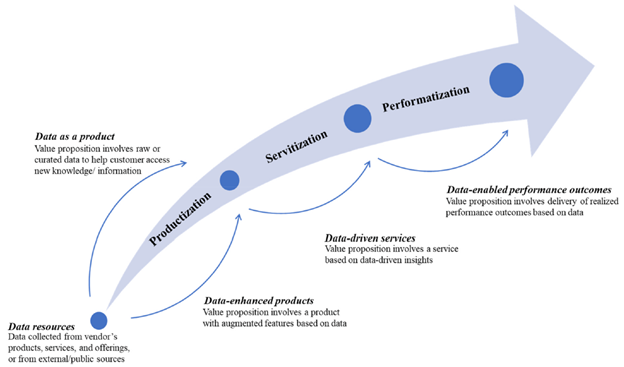
Data-driven value proposition continuum (Source: Ritala et al., 2023)

Selling and monetizing data in B2B markets

This blog post is based on the findings of our research article, openly accessible and freely available here: https://doi.org/10.1016/j.technovation.2023.102935

What is data monetization?

Data monetization refers to the process of capturing monetary value from data by generating revenue through selling data, data-based products, and data-based services. It involves converting the intangible value of data into tangible financial returns.

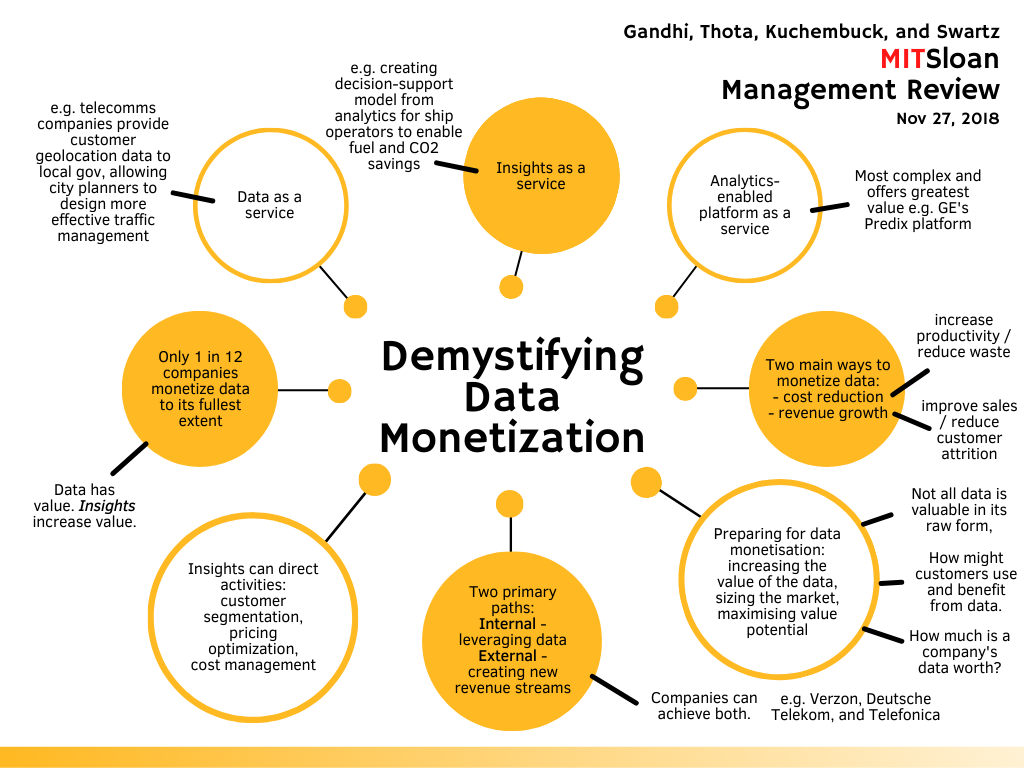
Summary of ‘Demystifying Data Monetization’ (Gandhi et al., 2018). Created by author.

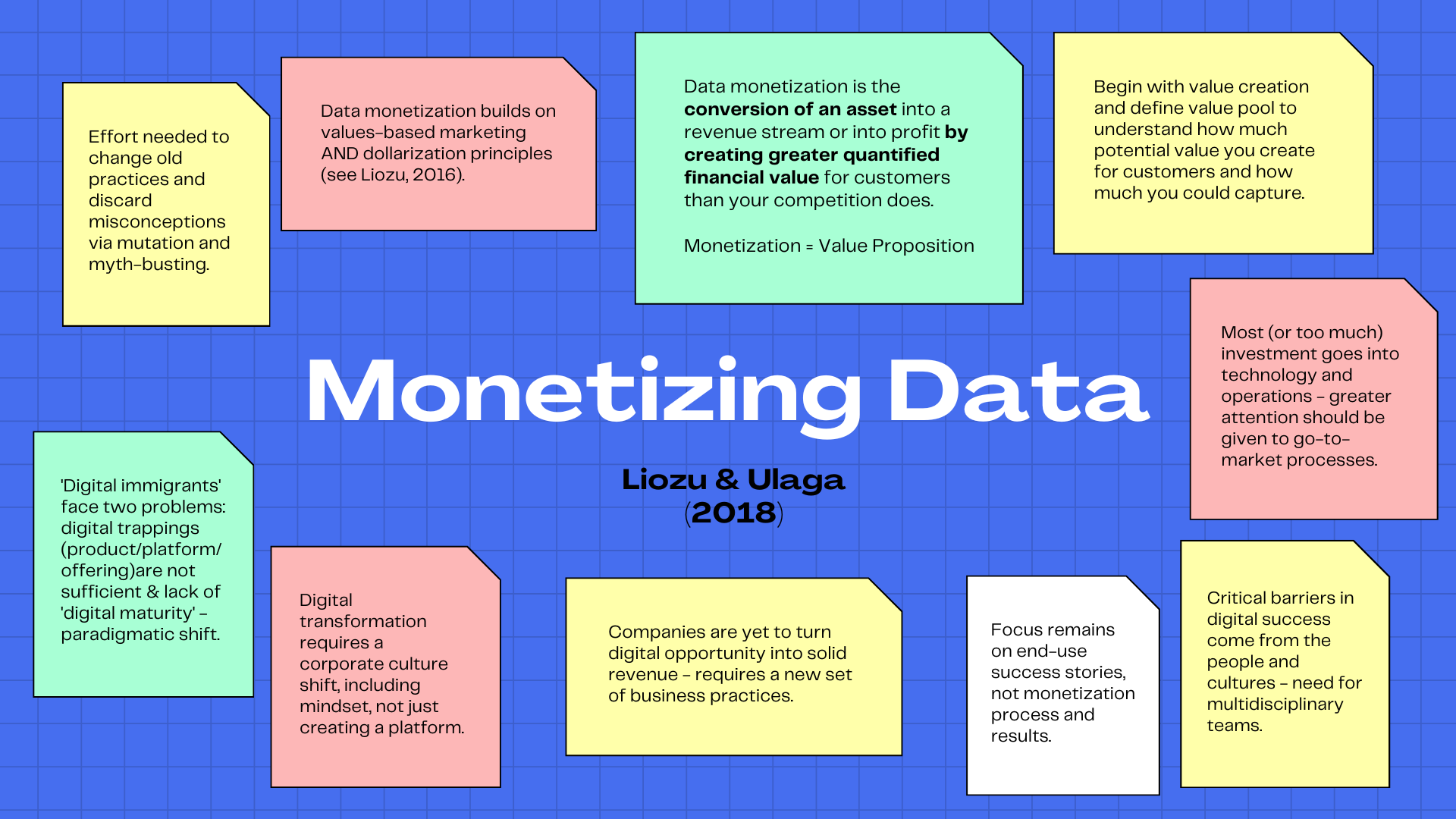
I was actually very new to this topic when I started this project, so as a fun way to get into the literature I generated a few visuals to help concretize the key learnings and takeaway. I share them here (above and below) to help give a snapshot of some of the foundational reading. At this time, I was lucky enough to gain the experienced wisdom from my co-authors, who publish works in this area such as ‘Three Ways to Sell Value in B2B Markets‘ (Keränen et al., 2021) and ‘Growth Reinvented: Turn your data and artificial intelligence into money‘ (Ruokonen, 2020).

Summary of ‘Monetizing Data’ (Liozu & Ulaga, 2018). Created by author.

Data monetization is crucial for organizations as it presents opportunities to create new revenue streams, drive innovation, enhance competitiveness, and unlock the full potential of data assets which can also contribute to environmental and social benefits. Despite the increasing trend towards data-driven offerings, many B2B firms face difficulties in effectively selling and monetizing their data.

How can data be monetized – what did we find?

We studied data-driven value propositions by 14 B2B companies, including ABB Group, Hilti Group, Kemira, Eagle Alpha, Kyndryl, Metso Outotec, Jakamo, and many others. Accumulating evidence from some of the authors’ previous work, the literature, and predominantly the interviews we conducted with key informants from our case companies, we were able to identify four different data-driven value propositions that B2B firms can use to sell and monetize data-driven offerings. These are:

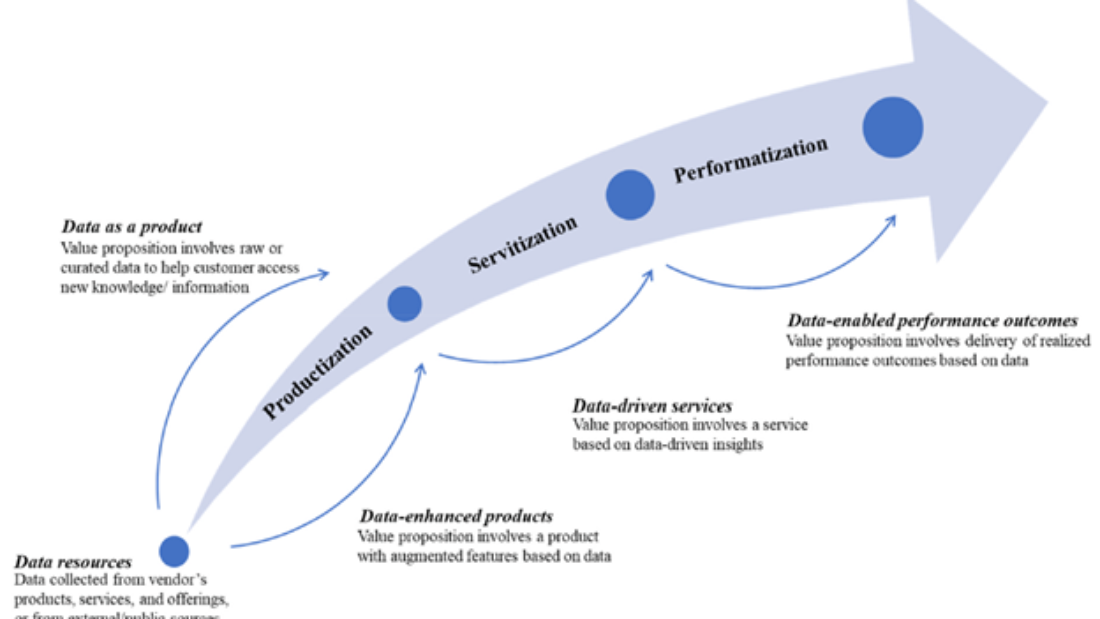
  1. Data as a product – where raw or processed data is sold or shared with customers as a stand-alone offering. In this model, vendors typically sell their own data or data collected from public domains or other companies.
  2. Data-enhanced products – where existing product offerings are enhanced with data-driven features and functionalities. In this model, vendors embed for instance smart sensors, software, and IoT applications into physical products to collect, analyze, and monitor data on how customers use their products.
  3. Data-driven services – where vendors use accumulated data to analyze, predict, and optimize customers’ processes. In this model, vendors sell intangible insights and know-how through consulting services.
  4. Data-enabled performance outcomes where vendors combine data-enhanced products and data-driven services to deliver complete smart solutions that guarantee specific performance outcomes. In this model, vendors take responsibility for specific processes on behalf of their customers and sell measurable and guaranteed performance, capacity, or availability outcomes.

Each of these value propositions has its unique characteristics, capabilities, and challenges, and the study provides insights into how firms can transition between them and develop their data-driven offerings (see Table 2 in the paper).

These four propositions are not a step-by-step progression, as a firm can choose to develop one or more of these propositions and expand in either direction that suits the firm’s capabilities, resources, and goals at any given time. Although, it can be said there is a higher investment of resources and increasing complexity and challenges as you progress from 1 to 4 of the labelled propositions above.

We developed a continuum to visualize how firms often navigate between these different value propositions.

Data-driven value proposition continuum (Source: Ritala et al., 2023)

For example, Telia told us about their data-driven services such as Crowd Insights, where for instance they work with cities to support decision-making and planning for a more efficient and optimized city. Using aggregated mobile data (meaning it is anonymized and cannot be traced to the individual) the city can understand the movements of people to better organise road traffic and general services such as events. This innovation allows Telia to make use of their otherwise untapped data and open additional revenue streams, while creating both social and environmental benefits with better traffic flow and less crowding.

As another example, at Johnson & Johnson MedTech they design healthcare solutions that are smarter, less invasive, and more personalized. They told us about how they monetize data via their smart product  and technologies (data-enabled products). Ultimately, the goal is to make surgery safer and to reduce complications. Additionally, with data-enabled performance outcomes such as their Surgical Process Manager, they are able to standardize processes better which reduces errors and thus reduces complications in surgery.

Key implications for managers

We suggest that firms need to carefully develop and pilot new data-driven value propositions with their customers.

  • During this process, they should engage in organizational up-skilling, especially in terms of acquiring and developing new capabilities related to data collection and analysis, tech architecture, commercialization, sales, and marketing.
  • While the softer sales and marketing capabilities needed to understand and communicate the value of data-driven value propositions are often possible to learn and (re)train in-house, the more complex technical capabilities related to data collection, analysis, and interpretation usually need to be acquired externally through hiring or partnering with other firms.
  • It’s also important for firms to consider strategically how and to what extent they can monetize the data they can access and to address challenges with customer or industry maturity in terms of accepting and using novel data-driven solutions, which often require extra effort from suppliers to educate and shape those markets.

Our research article is openly accessible and freely available here: https://doi.org/10.1016/j.technovation.2023.102935

References:

Gandhi, S., Thota, B., Kuchembuck, R., Swartz, J., 2018. Demystifying Data Monetization. https://sloanreview.mit.edu/article/demystifying-data-monetization/

Keränen, J., Terho, H. and Saurama, A., 2021. Three ways to sell value in B2B markets. MIT Sloan Management Review, 63(1).

Liozu, S., Ulaga, W., 2018. Monetizing Data: A Practical Roadmap for Framing, Pricing & Selling Your B2B Digital Offers. Value Innoruption Advisors Publishing.

Ritala, P., Keränen, J., Fishburn, J. and Ruokonen, M., 2024. Selling and monetizing data in B2B markets: Four data-driven value propositions. Technovation, 130, p.102935.

Ruokonen, M. 2020. Growth Reinvetned: How to turn your data and artificial intelligence into money. Independently published.

ian-dooley-3NCA3tbaE5I-unsplash

In-between Places: How to work and travel during your PhD

In-between Places: How to work and travel during your PhD

Why do you go away? So that you can come back. So that you can see the place you came from with new eyes and extra colors. And the people there see you differently, too. Coming back to where you started is not the same as never leaving.” – Terry Pratchett

Originally, I was convinced that doing a PhD means to sit in a dusty, dark office corner at the end of a long echoing corridor of a university. And that may still hold true for some PhD candidates, frankly, I don’t know. Studying one topic in-depth for 3 to possibly many more years, turning that one coin over and over again, that does not exactly sound like a roller-coaster ride. It sounds like a long sweaty marathon when the skies are grey, everyone else is running in front of you, and the cheerleaders have gone home. But that is not it.

Embarking on a PhD journey may seem like a black box at first. Luckily, in my case, this does not describe my office situation. The black box is rather the many things that you figure out along the journey and that uncover over time and that includes the research output as well as the steps to get there. Against assumptions, two years into the journey, the ride continues to be exciting and somewhat mysterious. The times I spent sitting at a desk are finely interwoven with another trip to book, another chance to mingle and learn, another part of the chain to get to the next step.

The requirement of the EINST4INE program to move into another country was what drew me to it. I moved from Berlin to Barcelona in less than 2 months (the time frame is not my personal recommendation, but it worked out in the end!). Ever since, I get to enjoy an environment that was new to me, I am learning a new language and a new way of living—la vida loca. Aside from finding a new place to call home, the consortium also gets together on a regular basis, be it in Denmark, Italy, recently the United Kingdom – or soon in Stuttgart in southwestern Germany. And, of course, conferences, workshops and similar events are vital for joining the academic community, finding like-minded peers, and exchanging on the most recent findings.

While last year I was able to spend 4 months on an industry secondment in southern Norway, I kicked off this year with a joyful 3-months stay in Melbourne at RMIT. And here are some things that I learnt during my trips away thus far:

  1. Leaving your comfort zone is never easy, but can be very rewarding when you keep an open mind to experiencing something new everyday
  2. Planning early on and ahead of time can help to get adjusted more easily and prepare for the new setting (and safe money of your budget for another trip instead)
  3. Networking and getting to know new people are often the highlights of spending time abroad, especially if you can find people to discuss your topic with and get new ideas for your work, you may even make new friends for life
  4. Balancing to try new things and maintain regular habits (e.g., workout, sleep schedule, etc.) can be helpful to challenge yourself and expand your horizon while also keeping connected with your “home base self” for when your trip ends
  5. Exploring a new city and what it has to offer such as restaurants, museums, sights, and nature will provide many opportunities for experience and insight that can sometimes provide new angles on existing thoughts (especially for your research)—go explore and sleep when you are back home 😉

Looking back on every conference, every seminar, every dinner networking I thus far attended, each event provides such a unique value, adding to the pages of the PhD diary. Finally, my favorite saying goes like this: Don’t wait to be sure—move, move, move!


© phdcomics by Jorge Cham
PXL_20230501_125941041

Vappu

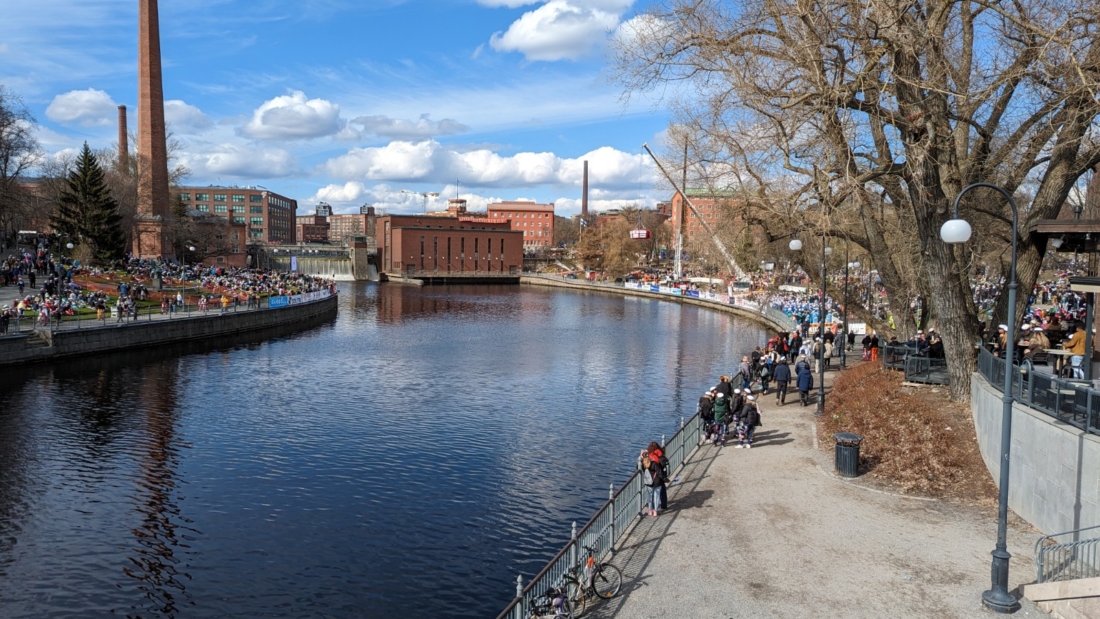
During my first weeks in Tampere I experienced the first of May celebrations in Finland also known as “Vappu”. In contrast to some other countries, the first of May is less important for workers’ rights and more relevant for the university students. The night before is often spend partying, while on the day itself everyone joins for huge public gatherings with sweets, picnics and alcohol. Sima a mead like beverage and munkki, a suggar coated donut are typical for those celebrations and sold in small booths all over the city. Freshly graduated students as well as alumni wear their white student cap and every city has its own traditions on what else is organized on the day. In Tampere, students will be submerged into the river running through the city. This is done in the most convenient way possible: by picking up a cage with students by crane. This spectacle is observed by the whole town, who gather at the riverside and bridge to have a look.

Party and picnic at the riverside. Picture by Finn Tryggvason
Dipping the students into the water by crane. Picture by Finn Tryggvason
Unsplash picture by Joshua Hoehne

Pitfalls and Blessings: A 21st century Research Journey

Pitfalls and Blessings: A 21st century Research Journey

Being in the academic world these days comes with many pros and cons, ups and downs, privileges, and struggles. On average, doctorate holders represent 1.1% of the 25–64-year-old population across OECD countries (source). That sounds like a very small percentage. But let us put this number a little bit into perspective: In 2006, approximately 1.3 million peer-reviewed scientific articles were published, synonymously leading to a rise in scientific journals from 16.000 in 2001 to more than 23.000 in just five years (source). Today the number of available journals to choose from is even larger, a presumed 30.000+ while, at the same time, enabling lower quality journals (source). You might think “paradox of choice”, how to decide which journal to go for?

Unsplash picture by Claudio Schwarz

Let us add another lens to that: “Fewer than 1%—manage to publish a paper every year” (source). Publication practices have long received the slogan: “publish or perish” (that speaks for itself) across disciplines such as medicine (source) and management studies (source). Assuming you have made it into a journal, about one third of articles in the social sciences do not get cited, much less in the natural sciences, but even more in the humanities with an approximate 80% of publications never getting cited after publication (source).

Publishing in a scientific journal has become a significant challenge. A challenge so significant that a professor once said to me, “When you receive the response from a journal inviting you to revise your manuscript – you celebrate” (Note, this does not mean the paper has been accepted yet, but it has moved on to round 2). A study on journal acceptance rates at Elsevier found an average of 32% of papers that make it past review (source) while “scientists suffer constant pressure to publish new work frequently” (source). In the case of a paper-based PhD, it is often mandatory to get papers into the review process while working on the PhD. Fortunately, actually being published by the end of the PhD is not necessarily a requirement – although it certainly will not hurt. But looking at the statistics sheds a light on the chances of doing that.

The lifecycle of scientific publishing only works with the valuable and dedicated time of unpaid reviewers but the pressure in the academic world is high, and an elbow-mentality is growing. In recent years the peer-review process is receiving some significant backlash. An article published by the highly recognized Journal of Management Studies almost read like a long-suppressed outcry: “Reining in Reviewer Two: How to Uphold Epistemic Respect in Academia”, criticizing the behavior of a reviewer who deprecated the use of low-tier journals (source). In a similar vein, DORA (the Declaration on Research Assessment) was formed in 2012 in order to improve ways in which researchers and research outputs are evaluated (source) and to date, more than 20,000 individuals and organizations have joined in, promoting this objective. While epistemic respect is crucial for scientific publishing, criticism and accepting rejection is the “daily bread” as Germans would say, or “the norm” for every researcher. However, a rejection by one reviewer or one journal does not decrease the value of the manuscript. Publishing is a journey and taking it from an Associate Professor at Princeton: “Authors should be wary of being drawn into this morass until they find an interested editor“ (source). And, I too know researchers who publish more than one paper a year—nothing is impossible.

Unsplash picture by Nathan Dumlao

It goes without saying that we have achieved a few milestones in education and academia in general. Higher education enrolment rates have almost doubled to close to 40% worldwide since the beginning of this century to 2018 (source). Education has become increasingly accessible to people around the world and this is a great achievement in many ways. However, there is no such thing as a flawless education system and scientific publishing has become an obstacle like never before. But along the ups and downs and the long way ahead, being able to learn, publish, and contribute to knowledge generation, informing others about our findings feels so very rewarding at the end of the day. Being able to produce research and working on the world’s challenges and concerns, in my humble opinion, is still worth the hours we put into it.

“Any fool can know. The point is to understand.” 
― Albert Einstein

My first secondment with AMPLYFI

My first secondment with AMPLYFI

So, one step further in my PhD journey: my first secondment with EINST4INE is in the books. I spenT some time with one of my industry partners: AMPLYFI in Cardiff. Here, I summarise a few useful learnings that might be helpful for your research as well!

AMPLYFI

My first secondment with AMPLYFI
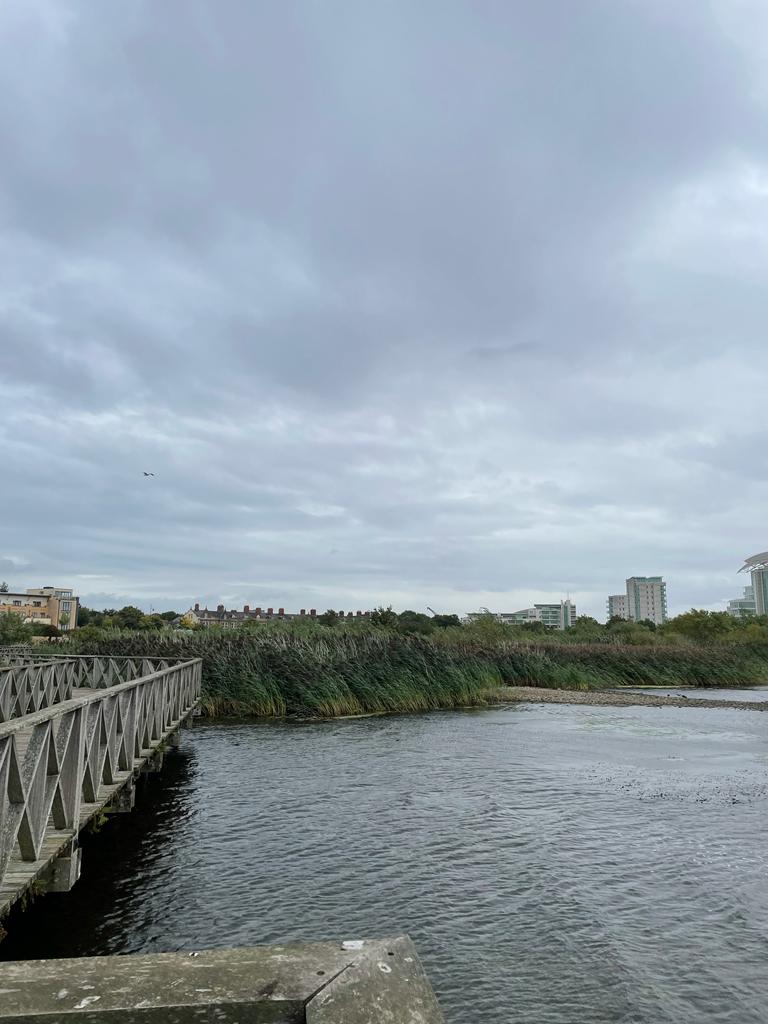
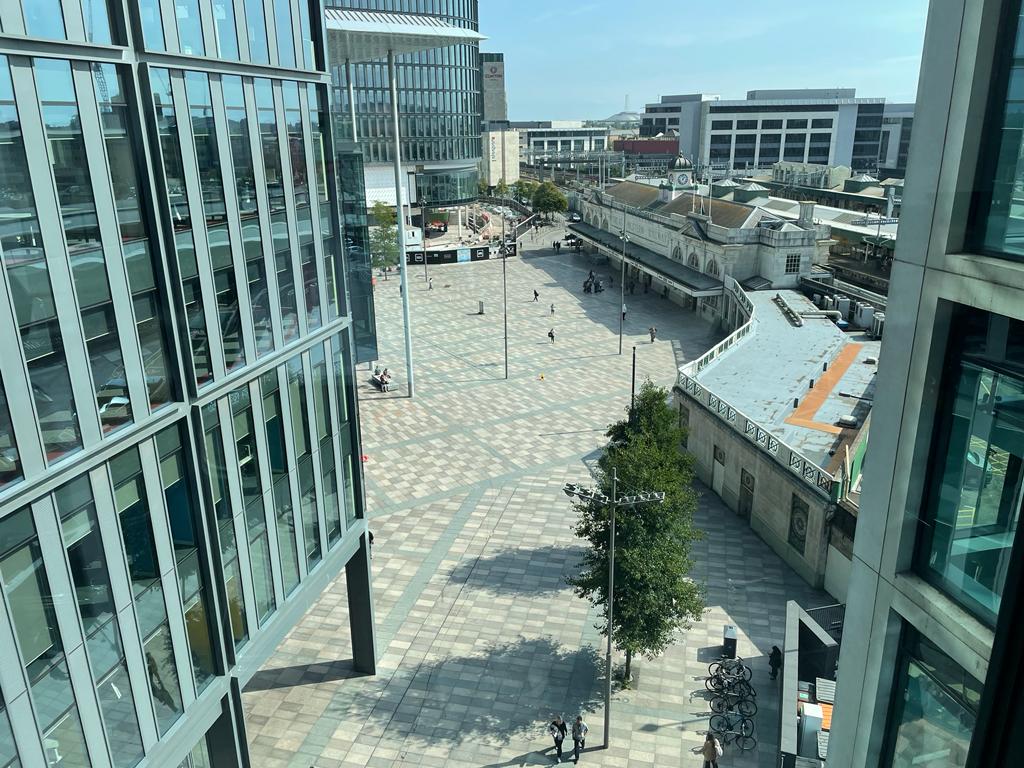
Cardiff Bay (picture taken by Constanze Leeb).

The company I visited during my first secondment is part of the EINST4INE consortium. AMPLYFI is a company providing a research platform which uses AI to analyse content and uncover previously hidden trends and opportunities. For this, I moved to Cardiff, Wales (so once across the U.K. from East to West) where the company is headquartered  and spent a few weeks with AMPLYFI. If you have never been – Cardiff is a great city, with an amazing castle, lots of nice arcades and it’s next to the sea (and if you time it right and are lucky, like me – you can maybe see the King)! Hint: bring a waterproof jacket (and backpack) and no umbrella – it can get quite rainy and windy.

Real fieldwork – A typical day at AMPLYFI

My days at AMPLYFI were always interesting and fun. First, the team is really nice and the atmosphere very motivating. Second, I was able to participate in many things during my time there. I had a desk in a shared working space, could come to the office every day, met many of the team, and was able to participate in most things, which enabled me to really experience the company and their activities. I talked to many colleagues, sat-in on meetings and calls, participated in workshops and was able to get hands-on experience with AMPLYFI’s tools.

Industry vs. Academia

You have all heard this before, but it really is true: the pace is very different in the industry. Everything happens faster – especially at a young company like AMPLYFI! A colleague has an idea, a small team gets together to look into it, and a few weeks later you can see the results. It is incredible how quickly AMPLYFI’s tools develop, I am sure there will be something new when I return for my second placement with them!

My first secondment with AMPLYFI
AMPLYFI’s Board Room (picture taken by Constanze Leeb).

What impressed me as well is how well organised AMPLYFI is. They are working closely across teams, keep each other up to date on their work, and have detailed documentation of their tasks performed – something that academia can benefit from as well!

Lastly, I have always studied intelligence work from a distance – reading about it and hearing others talk about it. But I have never had to perform it myself. During my time at AMPLYFI I was able to do a little research project on a topic of my choice using AMPLYFI tools, which was an invaluable practical experience. What I definitely learned from it is that intelligence work is just as hard and complex as I thought it is and my respect for all people performing intelligence work has increased even more.

Learnings for and from fieldwork

My first experience in fieldwork was great, but I did realise that many of the things that made it great came from my Sociology background and me taking time before the secondment to visualise what it would be like. Therefore, I am summarising some of my learnings here:

  • Be well organised!
    When you enter the field, it can be overwhelming. So, it is best if you already thought about a few things and prepared them. For example:

    • Know where you want to take which kind of notes. Especially, if your fieldwork will entail data that is not being recorded on audio or video!
    • Prepare folders beforehand for your data, e.g.: interviews with employees, interviews with customers, etc.
    • Think about a naming system for your data. Are you going to number your interview partners? Are you going to name the files after the interview partners, the day of the interview, etc.?
      My first secondment with AMPLYFI
      View from AMPLYFI’s Board Room.
  • Be part of everything you can!
    Often you learn the most interesting things in situations least expected. So, if you have dedicated time for fieldwork – use it and participate in everything you can.

    • You will not only learn a lot by participating in meetings, events, social activities etc. – you will also meet people! And this in turn can give you access to new interview partners or new events.
    • When you hear about an interesting event. – just ask if you can participate. The answer will likely be yes, as you will have some form of NDA/CDA in place anyways. Remember: others don’t know what you need or are specifically interested in! And also: Worst case – the answer is no, but at least you asked!
    • If you feel like you have no idea of what is happening – just participate anyways, you will figure it out on the way. Or not – and then you can ask about it afterwards.
  • Just ask!
    We all know the fear of asking questions from school or university. Of course, also back then the lesson was: just ask! This is also true here, especially as you are entering the field from outside – nobody expects you to know everything!

    • If you don’t understand something – ask about it. Usually, people are very happy to help and to explain something. Even if it is basic for them, they understand that it isn’t basic for you. Also – this is what research is sometimes about right? Asking the obvious questions to understand deeper underlying concepts.
    • Ask for access to internal documentation and access to internal communication! This will give you invaluable insights and help you understand your field a lot better! Just ask and explain that it’s insightful for a comprehensive understanding – if they are not happy to share, they will tell you so.

If you are interested to hear more about my time at AMPLYFI: I also wrote a blog post for the AMPLYFI website! You can check it out here, next to other interesting blogs on the AMPLYFI website.

A short guide to academic writing

A short guide to academic writing

Academic writing is a bit like marmite – some love it and some hate it. I am one of those in the latter. It can be quite daunting, something you would rather push to some other day, but the truth is that it is an essential skill to master as a researcher.

As a PhD student, I feel it is important to develop this competency early on. Recently, I was fortunate enough to attend a two-day intensive workshop on the ‘Basics of Academic Writing’ by Professor Eelko Huizingh that changed my attitude towards this element of academic life. In this blog I wish to share some advice I learnt and reflected on to help you feel more confident and inspired about writing too!

Writing is a skill that can be trained

This is one of the most reassuring pieces of advice that I could be told at this stage. As someone who does not possess the natural writing capabilities some authors have, it is good to be reminded that this is a skill that can be crafted. Most importantly, even if you are a capable writer, writing still requires consistent practice.

How to overcome writers block? Start writing.

Okay this is a fairly obvious one, but before you start rolling your eyes there is more… This block we have all experienced is a mental block and the best way to overcome thinking is by doing. A handy tip is to set yourself 10 or even just 5 minutes on a timer and force yourself to write whatever comes into your mind and do not stop until the time is over. It could be the most unintelligible words you have ever written but this does not matter, it can all be fixed later. The point is to stop avoiding and start puting fingers to keys or pen to paper.

Know your audience

In an academic context, it is a good idea to know the journal you are targeting before you start writing. Read their papers, learn their preferred structure and styles, follow their guidelines. Simple but effective and often underestimated.

Write with the reviewer in mind

As you tap away, always keep in the back of your mind what exactly you want to say and how it will be evaluated. Sufficiency is key – is your contribution sufficient? Is it novel and interesting enough? Is your evidence sufficient? Is it convincing? Have you delivered your promise in a sufficient way? Has it been told with clarity? Is the level of rigour sufficient? The list goes on…

Making your paper relevant and interesting

This is what every researcher strives for, but executing this can be quite challenging. Therefore, when you are writing, make sure to include statements that define: whether there are conflicting prior studies, if not much is known about the phenomena, if there is much at stake, or whether the problem persists in practice. To communicate this in an interesting way, consider using various presentation tools (concise tables, visual mapping, graphs, diagrams, etc.), storytelling elements (using analogies, engaging titles), and most importantly structure your paper in a way that is easy to read – benchmark top papers!

Build writing as a habit

Whether you are an early bird or an evening owl, figure out your most productive time of day. Block time in your calendar, even just 15 minutes, and start writing every day. You will thank yourself later.

Set priorities

We all have an endless email inbox and list of administrative tasks to do that tend to feel more imminent than they are. This is your permission to ignore them. Create a list of all the things you need to do and set them in priority order. Get your writing done first then address the other items. If you have to turn everything off – phone, emails – do it.

Don’t wait for motivation – create it.

Some days inspiration can flow easily and other days doing anything can feel a real chore. Remember to be kind to yourself on all occasions, but don’t wait for the inspiration to come to you. Go and find it. Here is a list ranging from high effort to low effort activities (in no particular order) to act as inspiration to motivate you to continue writing:

  • Read an interesting paper
  • Go for a walk to clear your mind
  • Watch an engaging (academic) video
  • Listen to a topical podcast
  • Make your favourite beverage or snacks to accompany your writing
  • Talk to colleagues about your topic (bonus: tell them you are writing so they keep you accountable)
  • Even better, host a writing club with your colleagues where you set focused sessions to each work on your writing (works both in-person or online) – as we have done in the EINST4INE group!

Remind yourself why you are writing

When under the pressure of deadlines or the pursuit of getting published, we often forget the art to academic writing. Whether it be to engage in academic discussion, a stepping stone in achieving your PhD, to build reputation in your field, to organise your thoughts and understanding, to advance science and societal progress – it is good to remind ourselves why we are doing it in the first place. Make a list and refer back to it whenever you need.

… Thanks for reading, now time to go write!

You need to get lost before you find your way

You need to get lost before you find your way

Looking back at the first term of my experience as a Ph.D. researcher at LUISS Guido Carli University in Rome and as a member of the EINST4INE program, here are some things that I have learned…

  • Classes have a lot to offer
  • In today’s digital world, social media is essential
  • You need to get lost before you find your way

I was previously employed at a firm that specialized in market and consumer data before commencing my PhD in September 2021. And while I learned a lot about recognizing new trends and the way to do research there, I became increasingly intrigued by the way society and the economy are being transformed by digital technology. That’s why I began looking at ways that my future employment may have a positive influence on society and help to address key developments and concerns that we’re all grappling with. Because of this, when I applied to the EINST4INE program, I was eager to collaborate with like-minded academics, educators, and industry practitioners throughout Europe and beyond.

Now the beauty of the program is the established network, where we’re able to share our own experiences and build a communal one. As a result, one of the first things my close friends and family asked when I informed them I was relocating to a new country to begin my academic career was “what are you going to do there?”, “what is the program of the PhD?”

Some people were taken aback when I told them I was a PhD student taking classes, but now that I’ve been in those classes for over six months, I can see how beneficial they have been:

One of the first steps in doing research is to choose the appropriate approach. And while the topic of my research as the Early-Stage Researcher (ESR) 15 is “Linking open innovation mechanisms to reach environmentally sustainable goals”, qualitative research seems the most fitting because of the exploratory nature of the topic, quantitative research is all I’ve ever done before. Thanks to one of my supervisors, Prof. Luca Giustiniano’s contribution to the qualitative methods course as an instructor, my fellow students and I gained a thorough understanding of the many sorts of qualitative research methodologies. The course provided an overview of key perspectives related to the design of qualitative research, with emphasis on theory framing, purpose statement definition, research questions development, and sampling in the qualitative research traditions. More specifically, I had the opportunity to work with data analysis tools such as NVivo, which help with the coding, transcription, and interpretation of qualitative outputs (such as interviews).

Epistemology was another class that I learned a lot from during my first six months as an ESR. Here we touched upon the topics of philosophy of science, rationality, games and institutions, and social norms. While the most important value of the course was to iterate the reason why we do research in the first place, the course also helped us appreciate the importance of the ties that bind academics, business, and society as a whole.

Many of the other courses in the program, such as Digital Ecosystems, Digital Business Transformation, and Organization and Technology, dealt with the present impact of digital technology on the corporate environment. While open innovation seems to be a good way for organizations to remain competitive and innovative, the engagement of sources like Artificial Intelligence (AI) and Big Data appears to be essential. And, especially because the COVID crisis has prompted many businesses to go digital, I am trying to relate how companies are becoming digital and work together to eventually be environmentally sustainable.

I am able to apply the knowledge I’ve gained from LUISS courses in the weekly EINST4INE Reading Club, where we discuss research articles on a wide range of contemporary problems and connect our own research to the study of others. We engage and discuss what the readings teach us, and typically broadcast the major learnings on a social media site such as Twitter or LinkedIn.

And while I’ve never really been a social-media-savvy person, my first LinkedIn post enabled me to connect with individuals from all over the globe and from a variety of study fields. I also recognized that if I want my work to have any significance, it has to be made public. Still, my private Instagram account is largely dedicated to posting photographs of my dog, but I also make an effort to speak about my research on sites like LinkedIn, Researchgate, and other similar ones since it is a fantastic way for researchers to network and keep their creative juices flowing.

For now, as an early-stage researcher, my primary focus is acquiring as much knowledge as possible on the subjects of Open Innovation, digital technologies, and sustainability. And this involves a lot of reading, which can be confusing at times…
For example, have you ever been overwhelmed by the sheer number of options of jams and chocolate spreads you can find in a supermarket? Everything about this first term has seemed the same. The more I read and attempt to understand complex concepts, the more confused I get. When I confided in my supervisor about it, she said, “This is normal, you need to get lost before you find your way”.

So while this may seem a little cheesy, it truly is the journey that matters and not the destination since you learn and give so much along the way.

PXL_20220428_153512878

How I decided to pursue a PhD.


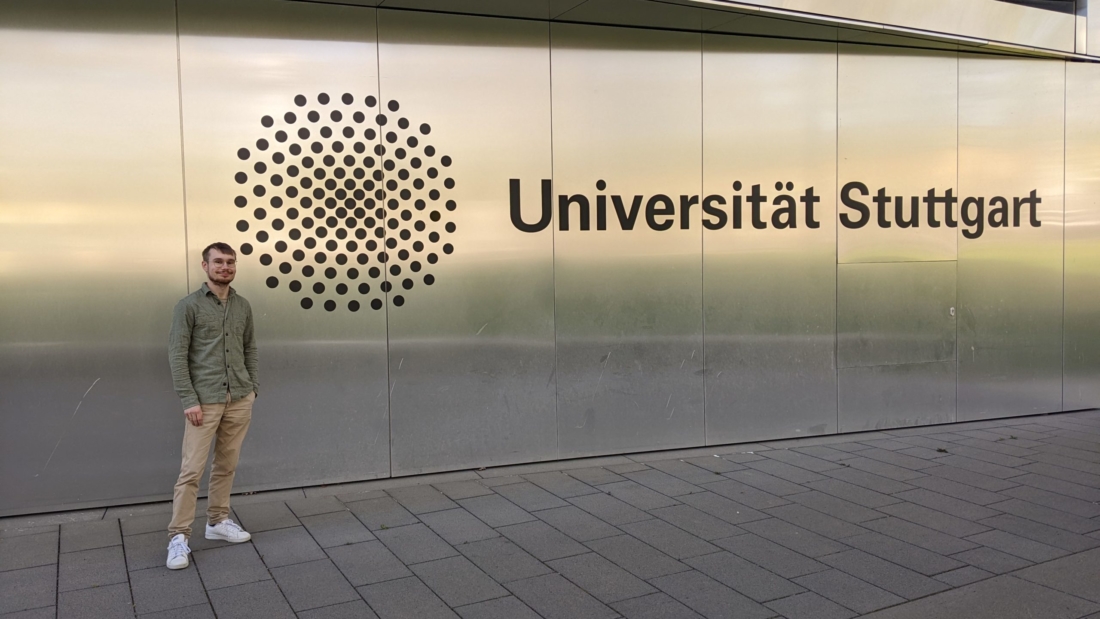
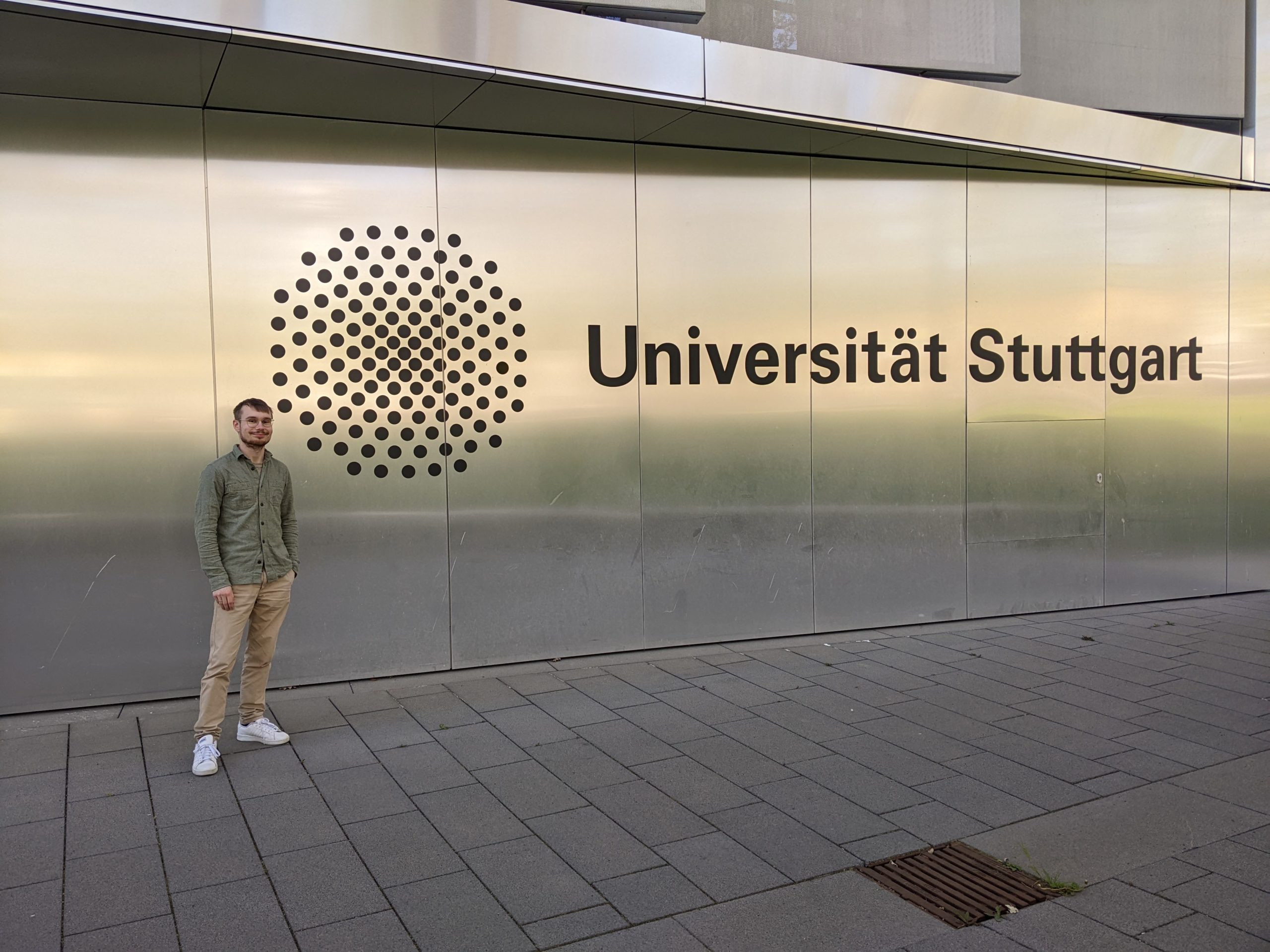
Me in front of Universität Stuttgart (Source: Finn Tryggvason)

Ever since I was a child I was undoubtedly interested in technologies. My extensive Lego collection and building projects gave an early indicator that my future would likely lead me to an engineering career. Unsurprisingly (though many years later) I started studying business engineering and I was certain that this would also be my future career path. However, the further I progressed in my studies, the more I distanced myself from “hardcore” engineering.

Towards the end of my education I was uncertain what the field of highest interest would be to me. Throughout my studies I came in touch with many different technologies such as 3D-printing, Cobots, VR, AI/ML and IoT and gained both hands on experience as well as a conceptual understanding of each technology. At the same time I was curious about topics such as Innovation Management, Open Innovation and how an innovation can reshaped the market. So as I approached the end of my education, I was left wondering: What will I do once I conclude my master studies?

Since I was unwilling to prematurely limit my future career opportunities, I decided to postpone my decision on what to specialize in. I started looking for something that would allow me to keep a close eye on novel technologies and trends from both a technological, as well as theoretical perspective.

I was lucky to discover the EINST4INE program which gives me the freedom to do exactly that. This program allows me to apply my previously gained knowledge regarding emerging technologies and combine it with my academic curiosity. I am excited to see where I will go from here and what the future of the program will bring.

Source: Christina Häfliger

Digital Innovation Journey

Digital Innovation Journey
(Photo: Christina Häfliger)


Currently I am working on extending my theoretical knowledge on innovation ecosystems. Over the past few years, I have developed a strong research interest in innovation, entrepreneurship, and strategic management. With multilateral sets of partners interacting in ecosystems, legitimacy processes are an important part of successful orchestration. I’m particularly interested in finding out how innovation ecosystems can be initiated and maintained so that they flourish, and how legitimacy is established.

My research at EINST4INE focuses on innovation orchestration. I’m interested in the mechanisms that contribute to prospering ecosystems. The orchestration of ecosystems involves multiple organizations and parties. Innovation ecosystems create new opportunities for diverse stakeholders to collaborate. At the same time, they create challenges for the inclusion of multiple perspectives of various stakeholders.

My expectations for the EINST4INE project are to learn and to build a network of colleagues working in different areas of digital transformation. I intend to contribute with insights through my own research and to profit from excellent research training. Having worked in higher education for the last couple of years, I had wanted to specialize in innovation. As I have been involved in several innovation projects in the past, I was looking for opportunities that would give me international research and training experience.

Research on innovation provides for me the opportunity to delve further into a topic I find fascinating. During the first few months we were able to participate in highly interactive reading and discussion sessions. We learned about various research activities and received a lot of input and tips from experienced researchers and practitioners. It is great to get to know a diverse group of young research colleagues and an extended network of partners in the field of digital business and organization. So far, we had many discussions in our cohort and were able to get to know our EINST4INE colleagues better. One topic that I particularly liked in our discussions was open innovation, as this has been an interest of mine for a while. Different forms of collaboration have fascinated me for a long time. When the Marie Skłodowska-Curie Fellowship presented this excellent opportunity to further develop my skills, I was – and still am – very happy to be able to pursue my new career path in research.

Photo by Robynne Hu on Unsplash.

IT doesn’t matter: A Journey to EINST4INE

IT doesn’t matter.

I remember reading this article by Nicholas Carr during my graduate studies. I still remember this article today which may or may not relate to the fact that it also helped kickstart the idea for my consequent master thesis. While never before did I think much about cloud computing I started to get really engaged with the matter and how it drastically impacted how we “did IT”.

Technology has fascinated me for some time, going back many years. Since I can call myself a millennial of this day and age, I still recall the days of fixing my cassette with a pencil and mastering the art of Paint on a bulky Windows computer. When I was about 15 years old it started to become the norm to have a phone. One that slides up and down. It was the most fascinating tool I could have wanted. Today my smartphone is heavy, and it doesn’t fold nor slide.

Until today I have seen so many changes that I cannot count them anymore. I cannot count the types of phones and music players – portable and static – I used to own. Truly just the variety they came in. So much has changed and then again, not that much. We have become so used to the constant connection, the faceless conversations, the mind-numbing notification rings.

All of this raised more questions to me than it answered. How can we live in this interconnected digital world? What does it do to us, how we communicate, how we interact with each other?

Photo by Robynne Hu Source: Unsplash.

When the opportunity came up to apply for EINST4INE I knew I had to.

It was the sum and at the same time the continuation of everything I worked on since starting my bachelors in 2013. I explored so many topics in those years and yet I feel that questions remain, they reappear, they arise in new contexts again and again. What topics did I look at so far that still uphold my fascination for understanding digital technologies in a social context?

  • How does the Internet of Things in a smart office environment impact employer-employee-relationships?
  • How can we design humanoid robots when social and cultural bias will be mirrored in their representation?
  • In what way can social data be gathered in a smart home environment?
  • What motivates peers in the Sharing Economy and how does it impact our understanding of the P2P economy?
  • How does a cloud first strategy impact the role of IT staff in an organisation?

It was the last question of my master thesis that made me choose to pursue a PhD that studies the impact of implementing a technology that, through automation, deems traditionally complex and specialised knowledge redundant. Technology has had an enormous impact on our society in many ways. It has brought immense opportunities in so many areas from transport to healthcare, communication, finance. We have become agile, wireless and interconnected. Along with a plethora of benefits we still see challenges, disruption and the solutions we have yet to find.

EINST4INE to me offers exactly this opportunity where I can research a phenomenon that I believe to impact society at large. We have to help organisations, educational institutions and politicians to find those solutions.

Does IT matter?

It certainly has the greatest hold on us in this century than we might have imagined. But then again, it is just a technology. A connection of wires, a power source, switches, motors, microchips. Studying the composition of a computer a long time ago helped me to gain perspective. So did all those theories in Information Systems research. Technology is not the culprit. Carr makes a very valid point when he foresees the commoditisation of IT. Seeing how our utilities—electricity, water, gas—all have become our necessity for life – where would we be today without a computer, without the internet? IT is not something we achieve anymore. We know we can, and we did. What we do now is to go above and beyond. We merge humans and machines, intertwine our lives as much as possible and, as social scientists, explore the best ways to do so without collateral damages to, what we know to be, our society today.

I am dedicated to continuing onto my path, researching for answers that can create guidelines. And I am looking forward to doing exactly that.

Einstein. Source: © Shutterstock

So, you think you’re the next EINST4INE?

A genuine question I received when explaining my new project and role (yes, EINST4INE is intended to be pronounced Einstein). I simply laughed and dismissed the comment.. of course I am not the next Einstein.

But, it did make me think.

Collectively, our projects will embrace the major challenges of future industrial systems. That’s pretty big. While this is certainly a daunting prospect as the imposter syndrome starts to creep in, I remind myself that I was selected to embark on this journey alongside other brilliant young researchers, so why shouldn’t we aim for such an impact with our research projects?

Impact really drives me. Graduating only in 2020 and 2021, I completed both my Bachelors in Business and Master of Research in Sustainable Futures at the University of Exeter, Cornwall. During my studies, I interned for a social enterprise that trains and supports entrepreneurs to innovate social and environmental challenges through purpose-led businesses, as well as co-founding and leading my own venture of a ‘Women in Business’ society to empower young women to pursue their dream careers. Further to this, I have worked on several projects providing consultancy and freelance support to start-ups and research projects addressing various business and sustainability challenges.

Despite a rather naïve and potentially even immodest notion to believe that a group of PhDs will contribute groundbreaking science, I also believe that if you are not striving for something you will never come close to achieving it. So, we must dream big.

The main expectations I have for my EINST4INE journey is to make connections and build my network, receive high-level research training with great support from colleagues, and be exposed to a number of multicultural and practical experiences which all help deliver impact and enhance employability. At current, my research topic is broadly focussed on orchestrating innovation ecosystems. I’m really interested in investigating how things work, what challenges are being faced, and how they can be improved or resolved. As a result, I hope that my research will explore and develop mechanisms to successfully orchestrate ecosystems and the challenges they face. From an industrial perspective, I would like to explore ecosystems applied in circular innovation as I find it very applicable and an area that faces its own unique challenges. Above this, digital transformation has created opportunity to accelerate both the emergence and management of innovation ecosystems and the sustainable transition to a Circular Economy, areas that need development of understanding and best practices. And of course, being part of Gen Z, life before technology is pretty incomprehensible to me so curiosity into the digital phenomenon is almost second nature.

With these big dreams, how did I end up here in the first place? And another funny remark I have received…why Finland?!

Well, I am extremely pleased that LUT University is my host institution. It was my hope to pursue a career in research, and with a strong academic background, I was seeking opportunities that would give me international and industrial experience whilst still gaining PhD research training. The Marie Skłodowska-Curie Action presented the perfect opportunity to enable this. I am still in disbelief to be in such a fortunate position and am extremely honoured. I feel very grateful that I get to be located in such a beautiful place with such high quality of life and connected to incredible expertise through the institution and EINST4INE; I believe these factors will make all the difference on this learning and development journey.

So, you think you are the new EINST4INE?
Our view from the office. Source: Jessica Fishburn.

I feel I align quite well with Finnish culture and ways of conducting business; quiet, relaxed, resilient, and respectful. While this has helped me settle here, it also excites me for working with our industry partners here with whom I have begun exciting conversations about orchestrating innovation ecosystems addressing sustainability challenges. Beyond this, I cannot wait to learn and explore other cultures as part of my EINST4INE journey and the amazing research opportunities we have!

Looking forward to seeing what the future holds and I hope others will be inspired to follow along the way ?