In the world of academic research, it’s common to embark on a journey with a specific destination in mind (at least that was my path). Guided by established theories and prior studies, we often believe we know where our research will take us. My recent experience with a case study on innovation ecosystems, particularly focusing on environmental sustainability, was a humbling reminder of the unpredictable nature of inquiry.
As is the beauty—and sometimes, the frustration—of qualitative research (though it’s worth noting that surprises aren’t exclusive to this methodology), I was in for some revelations, when taking a closer look at how companies carry out projects…
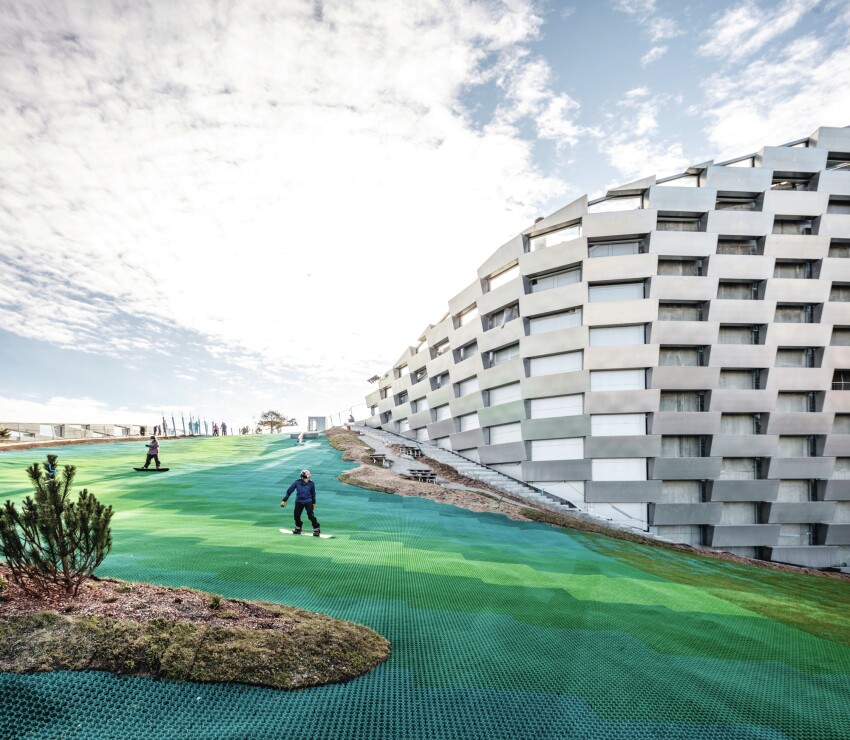
… As I was delving into the practices of companies engaged in green transition projects, I encountered a case that exemplifies this perfectly: the renowned CopenHill facility in Copenhagen.
CopenHill is an example of a new breed of sustainability projects that are simultaneously functional and hedonistic. With its waste-to-energy plant, ski slope, and restaurant, CopenHill epitomizes the concept of “hedonistic sustainability”, a term brought to life by Bjarke Ingels, the architect behind the facility (Estika et al., 2020). Aimed at merging environmental responsibility with pleasure and aesthetic appeal, many of these new facilities stand as a testament to the interconnectedness of green projects with the social, cultural, and environmental fabric of their communities. They are “history-dependent and organizationally-embedded units of analysis” (Engwall, 2003), each following a unique trajectory influenced by a variety of factors.
Thus, the creation of such multifaceted projects involves a collaborative effort extending beyond the realms of engineering or business. To assess their success or failure, there is an increasing need to adopt inter- or multi-disciplinary approaches, as their implementation and development cannot be fully understood or effectively managed through a single field of knowledge. Instead, it requires the collaboration and integration of diverse disciplines, as I have come to realize. For this reason, the current findings of my case study research are steering me in a more sociological direction, to better understand the complexities of the green transition. In pursuit of this, I have enrolled in an immersive three-day course at Aarhus University, where I’ll delve into various sociological theories, including Actor-Network Theory and Transition Theory, to name a few. My aim is to enrich my comprehension of the historical and environmental contexts that surround my case study.
Of course, I’m eager to share my discoveries along the way, so stay tuned for more updates and revelations!
References:
Engwall, M. (2003). No project is an island: Linking projects to history and context. Research Policy, 32(5), 789–808. https://doi.org/10.1016/S0048-7333(02)00088-4
Estika, N. D., Kusuma, Y., Prameswari, D. R., & Sudradjat, I. (2020). The hedonistic sustainability concept in the works of Bjarke Ingels. ARTEKS : Jurnal Teknik Arsitektur, 5(3), 339–346. https://doi.org/10.30822/arteks.v5i3.487
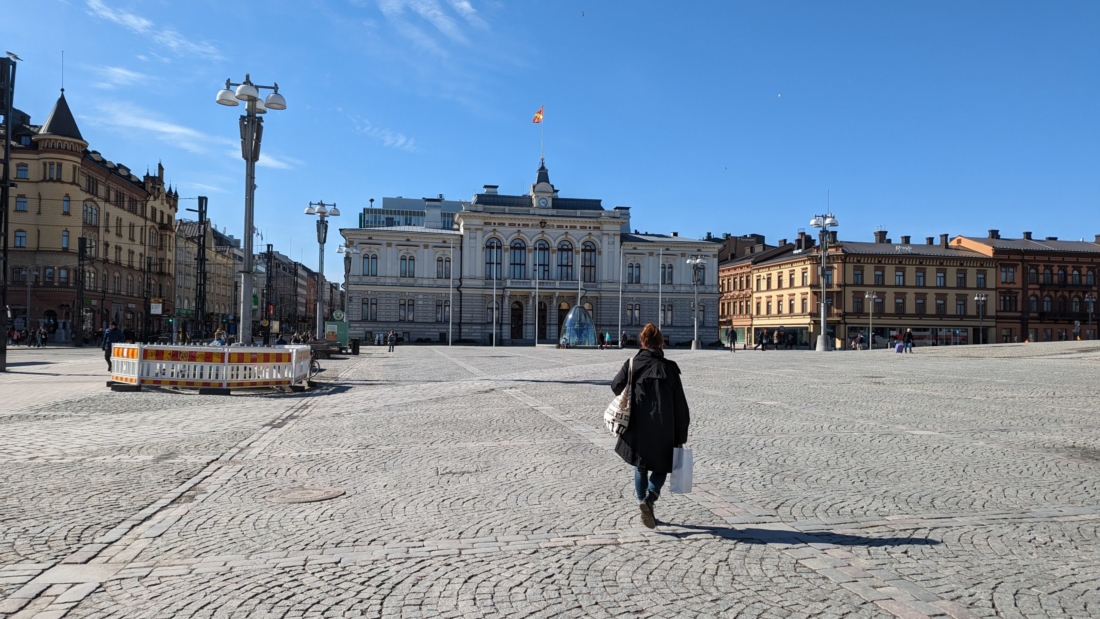
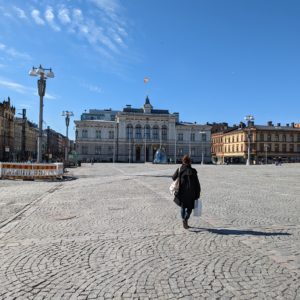
As part of the program I have the opportunity to go to Finland and visit both my industry partner Jakamo, as well as the LUT university. Now the time has finally come and I have arrived in the lovely city of Tampere, where I will be staying for my first two months. I was lucky to be met not only by great weather, but also the amazing team of Jakamo. During my stay I will conduct research in the field of ecosystem legitimacy, using Jakamo as a case study. At the same time, I will gain important industry insights and can engage with the team here so that we can learn from each other. For now I will focus on settling in, which does not seem too hard with such great company showing me the sights of Tampere 😉
I am thankful for this opportunity and am excited to see where my journey here takes me. While working with Jakamo, I will also post on their blog on supplier experience, so stay tuned for more to come!
Approaching Tampere. Picture by Finn TryggvasonTampere Town Square. Picture by Finn Tryggvason
After work sunbathing with the team. Picture by Timo Rossi
Pitfalls and Blessings: A 21st century Research Journey
Being in the academic world these days comes with many pros and cons, ups and downs, privileges, and struggles. On average, doctorate holders represent 1.1% of the 25–64-year-old population across OECD countries (source). That sounds like a very small percentage. But let us put this number a little bit into perspective: In 2006, approximately 1.3 million peer-reviewed scientific articles were published, synonymously leading to a rise in scientific journals from 16.000 in 2001 to more than 23.000 in just five years (source). Today the number of available journals to choose from is even larger, a presumed 30.000+ while, at the same time, enabling lower quality journals (source). You might think “paradox of choice”, how to decide which journal to go for?
Unsplash picture by Claudio Schwarz
Let us add another lens to that: “Fewer than 1%—manage to publish a paper every year” (source). Publication practices have long received the slogan: “publish or perish” (that speaks for itself) across disciplines such as medicine (source) and management studies (source). Assuming you have made it into a journal, about one third of articles in the social sciences do not get cited, much less in the natural sciences, but even more in the humanities with an approximate 80% of publications never getting cited after publication (source).
Publishing in a scientific journal has become a significant challenge. A challenge so significant that a professor once said to me, “When you receive the response from a journal inviting you to revise your manuscript – you celebrate” (Note, this does not mean the paper has been accepted yet, but it has moved on to round 2). A study on journal acceptance rates at Elsevier found an average of 32% of papers that make it past review (source) while “scientists suffer constant pressure to publish new work frequently” (source). In the case of a paper-based PhD, it is often mandatory to get papers into the review process while working on the PhD. Fortunately, actually being published by the end of the PhD is not necessarily a requirement – although it certainly will not hurt. But looking at the statistics sheds a light on the chances of doing that.
The lifecycle of scientific publishing only works with the valuable and dedicated time of unpaid reviewers but the pressure in the academic world is high, and an elbow-mentality is growing. In recent years the peer-review process is receiving some significant backlash. An article published by the highly recognized Journal of Management Studies almost read like a long-suppressed outcry: “Reining in Reviewer Two: How to Uphold Epistemic Respect in Academia”, criticizing the behavior of a reviewer who deprecated the use of low-tier journals (source). In a similar vein, DORA (the Declaration on Research Assessment) was formed in 2012 in order to improve ways in which researchers and research outputs are evaluated (source) and to date, more than 20,000 individuals and organizations have joined in, promoting this objective. While epistemic respect is crucial for scientific publishing, criticism and accepting rejection is the “daily bread” as Germans would say, or “the norm” for every researcher. However, a rejection by one reviewer or one journal does not decrease the value of the manuscript. Publishing is a journey and taking it from an Associate Professor at Princeton: “Authors should be wary of being drawn into this morass until they find an interested editor“ (source). And, I too know researchers who publish more than one paper a year—nothing is impossible.
Unsplash picture by Nathan Dumlao
It goes without saying that we have achieved a few milestones in education and academia in general. Higher education enrolment rates have almost doubled to close to 40% worldwide since the beginning of this century to 2018 (source). Education has become increasingly accessible to people around the world and this is a great achievement in many ways. However, there is no such thing as a flawless education system and scientific publishing has become an obstacle like never before. But along the ups and downs and the long way ahead, being able to learn, publish, and contribute to knowledge generation, informing others about our findings feels so very rewarding at the end of the day. Being able to produce research and working on the world’s challenges and concerns, in my humble opinion, is still worth the hours we put into it.
“Any fool can know. The point is to understand.”
― Albert Einstein
“The best way to predict the future is to invent it.” – Alan Kay
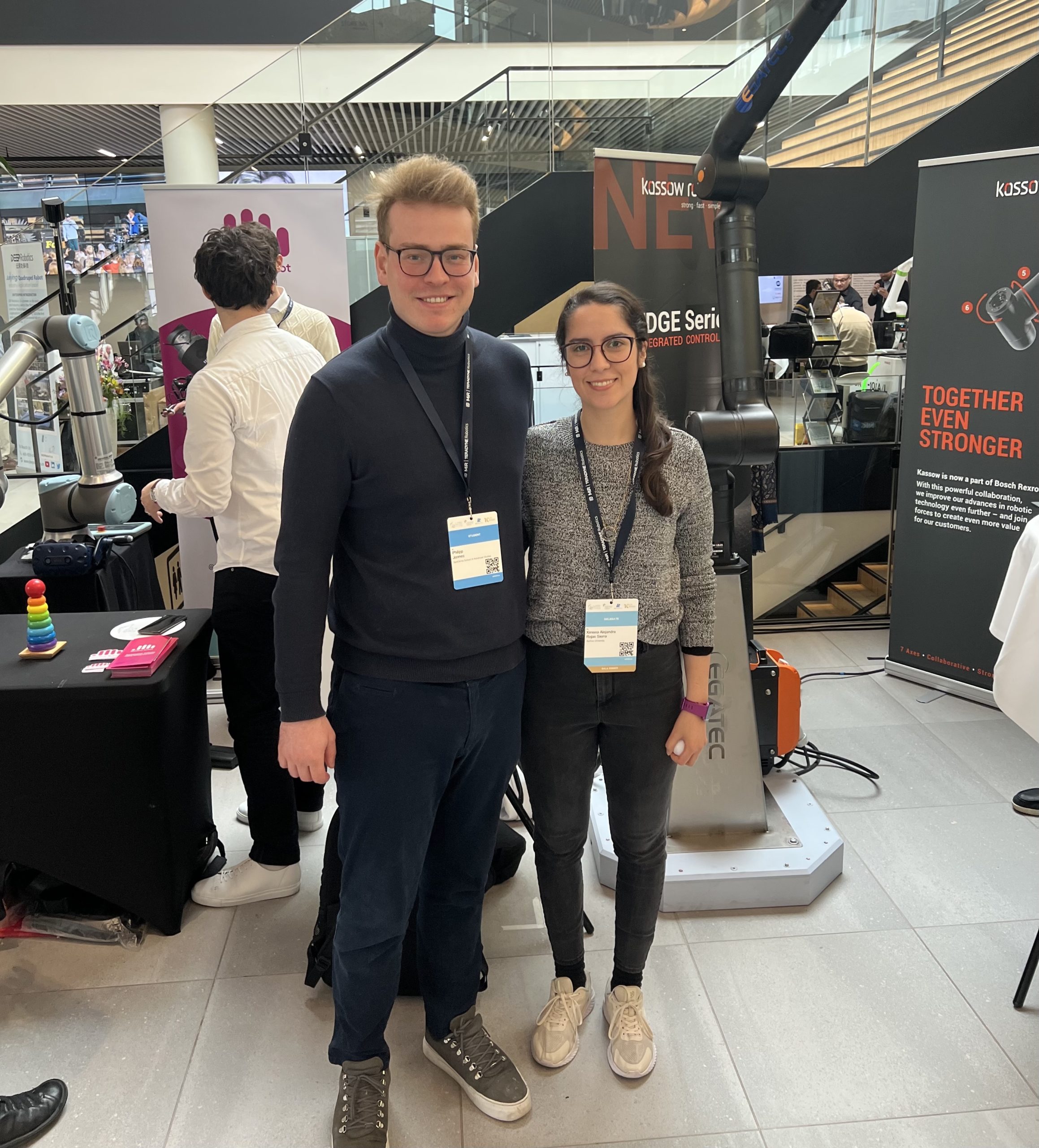
Hello everyone! I’m happy to share some experiences that I’ve made during the last month. Recently, I had the incredible opportunity to accomplish my academic secondment at Aarhus University in Denmark and attend the European Robotics Forum in Odense with my EINST4INE colleague Alejandra Rojas.
ERF23
The European Robotics Forum (ERF) is an annual event that brings together experts in robotics from industry, academia, and government to discuss the latest developments in the field and explore potential collaborations. The forum is organized by the European Robotics Association (ERA) and typically features keynote speeches, technical sessions, panel discussions, and exhibitions showcasing the latest robotics technologies and applications.
The ERF serves as a platform for researchers, engineers, and entrepreneurs to exchange ideas and knowledge on a wide range of topics related to robotics, including industrial automation, healthcare robotics, service robotics, and artificial intelligence. It is also a forum for policy makers and industry leaders to discuss the challenges and opportunities presented by the rapidly evolving field of robotics, such as ethical and legal considerations, workforce training, and investment strategies. Even Crown Prince Frederick, His Royal Highness of Denmark, attended the event this year!
ERF23 with EINST4INE colleague Alejandra Rojas. Source: own photo.
As a visiting researcher, I was thrilled to be able to connect with so many people who are passionate about robotics and human-robot interaction. I was able to learn about the latest developments in this field. I was particularly interested in discussions surrounding collaborative robots, which are designed to work alongside humans in manufacturing and other industries. During the forum, I had the pleasure of engaging with some brilliant minds, from both the academic and practitioner side. Their contributions to the discussions were invaluable, and I learned a lot from them.
Exploring the Fascinating World of Robotics
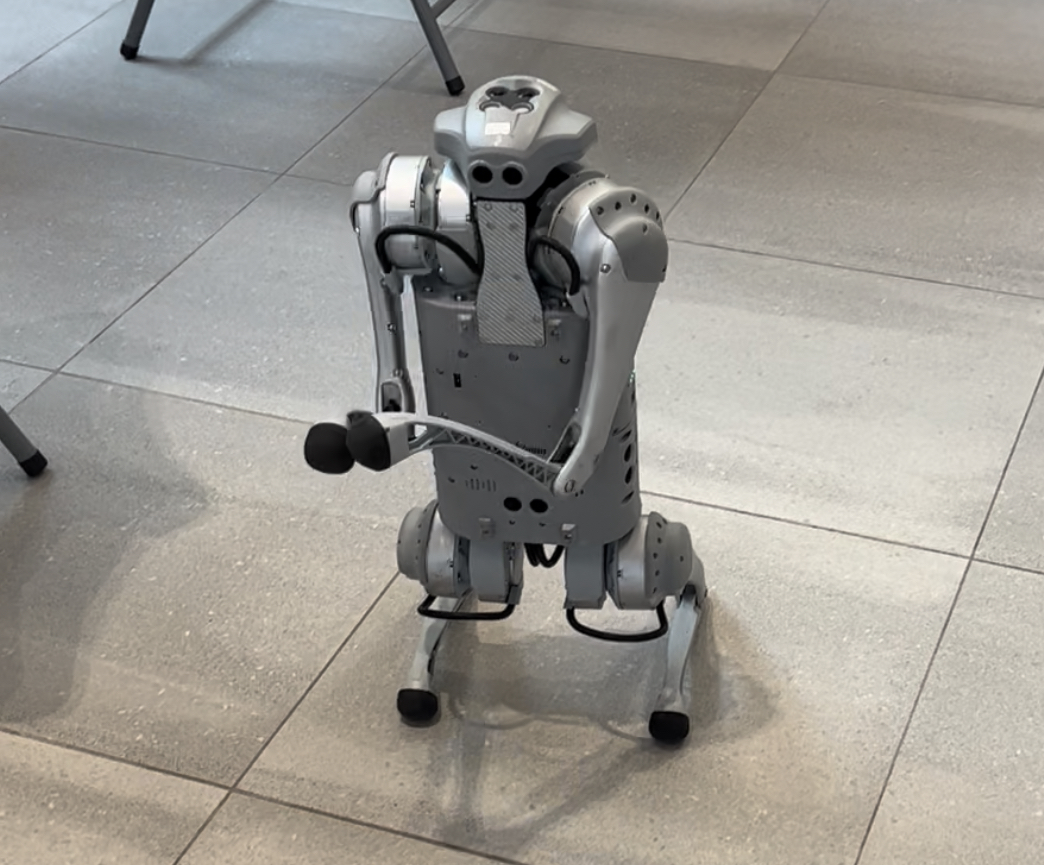
In addition to my research on collaborative robots, I’m also fascinated by other robotic technologies such as drones and robotic dogs. These technologies are shaping our world in profound ways, and I believe they have enormous potential to improve our lives. For example, drones have the ability to conduct aerial surveys, deliver packages, and even help with search and rescue missions. Robotic dogs, on the other hand, can be used in a wide range of applications, from military and law enforcement to assisting people with disabilities. I find the intersection between these technologies and human needs to be particularly interesting, as it challenges us to think about how we can design and use robots in ways that are safe, ethical, and beneficial for society as a whole.
Robotic Dog ERF23. Source: own photo.
The Journey Goes On
Aside from the forum, I also spent time at Aarhus University, where I was conducting interviews with SMEs located around Denmark. These interviews are an important part of my research, as I’m studying the implementation of social and collaborative robots in organizations. By understanding the effects of cobots on an individual and firm-level, I hope to achieve a clearer understanding of cobot implementation processes, organizational opportunities and challenges.
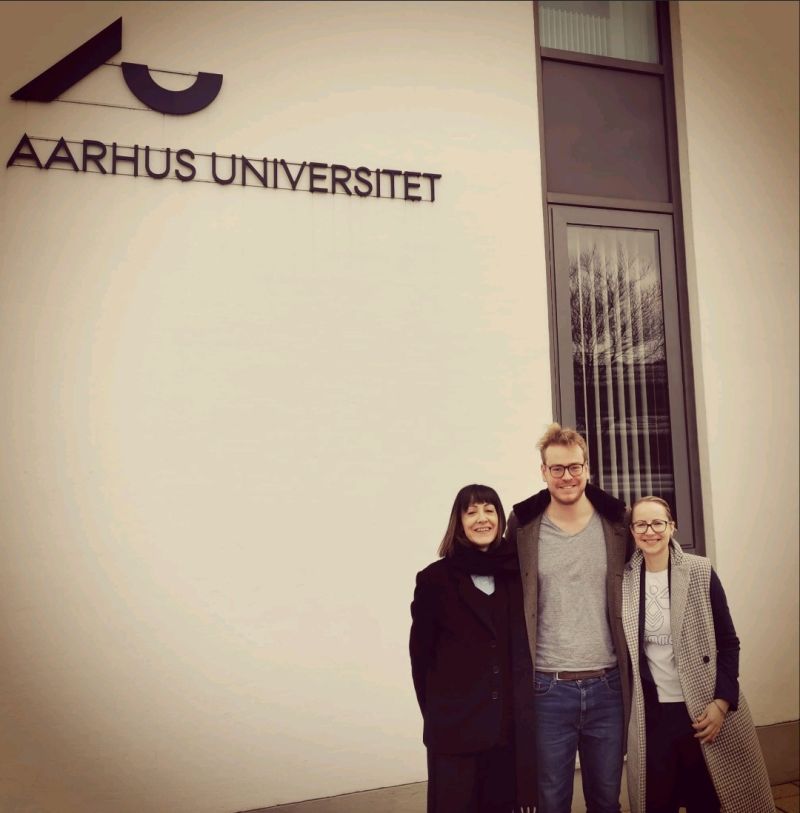
Visit at AU with Agnieszka Radziwon and Cristina Marullo. Source: own photo.
Overall, my trip to Denmark was an amazing experience, and I’m so grateful for the opportunity to connect with so many brilliant minds in the robotics field. I’m excited to continue my research and see what developments the future holds for human-machine interaction models. I am also looking forward to the next EINST4INE Summer school and see my ESR friends in person again. Thanks for reading!
So, one step further in my PhD journey: my first secondment with EINST4INE is in the books. I spenT some time with one of my industry partners: AMPLYFI in Cardiff. Here, I summarise a few useful learnings that might be helpful for your research as well!
AMPLYFI
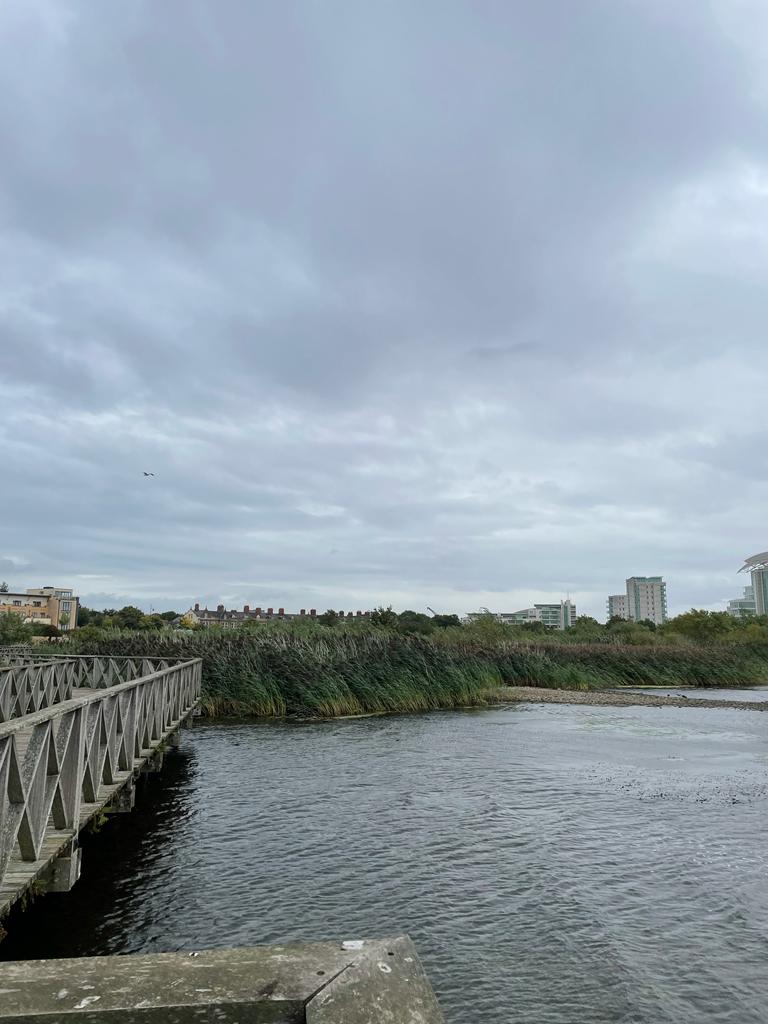
Cardiff Bay (picture taken by Constanze Leeb).
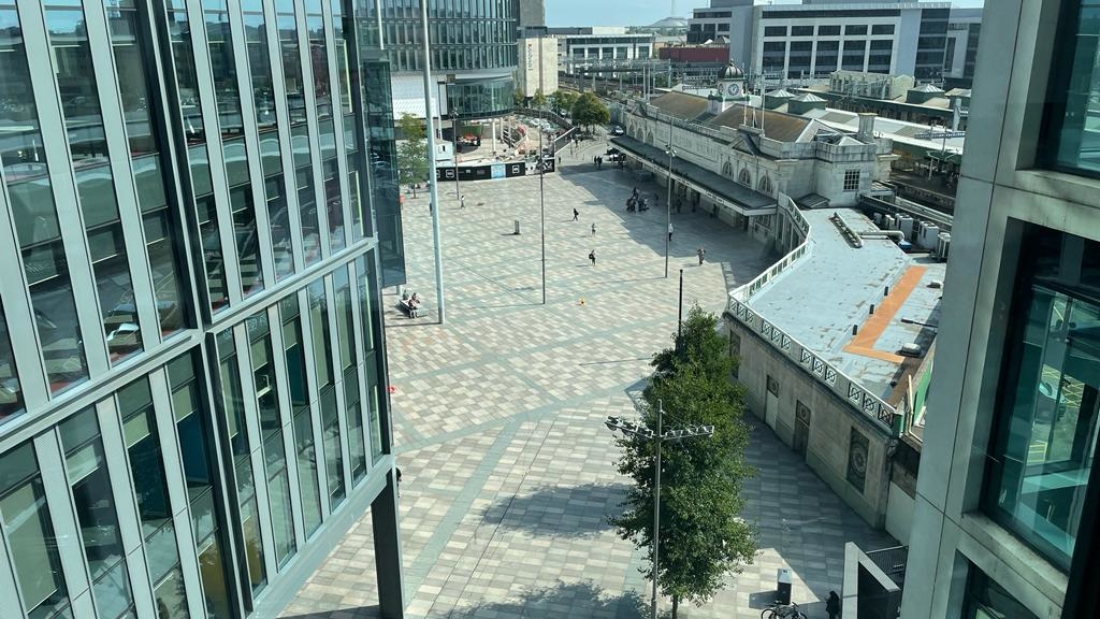
The company I visited during my first secondment is part of the EINST4INE consortium. AMPLYFI is a company providing a research platform which uses AI to analyse content and uncover previously hidden trends and opportunities. For this, I moved to Cardiff, Wales (so once across the U.K. from East to West) where the company is headquartered and spent a few weeks with AMPLYFI. If you have never been – Cardiff is a great city, with an amazing castle, lots of nice arcades and it’s next to the sea (and if you time it right and are lucky, like me – you can maybe see the King)! Hint: bring a waterproof jacket (and backpack) and no umbrella – it can get quite rainy and windy.
Real fieldwork – A typical day at AMPLYFI
My days at AMPLYFI were always interesting and fun. First, the team is really nice and the atmosphere very motivating. Second, I was able to participate in many things during my time there. I had a desk in a shared working space, could come to the office every day, met many of the team, and was able to participate in most things, which enabled me to really experience the company and their activities. I talked to many colleagues, sat-in on meetings and calls, participated in workshops and was able to get hands-on experience with AMPLYFI’s tools.
Industry vs. Academia
You have all heard this before, but it really is true: the pace is very different in the industry. Everything happens faster – especially at a young company like AMPLYFI! A colleague has an idea, a small team gets together to look into it, and a few weeks later you can see the results. It is incredible how quickly AMPLYFI’s tools develop, I am sure there will be something new when I return for my second placement with them!
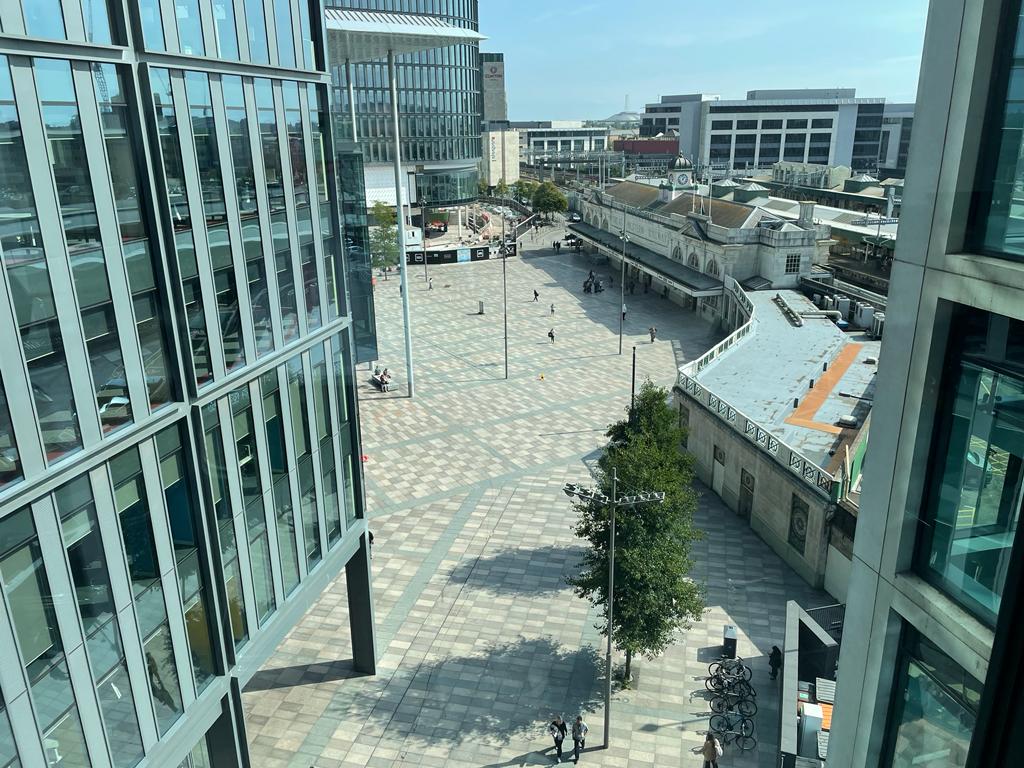
AMPLYFI’s Board Room (picture taken by Constanze Leeb).
What impressed me as well is how well organised AMPLYFI is. They are working closely across teams, keep each other up to date on their work, and have detailed documentation of their tasks performed – something that academia can benefit from as well!
Lastly, I have always studied intelligence work from a distance – reading about it and hearing others talk about it. But I have never had to perform it myself. During my time at AMPLYFI I was able to do a little research project on a topic of my choice using AMPLYFI tools, which was an invaluable practical experience. What I definitely learned from it is that intelligence work is just as hard and complex as I thought it is and my respect for all people performing intelligence work has increased even more.
Learnings for and from fieldwork
My first experience in fieldwork was great, but I did realise that many of the things that made it great came from my Sociology background and me taking time before the secondment to visualise what it would be like. Therefore, I am summarising some of my learnings here:
Be well organised! When you enter the field, it can be overwhelming. So, it is best if you already thought about a few things and prepared them. For example:
Know where you want to take which kind of notes. Especially, if your fieldwork will entail data that is not being recorded on audio or video!
Prepare folders beforehand for your data, e.g.: interviews with employees, interviews with customers, etc.
Think about a naming system for your data. Are you going to number your interview partners? Are you going to name the files after the interview partners, the day of the interview, etc.?
View from AMPLYFI’s Board Room.
Be part of everything you can! Often you learn the most interesting things in situations least expected. So, if you have dedicated time for fieldwork – use it and participate in everything you can.
You will not only learn a lot by participating in meetings, events, social activities etc. – you will also meet people! And this in turn can give you access to new interview partners or new events.
When you hear about an interesting event. – just ask if you can participate. The answer will likely be yes, as you will have some form of NDA/CDA in place anyways. Remember: others don’t know what you need or are specifically interested in! And also: Worst case – the answer is no, but at least you asked!
If you feel like you have no idea of what is happening – just participate anyways, you will figure it out on the way. Or not – and then you can ask about it afterwards.
Just ask! We all know the fear of asking questions from school or university. Of course, also back then the lesson was: just ask! This is also true here, especially as you are entering the field from outside – nobody expects you to know everything!
If you don’t understand something – ask about it. Usually, people are very happy to help and to explain something. Even if it is basic for them, they understand that it isn’t basic for you. Also – this is what research is sometimes about right? Asking the obvious questions to understand deeper underlying concepts.
Ask for access to internal documentation and access to internal communication! This will give you invaluable insights and help you understand your field a lot better! Just ask and explain that it’s insightful for a comprehensive understanding – if they are not happy to share, they will tell you so.
If you are interested to hear more about my time at AMPLYFI: I also wrote a blog post for the AMPLYFI website! You can check it out here, next to other interesting blogs on the AMPLYFI website.
You are probably wondering why a first-year PhD student is already talking about how to get published. Even though my natural thought has always been to think about publishing after actually having written something, I have attended a course on How To Get Published taught by Prof. Dries Faems which has shown me otherwise.
As PhD students, and Early-Stage Researchers at EINST4INE, we should be able to recognize and apply the basic structure of an academic text, which includes an abstract, an introduction, a literature review, a method section, and a conclusion (at the least). This might differ according to the nature of our research, different journals might have different requirements – but the truth is that the academic world is competitive, so you might as well start now.
First, before you fit your paper into a specific journal, ask yourself these questions:
What is your research question?
How is your research question related to the current literature?
How will you use your data to answer your research question?
These are questions that both, author and reader need to be able to answer.
The next step would be to choose a journal.
After having established what kind of paper you are planning to write (conceptual, quantitative/qualitative, positivistic/interpretative), you will probably recognize the community of scholars who are working and have published in your line of study, and thus you can identify which people should read your work, and where they have published.
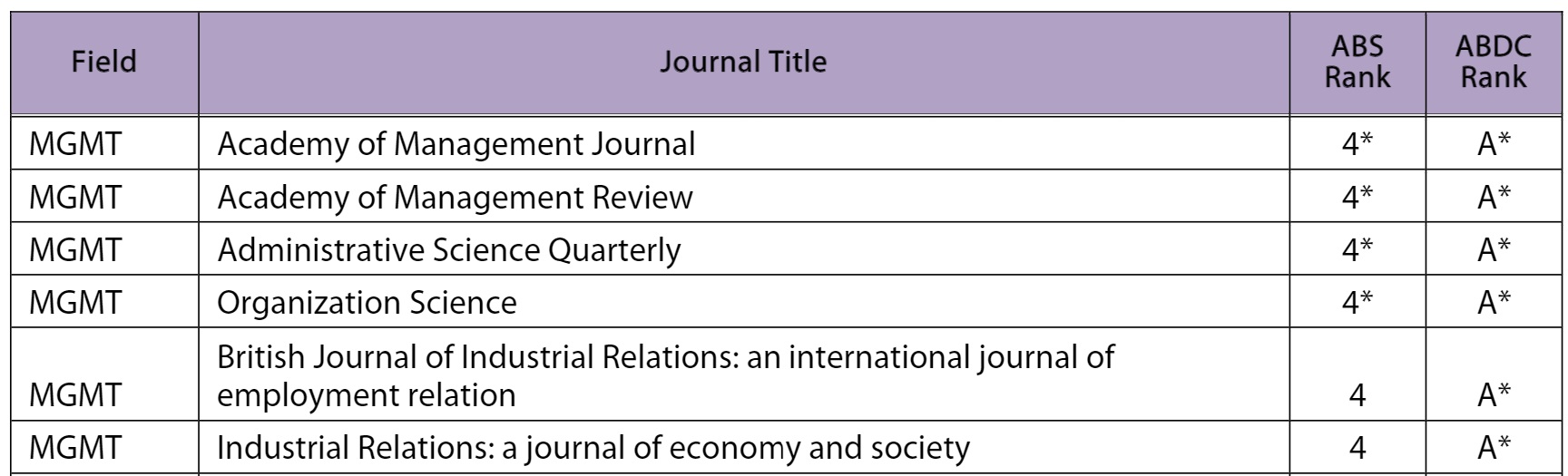
There are a number of websites and services which publish journal rankings according to their impact factor. Here, the impact factor represents the frequency with which an average article in a journal within a given year has been cited. Counting the number of times its articles are mentioned, determines the standing or prominence of a journal.
Example of the ABS ranking for Management (MGMT) journals [Image source: ABS (Association of Business Schools) and ABDC (Australian Business Deans Council)].Being a Management scholar myself, I look at the yearly published ABS list, however other websites might publish similar information, and universities usually also offer guidance on the rank, reputation, and purpose of journals.
Then, another useful step would be to get to know the editors of the journals as well as assess the reputation of these journals in terms of processing time/quality of the feedback that they give (don’t forget to check the Open Access criteria/options). This can be done by contacting people that have had experience with the journal. You might also find that you want to target other journals which are not included in the big journal list but are still very relevant to your field of study. For instance, as a Management scholar, I might focus on the Academy of Management Journal (impact factor 10.2). But with a specialization in ecosystem research, the R&D Management (impact factor 4.3) Journal might also be a great fit.
Once you have made your selection of qualified journals, start writing your paper with the criteria of the journal in mind. This has definitely helped me not only to narrow down the most crucial sources of information for my research but also helped me find a research focus.
… So how do you write a paper that might get accepted?
According to Prof. Faems, there are a number of reasons a paper might get rejected, one of them simply being the reason that the paper does not fit the personality of the journal, emphasizing the need to work towards that target journal. Some other reasons include an absence of a clear theoretical contribution, a lack of novelty, and methodological issues.
Unfortunately, I don’t think there is a specific recipe that mixes a set of ingredients for success. But there are still some basic ingredients that might help:
Clearly position your project against existing research and theories
Formulate a good theoretical contribution
Good data and methodology won’t hurt
The best way to understand how you can embed your project in existing research is to visualize it:
Imagine you are entering a house and you have to choose to enter a room, which goes in line with your research. So, you enter the room of Management research. You try to find a table of people who you understand and where you feel comfortable enough to contribute to the conversation. So, you go sit at the table that talks about, let’s say Open Innovation. So, you’ve already positioned yourself in the Management field, focusing on Open Innovation. At the Open Innovation table, you are trying to recognize the recurrent themes and findings that are being reported and you identify the most important people at this table.
Once you have done that, you might be able to recognize missing links in the current research or you might make new links that you wish to develop in your research.
One challenge that many scholars and reviewers report is the clear positioning in one specific area of research. For instance, while I can identify a particular gap in the Open Innovation literature, I realize that I can address this gap with findings from the Ecosystem literature (for instance), which puts me at two different tables in my Management room. In this case, making links between two literature streams is good, if I make it clear. However, the more links I have, the more delicate it becomes and can confuse some people at my main table.
In terms of the novelty of the paper, reviewers are often looking for interesting ideas that have the potential to impact future research, i.e. a strong contribution. This process seems tricky, as novelty does not necessarily mean interesting. Imagine you have found a research gap in your given field… This doesn’t imply that it’s a novel idea, it might well be an idea that has already been thought of but is not worth researching further. Thus, an editor might reject your paper on the basis of lacking a novel and relevant contribution. This is the reason why having good data doesn’t hurt. While your theoretical part might lack some grounding and novelty (which, for the record, it shouldn’t), having a unique and well-developed dataset that is difficult to access, can become an advantage during the review process.
The theoretical grounding, novelty, and contribution of your research, along with your data (depending on the nature of your research) are the main selling points of your research, which should be communicated at the beginning.
And the best way to communicate it is through the introduction, which is the gateway to a good paper. Indeed, apart from the abstract which swiftly summarizes your research, the introduction is one of the most important written parts of your research. In fact, editors make a first judgment based on the quality of the introduction which should include:
The community you want to talk to
Your research gap
How you address the research gap
Your main findings and contributions
Of course, this does not mean that one should disregard other sections like the discussion section, where you can go more in-depth into discussing the implications of your findings and iterate on the practical and theoretical contribution you wish to make.
Finally submitting it…
Once you think you have managed to position your research in a clear and concise manner, the last step is to get some friendly reviewers (such as fellow researchers, supervisors, etc.) to look over your work before submitting it to your journal of choice.
And then you wait…
You will most probably receive feedback from the editor with reviews from researchers in the same or related field (some that might even be cited in your paper!) who will either have immediately rejected it or might have accepted it with some changes. This return can provide you with a relevant critique on how to improve your paper, and (hopefully) arm you with the tools necessary to survive the next round of reviews and get you published.
I hope I was able to provide a little insight into what I have learned about publishing and how I aim to tackle my research. Of course, there are different ways to conduct research and get published. I have certainly started following my own advice from this post, which was mostly inspired by what I have learned following Prof. Faems’ How to Get Published course.
And who knows, this might even be helpful for becoming a good reviewer or even editor at some point…
Looking back at the first term of my experience as a Ph.D. researcher at LUISS Guido Carli University in Rome and as a member of the EINST4INE program, here are some things that I have learned…
Classes have a lot to offer
In today’s digital world, social media is essential
You need to get lost before you find your way
I was previously employed at a firm that specialized in market and consumer data before commencing my PhD in September 2021. And while I learned a lot about recognizing new trends and the way to do research there, I became increasingly intrigued by the way society and the economy are being transformed by digital technology. That’s why I began looking at ways that my future employment may have a positive influence on society and help to address key developments and concerns that we’re all grappling with. Because of this, when I applied to the EINST4INE program, I was eager to collaborate with like-minded academics, educators, and industry practitioners throughout Europe and beyond.
Now the beauty of the program is the established network, where we’re able to share our own experiences and build a communal one. As a result, one of the first things my close friends and family asked when I informed them I was relocating to a new country to begin my academic career was “what are you going to do there?”, “what is the program of the PhD?”
Some people were taken aback when I told them I was a PhD student taking classes, but now that I’ve been in those classes for over six months, I can see how beneficial they have been:
One of the first steps in doing research is to choose the appropriate approach. And while the topic of my research as the Early-Stage Researcher (ESR) 15 is “Linking open innovation mechanisms to reach environmentally sustainable goals”, qualitative research seems the most fitting because of the exploratory nature of the topic, quantitative research is all I’ve ever done before. Thanks to one of my supervisors, Prof. Luca Giustiniano’s contribution to the qualitative methods course as an instructor, my fellow students and I gained a thorough understanding of the many sorts of qualitative research methodologies. The course provided an overview of key perspectives related to the design of qualitative research, with emphasis on theory framing, purpose statement definition, research questions development, and sampling in the qualitative research traditions. More specifically, I had the opportunity to work with data analysis tools such as NVivo, which help with the coding, transcription, and interpretation of qualitative outputs (such as interviews).
Epistemology was another class that I learned a lot from during my first six months as an ESR. Here we touched upon the topics of philosophy of science, rationality, games and institutions, and social norms. While the most important value of the course was to iterate the reason why we do research in the first place, the course also helped us appreciate the importance of the ties that bind academics, business, and society as a whole.
Many of the other courses in the program, such as Digital Ecosystems, Digital Business Transformation, and Organization and Technology, dealt with the present impact of digital technology on the corporate environment. While open innovation seems to be a good way for organizations to remain competitive and innovative, the engagement of sources like Artificial Intelligence (AI) and Big Data appears to be essential. And, especially because the COVID crisis has prompted many businesses to go digital, I am trying to relate how companies are becoming digital and work together to eventually be environmentally sustainable.
I am able to apply the knowledge I’ve gained from LUISS courses in the weekly EINST4INE Reading Club, where we discuss research articles on a wide range of contemporary problems and connect our own research to the study of others. We engage and discuss what the readings teach us, and typically broadcast the major learnings on a social media site such as Twitter or LinkedIn.
And while I’ve never really been a social-media-savvy person, my first LinkedIn post enabled me to connect with individuals from all over the globe and from a variety of study fields. I also recognized that if I want my work to have any significance, it has to be made public. Still, my private Instagram account is largely dedicated to posting photographs of my dog, but I also make an effort to speak about my research on sites like LinkedIn, Researchgate, and other similar ones since it is a fantastic way for researchers to network and keep their creative juices flowing.
For now, as an early-stage researcher, my primary focus is acquiring as much knowledge as possible on the subjects of Open Innovation, digital technologies, and sustainability. And this involves a lot of reading, which can be confusing at times…
For example, have you ever been overwhelmed by the sheer number of options of jams and chocolate spreads you can find in a supermarket? Everything about this first term has seemed the same. The more I read and attempt to understand complex concepts, the more confused I get. When I confided in my supervisor about it, she said, “This is normal, you need to get lost before you find your way”.
So while this may seem a little cheesy, it truly is the journey that matters and not the destination since you learn and give so much along the way.
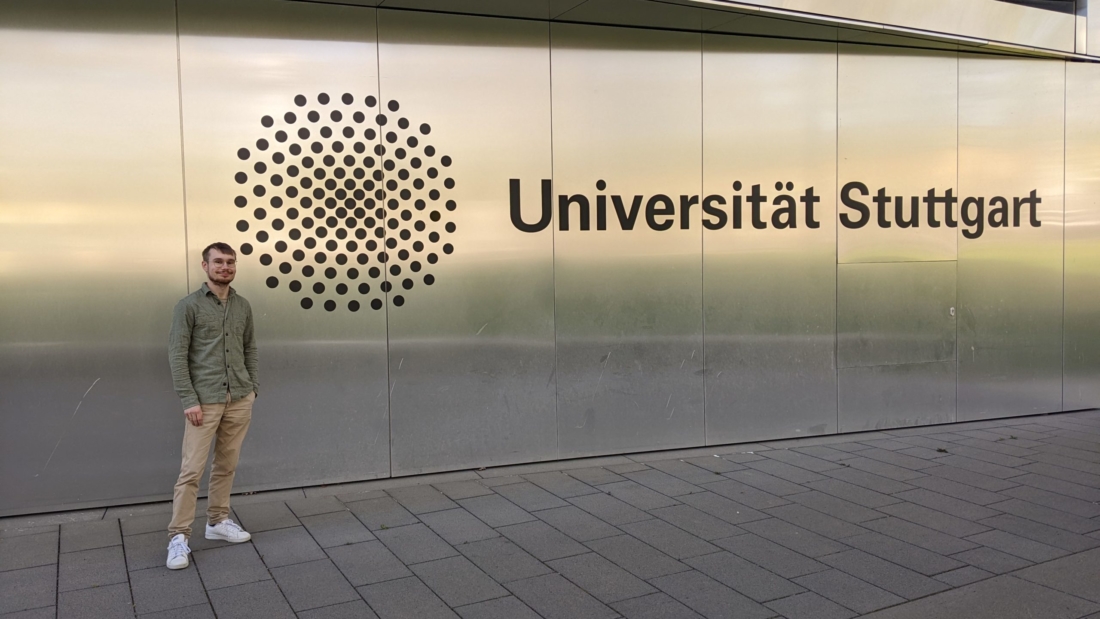
Me in front of Universität Stuttgart (Source: Finn Tryggvason)
Ever since I was a child I was undoubtedly interested in technologies. My extensive Lego collection and building projects gave an early indicator that my future would likely lead me to an engineering career. Unsurprisingly (though many years later) I started studying business engineering and I was certain that this would also be my future career path. However, the further I progressed in my studies, the more I distanced myself from “hardcore” engineering.
Towards the end of my education I was uncertain what the field of highest interest would be to me. Throughout my studies I came in touch with many different technologies such as 3D-printing, Cobots, VR, AI/ML and IoT and gained both hands on experience as well as a conceptual understanding of each technology. At the same time I was curious about topics such as Innovation Management, Open Innovation and how an innovation can reshaped the market. So as I approached the end of my education, I was left wondering: What will I do once I conclude my master studies?
Since I was unwilling to prematurely limit my future career opportunities, I decided to postpone my decision on what to specialize in. I started looking for something that would allow me to keep a close eye on novel technologies and trends from both a technological, as well as theoretical perspective.
I was lucky to discover the EINST4INE program which gives me the freedom to do exactly that. This program allows me to apply my previously gained knowledge regarding emerging technologies and combine it with my academic curiosity. I am excited to see where I will go from here and what the future of the program will bring.
I remember reading this article by Nicholas Carr during my graduate studies. I still remember this article today which may or may not relate to the fact that it also helped kickstart the idea for my consequent master thesis. While never before did I think much about cloud computing I started to get really engaged with the matter and how it drastically impacted how we “did IT”.
Technology has fascinated me for some time, going back many years. Since I can call myself a millennial of this day and age, I still recall the days of fixing my cassette with a pencil and mastering the art of Paint on a bulky Windows computer. When I was about 15 years old it started to become the norm to have a phone. One that slides up and down. It was the most fascinating tool I could have wanted. Today my smartphone is heavy, and it doesn’t fold nor slide.
Until today I have seen so many changes that I cannot count them anymore. I cannot count the types of phones and music players – portable and static – I used to own. Truly just the variety they came in. So much has changed and then again, not that much. We have become so used to the constant connection, the faceless conversations, the mind-numbing notification rings.
All of this raised more questions to me than it answered. How can we live in this interconnected digital world? What does it do to us, how we communicate, how we interact with each other?
Photo by Robynne Hu Source: Unsplash.
When the opportunity came up to apply for EINST4INE I knew I had to.
It was the sum and at the same time the continuation of everything I worked on since starting my bachelors in 2013. I explored so many topics in those years and yet I feel that questions remain, they reappear, they arise in new contexts again and again. What topics did I look at so far that still uphold my fascination for understanding digital technologies in a social context?
How does the Internet of Things in a smart office environment impact employer-employee-relationships?
How can we design humanoid robots when social and cultural bias will be mirrored in their representation?
In what way can social data be gathered in a smart home environment?
What motivates peers in the Sharing Economy and how does it impact our understanding of the P2P economy?
How does a cloud first strategy impact the role of IT staff in an organisation?
It was the last question of my master thesis that made me choose to pursue a PhD that studies the impact of implementing a technology that, through automation, deems traditionally complex and specialised knowledge redundant. Technology has had an enormous impact on our society in many ways. It has brought immense opportunities in so many areas from transport to healthcare, communication, finance. We have become agile, wireless and interconnected. Along with a plethora of benefits we still see challenges, disruption and the solutions we have yet to find.
EINST4INE to me offers exactly this opportunity where I can research a phenomenon that I believe to impact society at large. We have to help organisations, educational institutions and politicians to find those solutions.
Does IT matter?
It certainly has the greatest hold on us in this century than we might have imagined. But then again, it is just a technology. A connection of wires, a power source, switches, motors, microchips. Studying the composition of a computer a long time ago helped me to gain perspective. So did all those theories in Information Systems research. Technology is not the culprit. Carr makes a very valid point when he foresees the commoditisation of IT. Seeing how our utilities—electricity, water, gas—all have become our necessity for life – where would we be today without a computer, without the internet? IT is not something we achieve anymore. We know we can, and we did. What we do now is to go above and beyond. We merge humans and machines, intertwine our lives as much as possible and, as social scientists, explore the best ways to do so without collateral damages to, what we know to be, our society today.
I am dedicated to continuing onto my path, researching for answers that can create guidelines. And I am looking forward to doing exactly that.
This is the aphorism that sums up the famous Socratic paradox, according to which the first step to knowledge is to recognize one’s own ignorance. Beyond its original meaning, I think this concept summarizes very well also the spirit in which I am embarking on my PhD journey.
In my opinion, there are two ingredients that are necessary to conduct meaningful research: being able to recognize the shortcomings of current theories and formulate the right question in order to address these gaps.
Then, based on these questions, being a researcher means making hypotheses, testing and analyzing results in order to propose concepts and claims that no one has ever proven before. In short, it means to innovate, starting from the awareness that some pieces are still missing to completing the puzzle.
Back to the roots
But what does it mean to innovate? Why do we do it?
Since I was a child, I have always been attracted by everything that was innovative, especially if it was related to technology. In retrospect, it was probably for these reasons that I enrolled in an engineering degree, having the curiosity to understand how these innovations work. But until a few years ago, I had never reflected on these two questions.
According to Schumpeter, an innovation represents the combination of new and existing ideas disturbing the current economic equilibrium. Building on that, there are two main reasons why this word has become increasingly more important in our society:
on a macro level, innovation is the main reason why the world’s economy has been steadily growing, a factor that has also ensured a general improvement in living conditions over time;
at the micro-level, innovation allows companies to be competitive and, in short, to increase the chances to survive in the long term.
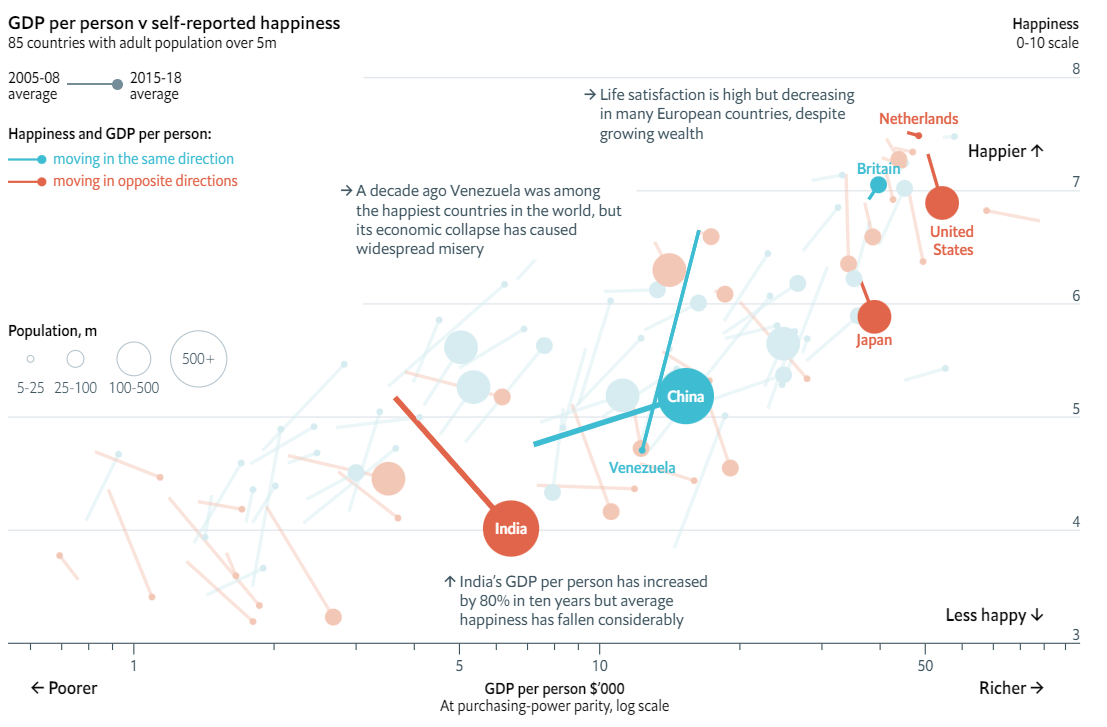
Despite these positive outcomes, in the last century humanity has also realised that the implementation of new ideas or technologies can no longer fail to take account of the externalities generated. Examples can range from e-scooter sharing, to AI up to the atomic bomb. Moreover, it is now widely known that the correlation between GDP per capita and life satisfaction is far from perfect.
GDP per person compared to perceived happiness. Source: https://www.economist.com/graphic-detail/2019/03/21/economic-growth-does-not-guarantee-rising-happiness
Mindset’s change
This is the main factor whereby I decided to choose a master’s degree focused on sustainability and social innovation, where I could deepen how the market dynamics and the human factors affect the success or failure of an innovation. Indeed, as Henry Chesbrough once argued: “a mediocre technology pursued within a great business model may be more valuable than a great technology exploited via a mediocre business model”.
Then, after a couple of years of work experience as a sustainability consultant, I realised that I wanted to better understand the causes of and solutions to unsustainable development, adopting a more systemic view than the one I knew at the time. Therefore, I started looking for research opportunities about these topics, until a friend of mine shared with me the link for the application to the EINST4INE project.
In this way, on the 1st of November, I started my PhD project at Aarhus University, under the supervision of Agnieszka Radziwon and Henry Chesbrough.
The project
When I first saw the EINST4INE application, what really caught my attention was the term “ecosystem”, which can be conceived as a set of partners collaborating toward a shared goal, without necessarily having formal or contractual bonds. However, I have to admit that at that time I didn’t know much about it.
Now, a few months into my PhD, I actually realized that I was not the only one having unclear ideas about it and that this is actually a positive thing. In fact, the term ecosystem is still being used in a rather fuzzy way both by scholars and practitioners due to its novelty, which means that there is room for further research in this direction.
In particular, I will focus on exploring the emergence process of technology-enabled innovation ecosystems. Since this is a concept that could be addressed from very different perspectives, now I am focusing on shaping the boundaries of the research, in order to define which could be the best way to study it.
The future
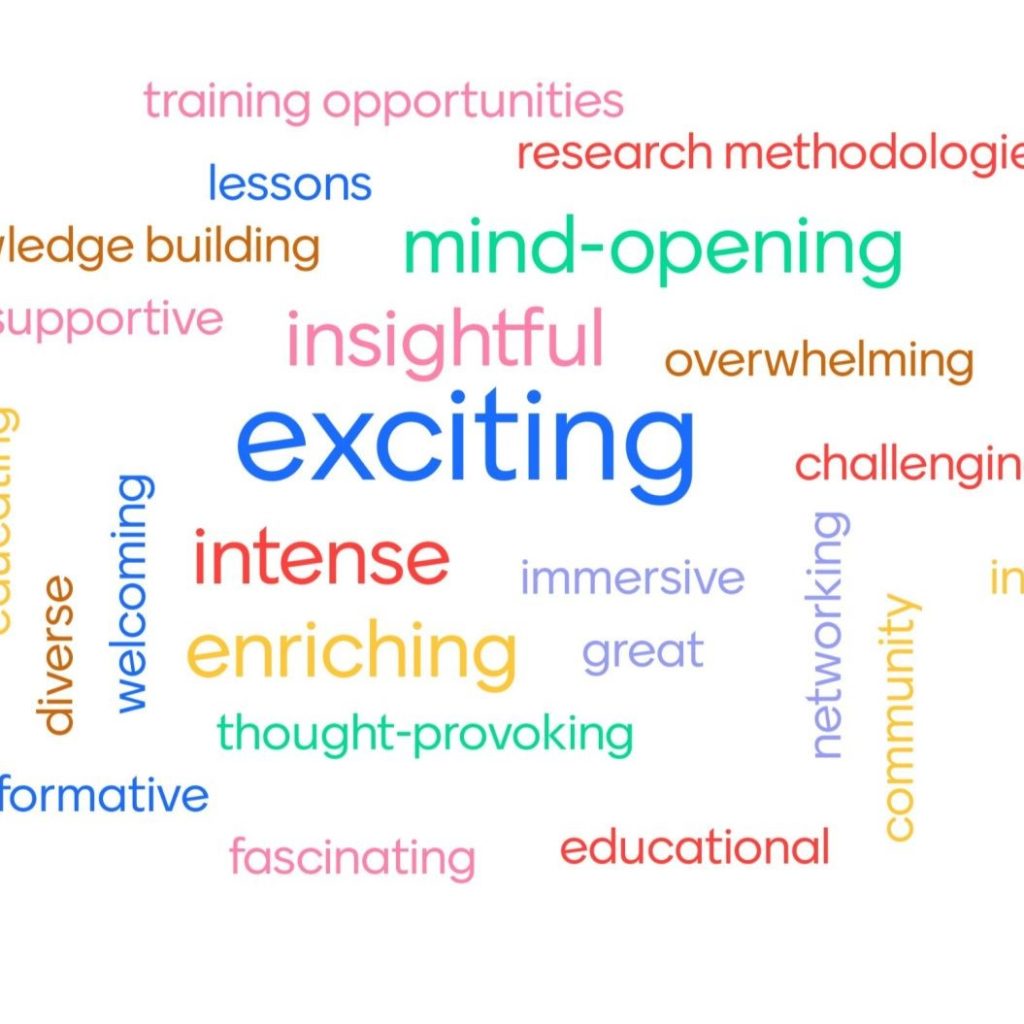
As the mind map below shows, I believe that the next three years will be a combination of exciting, intense and insightful moments that will enable all Early Stage Researchers’ (ESRs) professional and personal lives to enrich.
ESRs’ answers to the question “How your first few months with EINST4INE have been so far?”
In this regard, I think that a crucial role will be played by the special structure of this program, which allows us to spend several months abroad, between summer schools and academic and industrial secondments. Indeed, all the projects supported by the MSCA funding scheme represent a powerful democratization experiment. They give the chance to people with very different backgrounds to inspire each other and receive high-quality education that otherwise would have been almost inaccessible to them. Moreover, together with all the ESRs, I will be involved in several dissemination activities over the next years, such as conducting this blog and organizing outreach events with the Consortium partners.
In short, it will be a three-year journey that I hope will ultimately allow me to say that, at least in a very specific field, I know something.
Note
The title is inspired by the homonymous blog edited by Tim Urban
Shopping Basket
This website collects cookies to enable the proper functioning and security of the website, and help us offer you a better browsing experience. By using our website you agree we can place functional and analytical cookies on your device. Find out more about cookies and how to manage them by visiting the RMIT Privacy Statement link in the website footer. If you're happy to continue, please press accept. You can opt-out if you wish but this may affect how the website functions. Cookie settingsACCEPT
Privacy and Cookies Policy
Privacy Overview
This website uses cookies to improve your experience while you navigate through the website. Out of these cookies, the cookies that are categorized as necessary are stored on your browser as they are essential for the working of basic functionalities of the website. We also use third-party cookies that help us analyze and understand how you use this website. These cookies will be stored in your browser only with your consent. You also have the option to opt-out of these cookies. But opting out of some of these cookies may have an effect on your browsing experience.
Necessary cookies are absolutely essential for the website to function properly. This category only includes cookies that ensures basic functionalities and security features of the website. These cookies do not store any personal information.
Any cookies that may not be particularly necessary for the website to function and is used specifically to collect user personal data via analytics, ads, other embedded contents are termed as non-necessary cookies. It is mandatory to procure user consent prior to running these cookies on your website.