“The best way to predict the future is to invent it.” – Alan Kay
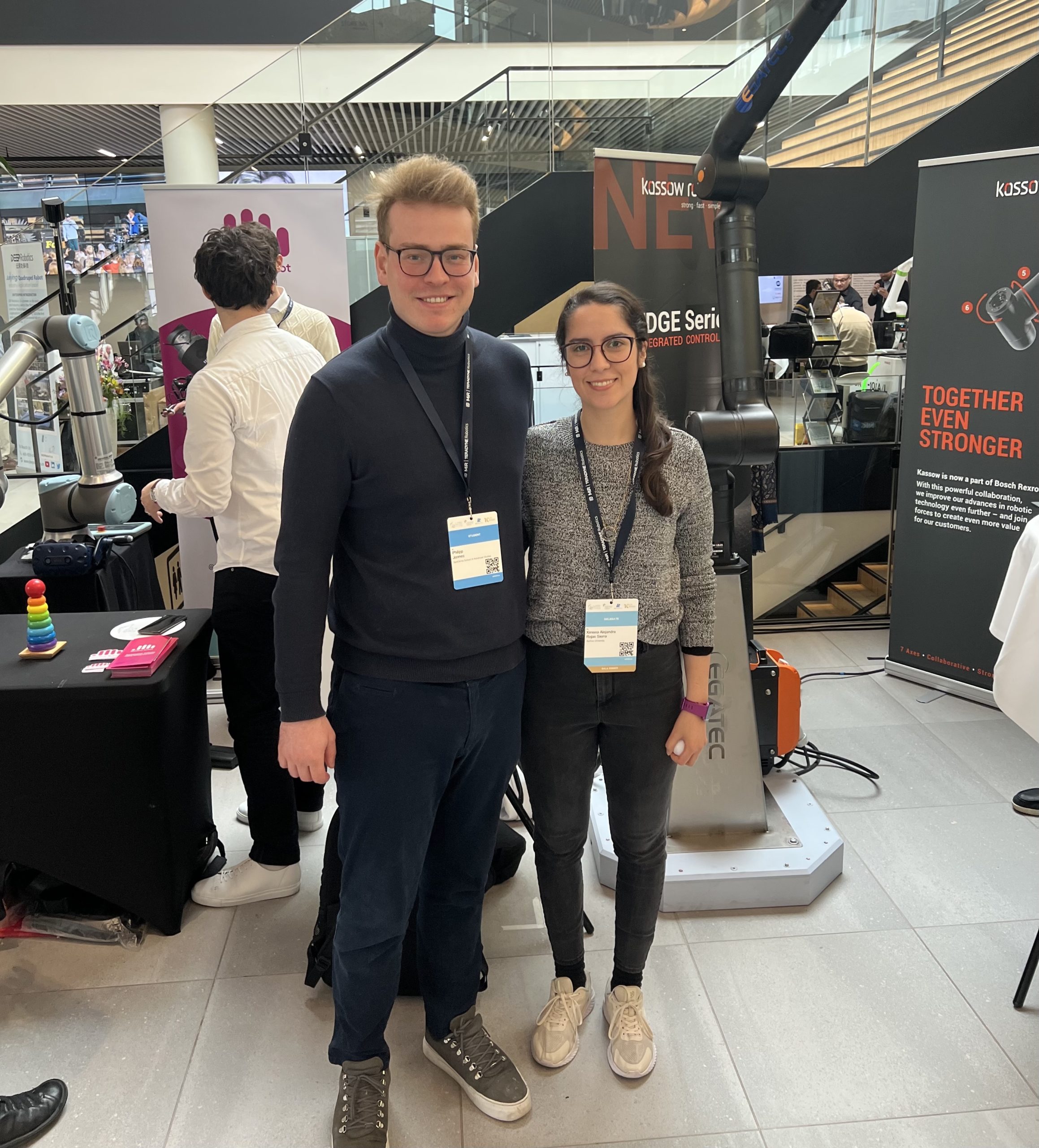
Hello everyone! I’m happy to share some experiences that I’ve made during the last month. Recently, I had the incredible opportunity to accomplish my academic secondment at Aarhus University in Denmark and attend the European Robotics Forum in Odense with my EINST4INE colleague Alejandra Rojas.
ERF23
The European Robotics Forum (ERF) is an annual event that brings together experts in robotics from industry, academia, and government to discuss the latest developments in the field and explore potential collaborations. The forum is organized by the European Robotics Association (ERA) and typically features keynote speeches, technical sessions, panel discussions, and exhibitions showcasing the latest robotics technologies and applications.
The ERF serves as a platform for researchers, engineers, and entrepreneurs to exchange ideas and knowledge on a wide range of topics related to robotics, including industrial automation, healthcare robotics, service robotics, and artificial intelligence. It is also a forum for policy makers and industry leaders to discuss the challenges and opportunities presented by the rapidly evolving field of robotics, such as ethical and legal considerations, workforce training, and investment strategies. Even Crown Prince Frederick, His Royal Highness of Denmark, attended the event this year!
ERF23 with EINST4INE colleague Alejandra Rojas. Source: own photo.
As a visiting researcher, I was thrilled to be able to connect with so many people who are passionate about robotics and human-robot interaction. I was able to learn about the latest developments in this field. I was particularly interested in discussions surrounding collaborative robots, which are designed to work alongside humans in manufacturing and other industries. During the forum, I had the pleasure of engaging with some brilliant minds, from both the academic and practitioner side. Their contributions to the discussions were invaluable, and I learned a lot from them.
Exploring the Fascinating World of Robotics
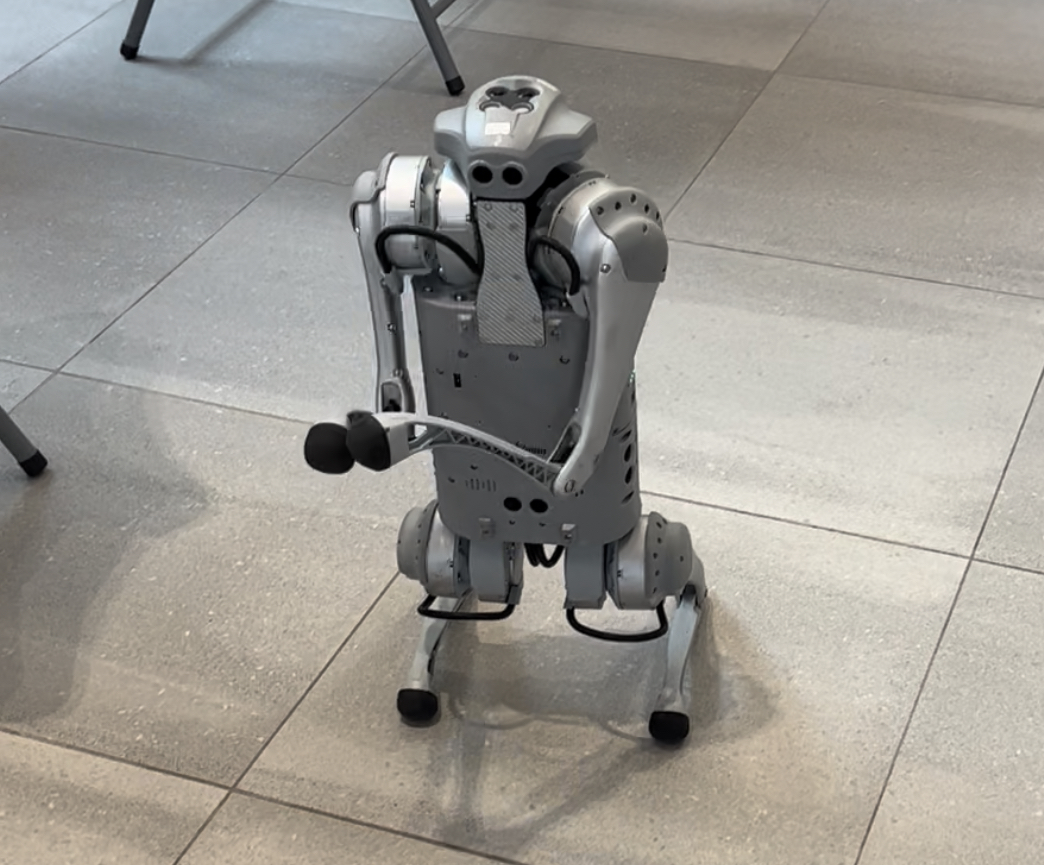
In addition to my research on collaborative robots, I’m also fascinated by other robotic technologies such as drones and robotic dogs. These technologies are shaping our world in profound ways, and I believe they have enormous potential to improve our lives. For example, drones have the ability to conduct aerial surveys, deliver packages, and even help with search and rescue missions. Robotic dogs, on the other hand, can be used in a wide range of applications, from military and law enforcement to assisting people with disabilities. I find the intersection between these technologies and human needs to be particularly interesting, as it challenges us to think about how we can design and use robots in ways that are safe, ethical, and beneficial for society as a whole.
Robotic Dog ERF23. Source: own photo.
The Journey Goes On
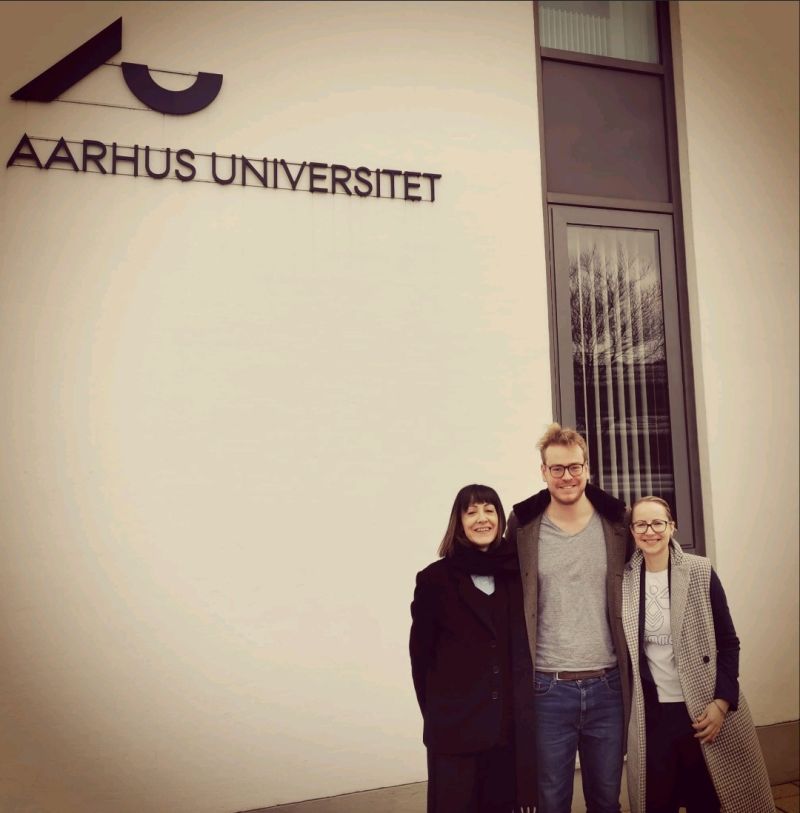
Aside from the forum, I also spent time at Aarhus University, where I was conducting interviews with SMEs located around Denmark. These interviews are an important part of my research, as I’m studying the implementation of social and collaborative robots in organizations. By understanding the effects of cobots on an individual and firm-level, I hope to achieve a clearer understanding of cobot implementation processes, organizational opportunities and challenges.
Visit at AU with Agnieszka Radziwon and Cristina Marullo. Source: own photo.
Overall, my trip to Denmark was an amazing experience, and I’m so grateful for the opportunity to connect with so many brilliant minds in the robotics field. I’m excited to continue my research and see what developments the future holds for human-machine interaction models. I am also looking forward to the next EINST4INE Summer school and see my ESR friends in person again. Thanks for reading!
From the 4th to the 8th of July, my institute, RMIT Europe, hosted the first EINST4INE Summer School. Over the course of the week, numerous activities took place, enabling us, ESRs, to expand our academic knowledge, from one side, and understand the new horizons and frontiers in innovation and digital transformation, from the other.
On Tuesday, the 5th of July, we got the opportunity to participate in an industrial challenge involving two of our consortium partners: Innoget and Enel.
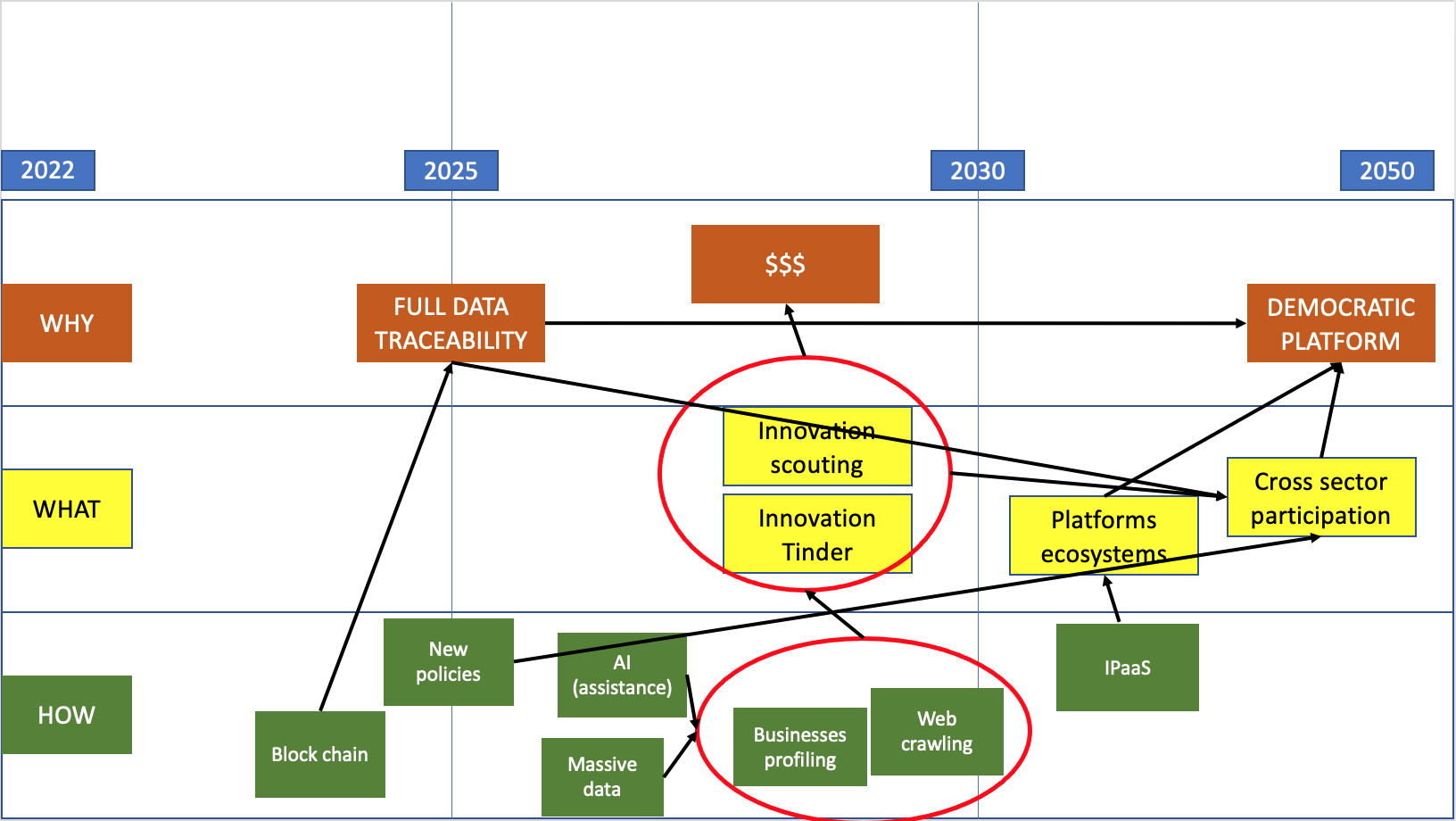
I took part in the challenge proposed by Innoget, which expected us to draw an applied technology roadmap for a clear understanding of potentially available digital solutions to improve the interactions among the different stakeholders.
Roadmaps are practical tools that help to clearly visualize plans for long-term objectives. During the summer school we attended a lecture by Dr. Rob Phaal who gave us a theoretical understanding of “roadmapping” and its potential applications in numerous fields, including our PhD journey.
During the Innoget challenge, people from my team and I firstly set a horizontal timeline on the top and a vertical column on the left, including the “why” (i.e., the objectives), the “what” (i.e., the elements we need to get the objectives) and the “how” (i.e., elements to build the “what”, in other words, the foundation of the plan).
Afterwards, we started to think about the goals, in particular those in the long-run, and then we progressively built the whole map accordingly. Building roadmaps is an iterative process, where many trials and errors take place. A first brainstorming session was essential for us to think outside the box and imagine big long-term goals for Innoget; we used sticky notes to collect and share ideas.
The picture was taken by Chiara Mariottini – from Innoget challenge – group presentation
This challenge was particularly useful because we got the chance to apply something theoretical from the management field to a practical industrial case, building a roadmap according to the expectations and the needs of an industrial partner.
Understanding the new horizons, needs, and frontiers in innovation and digital transformation is particularly important to identify hot topics and outline research projects that can practically solve specific issues or produce impactful results for companies operating in the market.
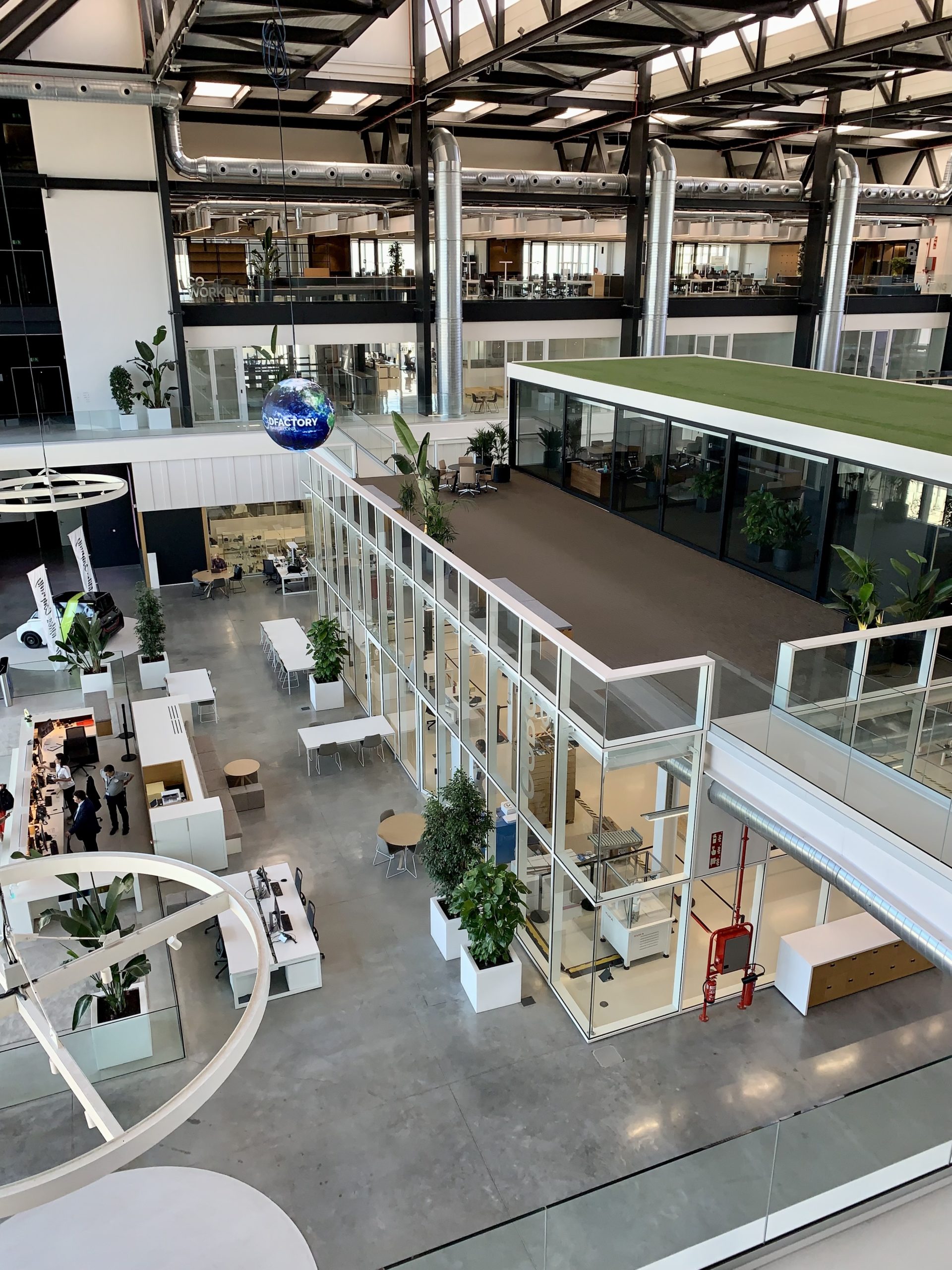
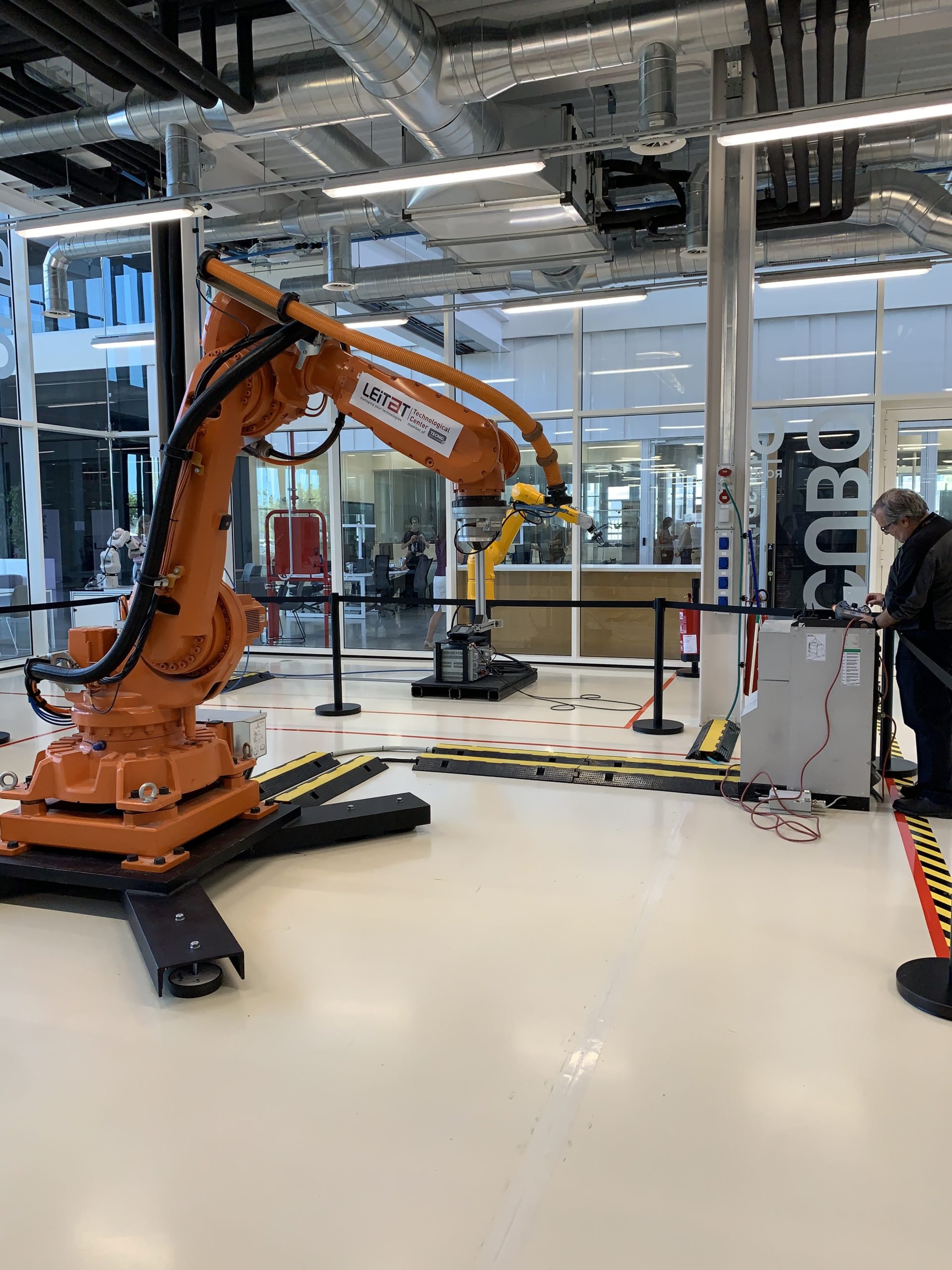
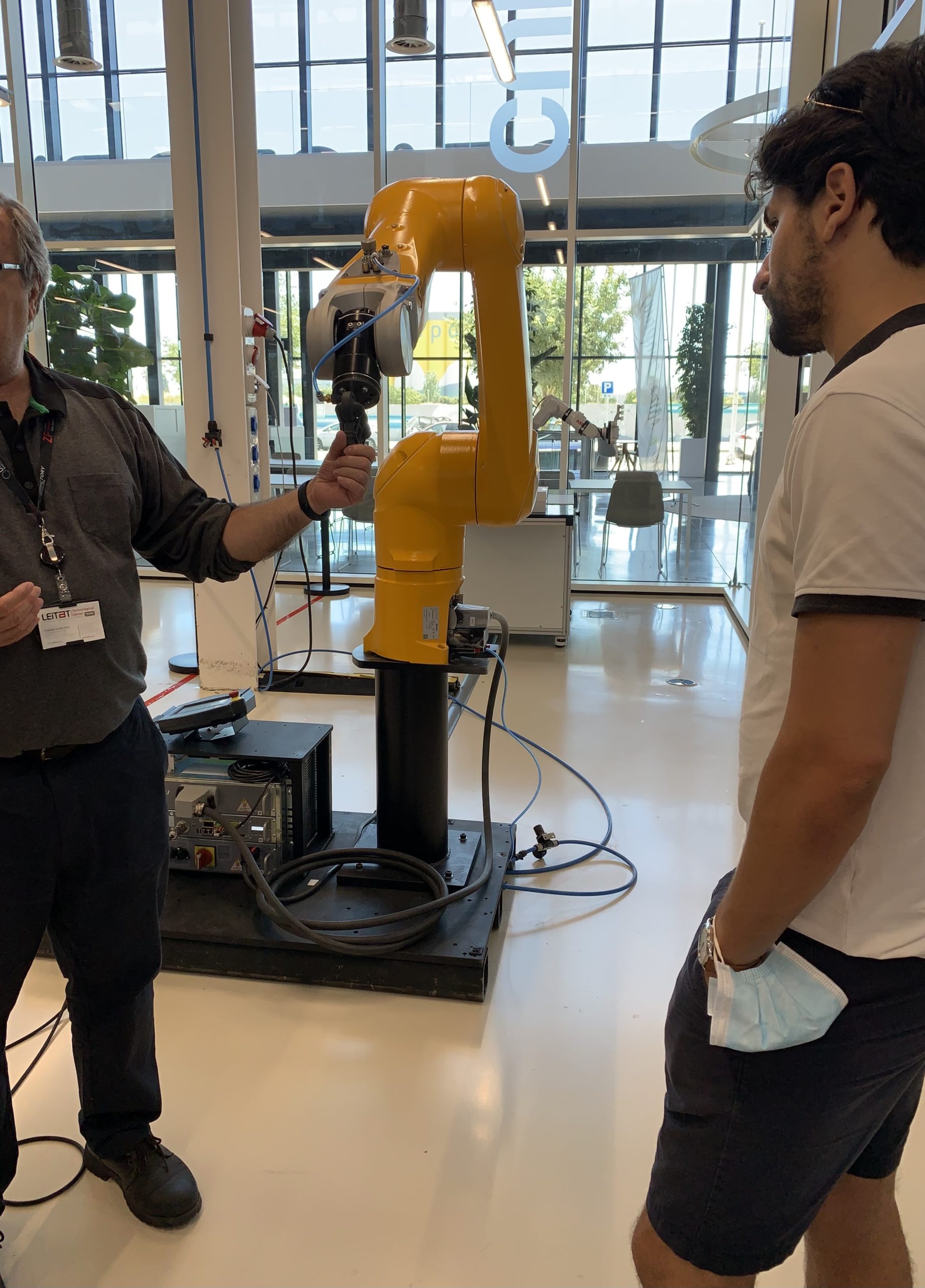
During the summer school we also got the chance to visit DFactory, a hub for the creation of an ecosystem to encourage the promotion and development of 4.0 industry. We saw robots, 3D printing, and other advanced Industry 4.0 technologies in action, understanding their functioning and their practical applications.
All these inputs were extremely valuable starting points to expand my practical knowledge about Digital Transformation, Industry 4.0, and innovation, and gave me new lenses for the exploration of the topics I am now addressing in my research projects.
Picture taken by Chiara Mariottini – DFactory – 08/07/2022Picture taken by Chiara Mariottini – DFactory – 08/07/2022Picture taken by Chiara Mariottini – DFactory – 08/07/2022
You are probably wondering why a first-year PhD student is already talking about how to get published. Even though my natural thought has always been to think about publishing after actually having written something, I have attended a course on How To Get Published taught by Prof. Dries Faems which has shown me otherwise.
As PhD students, and Early-Stage Researchers at EINST4INE, we should be able to recognize and apply the basic structure of an academic text, which includes an abstract, an introduction, a literature review, a method section, and a conclusion (at the least). This might differ according to the nature of our research, different journals might have different requirements – but the truth is that the academic world is competitive, so you might as well start now.
First, before you fit your paper into a specific journal, ask yourself these questions:
What is your research question?
How is your research question related to the current literature?
How will you use your data to answer your research question?
These are questions that both, author and reader need to be able to answer.
The next step would be to choose a journal.
After having established what kind of paper you are planning to write (conceptual, quantitative/qualitative, positivistic/interpretative), you will probably recognize the community of scholars who are working and have published in your line of study, and thus you can identify which people should read your work, and where they have published.
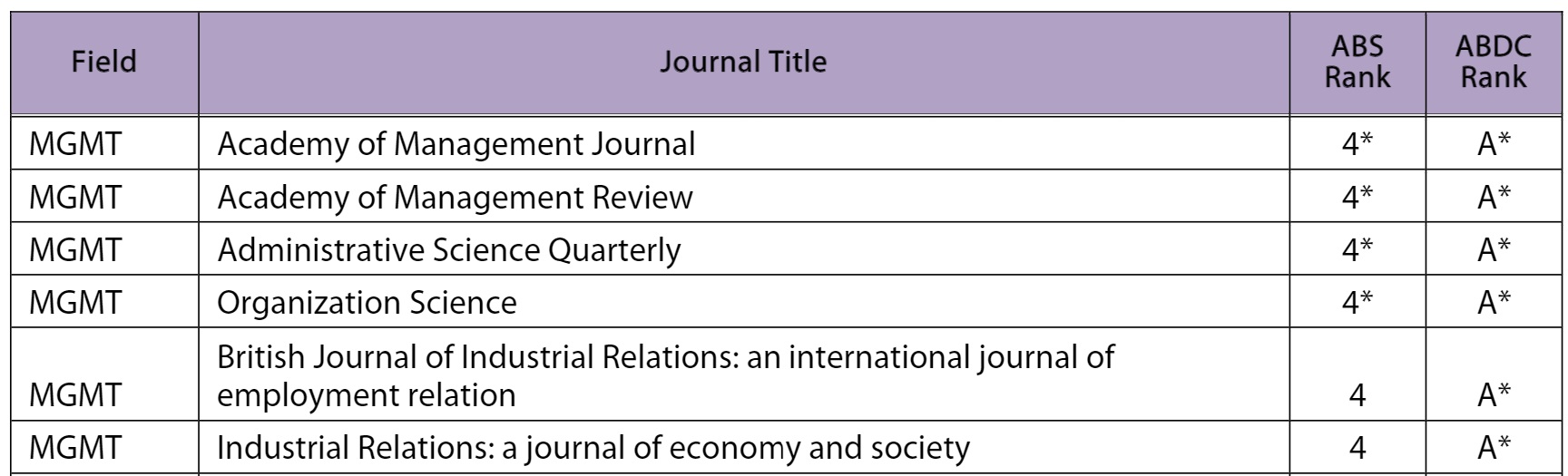
There are a number of websites and services which publish journal rankings according to their impact factor. Here, the impact factor represents the frequency with which an average article in a journal within a given year has been cited. Counting the number of times its articles are mentioned, determines the standing or prominence of a journal.
Example of the ABS ranking for Management (MGMT) journals [Image source: ABS (Association of Business Schools) and ABDC (Australian Business Deans Council)].Being a Management scholar myself, I look at the yearly published ABS list, however other websites might publish similar information, and universities usually also offer guidance on the rank, reputation, and purpose of journals.
Then, another useful step would be to get to know the editors of the journals as well as assess the reputation of these journals in terms of processing time/quality of the feedback that they give (don’t forget to check the Open Access criteria/options). This can be done by contacting people that have had experience with the journal. You might also find that you want to target other journals which are not included in the big journal list but are still very relevant to your field of study. For instance, as a Management scholar, I might focus on the Academy of Management Journal (impact factor 10.2). But with a specialization in ecosystem research, the R&D Management (impact factor 4.3) Journal might also be a great fit.
Once you have made your selection of qualified journals, start writing your paper with the criteria of the journal in mind. This has definitely helped me not only to narrow down the most crucial sources of information for my research but also helped me find a research focus.
… So how do you write a paper that might get accepted?
According to Prof. Faems, there are a number of reasons a paper might get rejected, one of them simply being the reason that the paper does not fit the personality of the journal, emphasizing the need to work towards that target journal. Some other reasons include an absence of a clear theoretical contribution, a lack of novelty, and methodological issues.
Unfortunately, I don’t think there is a specific recipe that mixes a set of ingredients for success. But there are still some basic ingredients that might help:
Clearly position your project against existing research and theories
Formulate a good theoretical contribution
Good data and methodology won’t hurt
The best way to understand how you can embed your project in existing research is to visualize it:
Imagine you are entering a house and you have to choose to enter a room, which goes in line with your research. So, you enter the room of Management research. You try to find a table of people who you understand and where you feel comfortable enough to contribute to the conversation. So, you go sit at the table that talks about, let’s say Open Innovation. So, you’ve already positioned yourself in the Management field, focusing on Open Innovation. At the Open Innovation table, you are trying to recognize the recurrent themes and findings that are being reported and you identify the most important people at this table.
Once you have done that, you might be able to recognize missing links in the current research or you might make new links that you wish to develop in your research.
One challenge that many scholars and reviewers report is the clear positioning in one specific area of research. For instance, while I can identify a particular gap in the Open Innovation literature, I realize that I can address this gap with findings from the Ecosystem literature (for instance), which puts me at two different tables in my Management room. In this case, making links between two literature streams is good, if I make it clear. However, the more links I have, the more delicate it becomes and can confuse some people at my main table.
In terms of the novelty of the paper, reviewers are often looking for interesting ideas that have the potential to impact future research, i.e. a strong contribution. This process seems tricky, as novelty does not necessarily mean interesting. Imagine you have found a research gap in your given field… This doesn’t imply that it’s a novel idea, it might well be an idea that has already been thought of but is not worth researching further. Thus, an editor might reject your paper on the basis of lacking a novel and relevant contribution. This is the reason why having good data doesn’t hurt. While your theoretical part might lack some grounding and novelty (which, for the record, it shouldn’t), having a unique and well-developed dataset that is difficult to access, can become an advantage during the review process.
The theoretical grounding, novelty, and contribution of your research, along with your data (depending on the nature of your research) are the main selling points of your research, which should be communicated at the beginning.
And the best way to communicate it is through the introduction, which is the gateway to a good paper. Indeed, apart from the abstract which swiftly summarizes your research, the introduction is one of the most important written parts of your research. In fact, editors make a first judgment based on the quality of the introduction which should include:
The community you want to talk to
Your research gap
How you address the research gap
Your main findings and contributions
Of course, this does not mean that one should disregard other sections like the discussion section, where you can go more in-depth into discussing the implications of your findings and iterate on the practical and theoretical contribution you wish to make.
Finally submitting it…
Once you think you have managed to position your research in a clear and concise manner, the last step is to get some friendly reviewers (such as fellow researchers, supervisors, etc.) to look over your work before submitting it to your journal of choice.
And then you wait…
You will most probably receive feedback from the editor with reviews from researchers in the same or related field (some that might even be cited in your paper!) who will either have immediately rejected it or might have accepted it with some changes. This return can provide you with a relevant critique on how to improve your paper, and (hopefully) arm you with the tools necessary to survive the next round of reviews and get you published.
I hope I was able to provide a little insight into what I have learned about publishing and how I aim to tackle my research. Of course, there are different ways to conduct research and get published. I have certainly started following my own advice from this post, which was mostly inspired by what I have learned following Prof. Faems’ How to Get Published course.
And who knows, this might even be helpful for becoming a good reviewer or even editor at some point…
Shopping Basket
This website collects cookies to enable the proper functioning and security of the website, and help us offer you a better browsing experience. By using our website you agree we can place functional and analytical cookies on your device. Find out more about cookies and how to manage them by visiting the RMIT Privacy Statement link in the website footer. If you're happy to continue, please press accept. You can opt-out if you wish but this may affect how the website functions. Cookie settingsACCEPT
Privacy and Cookies Policy
Privacy Overview
This website uses cookies to improve your experience while you navigate through the website. Out of these cookies, the cookies that are categorized as necessary are stored on your browser as they are essential for the working of basic functionalities of the website. We also use third-party cookies that help us analyze and understand how you use this website. These cookies will be stored in your browser only with your consent. You also have the option to opt-out of these cookies. But opting out of some of these cookies may have an effect on your browsing experience.
Necessary cookies are absolutely essential for the website to function properly. This category only includes cookies that ensures basic functionalities and security features of the website. These cookies do not store any personal information.
Any cookies that may not be particularly necessary for the website to function and is used specifically to collect user personal data via analytics, ads, other embedded contents are termed as non-necessary cookies. It is mandatory to procure user consent prior to running these cookies on your website.