
AI sustainability_chayanuphol_Shutterstock

When in Paris… talk about AI

Exploring AI Beyond the Hype: Reflections from the second edition of our workshop

I recently had the honor of co-organizing (together with my fellow colleague Domenico Di Prisco) and participating in the second edition of the workshop titled “Emerging Technology and AI: Beyond the Hype.” This initiative, launched by Prof. Lauren Waardenburg and my supervisor, Cristina Alaimo, aims to foster a deeper understanding of AI, cut through the surrounding hype, and explore its broader implications for management, society, and institutions.

First workshop “Emerging Technology and AI: Beyond the Hype” at LUISS in 2023:
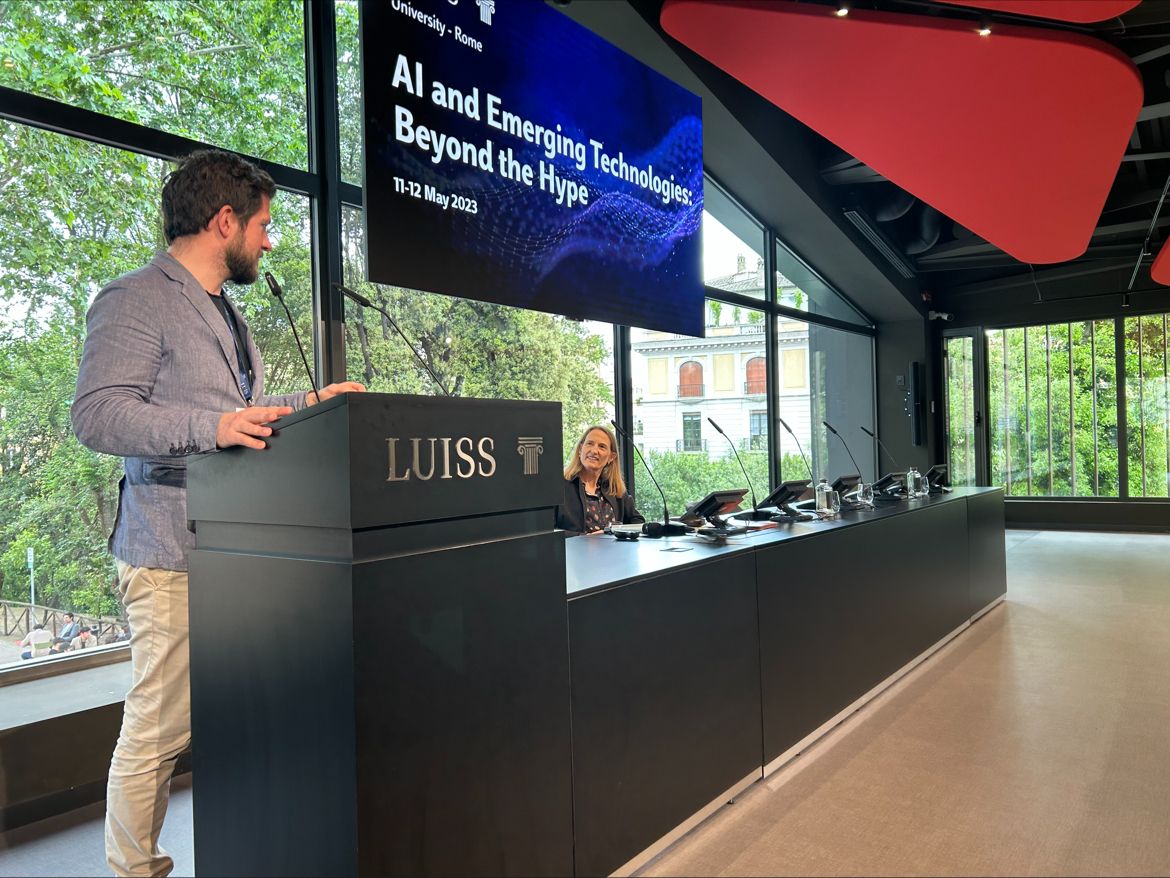
Source: Author

After the inaugural workshop at the LUISS campus in 2023, this second edition was held at the ESSEC campus in Paris. The event brought together experts from various disciplines, including information studies, organization and management theory, marketing, and even sociologists. They were all focused on studying the intricate impacts of AI on organizations and society and how these entities, in turn, shape AI.

2nd workshop edition in ESSEC Paris in May 2024:
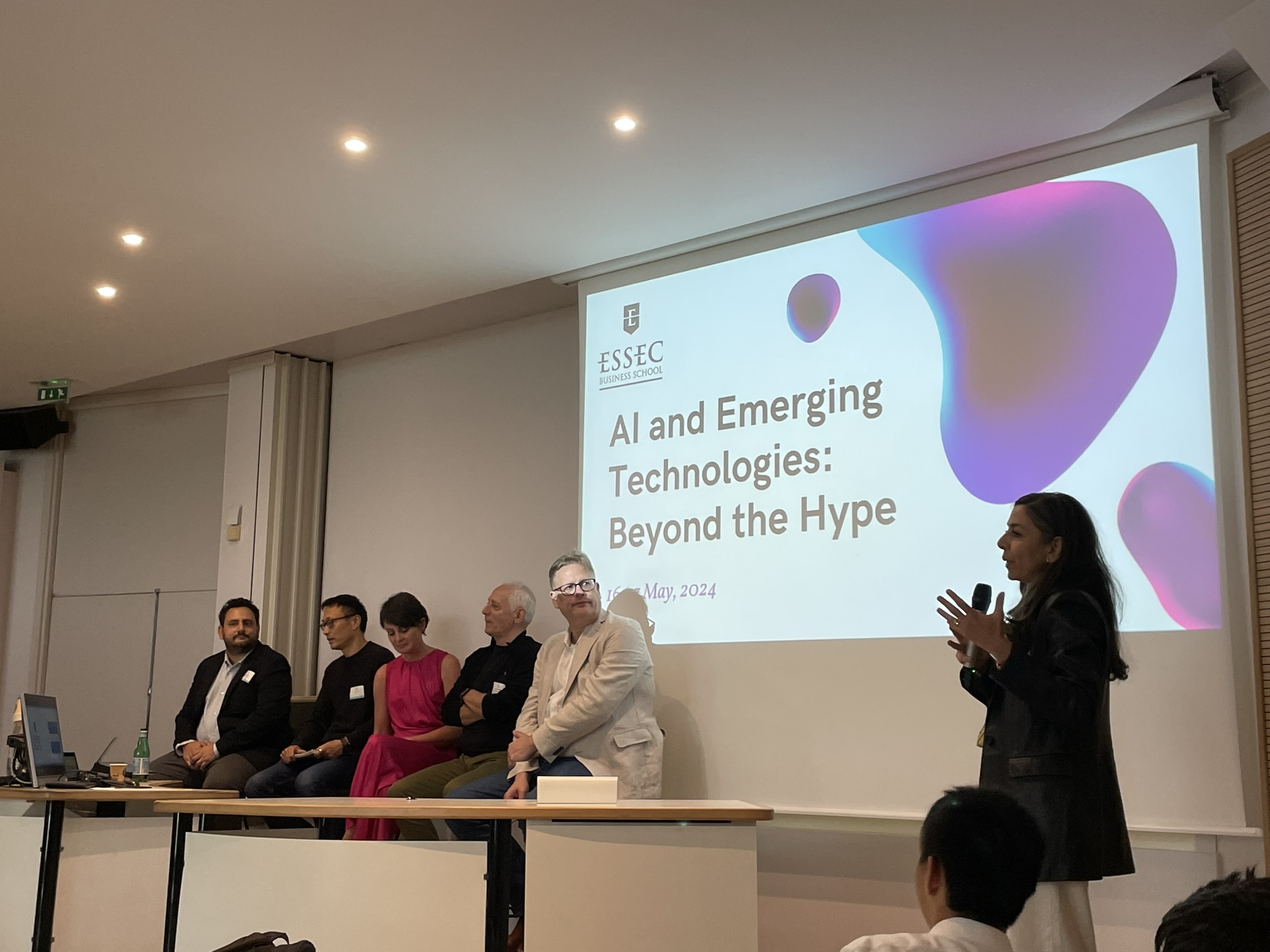
Source: Author

Over the course of two days, the workshop featured a series of insightful keynote speeches. The introductory keynote was delivered by Professor Jan Recker, who set the tone with his thought-provoking topic “Responsible AI = Sustainable AI?” He challenged the assumption that responsible AI is inherently sustainable, suggesting that we need to approach these concepts differently to ensure both responsibility and sustainability in AI development.

Following this, Prof. Elena Esposito delivered a compelling keynote on the transformative power of AI in making predictions actionable. She illustrated how, unlike traditional predictions like weather forecasts that merely prepare us for the future, AI enables proactive interventions to alter the predicted outcomes. This represents a significant shift in the role of predictions, akin to changing the weather itself rather than just dressing appropriately for it.

The second day of the workshop continued with equally engaging keynotes. Prof. Harris Kyriakou discussed the “Implications of AI for Research & Practice,” offering valuable insights into how AI is reshaping both academic research and practical applications. Prof. Melissa Valentine from Stanford University captivated the audience (making us solve math equations!) with her ethnographic study of an online clothing retailer. She demonstrated how introducing an algorithm transformed the organizational structure, with data science approaches to buying and planning redefining existing departmental boundaries.

These keynote speeches, followed by dynamic roundtables and project presentations, provided me with a lot of answers about AI, but it also left me with some new questions (which, I think, is a good thing?):

  • We still don’t truly know what falls under the category of AI. While many consider it an emerging technology, some argue that parts of it have reached the level of a general-purpose technology. As various fields navigate the creation and adoption of digital and advanced technologies, it’s uncertain whether we will have a clear answer to this question even next year.
  • This uncertainty leads to broader questions about our common understanding. Do we mean the same things when we talk about AI, sustainability, responsibility, accountability, and the role of data in addressing problems and finding solutions? How does this ambiguity impact our research? Are we experiencing an epistemological crisis due to the lack of clear definitions and shared understanding?
  • This also raised important questions about AI and sustainability. While AI is often touted as a contributor to sustainable solutions and development, it’s essential to consider the substantial resources these processes consume. Although AI can indeed foster sustainable outcomes, the experimentation process itself, even when shifted from physical to digital realms, still consumes a significant amount of resources. How, then, do we address this issue effectively?
  • As AI continues to become smarter and more autonomous, questions about accountability arise. Who is responsible for the good and bad decisions we outsource to AI? What decisions can we ethically and effectively delegate to non-human entities, and which should remain under human control? This issue is particularly pertinent in the use of AI for human resources, such as in the hiring process.

This workshop was and will continue to be an incredible opportunity to delve into these questions, fostering a deeper understanding of AI’s role and potential in society.

Looking forward to next year!

jcob-nasyr-PItsVmyu34Q-unsplash

“No project is an island”

In the world of academic research, it’s common to embark on a journey with a specific destination in mind (at least that was my path). Guided by established theories and prior studies, we often believe we know where our research will take us. My recent experience with a case study on innovation ecosystems, particularly focusing on environmental sustainability, was a humbling reminder of the unpredictable nature of inquiry.

As is the beauty—and sometimes, the frustration—of qualitative research (though it’s worth noting that surprises aren’t exclusive to this methodology), I was in for some revelations, when taking a closer look at how companies carry out projects…

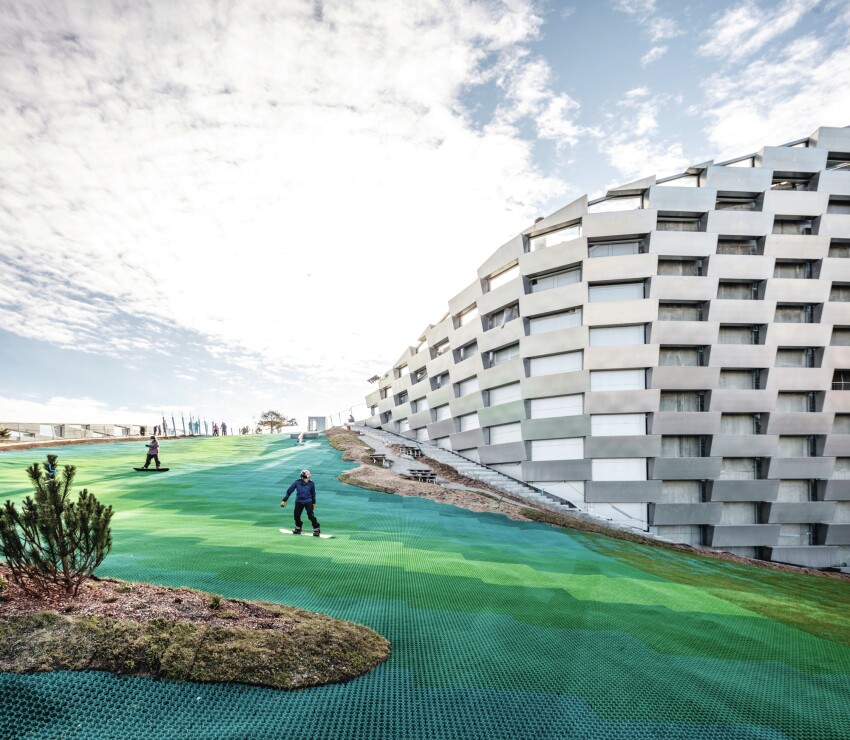
… As I was delving into the practices of companies engaged in green transition projects, I encountered a case that exemplifies this perfectly: the renowned CopenHill facility in Copenhagen.

Source: (Rasmus Hjortshoj, Architect Magazine: https://www.architectmagazine.com/project-gallery/copenhill_o)

CopenHill is an example of a new breed of sustainability projects that are simultaneously functional and hedonistic. With its waste-to-energy plant, ski slope, and restaurant, CopenHill epitomizes the concept of “hedonistic sustainability”, a term brought to life by Bjarke Ingels, the architect behind the facility (Estika et al., 2020). Aimed at merging environmental responsibility with pleasure and aesthetic appeal, many of these new facilities stand as a testament to the interconnectedness of green projects with the social, cultural, and environmental fabric of their communities. They are “history-dependent and organizationally-embedded units of analysis” (Engwall, 2003), each following a unique trajectory influenced by a variety of factors.

Thus, the creation of such multifaceted projects involves a collaborative effort extending beyond the realms of engineering or business. To assess their success or failure, there is an increasing need to adopt inter- or multi-disciplinary approaches, as their implementation and development cannot be fully understood or effectively managed through a single field of knowledge. Instead, it requires the collaboration and integration of diverse disciplines, as I have come to realize. For this reason, the current findings of my case study research are steering me in a more sociological direction, to better understand the complexities of the green transition. In pursuit of this, I have enrolled in an immersive three-day course at Aarhus University, where I’ll delve into various sociological theories, including Actor-Network Theory and Transition Theory, to name a few. My aim is to enrich my comprehension of the historical and environmental contexts that surround my case study.

Of course, I’m eager to share my discoveries along the way, so stay tuned for more updates and revelations!


References:

Engwall, M. (2003). No project is an island: Linking projects to history and context. Research Policy, 32(5), 789–808. https://doi.org/10.1016/S0048-7333(02)00088-4

Estika, N. D., Kusuma, Y., Prameswari, D. R., & Sudradjat, I. (2020). The hedonistic sustainability concept in the works of Bjarke Ingels. ARTEKS : Jurnal Teknik Arsitektur, 5(3), 339–346. https://doi.org/10.30822/arteks.v5i3.487

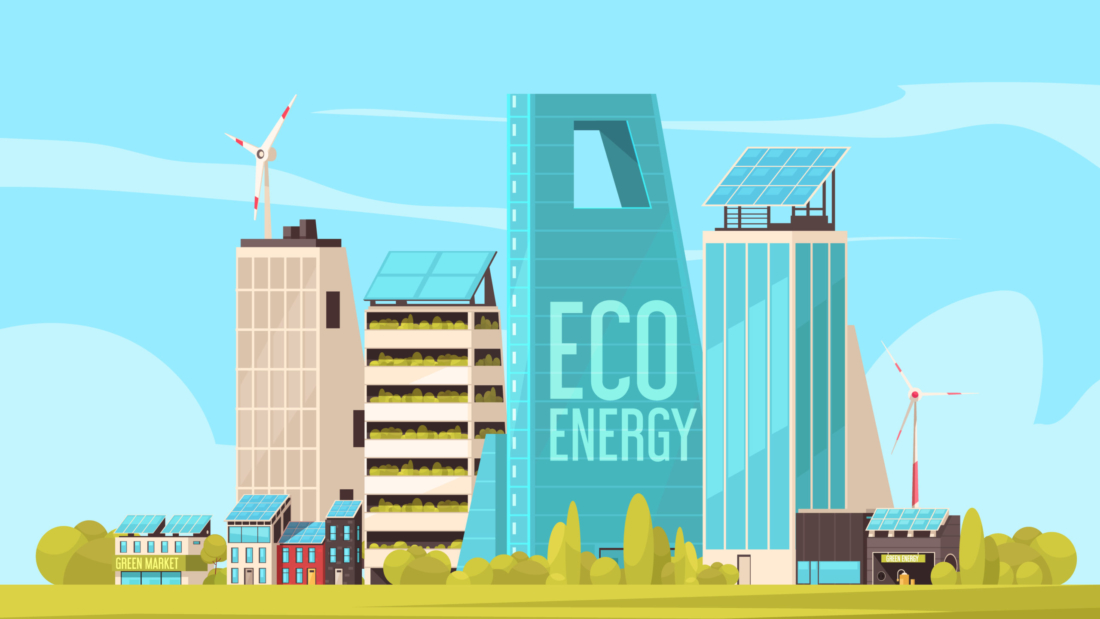
Image by Macrovector on Freepik

The energy transition and the NIMBY syndrome

The global energy transition towards renewable and sustainable resources has been nudged by institutions such as the UN setting universal standards for social and environmental welfare, and external shocks have questioned the current standards of operation. As they show a pressing necessity to (not only) address issues like climate change, several clusters of organizations, and institutions have started to come together to tackle this challenge.

By “transforming the environmental crisis from a problem into an opportunity” (Fabrizio Di Amato, CEO of Maire Tecnimont during a talk about Leadership at LUISS in Rome), various industries have developed promising solutions like the production of green hydrogen and more.
However, some of these technologies remain costly, and more solutions are needed at a faster pace. The EU has financed and granted several European initiatives like the introduction of hydrogen valleys. Recently, the Important Projects of Common European Interests (IPCEI) (a European Union framework that supports large-scale, transnational projects in strategic industries, like the energy infrastructure) has granted NextChem, an Italian leader in energy transition technologies, and a subsidiary of the Maire Group, 194 € million, as part of the “IPCEI Hy2USE” EU project, for the development of one of the first Waste to Hydrogen plant in the world. The goal of the project is to set up the first industrial-scale technology hub for the development of the entire national hydrogen supply chain.
Projects which include plants like these use specific technologies to transform waste into hydrogen and/or other industrial products and represent a promising solution to address both waste management and energy transition challenges. By converting waste into valuable products, different transformational processes can be applied, and all this, by reducing greenhouse gas emissions, minimizing landfill use, and contributing to renewable energy production.

However, as with other infrastructure projects, like the infamous project of subway building in the Netherlands, they can often be met with community resistance. Concerns about potential impacts on health, the environment, property values, and aesthetics can lead to delays in project approvals, increased costs, and even project cancelations. Coined as the NIMBY syndrome (Not In My Back Yard), communities are often rooting for innovative solutions, as long as they are not close to them.

So, what can be done?

When planning the construction of a plant, the use of digital technologies can limit the environmental impact of the design and experimentation (for example through 3D mappings, like digital twins). But the actual construction of such projects needs strong incentives to attract stakeholders.

Even though this list is not extensive, there are several ways in which companies are adopting a proactive strategy to get various people and institutions on board:

  1. Engaging and including them early on in the decision-making process by maintaining open and transparent communication throughout the implementation and activity of the project.
  2. By collaborating with research institutions and other leaders in the field, projects can gain increasing legitimacy, for instance through grants and scientific outputs.
  3. Collaboration with local organizations and communities: while research centers and higher institutions advocate for the technology itself and the benefit it provides at a broader level, partnering with local organizations like NGOs and community leaders can help gain insights into community concerns and use their networks to facilitate communication.

While these are just general comments that I have been able to observe throughout my research, the energy sector remains a highly debated sector, undergoing major changes. Thus, there is a lot more to it than communication and engagement, and preparing the field to build an ecosystem infrastructure around a green transition can be very complex. With the most promising efforts, projects can still fail. Factual information may provide the technical arguments that speak for the plant, but effective stakeholder engagement fosters trust, cooperation, and shared value among different participants and could help create a supportive environment for problem-solving and innovation.


Circular-Economy-illustration-scaled

Innovation to serve sustainable goals: a circular economy perspective

Some RMIT University engineers have recently discovered sunscreen for roads starting from recycled rubber. The experiment was developed by Professor Giustozzi, together with his research team, at RMIT University, that is one of the few universities in Australia to have a UV machine for asphalt studies. The equipment of the university labs allowed to replicate the long-term effect of sun degradation on bitumen using varying concentrations of crumb rubber, ranging from 7.5 percent to 15 percent to 22.5 percent. The researchers examined the changes in bitumen’s chemical and mechanical properties after a month and a half of continuous exposure to the UV machine – comparable to nearly a year of UV radiation in Melbourne.

The Australian government is currently spending millions of dollars on annual road maintenance; according to the National Transport Commission, these costs piled to $2.9 billion in 2019/2020. Therefore, this innovative product has the potential to reduce expenses for road maintenance, leading to considerable economic benefits. Together with that, this solution is also highly sustainable; used tyres in Australia cannot be exported, making new methods for recycling, and reprocessing them locally increasingly important.

Source: “The Circular Economy, Your Business, and Your Future” by Bowles R., Abbott L., McIvor M. (2021)

Sustainability now represents a central concern for global institutions and actors, belonging to different levels, including governmental institutions, international organizations, enterprises, stakeholders, and individuals as consumers. These innovative solutions thus represent a first turning point to progressively achieve sustainable goals, including those promoted by the UN in the 2030 agenda (i.e., SDGs). Within this context, circular economy (CE) is a suitable model to address and frame these goals in an efficient way.

“CE represents a new concept of more sustainable development, since it aims to increase the efficiency of resource use in order to achieve economic, environmental and societal development by balancing and taking into consideration economic, environmental, technological and social factor” (Del Giudice et al., 2021).

In line with that, according to the Triple Bottom Line (TBL), the economic, environmental, and social pillars of sustainability are highly interconnected and interdependent (Montiel, 2008), thus getting benefits in one dimension also has implications for the other pillars of the TBL.

Within this framework, innovative solutions can help us to achieve sustainable goals. The idea promoted by Professor Giustozzi’s research team is a pivotal example of how innovation can be framed according to sustainable values, thus serving society and its needs. Research insights can be valuable starting points to address great human challenges and progressively uncover ways to solve them.

References:

You need to get lost before you find your way

You need to get lost before you find your way

Looking back at the first term of my experience as a Ph.D. researcher at LUISS Guido Carli University in Rome and as a member of the EINST4INE program, here are some things that I have learned…

  • Classes have a lot to offer
  • In today’s digital world, social media is essential
  • You need to get lost before you find your way

I was previously employed at a firm that specialized in market and consumer data before commencing my PhD in September 2021. And while I learned a lot about recognizing new trends and the way to do research there, I became increasingly intrigued by the way society and the economy are being transformed by digital technology. That’s why I began looking at ways that my future employment may have a positive influence on society and help to address key developments and concerns that we’re all grappling with. Because of this, when I applied to the EINST4INE program, I was eager to collaborate with like-minded academics, educators, and industry practitioners throughout Europe and beyond.

Now the beauty of the program is the established network, where we’re able to share our own experiences and build a communal one. As a result, one of the first things my close friends and family asked when I informed them I was relocating to a new country to begin my academic career was “what are you going to do there?”, “what is the program of the PhD?”

Some people were taken aback when I told them I was a PhD student taking classes, but now that I’ve been in those classes for over six months, I can see how beneficial they have been:

One of the first steps in doing research is to choose the appropriate approach. And while the topic of my research as the Early-Stage Researcher (ESR) 15 is “Linking open innovation mechanisms to reach environmentally sustainable goals”, qualitative research seems the most fitting because of the exploratory nature of the topic, quantitative research is all I’ve ever done before. Thanks to one of my supervisors, Prof. Luca Giustiniano’s contribution to the qualitative methods course as an instructor, my fellow students and I gained a thorough understanding of the many sorts of qualitative research methodologies. The course provided an overview of key perspectives related to the design of qualitative research, with emphasis on theory framing, purpose statement definition, research questions development, and sampling in the qualitative research traditions. More specifically, I had the opportunity to work with data analysis tools such as NVivo, which help with the coding, transcription, and interpretation of qualitative outputs (such as interviews).

Epistemology was another class that I learned a lot from during my first six months as an ESR. Here we touched upon the topics of philosophy of science, rationality, games and institutions, and social norms. While the most important value of the course was to iterate the reason why we do research in the first place, the course also helped us appreciate the importance of the ties that bind academics, business, and society as a whole.

Many of the other courses in the program, such as Digital Ecosystems, Digital Business Transformation, and Organization and Technology, dealt with the present impact of digital technology on the corporate environment. While open innovation seems to be a good way for organizations to remain competitive and innovative, the engagement of sources like Artificial Intelligence (AI) and Big Data appears to be essential. And, especially because the COVID crisis has prompted many businesses to go digital, I am trying to relate how companies are becoming digital and work together to eventually be environmentally sustainable.

I am able to apply the knowledge I’ve gained from LUISS courses in the weekly EINST4INE Reading Club, where we discuss research articles on a wide range of contemporary problems and connect our own research to the study of others. We engage and discuss what the readings teach us, and typically broadcast the major learnings on a social media site such as Twitter or LinkedIn.

And while I’ve never really been a social-media-savvy person, my first LinkedIn post enabled me to connect with individuals from all over the globe and from a variety of study fields. I also recognized that if I want my work to have any significance, it has to be made public. Still, my private Instagram account is largely dedicated to posting photographs of my dog, but I also make an effort to speak about my research on sites like LinkedIn, Researchgate, and other similar ones since it is a fantastic way for researchers to network and keep their creative juices flowing.

For now, as an early-stage researcher, my primary focus is acquiring as much knowledge as possible on the subjects of Open Innovation, digital technologies, and sustainability. And this involves a lot of reading, which can be confusing at times…
For example, have you ever been overwhelmed by the sheer number of options of jams and chocolate spreads you can find in a supermarket? Everything about this first term has seemed the same. The more I read and attempt to understand complex concepts, the more confused I get. When I confided in my supervisor about it, she said, “This is normal, you need to get lost before you find your way”.

So while this may seem a little cheesy, it truly is the journey that matters and not the destination since you learn and give so much along the way.

Einstein. Source: © Shutterstock

So, you think you’re the next EINST4INE?

A genuine question I received when explaining my new project and role (yes, EINST4INE is intended to be pronounced Einstein). I simply laughed and dismissed the comment.. of course I am not the next Einstein.

But, it did make me think.

Collectively, our projects will embrace the major challenges of future industrial systems. That’s pretty big. While this is certainly a daunting prospect as the imposter syndrome starts to creep in, I remind myself that I was selected to embark on this journey alongside other brilliant young researchers, so why shouldn’t we aim for such an impact with our research projects?

Impact really drives me. Graduating only in 2020 and 2021, I completed both my Bachelors in Business and Master of Research in Sustainable Futures at the University of Exeter, Cornwall. During my studies, I interned for a social enterprise that trains and supports entrepreneurs to innovate social and environmental challenges through purpose-led businesses, as well as co-founding and leading my own venture of a ‘Women in Business’ society to empower young women to pursue their dream careers. Further to this, I have worked on several projects providing consultancy and freelance support to start-ups and research projects addressing various business and sustainability challenges.

Despite a rather naïve and potentially even immodest notion to believe that a group of PhDs will contribute groundbreaking science, I also believe that if you are not striving for something you will never come close to achieving it. So, we must dream big.

The main expectations I have for my EINST4INE journey is to make connections and build my network, receive high-level research training with great support from colleagues, and be exposed to a number of multicultural and practical experiences which all help deliver impact and enhance employability. At current, my research topic is broadly focussed on orchestrating innovation ecosystems. I’m really interested in investigating how things work, what challenges are being faced, and how they can be improved or resolved. As a result, I hope that my research will explore and develop mechanisms to successfully orchestrate ecosystems and the challenges they face. From an industrial perspective, I would like to explore ecosystems applied in circular innovation as I find it very applicable and an area that faces its own unique challenges. Above this, digital transformation has created opportunity to accelerate both the emergence and management of innovation ecosystems and the sustainable transition to a Circular Economy, areas that need development of understanding and best practices. And of course, being part of Gen Z, life before technology is pretty incomprehensible to me so curiosity into the digital phenomenon is almost second nature.

With these big dreams, how did I end up here in the first place? And another funny remark I have received…why Finland?!

Well, I am extremely pleased that LUT University is my host institution. It was my hope to pursue a career in research, and with a strong academic background, I was seeking opportunities that would give me international and industrial experience whilst still gaining PhD research training. The Marie Skłodowska-Curie Action presented the perfect opportunity to enable this. I am still in disbelief to be in such a fortunate position and am extremely honoured. I feel very grateful that I get to be located in such a beautiful place with such high quality of life and connected to incredible expertise through the institution and EINST4INE; I believe these factors will make all the difference on this learning and development journey.

So, you think you are the new EINST4INE?
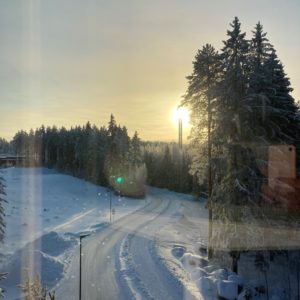
Our view from the office. Source: Jessica Fishburn.

I feel I align quite well with Finnish culture and ways of conducting business; quiet, relaxed, resilient, and respectful. While this has helped me settle here, it also excites me for working with our industry partners here with whom I have begun exciting conversations about orchestrating innovation ecosystems addressing sustainability challenges. Beyond this, I cannot wait to learn and explore other cultures as part of my EINST4INE journey and the amazing research opportunities we have!

Looking forward to seeing what the future holds and I hope others will be inspired to follow along the way ?