Attending the EGOS Colloquium & EGOS PhD Colloquium 2023 in Cagliari

Attending the EGOS Colloquium & EGOS PhD Colloquium 2023 in Cagliari

As a researcher, often summertime is conference time – this was true for me this year as well. Like some other ESRs’, I attended and presented at R&D Management Conference 2023 in Seville in June. In July I travelled again, this time to Cagliari, Italy to attend and present at the EGOS Colloquium 2023. In addition, I got a spot at the EGOS PhD Colloquium, which is a one-day event before the conference itself. In the following blog post, I will share some insights from my time there – EGOS is indeed a really good conference and the research there is so amazing and high quality, I can totally recommend going!
Attending the EGOS Colloquium & EGOS PhD Colloquium 2023 in Cagliari
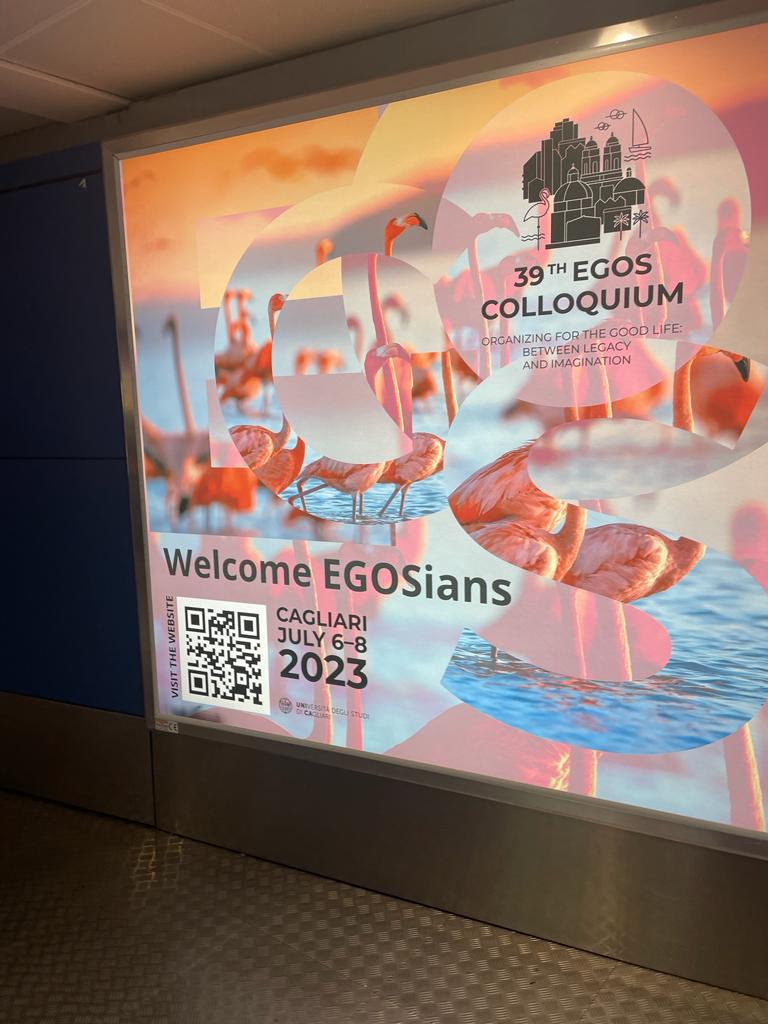
Poster at Cagliari airport welcoming all EGOSians (picture taken by C. Leeb).

The EGOS PhD Colloquium

PhD Colloquia are an excellent opportunity for any PhD student and I highly recommend attending one or several! This year I attended the one from R&D Management and the one from EGOS. Jess already wrote an insightful summary of the PhD Colloquium with R&D, and I thought it could be useful to share how the EGOS one looks like.

It was a one-day event before the main conference and we heard some talks by senior scholars about writing theory papers, the art of reviewing, and insights on how to publish in Organization Studies. In addition, the EGOS PhD Colloquium consists of small table rounds of a few students and one senior researcher. Each student submits a thesis proposal which is then being discussed in these smaller groups. This way you get to meet fellow PhD students from around the world, as well as brilliant researchers from various fields within organisational studies.
Even though it can be daunting to share your thoughts, especially as everybody is doing such great work, it is a great opportunity! This part was extremely productive and useful for me – I learned so much and got very valuable tips from the other PhDs and my facilitator. In addition, you already get to meet other people you will see again at the main conference!

In general, I would recommend doing PhD Colloquia as early as possible in your PhD – it sometimes is a bit hard to be ready for these in your first year. At the EGOS colloquium, I felt like most people were in their 3rdyear of PhD (also depending on the PhD system of their home country), so it is for more “advanced” PhDs.
Attending the EGOS Colloquium & EGOS PhD Colloquium 2023 in Cagliari
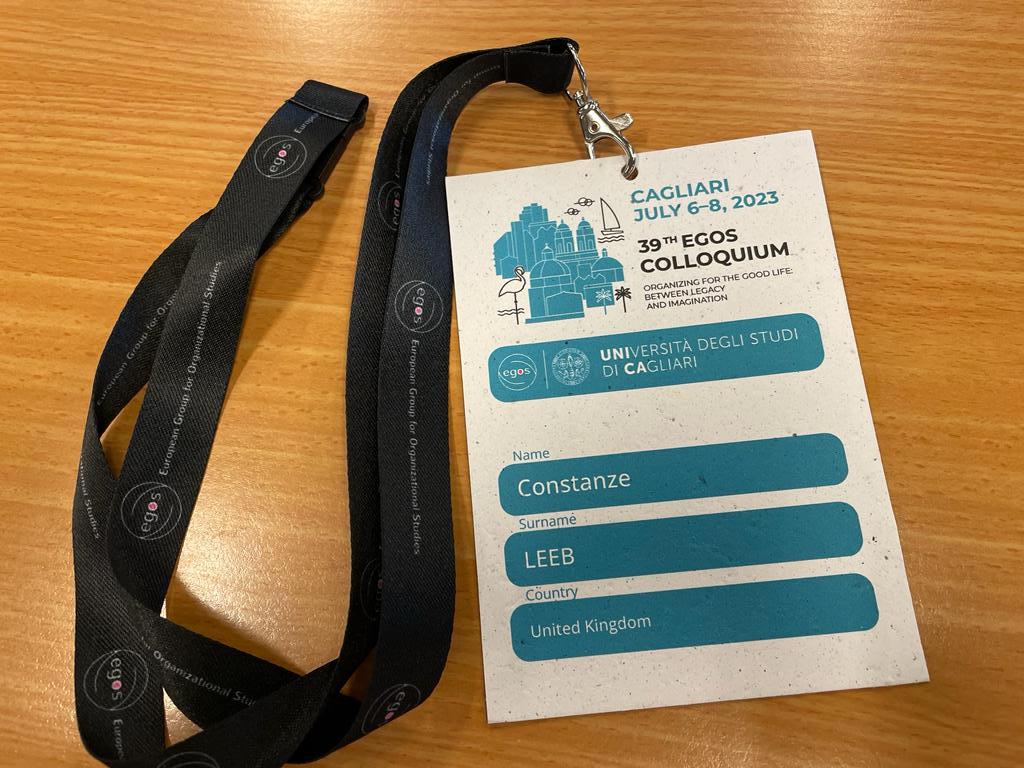
Sustainable conference badge, which can be planted! (picture taken by C.Leeb).

The main EGOS colloquium

Don’t get confused – the main EGOS colloquium is the name of the conference, and it is really a big conference! We were spread out in 3 different locations across the city, and I heard from others that it really was a conference with thousands of people.
Something really great about EGOS is that they are trying to be as sustainable as possible. One example is their conference badges (see picture)!

What is specific for EGOS is that they have a track-based system. That means that you submit your work to one specific track and if you get selected to present, you are asked to attend all sessions in this track throughout the conference. This way, they are trying to build a community around a topic – which is really nice! I presented in the track “Professions in an Age of Intelligent Technologies”.
It was such an amazing experience for me to join this as such a junior researcher. In my track, there were so many excellent researchers, whose papers I had read in top journals – just incredible! The feedback I got was so useful and of excellent quality. Many of the attendees had read my paper and were really trying to give useful feedback to help me progress further. In addition, every single presentation in my track was interesting to listen to and the topic was relevant to my research – incredible!

Of course, this can also be intimidating, and it is normal to start questioning what you do, etc. – but courage, it is part of the PhD journey (what I have been told from senior researchers) and it’s just an amazing opportunity to connect with great scholars from your field!

At EGOS I did not know many people. Alejandra was there as well, which was really nice for some social events, and also another friend that I met at my placement at RMIT Australia was there. However, as noted above, the conference is really big, which meant that I did not meet them during coffee breaks and was alone – something daunting as well! As in most conferences, people travel with colleagues or have their community already, so it can feel a bit lonely and overwhelming. But, don’t be afraid – you will meet people that you can have a chat with or you can just approach new people to make some small talk. Or, what happened to me, is you meet somebody who is really well connected and who introduces you (in person or via e-mail) to other scholars. And don’t forget: it’s also totally ok to take breaks from socialising now and then, conferences are exhausting!

Even though it was harder to meet people at EGOS than it was at R&D (where I already knew many people through EINST4INE, especially more senior scholars), I still met a few new people who do similar things to me, some of whom I will also try to visit when I pass by their university.

As a summary: EGOS is an amazing and excellent conference. It was daunting, exciting and brought me invaluable and extremely helpful insights into my research – I can only recommend everybody to attend EGOS if you get a chance to!
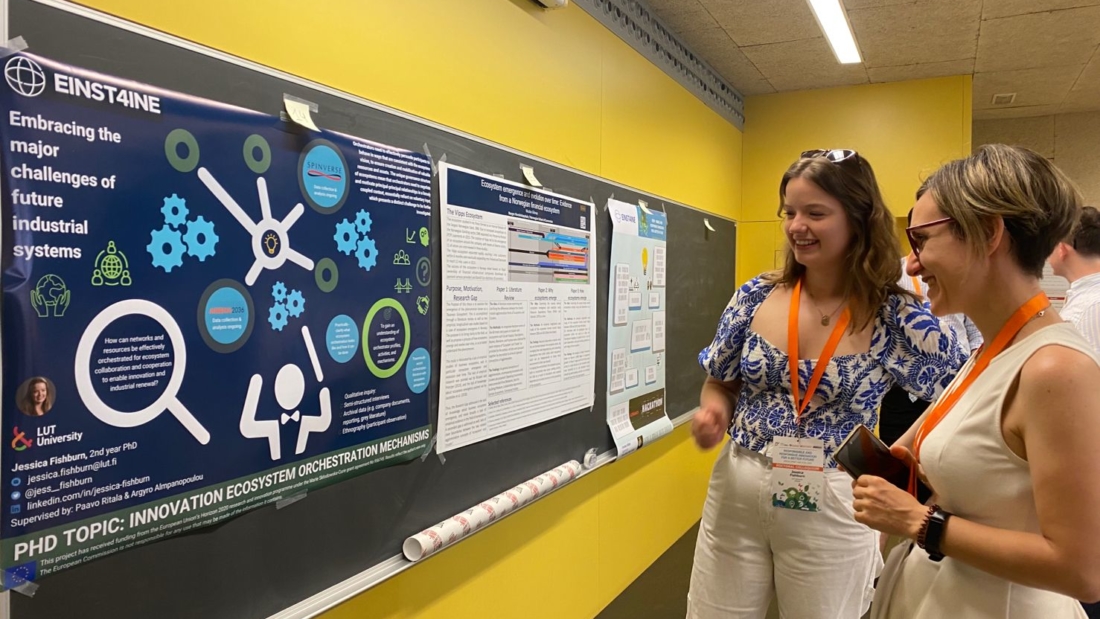

Source: Own image.

R&D Management Conference Doctoral Colloquium: here’s what to expect

Attending a Doctoral Colloquium can be an exciting and valuable experience for doctoral students at all stages in their journey. I was lucky enough to be accepted to this year’s R&D Management conference and Doctoral Colloquium, held in the beautiful (and very hot) Sevilla. This was my first time attending a colloquium so I thought I would share my experiences to help other first-time goers or those that are simply interested to learn more about the experience.

The colloquium typically provides a platform for doctoral candidates to present themselves and their ongoing research work, receive feedback, and interact with experienced researchers and scholars in our field. Here are my key takeaways:

Research is MEsearch:

Alberto Di Minin (Co-Editor in Chief of R&D Management Journal) energetically opened the colloquium with a ‘Start with Why’ exercise (if you are familiar with Simon Sinek’s work). As an icebreaker and to introduce ourselves, we all shared the ‘why’ of our research, before explaining the ‘what’ and the ‘how’. This was a meaningful reminder of how research is really MEsearch which we don’t often acknowledge – you are the one invested in your topic, you are carrying out the research, you are producing the results. It is important we remind ourselves why we are doing this and continue to engage with that in order to power on and in creating connections with others.


Presentation of Research:

As a participant, we had the opportunity to present our doctoral research projects in the form of a poster presentation. It was interesting to see the range of posters presented, from the traditional academic poster format to more visual and creative ones. Honestly, I felt a little self-conscious displaying my work on a giant A0 sheet for everyone to poke at, but this became a very fruitful exercise both for myself and I hope for those interested in my work. In the preparations I stressed over what and how I should present, but in the end I learnt it is most important to understand what YOU would like to get from the interaction and let your poster follow that principle, no matter how others have approached the task.


Networking Opportunities:

The colloquium allows you to connect with other doctoral students and researchers who share similar interests in R&D management and wider management topics. Networking is an essential aspect of academic conferences, as it opens doors for potential collaborations and research partnerships in the future. However, what is perhaps some unspoken law about conferences that is maybe unknown to new PhD students (at least it was to me) is how social these events are. The majority of networking, and deeper connections, happen outside of the conference centre and instead in the bars, tours, dinners, etc. Having these bonding moments and community building activities are essential, so while these are very long and tiring days, I would urge all students to make the most of these additional activities where possible and be open to getting involved.


Mentorship and Guidance:

Expect to receive insights, suggestions, and critiques from both fellow doctoral students and established researchers. This feedback can be invaluable in refining your research approach and identifying potential areas for improvement, particularly gaining insights from outside of your usual mentorship. We were honoured to benefit from the expertise and wisdom of Petra C. de Weerd-Nederhof, Lucia Naldi, Wim Vanhaverbeke, Anne Ter-Wal, Bart Van Looy, Shanthi Gopalakrishnan, Andrea Piccaluga, Leticia Pérez-Calero, and Jeremy Klein.


Exposure to Current Trends:

We can often get stuck in our narrow little holes as PhD students focussing hard on our topics. While sometimes I find it overwhelming to become distracted by so many new ideas and inputs, you never know when a piece of advice, literature suggestion, new connection, etc. may become fundamental to your work. Since R&D Management conference attracts the leading experts and top students in the field, the colloquium can expose you to the latest trends and emerging areas of interest in R&D management.


Practice in Academic Communication:

Presenting at the colloquium allows you to refine your academic communication skills, including attempting to deliver clear research ideas, responding to questions, and engaging with an audience. When working with experts who have 10s of years experience in these fields, I often still feel that I know nothing about my topic. Having to communicate my research, respond to questions, and share the observations I am making surprisingly gave me some ‘uh-huh’ moments where I realised, perhaps sometimes I do know what I am talking about. Similarly, being asked questions opened up new avenues even in my own mind about what should be clarified and what is most interesting to answer – which is key to making impact with your work!

Community Building:

As mentioned above regarding networking, one of the biggest takeaways was the social aspect that I did not expect. Being able to connect with other doctoral students in your field and share some of the trials and tribulations of this journey with them is a very cathartic and underrated activity. Particularly since this is a small and select group (approx. 40 students accepted) means that you do have the opportunity to get to know most of the students over the 2 days and, even better, you then have some familiar faces to say hello to during the conference. Of course, I hope that all doctoral students also have a great community at their home institution, but having this community extended across borders is all the more valuable. For future collaboration, or future complaining, as you wish!


Overall, remember to come prepared with energy and intention and don’t be shy to receiving constructive criticism. This is an excellent chance to gain valuable insights into your work and build connections within the academic community, so don’t forget to follow-up afterwards too. Enjoy the experience and make the most out of this unique opportunity!

terren-hurst-blgOFmPIlr0-unsplash

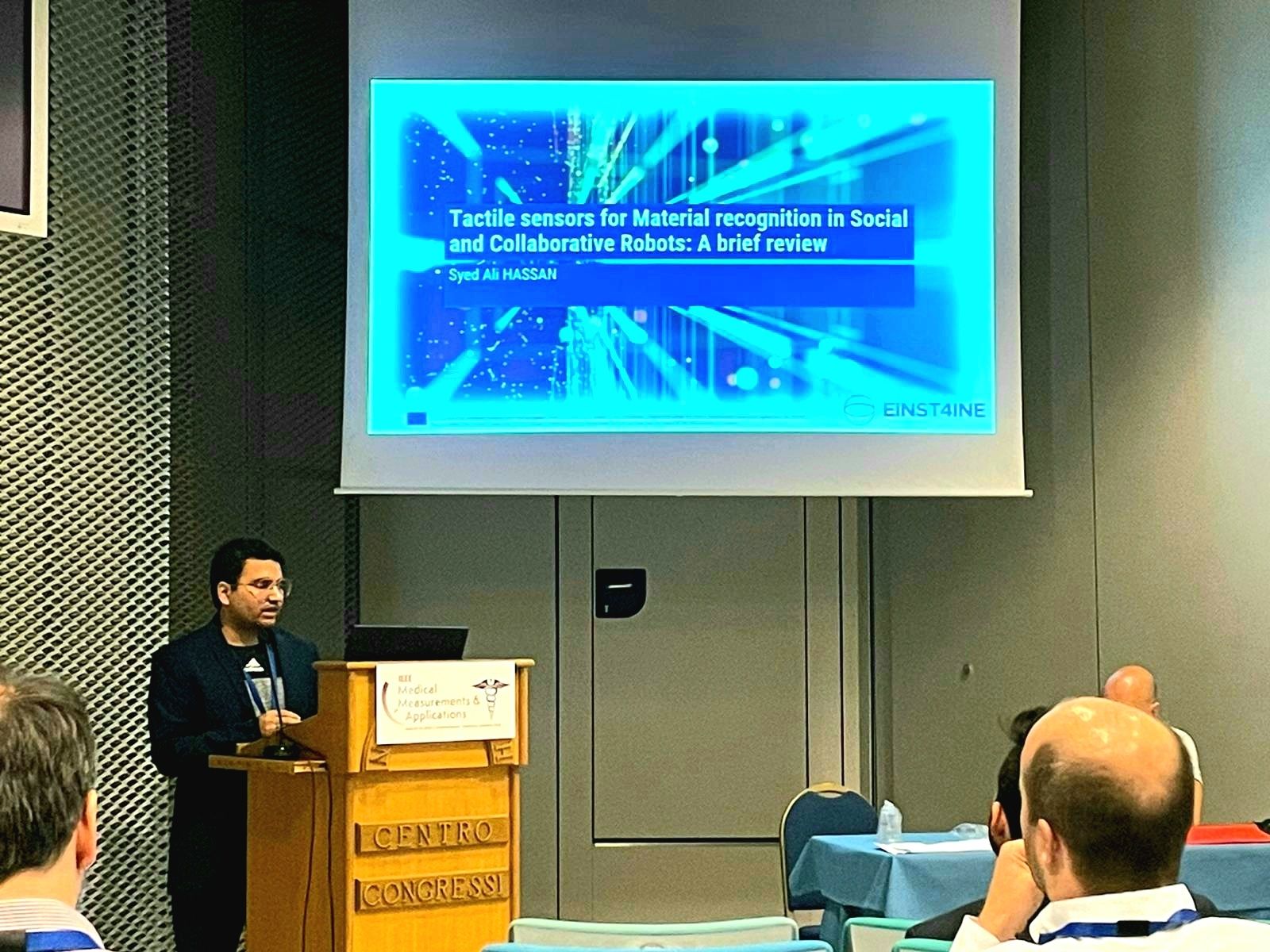
My recent experience of presenting the research paper in a conference.

The majority of researchers hunt for a reputable conference to present their work at. As a master’s student, I presented several papers at various conferences, so I was accustomed to doing so and knew how to present my research, but as a doctoral student, this was my first conference in Italy. IEEE MeMeA 2022 is the name of the conference, which was held in Catania from June 21 to June 25, at the UNA hotel. The research papers of numerous researchers from various nations were presented. The opportunity to network with researchers from other scientific fields was a wonderful experience.

The title of my research paper on robotics is Tactile sensors for material recognition for social and collaborative robots. It was a review paper; it may be preferable to begin a research project with a review paper because it aids in a thorough understanding of the subject and stimulates reading more recent material pertinent to our investigation. After reading other people’s research on the same subject, writing a review paper might also give us fresh ideas. Anyone can read the paper I wrote by simply typing its title into IEEE Xplore, where it will be published.

The points I’m sharing for a good conference presentation are listed below:

  • Practice several times in front of a mirror.
  • Discuss your paper with your supervisor.
  • Be confident when presenting the paper.
  • Always put your presentation earlier in the conference room computer and check all slides one time to make sure all slides are working.
  • Don’t use new fonts in the presentation that are not supported in old versions of PowerPoint.
  • Use pptx or pdf format, take both formats with you.

A few researchers presented their posters on the first day of the three-day conference. Most conferences feature a poster session. During this time, researchers must display their posters on walls or on whiteboards. After that, many attendees approach the posters and ask questions about them. Poster sessions typically last for two hours or longer, during which time researchers must stand in front of their posters and answer the questions of visitors. My presentation was scheduled on the second day: I first went to see some research posters before going to the presentation room and delivering my talk. The presentation was fantastic. During my presentation, one professor asked me a few questions and said he would like to collaborate with my research.

In conclusion, I would like to address anyone who believes that if you present your study at a conference, it will be made public and someone else might steal your research concept. This is true in some cases; however, the longer portion of your work should be submitted to a reputable journal. I would suggest creating a plan whenever you begin a research project so that you can present a portion of it at a conference and later submit the entire thing to a reputable journal.

Organising a one-day conference

Organising a one-day conference

As part of the first-year assessment at the University of Cambridge our institute, the Institute of Manufacturing (IfM), has the tradition of having a “IfM PhD conference” happening each year in May. All 1st year PhDs share their research progress so far and their plans for the next few years. Everybody needs to hand in an abstract, create a poster for a poster session and present their research in a short talk followed by Q&As. Further, this conference day is organised by volunteers who are themselves 1st year PhDs of the institute. And guess who was one of the four volunteers – me! Further, we were supported by the PhD administrator and two researchers who helped us with advice etc.

In the following post I will share my experiences and learnings – maybe it helps you organising a small event yourself!

The start – important things to consider first

Organising a one-day conference
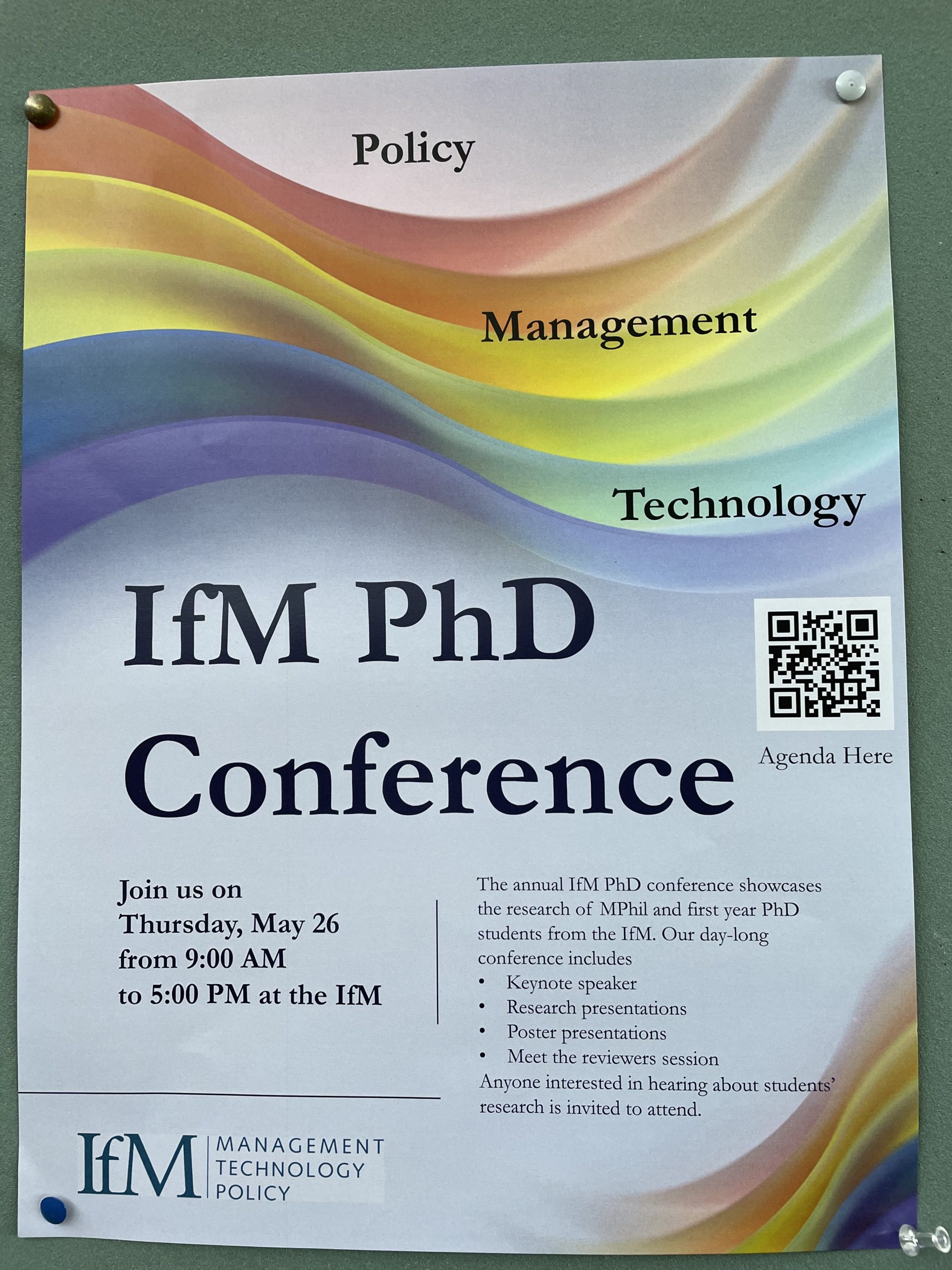
Flyer to advertise the conference (Picture taken by C.Leeb).

Of course, the organisation of the event started well before the conference. There are many things that need to get sorted beforehand. The first ones that we found most relevant are: (i) How much budget is there? This will determine many aspects, such as what kind of food you can provide. (ii) Where is it going to take place? Often, another crucial thing is the venue – in our case we were lucky, as we could use the seminar rooms at the IfM. (iii) When is it going to be? The question of the date needs to be settled early on as well – again, this had been decided for us.

Knowing about it – advertisement & contacting people

Another important thing is that people know about the event. For us, that meant contacting the other 1st year PhDs and informing them about the deliverables. Further, we wanted other members from IfM to join. We made sure that the conference was advertised through different channels: (i) our weekly IfM-news mail starting 1 month before the event (ii) The monthly newsletter for the month April and May and (iii) posters that we put up across the building a few days before the event (see picture).
Of course, we also had to contact many other people, which is related to the next point – our agenda. 

Putting together the agenda

We started the day off with introduction words by the head of IfM followed by a keynote speaker. Finding a keynote speaker turned out to be difficult – because the one we had planned canceled close to the event! From this we learnt that it is very helpful to know people who are well connected and can find another keynote speaker on short notice, luckily, one of the supporting senior researchers could help us.

Another aspect to coordinate was the talks: due to the high number of PhD students we ran two tracks in parallel, in blocks of 3-5 students with breaks between blocks. We decided that it would be best to have people in each block that could make sure that it ran smoothly. Therefore, we appointed 2 PhD students in each block (in which they were not presenting): one was responsible for time keeping (i.e., 2 and 1 min. warnings) and a second one to chair the sessions (i.e., coordinating the Q&A and asking questions, putting up the slides). It really paid of to have these special roles – everybody that got assigned a special role (i.e., timekeeper & chairing) did a wonderful job – so the talk tracks ran smoothly without any trouble! 

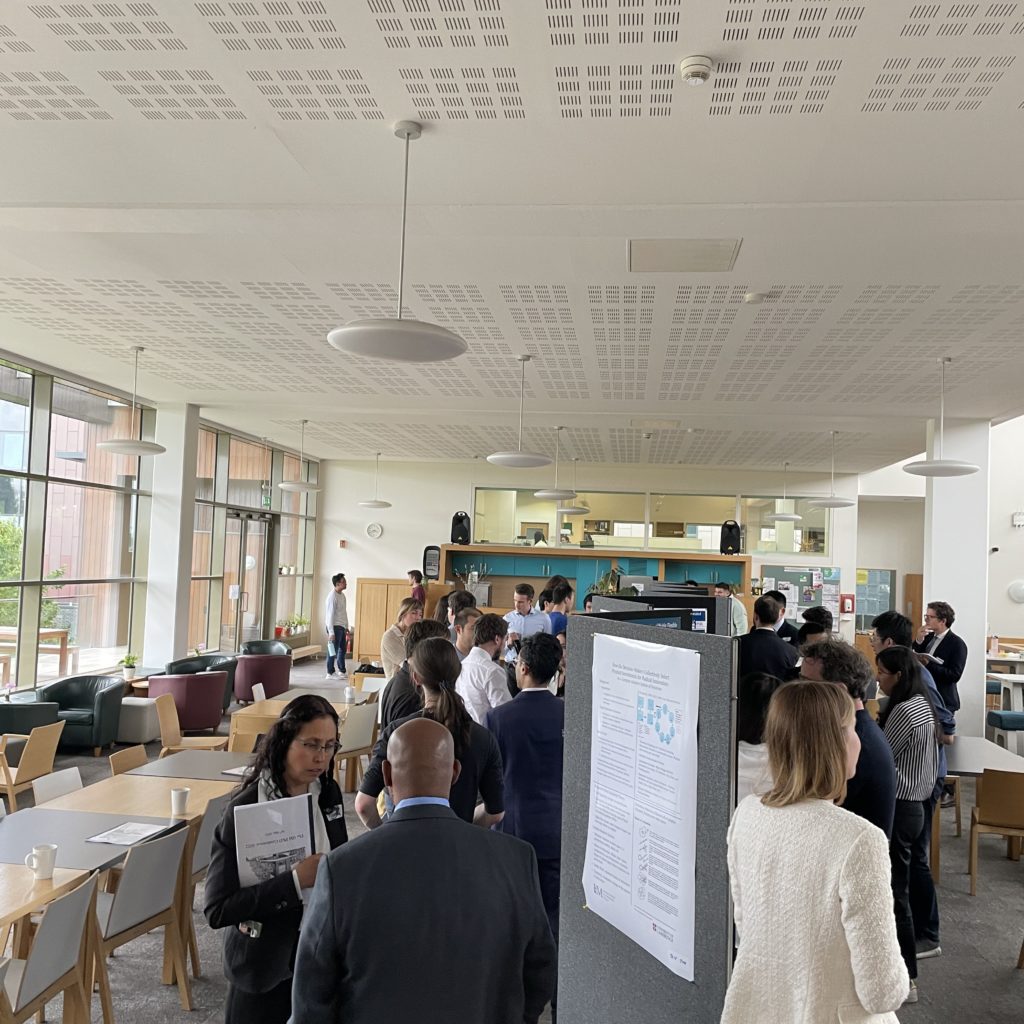
In the afternoon we had a poster session (see picture), during which students were standing next to their poster and others could walk around to ask questions. Here my learning is: putting up the posters can be tricky – in total we needed 4-6 people to put up the posters, because it requires a lot of force to punch the thumbtacks in the unstable boards (at least in our case) – thanks for our friends who helped us out!

Organising a one-day conference
The poster session (Picture taken by C.Leeb).

Another successful aspect of our conference was the best talk & poster competition we organised. We put together a jury of senior researchers, which we divided between the tracks. In the end, we had one best talk per track and 3 best posters. The competition worked really well – I think the fact that we had a clear scoring scheme and that we picked jury members from different research areas helped.

Before we had closing remarks from the two senior researchers that supported us, we decided that we would put together a “Meet the reviewers”-panel with three senior researchers from our institute. They came from different areas and shared their experiences in the publication process. The insights were extremely insightful– as PhDs we got a lot of useful tips for our careers!


Submissions

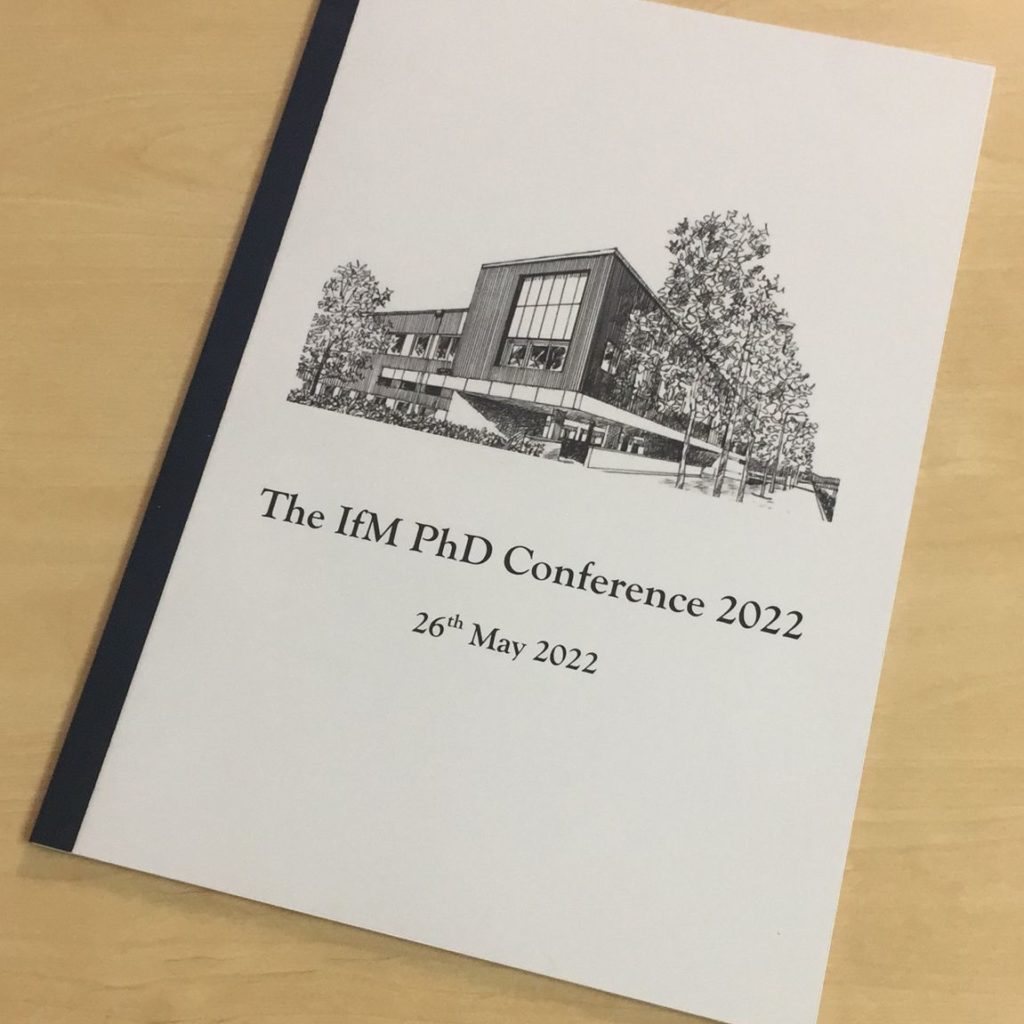
One of my main tasks was putting together a booklet of all the abstracts students submitted (see picture). This was a lot of work, despite having set a quite early deadline that every student followed (!). Mostly, I had to ask people to resend their submissions and follow the template we had provided beforehand. So my recommendation: ALWAYS provide a template that people need to follow (it makes your life much easier and also everything looks nicer) – and make it as detailed as you can, I realised a few things I had not specified only after it was too late. But the product looks really nice and the booklet was also a great take-home gift for everybody. Another perk of it: we included the agenda in the booklet – so everybody had it with them throughout the day and knew where to be when.

Organising a one-day conference
Booklet with abstracts (Picture taken by C.Leeb).

Some final learnings

My learnings from organising this one-day event are summarised here, some of which I learned the hard way through extra work:

  • Try to think of all the details! Try to picture the day and run through the agenda/day – this will help you think of (tiny) aspects!
    E.g.,: who is registering the participants? Do you have lunch, will there be coffee breaks? If yes – where and with snacks or not? Is everything printed in time? Do the participants know when to be where? How can they get this information during the day? When are you putting up posters and how are you fixing them? Etc.
  • Try to plan/setup as much as you can before the event starts! Also, try to delegate tasks that are needed on the day of the event to other people – you will be busy with little (unexpected) things anyways!
  • Bring extra laser-pointers/clickers! One of ours died in the middle of the second talk, and it was really good that I had a spare one with me.
  • The more detailed information you give the better – it saves you time in the end! More concrete information means (typically) fewer questions/less editing.
    E.g.,: giving clear instructions to people who are taking up roles (e.g., timekeepers, chairing a session), giving clear instructions on how to format documents (e.g., abstracts).
  • What really safes you is good team communication and team work!
    Best is to divide tasks between the team members, making it very clear who is responsible for what – here it is crucial that you are able to rely on your team members (or know what aspects you might have to have a watchful eye on).
  • It is an amazing opportunity to connect with many people!
    E.g., other PhDs, researchers across areas, senior researchers, etc.
My first six months (and a new column!)

My first six months (and a new column!)

Welcome to the second post of my blog!

This time I will start by resuming the main highlights of this first semester, before telling you more about my plans for the future. Finally, I will present a brand new column where I intend to share some curious content that caught my attention while surfing the internet.

What have I done?

As I am now 6 months into my PhD, I think I have already had a taste of what a doctorate is all about. I have attended several interesting courses and seminars, submitted my first papers, worked long hours and made calls at unusual times (the West Coast time zone did not help), but I have also had a lot of flexibility and, most importantly, I have started to give my small contribution to share knowledge on the topics that interest me most.

First, I had the chance to give two lectures in a MSc course called “Sustainability in a Business Development Perspective” about “Social entrepreneurship in a digital context” and “The Impact of Sustainability on Today’s Management”, at Aarhus University.
Even though I was very lucky because I could teach two topics of my interest, I have to admit that at the beginning it felt a bit weird to be on the other side of the desk, as you have almost the same age of the students in front of you. But when you have the opportunity to share your experience and knowledge about something you are passionate about, then everything becomes easier and more natural. Moreover, I think this opportunity also helped me in strengthening old relationships and building new ones. First, because I got in contact with some former colleagues of mine at PwC Italy. They helped me to invite a Manager, who gave us an overview on the last developments around Non-financial reporting matters. Secondly, because this topic sparked a discussion with some working students that went beyond the four walls of the classroom and had positive implications on their job.


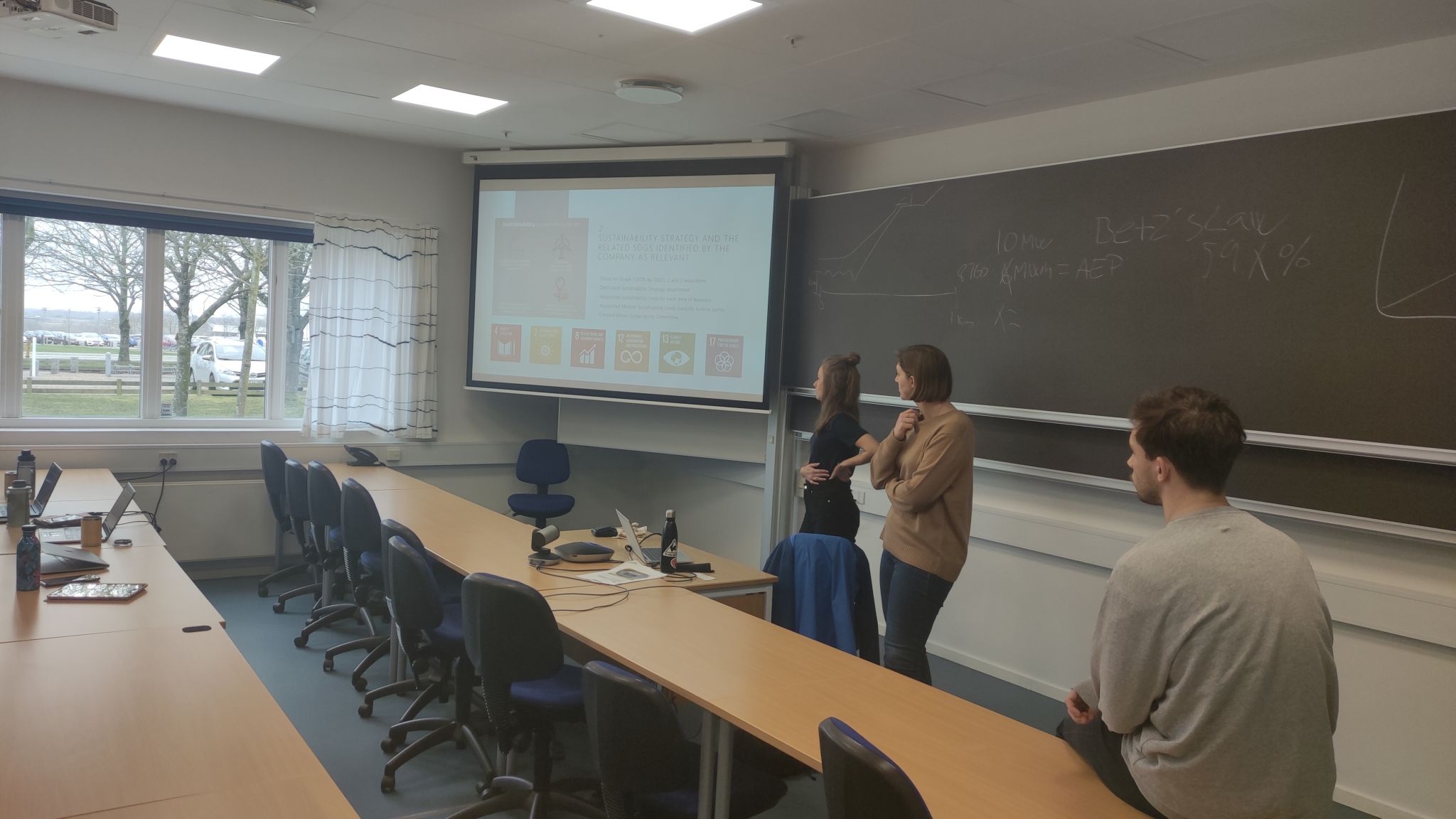
Photo taken by myself, during the “The Impact of Sustainability on Today’s Management” class, Aarhus University

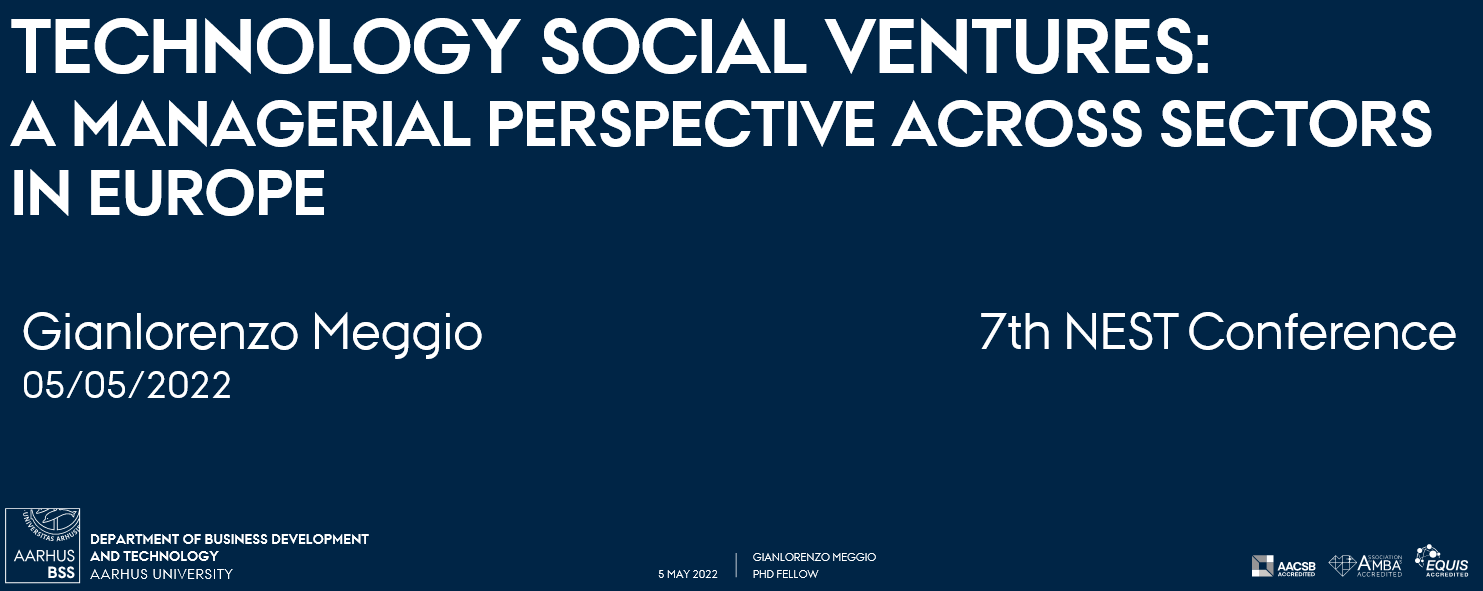
Then, I also virtually participated in my first conference, at NEST. Even though I could not join it in person, it was a nice opportunity to receive feedbacks from other early stage scholars, to get to know their research and see how the topics that I am going to write about are addressed in a rather different yet connected field, i.e. Sustainability Transition.

Cover of the PPT presented at the 7th NEST Conference

What will I do?

In this period, I have also received the first responses related to the works I submitted in the previous months. They have all gone well, which means that I will be able to travel a lot in the next few weeks! In June, I will be first in Copenaghen and then in Zurich, respectively to attend ISPIM and EURAM. In these two conferences, I will present my research-in-progress on Innovation Ecosystems and Technology Social Ventures, two of the topics that I want to deepen during my PhD and that I will talk about more in the next blogs. Then, after a couple of weeks I will be flying to Barcelona for the first EINST4INE Summer School – if you are interested, morning sessions will be open (online) to external participants. In that occasion, together with other 3 ESRs, I will run our first Industry engagement activity, i.e., a contest in which the ESRs will have to find a solution for the challenges proposed by the companies part of the consortium. A great chance to put in practice our knowledge and understand the main interests of the industry partners.

Finally, after the Summer Break, I will take part to the 82nd Annual Meeting of the Academy of Management, in Seattle. This year’s theme is “Creating a Better World Together” and I will be involved in the organization of the Paper Development Workshop on “Researching Open Innovation”. Being the most important conference in the field, I cannot hide that I am really excited. It will be a great learning opportunity to personally meet the most talented scholars from all over the world and to better understand how the academic world works overseas. Moreover, it will be the first live event after the pandemic, so I guess that everyone will be very excited.

All this travelling will mean that my writing will be temporarily put on hold, but I hope that these weeks will represent a great source of inspiration for the work that I will do in the upcoming months. Therefore, the main goal will be to get to know new people that work on similar topics and put some gas in the tank in terms of ideas and useful academic references. Looking forward, this could also be a great opportunity to build relationships that could potentially evolve into future collaborations.


Surfin’ Internet

Since the main goal of a PhD is to research, ask new questions (and sometimes give answers), this column aims to collect material that I have found useful or that has piqued my curiosity in recent times.

  • Video:
    • The quality of the material shared by the New Scholars Network is absolutely stunning. You can attend webinars hosting the most renowned scholars, interact with them, and even watch most of the recordings whenever you want on their YouTube channel. In addition, it is also a great way to stay up-to-date on the latest articles published in the field of management.


  • Academic article
    • In his latest article, J. Kirchherr, researcher at Utrecht University and Associate Partner at McKinsey & Company, writes about the “​Bullshit in the Sustainability and Transitions Literature: a Provocation​”.
      Beside the rant being addressed at one specific topic, it is a good reminder for all researchers writing on a trending topic, regardless of their academic field. That said, there is no doubt that sustainability has become a buzzword and we should all be careful how we use it, unless our goal is to devalue it.
  •  Tweet
    • In this thread, G. Krlev describes his (almost) endless journey in search of a tenure track position.
      It sounds a bit scary, but I think it offers a nice overview over the idiosyncrasies of the academic world and some food for thought about the lessons learnt during this process.

I would be curious to know your perspective, so, feel free to comment the post.

That’s all for today, see you soon!