
AI sustainability_chayanuphol_Shutterstock

When in Paris… talk about AI

Exploring AI Beyond the Hype: Reflections from the second edition of our workshop

I recently had the honor of co-organizing (together with my fellow colleague Domenico Di Prisco) and participating in the second edition of the workshop titled “Emerging Technology and AI: Beyond the Hype.” This initiative, launched by Prof. Lauren Waardenburg and my supervisor, Cristina Alaimo, aims to foster a deeper understanding of AI, cut through the surrounding hype, and explore its broader implications for management, society, and institutions.

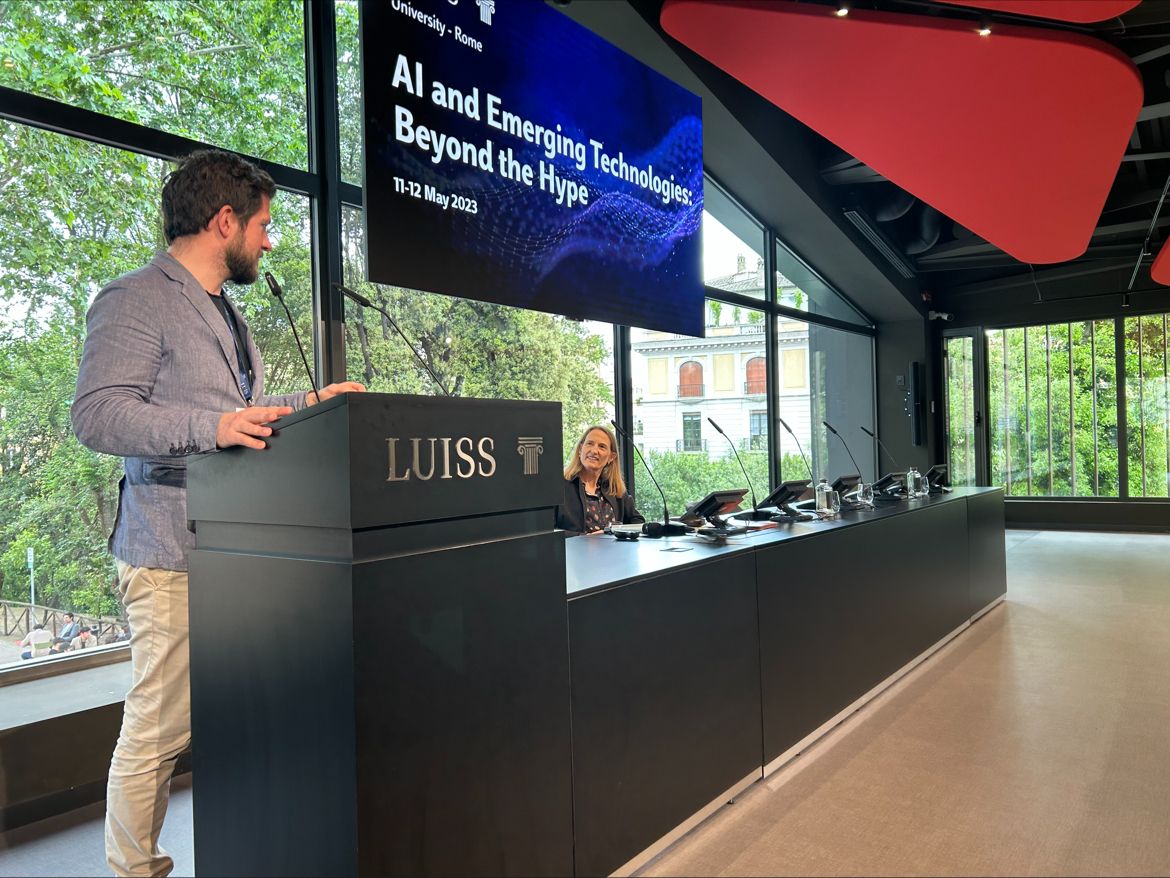
First workshop “Emerging Technology and AI: Beyond the Hype” at LUISS in 2023:
Source: Author

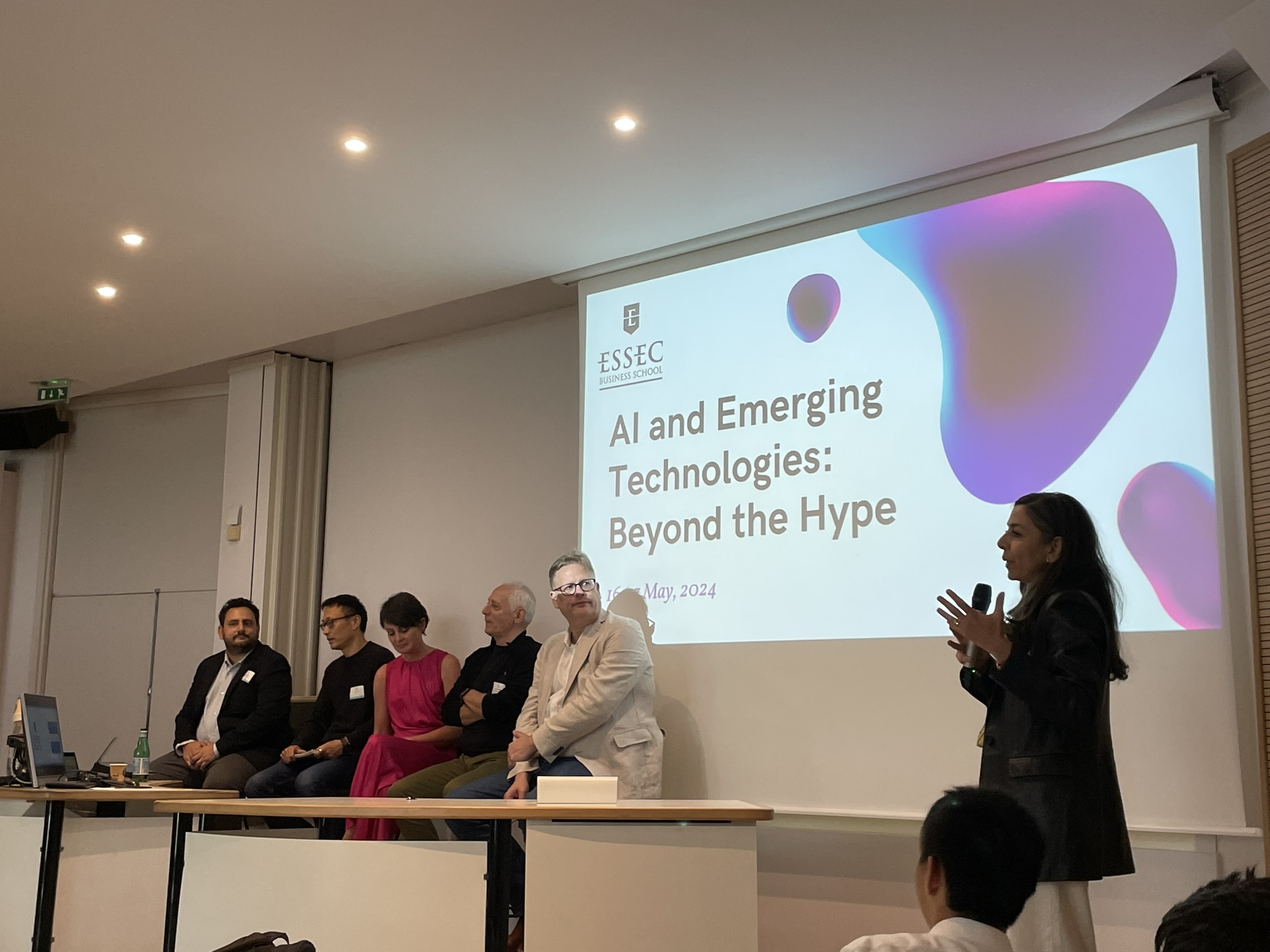
After the inaugural workshop at the LUISS campus in 2023, this second edition was held at the ESSEC campus in Paris. The event brought together experts from various disciplines, including information studies, organization and management theory, marketing, and even sociologists. They were all focused on studying the intricate impacts of AI on organizations and society and how these entities, in turn, shape AI.

2nd workshop edition in ESSEC Paris in May 2024:
Source: Author

Over the course of two days, the workshop featured a series of insightful keynote speeches. The introductory keynote was delivered by Professor Jan Recker, who set the tone with his thought-provoking topic “Responsible AI = Sustainable AI?” He challenged the assumption that responsible AI is inherently sustainable, suggesting that we need to approach these concepts differently to ensure both responsibility and sustainability in AI development.

Following this, Prof. Elena Esposito delivered a compelling keynote on the transformative power of AI in making predictions actionable. She illustrated how, unlike traditional predictions like weather forecasts that merely prepare us for the future, AI enables proactive interventions to alter the predicted outcomes. This represents a significant shift in the role of predictions, akin to changing the weather itself rather than just dressing appropriately for it.

The second day of the workshop continued with equally engaging keynotes. Prof. Harris Kyriakou discussed the “Implications of AI for Research & Practice,” offering valuable insights into how AI is reshaping both academic research and practical applications. Prof. Melissa Valentine from Stanford University captivated the audience (making us solve math equations!) with her ethnographic study of an online clothing retailer. She demonstrated how introducing an algorithm transformed the organizational structure, with data science approaches to buying and planning redefining existing departmental boundaries.

These keynote speeches, followed by dynamic roundtables and project presentations, provided me with a lot of answers about AI, but it also left me with some new questions (which, I think, is a good thing?):

  • We still don’t truly know what falls under the category of AI. While many consider it an emerging technology, some argue that parts of it have reached the level of a general-purpose technology. As various fields navigate the creation and adoption of digital and advanced technologies, it’s uncertain whether we will have a clear answer to this question even next year.
  • This uncertainty leads to broader questions about our common understanding. Do we mean the same things when we talk about AI, sustainability, responsibility, accountability, and the role of data in addressing problems and finding solutions? How does this ambiguity impact our research? Are we experiencing an epistemological crisis due to the lack of clear definitions and shared understanding?
  • This also raised important questions about AI and sustainability. While AI is often touted as a contributor to sustainable solutions and development, it’s essential to consider the substantial resources these processes consume. Although AI can indeed foster sustainable outcomes, the experimentation process itself, even when shifted from physical to digital realms, still consumes a significant amount of resources. How, then, do we address this issue effectively?
  • As AI continues to become smarter and more autonomous, questions about accountability arise. Who is responsible for the good and bad decisions we outsource to AI? What decisions can we ethically and effectively delegate to non-human entities, and which should remain under human control? This issue is particularly pertinent in the use of AI for human resources, such as in the hiring process.

This workshop was and will continue to be an incredible opportunity to delve into these questions, fostering a deeper understanding of AI’s role and potential in society.

Looking forward to next year!

Source: Rahul/Adobe Stock

A practical look at Large Language Models

Good day, developers and aspiring coders! The potential of Large Language Models (LLMs) has sparked excitement in the AI community. These AI superstars are transforming how we interact with computers, and comprehending them is an essential skill for any developer or student interested in the future of technology. So buckle up and prepare to dive into the exciting world of LLMs!

Consider a neural network on a data binge, consuming mountains of text and code. That’s basically what an LLM is. These models are trained on large datasets, allowing them to understand the complexities of language, including grammar, syntax, etc. What’s the secret weapon behind this learning process? Transformers are a specific type of neural network architecture that excels at analysing sequential data such as text. By analysing these massive amounts of data, LLMs become experts in predicting the next word in a sequence, translating languages, creating unique material, and even answering your questions in an informative manner.

LLMs are a developer’s toolkit, full of potential applications. Here are a few ways to use their power:

Code completion and bug detection: Are you stuck on a particular line of code? LLMs can analyse your existing code and provide improvements or even uncover possible flaws. Consider your friendly neighbourhood debugging assistant, all powered by AI!

NLP projects: Create chatbots, virtual assistants, or sentiment analysis tools. LLMs can be an invaluable resource. They can assist you in training your models on large amounts of text data, enhancing their capacity to interpret and respond to real language.

Creative Text Generation: Looking for a clever tagline or some code documentation inspiration? LLMs can generate a variety of imaginative text formats, serving as a catalyst for your own creative spark.

Machine Translation Integration: Developing a Global App? LLMs can assist you with implementing seamless machine translation services, allowing your users to communicate with your application in their native language.

These are just a few ways developers can use LLMs. As the field advances, we should expect even more fascinating applications to emerge.

Getting Started with LLMs: A Developers Playground
Are you ready to try with LLMs? Here’s a simple roadmap to help you get started:

  1. Choose Your Platform: Several cloud platforms provide access to pre-trained LLM models via API. Popular choices include Google AI Platform, OpenAI API, and Amazon Comprehend.
  2. Explore Tutorials and Documentation: Most platforms provide extensive documentation and tutorials to assist you get started with their LLM services. These tools will walk you through the process of configuring your environment, submitting requests to the LLM, and analysing the outcomes.
  3. Begin with Simple Tasks: Don’t plunge right into creating a sophisticated chatbot! Start by experimenting with simple tasks such as text generation and sentiment analysis. Before moving on to more complicated projects, be sure you have a strong understanding of how LLMs work.
  4. Explore Existing Libraries: The open-source community is constantly creating libraries and frameworks for working with LLMs. Consider using libraries like TensorFlow or PyTorch to simplify your development process.

Remember that the field of LLMs continually evolving. Continue to be interested, investigate other platforms and libraries, and stay up to date on the latest developments. There’s a whole world of possibilities waiting to be discovered!

This is only the first step in your LLM journey. As these models evolve, they have the potential to become a valuable tool in your development toolkit. So, continue to study, experiment, and help shape the future of AI with LLMs!

Ensuring Safe Human-Robot Collaboration: The Role of Vision and Proximity Sensors

Robots working alongside humans is becoming more and more probable as robotics technology develops. But when people and robots collaborate, safety is still a major issue. Vision and proximity devices can be used in this situation to guarantee secure human-robot interaction. Robots can detect people, objects, and obstacles in their environment due to vision sensors. They track and identify motion and shapes using cameras and other tools. Robots are able to identify and steer clear of humans and other objects with the help of this ability.

  • As the use of robots spreads across a variety of sectors, safety concerns regarding human-robot collaboration have taken on greater significance.
  • Robots can sense their surroundings and identify objects, people, and obstacles with the help of vision sensors.
  • Proximity sensors can help avoid collisions by detecting the existence of an object or person and their proximity to the robot.
  • By utilizing both kinds of sensors, robots can more accurately perceive their surroundings and decide how to interact with people.
  • Human-robot collaboration is becoming more prevalent in the industrial and healthcare sectors, but safety is still of utmost importance in these environments.
  • While sensors can significantly increase safety, human supervision and training are still necessary to guarantee secure and productive human-robot interaction.

On the contrary, proximity sensors can both sense the presence of an object or person and their proximity to the robot. They employ a variety of technologies, including ultrasonic, capacitive, and infrared sensors, to identify changes in the environment and warn the robot to stop or slow down when a person is close. Robots can more accurately sense their surroundings and decide how to interact with people by combining these two kinds of devices. A robot in a manufacturing environment, for instance, could use vision sensors to recognize nearby people and proximity sensors to determine their closeness. The robot may slow down or halt if the person approaches too closely in order to prevent a collision.

Healthcare is a further application where vision and proximity sensors can be used for secure human-robot collaboration. When working with vulnerable patients, safety is of the highest importance. Robots can help medical workers with tasks like lifting and transporting patients. While proximity sensors can warn the robot to halt if the patient approaches too closely, vision sensors can track the patient’s position and movements. Additionally, sensors can be used by robots to track their own motion and recognize when something is wrong. For instance, a robot with a broken arm may be able to sense when it is moving too quickly or in the incorrect direction and stop before it does any damage. While sensors can significantly increase safety in human-robot collaboration, it is essential to remember that they are not infallible. For the collaboration between humans and robots to be secure and productive, human supervision and instruction are still necessary.

Finally, the integration of vision and proximity sensors can significantly improve the security of human-robot interaction in a variety of contexts, from manufacturing to healthcare. The distance between a person and a robot can also be determined using a depth camera, but it is more difficult to attach multiple cameras to the robot’s skin than it is to attach numerous proximity sensors to various regions of the skin in order to calculate the precise distance from various angles and prevent collisions. The project we’re working on also makes use of a camera and a proximity sensor for secure human-robot collaboration.