Old wine, new bottles
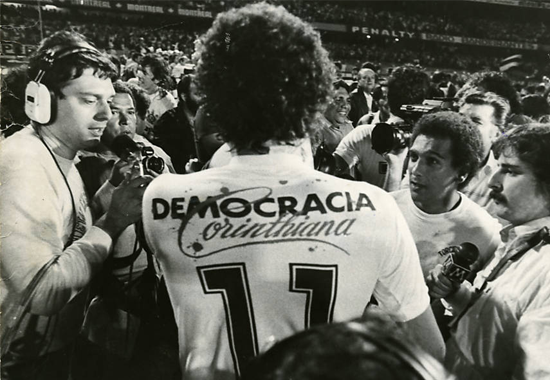
In the early 1980s, in a Brazil plagued by dictatorship and economic stagnation, a soccer player succeeded in transforming the structure of one of the most famous Brazilian football teams, named Corinthians, into the only shared governance laboratory in the football world.
A revolution that has gone down in history as Democracia Corinthiana.
Tired of the way the players were treated and some of the decisions made by the previous president, Socrates, in agreement with the rest of the team, convinced the club’s new management that any decisions would have to be discussed at an assembly and then put to a vote by all employees. From the transfer window to the redistribution of the economic income, everything had to be decided in a democratic manner (1).
The experiment had its ups and downs, including a brief period of rather confusing total self-management that led to much criticism from the club’s advisors. At that moment, the team realized that the only way to continue the experiment was to win. And so it did.
Between 1982 and 1983 Corinthians returned to win the championship for two consecutive years, as it had not happened since the 1950s (2).
Inspired by the reading of a recent book called “Think Blockchain“, written by I will explain in the next sections why this ideal of shifting profit and control from the managers to the content creators stands at the foundation of the Web3 development and how things are going so far.
Context
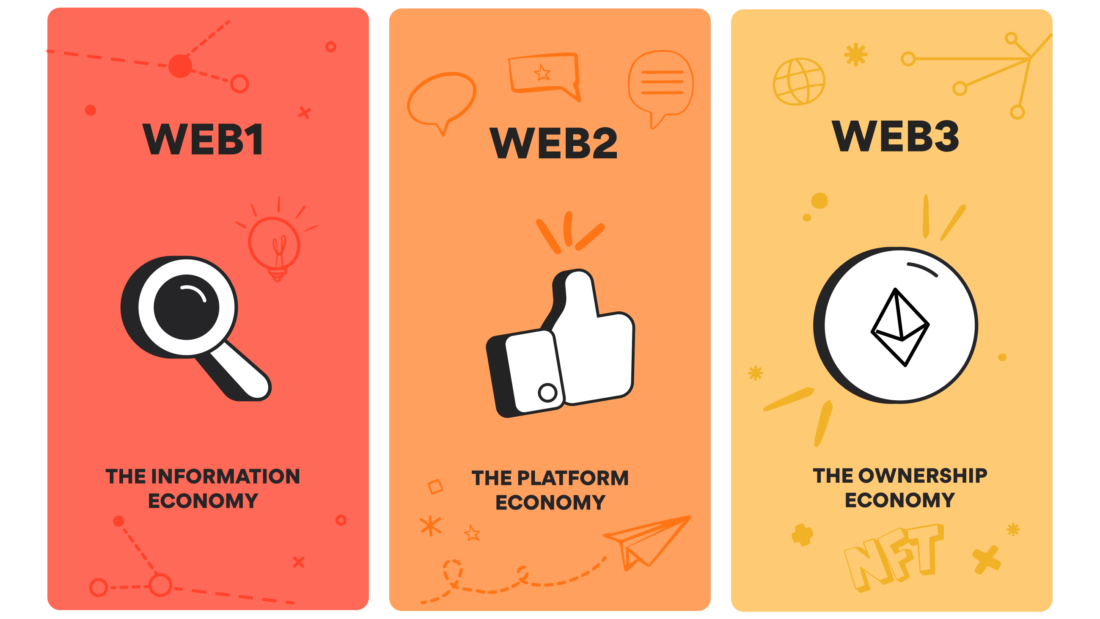
The current phase of the internet is defined by accessing and creating content. Web2 is dominated by centralized companies, e.g., Big Tech such as MAMAA, which provide services in exchange for accessing and monetizing users’ personal data. On the contrary, the next phase aims at leaving the ownership of data and information to the content producers, i.e., us, without transferring the potential value created.
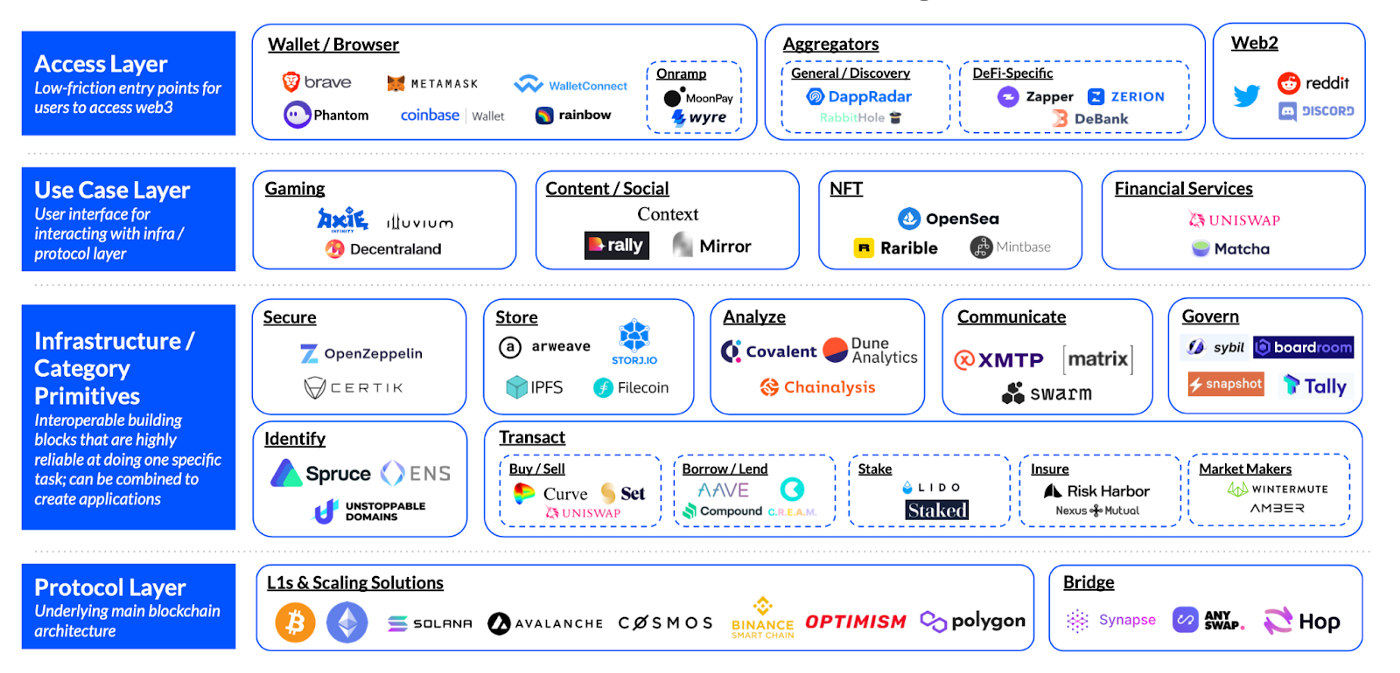
However, the Web3, term originally coined by Ethereum co-founder Gavin Wood in 2014, offers much more than this. The rise of products related to the token-economy, e.g., NFTs, is an example, but Figure 2 offers a more comprehensive overview of the different use cases and of the companies involved at each layer.
Architecture
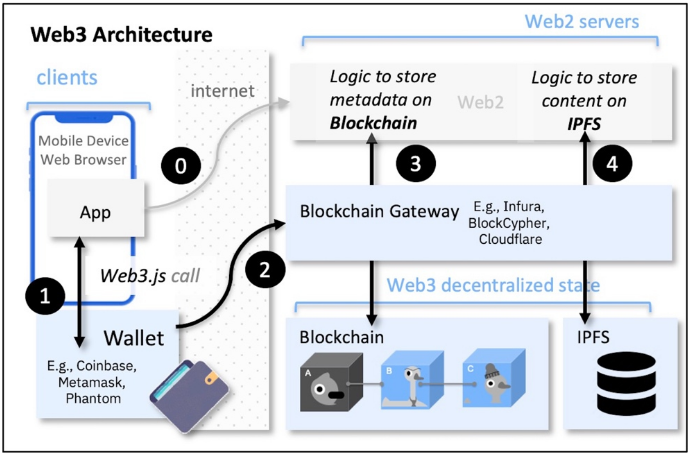
Contrary to its previous version, Web3 will be built using Decentralized Peer-to-Peer networks, Artificial Intelligence, Crypto-wallets, and distributed ownership of Protocols rather than corporate servers. Nevertheless, Web3 represents an extension more than a replacement of Web2, as it will enable to “off-board” key personal and application data from centralized organizations to decentralized wallets, blockchain and storage networks, under the control of the user (3).
Characteristics
After having spoken about the architecture, we should now move to the main features characterizing Web3: (3) (4)
- Distributed and Decentralized Governance:
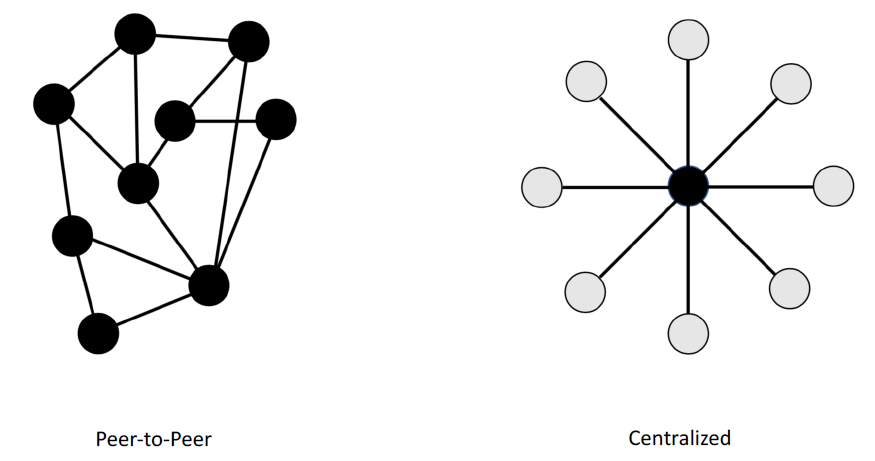
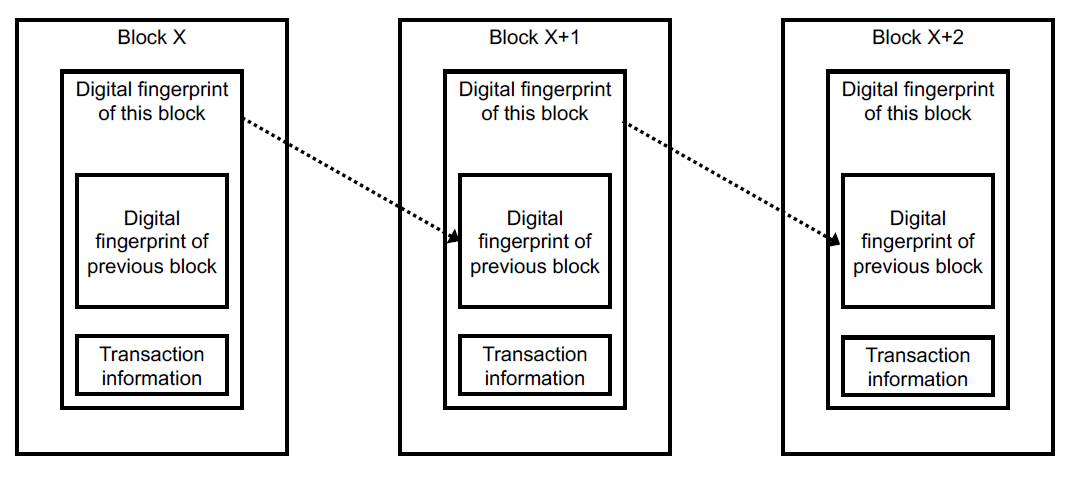
- Respectively, the record of all transactions is stored and shared across all the actors of the network and no single actor controls the operation of the blockchain.
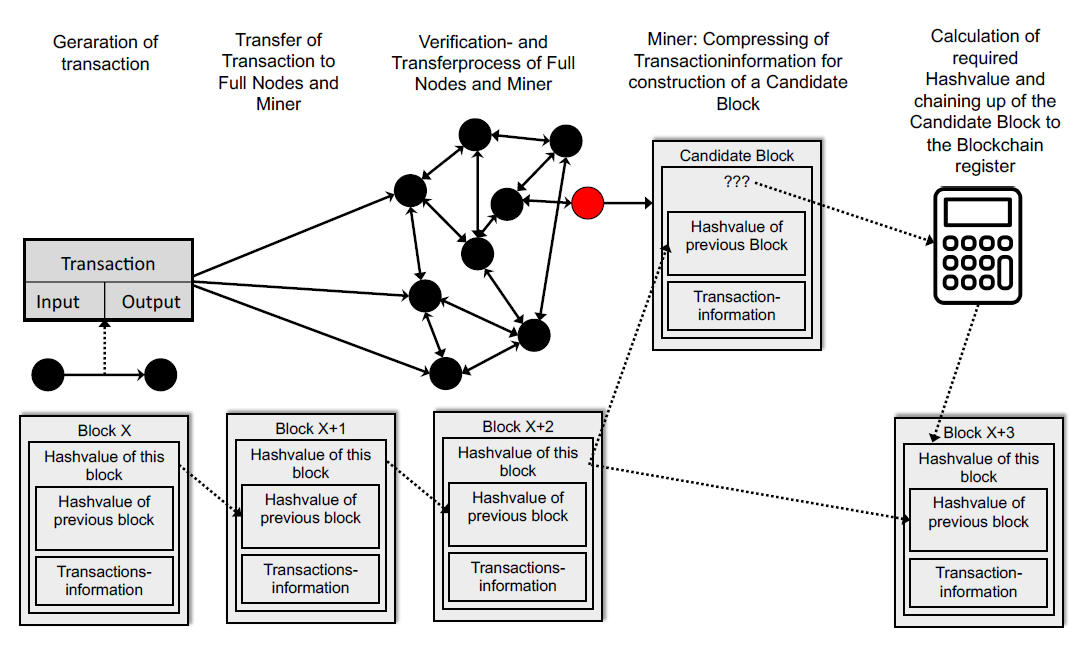
For more details of this process, check Philipp‘s blog on the topic.
- Respectively, the record of all transactions is stored and shared across all the actors of the network and no single actor controls the operation of the blockchain.
- Universal Identity:
- An anonymous single-sign-on will allow to use just one username and authentication method across all websites, rather than individual logins, without the need to share personal information. In fact, thanks to Web3 wallets backed by blockchain, the user always retains control of the personal data and login credential.
- An example of a Crypto-wallet is CoinBase, already valued more than $11 billion in terms of market cap.
- An anonymous single-sign-on will allow to use just one username and authentication method across all websites, rather than individual logins, without the need to share personal information. In fact, thanks to Web3 wallets backed by blockchain, the user always retains control of the personal data and login credential.
- Token-based:
- Activities that contribute to Web3 will be rewarded by a token (either NFT or fungible) to incentivize participation and distribute ownership. This token can be “minted” (generated) and stored into a crypto-wallet.
- An example is Pixie, the world’s first fully functional decentralized photo and video sharing social network based on blockchain crypto economics. Pixie, like a crypto version of TikTok or Instagram, encouraging users to create quality content and interact constructively with fellow users, thus all the content can circulate inside Pixie effectively (5).
- Activities that contribute to Web3 will be rewarded by a token (either NFT or fungible) to incentivize participation and distribute ownership. This token can be “minted” (generated) and stored into a crypto-wallet.
- Self-governing:
- Blockchains will rely on the entire network to verify an activity via consensus. However, specific governance mechanisms can be established to democratize decisions, based on the quality or volume of a user’s investment into a site or DApp. Thus, when the rules are set, new forms of organization can arise, thanks to the execution of smart contracts.
- An example is BitDAO, a Decentralized Autonomous Organization (DAO) with one of the largest and most diverse token-governed treasuries in the world and more than $2.5 billion invested (3).
- Blockchains will rely on the entire network to verify an activity via consensus. However, specific governance mechanisms can be established to democratize decisions, based on the quality or volume of a user’s investment into a site or DApp. Thus, when the rules are set, new forms of organization can arise, thanks to the execution of smart contracts.
- Immersive and augmented experience
- As described by Nicola in a previous blog post, the combination of decentralized solutions and immersive technologies coming to maturity may give birth to decentralized Metaverses, providing an open exchange of digital assets.
To give you a sense of what this buzzword means, here there is a list of examples coming from the manufacturing industry and the entertainment sector.- BMW’s future factory developed on Omniverse platform;
- Volkswagen’s experience with Web3;
- Renault unveiled a partnership geared towards offering virtual automobile experiences by leveraging blockchain technology and Web3-based solution;
- For entertainment there are a lot of examples like, Sandbox and Decentraland.
- As described by Nicola in a previous blog post, the combination of decentralized solutions and immersive technologies coming to maturity may give birth to decentralized Metaverses, providing an open exchange of digital assets.
A longer list spanning across different industries has been prepared by Rejolut and can be found here.
Critics
As for every innovation, limits and possible negative externalities have to be considered. In this case, the criticism concerns its feasibility, due to hurdles around scalability, control, and adoption that must be overcome (4). You can find some interesting commentaries below:
- about the real decentralization potential of the Web3 structure The irrational exuberance of web3 | TechCrunch;
- and about the (economic) interests behind the development of Web3 and the current market concentration Elon Musk and Jack Dorsey are right to raise concerns about Web3 (thenextweb.com)
Moreover, a policy brief published last March by the Bennett Institute for Public Policy in Cambridge warned against several risks related to the immutability of the blockchain (Online safety), the diffusion of cryptocurrencies as an incentive to ransomware attacks and a possible threat for unprepared consumers.
The report concludes that even though some market intermediaries are extractive rentiers, many others play value-adding governance roles that cannot be replicated with smart contract code. Thus, trusted central authorities will still keep a key role, making blockchain a redundant solution.
Conclusion
Being a new phenomenon, there are still more questions than answers about the future of Web3. However, I hope that this blog has helped to clarify some aspects related to its architecture, its relationship with blockchain, and has sparked interest in critically analysing its pros and cons.
Now, let’s move to the third episode of my column!
Surfin’ Internet
- Video:
- How about combining Web3 and the World Cup?
FIFA has experimented some new solutions in Qatar
- How about combining Web3 and the World Cup?
- Academic article
- Wondering about scientific articles on Web3?
One recent article by Murray et al. (2022) explores the promise of a decentralized internet, describing how companies can prepare for a Web3 world.
However, since there are not yet many out, you can find below a set of open Call for Papers, if you want to write a piece on this topic (or read them in the future):
- Wondering about scientific articles on Web3?
- Twitter
- We have just started speaking about Web3 and well.. Jack Dorsey (co-founder and former CEO of Twitter) has already announced the launch of Web5.
Yesterday, Jack Dorsey announced Web5: “an extra decentralised web platform”.
I went through the 18-page deck.
Here’s a summary of the protocol, and how it claims to be different to Web3.
[THREAD]— ntkris (@ntkris) June 11, 2022
Feel free to comment and share your thoughts on this topic, see you soon!
References
(1) https://www.ultimouomo.com/buon-compleanno-dottor-socrates/
(2) https://www.ilpost.it/2021/12/16/socrates-democrazia-corinthiana/
(3) Jerry Cuomo, Mark Parzygnat, Shaun Lynch, Irving Wladawsky-Berger. (2022). “Think Blockchain: A Student’s Guide to Blockchain’s Evolution from Bitcoin, Ethereum, Hyperledger to Web3.”
(4) https://eco.brainsy.com/kb/article/web3-defined
(5) Pixie: The blockchain social platform taking the internet by storm (cointelegraph.com)
Alex Murray, Dennie Kim, Jordan Combs. (2022). The promise of a decentralized internet: What is Web3 and how can firms prepare?. Business Horizons.