Our recent research has been published in a journal!

I’m delighted to share our study, “Contamination Detection Using a Deep Convolutional Neural Network with Safe Machine Environment Interaction,” has been accepted for publication in MDPI Electronics Journal. This journey has been an effort of dedication, and I can’t wait to share our groundbreaking findings with you.

Understanding the Problem
Contamination detection is an important issue in many industries, including food processing, healthcare, and others. A primary focus is ensuring product quality and safety, and this is where our research comes in. Manual examination gets laborious and may result in contamination occurring along the production line. To solve this issue, a contamination detection system based on an enhanced deep convolutional neural network (CNN) in a human-robot collaboration framework is proposed.

Deep Learning: The Key to Precision
In our research, we enhanced Deep Convolutional Neural Networks (CNNs) to detect contaminants in food packages. CNNs are well-known for their ability to extract intricate patterns from complex data, making them perfect for tasks like object detection and analysis.

Safe Machine Environment Interaction
To improve our system’s performance, we coded the proximity sensor for “Safe Machine Environment Interaction.” A mechatronic platform with a camera for contamination detection and a time-of-flight sensor for safe machine-environment interaction was used for the experiment. The experiment findings show that the reported system can identify contamination with 99.74% mean average precision (mAP). Figure 1 depicts the experimental results, and the publication can be found here [1].
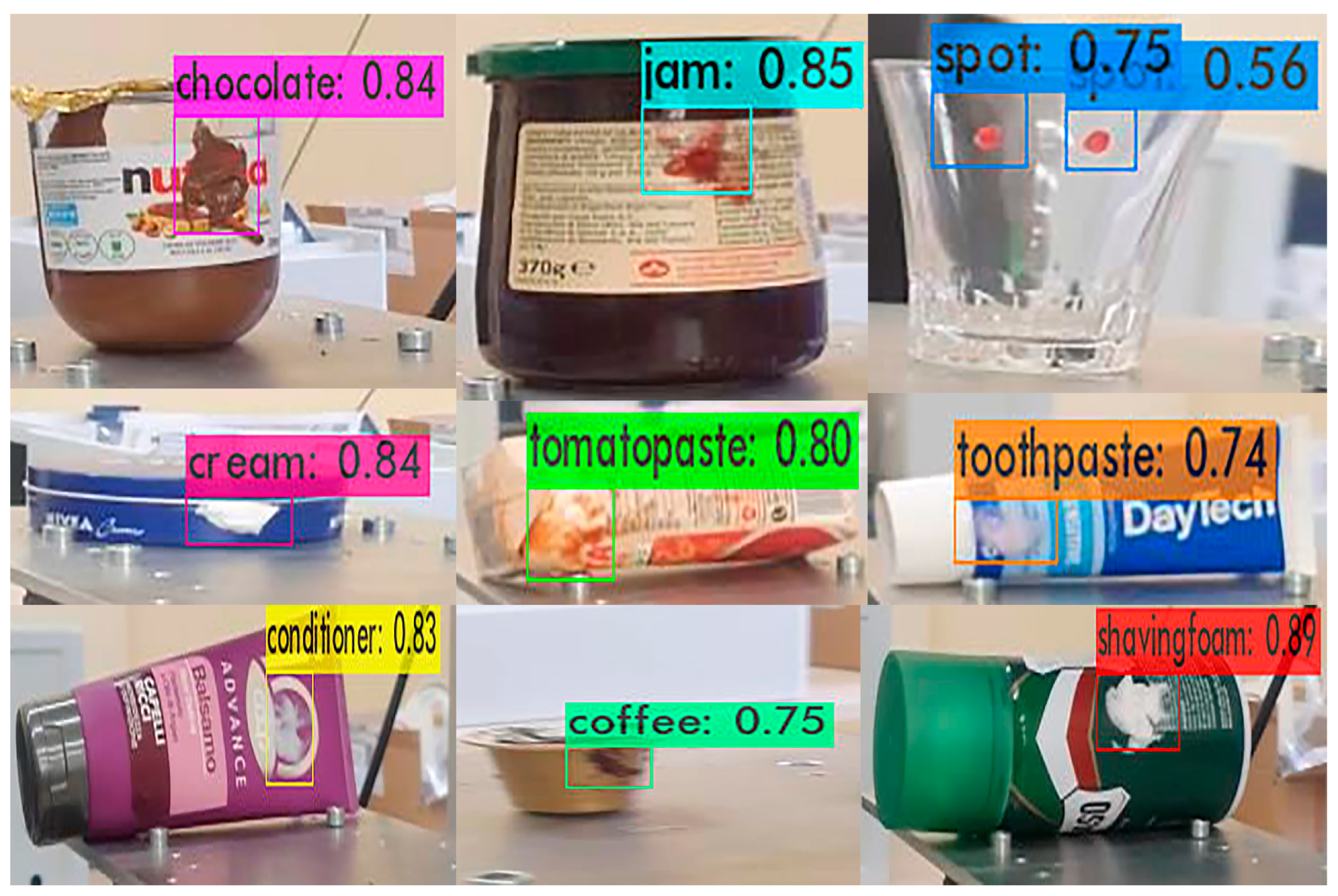
Figure 1. Experimental trials of real-time detection using the reported CNN [1].
Future Directions
Future work may concentrate on adding more contamination classes in order to create a more thorough and improved contamination detection system. The algorithm might also be applied in a real robot with a conveyor belt to create an industrial quality inspection setup. However, the journey does not finish here. We’re devoted to improving our methodology and investigating new applications. We’re thrilled to be at the forefront of the deep learning revolution.

Acknowledgments
I want to express my heartfelt gratitude to my Supervisor, colleagues, and the entire research team who played a pivotal role in this project. Their expertise, dedication, and collaboration made this achievement possible.

Paper Reference
[1] Hassan, Syed Ali, Muhammad Adnan Khalil, Fabrizia Auletta, Mariangela Filosa, Domenico Camboni, Arianna Menciassi, and Calogero Maria Oddo. “Contamination Detection Using a Deep Convolutional Neural Network with Safe Machine—Environment Interaction.” Electronics 12, no. 20 (2023): 4260.
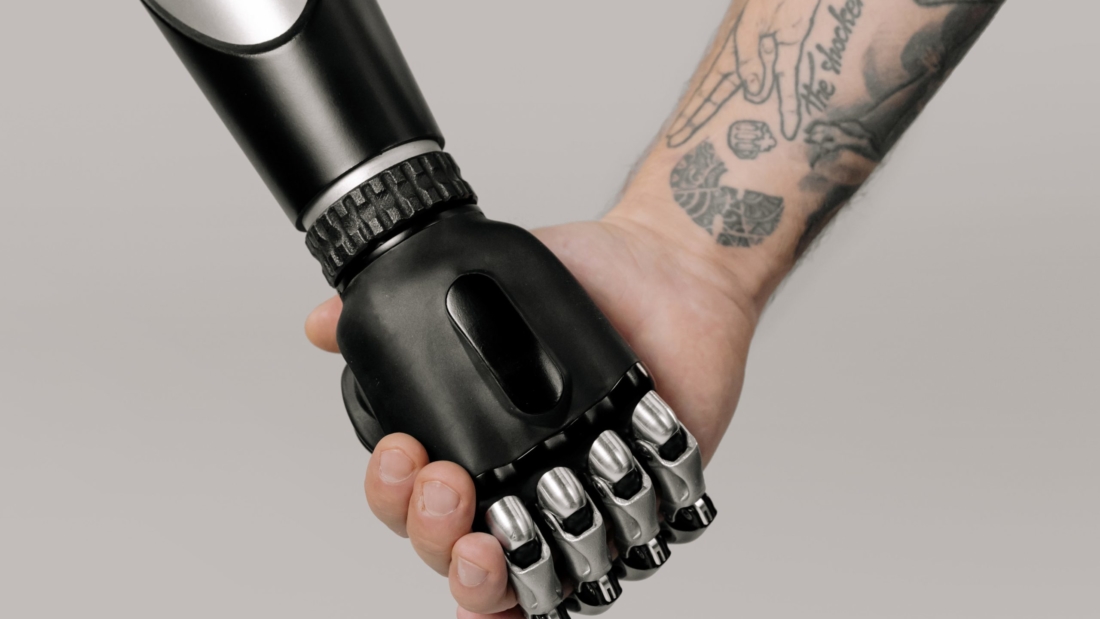
Ensuring Safe Human-Robot Collaboration: The Role of Vision and Proximity Sensors

Robots working alongside humans is becoming more and more probable as robotics technology develops. But when people and robots collaborate, safety is still a major issue. Vision and proximity devices can be used in this situation to guarantee secure human-robot interaction. Robots can detect people, objects, and obstacles in their environment due to vision sensors. They track and identify motion and shapes using cameras and other tools. Robots are able to identify and steer clear of humans and other objects with the help of this ability.

  • As the use of robots spreads across a variety of sectors, safety concerns regarding human-robot collaboration have taken on greater significance.
  • Robots can sense their surroundings and identify objects, people, and obstacles with the help of vision sensors.
  • Proximity sensors can help avoid collisions by detecting the existence of an object or person and their proximity to the robot.
  • By utilizing both kinds of sensors, robots can more accurately perceive their surroundings and decide how to interact with people.
  • Human-robot collaboration is becoming more prevalent in the industrial and healthcare sectors, but safety is still of utmost importance in these environments.
  • While sensors can significantly increase safety, human supervision and training are still necessary to guarantee secure and productive human-robot interaction.

On the contrary, proximity sensors can both sense the presence of an object or person and their proximity to the robot. They employ a variety of technologies, including ultrasonic, capacitive, and infrared sensors, to identify changes in the environment and warn the robot to stop or slow down when a person is close. Robots can more accurately sense their surroundings and decide how to interact with people by combining these two kinds of devices. A robot in a manufacturing environment, for instance, could use vision sensors to recognize nearby people and proximity sensors to determine their closeness. The robot may slow down or halt if the person approaches too closely in order to prevent a collision.

Healthcare is a further application where vision and proximity sensors can be used for secure human-robot collaboration. When working with vulnerable patients, safety is of the highest importance. Robots can help medical workers with tasks like lifting and transporting patients. While proximity sensors can warn the robot to halt if the patient approaches too closely, vision sensors can track the patient’s position and movements. Additionally, sensors can be used by robots to track their own motion and recognize when something is wrong. For instance, a robot with a broken arm may be able to sense when it is moving too quickly or in the incorrect direction and stop before it does any damage. While sensors can significantly increase safety in human-robot collaboration, it is essential to remember that they are not infallible. For the collaboration between humans and robots to be secure and productive, human supervision and instruction are still necessary.

Finally, the integration of vision and proximity sensors can significantly improve the security of human-robot interaction in a variety of contexts, from manufacturing to healthcare. The distance between a person and a robot can also be determined using a depth camera, but it is more difficult to attach multiple cameras to the robot’s skin than it is to attach numerous proximity sensors to various regions of the skin in order to calculate the precise distance from various angles and prevent collisions. The project we’re working on also makes use of a camera and a proximity sensor for secure human-robot collaboration.


Photo by cottonbro from Pexels

What is life without an intention?

I believe in the power of setting an intention and seeing where it takes you. Being more abstract than a goal, an intention can guide you and allow the flexibility of taking different paths. In the last semester of my master’s degree in Tourism Management, I set my intention of contributing to the human side of digital transformation. Humans and technology co-create the present and the future. I firmly believe that digital transformation is not just about technology, it is about how it strategically works together with (and for) humans. 

Why?

Why would I set that intention when studying tourism? In the first semester of the Erasmus Mundus European Master in Tourism Management, I led a project on Big Data as an open innovation source to accelerate innovation in the tourism ecosystem. This research project opened my eyes to the amazing world of emerging technologies, open innovation, and sustainable development. Then, I wrote my master’s thesis about Intelligent automation and robotics in the service sector and the job transformation it brings. My goal was to understand how can tech start-ups develop Intelligent automation solutions that contribute to sustainable development’s socio-economic sphere. I got so many interesting insights from this research! By interviewing start-ups members and policymakers, I could have the perspectives of two actors that seem crucial for the ethical development of technology.  I wanted to continue this research journey, and when I found the EINST4INE project I thought it was the perfect opportunity.  

How?

How can I be part of the human side of digital transformation? By investigating robots from a social approach and bringing new perspectives of human-robot interaction. I believe in research that can make a difference in how technology is used and how it affects humans. This is why I want to fill some knowledge gaps and contribute to the strategic introduction and implementation of social robots. In the end, social robots should enhance humans’ interactions, not diminish them.

What is knowledge for if not for sharing it and putting it into practice? I think it is very important to disseminate all the findings, theories, and whatever we think might help someone. We have to share it, mostly with young generations because that is where the hope is placed right now (at least mine). So, at some point, I might also be teaching about the human side of digital transformation hoping to have an impact on future decision-makers.

What?

What kind of robots am I going to investigate? Social robots, for example, Mobile telepresence robots (MTRs) allow people to communicate remotely and have a physical presence. These robots are changing organizational dynamics, work practices and processes, occupations, and challenging the psycho-social factors in organizations. In the following years, I will be studying robots from a social approach and aiming to ultimately help people to use social robots in a way that benefits humans. 

Where?

My host is Aarhus University, in the Department of Business Development and Technology located in Herning, Denmark, a very cozy little town. I am part of the Advanced Interdisciplinary Research on Organisational Development (AIROD) and supervised by Sladjana Nørskov. I am very grateful to be part of the Aarhus University team and to have Sladjana guiding me through this path. Also, I am collaborating with our industry partner Blue Ocean Robotics which offers professional service robots mainly in healthcare and hospitality. Exciting research stays abroad are coming, but that would be the topic for another blog post.

I am very happy to have set that intention that brought me to where I am now. Let’s see what the future brings!

Photo by Possessed Photography on Unsplash