Extended Reality

XR – Extended Reality

Immersive experiences are constructed by merging the physical and virtual worlds. Among the technologies that are gaining more popularity are Virtual Reality (VR), Augmented Reality (AR), and Mixed Reality (MR). Recently interest in Extended Reality (XR) has grown rapidly.

Current developments in technology have led to the extension of the terminology used to describe the merging of the physical or real world with a virtual world. All mentioned terms refer to a combination of virtual and physical worlds using various digital media to create new, blended spaces. In recent years, we have heard and read a lot about Virtual Reality and Augmented Reality.

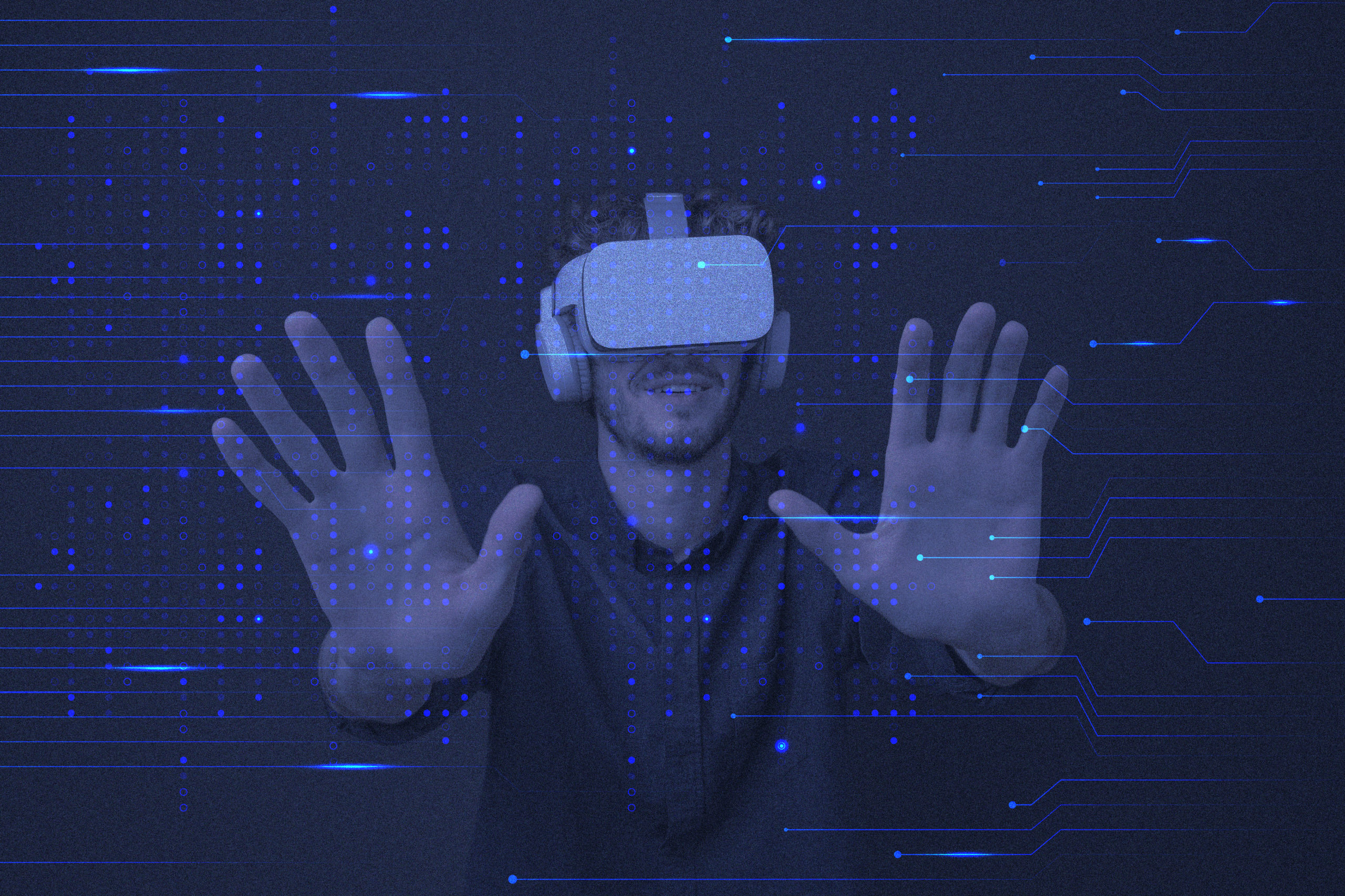
Virtual Reality (VR) is like a new reality that is created. It is a simulation of an environment or a three-dimensional image. People can interact with that virtual environment by using equipment such as headsets, helmets, glasses, or gloves. Increasingly such equipment comes with more sophisticated sensors, enabling more refined experiences. A headset allows the user to be immersed in the VR experience; the user can see a virtual world delivered by computer-simulated images and sounds.

Augmented Reality (AR) is often described as the merging of our normal reality with computer-generated digital graphics. Unlike virtual reality, users do not experience being in a virtual world, but they see the real world with an additional digital layer. Often used by enabling the camera of handheld devices such as mobile phones or tablet computers, AR allows a new kind of display which is usually portable.

Picture: Freepik.com 

Mixed Reality (MR) combines the features of VR and AR. A more recent term, mixed reality is often used in a similar way as augmented reality. MR is used to create three-dimensional images of realistic objects or complex environments where real and virtual worlds are blended. The interaction of digital and physical elements in real-time constructs a new space. MR is defined as a “continuum between the real and the virtual environments” [1].

In addition to the combination of real-world overlaid with a virtual layer as provided by AR, digital environments for mixed reality can use not only portable devices but physical environmental elements such as rooms or buildings. The fact that both sellers and users or buyers can interact with these objects or environments makes MR attractive for application in business. Sellers can provide immersive experiences with MR that help demonstrate how a product will look in a certain space. For instance, fitting furniture into a client´s home or demonstrating how a building looks and how it will fit into an area or neighborhood are useful features for marketing and sales. Other examples include head-up displays as used in the automotive industry. Using MR, clients can interact with the object and experience it in a new way.
Picture: Freepik.com

So, VR constructs a new reality, AR consists of the physical world that is overlaid with a digital layer, and MR allows new experiences through interaction with an object or a product… what about Extended Reality?

Extended Reality (XR)

Extended Reality or XR is a relatively new expression. It is an emerging umbrella term that includes Virtual Reality (VR), Augmented Reality (AR), and Mixed Reality (MR). The full spectrum of real and virtual environments is covered by XR. [2] It refers to computer-generated environments. By overlaying a virtual layer over the physical reality, XR creates entirely immersive user experiences using computer-generated images and sensors.

In 2019, many stakeholders of XR product companies predicted that XR will become mainstream in the next five years. [3] Industry use cases are predicted to be mainly in the medical and manufacturing industries for business XR, whereas consumer XR will be mainly focused on media and entertainment, movies, television, and the gaming industry.

In education augmented and virtual reality technology offers new training opportunities that cannot be found in traditional classroom settings. XR will allow educators to explore new educational territory. Furthermore, XR helps facilitate new experiences for students, such as observing certain topics at different points in time throughout history or exploring distant places on earth with virtual visits. Students exposed to XR are enabled to experiment and engage in new ways. They may not only learn better but could also improve crucial skills like problem-solving or other abilities that are useful in daily life.

Multisensory Extended Reality is often used together with the term extended reality. In addition to the visual and the auditory senses, which have been mainly highlighted by VR and AR, it refers to immersion into a new reality through additional senses. The human senses are extended with sensory-enabling XR technology. These include the haptic sense, enabling the touch of objects with gloves, the sense of taste, simulated with an electronic tongue, and the sense of smell, simulated through an electronic nose or diffuser technology. [4]

Picture: Freepik.com

Which reality?

The possibilities offered by XR technology are seemingly endless. Businesses have begun to leverage this cutting-edge technology for a variety of purposes such as entertainment, education, or remote tours for remote visits to museums or tourist attractions. Marketing, real estate, the medical industry, media, and entertainment were the first to adopt it, but many more will follow soon. In 2022, the worldwide market for extended reality was valued at $38.3 billion. Predictions for 2030 see the market rise up to $394.8 billion. [5] The European XR industry is fragmented and less well-known than its competitors in Asia or the US. [6]

Industry has discovered what XR technology can do for them and has developed innovative ways to make use of these advanced technologies. As AR and VR are increasingly adopted, a rapidly growing list of sectors invests in the development of new applications.

New technologies are likely to continue the creation of additional new realities. People are given more control over how they interact with their physical or digital environment. Use cases for XR are seen in almost every industry. As potential applications for XR may go far beyond the sectors mentioned, XR is foreseen to revolutionize every industry in the near future.

References

[1] https://xr4all.eu/xr/

[2] XR4ALL is an initiative by the European Commission to strengthen the European XR industry. For more information see https://xr4all.eu/xr/

[3] https://www.visualcapitalist.com/extended-reality-xr/

[4] Santoso, H. B., Wang, J. C., & Windasari, N. A. (2022). Impact of multisensory extended reality on tourism experience journey. Journal of Hospitality and Tourism Technology.

[5] https://www.psmarketresearch.com/market-analysis/extended-reality-xr-market-insights

[6] https://xr4all.eu/about/

IEEE Computer Society

If you won’t go to the Metaverse, the Metaverse will come to you

“Every ten or 15 years, there’s an impactful shift in the way people use and interact with technology and data,” said Allan Cook, Deloitte Consulting Managing Director, two years ago, “mixed reality is going to be the fourth shift (i.e. after the PC, the internet, and the mobile revolution), and it will be as big as each one of those earlier shifts.”

Meta’s announcement focused attention on immersive technologies. Source: The Verge.

Not more than 12 months later, Facebook’s founder Mark Zuckerberg announces one of the major corporate rebrands of recent years. Since October 2021, his social networks empire is now grouped under the brand Meta and aims to build the next generation of the internet (web 3.0), a symbiotic blend of the digital infosphere and the physical world. They call it “the Metaverse”.


Beyond the ambiguities of its radical shift, Meta’s move generated an unprecedented hype around the concept of virtual worlds and the technologies that are supposed to enable their fruition in a nearby future. Firsts on the list Augmented Reality (AR), Virtual Reality (VR) and everything in between.

In Layman’s terms, VR consists of placing a screen in front of our eyes that streams a simulated perspective (a view) of a virtual environment, to give the illusion of being inside such a virtual world. In AR instead, the digital content is overlayed (added) to our view of the real world, whether through displaying it on the screen of a smart device (e.g. a smartphone) or through reflective lenses (smart glasses). Placing them side by side, the main difference between VR and AR is that the former precludes the visual perception of the reality, providing an experience of total visual immersion, while the latter adds visual content to our natural perspective, augmenting our visual experience.

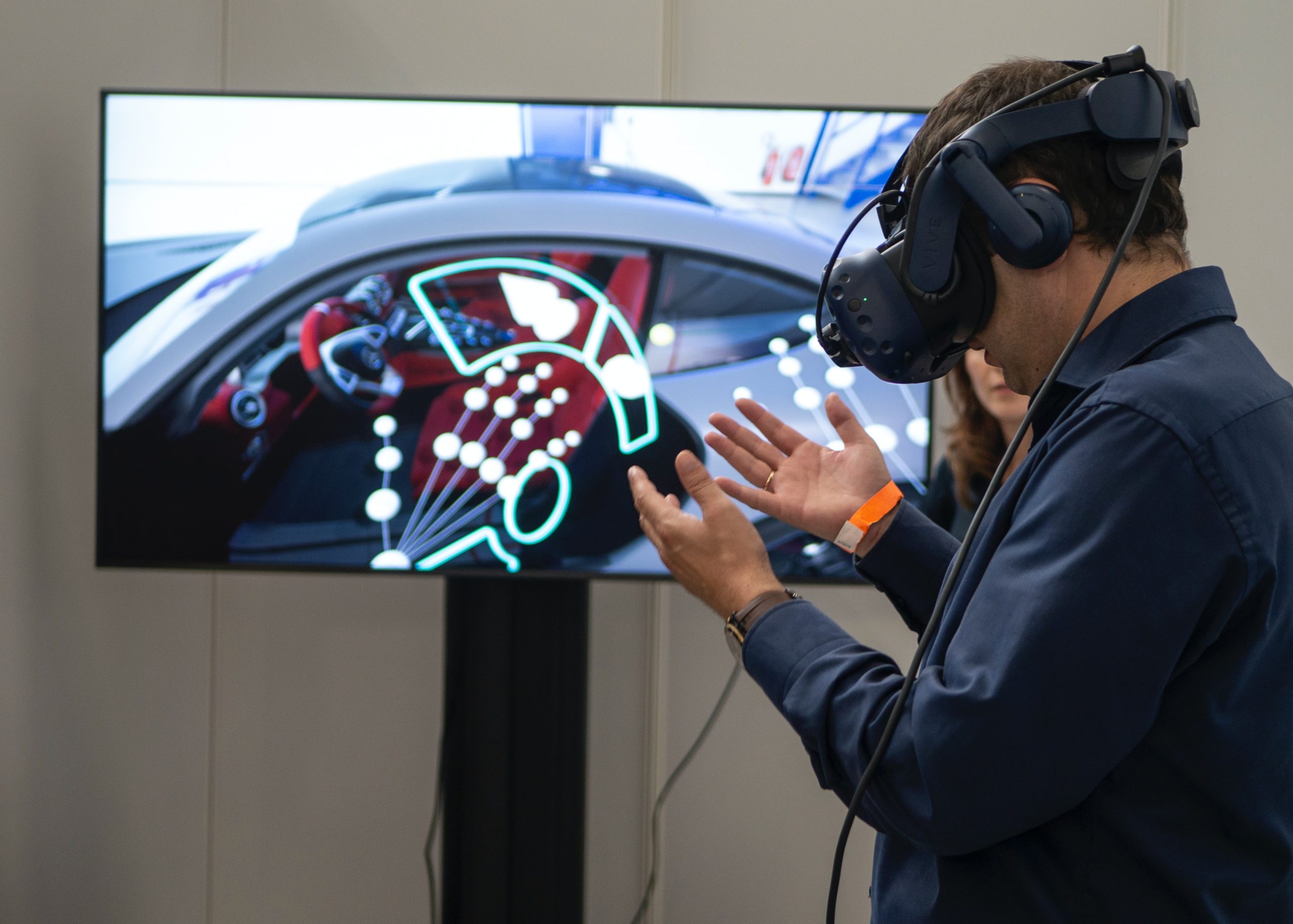
VR completely immerses the user in a virtual world. Source: XR Expo.
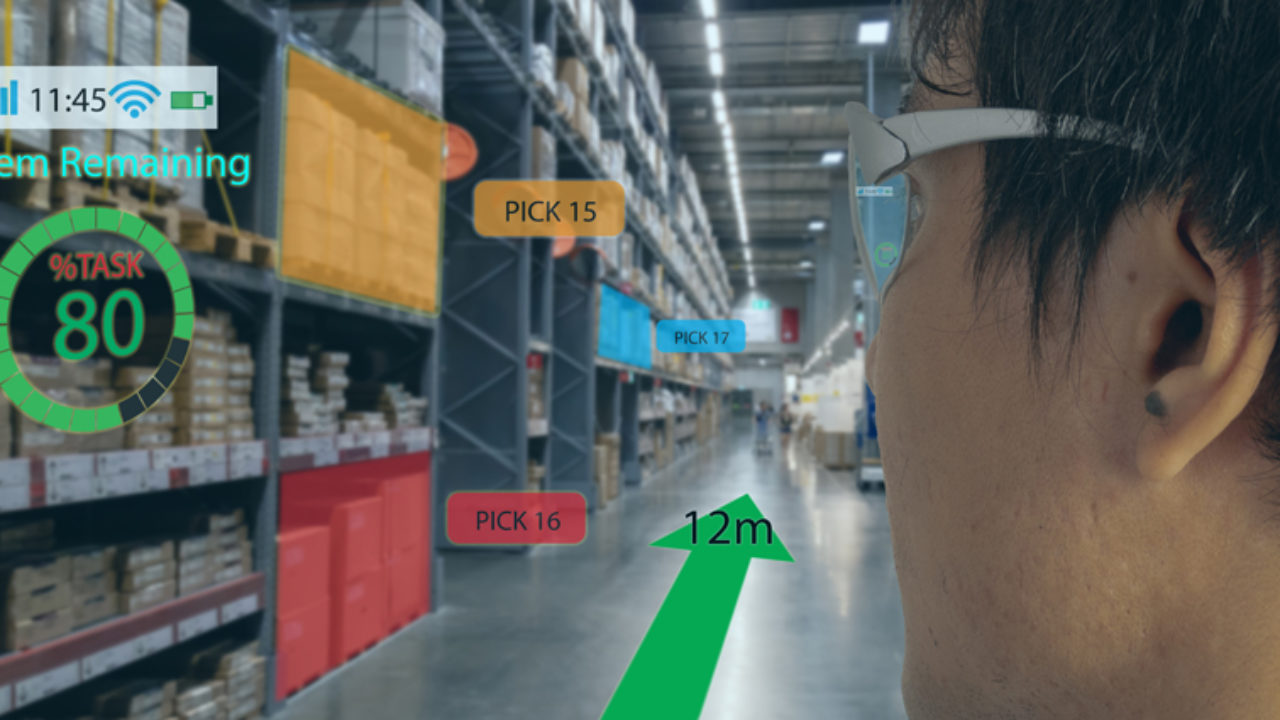
AR adds information to our natural view, “augmenting” our perception. Source: XR Today.


You might have tried AR or VR in exhibition pavilions, or at a techy friend’s house. Perhaps after watching Ready Player One, you have been so intrigued to download a VR app on your smartphone hoping, in vain, to have a similar amount of fun. But what Cook was referring to and what Meta anticipated goes far beyond the available applications. Much of their potential is still to be envisioned and a widespread adoption is still held back by certain barriers, such as hardware ergonomics, battery life and connectivity speed. However, cutting-edge innovations like Internet of Things, 5G, and a growing mobile computing capacity promise to address those limits and allow unprecedented ways of interaction with data, devices, and people.

Since the dawn of the computing era, our relationship with data passed through a bi-dimensional sheet of glass (or perforated paper for those who have a higher mileage), whereas the real world where we put those data to use is unarguably at least three-dimensional. As a Harvard publication pointed out[1], this gap between the digital and real-world represents a bottleneck for taking advantage of the rising torrent of data produced by an always more smart and connected world. By superimposing digital information directly on the real environment, AR allows processing the physical and digital simultaneously, eliminating the need to mentally link the two. By giving digital content a tridimensionality, VR allows us to experience it in a more natural and intuitive way that matches our instincts of interaction with reality. These capabilities will enable us to absorb information, make decisions and execute tasks more quickly and efficiently.

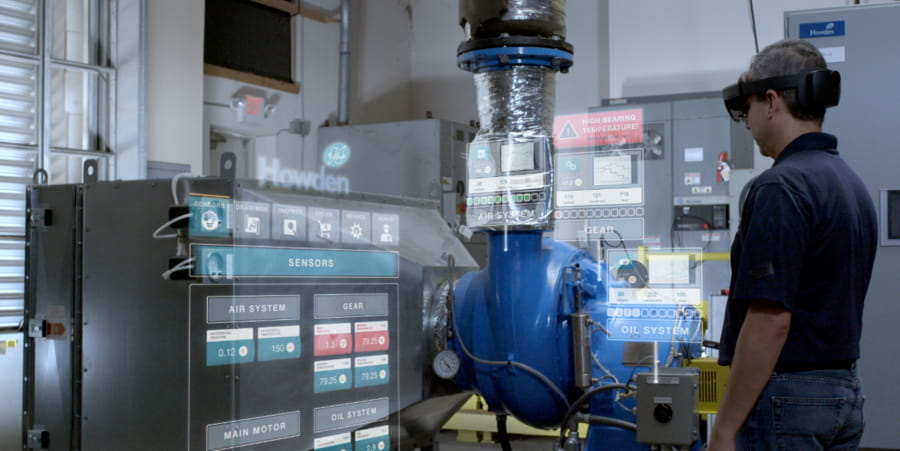
The combination of immersive tools and connected devices will change the way we interact with things. Source: PTC.

The future of digital interaction won’t be limited to your next washing machine, but industrial machinery, Artificial Intelligence, complex databases and potentially all digital-rich applications that make AR and VR promising tools for a broad range of work applications. A lack of real uses was perhaps one of the main causes of the clamorous, now almost ten-years-old, Google Glasses failure, when the tech giant tried broad commercialization of AR without providing solid use cases in real work or life situations. At the Institute for Manufacturing of the University of Cambridge, in the Center for Technology Management – among other fascinating topics – we are also studying the implementation of AR and VR into companies’ practices, in particular for strategic planning purposes.

Tech companies must deal with a high level of uncertainty and complexity when deciding, for instance, where to invest in the upcoming year, which features to provide in the next product or “simply” envisioning the future. The continuously reshaping industry landscape forces managers to constantly adapt strategies in order to address the threats posed by emerging technologies and seize the opportunities brought by them. Having a new, performative way of accessing, managing, communicating and (literally) handling information and insights of growing volume and complexity will be fundamental to navigating future uncertainties. Tools like AR or VR are potential enablers of such capacities and therefore might play a role in companies’ daily activities.

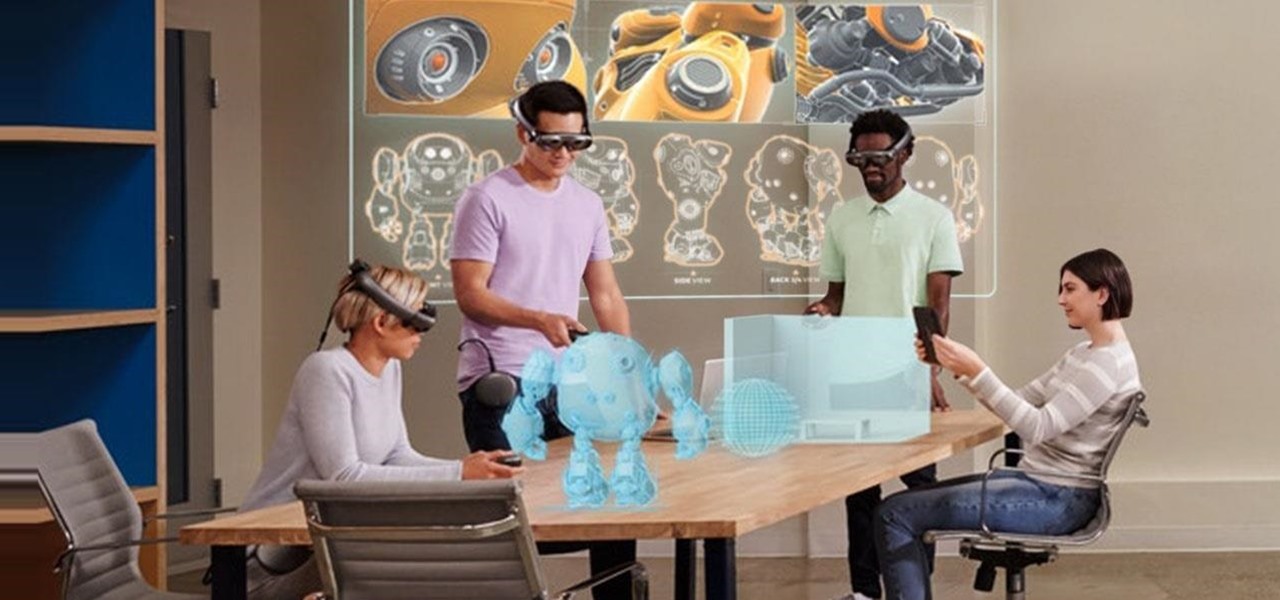
Companies will benefit from a more immersive way of visualizing data, testing products and communicating with colleagues. Source: Magic Leap.

Far from being a proven law, Cook’s words envisioned a radical change that will revolutionize our life. You might be (with reasons) a metaverse skeptic, or a fan of old-fashioned ways, but AR and VR applications are already being implemented by major players (e.g. Xerox, US Navy, Boeing) along their value chain and their number will inevitably increase along with the progress of the technology. Relatively soon in your office, in your factory, or at home, you might see people gesturing in the air, wearing strange glasses, hitting the furniture while talking to no one. Don’t panic, they might be just surfing the Metaverse.


[1] 2017, Porter M.E. and Happelmann J.E. Why Every Organization Needs an Augmented Reality Strategy. Harvard Business Review.