Attending a Digital Ethnography summer school in Australia

Attending a Digital Ethnography summer school in Australia

During my current academic placement with RMIT in Melbourne, Australia I have the chance to network with colleagues from the School of Business, attend talks and seminars and collaborate with other departments and researchers from different fields!

One example is the summer school led by the Digital Ethnography Research Centre (DERC) [https://digital-ethnography.com] here at RMIT Melbourne which I attended at the end of February. During the summer school Early Career Researchers (mostly PhDs) from all over the world got together to learn from Annette Markham and Larissa Hjorth about “Digital Ethnography Fieldwork and Analysis: Studying hybrid contexts of human+ non-human+ more-than-human entanglements.

What is Digital Ethnography?

Attending a Digital Ethnography summer school in Australia
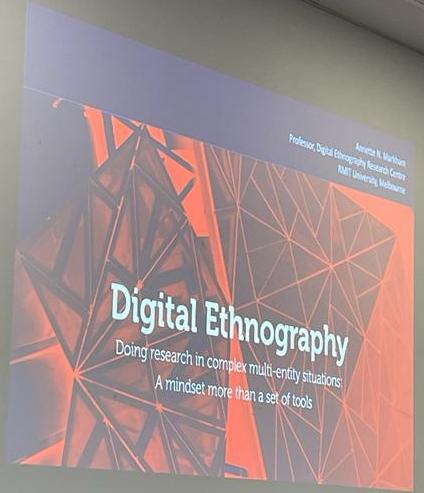
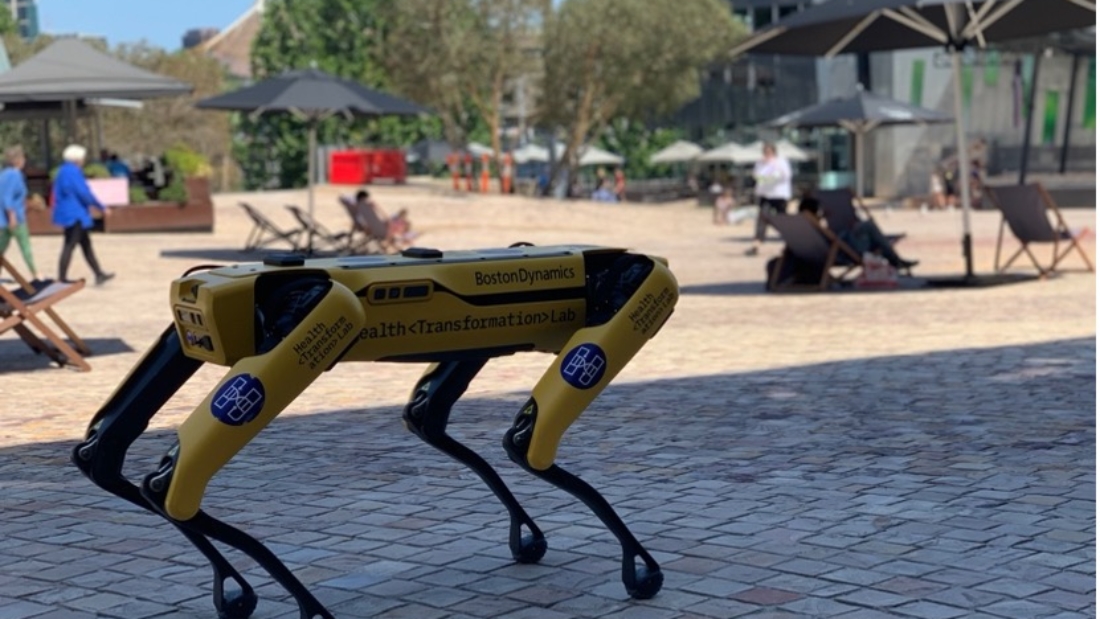
Slide from the summer school (Source: picture taken by C. Leeb).

Digital ethnography encompasses a lot of things. In general, it means investigating how digital technology impacts humans and society by using ethnographic tools. For example, how people use and interact in the digital space (e.g., on social media platforms like Instagram or Twitter, online forums, games, etc.) and trying to understand how this impacts the end-user. Just like the EINST4INE researchers, digital ethnographers investigate digital transformation. They are taking a very human-centred approach to this and are interested in the lived experience and feelings of the people using digital tools. I was lucky enough to be able to participate in this summer school, and I can only say: What an amazing summer school and what a great fit to my research!


The Summer School

The summer school lasted a week, plus an extra day for PhDs to present their work.

We heard lectures on various topics, such as how to do ethical research or on important themes in fieldwork (e.g., immersion, continuous documentation, using “what’s at hand” to generate material). Further, a penal discussion of former PhD students doing Digital Ethnography gave us insights about the possibilities in this research area. We heard from Marissa Willcox (University of Amsterdam), Zöe Glatt (London School of Economics), Kelly Chan (RMIT University) and Jess Hardley (RMIT University). We also had workshops in which we did our first ethnographic fieldwork, we learned how to write field notes and how to use video and photos to document our experiences.

Halfway through the summer school, we did one day of fieldwork out in the public space. We were divided into 6 groups. Half of the groups observed the interactions inside the Australian Centre for the Moving Image (ACMI) and the other half on Federation Square in Melbourne. But – this was not all!

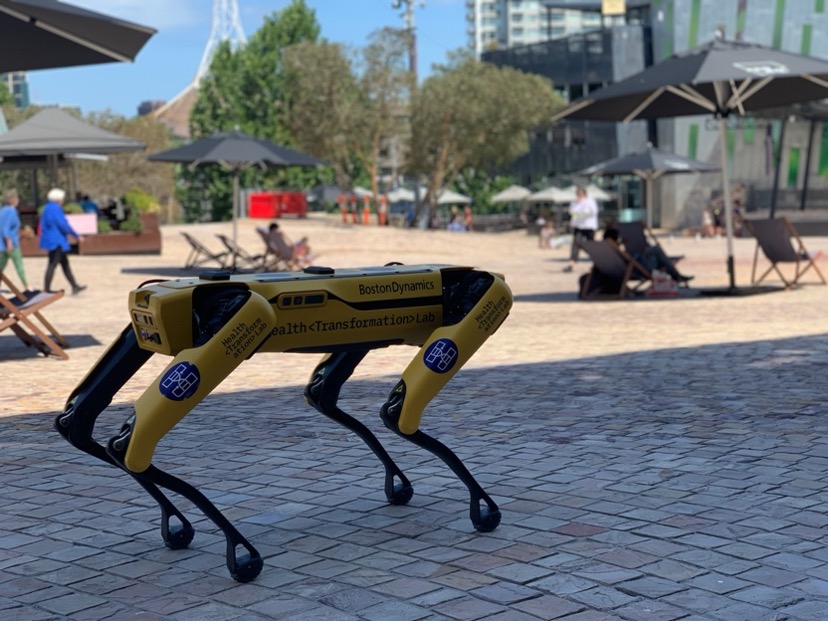
We actually observed something very specific, as we had another participant joining us: Boston Dynamic’s robot Spot!
Attending a Digital Ethnography summer school in Australia
Spot on Federation Square (Source: picture credits to Alison Starr).

The focus of our observation and field day was to see how people of the public react and interact with Spot. This day was very insightful and lots of fun!

After that, we started reflecting on our experiences as a group and heard lectures on some useful tools for the analytical processing of the data, namely on Situational Mapping and Critical Making techniques. Then, each group put together two presentations to share with the other participants: one on our initial reflections of the field day and one on initial findings from the first attempts of analysing some data.

Personal key take-aways

I will very shortly touch upon 3 key take-aways from this summer school:

  • Ethical considerations: Before, during, and after doing research.

It was great to discuss this central topic in research again: how important it is for a researcher to constantly reflect on ethical considerations.

Before the research this seems obvious to most: often simply because you need to obtain ethical approval to do your study. But it doesn’t end there, continuously throughout your data collection time – you need to be aware of your positionality (am I an outsider, an insider?), what effect your research or your presence in the field could have on others, and that you will always bring in subjectivity when entering a field. The more you reflect on these things, the better and the more you can ensure that your research will be ethical. Ethics is not simply an approval to obtain – it is there to support you to do the right thing. It helps you to reflect on possible issues that might arise and to plan ahead on how you will react to them.

  • Looking at the data in a group: Surprises can emerge.

During the analysis stage, we had access to the data we collected ourselves and the data from all other researchers. A key take-away for me here is that looking at data in a group can lead to many different insights and surprising themes! It enriches the analysis process greatly as every member brings a unique point of view into the discussion.

It was exciting to see all the interesting themes that emerged during the analysis process with my group. We talked about the agency of oneself and how we ascribe agency to others (e.g., Spot). While I wasn’t too surprised that participants seemed to struggle to categorize Spot (Is it a dog? A horse? A spider?), I was intrigued by the fact that most people really wanted to categorize it. They either asked a lot of questions or started treating it in a certain way (e.g., petting it etc). Other interesting topics that emerged were control (people started giving Spot commands) and embodiment (participants reflected on their feelings in a bodily sensation).
Attending a Digital Ethnography summer school in Australia
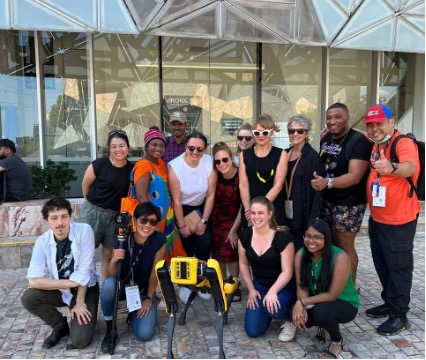
About half of the participants of the summer school + Spot at Federation Square. (Picture credits to Haryo Jiwandono).
  • Not just valuable learnings: Good company & good food.

The last key take-away is clearly that I learned a lot and enjoyed the summer school greatly. I met fascinating people from all (literally every continent except Antarctica was represented) over the world from various disciplines (architecture, urban studies, anthropology, design, journalism, organisational studies…). Actually – one of them, Kateryna Kryzhanivska, who is also a visiting PhD researcher at RMIT, and she is from LUT University, Business School! (which shows again that the world can be really small as well).
Who knows – maybe some of these connections will last and result in future collaborations!

Further, good food is a great plus in any event.
Attending a Digital Ethnography summer school in Australia
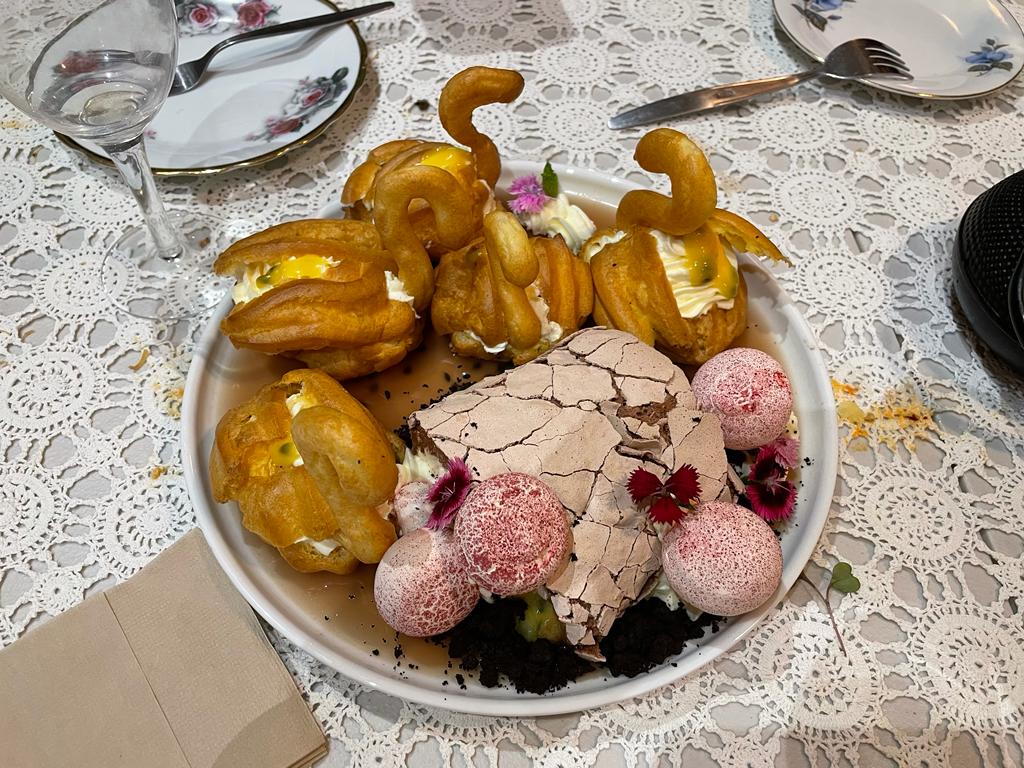
The desert at the Welcome Dinner provided by “Piecurious” run by Helen Addison-Smith (picture taken by Constanze Leeb).

All in all I can say:

It was intense, insightful and amazing – a week well spent!
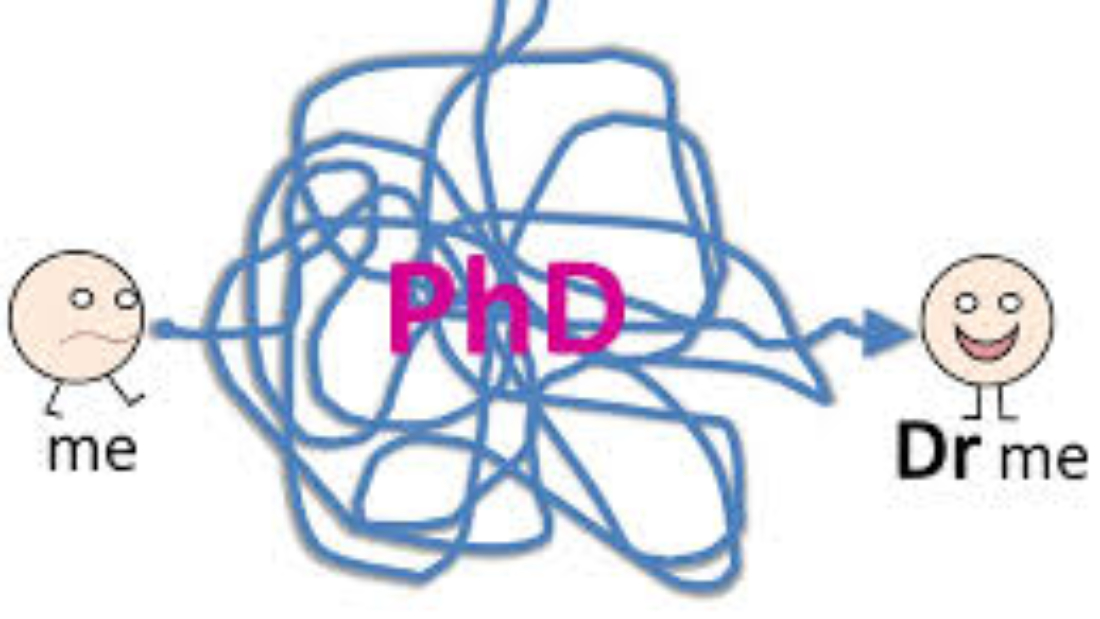
My first six months (and a new column!)

My first six months (and a new column!)

Welcome to the second post of my blog!

This time I will start by resuming the main highlights of this first semester, before telling you more about my plans for the future. Finally, I will present a brand new column where I intend to share some curious content that caught my attention while surfing the internet.

What have I done?

As I am now 6 months into my PhD, I think I have already had a taste of what a doctorate is all about. I have attended several interesting courses and seminars, submitted my first papers, worked long hours and made calls at unusual times (the West Coast time zone did not help), but I have also had a lot of flexibility and, most importantly, I have started to give my small contribution to share knowledge on the topics that interest me most.

First, I had the chance to give two lectures in a MSc course called “Sustainability in a Business Development Perspective” about “Social entrepreneurship in a digital context” and “The Impact of Sustainability on Today’s Management”, at Aarhus University.
Even though I was very lucky because I could teach two topics of my interest, I have to admit that at the beginning it felt a bit weird to be on the other side of the desk, as you have almost the same age of the students in front of you. But when you have the opportunity to share your experience and knowledge about something you are passionate about, then everything becomes easier and more natural. Moreover, I think this opportunity also helped me in strengthening old relationships and building new ones. First, because I got in contact with some former colleagues of mine at PwC Italy. They helped me to invite a Manager, who gave us an overview on the last developments around Non-financial reporting matters. Secondly, because this topic sparked a discussion with some working students that went beyond the four walls of the classroom and had positive implications on their job.


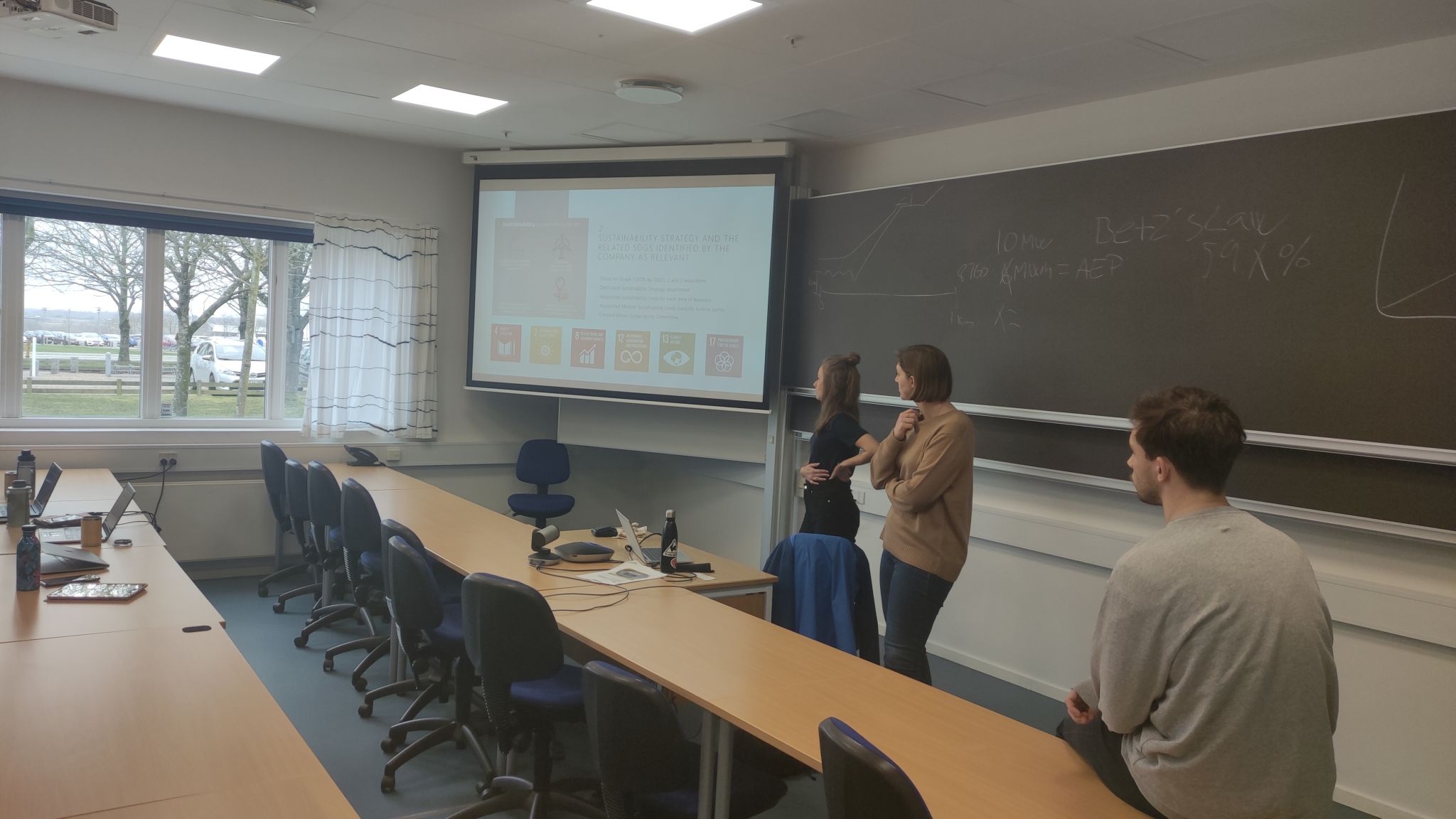
Photo taken by myself, during the “The Impact of Sustainability on Today’s Management” class, Aarhus University

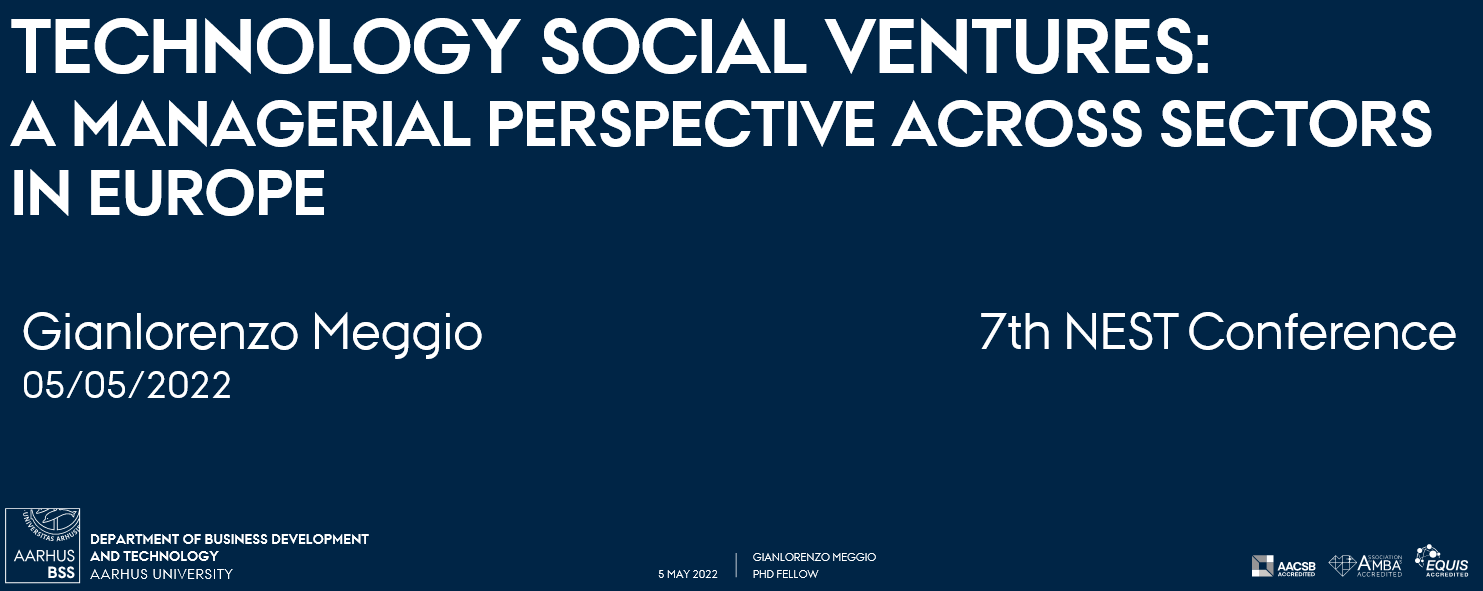
Then, I also virtually participated in my first conference, at NEST. Even though I could not join it in person, it was a nice opportunity to receive feedbacks from other early stage scholars, to get to know their research and see how the topics that I am going to write about are addressed in a rather different yet connected field, i.e. Sustainability Transition.

Cover of the PPT presented at the 7th NEST Conference

What will I do?

In this period, I have also received the first responses related to the works I submitted in the previous months. They have all gone well, which means that I will be able to travel a lot in the next few weeks! In June, I will be first in Copenaghen and then in Zurich, respectively to attend ISPIM and EURAM. In these two conferences, I will present my research-in-progress on Innovation Ecosystems and Technology Social Ventures, two of the topics that I want to deepen during my PhD and that I will talk about more in the next blogs. Then, after a couple of weeks I will be flying to Barcelona for the first EINST4INE Summer School – if you are interested, morning sessions will be open (online) to external participants. In that occasion, together with other 3 ESRs, I will run our first Industry engagement activity, i.e., a contest in which the ESRs will have to find a solution for the challenges proposed by the companies part of the consortium. A great chance to put in practice our knowledge and understand the main interests of the industry partners.

Finally, after the Summer Break, I will take part to the 82nd Annual Meeting of the Academy of Management, in Seattle. This year’s theme is “Creating a Better World Together” and I will be involved in the organization of the Paper Development Workshop on “Researching Open Innovation”. Being the most important conference in the field, I cannot hide that I am really excited. It will be a great learning opportunity to personally meet the most talented scholars from all over the world and to better understand how the academic world works overseas. Moreover, it will be the first live event after the pandemic, so I guess that everyone will be very excited.

All this travelling will mean that my writing will be temporarily put on hold, but I hope that these weeks will represent a great source of inspiration for the work that I will do in the upcoming months. Therefore, the main goal will be to get to know new people that work on similar topics and put some gas in the tank in terms of ideas and useful academic references. Looking forward, this could also be a great opportunity to build relationships that could potentially evolve into future collaborations.


Surfin’ Internet

Since the main goal of a PhD is to research, ask new questions (and sometimes give answers), this column aims to collect material that I have found useful or that has piqued my curiosity in recent times.

  • Video:
    • The quality of the material shared by the New Scholars Network is absolutely stunning. You can attend webinars hosting the most renowned scholars, interact with them, and even watch most of the recordings whenever you want on their YouTube channel. In addition, it is also a great way to stay up-to-date on the latest articles published in the field of management.


  • Academic article
    • In his latest article, J. Kirchherr, researcher at Utrecht University and Associate Partner at McKinsey & Company, writes about the “​Bullshit in the Sustainability and Transitions Literature: a Provocation​”.
      Beside the rant being addressed at one specific topic, it is a good reminder for all researchers writing on a trending topic, regardless of their academic field. That said, there is no doubt that sustainability has become a buzzword and we should all be careful how we use it, unless our goal is to devalue it.
  •  Tweet
    • In this thread, G. Krlev describes his (almost) endless journey in search of a tenure track position.
      It sounds a bit scary, but I think it offers a nice overview over the idiosyncrasies of the academic world and some food for thought about the lessons learnt during this process.

I would be curious to know your perspective, so, feel free to comment the post.

That’s all for today, see you soon!